Faces

A week and a half ago, Philadelphia Museum Of Art opened its arms nice and wide when my wife Sandy and I entered the building. Then, with feeling, it embraced us. “Yeah,” I thought to myself, “this is going to be a good visit.” And it was. How could it not have been? I mean, over the years I’d roamed through PMA’s galleries more than 100 times, coming away invigorated each trip. The museum rocks.

Arriving with no advance plans as to what to see, we took a look at the museum’s website after showing our PMA-membership cards at the admissions counter. Any number of special exhibits listed on the site, ranging from small to large, piqued our interest. An hour and 45 minutes later, we’d toured them all, plus other gallery spaces. Whew! Had we covered too much ground a bit too quickly? Probably, but little matter. In any event, the museum was readying to close at that point, so off we went to retrieve our car in the museum’s parking garage. The visit, though, didn’t fade from my mind.

Sketch of The Potato Eaters, by Vincent Van Gogh. (This image belongs to Philadelphia Museum Of Art)

Faces! I’m still thinking about some of the face-centric artworks I saw at the museum, more so than the landscapes, seascapes, town scenes and city scenes, and abstractions. Maybe that’s because Sandy and I began our trek at a mini exhibit whose centerpiece was a privately owned, seldom-shown-in-public sketch by my favorite artist, Vincent van Gogh. The drawing, from 1885, is a rendition of The Potato Eaters, an oil painting Van Gogh was working on at the time in the Netherlands, the country of his birth. That painting is now generally considered to be one of his most important pieces.

The five folks in the sketch are Dutch farmers, a hard-working family that never had, and undoubtedly never would have, more than the minimum necessities needed to get by. Van Gogh didn’t try to portray them in exacting detail. He wasn’t a precisionist. His intent was to get to the heart and soul of these people. Hell, getting to the heart and soul was his intent in every one of his works, no matter what the subject matter. And he almost always pulled it off. His enormous popularity developed largely for this reason, I think. Posthumously, needless to say, as the general public was unaware of Van Gogh during his lifetime. (Van Gogh moved from the Netherlands to France in 1886, and died there, by his own hand, in 1890.)

Portrait Of James Baldwin, by Beauford Delaney. (This image belongs to Philadelphia Museum Of Art)

On the opposite side of the museum’s ground floor, hundreds of feet away from the Van Gogh sketch, Sandy and I admired a portrait of James Baldwin, the American writer, social activist and deep thinker. Painted by Beauford Delaney, a devoted artist whom success mostly eluded, the work, painted in 1945, depicts Baldwin in his early twenties. It captures him brilliantly, with bold strokes and an expert disregard for photographic-like realism. As a result, Baldwin comes alive on the canvas. Van Gogh would have approved.
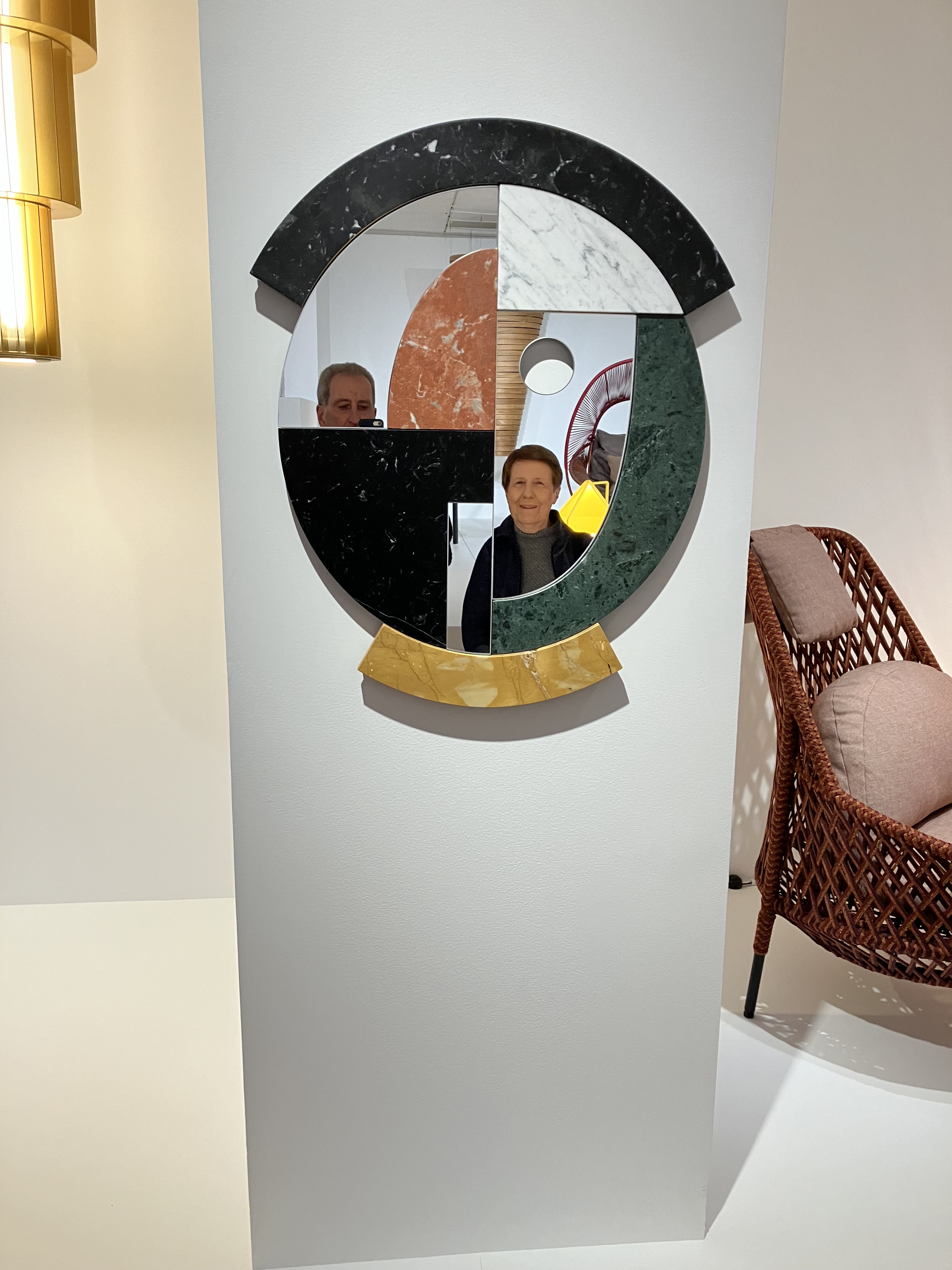
Many other faces greeted us from PMA’s gallery walls that day. I’ll comment on only two of them. They are the visages, as some of you will recognize, of myself and my better half. Man, there was no way I was going to let pass the opportunity to snap a photo when I noticed our reflections in a mirror designed by Stephen Burks. The mirror was part of a dazzling exhibit of Burks’ modern interior-design items.

Somewhat amazingly, it is the only picture I took in the museum that day (the other two pix in this story are from the PMA website). That’s because, while at PMA, I had no intention of writing about Sandy’s and my visit and illustrating the story with photos captured by my phone’s camera. I just wasn’t in a reporter-on-the-scene mood. And yet, this essay emerged anyway. Well, all I can say is, “You never frigging know.” Ain’t that the truth!
Great Performances

Last week, a few hours before placing my fingers on my computer’s keypad, I toyed with the idea of writing in depth about the world’s never-ending cavalcade of horrors: the man-made and also the ones bestowed by Mother Nature. Among those of recent vintage, Russia’s pummeling of Ukraine for the past 13 months is the first category’s undisputed leader. Earthquakes in Turkey and Syria, which killed nearly 60,000 people earlier this year, top the second.

But, seeing that I ain’t anyone’s go-to guy for news analysis or for astute political and philosophical commentary, I decided to ditch said idea and head instead in a direction I’m more in tune with. The next however-many hundreds of words, therefore, are devoted to artistic performances that recently knocked me off my aged, wrinkly feet.

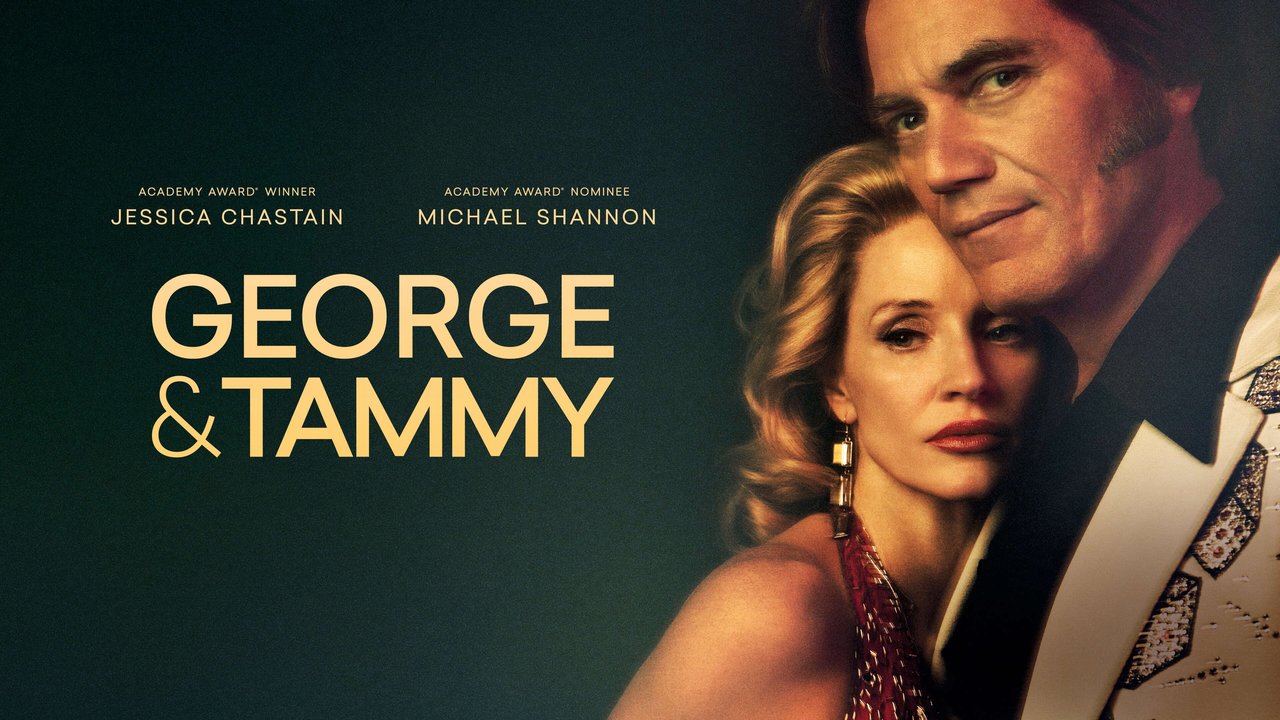
First up are the acting jobs — as profound as any you could hope to see — turned in by Michael Shannon and Jessica Chastain in George & Tammy, a mini-series available on various platforms, including Showtime. The show tells the intertwined tales of George Jones and Tammy Wynette, country music stars long deceased, who loved one another to the end, despite divorcing in 1975 after six years of marriage (Jones passed in 2013, Wynette in 1998.) More than anything else, Jones’ heavy drinking caused the union to crumble. He adored Wynette but, a troubled soul, was prone to violent outbursts. Conversely, Wynette, blessed with inherent sweetness, radiated calm and light in the face of a host of personal difficulties.

My wife Sandy and I gobbled up George & Tammy last month. It got to us, really moved us. It’s not perfect, though. A few too many clichéd scenes see to that. However, Shannon and Chastain are wonders to behold, and make production deficiencies almost irrelevant. Bringing their characters to life so believably, so naturally, they elevate each episode’s script to levels the writers likely never envisioned. And, by the way, Shannon and Chastain sing damn well too. I’ll now clearly state what I’ve been implying: George & Tammy is worth your time, even if you’re not a country music fan. I highly recommend it.

Anyone who is into paintings, graphics and sculptures probably is familiar with The Barnes Foundation, a museum in Philadelphia, Pennsylvania, USA. Its collection, amassed over several decades by the late Albert Barnes, a wealthy physician, chemist and businessman who left this mortal coil in 1951, is nothing short of astonishing. The Barnes is drenched with works by Renoir, Cézanne, Soutine, Utrillo, Matisse and Van Gogh, to name but a few of the mid-1800s-to-mid-1900s artists the museum specializes in. It also showcases African masks and sculptures, ancient Greek sculptures, plus a ton of other creations. What a place!

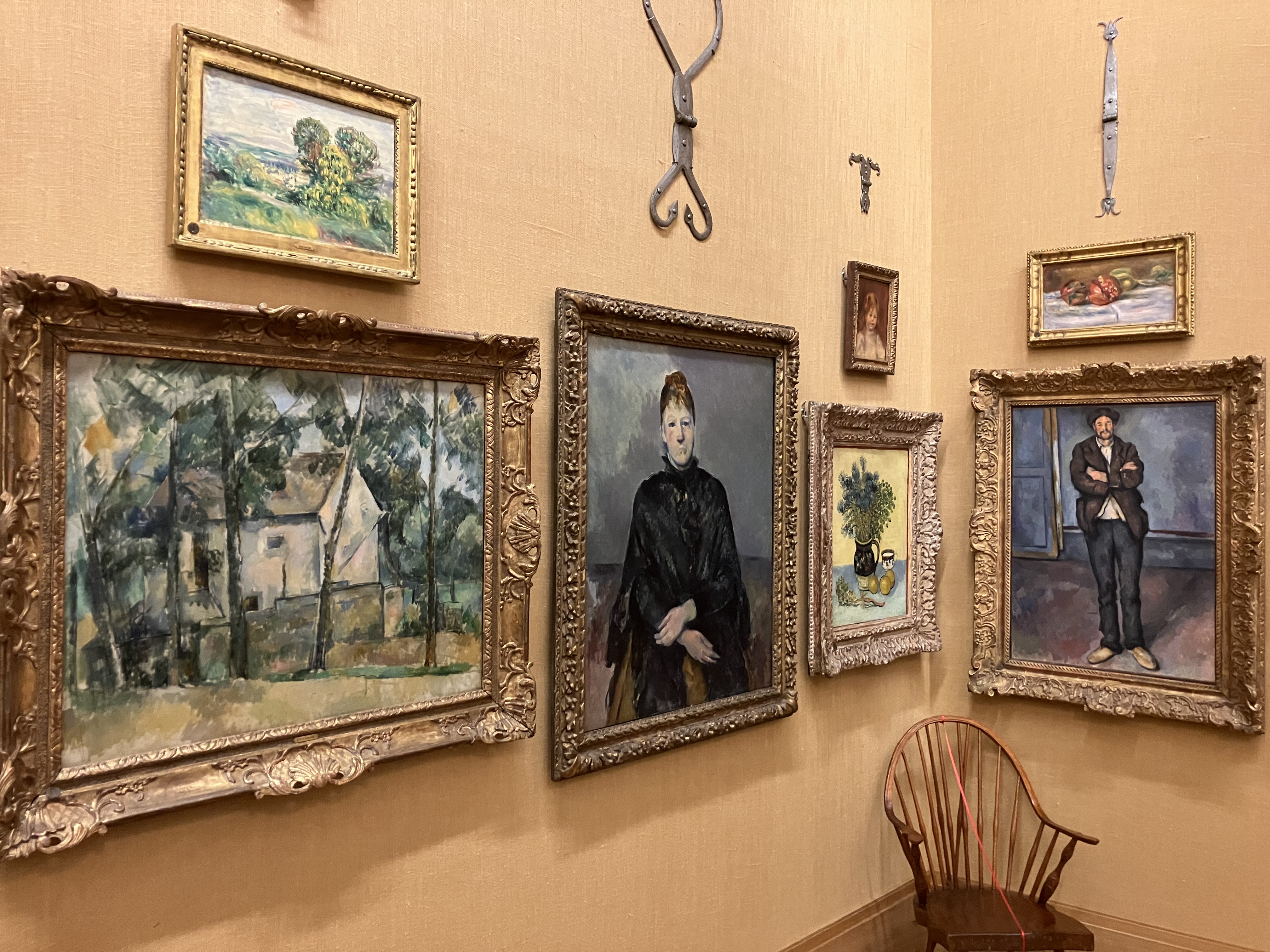
Well, being someone who definitely is into the artforms listed above and who lives not terribly far from Philadelphia, I drop by the Barnes every few years (visiting more often than that would dampen my ability to view the collection with fresh eyes). One particular array of paintings has caught my attention on each of my last few visits, including the one I paid three weeks ago. Extending from one wall to the next, it presents four oils, three of them by Paul Cézanne and one by Vincent van Gogh. Those gentlemen, along with Claude Monet, are my favorite artists.

Cézanne and Van Gogh had the gift of getting to the heart of things, each from a different set of angles. The four oils in question — beautiful performances, if you will — are proof of this. I feel life forces simmering beneath Cézanne’s understated pallet of blues, grays, browns and greens. Van Gogh, of course, is more obviously expressive. He can’t contain his emotions.  It’s easy to spend more than a few moments gazing at his still life’s flowers and leaves, which seem ready to leap not only out of their container but off the canvas too. He painted it in 1888, one year before his death. Van Gogh, who had minimal commercial success during his life, would have been ecstatic, I’m sure, to know that in time his works would captivate people, and that he was destined to become a legend.

The final performance I’ll present is by Sarah Shook & The Disarmers, an American band that can rock like nobody’s business. Their recording Talkin’ To Myself came out a year and a half ago. It blew me away when I first heard it last year, and I dialed it up again the day before I began writing this story because I was in need of perfect, ass-kicking rock and roll. Lyrically this song doesn’t paint a happy picture but, man, sonically it’s amazing. Ferocious guitar licks and pounding drums that show no mercy surround Shook’s controlled-yet-sneering vocals. Press the Play button below if you’re ready to be jolted.