My Coca-Cola Relapse

How much cola have I consumed in my life? Thousands of gallons I’d guess. Not to mention the huge quantities of other soda varieties that have passed through my body. But cola always was my favorite. Coca-Cola, Pepsi, RC Cola, store brands – I proudly and happily drank them all. Over time, Coke became my top cola choice.

My cola habit was strong in my teens and went up some notches in my early 20s. But it ended in my mid-40s when I gave up cola and other sodas. All of that sugar for so many years, combined with sad dental hygiene, had made a mess of my teeth and gums. I needed to stop drinking the stuff, and it’s a good thing that my willpower was strong enough to follow through. I didn’t switch to diet sodas because I’ve never liked the taste of artificial sweeteners.
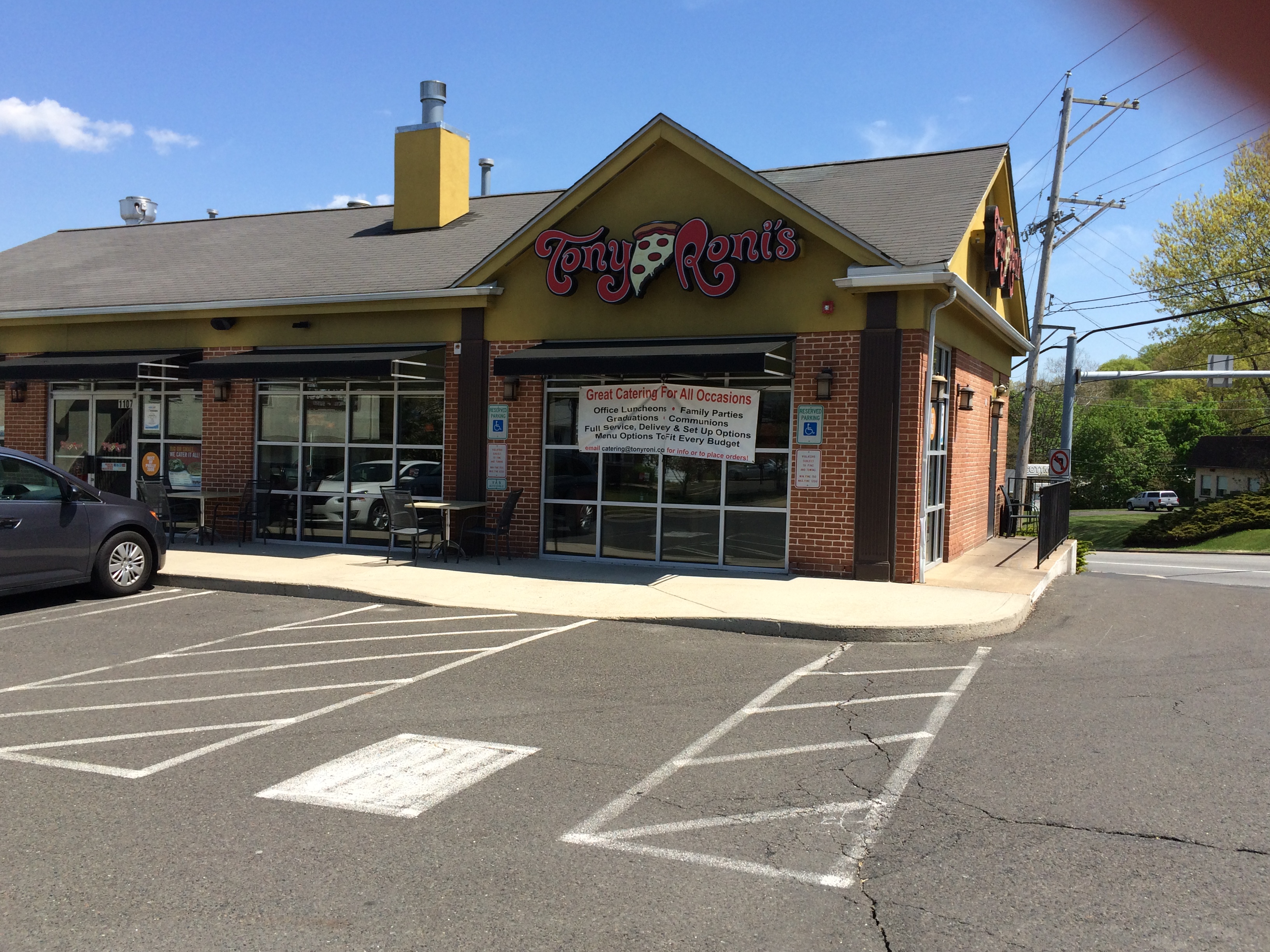
The scene of my relapse

But cola is back in my life. Coca-Cola, to be precise. Its return began not long ago at a pizza place I’ve been going to for a couple of years, Tony Roni’s. Roni’s resides at a remarkably congested and dangerous road intersection in Willow Grove, PA, not far from Philadelphia. Customers might somewhat put their lives in jeopardy to visit Roni’s, but that doesn’t keep them away. And that includes me.

I love pizza, especially the more traditional and unadulterated types, but I can’t find many by-the-slice places that make it the way I prefer: crisp charred crust, sweet tomato sauce, good quality cheese and not an overload of it nor of oil. Tony Roni’s traditional pies seem to vary in quality from visit to visit. They are not too bad overall, but in a better world they consistently would be less floppy and oily. So, a bit frustrated, last year I started ordering slices of Roni’s tomato pie instead. It’s a pizza variety I had rarely had before. They do a nice job with tomato pie, its underside heat-darkened, the crushed tomatoes ripe with good flavor, very little oil, a dusting of cheese. The crust could be better, but what the heck.

Initially I drove to Tony Roni’s once every two or three weeks and, for various reasons, most frequently on Wednesdays. Wednesday is the one day when they offer a free fountain soda to anyone who buys two pizza slices. For a long time I rejected the free drink. After much cavity filling and periodontal work, my teeth and gums have been pretty good for quite awhile now, so why press my luck? But the lure of Tony Roni’s free soda must have been nibbling at my subconscious. Earlier this year my resistence grew thin. Paying for two slices on a January Wednesday I said “oh well” to myself and accepted the cashier’s proferred paper soda cup. Off I went to the soda dispenser and allowed six or so ounces of Coca-Cola to descend. I took a seat, took a sip, and was in heaven. Coke is heaven. I knew that all along.

Since then, my trips to Tony Roni’s have been almost weekly, and exclusive to Wednesdays. Each time I buy two slices of pie, usually tomato pie, and savor about six ounces of free Coke. I try very hard not to drink more Coke than that. So far I’ve been successful. And when I get home from my pizza and soda outings I brush my teeth. Coke is delicious. Dental work isn’t.
Willy Porter Anchors A Visit To Jim Thorpe, PA

Another weekend has come and gone. It was a good one. The locale: Jim Thorpe, PA. The main reason for being there: Willy Porter, a terrifically talented singer-songwriter and guitarist.

As with Kim Richey, whom I wrote about recently, I’ve known of Willy Porter for years but actually knew almost nothing about him. I’d never seen him perform, couldn’t have named a single song by him. One thing I did know, though, is that he would be at the Mauch Chunk Opera House in Jim Thorpe, Pennsylvania on April 25. The idea of visiting Jim Thorpe had been spinning quietly in my head for a couple of years, ever since some good friends of mine told about the fine time they’d had there. My wife and I recently were thinking about nabbing a weekend getaway, and at seventy miles Jim Thorpe isn’t too far from where we live. But our visit would need an anchor, a strong reason for going. To wit, Willy Porter. Something told me he’d put on a good show, and I was right.

Jim Thorpe, Pennsylvania

Jim Thorpe is a cute town nestled in the foothills of the Pocono Mountains. From the early 1800s until 1930 or so it was a prosperous place, a cog for coal mining and railroad industries. Its name then was Mauch Chunk, derived from a Native American language. Over time, there came to be not only Mauch Chunk, but also the adjacent town of East Mauch Chunk. As coal mining in the area dwindled in the 1900s, both Chunks’ fortunes headed south. People and money left. Town leaders had a plan, though a very odd plan, to try and reverse the decline. It revolved around Jim Thorpe, the celebrated Native American athlete who died in 1953.

Jim Thorpe lived in California at the time of his death, but was a native Oklahoman. His burial was to be in Oklahoma. It seems, though, that Oklahoma had trouble raising money for a Thorpe memorial, something that his family wanted. His widow Patricia somehow had heard that the two Chunks were looking for an economic boost. So, she and the towns’ officials made a deal. Mauch Chunk and East Mauch Chunk merged and became Jim Thorpe. Town leaders hoped that the new name would prove a draw for businesses and tourists, a pretty wifty notion if you ask me.  Jim’s remains were transported to the newly-christened community, which built a memorial to him. Possibly Patricia was paid for all of this. The details are quite cloudy.

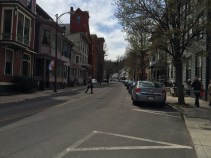
I doubt if the name change helped business grow at all, but during the last 20 or more years Jim Thorpe has become one of those places that people like to visit. With its old fashioned look as key, it has evolved into an artsy, craftsy and happily hippyish town. Bed and breakfast establishments have blossomed. The historic district is small but well-preserved, with strings of nice neat 19th century structures on twisting and narrow streets. Jim Thorpe is close to beautiful areas where you can hike, bike and water raft. But if you aren’t overly jazzed by those activities, then a one night stay, or even a day trip, is all you need. We arrived on April 25 and left the next day.

The highlight of our excursion was indeed Willy Porter. We also enjoyed walking around town checking out the architectural details and the town’s surrounding mountains, though that becomes old pretty fast as a steady pace will bring you from one end of the historic district to the other in eight minutes. But the addition of an excellent restaurant dinner, a bit of shopping,  and a tour of the Asa Packer Mansion made the weekend worthwhile, as did The Parsonage, the comfy B&B where we landed.

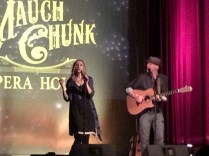
Willy Porter and Carmen Nickerson at Mauch Chunk Opera House

If you are a fan of good singer-songwriters, then Willy Porter is your man. His subjects often are love and personal freedom, and he peers at them intelligently from a spectrum of angles. One of many tunes that had me head-bopping was the Caribbean-flavored Elouise, a gentle love song that put me in mind of artists such as James Taylor, Jack Johnson and Martin Sexton.

If you are a fan of singer-songwriters who do more with their guitars than simple strumming, then Willy is totally your man. His abilities on amplified acoustic guitar made my jaw drop. He can play pretty much any which way he wants, and often had several harmonious interweaving lines going at the same time. Think Leo Kottke or Michael Hedges.

Willy was on stage for over two hours. Carmen Nickerson, his vocal accompanist, added depth and deft atmospherics to the mix. The funky Mauch Chunk Opera House, occupying its site in town since 1882, was another plus. Porter, a nationally-touring musician, has played there many times, becoming a Poconos fixture.

Food? Don’t miss Moya, a stylish and casual restaurant on Race Street. Before the Porter concert, my wife and I both ordered crab cakes, which came with a wonderful cilantro sauce. Delicious. Dessert, a shared crème brulee, was rich and vanilla loaded, and was served at the correct temperature, warm instead of piping hot. I’m always in search of beers I haven’t had before, and I found a great one at Moya, the Fort Collins Brewery’s very hoppy and dry Rocky Mountain IPA.

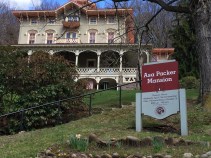
Asa Packer Mansion
Asa Packer Mansion

Well-presented history? Take the tour of the Asa Packer Mansion. Asa Packer’s name has been substantially lost in the mists of time, but he was a rich and powerful man in the 1800s, a railroad magnate and founder of Lehigh University. He lived in the mansion with his wife and several children from 1861 until his passing in 1879, and it continued to be the Packer home until 1912, the year in which his last surviving child, Mary, died at age 73. Mary left the house and its contents to Mauch Chunk. Everything there today is pretty much intact from that date.

Now, house tours can be kind of a snooze, but this one wasn’t. The home is full of lovely objects, and the tour guides are lively and make Packer history interesting. I especially liked the gorgeous but modest stained glass windows in the dining room and second floor landing. They stood out in a house dominated by various shades of brown.

“If you want a good cup of coffee, stay home.”

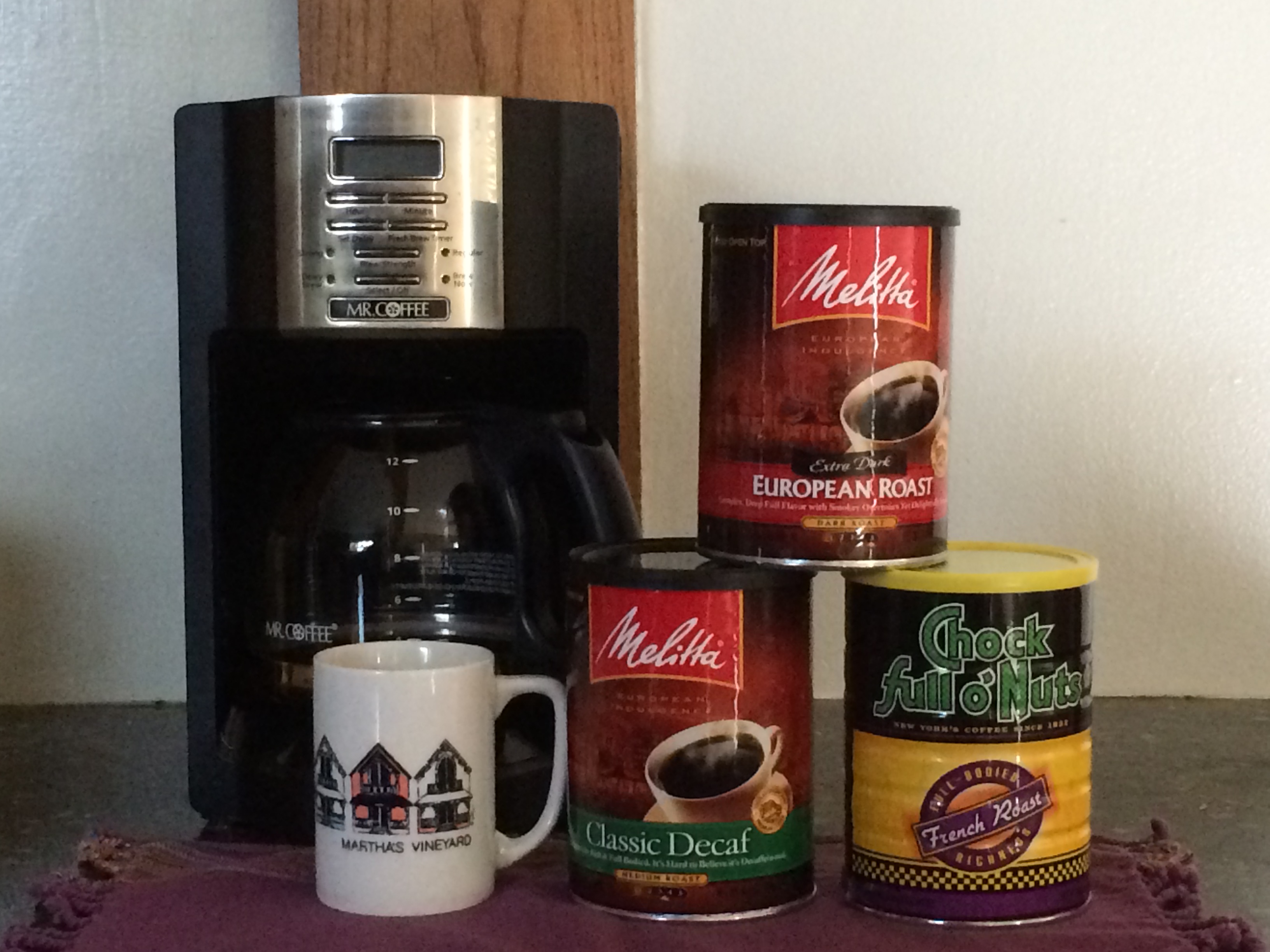
Each morning I combine these three ground coffees.  I don't use an excess of water.  The result is a very good brew.
Each morning I combine these three ground coffees. I don’t use an excess of water. The result is a very good brew.

Returning home from a restaurant where my wife, as expected, had consumed a disappointing cup of coffee to end our dinner, I uttered those words to her for the first time, about eight years ago. Myself, I had eschewed restaurant coffee some years before, having learned that most restaurants serve a timid brew. My wife, though, remained the always hopeful coffee seeker, and still is. I added, not particularly facetiously, that the above quote would be an appropriate inscription, as good as any, on my tombstone. It would give viewers of my grave something to think about, probably along the lines of “Huh? What was that guy all about?”

Coffee is a constant in the lives of half the planet’s population. Mine included. But I became a coffee person only when I reached my early 30s. Growing up, my parents didn’t offer coffee to me, even as I entered my teens, and I didn’t naturally gravitate to the dark brew. It’s not that coffee was absent from our house; my father drank it fairly regularly. My mother stuck to tea. I liked coffee, though, on the one occasion I can recall having it during my youth. That was in 1965 or ’66 in a Brazilian food pavilion at the New York World’s Fair. I was 17 or 18 at the time. I must have felt adventurous ordering a cup there, and I recall thinking that it was delicious. Yet, that fine cup didn’t jumpstart my desire or need for coffee. The habit began years later, when I started ordering a morning java from a food truck that parked outside the office building where I worked, in Philadelphia’s Germantown section.

Fast forward a couple of decades. My wife and I are vacationing in Paris in 1995. Our small hotel serves a modest but pretty perfect breakfast. Good rolls, pastries and fruit, and coffee that stuns us with its vitality. We’d never had coffee like this before. We realized that the coffee we drank in the States, both in and outside our house, was a very poor cousin of this French version. The American coffee revolution, with Starbucks leading the charge, had begun by this time but was in its early stages, and my wife and I were unaware of it. But, soon after returning to the USA, we began brewing strong coffee at home. Since then, we like it no other way.

These days, needless to say, rich coffee is easily found in much of our country. Starbucks outlets are almost everywhere, and independent coffee cafes are aplenty too. But regular restaurants leave me shaking my head, and that’s why I uttered the words that might decorate my tombstone. For accuracy’s sake, though, what I really should have said was: “If you want a good cup of coffee, go to Starbucks or the like, or stay home and brew it yourself. Forget about ordering joe in restaurants.”

But why do so few restaurants, from diners to pricey joints, choose to serve up a robust cup? Why has the coffee revolution bypassed most of them? Wish I knew. Brewing flavorful coffee isn’t too hard. The problem, I’ve come to realize, is simply that not enough ground coffee is used in proportion to water. The result is a weakish drink, even with the finest of beans. Duh, indeed. Hey, restaurateurs — up the bean count!

Dislikers of strong coffee should pay no attention to what I’ve written.