I tip my hat to the Philadelphia Horticultural Society (PHS), for it is the producer and director of the wonderful Philadelphia Flower Show, an event first staged in 1829 when PHS was two years old, and mounted almost every year since then. I’m very much into the show, something that wasn’t always the case. Pre-2016 I pooh-poohed it, certain that I’d have zero interest in its presentations were I to attend. Which only goes to prove I truly can be a dumb f*ck.
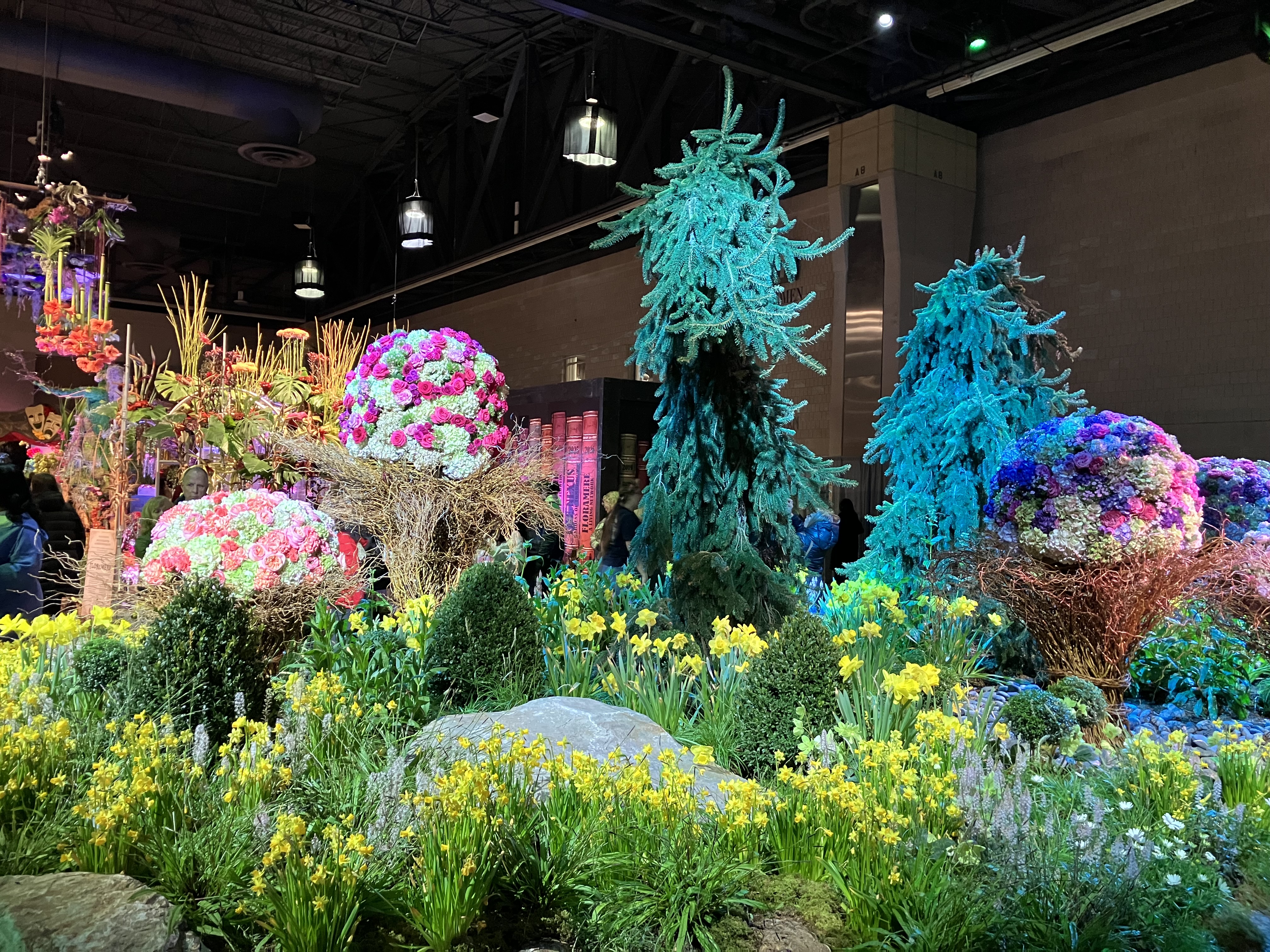
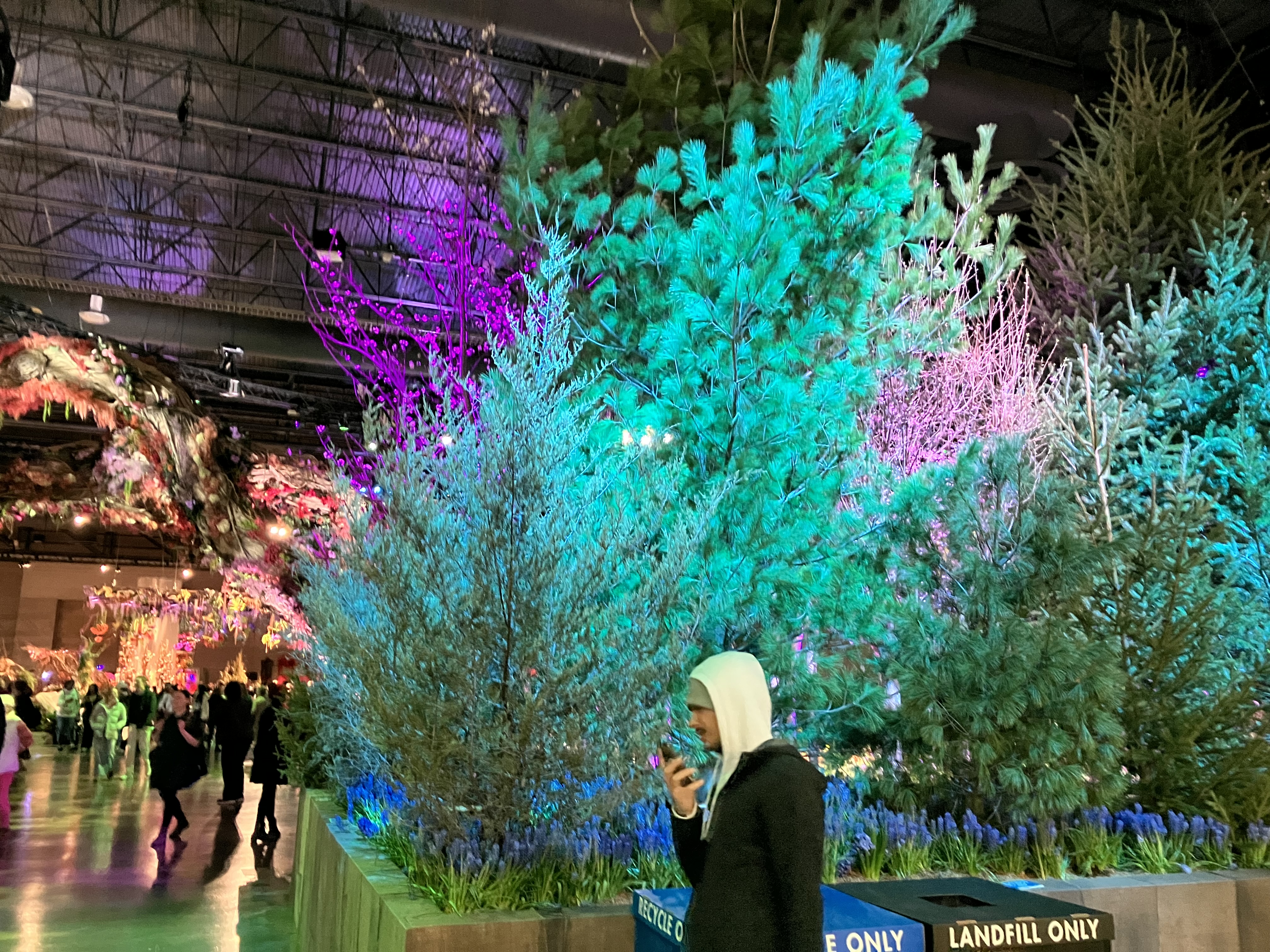
Anyway, in 2016 I woke up a little and decided to give the exhibition a shot. That year, I went with my wife Sandy to the Pennsylvania Convention Center, the show’s downtown-Philadelphia home, and was wowed. I’ve now been to seven editions of the extravaganza, most recently on the first Friday of this month. Though possibly not quite as enthralling as last year’s version, the 2026 flower show, which ran for nine days, damn well was more than good enough. Imaginative horticultural displays (from local, national and international exhibitors) abounded. Proof of the event’s high quality is that I more or less forgot I was inside a monstrously huge, cement-floored venue that in and of itself is completely devoid of charm. For two hours, Sandy and I wandered from one display to another, doubling back and circling around to re-examine the sights. And then, sated, we bade farewell to the show, exited the building, and disappeared into the fast-approaching night.
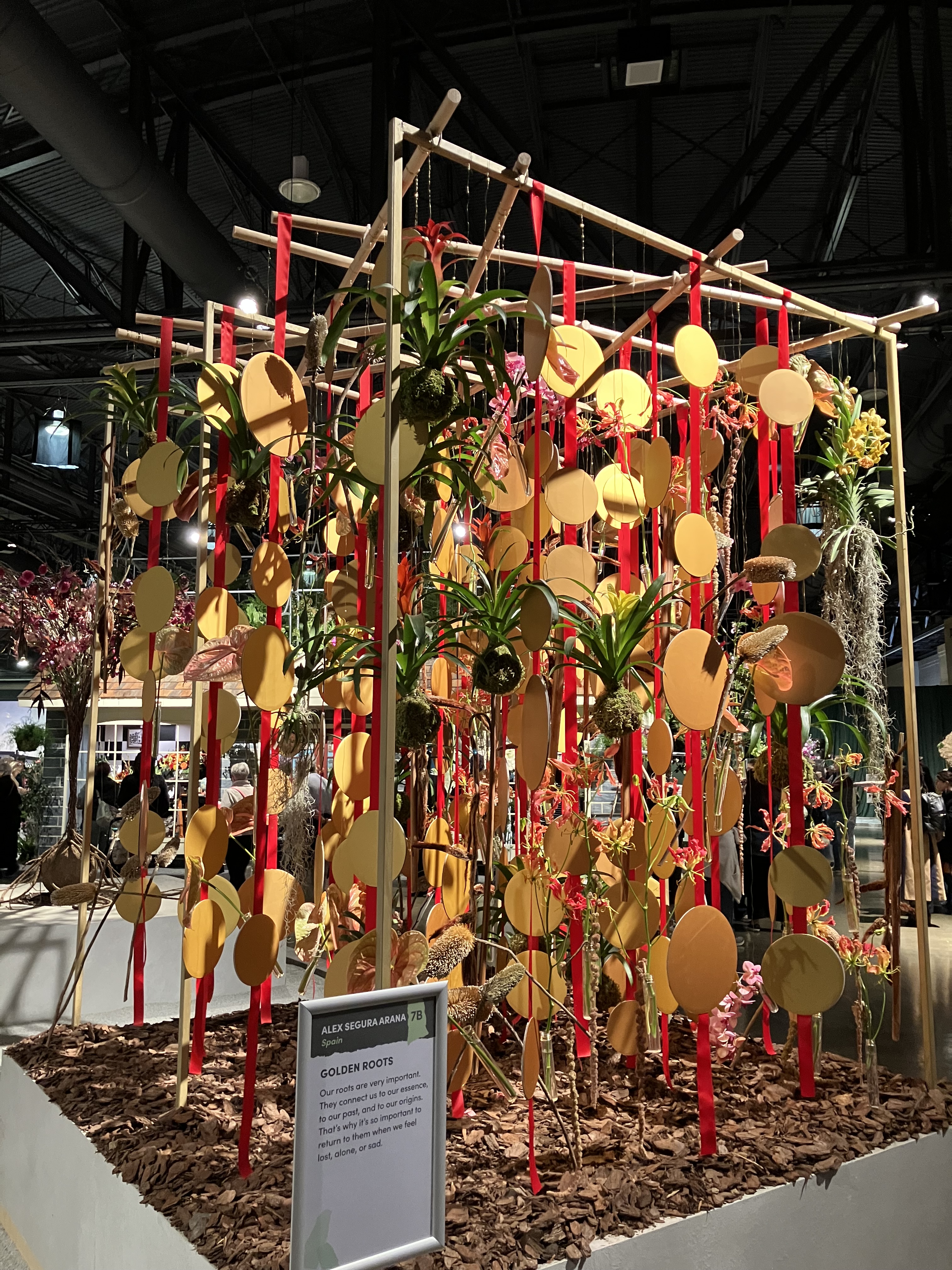
It’s too late in the game for PHS to change the name of the show. But theoretically it wouldn’t be a bad idea, because, for decades and decades probably, numerous displays have not been flower-centric. That is, other forms of flora (non-flowering trees, shrubs, vines, you name it) also have starred. And man-made elements, some as whimsical as can be, have raised the excitement and enticement levels of countless exhibits considerably.
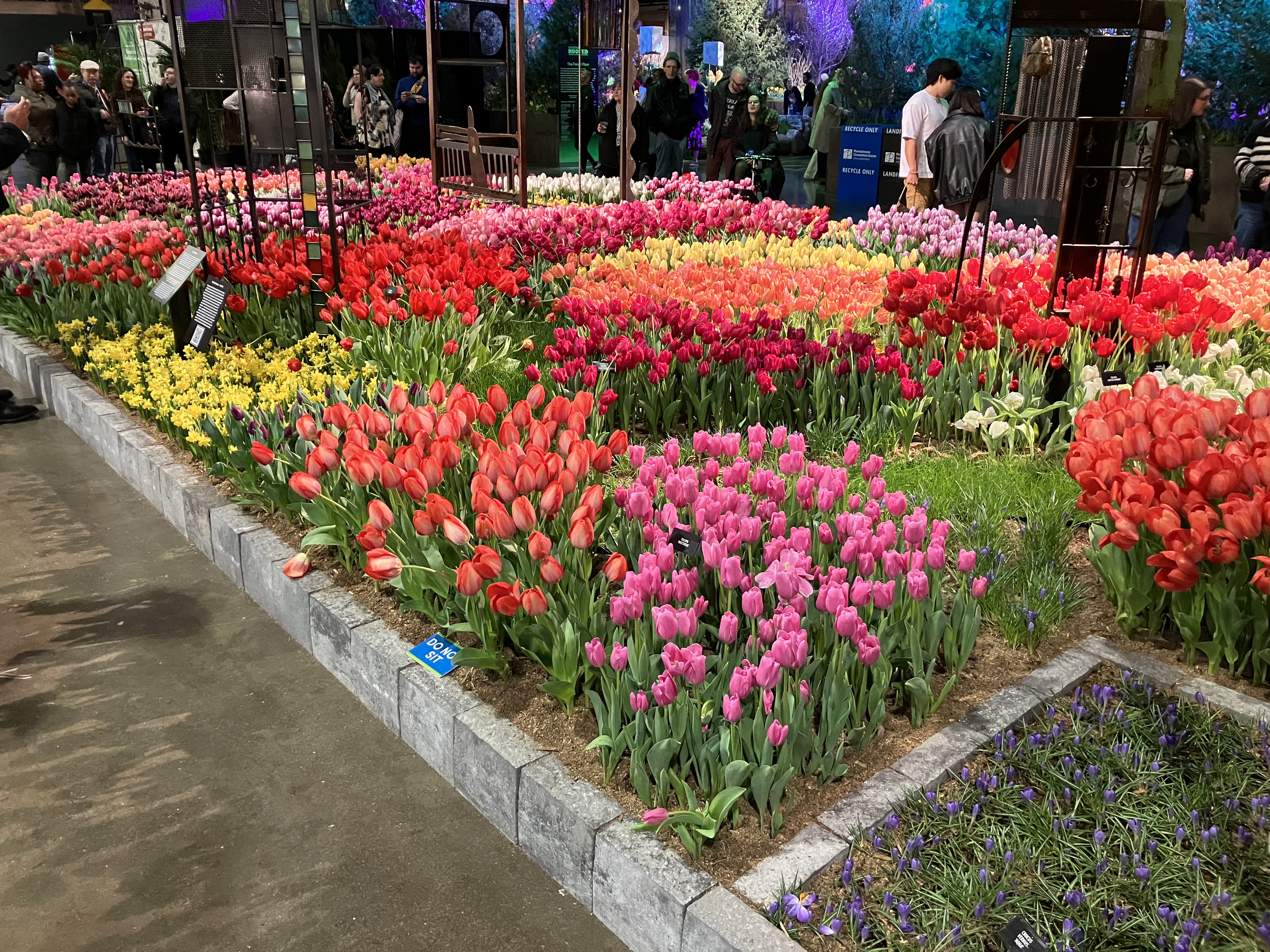
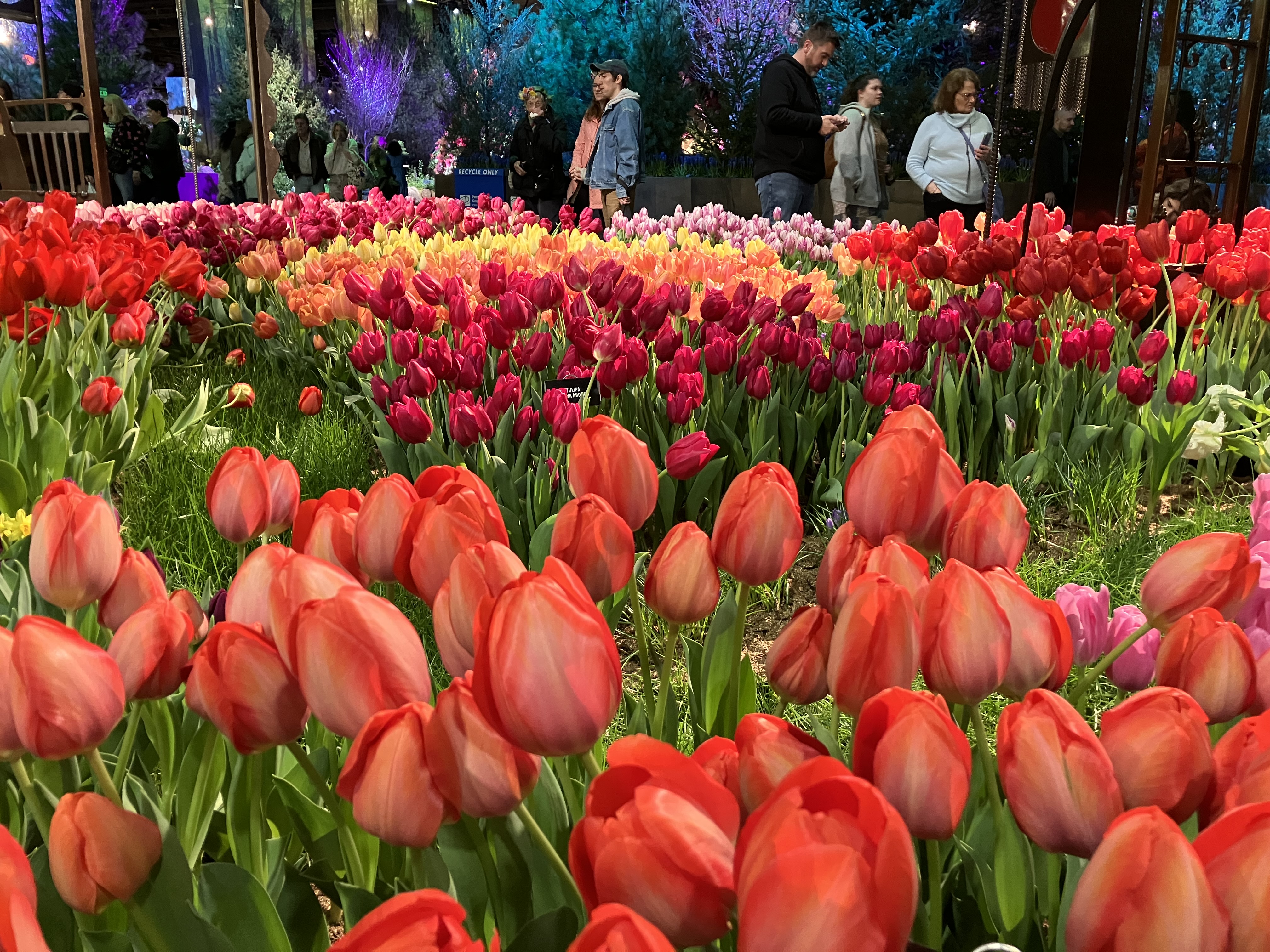
Still, the display that grabbed me the most this year was all flowers: a wedge-shaped bed of, primarily, tulips. Its creator — Jacques Amand International, a British firm — arranged the tulips by color groups, all of them snazzy. Man, the energy radiated by this exhibit was palpable. The flowers were bursting with life, proud of their vibrant hues and eager to share their happiness with members of the human race. I soaked up the tulips’ good vibes and good will while hungrily looking them over. They were just so beautiful.
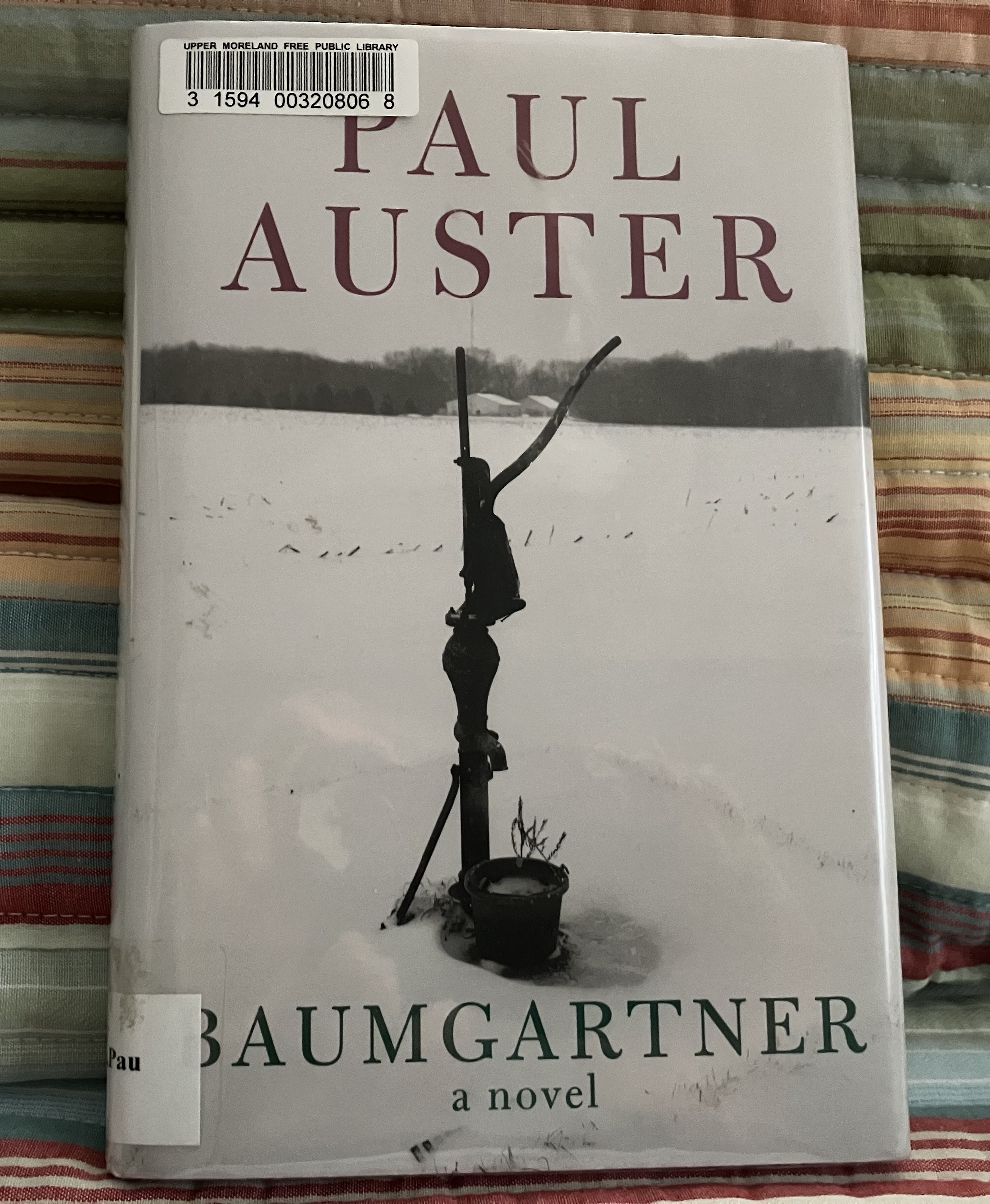
You never know when you’ll encounter beauty that takes your breath away. And in our troubled world, we need as much beauty of that sort as we can get. The tulips certainly did that to me. As did many passages in Baumgartner, a novel (by the late Paul Auster) that I read this year. A writing machine for decades, pumping out novels, memoirs, essays, poems and screenplays like there was no tomorrow, Auster passed away in 2024, about six months after Baumgartner was published. And so, strictly by chance, the first Auster novel I read turns out to have been his last.
I whole-heartedly recommend Baumgartner. It tells the tale of one Seymour (Sy) Baumgartner, a retired philosophy professor, age 70 when the book begins. Sy’s world was upended by the accidental death of his wife Anna, the utmost love of his life, some years earlier. At book’s start, he has yet to recover. As the next couple of years unfold, though, Sy begins to make headway as he thinks back upon his life, gaining not only insights into himself but also an expanded appreciation for Anna’s abilities and talents. Slowly, a meaningful future opens up.
Auster’s use of language is enviable. Throughout the novel, his word choices and their rhythms and flows often stunned me, the first time a book affected me this way since I don’t know when. Such as this passage from early on in the story:
It is the trope Baumgartner has been searching for ever since Anna’s sudden, unexpected death ten years ago, the most persuasive and compelling analogue to describe what has happened to him since that hot, windy afternoon in August 2008 when the gods saw fit to steal his wife from him in the full vigor of her still youthful self, and just like that, his limbs were ripped off his body, all four of them, arms and legs together at the same time, and if his head and heart were spared from the onslaught, it was only because the perverse, snickering gods had granted him the dubious right to go on living without her. He is a human stump now, a half man who has lost the half of himself that had made him whole, and yes, the missing limbs are still there, and they still hurt, hurt so much that he sometimes feels his body is about to catch fire and consume him on the spot.
See what I mean? Auster truly had a way with words. Beautiful!

 Yeah, Another Blogger