OJR Will Tour With The Rolling Stones (Keith Richards Assured Me Of This)

My cell phone rang in late afternoon on a recent Sunday. I answered and an unmistakable phlegmy voice said to me: “Yeah mate, how ya doin’? I’m OK. Just sittin’ here in my hotel room watchin’ the telly. Drinkin’ milk, munchin’ Oreos. They go good together, ya know?” It was Keith Richards calling from Sao Paulo, Brazil, where The Rolling Stones had played a show the night before.

“I know, Keith, I know. Every time you call it’s the same old thing. Milk and Oreos. Milk and Oreos. Come on, amigo. Switch it up once in a while. Didn’t you ever hear of Chips Ahoy? Vienna Fingers?”

He guffawed. “I’m hooked, son. I can’t switch. I won’t.”

“Okay, Keith,” I said. “So what’s the scoop? How was the show last night?”

Keith Richards. (Photo by Mark Seliger)

“Cool, man, cool. We had fun. Ya got a minute?” As though I didn’t. Before the phone rang I had been cutting coupons for half an hour. And before that, working on a story idea about celebrities’ genomes that I plan to pitch to Science Magazine, I’d spent 90 minutes meticulously plotting the Kardashians’ family tree. I was pooped. I was ready to have a relaxed phone conversation. “Spill your guts, partner,” I said to my old friend, whom I’d met and instantly bonded with in 1978. This was at a Bingo parlor in Philadelphia the day after a Stones gig in that fine city. Keith’s a Bingo man. He has wandered into Bingo halls all over the world.

“What’s the Stones’ signature song?” Keith asked me. “Ya know, the one we’ve played ten thousand times. The first letter is an S. Here’s another hint. It starts like this: dum dum da da dah da da da da da.”

“Let me guess,” I said “Is it Smoke Gets In Your Eyes?”

“I wish,” my friend said. “I’d like to play that one. I’ll run it by Mick. But I got a problem here, bro. No joke. Every show we hafta play Satisfaction. Last night I almost couldn’t do it. I f – – kin’ hate that song. If I hafta play it again I’m gonna plotz.”

“Relax, chum, relax,” I said. “You’ll get through this. You’re a pro. Drink some more milk.”

“C’mon, pal. I need a boost. Talk to me. What’s good? What’s new and happenin’? Clue me in.”
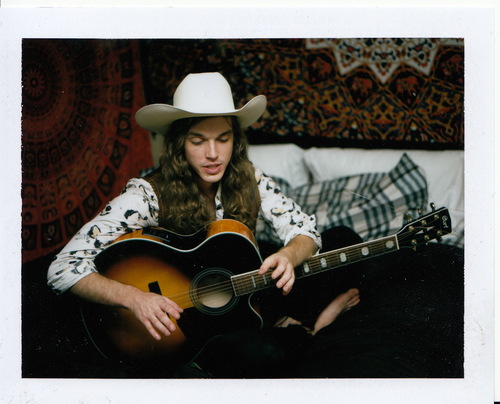
Oliver John-Rodgers. (Photo by David Salay)

“Okay, laddie,” I said. “There’s something really good that I checked out the other day. Great music by a young guy named Oliver John-Rodgers. Calls himself OJR. His YouTube videos have gotten about as many views as my blog articles, which means that just about nobody ever heard of him. But I think that’s going to change. For him, I mean. Not for me. His new album is fantastic. I ain’t Nostradomus, but I predict that he’s going to be big.”

“Hold up, Neil. Someone just tapped on my door. It’s Mick, no doubt. I can tell by the secret knock . . . dum dum da da dah da da da da da. You heard that, didn’t ya? He’s been doing that to me for the last 50 years. Gotta go, compadre. Send me an email about OJR. Peace, brother.”

With that, Keith hung up. Before I’d forget I sat down and composed my message to him. Here’s what I wrote:

Hey, boyo. Thanks for calling. OJR’s new album, Nashville Demos, rocks like a mother lode. Catchy melodies, nifty lyrics, guitar licks that wrap themselves around your brain. He recorded the album in, believe it or not, bedrooms all over the world. I guess he’s sort of a vagabond. Played most of the instruments himself. I found out about him from WXPN, a Philadelphia radio station I listen to sometimes. OJR has a song called Numb, and it’s in XPN’s rotation. The song’s a monster. OJR put the whole album up on his website (Keith-o, click here to listen to the album). And I found a primo YouTube video of OJR and his band playing Numb in a slowed-down head-warping version (Keith, my man, click  here to watch it). That’s all for now. It’s almost 7 PM, my bedtime as I’m sure you remember. Talk soon, matey. Oh wait, one more thing. Please ask Charlie, Ronnie and Mick to look at my blog. There’s a chance they might like my stuff. Peace out.

A few days later, at 8 PM, my phone rang. I’d been asleep for an hour. Thanks, Keith, for waking me up. He was calling from his hotel room in Lima, Peru. The Stones would be on stage in Lima the next night. “Yo, what’s up, cool guy?” he asked. “You were right. OJR is the friggin’ bomb. Best rock and roll I’ve heard since the end of the Ice Age. Or maybe it was the Cold War. I forget. Anyway, the boys and me had our managers get in touch with him. OJR’s a sweet dude, they said. And you know what? . . . We’re gonna have him open some shows for us later this year. Thanks for the tip, Bingo Boy.”

“No problem, Keith. Glad to help. How about my blog? What did Ronnie, Mick and Charlie say?”

There was a long pause. I knew the news wasn’t going to be too good. “Well, buddy, I sent them the link to your blog. Sorry mate, let me tell you straight — slow and snoozy are a couple of the words they used about your articles. What can I say? But I’ve got a great idea for ya. You’ve never written a story about Bingo. I think ya should.”

“Thanks, Keith. Maybe I will.”

(If you enjoyed this article, don’t be shy about sharing it. Sharing buttons are below)

Ruthie Foster, Soulful Singer: Frigid Weather Couldn’t Keep Us Away

It was a dark and stormy night . . . hold on, that line sounds familiar. I think I may have lifted it from someone inadvertently. Wouldn’t want to do that. I’m going to put it into Google and see what gives. I’ll be right back.

Yes, indeed. The sentence was penned about 185 years ago by an English novelist whom nobody alive today ever heard of. In that sense he’s just like me. Let’s start over.

It wasn’t a dark and stormy night. Well, it was dark, but it wasn’t stormy. In fact the sky was quite clear. But it was a bitterly cold Saturday night, no doubt about that. As in 12° F. My wife Sandy and I had just eaten dinner in a tavern we like in the Philly burbs. As we soldiered through the parking lot to our car, the night air laughed in my ear. “Man, you sure are a nitwit for going out in weather like this,” it mockingly said, keeping its voice low so that Sandy wouldn’t overhear. “Didn’t anyone tell you that it’s cold outside?” It’s surprising the things you learn as you get older — before that frigid evening a couple of weeks ago I never knew that the night air could talk, let alone be a sarcastic jerk. I kept my mouth shut, but next time I’ll be prepared with a snappy retort.

Ten minutes later Sandy and I arrived at our post-dinner destination, Montgomery County Community College. It’s located in the once-bucolic town of Blue Bell. Modest in size and scope, MCCC isn’t where one would expect to find a world-class performing arts series, but such is the case. Many times over the years, Sandy and I have seen top-of-the-line musicians and modern dance troupes in the series’ 400-seat auditorium.

It was good getting out of the cold. We settled into our seats at 7:45 PM and awaited the singer whom I’ve known about for a few years but never had seen in person. Ruthie Foster, she who drinks from the wells of blues, gospel, soul and folk music, and who is one of the prides of musically-rich Texas, USA. Ruthie, in her early 50s, is an in-demand artist. She regularly plays in the States, Canada, Europe and sometimes Australia. Let me mention one important point before I forget: Ruthie is a gifted vocalist with a gracious and likeable stage presence. If she passes through your area, and if you enjoy music of the sorts I mentioned above, you would do well to attend her concert.

Ruthie1 IMG_0175
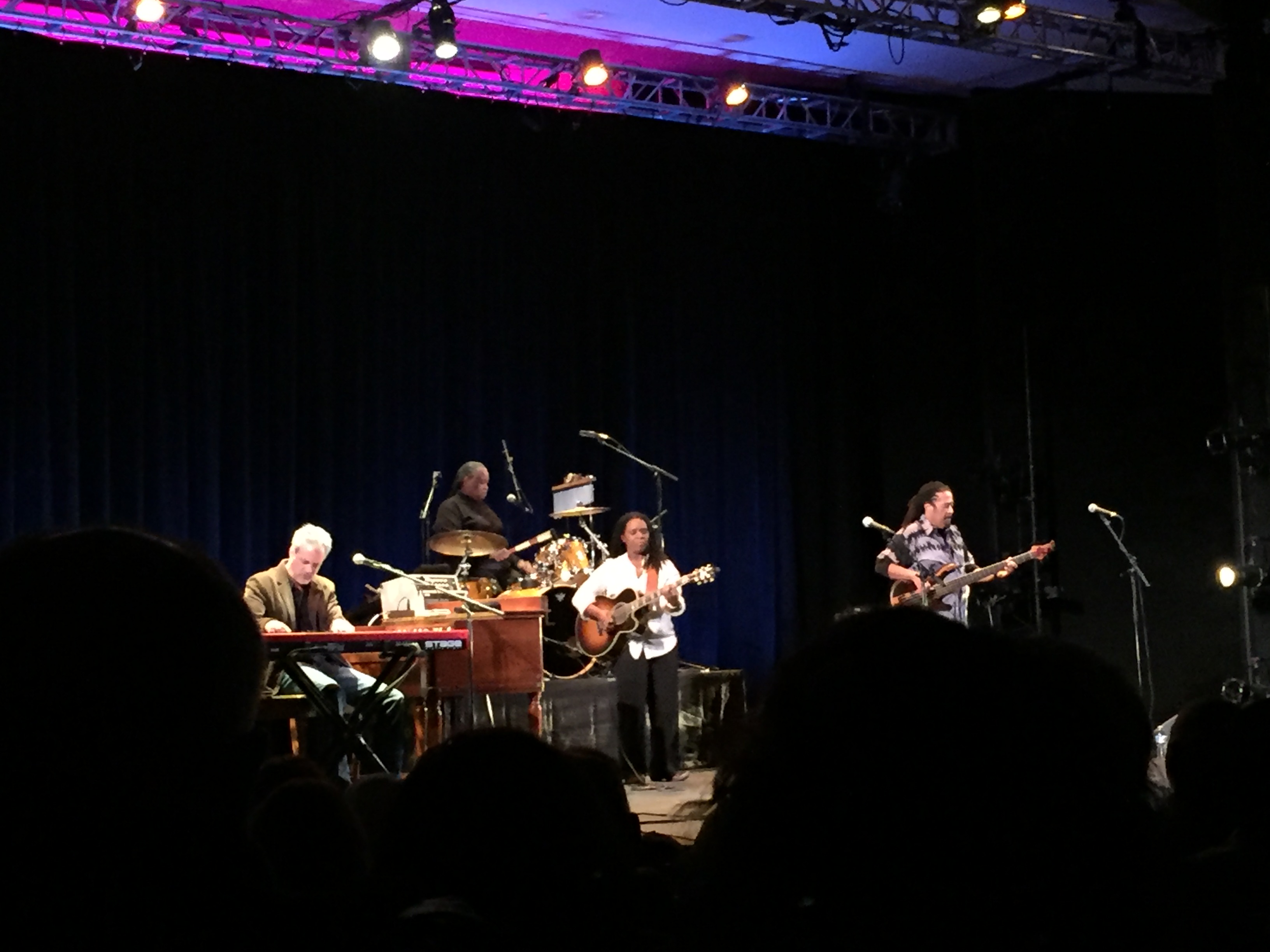
Showtime arrived. Ruthie Foster walked onstage with three musical compadres: Samantha Banks (drums and other percussion), Scottie Miller (piano and organ) and Larry Fulcher (electric bass). Electric guitar was not in the house. Ruthie strummed an amplified acoustic guitar, but she knew her limitations on the instrument and ventured not a solo during the show, leaving most of them to Scottie and a couple to Samantha and Larry. Would the band have gained from having an additional member, to wit a high-flying electric guitarist? No way. His or her absence kept things lean and uncluttered, and placed Ruthie’s vocals at the center of center stage.

The show began with a rendition of Patty Griffin’s When It Don’t Come Easy, a tune about love’s elusiveness. The tight machine that was Ruthie’s band set a perfect rhythm and constructed elastic boundaries over which Ruthie spoke the truth. Bap-bap-bap-bap went Samantha Banks, sure-footed and steady on the drums, as she was all evening long. Larry Fulcher’s bass lines floated here and then there but never lost their way. Scottie Miller pushed and probed on the piano, at the appropriate times sending out blasts of emotions. The band was aware, focused and nimble on this and every song that followed.

Ruthie2 IMG_1246
A few words about Ruthie Foster’s singing voice. It is wonderful, as is the way she uses it. She sings cleanly and clearly, unstrained and vibrato-less, always in control. And she can move easily to a hush or to a soulful barrage of notes. The timbre of Ruthie’s voice often reminded me of Bonnie Raitt’s, but Ruthie’s is fuller and better — Bonnie I’m certain would agree. At concert’s end, 90 minutes from the starting gun, I was convinced that Ruthie is one of the big talents in her field. What’s more, she sings songs that contain real meaning. Songs about tolerance, equality and hope. Such as the concert’s hope-centric third tune, a recent Foster original titled Brand New Day. It dripped with gospel fervor. “Love heals and love lives/And time will reveal a brand new day,” Ruthie proclaimed as her three pals, playing their instruments all church-like, vocally urged her along with harmonized “uh-huh, hoo” after “uh-huh, hoo.” Uh-huh, I loved it.

Let me say a few more things before I hit the “publish” button to post this article. Ruthie has written quite a few songs over the years, but kept her set list heavy with compositions penned by others. She chose numbers, for instance, by June Carter Cash (Ring Of Fire) and Lucinda Williams (Fruits Of My Labor). And she closed the show with  Stephen Foster’s Oh! Susanna, an American chestnut from 1848. (Click here to watch her perform Oh! Susanna two years ago). For that final tune she was alone on stage for the only time during the show. She sang slowly, picking comfortable notes on the guitar. As the song progressed her voice soared effortlessly, poignantly. Oh! Susanna took on meanings that I’d never thought about before. She made a great song greater.

(If you enjoyed this article, don’t be shy about sharing it. Sharing buttons are below)
(Photos by Sandra Cherrey Scheinin. If you click on a photo, a larger image will open)

Three Movies: The Fast, The Really Fast, And The Nice And Slow

“Hey, Neil,” my wife Sandy called to me a little while ago. “Pull your thoughts together. Your legions, or should I more accurately say handfuls, of readers are depending on you to digest and configure and explain our cinematic encounters from two weeks ago. C’mon, boy. You can do it. I’ve got faith in you.”

Oh yeah? She’s got to be kidding. I’m moments away from throwing in the towel. I feel my eyes tiring, my attention being directed elsewhere as if by a sorcerer’s hand. But I won’t give in. I know what I have to do, and it involves pain. WHACK, WHACK, WHACK. There, I’ve slapped myself in the face. Works every time. I’m feeling better. On with the show.

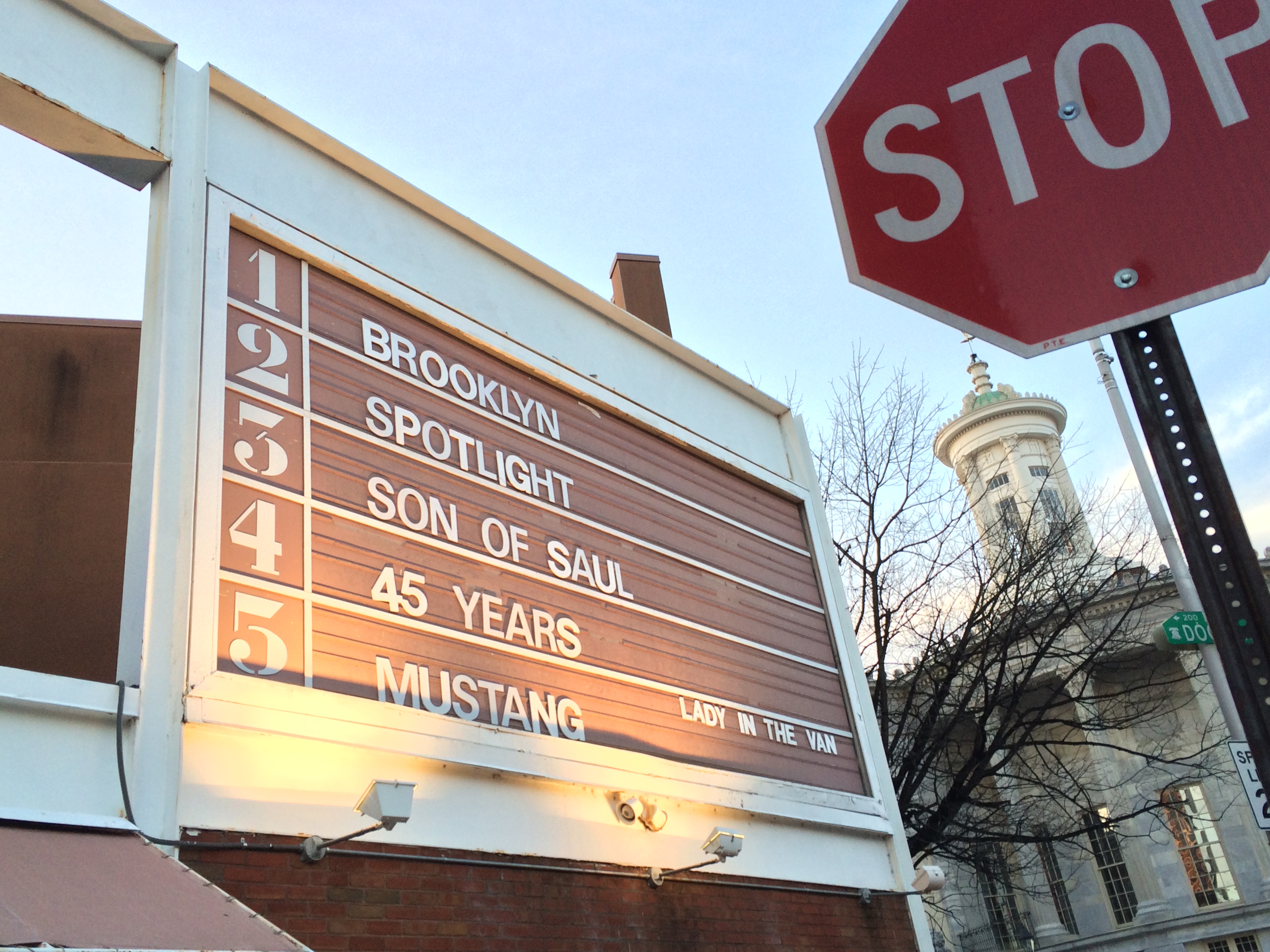
Very recently Sandy and I went to the movies on three consecutive days. After that streak ended I figured I ought to try and bang out a story about the trio of flicks for my insatiably content-hungry blog. It wouldn’t do, I decided, to focus on only one of the films, examining it from all angles like a jeweler ogling a precious stone. No, ambitious me would strive relentlessly to find and then analyze the thematic threads woven between the three movies. And believe me, I’ve been looking. Real hard. And so far here’s what I’ve come up with: zippo and bupkis.

But there’s got to be an angle. There always is. And so I’ve decided to throw connective threads to the winds and pull something out of my wazoo in a desperate attempt to create a blog story. Speed . . . yeah, that’s what I’m going to look at. The degree of rapidity of the movies’ action. And speaking of speed, I notice that it has taken me over 300 words to get around to naming the movies that Sandy and I watched. Oh well, my incredible slowness ties right in with what now is this article’s subject. And I suppose that Sandy’s faith in me possibly has paid off. In any case, the movies in the order that we saw them are The Big Short, Star Wars: The Force Awakens, and 45 Years.

StarWars IMG_0167
Respectively, those movies overall are, in terms of pace, fast, really fast, and nice and slow. And in terms of how much I liked them they are, respectively, very much, eh, and quite a lot. I’m amazed that I didn’t get big kicks from the newest Star Wars, the seventh in the franchise. Entering the theater I thought I would. A thousand years ago (in 1977) I loved the first in the series. It seemed cool as can be to me, action-packed and stocked with a fabulous menagerie of characters, human and otherwise. But, unlike 95% of the world’s population, I didn’t see any of the next five SW vehicles or do any reading over the years to keep up with the SW storylines. Watching The Force Awakens I was surprised to learn that Darth Vader no longer is on the scene, and I barely remembered what a Jedi is. But I was glad to see Harrison Ford on board playing the wisecracking and fearless Han Solo.

Most importantly, I was expecting an exhilarating ride. For sure, The Force Awakens often moves like lightening. I lost track of how many times Good was battling Evil on one planet or another, and seemingly only moments later the fight had shifted to an orb millions of miles away. I enjoy that kind of zooming sometimes, but after a while it wasn’t doing the trick for me. I began to feel that the screen was filled with too much of too much, that the plot almost was losing itself. I became bored. A healthy dash of better dialogue and believable human dynamics wouldn’t have hurt. Not that the film’s writers didn’t try to bring emotions into the proceedings, but the results of their efforts, probably purposely, are pretty cardboardy. The occasional hug and goo-goo eyes don’t meaningful human relationships make.

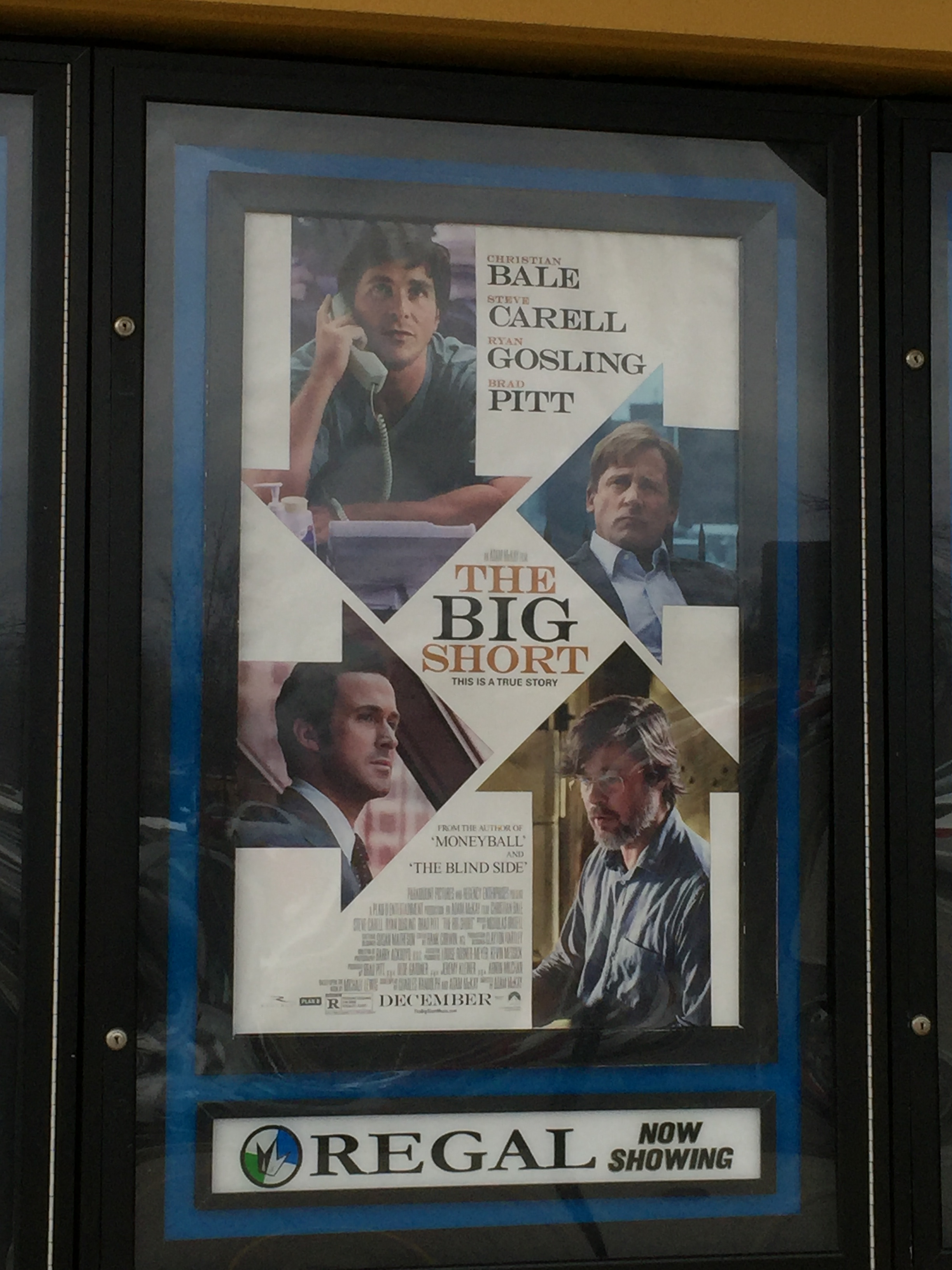
TheBigShort IMG_1244
Unlike SW:TFA, The Big Short doesn’t suffer from underdeveloped characters, though it contains plenty of characters, as in people with strong ways of expressing their inner selves. And its propulsion is mighty chipper, though it avoids the warp speed of many scenes in SW:TFA. The Big Short takes on a most unlikely candidate for a cinematic story, the worldwide financial catastrophe of 2008. The film tackles the subject inventively and with energy to spare. Basically, The Big Short rocks. Fast-thinking denizens of the investment world, some of them motor-mouthed (played by Steve Carell, Ryan Gosling and others) make for a heady and dizzying trip. Add snappy editing to that and you’ve got a really winning movie.

What’s more, you very well might leave the theater thinking you’ve finally begun to understand who and what caused calamity to shower the Earth eight years ago. And hopefully you won’t be like me, dumb as dirt once again in financial matters by the time you arrive home.

45Years IMG_0169
Within the low range of the miles-per-hour spectrum stands 45 Years, replete with a top-notch screenplay and realistic portrayals by Charlotte Rampling and Tom Courtenay of a married couple, the Mercers. This duo finds themselves with emerging marital problems on the cusp of their 45th wedding anniversary. But if you’re thinking of catching the Mercers’ predicaments, be prepared for a slow and deliberate adventure. Everybody takes their good ol’ time doing things and vocalizing. The most intense action in the movie occurs when Rampling struggles with a pull-down attic ladder. Yup, eventually she conquers the beast and makes her way upward to where a revelatory discovery awaits her. You go, girl!

What’s my point about all of this? Good question. Luckily I have an answer or two. A movie’s pace is important and should fit the circumstances of the plot. Movies with mucho scenes that rip along wildly can be terrific (think His Girl Friday and the version of Casino Royale with Daniel Craig), and so too can be those that mosey (think Hud and Nebraska). Velocity is only part of the equation. Whatever its pulse rate, a film usually will rise only if its story is strong, its dialog solid, its characters believable, its actors on top of their game and its director in firm control. The Big Short and 45 Years meet the criteria beautifully. Not so for Star Wars: The Force Awakens, which comes up a bit short in the plot, dialog and character development departments in my puny opinion. Shows what I know, though. SW:TFA to-date has grossed almost one billion smackers at the domestic box office, let alone the rest of the world. I bow before the power of the dollar.

(If you enjoyed this article, don’t be shy about sharing it. Sharing buttons are below)

(Photos by Sandra Cherrey Scheinin. If you click on a photo, a larger image will open)

Two Million Cheez-Its And Counting

Circa 1970 one of the greatest culinary stories of my life took root: My infatuation with Cheez-It crackers. Just about everyone knows Cheez-Its. They are crunchy and salty one-inch squares, baked amalgams of cheese, wheat flour, paprika, etc.  Back then there probably was only one variety of Cheez-Its. The divine original in other words, the sort I stuck with through the years till recently switching to the Extra Toasty style. Today there are more than 25 Cheez-It types to choose from, including Whole Grain, Cheddar Jack and Mozzarella. They take up a whole lot of shelf space in most supermarkets, so clearly I’m not alone in loving Its. As we’ve been told, great minds think alike.

Cheez-It crackers in two of its many varieties.
Cheez-It crackers in two of their many varieties.

And you know what? I’ve eaten 2,000,000 Cheez-It crackers in my life, give or take a couple hundred thousand. That’s a lot of individual food items going down the gullet. Have I ever eaten more separate pieces of anything over the years? I’ve given this plenty of thought. Who wouldn’t? The only thing I can come up with is grains of rice. Maybe I’ve consumed more than 2,000,000 grains of rice. I’ll investigate that subject one of these days and let an anxious world know the results. But on with the current story.

Two million Cheez-Its. How did I arrive at that figure? It wasn’t easy. The question is deep. And so, at a loss for determining a calculation method, I started where most sensible people would start. That is, I got in touch with someone much smarter than me. I had been in phone contact with Dr. Vinnie Bubalinsky before. He’s head of the mathematics department at St. Louis Institute of Advanced Abstract And Profound Research. I had called him from out of the blue a year ago, explaining that I was wondering about angels gyrating, not dancing, on the head of the average pin. How many might fit there? Vinnie hadn’t a clue, had very little response at all to tell you the truth. I was glad to learn that tough questions don’t necessarily evoke glib answers.

The other day I dialed Vinnie’s number again and told him about my Cheez-It quandary. Vinnie remembered me. “What the f – – k’s wrong with you?” he asked. Patiently. “Get a life, you loser,” he added before ending our conversation. I would if I knew how.

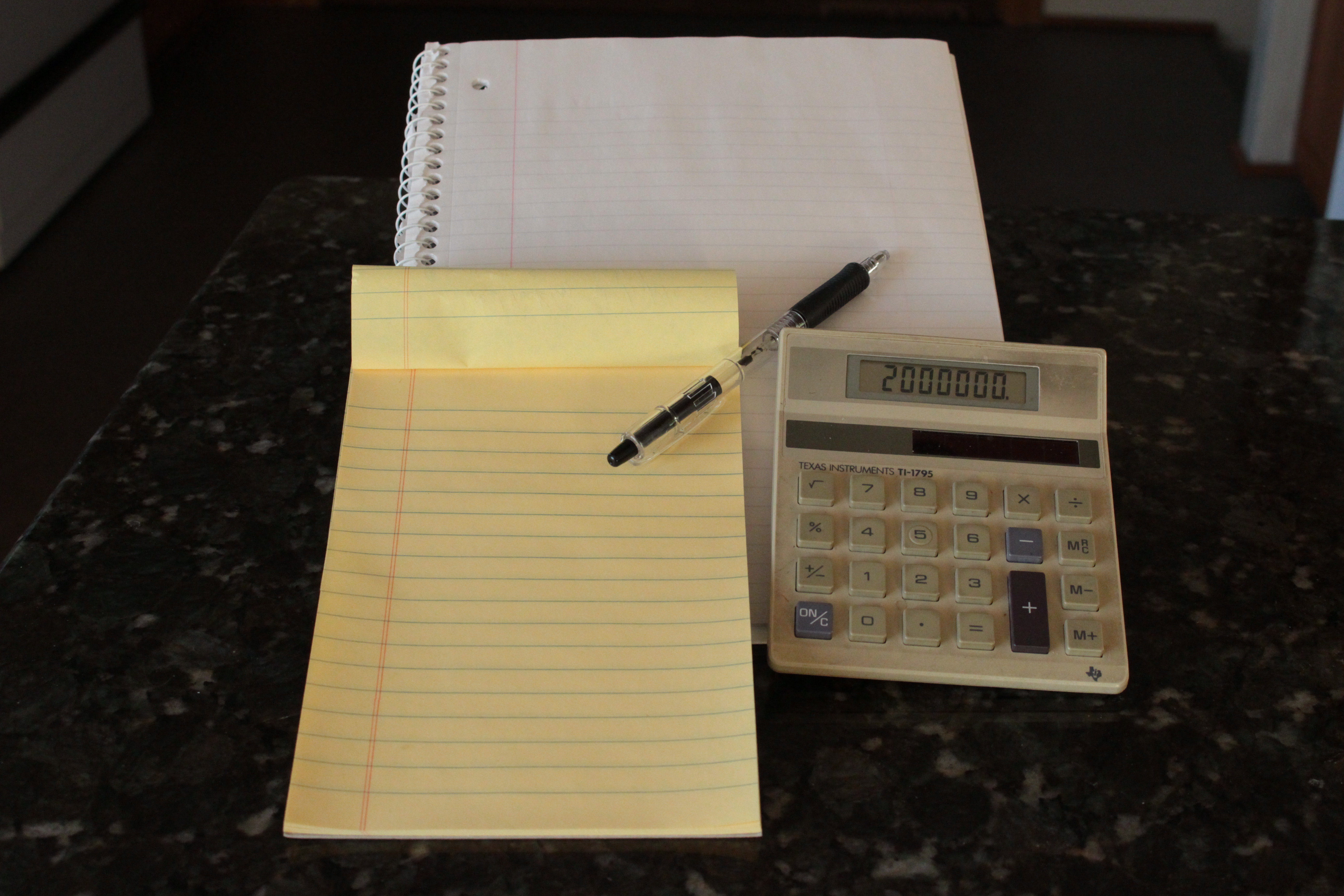
I was on my own. I grabbed my favorite pen, a load of blank paper and a calculator. And I began to work out the numbers. Leave it to the Cheez-It manufacturer to make things difficult. I mean, for decades Its had come in an understandable size, a one pound package. That’s the same as 16 ounces I’ll mention to those of you who left school a long time ago. But in 2008 the Its maker downsized the box to 13.7 ounces, a strange number to be sure. And last year they did it again. The standard Cheez-It box now contains 12.4 ounces of product.

And if all that weren’t bad enough, I had to throw into the equation the fact that my Its consumption habits have changed over time. For years and years I would down three or four pounds of Its weekly. I easily could knock off a box while watching a baseball game on television. But those heights are a distant memory. In the early aughts my intake of Its dropped by half. And it has continued to shrink. For the last few years I’ve eaten about three-quarters of a pound per week.

The tools that I used for my daunting calculations.

OK. I sat at the dining room table for hours, scribbling, sweating, cursing, punching wildly at calculator keys. The basic fact that I always held onto came from the side panel of each Cheez-It box: Twenty-seven Its weigh 30 grams. And 30 grams, I found out elsewhere, are the same as about 1.1 ounces. Needless to say, progress was slow. But things eventually started to come together, to make sense. Two million Cheez-It crackers was the approximate number that I had chewed and swallowed, I finally concluded. I picked up the phone and dialed Vinnie Bubalinsky’s number, ready to gloat. But I hung up after one ring. He will read about my triumph soon enough, no doubt, on this page. Vinnie, some losers never quit.

I’d like to put my Its consumption in perspective. We all agree that 2,000,000 Cheez-It crackers are a massive amount. In fact, if you placed them edge-to-edge on a flat and straight-as-an-arrow highway, they would extend for 31.5 miles, a very sizeable distance. But wait . . . there’s something I hadn’t thought about: In a car you’d cover those miles in less than half an hour. And yet it took me 45 years to eat the crackers. What does this mean? That cars are about 1,000,000 times faster than the human mouth? That highways inherently are inappropriate places to place Cheez-Its? I really don’t know. I’m confused. I need help.

(If you enjoyed this article, don’t be shy about sharing it. Sharing buttons are below)
(Photos by Sandra Cherrey Scheinin. If you click on a photo, a larger image will open)

The Night I Made A Cocktail Table Go “Boom”

You should count your lucky stars when you act like a nitwit and are forgiven for your sins. That is what happened to me about ten years ago at a jazz concert. It was the night when talentless me accidentally became part of the show.

I hadn’t thought about that infamous evening in a long time, but for some reason was reminded of it recently when my wife Sandy and I took in a Friday night concert at the Philadelphia Museum Of Art (PMA), which had been the scene of my crime. The museum calls its Friday night concert series Art After 5, and it’s a good one. Art After 5 began in 2001 with a jazz-only format, but has morphed over the years to include a wide range of genres. Sandy and I have been to a crazy number of music shows at PMA since we discovered the series in 2002.

Picture this: It is February 2006. Sandy and I are seated in the first of several rows of tables ringing the performance area in PMA’s Great Stair Hall. The hall is enormous, maybe 80 feet high, and is dominated by, yes, a great stairway that connects two levels of the museum. The Great Stair is 20 feet behind us and stares regally at the performance area. Many concertgoers are seated on its marble slabs . . . uncomfortably. Sandy and I prefer comfort. So we made it a point to arrive way before showtime in the hopes of nabbing one of the cocktail tables, which are squeezed together pretty closely. Compared to marble stairs, the chairs at the tables are a blessing for butts. At our table we don’t have much to do except twiddle our thumbs. We order soft drinks and sip at them. We are waiting for jazz vocalist Carmen Lundy and her band to start their show.

Carmen Lundy in performance six years after my cocktail table went "boom." (Photo by Daniel Sheehan)
Carmen Lundy in performance eight years after my cocktail table went “boom.” (Photo by Daniel Sheehan)

At 5:45 PM Carmen and the guys are introduced by Art After 5’s curator. Minutes later they begin to play. They are very fine, and only eight feet in front of our excellent seats. Carmen Lundy, a justly acclaimed performer, is singing with a lot of flair and swagger. Sandy and I are enjoying the show. But halfway through the set something begins to bother me. I feel as though my space is being impinged upon. Someone at a table behind me has inched up a tad too much and is putting pressure on the rear of my chair. I have the solution, of course. All I need to do is slide my cocktail table forward ever so little, after which I’ll be able to move my chair forward too. I push the table very very gently, maneuvering it carefully. But alas, this is a plan not destined to work out. The frigging table loses its balance and topples heavily, its edge creating an enormous sound when it smashes onto the floor. The noise echoes throughout the Great Stair Hall. And everything that was on the table flies off and finds a new home inches from the performers’ feet.

I felt like a schmuck. I was a schmuck. Oy vey, was there anywhere to hide? No way. All I could do was sit there as a couple of servers scampered over, set the table upright, and on their hands and knees quickly swept up ice cubes and pieces of broken glass. They mopped up the soft drink liquids from the floor and retrieved my eyeglasses, which once had been on the table but now were beneath the piano bench. Yet, all the while the band played on as if nothing had happened. Carmen Lundy continued to deliver her song with full emotion. Harold O’Neal’s fingers were flying on the keyboard. Jason Brown’s drums went rat-a-tat-tat and wham-bam-thank-you-ma’am, and Curtis Lundy, Carmen’s brother, plucked fervent notes on his upright bass.

The set finally ended. Was anyone in the audience staring at me? Probably. But I was too embarrassed to look around and find out. I knew one thing I had to do though. Apologize. Carmen Lundy was standing near the sound board, 20 feet to the right of the performance area. I stood up and made my way to her.

“Ms. Lundy,” I said. “I’m the idiot who knocked over the table. I’m very sorry. I feel like a fool.”

Carmen Lundy gave me a good hard look for a few moments and then did the darndest thing. She put a hand on one of my shoulders, looking me straight in the eyes, and said “Don’t worry about it, honey. It didn’t bother us. In fact it gave us energy to play even harder.”

Man, I didn’t know what to say in response to such a stellar attitude. I mumbled my thanks and probably a few other words and shuffled to my seat.

Looking back on all of this the other day I realized once again that I had been in the presence of classiness and graciousness. If our places had been reversed I doubt if dopey me would have been so wonderful. Carmen Lundy, in my book you’re very much okay.

(If you enjoyed this article, then don’t be shy about sharing it. Sharing buttons are below)
Van Gogh, Scorsese And I: A Tale Of Mispronunciations

So, there the three of us were, sitting around a table inside a cozy tavern, chatting amiably about nothing in particular and knocking back a round of beers. Vincent van Gogh, Martin Scorsese and I. Respectively, a powerful and visionary visual artist, a commanding director of moving images, and a plebeian with, by definition, an awfully light résumé.  What the heck was I doing at that table, you ask? And where, by the way, were the table and tavern?

In my dreams. That’s the answer to question number two. As for the first query, I was seated with greats solely because we all had something in common: A lot of people did not know how to pronounce our surnames.

Martin Scorsese (Photo by Jeff Vespa; copyright WireImage.com)
Martin Scorsese
There are several purported photographs of Vincent van Gogh. None are totally authenticated. This is believed to be from about 1886.
A purported photograph of Vincent van Gogh believed to be from about 1886.

We’d made more than enough small talk. Turning onto a substantive route, I said to the gent on my left: “Marty, it must drive you nuts that almost everyone thinks your last name is Score-Say-Zee. I wonder how in the world that messed-up notion ever caught on.”

“Neil,” Marty said to me, “I’ve gotten used to it. But it sure would be nice if they’d get things straight. I mean, we’re talking about my name, for crying out loud.” I nodded understandingly.

“Vincent,” I next said, rotating my head slightly to my right, “How do you deal with this? People call you Van-Go, or maybe Van-Gokh. Doesn’t anyone ever do better than that?”

“I gave up on this a long time ago, Neil. My family and my fellow Dutchmen, they know how to say my name. Just about everyone else, fuhgeddaboudit.”

“Guys,” I said. “I hear ya’. I’m not as hung up on the name thing as I used to be. But it still churns me when people say Shee-Nin or Shy-Nin or Shee-In-In. C’mon, I know the spelling is a guarantee to throw almost anyone off, but still . . . ”

A plebeian.
A plebeian.

Scheinin. That’s my last name. A confusing array of letters. But with a simple two-syllable pronunciation: Shay-nin. To make things easy, maybe I’ll legally change the spelling to exactly that, hyphen and all.

I looked leftward once again. “Marty, the only reason that I know how to say your name properly is because years ago I heard you pronounce it on the Charlie Rose interview show. ‘Score-Seh-See’, you said. And ever since then I’ve been careful to say it that way whenever I gab about your movies.”

“Thanks, Neil,” Marty said. “Finally someone pronounced it right.” And I speedily hoisted my right hand to catch the high-five that he threw at me.

“Vincent,” I then said, gazing in the master colorist’s direction. “Yours is very very tricky. And no doubt I’m not gonna be able to duplicate the from-the-back-of-the-throat nuances of the Dutch language. But, good sir, I’m going to give it my best shot. Vun-Khuhkh. Am I right? Am I in the ballpark?”

“Neil, that’s darn well close enough,” he replied, clapping his hands. “That’s the nearest anyone outside of Holland has come in decades.” He smiled broadly as his eyes examined all the planes of my face. Was he toying with the idea of painting my portrait?

The name situation settled, Vincent, Marty and I began to talk of deeper matters. The meaning of art, for instance, and its value to the human spirit. But almost immediately Vun-Khuhkh and Score-Seh-See left me in their wake. Little could I add to their understandings and suppositions. I was more than happy, though, to listen and hopefully to learn, and to toss in a lame comment now and then.

I eventually shouted over Vincent’s and Marty’s lively conversation. “Waitress, three more Guinnesses please.” A few minutes later the dark brews arrived. We downed them greedily.

The hour was advancing, as it always does. “Gentlemen,” I finally said, gesturing to the waitress to bring the bill. “It’s almost time for me to wake up. It’s been a pleasure. And the beers are on me.”

(If you enjoyed this article, then don’t be shy about sharing it)

(Photo of Martin Scorsese by Jeff Vespa; copyright WireImage.com)

(Photo of a plebeian by Sandra Cherrey Scheinin)