Vinyl Night: Collapses Will Happen

“What’s a good night for Dave to come over for Vinyl Night?” I asked my wife Sandy recently.

She rolled her eyes magnificently and exclaimed “Vinyl Night? There is no good night for Vinyl Night!”

And why did she say that? Because when my excellent pal Dave comes over for Vinyl Night, as he does once or twice a year, we listen to a genre of music that Sandy, to say the least, hates. “I don’t consider it to be music,” she explained to me succinctly during dinner not long ago. Understood.

And you know what? Boatloads of people would agree with her, but they can’t, because most folks have never experienced this kind of music. Don’t know that it exists. Here’s what I’m talking about: On Vinyl Nights, Dave and I gorge on jazz of the avant-garde variety. The wild and aggressive type in which melody often is minimal and screeching horns and thrashing drums are the norm. The type that might well be described as seismic in quality and in effect, as will become apparent.

Free jazz. That’s the name that has stuck to this fringe music which began to emerge in the mid-1950s. And liberating it is. The musicians are free to roam far and wide. And the music opens the minds and loosens the emotional chains of those listeners who like it, such as Dave and I, tossing us around like hold-on-for-your-lives roller coaster riders.

Sandy relented and Dave ended up coming over on a Wednesday night, because that was when she had plans to watch a lot of prime time television in the upstairs bedroom. Dave and I, in the living room, would be free to crank up the stereo system’s volume as high as we might. Turns out that wasn’t a good idea.

Vinyl Night's albums photographed on bunker floor before Vinyl Night began.
Vinyl Night’s albums photographed in basement before Vinyl Night began.

In preparation for each Vinyl Night I head to the basement room where my most prized possession resides: my vinyl album collection. I’ve got a ton of albums. Lots of musical styles. Never got rid of any of them, one of the smart calls I’ve made in life. On the afternoon of this most recent occasion I  walked to the shelves holding the discs and made the selections for that evening’s Vinyl Night. Albums by Jimmy Lyons, Roswell Rudd, Grachan Moncur III, Art Ensemble Of Chicago,  Archie Shepp, John Carter/Bobby Bradford, and Albert Ayler. Household names, no? As always, Dave and I would listen to one side of each album.
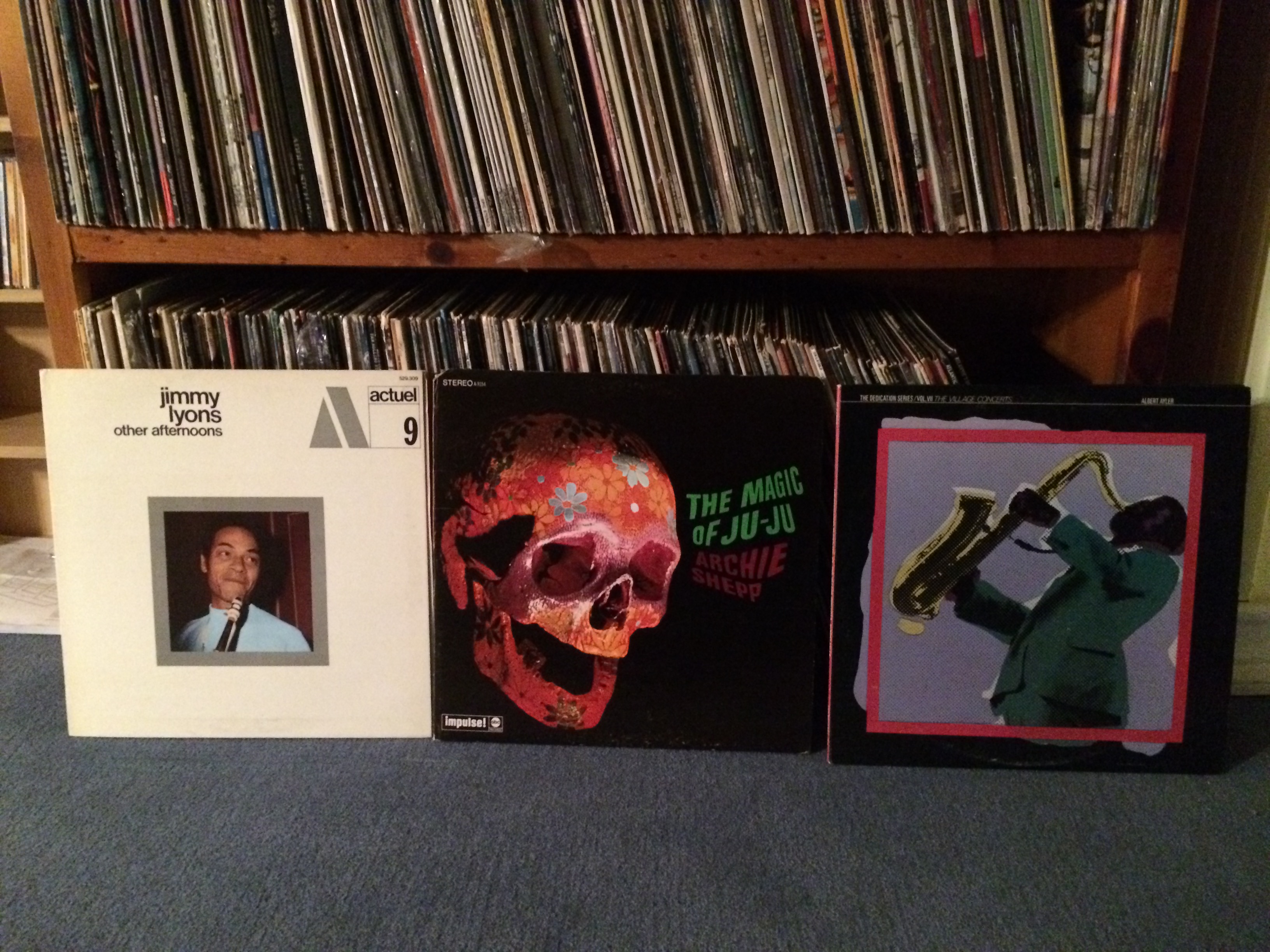
The three albums that caused problems. Photographed in bunker before Vinyl Night began.
The three albums that caused problems. Photographed in basement before Vinyl Night began.

Dave arrived around 8:00 PM. Sandy gave him a hug and walked upstairs, not to be seen again for a couple of hours. I placed side one of Jimmy Lyons’ Other Afternoons (recorded in 1969) on the turntable and an evening of fun, then mayhem, began. Jimmy Lyons no longer is with us, but his recordings live on with force. And force is what soon blew through the stereo speakers in my living room. The title track, Other Afternoons, began calmly enough. Didn’t take long however for alto saxophonist Lyons and his cohorts to wail and fly as though demons were on their tails and gaining fast (click here to listen). That’s when Dave and I thought we heard the sounds of wood and plaster creaking a bit more than they should in an old house. We put those thoughts out of our minds.

Several albums later a firestorm hit the turntable, Archie Shepp’s The Magic Of Ju-Ju (recorded in 1967). The title song, occupying all of side one, made Other Afternoons sound like a wimp. Shepp, whose career began in the early 1960s and who is alive and kicking, hit the ground at Usain Bolt speed, screaming on his tenor saxophone for 18 minutes over a drumming cacophony (click here to listen). I was amazed, mesmerized and kind of in a daze. Dave too. That’s the power of Shepp. We definitely heard those creaking sounds again, some rumbling ones also, but put them out of our minds.

The problems became undeniable a couple of albums after Shepp’s. Tenorman Albert Ayler, long gone, went stratospheric at around the six minute mark of Spirits Rejoice (recorded in 1966), which takes up all of side three on The Village Concerts double album (click here to listen). My house couldn’t take it any longer. Plaster started falling from the living room ceiling. The living room floorboards began to buckle and give way. Good things weren’t happening upstairs either. Sandy came running down the stairs. “I really, really hate this music,” she yelled as she and I and Dave bolted out the front door. We stood in disbelief on the sidewalk as Sandy’s and my suburban home dropped to the ground. The house’s descent took a long time and was extremely jarring, just like the saxophone, trumpet and other instrumental solos that Dave and I grooved to on that most infamous of Vinyl Nights.

The next day I called my Allstate agent. I described the bizarre situation to her. She said, “You’re out of luck, Neil. Your homeowners policy specifically prohibits you from playing any free jazz above the 80-decibel level. Allstate isn’t going to pay you a cent. We may be the ‘you’re in good hands’ people, like our logo says, but we’re not fools like you!”

(If you enjoyed this article, don’t be shy about sharing it. Sharing buttons are below)

The Night I Made A Cocktail Table Go “Boom”

You should count your lucky stars when you act like a nitwit and are forgiven for your sins. That is what happened to me about ten years ago at a jazz concert. It was the night when talentless me accidentally became part of the show.

I hadn’t thought about that infamous evening in a long time, but for some reason was reminded of it recently when my wife Sandy and I took in a Friday night concert at the Philadelphia Museum Of Art (PMA), which had been the scene of my crime. The museum calls its Friday night concert series Art After 5, and it’s a good one. Art After 5 began in 2001 with a jazz-only format, but has morphed over the years to include a wide range of genres. Sandy and I have been to a crazy number of music shows at PMA since we discovered the series in 2002.

Picture this: It is February 2006. Sandy and I are seated in the first of several rows of tables ringing the performance area in PMA’s Great Stair Hall. The hall is enormous, maybe 80 feet high, and is dominated by, yes, a great stairway that connects two levels of the museum. The Great Stair is 20 feet behind us and stares regally at the performance area. Many concertgoers are seated on its marble slabs . . . uncomfortably. Sandy and I prefer comfort. So we made it a point to arrive way before showtime in the hopes of nabbing one of the cocktail tables, which are squeezed together pretty closely. Compared to marble stairs, the chairs at the tables are a blessing for butts. At our table we don’t have much to do except twiddle our thumbs. We order soft drinks and sip at them. We are waiting for jazz vocalist Carmen Lundy and her band to start their show.

Carmen Lundy in performance six years after my cocktail table went "boom." (Photo by Daniel Sheehan)
Carmen Lundy in performance eight years after my cocktail table went “boom.” (Photo by Daniel Sheehan)

At 5:45 PM Carmen and the guys are introduced by Art After 5’s curator. Minutes later they begin to play. They are very fine, and only eight feet in front of our excellent seats. Carmen Lundy, a justly acclaimed performer, is singing with a lot of flair and swagger. Sandy and I are enjoying the show. But halfway through the set something begins to bother me. I feel as though my space is being impinged upon. Someone at a table behind me has inched up a tad too much and is putting pressure on the rear of my chair. I have the solution, of course. All I need to do is slide my cocktail table forward ever so little, after which I’ll be able to move my chair forward too. I push the table very very gently, maneuvering it carefully. But alas, this is a plan not destined to work out. The frigging table loses its balance and topples heavily, its edge creating an enormous sound when it smashes onto the floor. The noise echoes throughout the Great Stair Hall. And everything that was on the table flies off and finds a new home inches from the performers’ feet.

I felt like a schmuck. I was a schmuck. Oy vey, was there anywhere to hide? No way. All I could do was sit there as a couple of servers scampered over, set the table upright, and on their hands and knees quickly swept up ice cubes and pieces of broken glass. They mopped up the soft drink liquids from the floor and retrieved my eyeglasses, which once had been on the table but now were beneath the piano bench. Yet, all the while the band played on as if nothing had happened. Carmen Lundy continued to deliver her song with full emotion. Harold O’Neal’s fingers were flying on the keyboard. Jason Brown’s drums went rat-a-tat-tat and wham-bam-thank-you-ma’am, and Curtis Lundy, Carmen’s brother, plucked fervent notes on his upright bass.

The set finally ended. Was anyone in the audience staring at me? Probably. But I was too embarrassed to look around and find out. I knew one thing I had to do though. Apologize. Carmen Lundy was standing near the sound board, 20 feet to the right of the performance area. I stood up and made my way to her.

“Ms. Lundy,” I said. “I’m the idiot who knocked over the table. I’m very sorry. I feel like a fool.”

Carmen Lundy gave me a good hard look for a few moments and then did the darndest thing. She put a hand on one of my shoulders, looking me straight in the eyes, and said “Don’t worry about it, honey. It didn’t bother us. In fact it gave us energy to play even harder.”

Man, I didn’t know what to say in response to such a stellar attitude. I mumbled my thanks and probably a few other words and shuffled to my seat.

Looking back on all of this the other day I realized once again that I had been in the presence of classiness and graciousness. If our places had been reversed I doubt if dopey me would have been so wonderful. Carmen Lundy, in my book you’re very much okay.

(If you enjoyed this article, then don’t be shy about sharing it. Sharing buttons are below)
Q: How Cool Is The Philadelphia Museum Of Art? A: Very

The Philadelphia Museum Of Art, PMA to its friends, is one of our fair nation’s best museums. My wife Sandy and I visit pretty often. Its holdings are fantastic. What’s more, for years the museum has presented concerts on Friday nights, and we’ve been to a crazy number of them. During our Fridays at PMA we look at art for awhile and then hear music in the majestic Great Stair Hall. For artsy nerds like me, that’s usually a winning combination.

As we headed museumward on a recent Friday, we found ourselves in traffic hell. Our car windows were fogging up from steam coming out of our ears, but we wound up having a heck of a good time once we arrived. No pain, no gain, or something like that. Late-ish as it was though, we didn’t have barrels of time to check out art if we were to snare seats at a ringside cocktail table for the evening concert. Those seats ordinarily are claimed 45 minutes or more before concerts begin. When the preferred seating is taken, your option is to place your rear end upon the Great Stair Hall’s grand marble steps. And YOW, that’s a numbing backside experience.

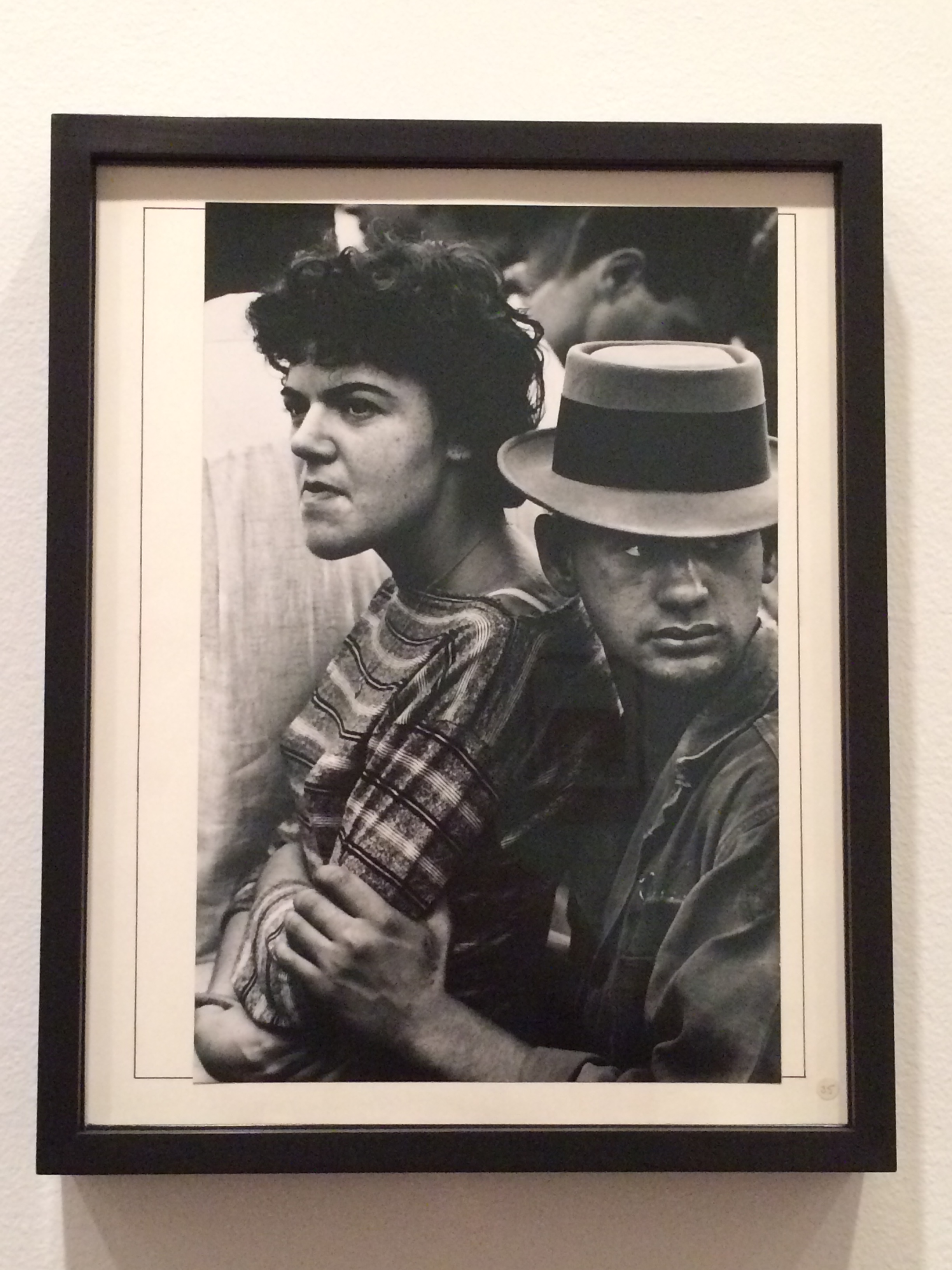
And so we navigated to a modestly-sized and time-friendly exhibit, works by the not particularly well-known Dave Heath. To me and Sandy, he wasn’t even that, as we’d never heard of him. This show (it closes on February 21, 2016) is entitled Multitude, Solitude: The Photographs Of Dave Heath, and comprises numerous 35 mm photos, all in black and white, that Heath took from 1949 to 1969. Also on display is Heath’s multimedia slide show from 1969. This is the first major presentation of his early and midlife creations, and one of the few museum exhibitions that he ever has had. It was organized by The Nelson-Atkins Museum Of Art in Kansas City, Missouri, with plenty of PMA input.

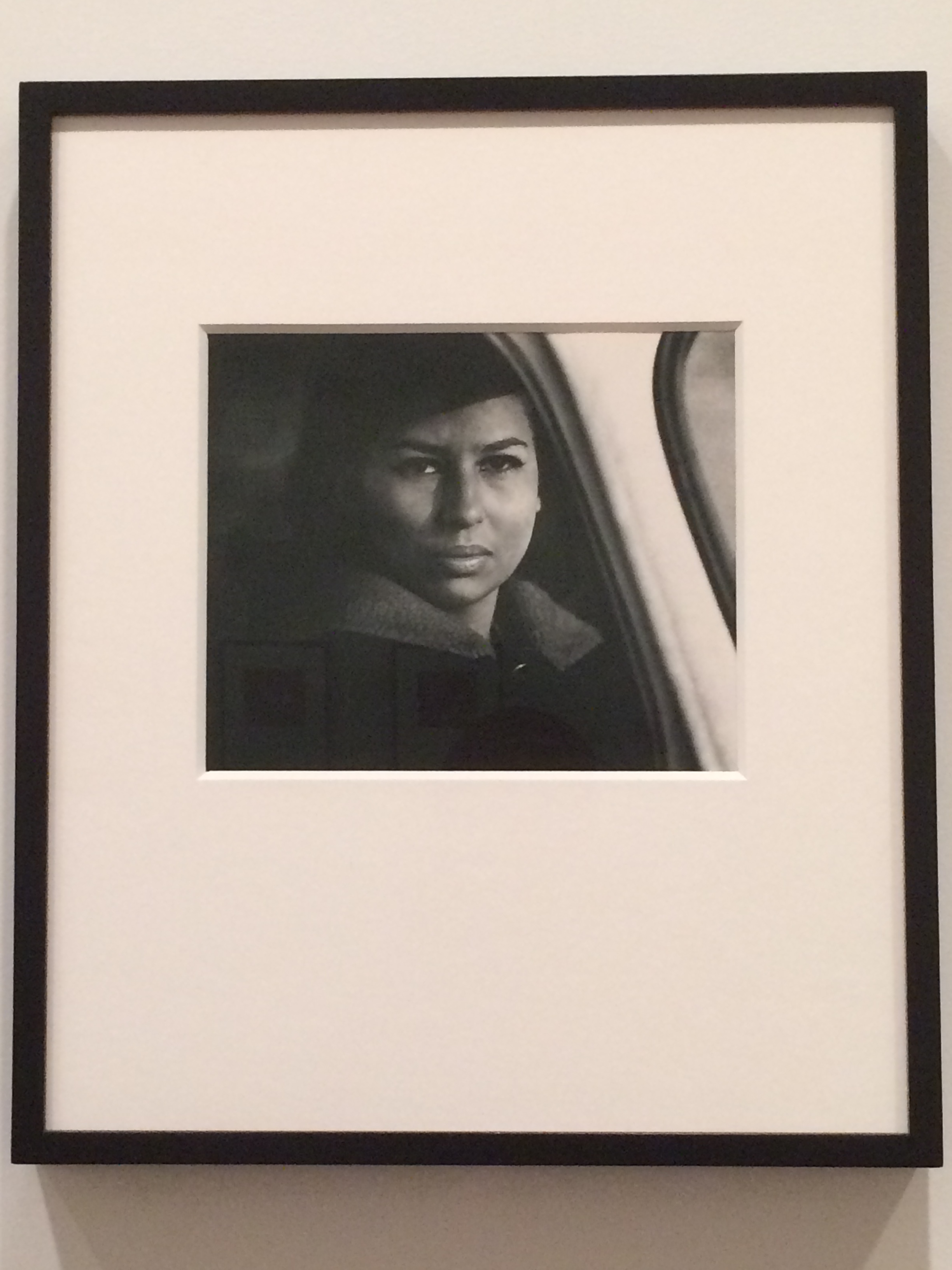
Sandy and I had the same reaction after looking at Heath’s photos for the first few minutes: “This guy is great,” we agreed. And I’m convinced that he is, or in any case was in the 1950s and 60s. The photographs are very beautiful and very dark, shades of black heavily predominating over those of white. I’ve always felt that this approach allows photographs to breathe emotionally, gives them depth and resonance.

New York City (1964), by Dave Heath. Nelson-Atkins Museum Of Art, Kansas City, MO; Gift of Hall Family Foundation
Washington Square, New York City (1960), by Dave Heath. Nelson-Atkins Museum Of Art, Kansas City, MO; Gift of Hall Family Foundation

Heath isn’t a chronicler of the natural world. He’s a people observer, usually in urban settings. And he is a lover of the close-up, often capturing folks deep in thought or in seeming isolation. His childhood was dreadful, and his work frequently reflects the hurt that probably never went away. But not all is aloneness or sadness in the Heathscape. Joyful images are here and there in the exhibit.

Dave Heath lives in Canada and is 84 years old. There’s not a lot of info about him in cyberspace. He was born in Philadelphia, grew up in foster homes and an orphanage, took up the camera in his late teens, and has had a full career as a photographer and photography teacher. His greatest fame and acclaim occurred in the 1960s, the decade in which he won two Guggenheim Fellowships and created the book for which he is best-known, A Dialogue With Solitude. The final pre-production copy of Dialogue is at PMA. Its 100 or so pages, mostly photographs, ring several gallery walls. Dialogue is divided into ten sections, among them Fate, Fragility And Diversity; Youth; Childhood; Ends And Beginnings. Dialogue is a deep photographic rumination on many aspects of the human plight.

Sandy and I ended up spending much more time with Heath’s images than we had anticipated. They are powerful. By the late 1960s though, Heath apparently felt that he had said all he could in black and white. He turned to color Polaroid picture-taking and later to digital photography. None of this is on PMA’s walls, and from what I gather isn’t well-known by the arts community. It’s a fine thing, though, that someone (the good folks at Nelson-Atkins and at PMA) has championed black and white Dave and decided to let the spotlight shine on him.

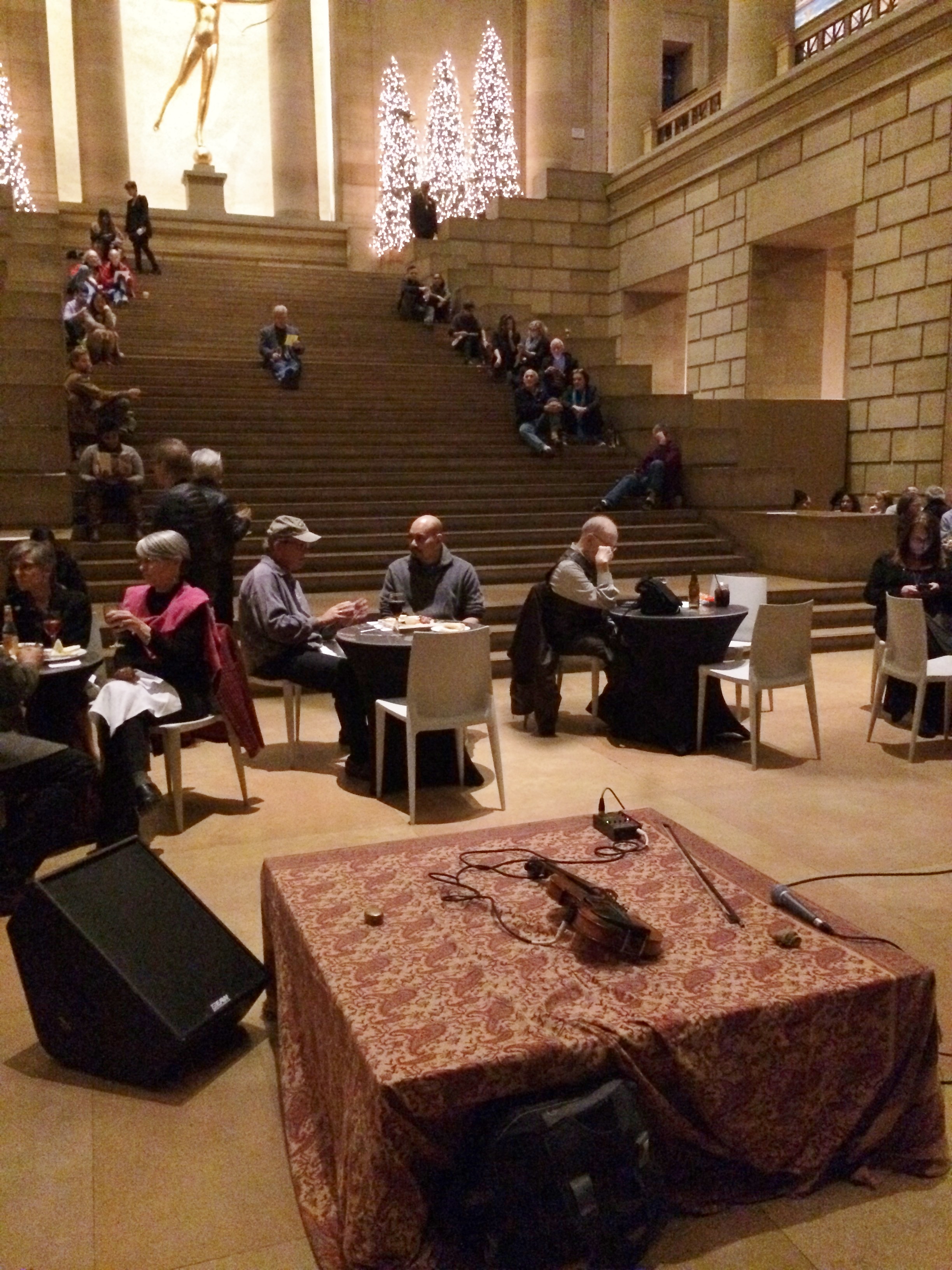
Before the concert in the Great Stair Hall. Photo by Sandra Cherrey Scheinin
Pre- concert in the Great Stair Hall. Photo by Sandra Cherrey Scheinin

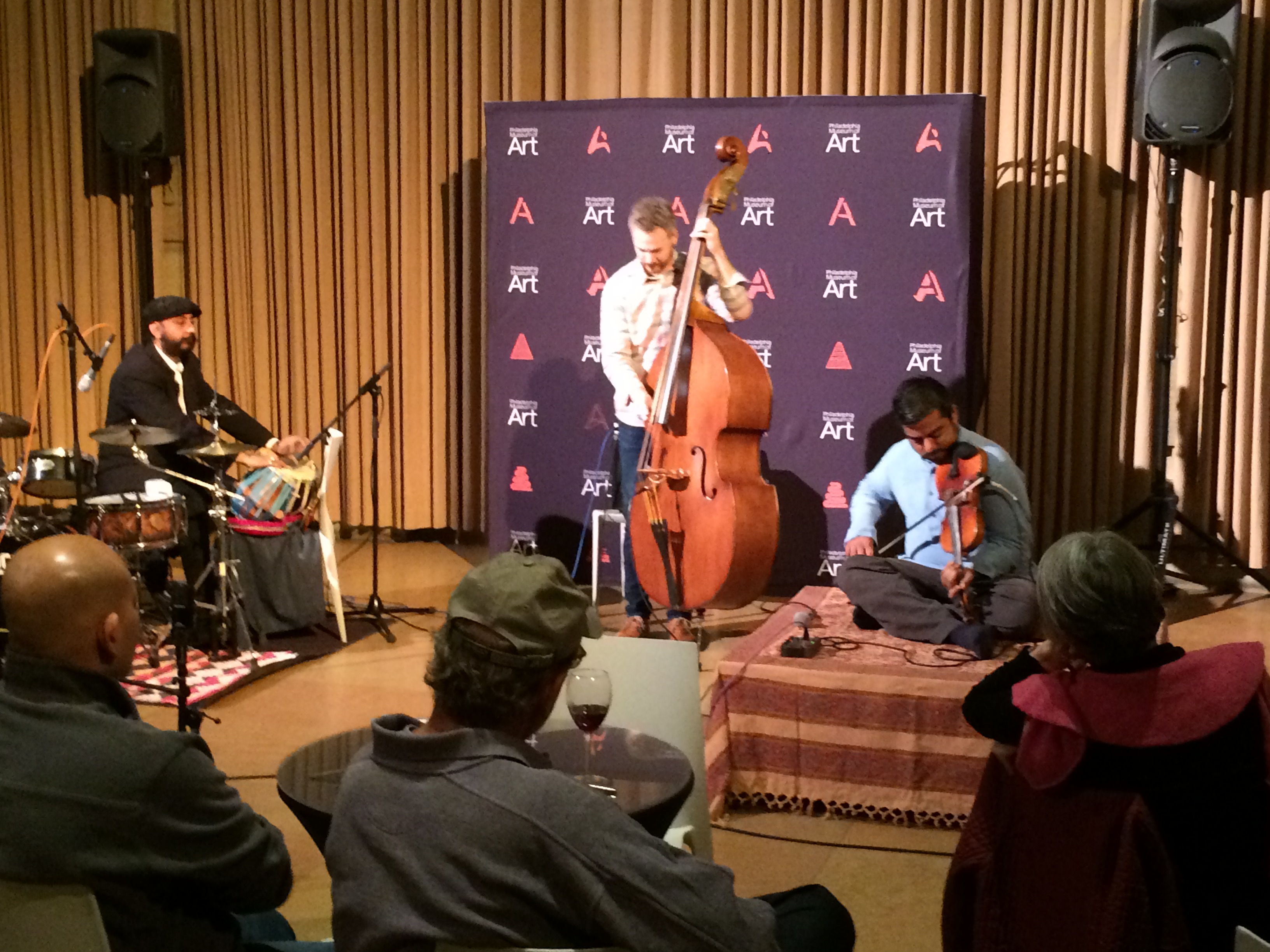
Show time was approaching. Sandy and I lucked out after Heath, grabbing two empty seats at a stage left cocktail table in the Great Stair Hall, a mere six feet from where Arun Ramamurthy soon would be bowing his violin. Arun Ramamurthy? Sandy and I knew as much about him as we had about Dave Heath an hour earlier. Brooklyn-based Ramamurthy, though, is a growing name to be reckoned with in classical Indian music and in musical cross-pollinations. At PMA he brought along Perry Wortman, on upright bass, and drummer/tabla player Deep Singh. The Arun Ramamurthy Trio began its first set at 5:45 PM.  They played a hybrid of South Indian classical music and jazz.

When it comes to music, I’m an appreciator, not a scientist. I understand little about any musical genre’s technical side. Scales, chords, the inter-relationships of notes and how they shape harmonies . . . forget it, I’m at sea. But the big picture I understand, as did the 200 others listening to the Ramamurthy group. We all clapped madly after each piece. Sure, Arun’s melodies and voicings on violin would be pretty unfamiliar to most American ears, but they were beautiful.

In the Great Stair Hall, Arun sat on a platform, chairless and shoeless. He held his violin vertically, bowing with his right hand, working the strings with the fingers of his left. The trio played five songs in the first set, three of them originals, all drawn from or reflecting traditional South Indian classical ragas, melodies and motifs. The music was elastic, minor-keyed and highly improvised, improvisation being a major component of both classical Indian music and jazz.

Arun began song number one unaccompanied, coaxing mournful sounds from his instrument for three minutes. Wortman’s bass then entered — low, gripping notes played slowly, repeatedly — and Singh’s drums too. Singh played carefully, tantalizingly, creating a steady and simmering beat. One drumstick tapped a drum’s rim. The high hat and cymbals shimmered just so. All the while Arun stroked melancholy lines. This was Ramamurthy’s original song, Conception. I was reminded of All Blues, and other numbers, from Miles Davis’ Kind Of Blue album.

The Arun Ramamurthy Trio. Photo by Sandra Cherrey Scheinin

The fifth song, an Arun original whose title I missed, found Deep Singh on tabla. The tune was energetic, Arun going pretty wild on violin, Wortman choosing notes eloquently and perceptively, as he did on each tune. Another thing I noticed was that Arun and Deep barely could keep their eyes off each other. They were in a strong musical relationship. And Singh’s fingers were absolutely flying, maybe wearing grooves in his tabla’s skins.

There was a sixth song, but it was not a full trio number. It was a classical raga played by two humans, Arun and tablaist Deep. They were joined not by Wortman but by a droning electronic accompaniment provided via an app on Arun’s smart phone. Amazing.

Dave Heath and The Arun Ramamurthy Trio. Another several hours well-spent at the Philadelphia Museum Of Art.

(If you enjoyed this article, then please don’t be shy about sharing it)

(If you click on any photo, a larger image will open)

Tony Bennett Is A Wonder

I’m not an expert on the subject. However, if someone asked me to name the 20th century’s best singers of the so-called Great American Songbook, I’d reel off names such as Frank Sinatra, Nat Cole, Ella Fitzgerald, Billie Holiday, Sarah Vaughan, Tony Bennett, Peggy Lee, Louis Armstrong and Fred Astaire. My list is hardly complete or definitive. But it contains excellent talent without a doubt.

All the entertainers on my list were contemporaries, their careers overlapping one another’s during various decades. A sad note is that only one member of the list is still with us, Tony Bennett, whose professional musical life took hold in 1949 (1949!). Sixty-six years later he continues to go strong. The man is 89 years old now and in good voice. He records regularly and likewise tours the world. He, to me, is a phenomenon. A wonder.

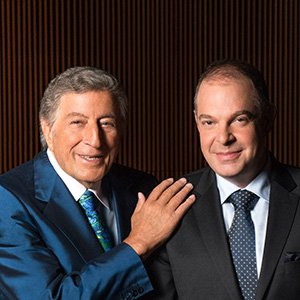
Tony Bennett (left) and Bill Charlap. (Photo by RPM/Columbia Records)

A few weeks ago I caught a track on the radio from one of his albums. It was a melancholy song, beautifully sung. His accompaniment was only one instrument, a piano. I thought that the selection probably came from The Tony Bennett/Bill Evans Album, a 1975 release pairing Bennett with the esteemed jazz pianist. That album has achieved iconic status over the years. But I was wrong. The song — and I can’t remember which one I heard — was a brand new recording from the lovely album by Tony Bennett and Bill Charlap titled The Silver Lining: The Songs Of Jerome Kern.

Recently I listened twice to The Silver Lining in its entirety. And I listened to a few cuts from the Bennett/Evans duet album too. These albums are separated by 40 years. And you know what? Tony’s voice is nearly as good now as it was then. It has lost a little power, strains a bit occasionally. But it remains quite great. I find this most incredible. Has there ever been another gifted vocalist whose pipes have held up so well in his or her very advanced years? I can’t think of anyone. Please let me know if you can.

Jerome Kern was a top composer during the first half of the 1900s. He wrote with a host of smart and classy lyricists, Oscar Hammerstein II, Dorothy Fields and Ira Gershwin among them. The Silver Lining presents some of Kern’s best-known, and best, compositions. For example, The Last Time I Saw Paris, All The Things You Are, I Won’t Dance.  There are 14 tracks on the record. Bennett sings on all of them. Bill Charlap, a refined and tasteful jazz piano player, is Tony’s sole partner on three. Charlap’s jazz pianist wife, Renee Rosnes, adds a second piano on four songs. On the remaining tracks, Charlap is joined by his longtime collaborators, Peter Washington on bass and Kenny Washington (no relation) on drums.

Overall I find this album to be sublime. The instrumentation is understated. Bennett’s vocalizing is poignant and incisive. He plumbs the depths of the tunes’ lyrics and adds some explosive high notes at the conclusions of a few songs to show that he still has it. If you’re a Tony fan, you should own The Silver Lining.

So, what’s the deal with Tony Bennett? How has he managed not only to survive, but to thrive? Well, genetics more than anything probably accounts for Tony’s long life. As for thriving, we all might learn from his outlook on and approach to life. Tony Bennett always has seemed to me to be a down-to-earth and nice guy, and also in possession of wisdom. There is a fine article about him in the December 2015 issue of DOWNBEAT magazine (the article is not online, so I can’t provide a link). Two quotes from the piece are very telling.  In one he says: “I can’t believe that I’m 89. I stay in shape. I take good care of myself. I got rid of all bad habits. When I was younger, I was pretty wild, doing a lot of foolish stuff. I stopped all of that and I got back to how to sing properly.” And in another he says: “I think life is a magnificent gift. We should all enjoy the fact that we’re living on an unbelievable planet that’s loaded with education and love and beauty.”

It’s not coincidental that the song Look For The Silver Lining concludes the Bennett/Charlap album. George “Buddy” DeSylva’s lyrics are fully in tune with Tony Bennett’s take on the human situation. Give a listen:

(If you enjoyed this article, then please don’t be shy about sharing it)

I Never Met Thelonious Monk, But . . .

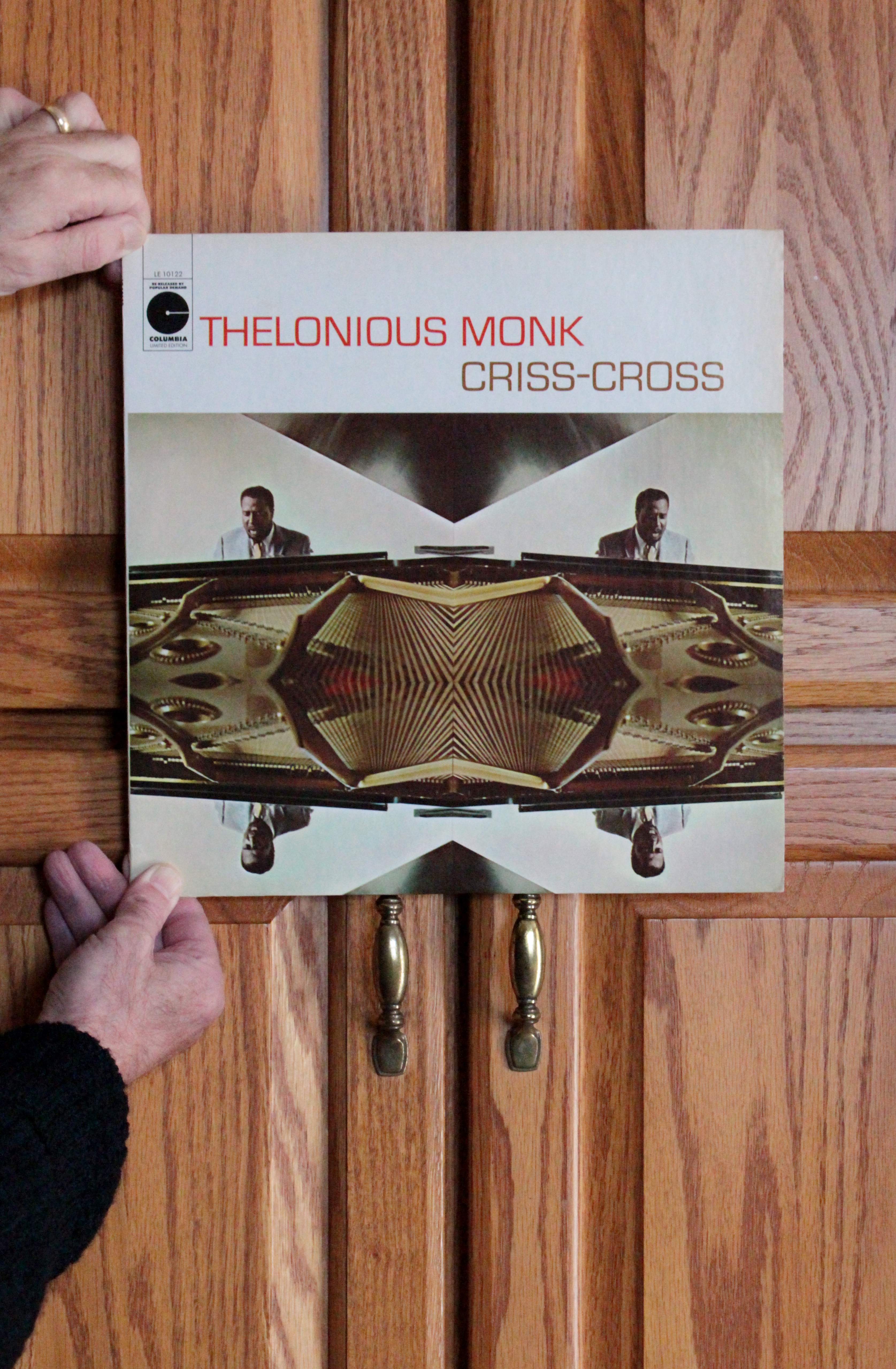
The front cover of the author's copy of Criss-Cross.
The front cover of the author’s copy of Criss-Cross.

I loved Thelonious Monk’s music from the first time I heard it, and I’m sure I’m not alone in that. The year was 1964, maybe ’65. I was a high school senior entranced by rock and roll, R & B, some folk music, and by standards singers such as Sinatra and Bennett. But not by jazz, which was foreign territory to me at that time. My high school buddy Dave had just obtained his New York State driver’s license and one day informed me that he was going to take a ride to a local Sam Goody’s, a popular record store chain that sadly is no longer with us. For whatever reason, I didn’t accompany him. Dave asked me if I wanted anything from Goody’s. I must have been feeling adventurous because I requested a jazz album. Any jazz album would do, since I didn’t know one from another. The record that Dave a day or two later placed in my hands was Criss-Cross, Monk’s 1963 release. I doubt if I had ever heard of Monk before, though he was one of the most famous jazz pianists in the world. And I doubt if Dave knew much about him either. How, then, had Dave come to select this album, which to this day I consider to be magnificent? I don’t know. Dave possessed powerful intuitive talents, still does, and it seems that choosing great music from out of the blue was one of them. On the other hand, maybe he just liked the album’s cover. It is très cool.

I listened to jazz in small amounts over the next few years and in 1969 began to become the jazzhead that I am when I started heavily to inhale the outpourings of Miles Davis, John Coltrane, Eric Dolphy, Ornette Coleman and an ocean of others. And Thelonious Monk too, of course. Monk is one of my all-time favorites.

There’s something peaceful about Monk’s playing, even on the upbeat numbers. Something mesmerizing. Something irresistible in the way he’d offer the unexpected note, the tantalizing trill. Monk had an instantly recognizable sound on the piano, an intriguingly off-center approach. He didn’t play overly fast, just fast enough, and he put his heart and soul on display. He didn’t compose a lot of tunes (73 is the official count), but the unadorned and undeniable beauty of many of his compositions have connected with millions of listeners and with his peers. During the 1980s and ’90s it seemed that every month brought forth a new Monk tribute album. Even now, many jazz albums include one or two Monk works. Great compositions such as ‘Round Midnight, In Walked Bud, Ruby My Dear, Hackensack. Monk died in 1982, and remains a giant.

Thelonious Monk was someone I wish I had met and talked to, though I gather he wasn’t a man of many words, at least at times. I suspect that his song titles indicate this. Fifty of the 73 are either one or two words in length. Still, how fine would it have been to ask Thelonious Monk some questions: Have your piano practice habits changed over the years? Which of your songs mean the most to you? Do you ever listen to Top 40 radio? As a New Yorker, whom do you like best, the Yankees or the Mets?

But I never met Monk. In the 1960s and ’70s, however, three people I knew had up-close Monk experiences, which as a Monk fan I always have looked upon fondly. And in a sense have made my own. The earliest involved one of my high school friends, a young lady. We had graduated in 1965, and soon after that she and her family moved from Long Island to an apartment building in Manhattan near Lincoln Center. Amazingly, this was the building in which Thelonious Monk and his family resided, and had for years. More amazingly, my friend and her family occupied an apartment either directly above or below the Monk pad, I’m not sure which. I recall my classmate telling me, not long after our high school careers ended, that she often would hear Monk playing the piano, which, to say the least, was incredible to me. And enviable.

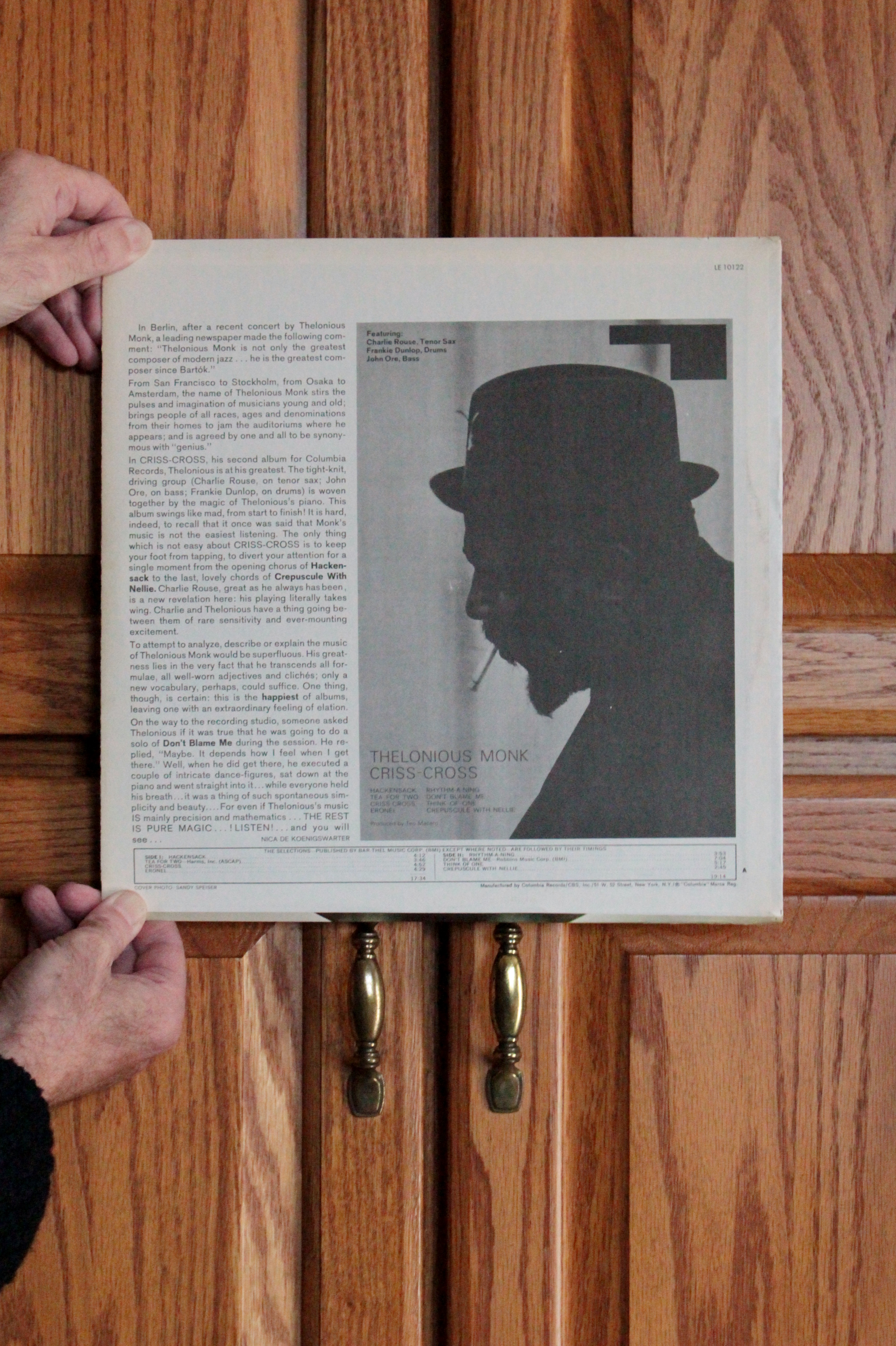
Back cover of the author's copy of Criss-Cross.
The back cover of the author’s copy of Criss-Cross.

The second occasion involved my friend Dave, who got my Monk ball rolling, with Criss-Cross, in the first place. He once had a brief encounter with the man. Dave thinks the meeting took place in 1966 or ’67. The location was a New York City subway car on which Dave spotted somebody who looked awfully familiar. This somebody was clothed in what Dave described to me as pajamas. Pajamas? Sure, why not? Intrepid soul that Dave was and is, he walked over and asked “Are you Thelonious Monk?” “Yeah, I’m the Monk,” came the reply. End of conversation.

The third Monk event was the topper. My mother was part of it, and I was there when it happened. The month was March, the year was 1976. WKCR, Columbia University’s radio station that programmed jazz in its classic and far-out varieties, was holding a Thelonious Monk marathon, playing his recordings nonstop over a multiday period. I imagine that the station’s intense tribute was timed to coincide with a concert by Monk and his band that same month at Carnegie Hall. My mother was a devoted jazz fan and WKCR listener because her son (my brother) Richard was in attendance at Columbia and was a WKCR jazz DJ. As such, he was on the air for portions of the Monk fest. But not on the evening in question, during which I sat with my mother in the kitchen of her Long Island home as the Monk celebration emanated from a small radio on a counter between the sink and the stove. Concerned about others as she always was, she said something like “I wonder if Thelonious Monk knows what KCR is doing.”

She went to the telephone and dialed 411, the number for directory assistance. Did Monk have a listed number? Somewhat surprisingly, he did. My mother called. Someone on the other end picked up. “Is this Mr. Monk?” she asked. “Yes,” was the reply. “Hello,” my mother said. “I wanted to ask if you know that WKCR is playing all of your music. It’s a wonderful tribute.” “Yes, thank you,” replied Thelonious Monk. My mother probably then complimented Monk on his talents, and Monk probably said “thank you” again. And that was that. I sat there semi-stunned. My mother, to my recollection, had never done anything like this before. She keenly followed the world of celebrities, but always from afar. Of all the stars that she admired, from Mary Tyler Moore to Lena Horne to Paul Newman, I never would have guessed that her one personal contact would be with a jazz pianist.

I was a mere bystander to my mother’s bold move. I, however, had one engaging and in-person Monk experience of my own. This occurred on March 26, 1976 from a balcony seat  at Thelonious’ aforementioned concert at Carnegie Hall. Sitting next to me were my brother Richie and his wife-to-be, Sara. I can’t recall if the performance took place just before or after my mother’s conversation with Monk. Likely, after. Monk didn’t play often in public those days, so the Carnegie gig was a highly anticipated event. In fact, two appearances in July of that year would be his last ever. He was on stage with four musicians, including his son T.S. Monk on drums. Thelonious said little, maybe nothing, to the audience. What mattered was his playing, and he was in superb form. Strong, poignant, totally on the money. His fingers did the talking.

(Photos by Sandra Cherrey Scheinin. If you click on a photo, a larger image will open)

(If you enjoyed this article, then please don’t be shy about sharing it)

Sunday In The Park With Duane (Jazz Concert Review)

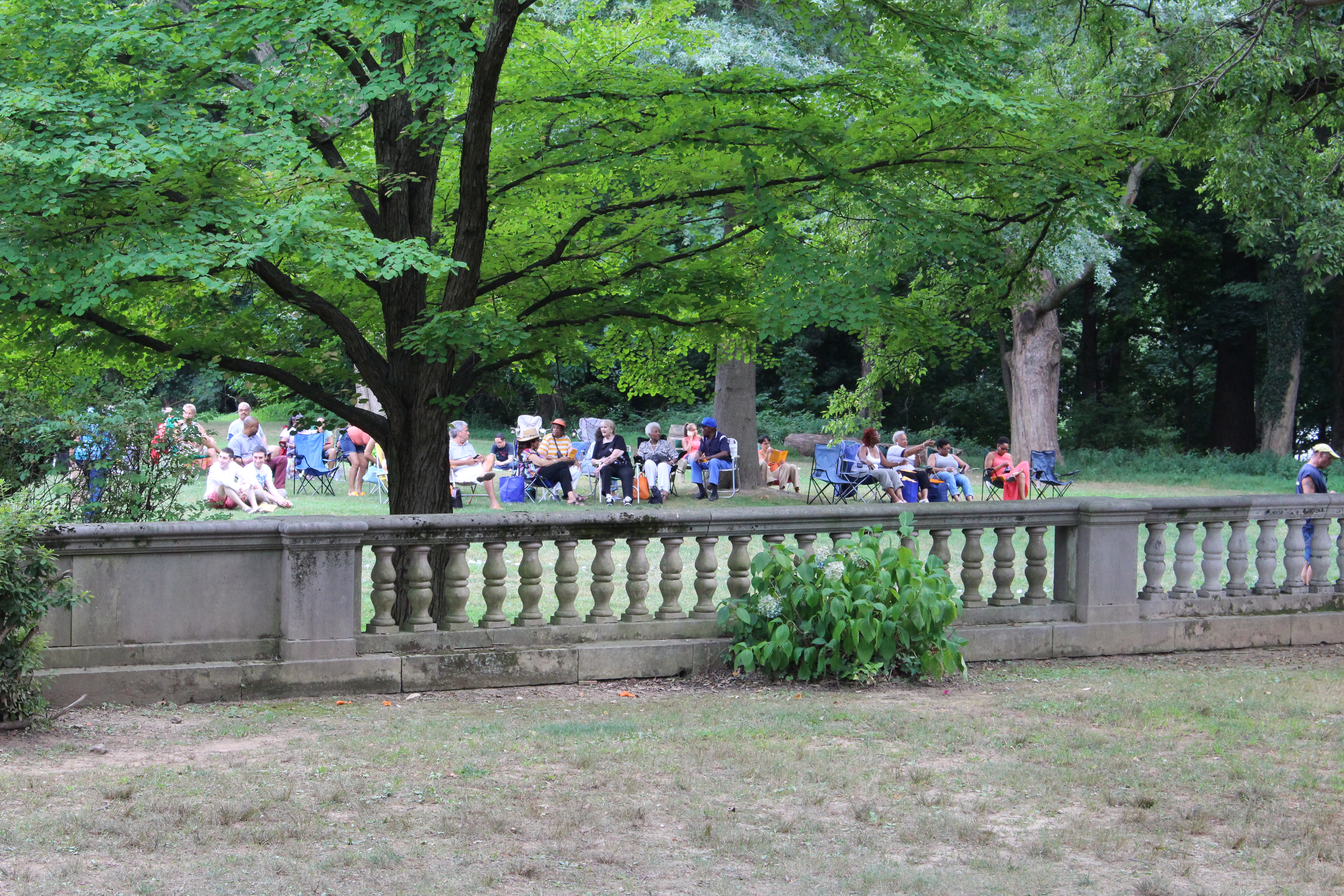
Some outdoor summer music series are better than others, but not everyone would agree on which are the good ones. Personally, I most like those that have an eclectic mix of musical genres and that also avoid tribute bands. Luckily for me and my tastes there are a number of summer series in the Philadelphia region that hire the kinds of acts that I’m a sucker for. One of those is Cheltenham Township’s Concerts In The Park, whose shows are staged in the sprawling and meticulously maintained Curtis Arboretum. There, a mile or two from Philadelphia, musicians mount a modest stage at 5 PM on five summer Sundays. They and their audiences are surrounded by, and are under, many large trees.

I’ve been impressed for years by some of the Cheltenham bookings. In 2014 my wife Sandy and I, accompanied by two of our friends, went to the Curtis Arboretum to see and hear Geoff Muldaur, who has been crisscrossing the USA and other countries as a musician for decades. Geoff began to make his name in 1963 as a member of the Jim Kweskin Jug Band. And there he was, so many years later, performing his folky-bluesy-jazzy repertoire on acoustic guitar at the arboretum.

The pre-show crowd at Curtis Arboretum.

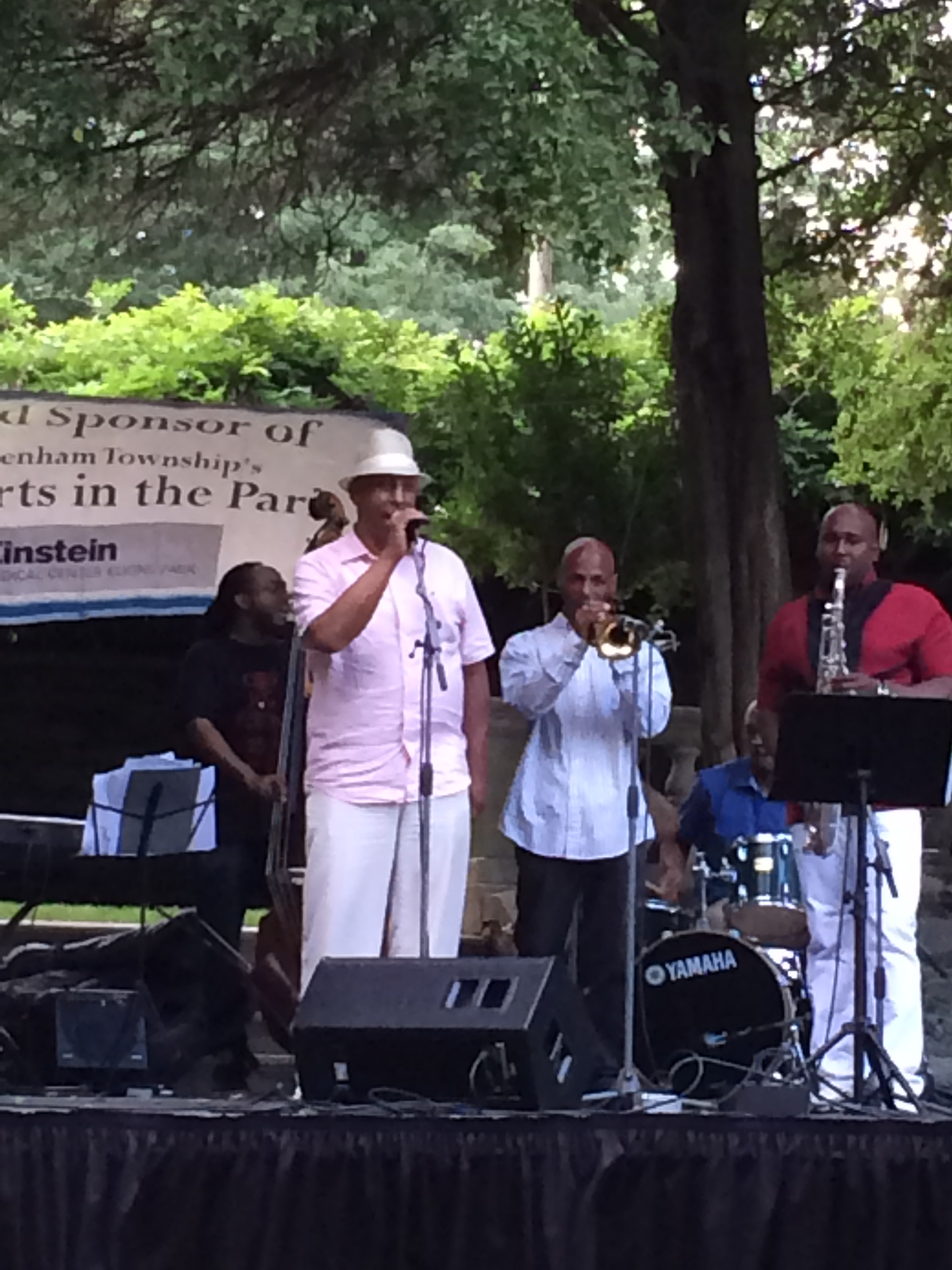
On a recent Sunday, Sandy and I, with the same two friends, sat beneath some leafy limbs at Curtis to take in another example of thinking-outside-the-box scheduling, the Duane Eubanks Quintet. This jazz outfit is more commonly witnessed in clubs. Somehow I didn’t hear Duane say from the stage that he wasn’t used to playing at settings such as Curtis, but my friend assured me that he did. Eubanks, a suburban New York City-based trumpeter with a first-rate résumé, brought along with him four fine and established members of the jazz world.

Duane Eubanks comes from a very musical family. He grew up in Philadelphia’s Mt. Airy section, so his Curtis gig wasn’t far from his childhood home. His pianist mother, who gave lessons to prominent jazz players, helped spark a musical flame in some of her children. Look at the results: Duane’s oldest brother, Robin, is a well-regarded jazz trombonist. Duane’s second-oldest brother, guitarist Kevin, became famous as the band leader for The Tonight Show With Jay Leno. Of the four male Eubanks offspring, only Shane, Duane’s twin, is not motoring on the professional musician highway.

Duane plays trumpet really well. Throughout the Curtis show I gave a mental thumbs-up to his imagination and clean lines. He wasn’t flashy, didn’t spend inordinate amounts of time swirling around in his instrument’s nosebleed zone. What he did was this: He spun worthy tales with his horn, filling his solos with strong ideas, and balanced that with terrific technique. I don’t think I had ever seen him in concert before. I was impressed.

Duane Eubanks Quintet at Curtis Arboretum.

Eubanks and company primarily stayed in the hard bop bag, with two excursions, which I wasn’t crazy about, into the borders of smooth jazz territory. The tough and driving stuff and the one unadulterated ballad, though, were terrific and had my head swaying. On board with Duane was tenor saxophonist Abraham Burton. Burton’s robustness and energy owed debts to John Coltrane, his more meditative moments to Dexter Gordon. David Bryant was a whiz on electric keyboard, an attentive musician filling spaces deftly when Duane or Abraham soloed, his fingers flying fast and furious when he himself took the lead. Corcoran Holt, on upright bass, helped power the band with notes that sometimes boomed, sometimes cooed. I thought that he was great. And the in-demand drummer, Eric McPherson, was all over his kit, rat-a-tat-tatting on his snare drum, whacking à propos accents on his cymbals. I didn’t particularly enjoy his work on the two aforementioned smoothed-out numbers, but let’s put them aside. I already have.

The tune I maybe liked the best was the first set’s opener, a Eubanks original titled Slew Footed. It went on for 20 minutes. Slew Footed was a hard romp, a controlled yet convulsive affair. Each musician took long propulsive solos. Each listened carefully to what the others were saying. The onstage musical conversations were animated and keen.

Guest vocalist TC III with Duane Eubanks' group.
Guest vocalist TC III with Duane Eubanks’ group.

Halfway through the second set Eubanks brought to the stage a guest vocalist, TC III. I used to see him perform at venues all over Philadelphia, but hadn’t in 20 or more years. He sang on two songs. TC III took hold of the first tune, Moanin’, from its opening notes. I had forgotten just how fine a singer he is, bluesy and direct. Think Eddie Jefferson. Think Joe Williams. Moanin’, a gutsy marriage of the blues and gospel, was a staple of Art Blakey And The Jazz Messengers. I loved the way that TC III and the Eubanks group belted it out.

I’m a stickler for good audio projection. Too often at concerts, in venues small to enormous, the sound quality doesn’t cut the mustard. At Curtis the sound guy got it right. Every instrument, and TC III’s vocals, came through loud and clear. There was no muddiness in the mix. All of this added to my enjoyment of the show. As did the weather. For much of the late afternoon and early evening, dark clouds massed and inched along far overhead. I was certain that a downpour was in the works, especially after a dozen or so raindrops plunked me around 6:30 PM. Amazingly though, not another drop fell after that.

(Photographs by Sandra Cherrey Scheinin. If you click on a photo, a larger image will open)

(If you enjoyed this article, then please consider sharing it. Thanks.)

Michelle Lordi, Jazz Singer

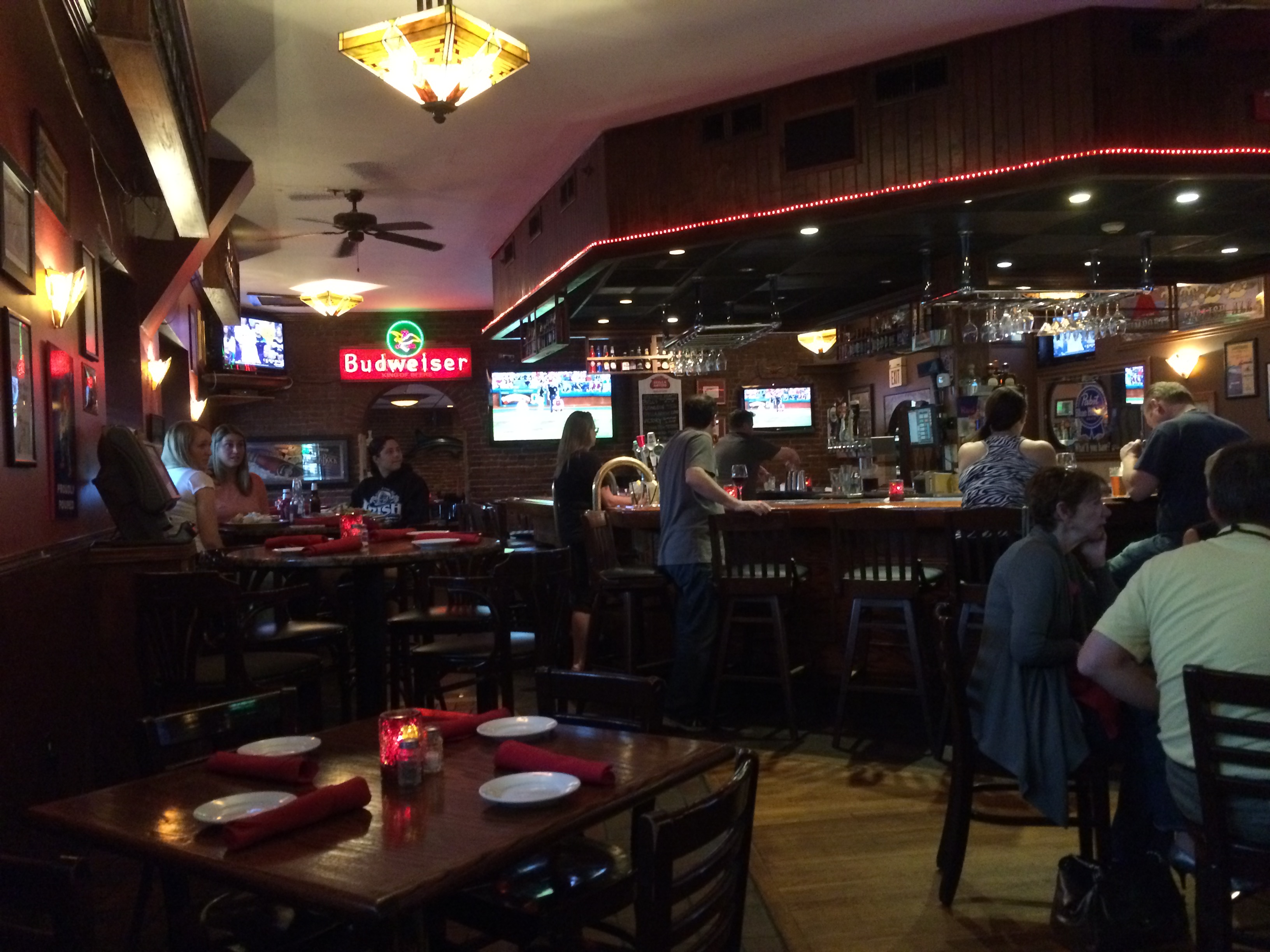
The main room at Vintage Bar And Grill, 10 minutes before the music began.

Vintage Bar And Grill in Abington, Pennsylvania is a good place. It’s a sports bar that serves up thoughtful food. There are plenty of televisions (seven in the main room), knick knacks all over the walls and a not bad selection of beers. And, duh, the place can get noisy, very noisy. So when my wife and I go there for dinner a couple of Fridays or Saturdays each year we are ready and willing to deal with mega decibels. Never had been there mid-week till a handful of days ago though, when on Tuesday we went not only for dinner but to hear some jazz. Most unlikely, Vintage is given over on Tuesday evenings to jazz vocalist Michelle Lordi and her musical partners.

The Philadelphia area, where I live, is home to lots of very good musicians in most musical genres, including jazz. The music biz being what it is, though, only a handful of musicians break through to decent-sized audiences. The rest, like Lordi, do what they can, sometimes maybe plying their craft at small unexpected spots like Vintage.

I’d known about Lordi’s Vintage gigs for a long time. I’d seen her name on a weekly email jazz-near-you schedule that I subscribe to, but I hadn’t given her much thought. Last week, though, the notion to see her bubbled up. Being musically in the dark about Michelle, I first checked her out on YouTube, and she sounded excellent. How was she in person? YouTube didn’t lie. She was great.

Lordi had with her four musicians she works with quite often. Two of them, tenor saxophonist Larry McKenna and electric guitarist Sonny Troy, are grizzled musical veterans, superb players with long and impressive resumes.  Neither I suppose is on the road much anymore, if at all. It says a lot about Michelle that they choose to play with her. The other two are young guys, Sam Harris on upright bass and Mike Frank on electric piano. They did a fine job at Vintage.

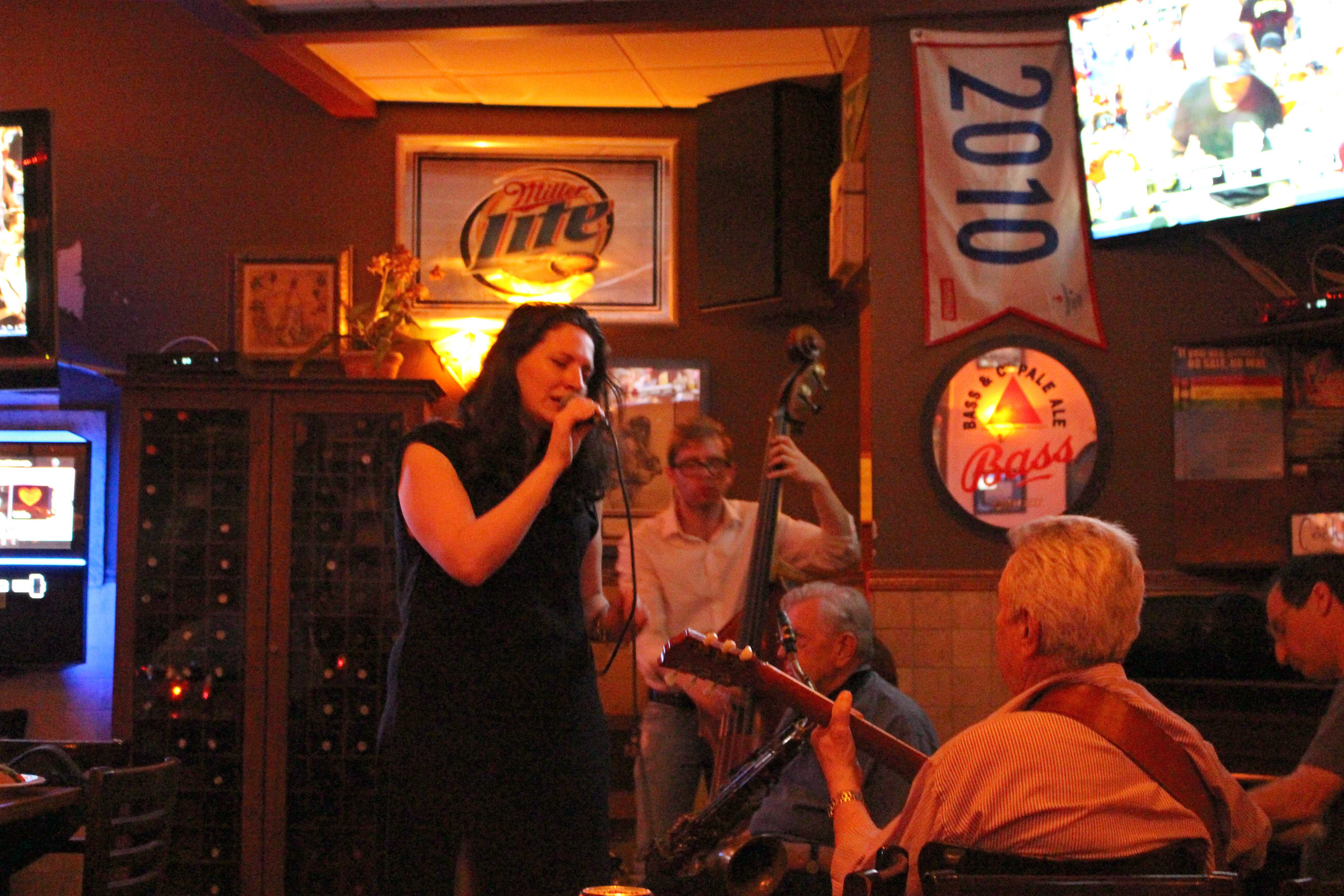
Michelle and her band set up shop in a tight Vintage corner near the main entrance. A hi-def TV, on mute, showed the Phillies baseball game above them. Maybe 30 customers were in the room for the first set, at best half of them listening to the music. Five feet from Michelle and one foot from Sonny Troy was a table of six. As the music played, these folks blithely chitchatted about their vacations and the goings-on of various relatives, groundbreaking news all of it. I tip my hat to musicians who learn to become immune to this kind of stuff.

Michelle Lordi is from the understated school of jazz singing. I’d bet that she has taken cues from Doris Day and June Christy, calm singers from the 1940s and 50s. Diana Krall is maybe today’s biggest jazz name who isn’t interested in vocal gymnastics or in bursting a vein reaching for a high note. I like this style of singing a lot. You hear it consistently with Brazilian bossa nova singers.

Michelle Lordi and her band at Vintage Bar And Grill.

During the one hour first set at Vintage, Lordi sang nine songs, standards from the American and Brazilian songbooks. She chose medium to slow tempos and sang efficiently and clearly in a firm and pretty voice. Lyrics came alive because she gave them room to breathe. Over Sonny Troy’s moody accompaniment, she slowed and elongated the words to Irving Berlin’s “They Say It’s Wonderful.” After a wise and moving Larry McKenna solo on Rodgers and Hart’s “I Didn’t Know What Time It Was,” Lordi sang unaffectedly, cleanly hitting the higher notes without strain or an excess of volume. The song  resonated.

Michelle Lordi performs pretty regularly at other venues in the Philadelphia area, such as Chestnut Hill’s Paris Bistro And Jazz Café. And she has done some recording too. But overall she is not exactly a household name. Unless I missed something, the set I took in at Vintage would have gone over just swell at the high-profile Village Vanguard or Café Carlyle in Manhattan or, closer to home, at Philadelphia’s Annenberg Center For The Performing Arts. Beautiful singing, assured and sympathetic instrumental work. Maybe one day I’ll be able to say “I saw her when . . . “