A Cloudy Walk And A Rousing Novel

A half hour shy of noon a few weeks ago, in need of some exercise, I raised my bony ass off the living room sofa, exited my house and took a walk around my suburban neighborhood. It was a hot and humid summer day, the type that normally causes me to spew sweat like a volcano. I guess the dermatology gods took pity on me, though, for my wrinkled skin became only mildly moist during the stroll.

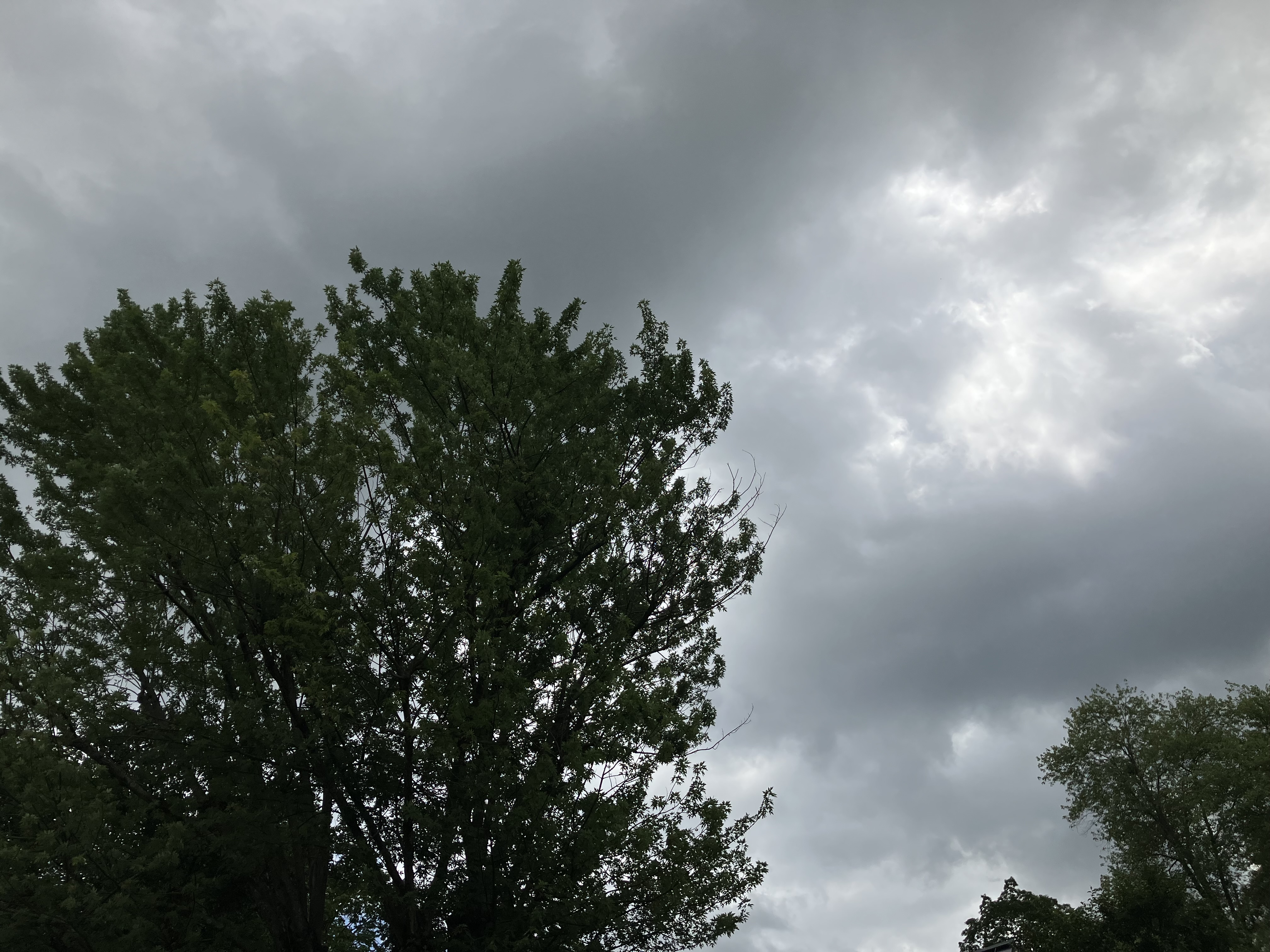
I usually don’t spend a lot of time looking upward when I’m outside, not in daylight nor when the skies are black. Pretty foolish of me, because, obviously, the heavens are incredible. But, on the day in question I decided to alter that orientation by examining the clouds filling much of the sky. They were of two sorts, some of them bright and friendly and perfect partners for the sky’s blue areas, the others darkened and signaling that rain, which ultimately never arrived, might be a-comin’.

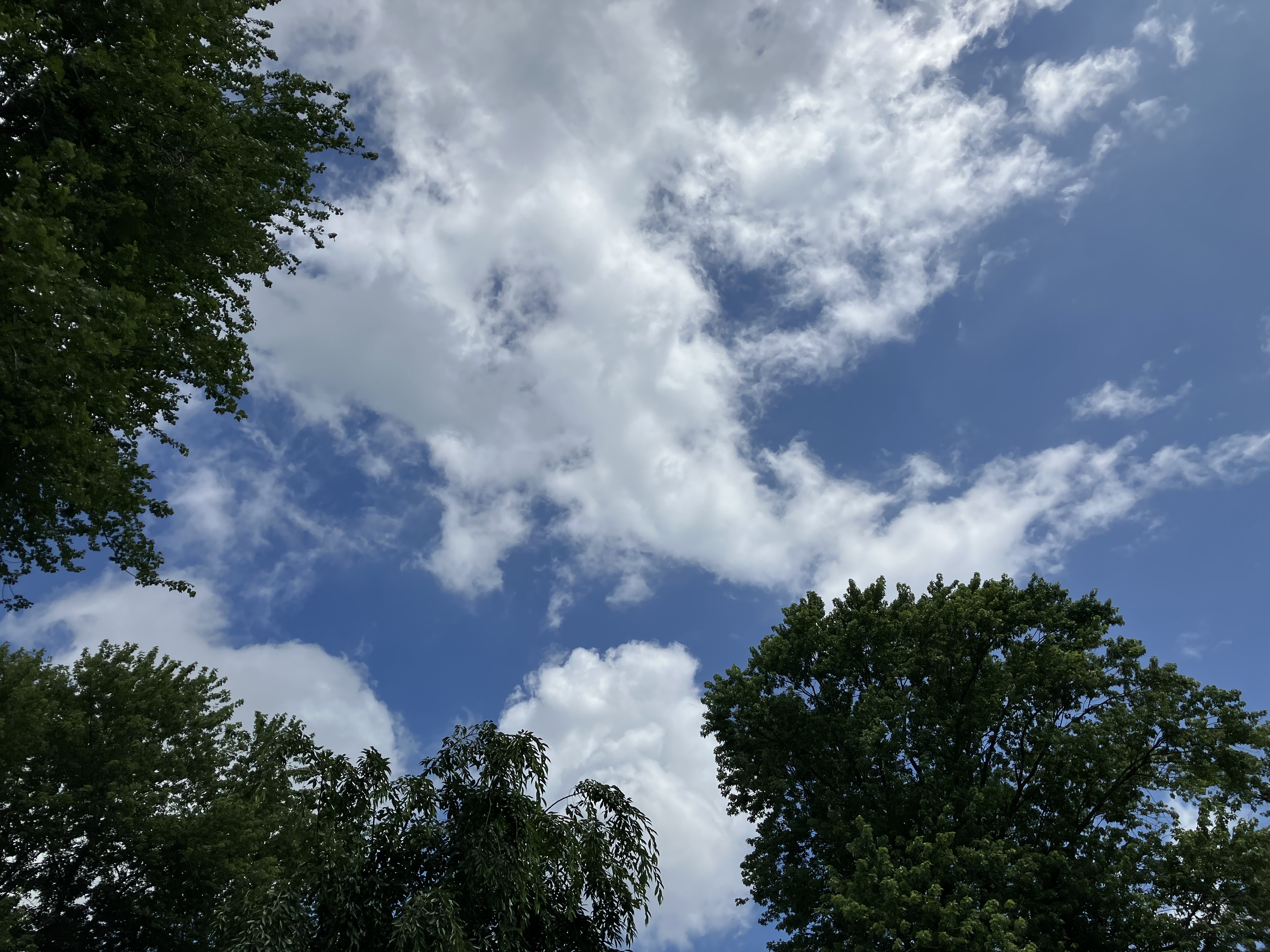
And I also had my eyes on trees, which are fairly abundant in my neighborhood (I live a few miles outside of Philadelphia, Pennsylvania, USA). It would be cool, I decided, to snap some photos in which cloud-filled skies and trees appeared. But only cloud-filled skies and trees. This turned out to be harder than I thought it would be. I shouldn’t have been surprised, of course, since my neighborhood is jam-packed with houses, utility poles and overhead-utility lines, nearly all of which not only were in the way, but also cursed me out when I told them I wouldn’t include them in the photos. What a bunch of obnoxious bastards! Persevering, I found a fair number of vantage points that allowed me to meet my criteria. I tell you, the life of an amateur photographer ain’t a breeze. On the other hand, just about nobody’s life is a breeze. Hell, that’s life.

Two photos from my mini expedition adorn this essay. I regard them as semi-abstract compositions, the amorphous clouds offset by the tight structure of treetops. I bow before Mother Nature. Her variety of creations is dazzling and just about infinite, yet limited and uncomplicated displays of her wares, such as these, have no trouble awing me. There’s a whole lot to be said for simplicity.

Getting back to life, this month I was swept away by a novel that tells the tale of one David Granger, a 68-year-old American whose adult life has been the opposite of a breeze. Months and months of violent combat in Vietnam jungles in the late 1960s saw to that, not only while he was fighting the Viet Cong, but also every year since then, a decades-long period during which war-induced nightmares have bedeviled his bedtime hours. Granger is the narrator of The Reason You’re Alive, the madcap, profane and humane book by Matthew Quick published in 2017. (Matthew Quick’s best-known novel is The Silver Linings Playbook, which was turned into a movie starring Jennifer Lawrence and Bradley Cooper.)

David Granger is a piece of work, an over-the-top character who wears his lengthy list of opinions on his sleeve. A widower, he has an uneasy relationship with his one child (an adult son named Hank), and adores his young granddaughter, Ella. His friendships are pretty plentiful and also profound. And although he possesses a conservative, America-first outlook, he does not meet the definition of a Trumpster, because he is completely accepting of, and admires, the USA’s racial and sexual minorities. A complicated guy, Granger feels compelled to put his story down on paper before it might be too late, seeing that he recently went under the knife for brain cancer, a disease he believes was induced by heavy exposure in Vietnam to the poisonous chemical Agent Orange. Post-surgery, Granger gets it into his head that he should return a valuable object that, under shameful circumstances, he stole from a fellow soldier during the war.

I don’t want to spill too many beans about the plotlines, so I’ll say little more. I will add, however, that the sentences in The Reason You’re Alive barrel along like a high-speed train and pack a punch. Here’s a sample paragraph from the book:

Doctors had sawed through my skull. They had cut out part of my brain. I was still freeballing it in a lime-green fairy gown. I was in a fucking hospital bed, for Christ’s sake, and Hank’s machine-gunning me with entire belts of words just because I didn’t tell him about the surgery until after it was over. I figured, why worry him? We hadn’t been speaking since summer anyway. Ever since we had a blowout at the Phillies game.

See what I mean? Matthew Quick can write. I unhesitatingly recommend The Reason You’re Alive.

I Am Extremely Fortunate

Last Monday, the first day of the second half of rapidly disappearing 2025, found me at the medical office building where I’ve volunteered for 13 years, manning its information desk. The part-time gig keeps me on my toes. Many patients arrive without knowing which suite their doctor works in, for instance. It’s my job to point them in the right direction. And sometimes I come to peoples’ “rescue,” such as when I aid those who, their medical appointments completed, can’t remember where in the nearby parking garage they deposited their cars. Off I go with them to that multi-level structure to solve the problem.

I like the job, which occupies me for four hours each week. Without it, I’d have a relative paucity of human interactions, seeing that I spend a hefty percentage of my time resting my aged, bony ass upon the living room sofa. Plus, helping people out boosts my spirits. Basically, I need to feel as though I’ve still got something to offer society.

Last Monday was a typical day at work. I answered questions from, and helped unravel somewhat-knotty situations for, approximately 50 individuals. However, during my shift something struck me more than it usually does: I clearly realized that a whole lot of visitors to the building were using and relying on canes, walkers and wheelchairs. And nowhere near all of those folks were senior citizens. This was a sobering observation. It brought to the surface a piece of self-knowledge that normally resides in the bottom reaches of my subconscious. Namely, I am extremely fortunate. Here I am, pushing age 80, and I get around on my legs just fine. I can walk for five or more miles, no problem. And though it would be foolhardy of me to attempt an all-out sprint, trotting remains within my powers. Yeah, anything might yet happen, but I’ve retained more than decent mobility.

And my good fortune extends way beyond my legs. My health in general, according to medical tests and my physicians, is solid. I’ve had one very dangerous health situation in my life. Thanks to modern medicine and just plain positive luck, it appears to be permanently confined to the rearview mirror. Of course, nobody knows that for certain, but the odds are in my favor.

What’s more, I have plenty to eat, and my country (the USA), though in the hands of a freedoms-suppressing megalomaniac, is not a war zone. I almost feel guilty about my good fortune, considering how difficult so many people have it in the States and all around the world. Poor health, poor healthcare availability, and inadequate food intake are some of the injustices plaguing hundreds of millions of individuals. And armed conflicts make life a living hell, or close to it, for so, so many. Not just in Ukraine and Gaza, but in violence-beset nations that don’t receive much media attention. Haiti and Sudan, to name two, and Myanmar and Yemen, to name two more.

Yes, the human condition, in certain respects, is horrible. Always has been. Always will be.

Considerate guy that I occasionally am, I’ll leave you on a sunny note: My good fortune expanded at the tail end of last year when I discovered Abigail Lapell. She’s a fine Canadian singer-songwriter who isn’t too well known outside her home country. Her latest album, Anniversary, came out 16 months ago. I’m in love with one of its songs, Flowers In My Hair, which is the first song in many a moon that I can’t (and don’t want to) get out of my head.  A meditation on going with the flow while letting love reign over you, it is dominated by angelic vocals and by mesmerizing percussion provided via handclaps and foot stomps. Flowers In My Hair, to me, is sweet as a peach and free as a bird. Give it a listen.

A Decently Joyful Story

It’s an understatement to remark that ours is a perplexing species. Yes, most people might be pretty good at heart for the most part. But you’d hardly know that by the wars that have raged in one place or another throughout recorded and, I have zero doubt, prerecorded history. The latest nightmare, of course, is the Russian assault on Ukraine. It is only one of many post-Second World War examples of cruelty and of refusal, inability even, to live harmoniously. Horrible conflicts in Syria, Yemen, Rwanda and the former Yugoslavia are others. The Russia/Ukraine situation is by far the most worrisome, needless to say, because a f*cking asshole with nuclear weapons at his command, good ol’ Vladimir, is its lead villain.

Okay, I needed to get that off my chest. And seeing that I’m not in the mood to bum myself out any further, nor anyone else, I now will pivot sharply and head into my comfort zone. Sitting there patiently are a song I first heard in February and a television series that my wife Sandy and I watched earlier this month. I kind of have to write about them. Why? Well, they brought me joy. And I don’t take joy lightly. When I experience it I thank my lucky stars, because joy, though weightless and invisible, is a sweet substance that we require at least now and then. Joy helps us feel whole. It is one of the finest things in life.

First up is Broken Heart, a tune by The Fiestas, a New Jersey vocal quartet (and at times a quintet) that inhabited the worlds of doo wop and rhythm and blues. I’m certain that just about everyone knows this group, if not by name then by their song So Fine, which was released in late 1958 and which I love. So Fine became a smash hit a few months later and receives substantial airplay to this day.

Little did I know that The Fiestas were more than So Fine. Little did I know, that is, until one night last month when a SiriusXM radio channel delivered Broken Heart to our ears while Sandy and I were at home having dinner. Man, in an instant I was hooked. I stopped chewing to let the song give me some thrills. And, via YouTube, I’ve listened to Broken Heart a bunch of times since that evening.

Subsequent research taught me that The Fiestas, whose career lasted into the late 1970s, scored a medium-sized hit with Broken Heart in 1962. Which is why I’m surprised I’d never heard it before. Such a song! Sure, its exuberance belies the warnings about love that are embedded in the lyrics, but who cares about that incongruity? I mean, you don’t run across singing as majestic as this very often. Lead vocalist Tommy Bullock soars, hitting notes so fluidly, so gleefully, he almost brings tears to my eyes. And his partners wrap their voices around his with precision and power. I’m listening to Broken Heart as I type this sentence. Am I feeling joyful? Damn straight! Without further ado, here’s Broken Heart:

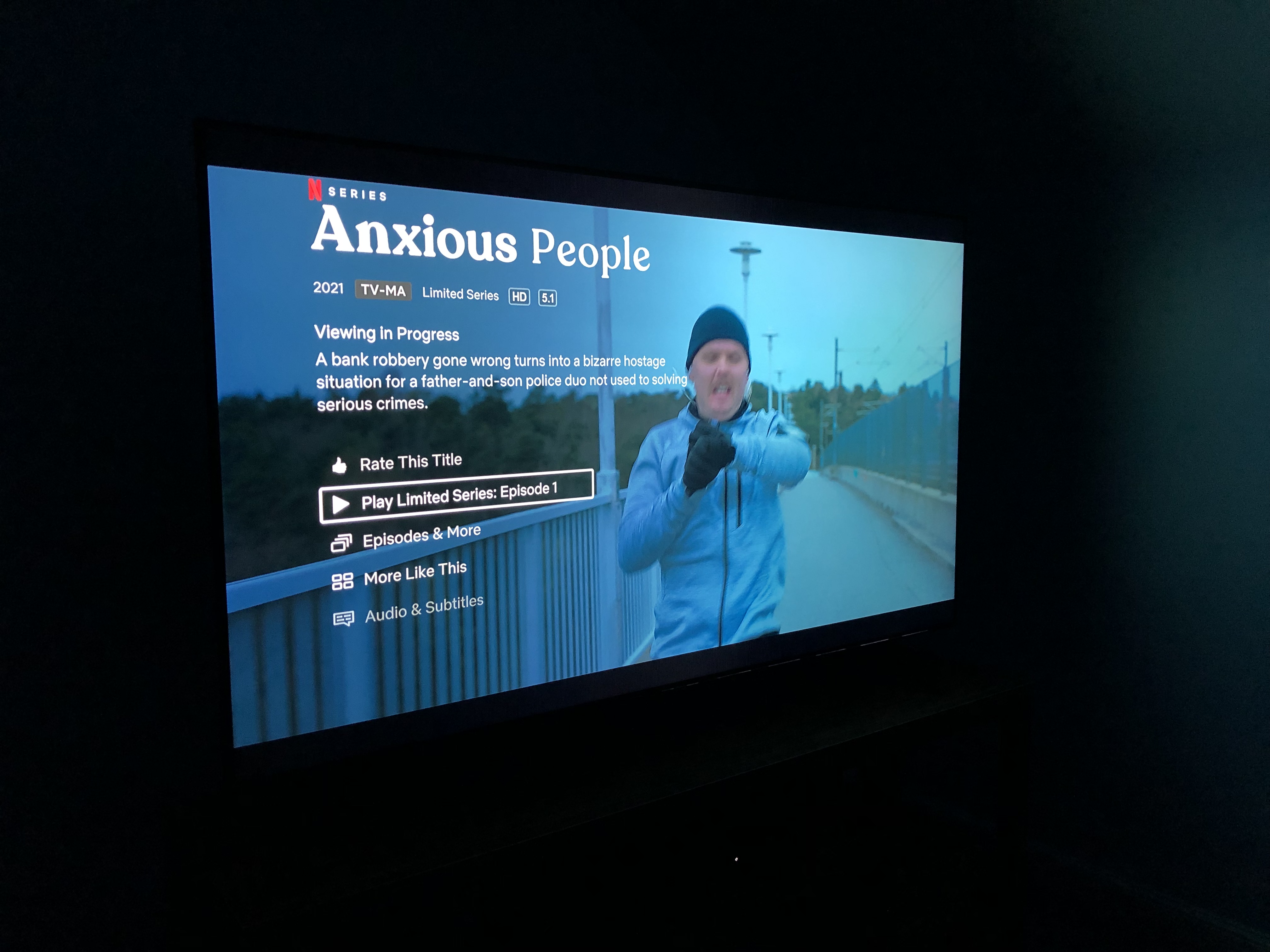
Let’s move on now, joyfully, to Anxious People, a Netflix mini-series (six episodes of about 30 minutes each) set and produced in Sweden and based on a novel of the same name by Fredrik Backman. Backman, by the way, is famous, having penned the international bestseller A Man Called Ove.

Sandy and I knew almost nothing about Anxious People before dialing it up, and are pleased as punch that we took the leap. It’s a whimsical tale centered around a group of folks who find themselves held hostage, in a loose sense, by an inept bank robber, and the police investigation that follows. I’m tempted to divulge a whole lot about Anxious People, multi-layered and fascinating as it is. For me to do so, though, would be a crime on my part, as telling too much would spoil the show for anyone interested in giving it a try.

So, I’ll add but a few more handfuls of words. To begin, are there flaws in the series? I, who can be picky to a fault, didn’t find any. The plot lines unfold and interweave deliciously, and the characters, nearly all of whom are laden with foibles and self-doubts, ring true. What we have here, then, is a gentle story that warmed the hell out of my heart. When the final episode reached its end I was filled with joy that carried over to the next day.

Boys and girls, that’s a wrap. I’d be happy to learn about who or what has given you joy of late. Till next time!

A Coronavirus And Philadelphia Flower Show Story

These are tough times. I’ll mention but three of many calamitous situations: War, raging in Syria and Yemen, has displaced millions of people from their homes and homelands. Ocean levels are on the rise as a result of melting Arctic and Antarctic glaciers and ice shelves. And coronavirus, emerging like a demon from a dark, dark corner, is throwing mankind into a tailspin. The virus is the story, so far anyway, of 2020.

Most of us might be fortunate and not contract coronavirus. But how can we not pay attention to it and worry about it? We can’t. As I began to compose this essay on March 11, I relived the conversations I’d had with the ten relatives and friends that I’d spent time with in the six days before that date. Coronavirus was, and remains, heavy on their minds. And on mine too. How far will this renegade spread? Just how deadly might it become? Will an effective vaccine or other treatment be developed, and if so, when? Will coronavirus mutate into other strains that will raise the human condition’s havoc level to even higher heights?

Before March 11, the virus hadn’t infiltrated my region too much (I live near Philadelphia, Pennsylvania, USA), or so it was thought. How quickly things have changed since then, though. As of this article’s publication date (March 16), there are many confirmed cases of coronavirus in Pennsylvania. And, as we all know, numerous national and local governments, worldwide, have increased restrictions on travel, and have ordered schools and certain businesses and other organizations to close until further notice (this is true for my region). Much of the same has occurred via voluntary restrictions and closures too.

As a result, over the last few days my wife Sandy and I have made big adjustments in regard to what we do and don’t do. So, it’s sobering to think that until recently pretty much everyone around here was living life fairly normally — the population was aware of the virus, but was only starting to act cautiously. Sandy and I certainly weren’t exercising a whole lot of caution when, on March 6, we boarded a train in our suburban town and rode it into the heart of central Philadelphia. A short walk away was the Pennsylvania Convention Center, a huge-as-hell structure that for nine days this month was home to the Philadelphia Flower Show. We bought tickets for the show at one of the Center’s box offices and entered the exhibition hall.

The Philadelphia Flower Show is an annual, world-famous event. It began modestly in 1829 as a project of the Philadelphia Horticultural Society and has become, by far, PHS’s most noted endeavor. Millions of people have taken it in over the years. Now, I’ve lived in or near Philadelphia since the mid-1970s and have been aware of the Flower Show all of that time. But I didn’t give a shit about it, and never went. Until a few years ago, that is. “What the hell, let’s go to the Flower Show,” I said to Sandy in 2016, and we did. We liked it. We returned in 2018, took 2019 off, and decided two weeks ago not to extend that non-attendance streak to two consecutive years.

One of the reasons that I didn’t give a shit about the Flower Show is that I wasn’t keen on looking at exhibit after exhibit of flowers. If I had investigated what the show really is about, though, I’d have discovered that it features all sorts of flora, not just flowers, and often replicates natural and man-made landscapes and waterscapes too. Hell, I’m down with all of that, so I should have given the Flower Show a shot way before I eventually did. I don’t live and learn all that often, but in this case it happened.

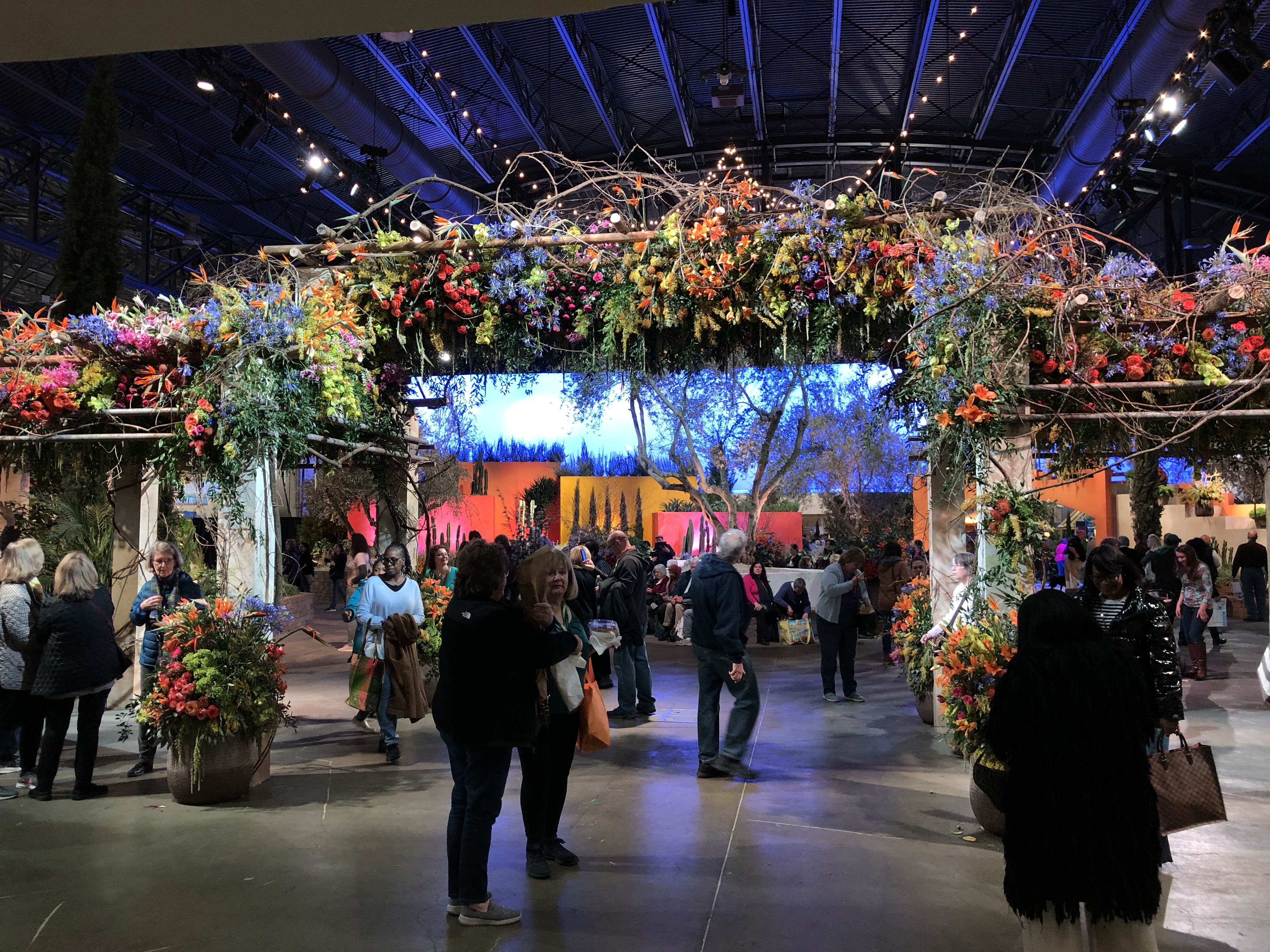
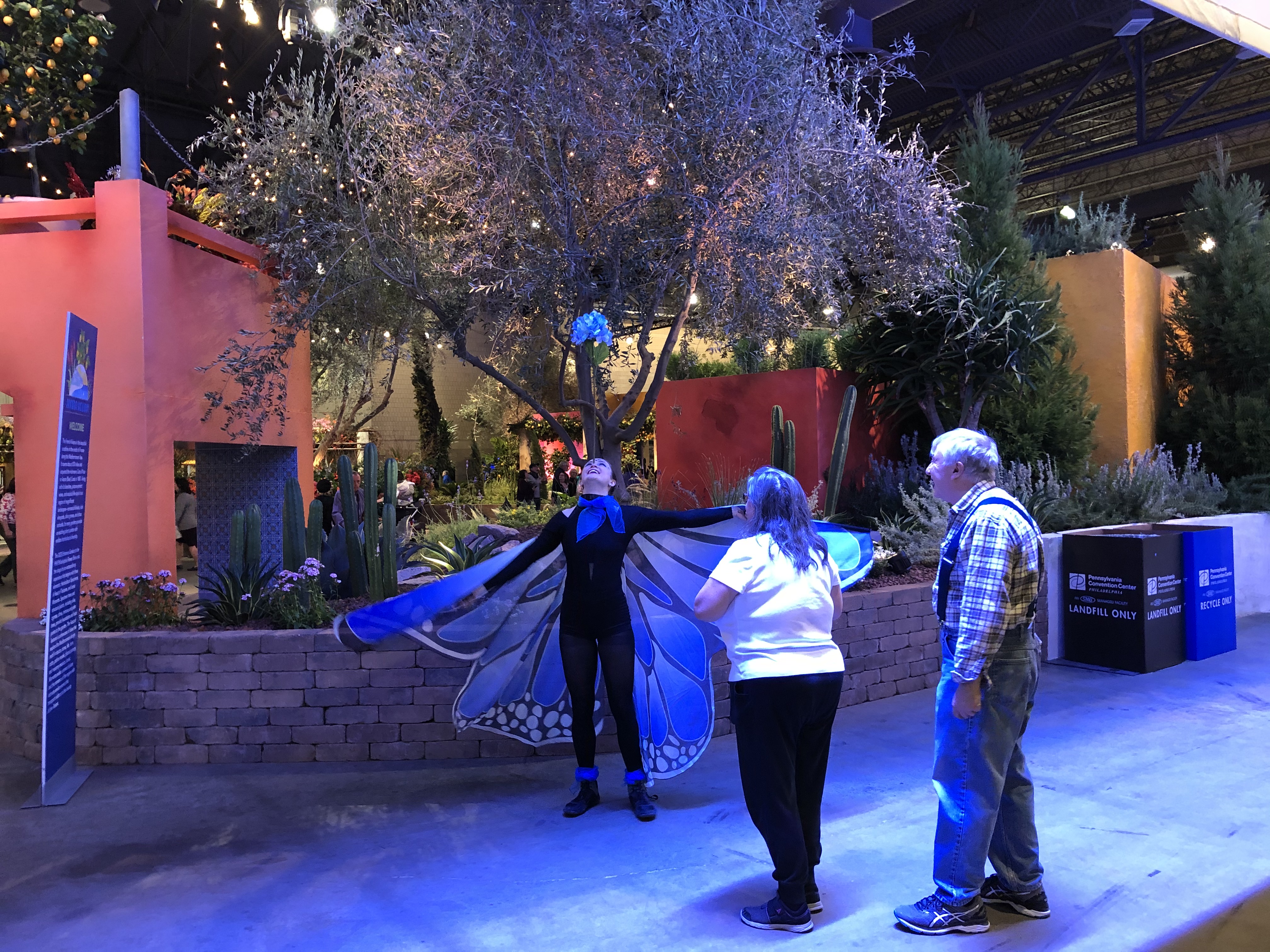
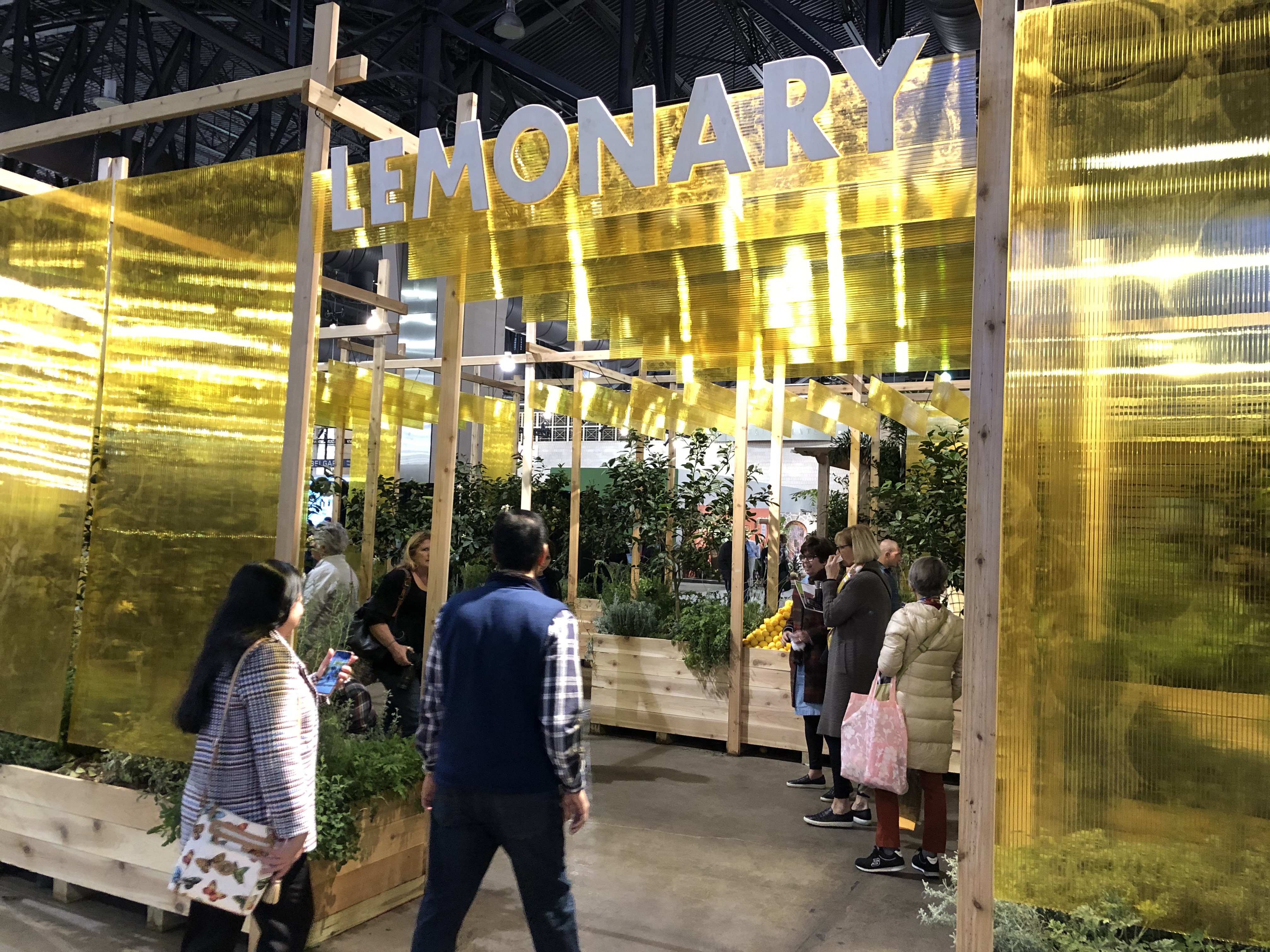
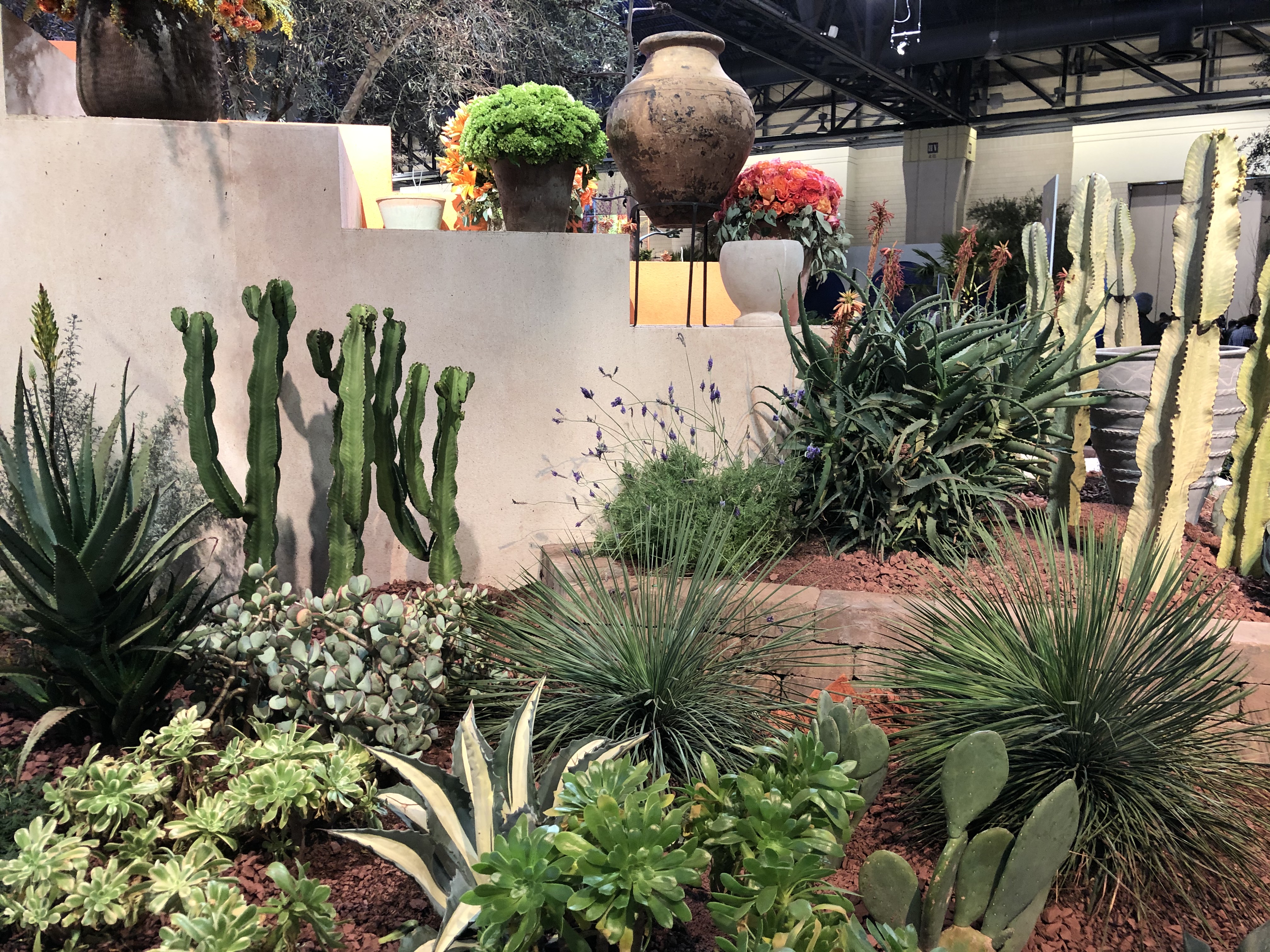
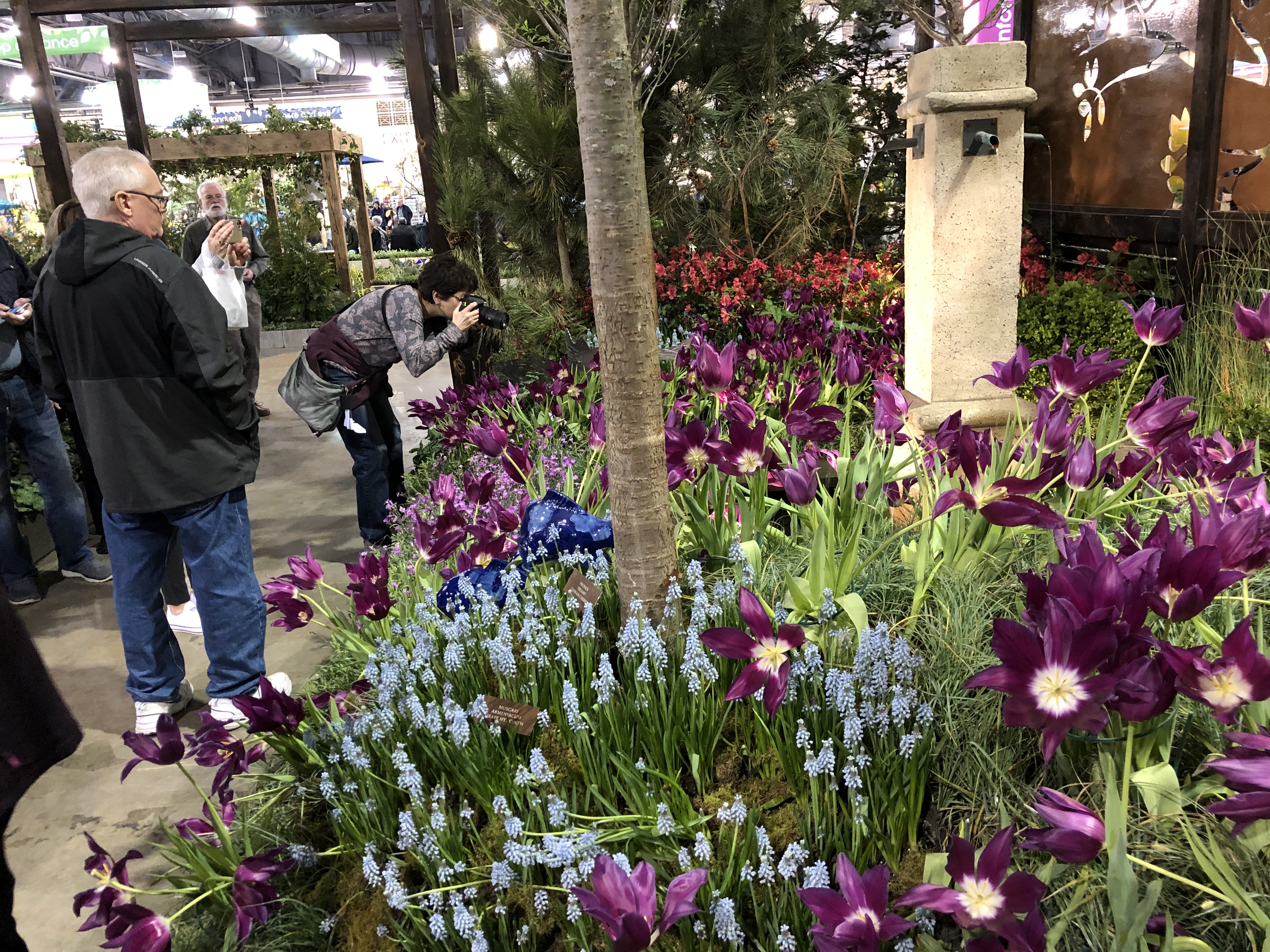
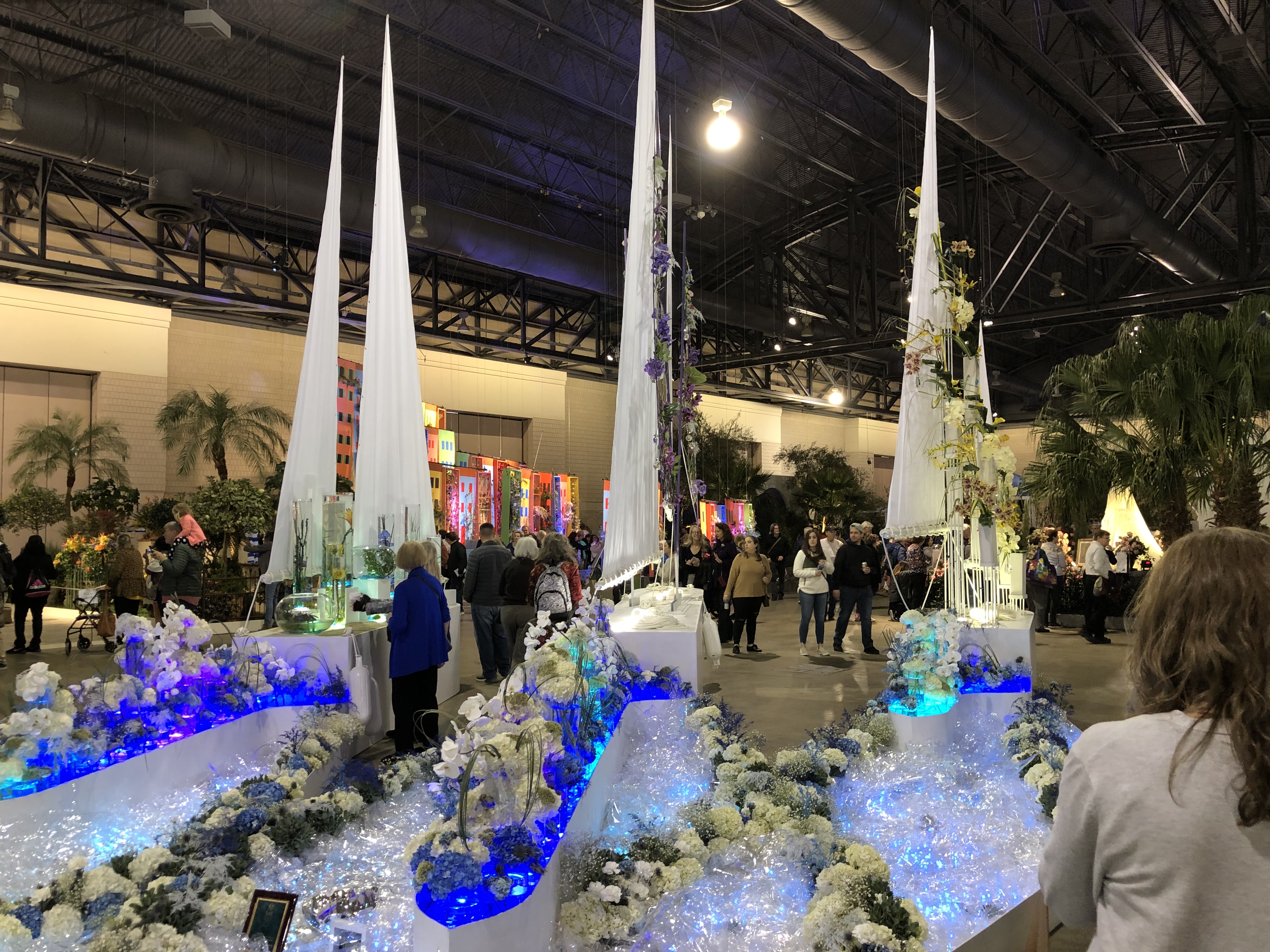
Almost needless to say, I found the 2020 version of the show to be absolutely a-ok. As did Sandy. Each year the Flower Show is centered around a theme, and this year’s was Riviera Holiday. Meaning, displays inspired by Mediterranean life in Spain, France, Monaco and Italy took up much of the hall (horticultural-competition areas and booths selling this, that and the other thing grabbed the rest of the floor space).

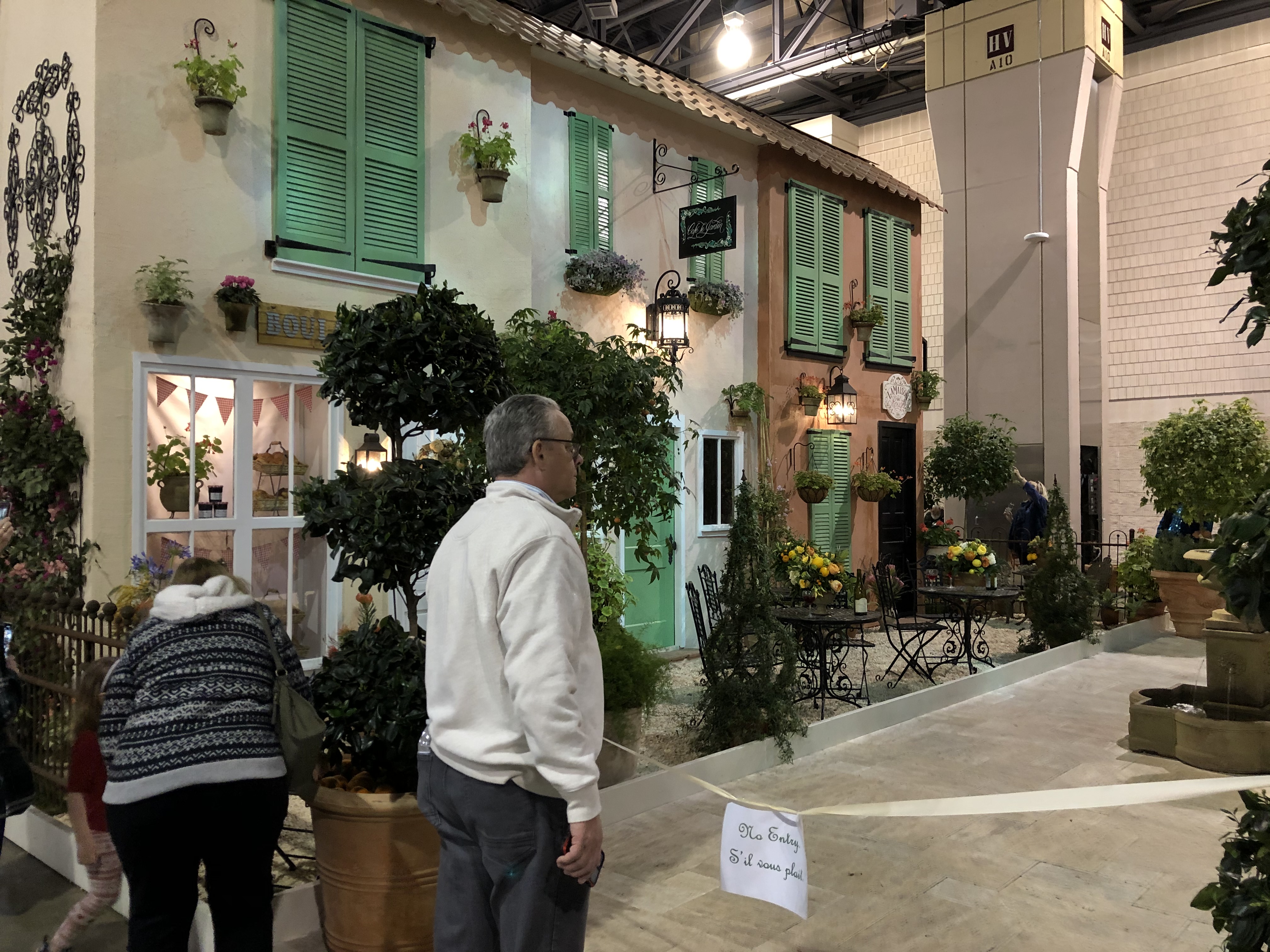
The themed section, filled with movie-set-like constructions, was where I spent most of my time. The gardens, some formal, some not, were lovely. As was a villa, and a modest cottage beside which a motor scooter was stationed, and the whimsical, color-drenched representations of Italian fishermen’s houses.

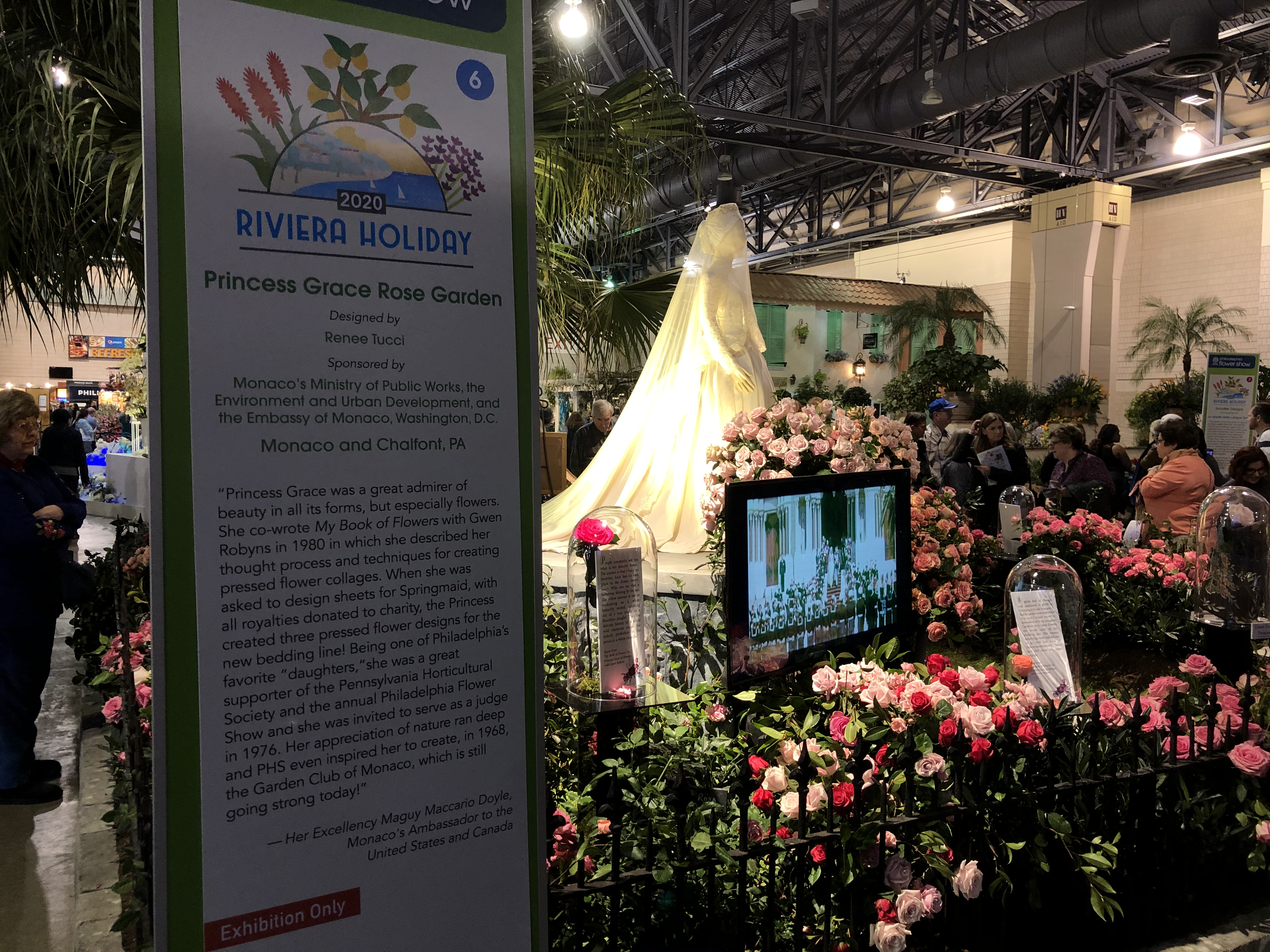
I dug the recreation of the Princess Grace Rose Garden. The original garden is in Monaco, the itsy-bitsy nation where, in 1956, the actress Grace Kelly became a princess by marrying Monaco’s Prince Rainier. A mannequin, clothed in a copy of Kelly’s wedding gown, stood in the garden. Grace, I’m sure, would have approved of the tribute.

Yes, the Flower Show had atmosphere. It brought me back to 1977, the only time I was on the Mediterranean coast. I spent six weeks in Europe in the spring of that year, travelling solo, before returning to a job in Philadelphia that I foolishly had quit two years before. One of those weeks was passed in southern France and in Monaco. A very good week it was. And the Flower Show gave me the urge to return, this time with Sandy. But the coronavirus situation will have to be under control before we step onto a plane. And who knows when that will be?

The crowds at the Flower Show on the day we attended were noticeably smaller than those we encountered in 2016 and 2018. One of our friends, a Flower Show aficionado, went twice this year. She told Sandy that attendance was less than usual on the days she visited too. Part of the shrinkage was due I’m sure to the hefty ticket price increases that PHS instituted in 2020. But the main factor, I’m also sure, was the threat of coronavirus posed by being in crowds.

That threat was understood on March 6 in my area, but nowhere near as well as it is understood today. That’s why the Philadelphia Flower Show was lucky, in a sense, that it was able to complete its run (last week, government mandates in Philadelphia and throughout Pennsylvania banned large events such as the Flower Show.) On the other hand, it’s more than possible that some amount of virus transmission took place at the show. And that truly sucks.

Coronavirus ain’t playing. It already has killed thousands. And its course is unpredictable. Hang on tight as best you can, girls and boys.

(Please don’t be shy about adding your comments. And if you’re in the mood for sharing this article, go for it! I thank you.)

(The photos, duh, are from the 2020 Philadelphia Flower Show. If you click on any photo, a larger image will open.)

I’ve Got A Few Recommendations. How About You?

During our vacation on Cape Cod in October, my wife and I poked around the cute town of Chatham one fine, sunny afternoon. While my much better half busied herself in the aisles of a store or two, I went into the Chatham Orpheum Theater to try and find out which films would grace its screens in the upcoming weeks. Thumbing through the theater’s brochures at the ticket counter, I overheard a conversation taking place between the guy behind that counter and a patron. They were discussing literature, and one of them mentioned Cacciato. Man, I’d heard of Cacciato, so I opened my trap and said so.

“Are you talking about Going After Cacciato, the novel by Tim O’Brien?” I asked them. The ticket seller gave me what I interpreted as one of those Huh, this asshole knows about Cacciato? looks, but I wasn’t offended. Anyway, it turns out that the two fellows mostly had been gushing over another of O’Brien’s works, The Things They Carried. They briefly told me about the book, which came out in 1990 and, like Going After Cacciato, was inspired by the time that O’Brien spent in 1969 and 1970 as a soldier in Vietnam. It sounded intriguing. “Do you want me to write down the name for you?” the ticket seller asked. Indeed I did, and so he did. Into my wallet the slip of paper went.

Not long after I got back from vacation I borrowed The Things They Carried from a local library. I finished it last week. And I have to say that the gents were right. A series of interconnected, semi-fictional stories about the Vietnam War (pre, during and post), the work impressed me. It doesn’t glorify war, doesn’t dwell on battles. What it mainly does is lay on the table the emotions and mindsets of people attempting to deal with potential, immediate and imaginary dangers. You’ll find the good, the bad and the ugly in this book. And also the mysterious and the truly touching. In the best of the stories, O’Brien’s words come at you like the blows of a patient, precise boxer. Clearly, I recommend The Things They Carried.

Recommendations. There are a few other new ones kicking around inside me. And there’s no way I can contain them, so desperate are they to meet and greet cyberspace. With no further ado then, here they are.

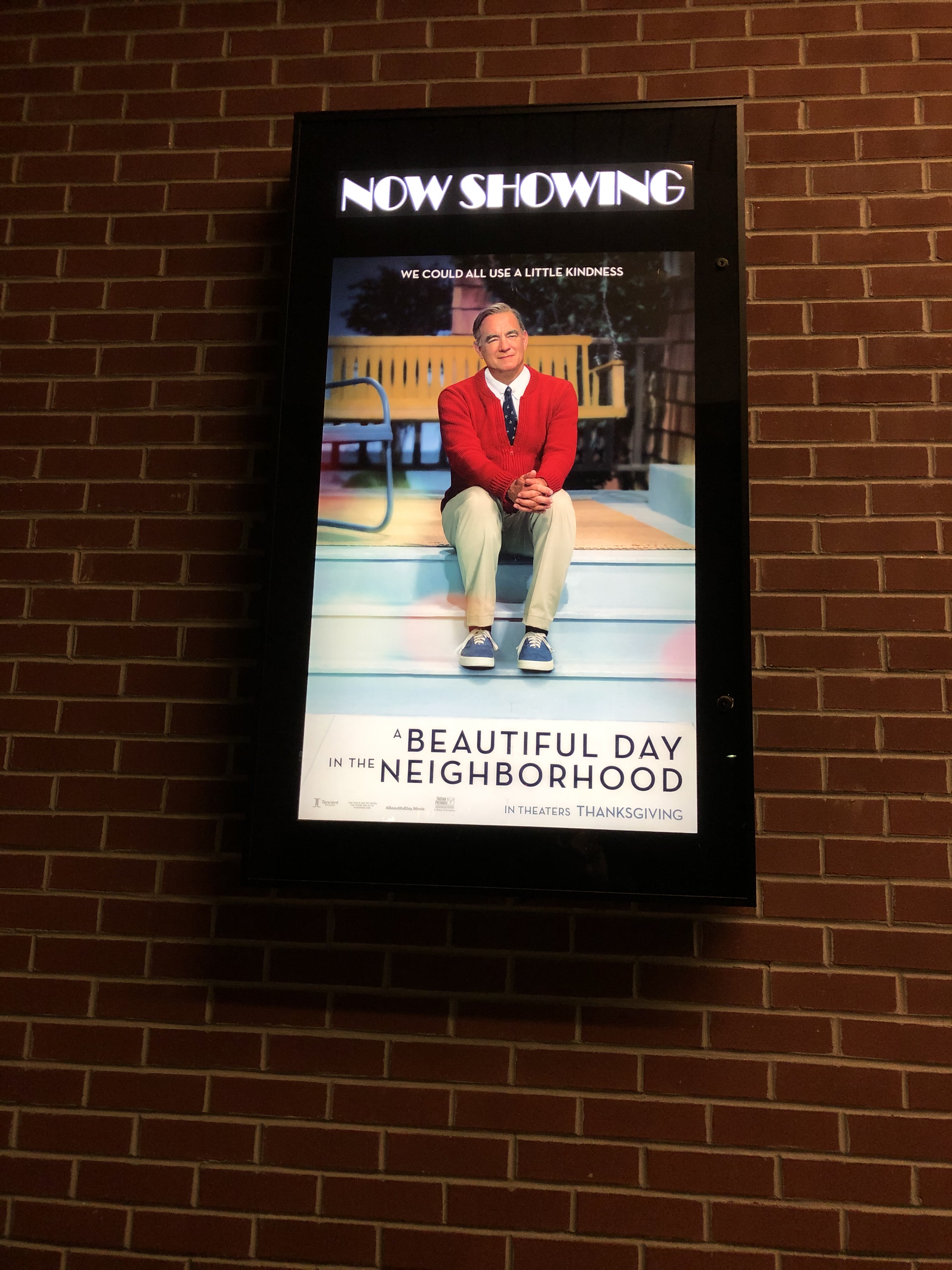
A biopic of sorts about the late Fred Rogers, host of the legendary kids’ show Mister Rogers’ Neighborhood, has just come out. A Beautiful Day In The Neighborhood is its name, and it stars Tom Hanks as Rogers. Now, I know that Fred was a strong force for decency and love. But his nasally voice, his sloooow talking pace, and his unnervingly calm manner never appealed to me. Nevertheless, my wife and I went to see the film a handful of moons ago. And I loved it. Having read no reviews in advance, I was happy to discover that it is not a typical biopic. Instead, it’s an imagined examination of the relationship between Fred and a cynical journalist named Lloyd Vogel, who is assigned, in 1998, to interview and profile Fred for Esquire magazine (the movie is drawn from the friendship that developed between real-life journalist Tom Junod and Fred).

A Beautiful Day rings very true. Hanks is Fred. And decency and love are largely what the movie is all about. Will Lloyd Vogel come to believe in the powers of Fred? I ain’t saying. Will Fred start talking faster and become the type of guy I’d want to discuss sports, music, food and girls with? Nah, but that’s more than okay. A Beautiful Day In The Neighborhood flirts with sappiness here and there, sure, but it got to me anyway. That’s because it gently aims for the heart and doesn’t miss.

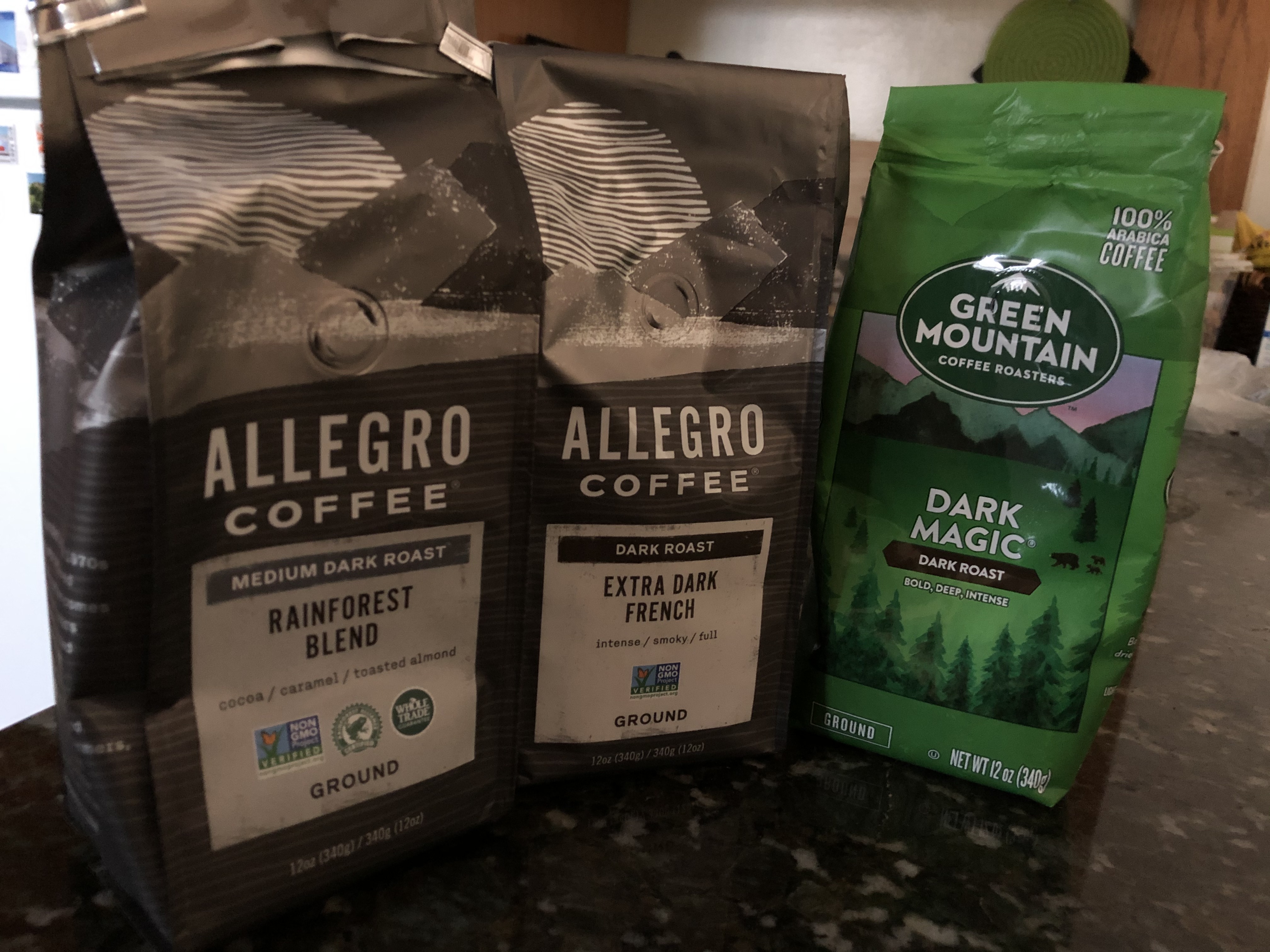
Hey, it’s almost dinner time in my household, so I’ve got to wrap this up. You know what else is good? Beers from Magic Hat and New Belgium breweries, that’s what. In November I bought variety packs of their robust, soul-satisfying ales. And I’m going to apply those same adjectives (robust; soul-satisfying) to the coffees that Allegro and Green Mountain coffee companies turn out. My wife and I are hooked on several of their roasts. I’m tempted to use the adjectives also to describe myself, but I’d be lying out my ass if I did. So, I won’t.

The ball is now in your court. What’s been ringing your chimes recently? Down below is a section where you can enter your comments.

Before I go, though, I have to mention and recommend a golden oldie — Bernadette —  that has been stuck in my head for a few weeks. I’ve heard it dozens of times in my life and always dug it. But when the tune came on the radio not long ago it walloped me like never before. Bernadette, by The Four Tops, was released in 1967. And it’s never gone away. Such a great song. The desperation in lead singer Levi Stubbs’ voice sends chills up and down my ol’ spine. I don’t like having earworms. But if I’ve got to have one, this is an excellent choice. Bernadette!