Fun Times In Paris And Amsterdam: An Overview

We went, we saw, we had a very swell time overall, and then we came home. The end.

There’s something to be said for conciseness, don’t you agree? And maybe if I were more courageous than I am I’d write not another word beyond the 18 contained in the two masterful sentences above. But my fingers, God help them, are itching to type, so I’ll bag that idea for now. In fact, I’m going to try and bite off more than I normally can handle, by turning my wife Sandy’s and my recent visit to Paris and Amsterdam into a three-part blogging extravaganza. I’ve noted before on these pages that I have trouble enough producing one-parters. Wish me luck.

Let’s begin. In many ways I’m a lucky individual. And I don’t take my good fortune for granted. Throughout my adult life, for instance, I’ve done a fair amount of traveling. In the earlier of those years I somehow wandered far and wide with not much more than a few bucks in my pockets. During the last three decades they have been more fully filled with cash (and plastic). Regardless of my financial situation, though, I’ve never ceased to be amazed that I’m able to leave the home environment and rev my motor in other parts of the world. And for my money you can’t do a whole lot better than to frolic in Paris and Amsterdam. Great cities both. Beautiful cities both. And Sandy’s and my week-and-a-half-long sojourn there earlier this month came with a special bonus. Namely, we spent most of the expedition with our très magnifique pals Alan and Martine.
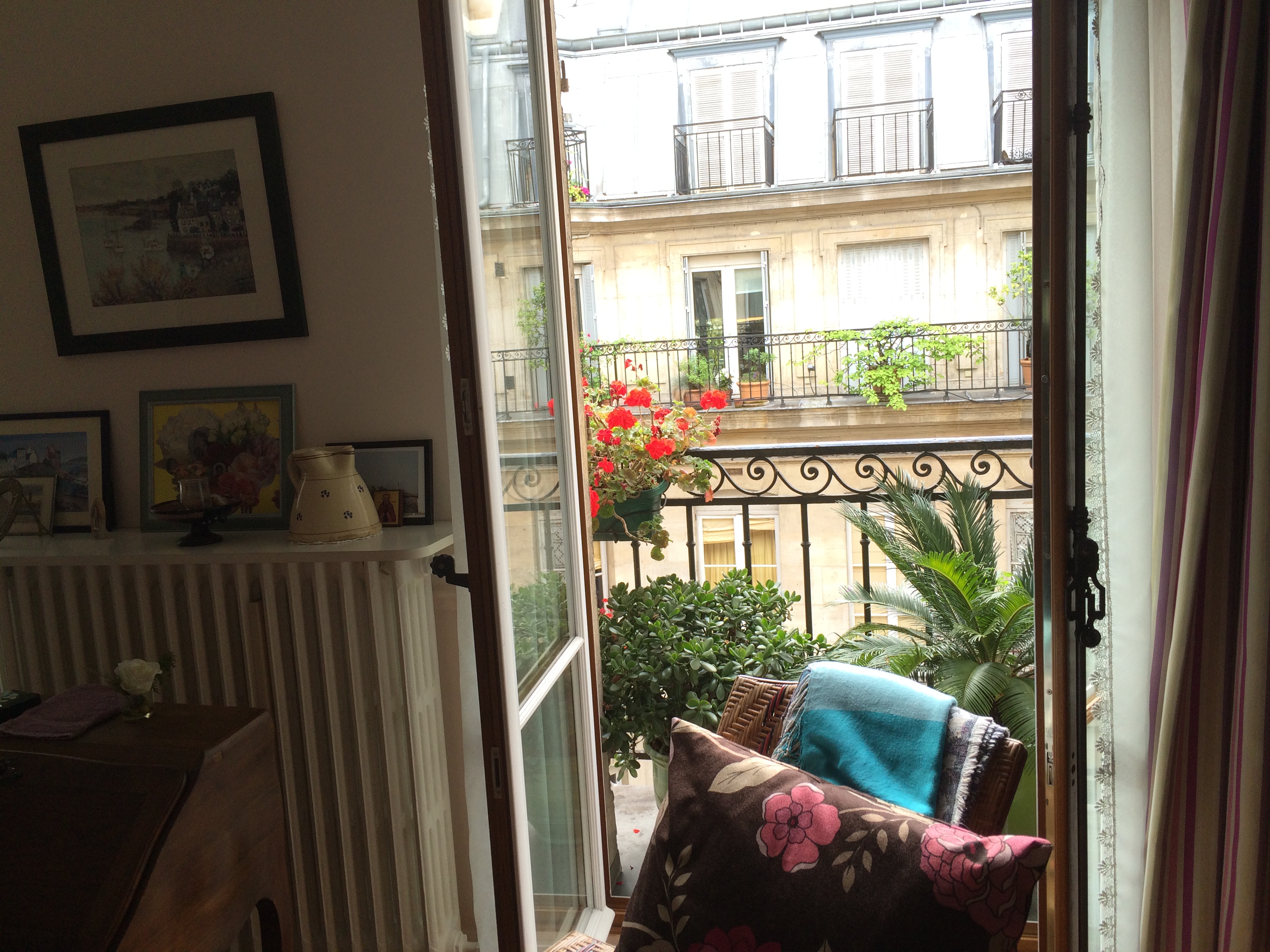
The view from Martine and Alan's guest bedroom.
The view from Martine and Alan’s guest bedroom.

Martine and Alan live in Paris. Have a lovely home in the city’s heart. And they not only put up with us, they put us up. I guess they like us because, after four days of that, they hopped aboard an Amsterdam-bound train with Sandy and me. The four of us spent several days bopping around that canal-laced city until the scheduled time arrived for the Parisians to return home. Alan! Martine! Don’t abandon us! We’ll be lost without you! But Sandy and I showed ’em. Yeah, maybe we stumbled and fumbled a bit, but we sure as shootin’ had three more Amsterdam days heavily sprinkled with fun. Amsterdam, I miss you. A lot.

Now, Sandy and I had been to Paris before. We’d seen most of the must-sees and plenty of the less-noticed sights too, such as the building in which Vincent van Gogh crashed with his brother Theo for two years in the 1880s. This time around we decided to let things flow organically, whatever that means. And to try and spend lots of time just strolling around, taking in the views and vibes in as unpressured a manner as we could. Sure, we couldn’t resist going to a couple of museums (The Orangerie, The Marmottan Monet), and we had a sweet dinner in a quintessentially Parisian eatery (Le Petit Colbert), the type that natives frequent. But walking is what we did the most of. Miles and miles of it. All over central Paris, on both sides of the Seine. And beyond. The entire time, indoors and out, Martine and Alan accompanied us. They are expert tour guides and really, really good sports.
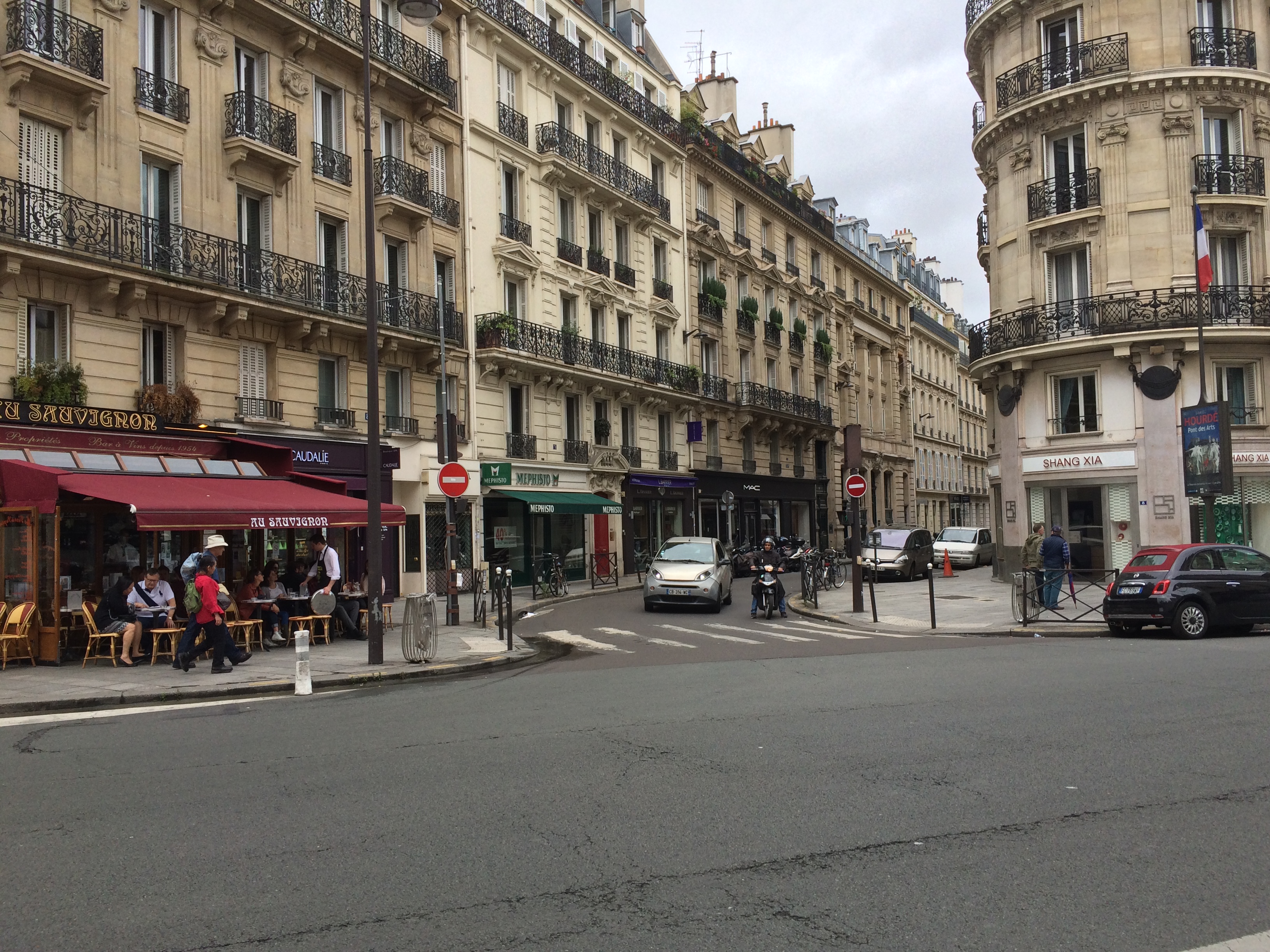
IMG_0523 IMG_0511 What can I say about Paris that hasn’t already been said? Nothing much, pardner. But that won’t stop me. I mean, I’ve got blog stories to create. First, if you haven’t been and have the means, you should go. As everyone knows, Paris’ appeal isn’t simply its gorgeousness . . .  the city is intriguing too. Streets come together at odd angles, a wonderful idea. Many sidewalks are narrow, an example of quaintness of which I approve. And seemingly every block has alluring buildings you’d like to live in, bistros whose tables are just made for sipping espressos beside, and perfect, little shops loaded with foods better than you’re likely to find at home. The pastries, the breads, the cheeses. Did somebody say breads? I live in suburban Philadelphia, and I know of only one place within five miles of my house where I can buy a crusty, flavorful rustic loaf of bread. Yo, when’s the next flight back? I need to be around people who know how to bake the staff of life.
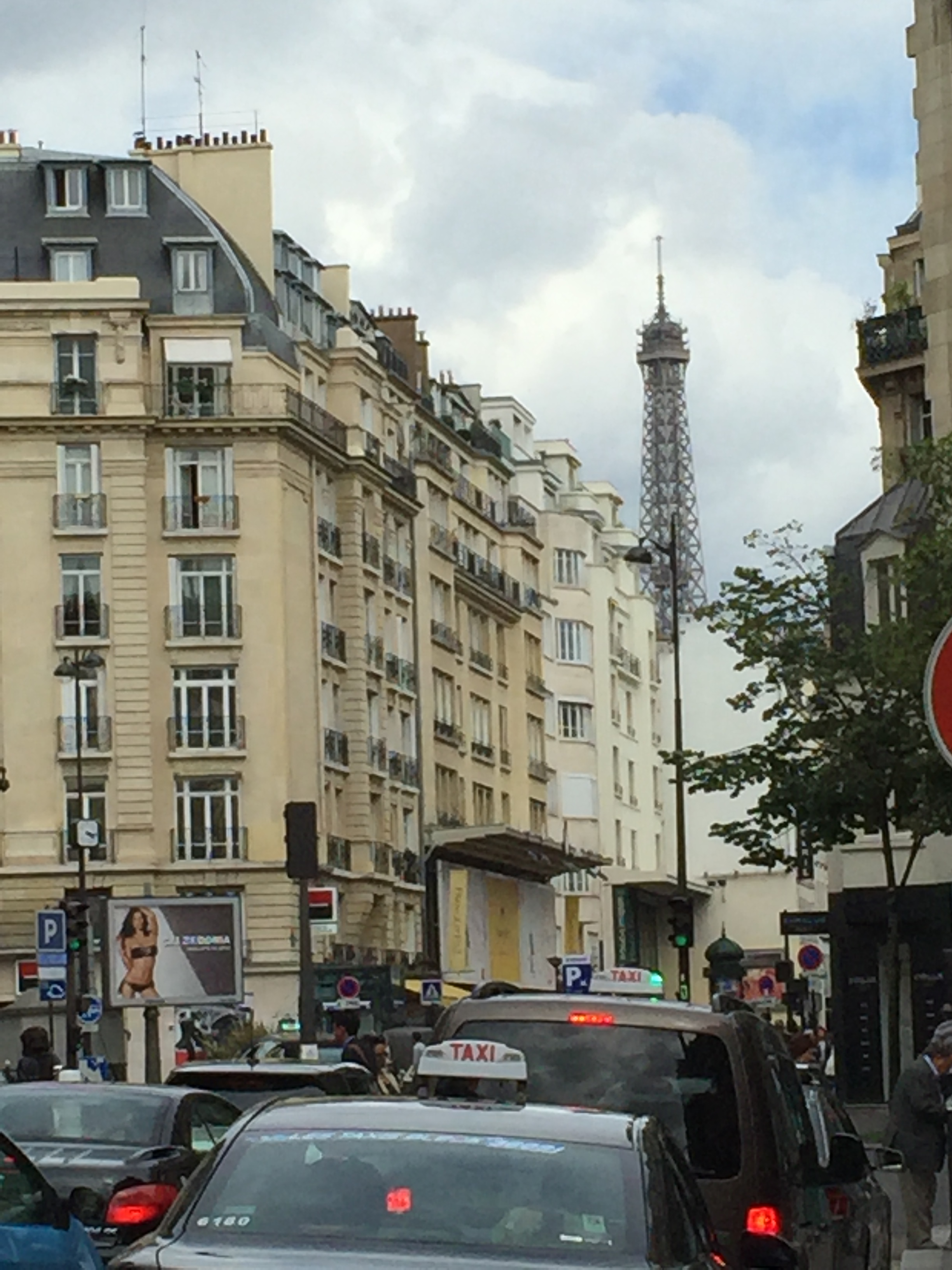
Eiffel Tower in the distance.
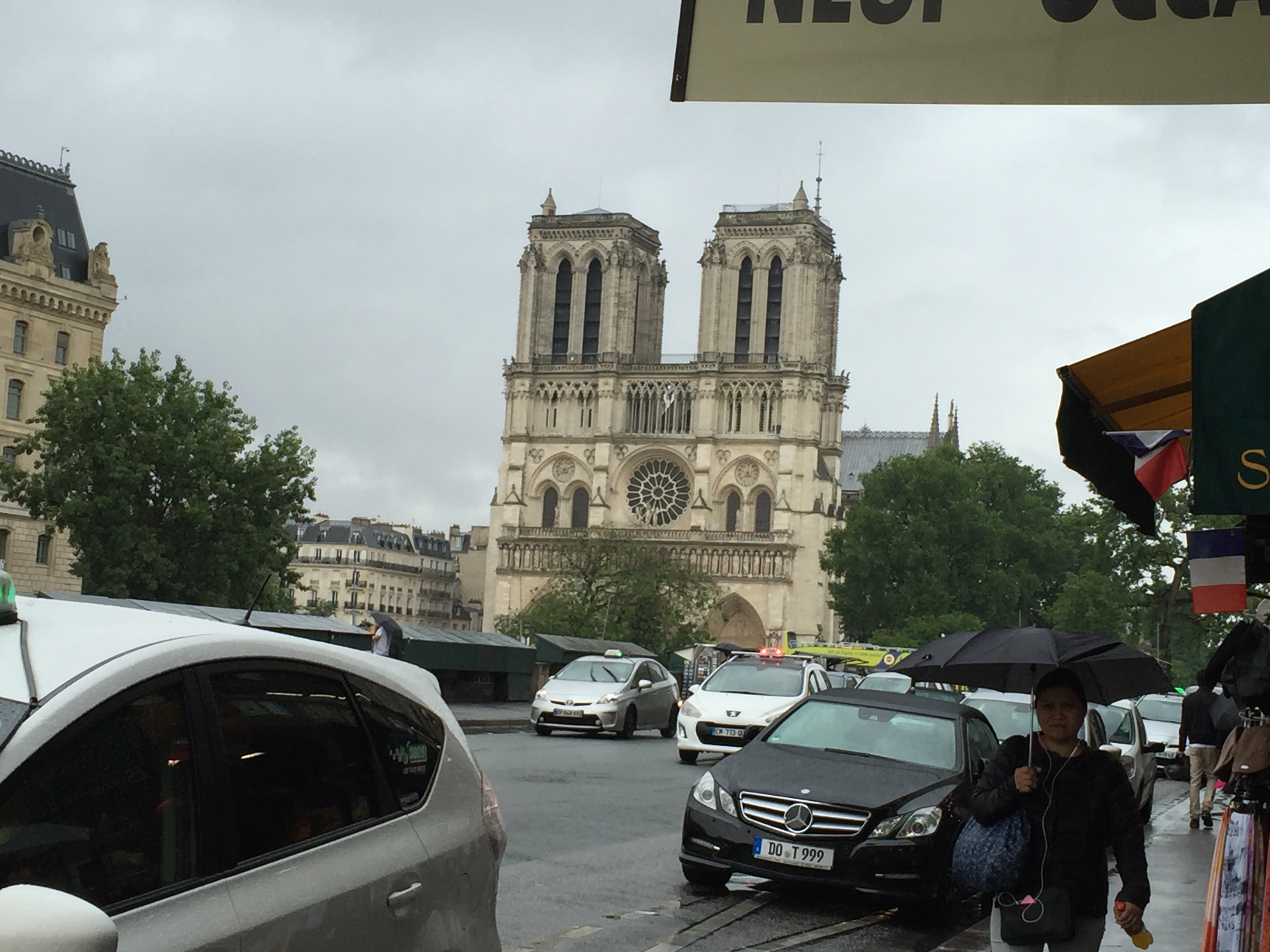
Notre Dame Cathedral.

And there’s a soul-satisfying uniformity in scale and color to much of Paris that I’d forgotten about. Most of Gay Paree’s buildings are from the 1700s and 1800s and about seven levels high and made from beige-colored limestone. Talk about a charming and serenity-inducing look. I couldn’t get enough of it. I wallowed in its aura.

It would be a mistake for me to end my brief Parisian recap without mentioning the big guns for which the city is famed. For starters: The Eiffel Tower, Notre Dame Cathedral, the Seine, the unreally-huge Louvre Museum. To first-time visitors I’d say you’d do well to examine them thoroughly, though, to be honest, you easily could live without stepping foot within the Louvre.

A snap of the fingers later, Sandy and I and our friends found ourselves in Amsterdam. I’d been there about 30 years ago, though my pigeon-like brain has forgotten many details of the experience. Sandy never had been. I’ve got to tell you, this is a place where I’d be happy and content as a clam to live. And the fact that there wouldn’t be a language problem is a plus, as Amsterdammers speak English in addition to their native tongue. I kept looking around and exclaiming to myself and to whomever else in the party was nearby: “I love this city.”
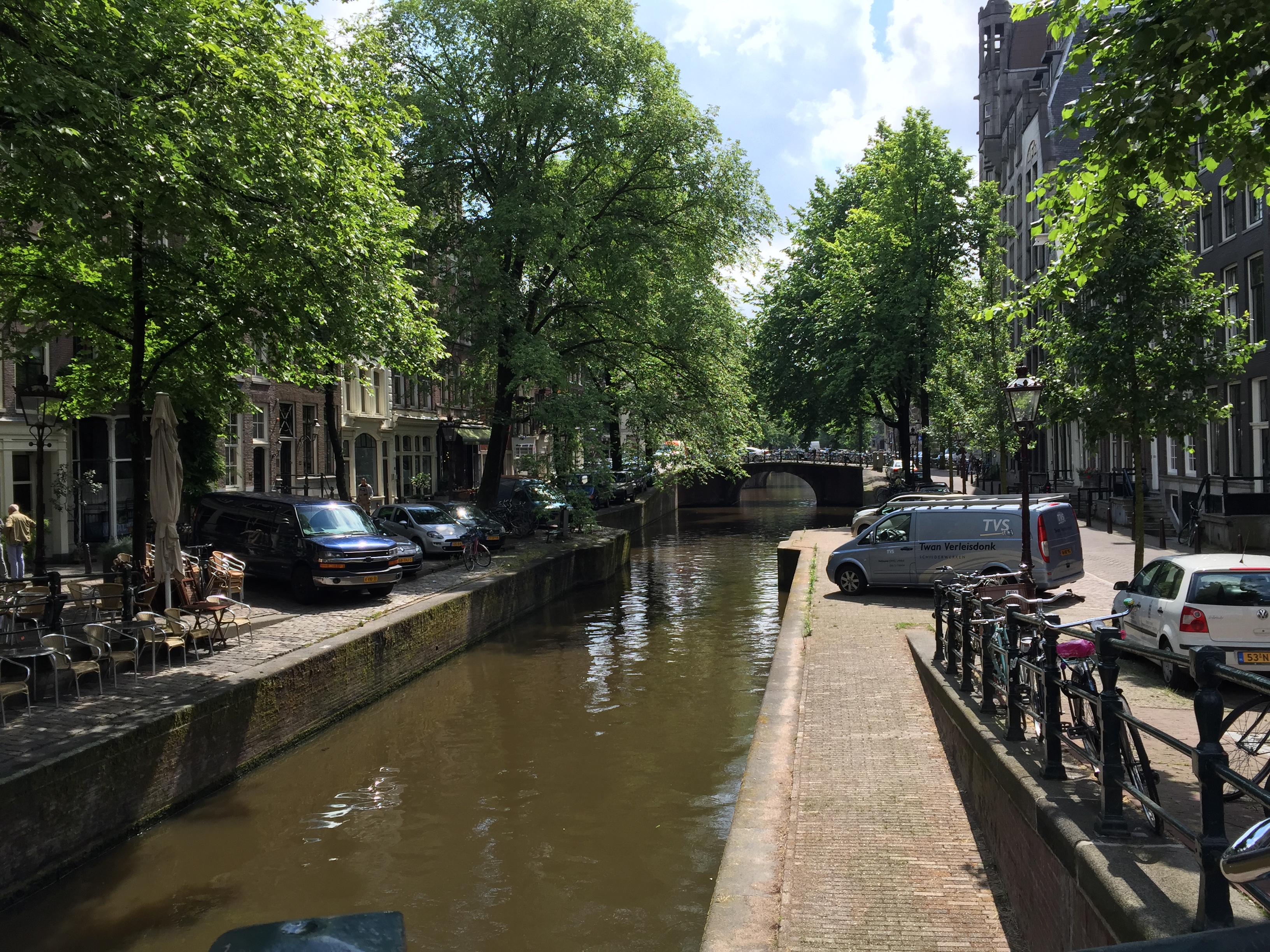
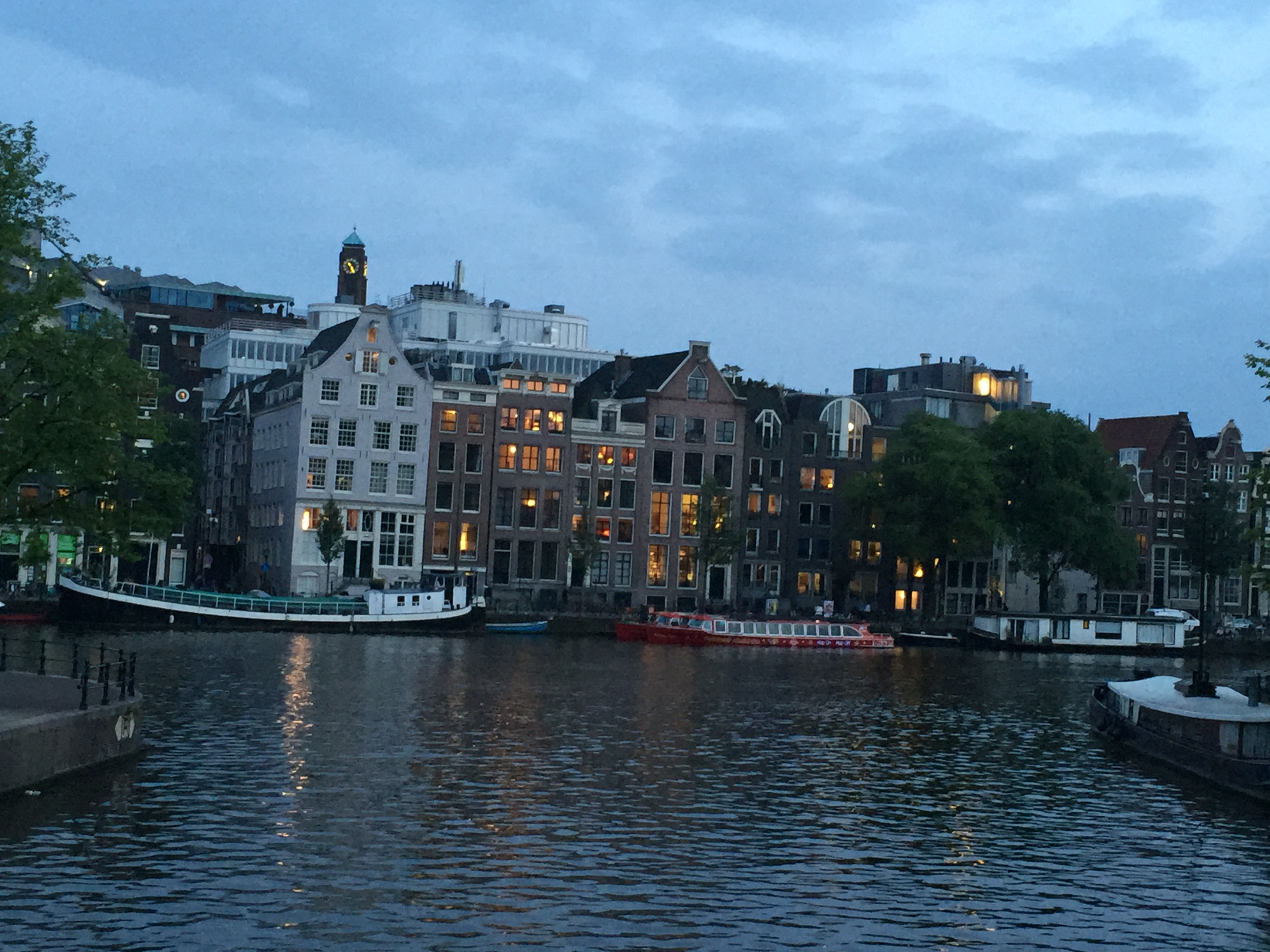
IMG_1401IMG_1463What’s not to love? Amsterdam looks great. Most of the houses, many of which overlook canals, are cozy and cute and entertainingly gabled. Generally they stand five levels above ground and are constructed of bricks. And they are not new, the majority having been erected between 1500 and 1900. I like being in places that look pretty much the same as they did hundred of years ago. And the canals? Man, they crisscross the city gently yet semi-riotously. And their prettiness can not be exaggerated. As in Paris, the four of us walked and walked and walked. Very happily. And when we got tired of walking we climbed aboard Amsterdam’s trams, which make navigating the city a breeze.
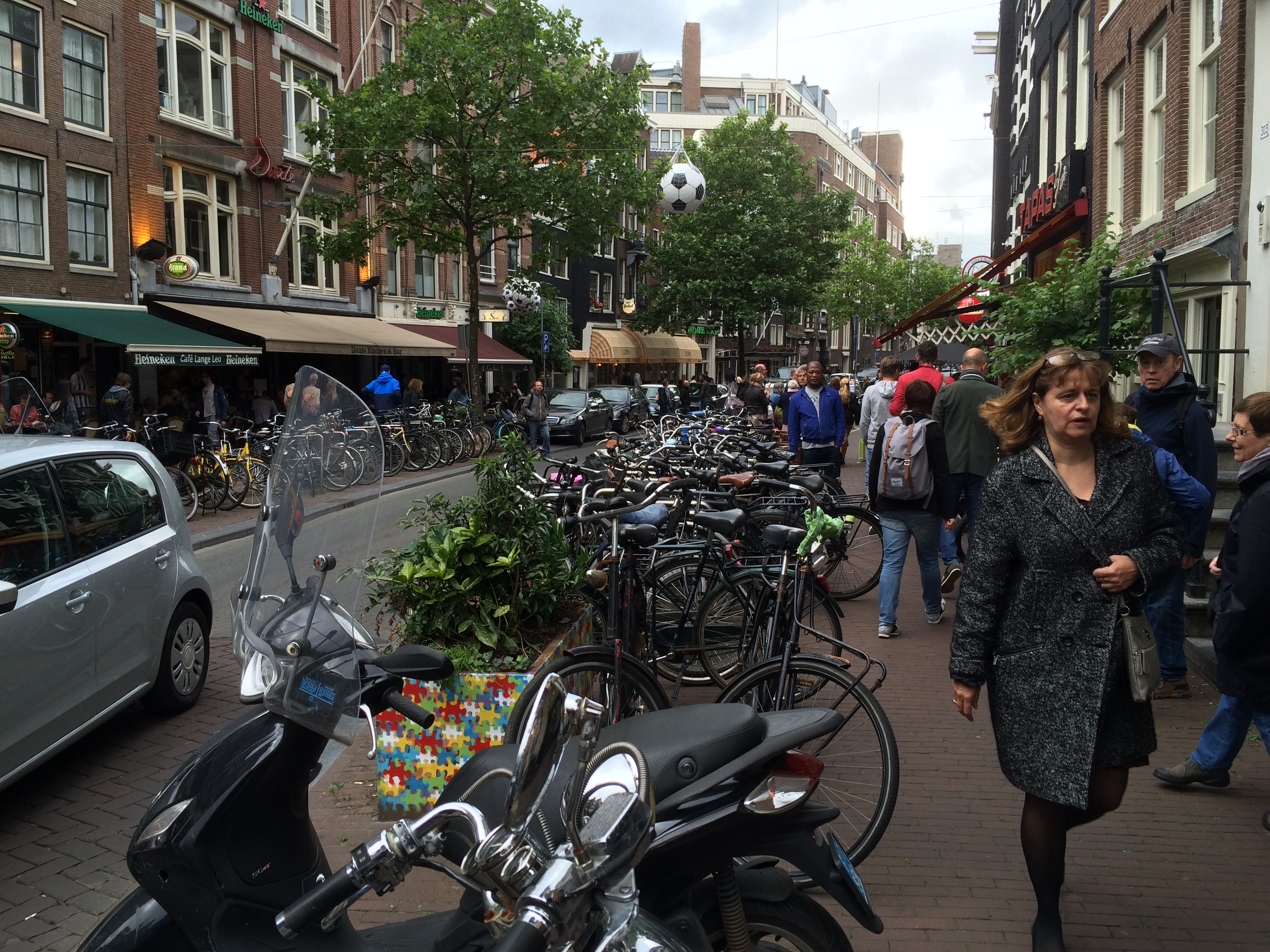
 

IMG_0670Amsterdam is relatively compact, meaning that you can make it to pretty much anywhere on foot, though some treks might take you an hour and a half. There aren’t a ton of cars on the streets, and that’s because Amsterdammers are bicycle-crazed. Practically everyone owns a bike and uses it to get around. I’d heard about the bicycle scenario, and it was a gas witnessing it. Bicycles, bicycles everywhere, loads in operation, many more attached to bike racks, bridge railings, trees, you name it. You gotta watch out where you’re going or you might get smacked by a bike. One evening, Martine received a double dose of near-trouble. It’s easy to become distracted by the loveliness surrounding you in Amsterdam, and that’s what happened to her. Stepping off the sidewalk into the narrow street bordering a canal, she nearly got clipped by a car. Half a minute later, at the same spot, a bicyclist almost broadsided her. But I’m giving the wrong impression. Back to Amsterdam’s magnetic powers.

At the zoo.
At the zoo.

The Fearsome Foursome hit some of the famed sites together (Anne Frank House, Van Gogh Museum, Rijksmuseum) and took a groovy canal boat tour of the city. And after Alan and Martine hightailed it back to Paris, Sandy and I poked around neighborhoods and other spots, such as the city’s botanical gardens and zoo and the Stedelijk Museum, an astonishingly good modern art repository. Then, before we knew it, the time approached for us to head to the airport and return home. But I can’t wind things up without mentioning two subjects: marijuana and prostitutes. Amsterdam is famed for both, as cannabis use and prostitution are legal, within boundaries, in this enlightened and welcoming city. And they undoubtedly help make for an atmosphere real attractive to millennials (residents and visitors alike), who fill Amsterdam’s streets in uncountable numbers.

Now, seeing the prostitutes was kind of cool. They have set up shop on a smallish enclave of blocks in what’s known as the Red Light District, which my group toured on a Sunday afternoon. Barely dressed, the ladies stood in full view behind ground level doors and windows in what I assume used to be normal residences. My eyes, and those of my companions, were popping. Needless to say, I didn’t come close to indulging.
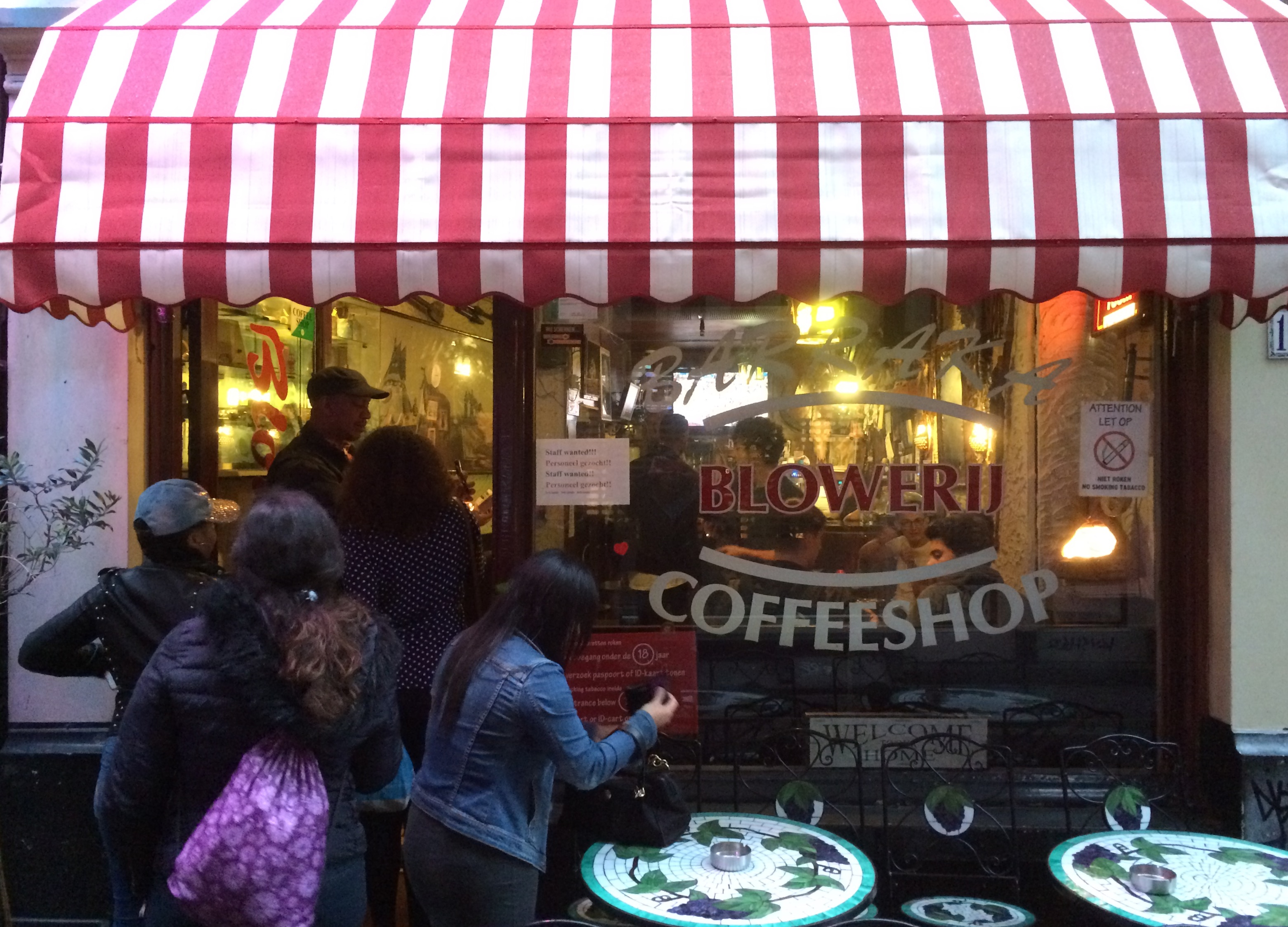
A purveyor of marijuana.

But marijuana was another story. Me, I haven’t had a toke in about 30 years. And boy was I tempted to resume the habit temporarily. After dinner on the day we arrived, Alan and I strode into one of the town’s numerous marijuana parlors, all of which, for reasons I don’t know, are called, incongruously, coffee shops. Alan strictly was an observer. The place looked like a Greenwich Village beatnik hangout. Lights were low, tables were small and occupied, and the air was filled with second-hand marijuana smoke. Inhaling deeply, I started to feel a bit of a buzz. I walked to the counter and sized up what’s what. Gazing at a menu, I saw that various strains of grass were available. The least potent varieties were described as strong. The most powerful were guaranteed to get you incredibly high. Prices for one ounce ranged, I think, from 10 to 15 euros. Not too expensive at all. One of the two girls behind the counter suggested to me that getting stoned after years of abstinence would be a terrific idea. I looked at Alan and pondered the situation. I breathed in the second-hand smoke hungrily. My buzz got slightly stronger. In the end, though, nerd that I am, I chickened out.

To be continued, if the stars align themselves properly.

(Don’t be shy about adding your comments, or about sharing this article with others)

(Most photos by Sandra Cherrey Scheinin. The crooked ones are by a nerd whom she knows. If you click on any photo, a larger image will open)
Killer Joe: The Song That Gave Me Pause

You know, I’m not exactly the poster boy for being cool. I mean, the last time that a hot chick couldn’t keep her eyes off of me was . . . was . . . was . . . yeah, now I remember. I was about two years old, being pushed around in a baby carriage. “Oh, he’s absolutely adorable,” the girl cooed, bending down to get a better look and never taking her gaze from mine. Wow, that was the best!

But I’ll tell you something. I do know how to be cool once in awhile. Like when I hear a great tune on the radio, one so finger-snapping and head-bopping fine that I can’t contain myself. Just watch me as I rise from the sofa and strut across the living room, the dining room, the kitchen and back again. Fingers snapping. Head a-bopping. Cool, man, cool. It happens now and then.

Killer Joe. That’s the tune that got me off the couch one recent evening. As usual I was doing not much of anything, except half-listening to the radio and counting the number of Cheez-Its crumbs stuck to the sofa’s cushions. I had counted 87 of them when — POW! POW! — Quincy Jones’ version of Killer Joe came on the air. It sounded spectacular. Next thing I knew, I was stepping.

killerjoebenny the-jazztet-featuring-art-farmer-and-benny-golson-killer-joe-argo
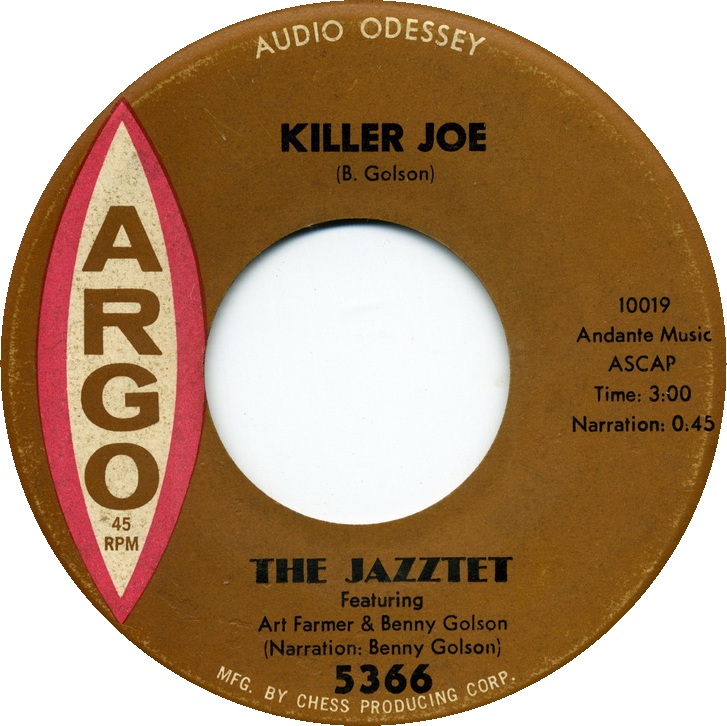
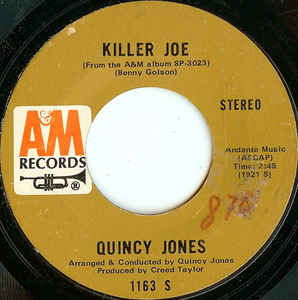
Killer Joe, a jazz standard, was composed around 1959 by jazz saxophonist Benny Golson, who has written many other songs (I Remember Clifford, Whisper Not, Stablemates) covered by scads of jazzbos. And Benny’s 1960 recording of Killer Joe is absolutely ace (click here to listen). Benny put the tune on wax with The Jazztet, the group that he co-led with trumpeter Art Farmer, and it came out on their album Meet The Jazztet. But Quincy’s KJ is better. It’s just too, too much, though it took me awhile to settle permanently into that opinion (click here to listen). I like it more than The Jazztet’s version because it has more slinky sizzle. Quincy himself didn’t play on the tune, which is from his 1969 album Walking In Space. But he arranged and conducted it and hired some monster guys to send out the sounds. Ray Brown (bass), Hubert Laws (flute) and Grady Tate (drums), to name a few.

To me, Ray Brown’s confident, strutting upright bass is the key to Killer Joe. From the opening bass lines straight through to the song’s end, Ray Brown is walking the walk. He’s under control, yet swaggering. He’s keeping things tight and tense, but jaunty too. And Tate, his steady high-hat cymbal work somehow loose as a goose, ambles arm-in-arm with Brown. Beyond the purring Brown/Tate engine, I couldn’t get enough of the airy flute solo, the piercing trumpet interludes and the pleading voices of the female chorus. Man, my fingers were snapping big time as I did my household shuffle.

KillerJoeQuincyR-2139078-1368881598-7835_jpeg
It wasn’t till the next day, though, relistening to the song on YouTube, that I paid attention to the lyrics that the ladies sing. “Killer Joe, don’t you go/Hurt me slow, please Joe.” Whoa, what did that mean? Is this a song about physical abuse? Had I been slow-marching and bopping to a composition that contains a really nasty notion? It took me a good long while to grasp the meaning of the words. They don’t paint a pretty picture, but I believe that the hurt referred to is emotional, not physical. Killer Joe (the character, not the song) is a cad, a heel, a self-absorbed jivester whom some women just can’t resist. Smitten, they know it’s a certainty that he will leave them. And that their hearts face a sad destiny: to be broken. The ladies want to be let down easy, not hard.

Now, The Jazztet’s recorded version of KJ basically is an instrumental piece. It has no lyrics, though Benny Golson felt the need to open the proceedings with a spoken introduction to let the world know that KJ ain’t a swell guy. Nine years later, on Quincy’s version, lyrics, brief as they are, were added. Who wrote them? I’ve scoured the Web, coming up unsure as to the answer. Could have been Golson, could have been Jones, could have been both or neither of them. Regardless, Quincy’s 1969 take on the song expanded Golson’s equation. What had been an instrumental description of a me-first, ponies-playing ladies’ man became deeper, something to ponder. Quincy Jones’ Killer Joe is a swinging statement tempered with reminders about how doleful and strange and complicated life can be.

Speaking from my me-first perspective, it’s a good thing that Quincy’s KJ isn’t about women who like their bad boy to whup them. If it were, into the deep freeze it would go, never to be listened to again. I’d be a chump to support any tune that goes that far to the dark side, even if it grooves like a champ.

But all is well in my music world. Onward!

(Don’t be shy about adding your comments, or about sharing this article with others)

The Day My Father Went Eye To Eye With Van Gogh: In Memory Of My Father

Since April 2015, the month in which I began to blog, I’ve written tens of thousands of words on these pages, a fact that pretty well blows my mind. I doubt if I churned out that much product during my high school and collegiate careers combined. Luckily I’ve enjoyed doing the writing, and plan to keep on truckin’.

As Father’s Day 2016 approached I wondered what new article, in memory of my father, I might compose. After some thought I decided to republish the essay that I penned for last year’s Father’s Day. It is titled The Day My Father Went Eye To Eye With Van Gogh. There’s something about this story that gets to me. I hope it will do the same for you, whether you’ve read it before or not. Here it is:


My father came to live with me and my wife Sandy in Philadelphia soon after his 90th birthday, in 1999. He had been living alone on Long Island, but health issues necessitated his relocation. Good doctoring in the Philadelphia suburbs improved his physical condition quickly, but there was no cure for the declining state of his kidneys. He became a dialysis patient one year after he moved in with us, and he remained on dialysis till his death in 2005 at age 96.

My father was in pretty good shape until the final nine or so months of his life. He loved getting out of the house and joining Sandy and me and others at restaurants, concerts, museums, you name it. On this Father’s Day I’ll relate one incident that I look back on fondly. It was the day that he and I and my brother had a private viewing of a rarely-seen Van Gogh oil painting at the Philadelphia Museum Of Art.

There are several purported photographs of Vincent van Gogh. None are totally authenticated. This is believed to be from about 1886.
There are several known photographs of Vincent van Gogh, though they are not fully authenticated. This photo is believed to be from about 1886.

Vincent van Gogh is one of my two favorite artists. The other is Paul Cézanne. I never can decide which of the two I like best. For wordsmanship, however, I go with Vincent. In spring 2001 I read all 800+ of his mesmerizing letters, in their English translation. My father got a kick from this. He told people that I was becoming a Van Gogh expert, which was hardly the case. But my semi-obsession with Van Gogh was rock solid, and it is here that the story really begins.

One day in January 2002 I poked around some Van Gogh websites and discovered that the Philadelphia Museum Of Art, which Sandy and my father and I frequented, owned five Van Gogh oils. Yet, I had never seen more than four of them on display there. The painting that I wasn’t familiar with was Still Life With A Bouquet Of Daisies. Most experts believe that Vincent painted it in summer 1886, a few months after he moved to Paris to live with his brother Theo and to contemplate the new techniques and perspectives, most notably those of Impressionism, that had been invigorating the French art scene. Why wasn’t the painting on display? I needed to know.

A few days later, from my desk at work, I dialed the museum and got connected to an assistant curator. I asked about the mystery painting. She told me that the museum did occasionally bring it from storage to the public galleries, but that it had been a long time since that had happened. We chatted a little and then I said thanks and was about to hang up. But before I could the curator asked “Would you like to see it?” Huh? Huh? I couldn’t believe my ears. Yes ma’am, I would.

My father was about to turn 93, on January 19, 2002. A few days before that, to help our dad celebrate his birthday, my brother Richard planned to fly to Philadelphia from his California home. I explained this to the curator and asked her if my brother and father could come along with me (Sandy, chained to her job, wasn’t free to get mid-day time off from work). Sure, she said. Fairly stunned, I set the date for Friday January 18, a non-dialysis day. I knew that something special had just occurred.

The momentous day arrived. We drove to the museum and were met in the west wing by the curator. She was a lively and lovely person and probably was getting as big a charge out of the situation as anyone. Down an elevator we all went to one level of the museum’s cavernous underbelly. We followed our hostess along a long corridor, walking past many locked rooms. At our consecrated storage area she unlocked the door and we entered. Perpendicular to one of the room’s sides were very large moveable display panels. All of them were in their retracted positions. The curator pulled out one of the panels, both sides of which were covered with paintings, maybe 20 per side. I noticed a Chagall on the side facing us. Can’t recall what else. Except of course for a work near the left edge on the top row. The Van Gogh.

Still Life With A Bouquet Of Daisies. Philadelphia Museum Of Art
Still Life With A Bouquet Of Daisies.
Copyright Philadelphia Museum Of Art

It was show time. The curator wheeled over a tall moveable step ladder. Richie and I went up first. What did I make of Vincent’s oil? Well, Still Life With A Bouquet Of Daisies doesn’t have the brilliant color schemes that Vincent was developing in Paris. It is dark, with lots of deepened greens. Maybe that’s why the museum doesn’t bring it out of storage too often. But they should. With Vincent, there’s always something to admire. I took in his trademark broad brush strokes, the intense tangles of flower stems. The greens upon greens.

Richie and I and our benefactor were excited and happy for my father when his turn came. My dad was excited and happy too, a muted gleeful smile on his face, his eyes on alert. I’m sure he knew how lucky he was to do what he was about to do. Holding the ladder rails carefully, up he climbed. Admirable mobility for a guy one day away from the big 93. He gazed at the painting for a good long spell, longer I think than my brother or I had. He spouted words of admiration. He was having a ball. Finally he came back down. Thank you, thank you, thank you we said to the wonderful curator.

Over the following years, my father and brother and I talked about our museum visit many times among ourselves and with friends and relatives. Always with a grin. Always feeling a tingle. And so, I dedicate this Father’s Day essay to Hyman Scheinin, he whom I’m sure is the only nonagenarian ever to climb a step ladder to go eye to eye with Van Gogh.

(Don’t be shy about adding your comments, or about sharing this article with others)

Porchfest: A Very Good Idea

Good ideas . . . some people get ’em like crazy. Others, not so much. I’m near the bottom of the barrel of the latter grouping. I had a good idea about 50 years ago, when it dawned on me that grilled cheese and tomato sandwiches might be improved upon by adding a schmear of Gulden’s spicy brown mustard. Genius visited me that day, but hasn’t made an appearance since. Such, as we know, is life.

Which smoothly brings us to a remarkably good idea that some folks came up with nine years ago: a neighborhood outdoor music festival called Porchfest. When I first heard earlier this month about Porchfest’s existence I smacked myself on the forehead and said: “Yo, cowboy. This is so obvious. How come you never thought of it?” And then I remembered once again that, sadly, genius ain’t no friend of mine.

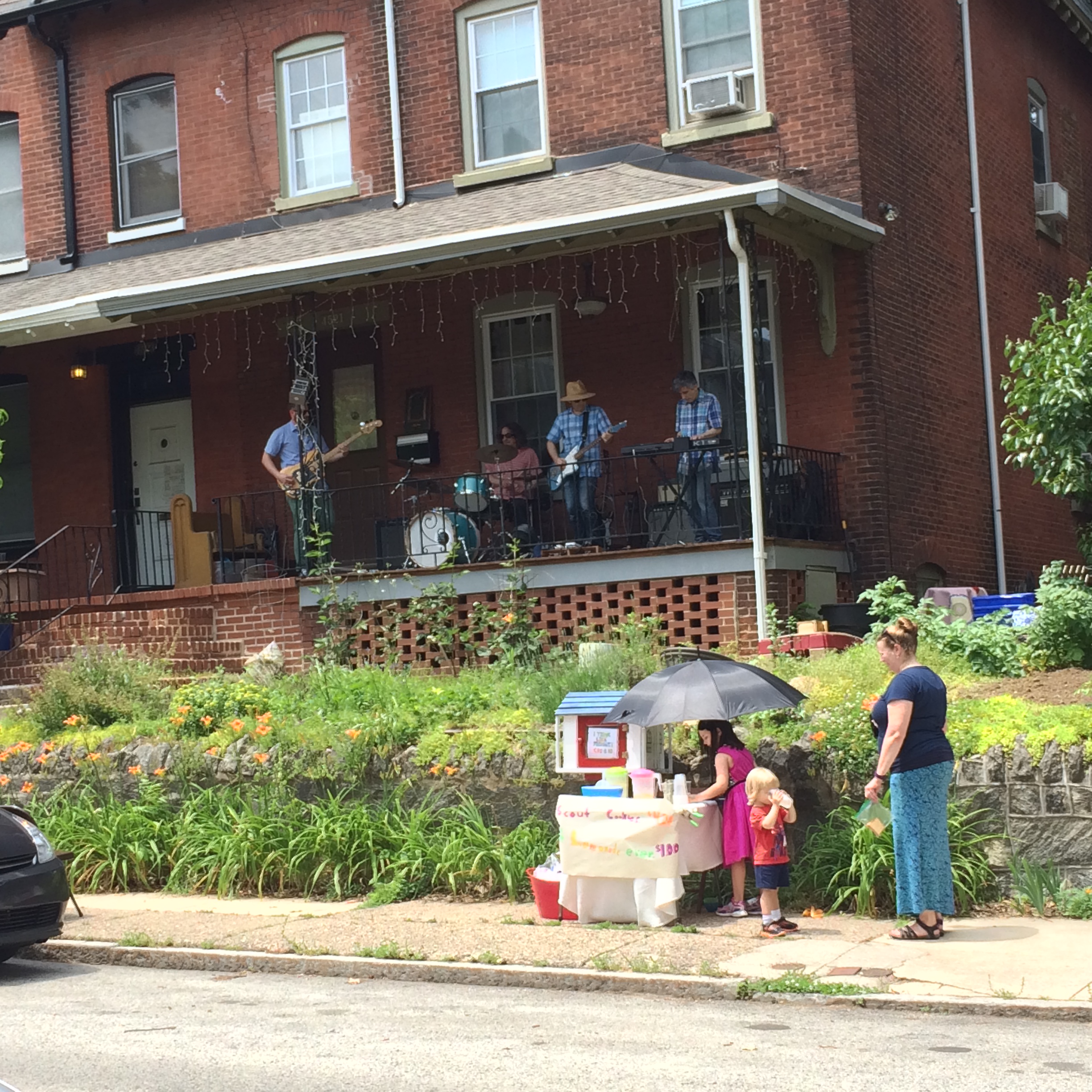
What’s a Porchfest? Well, it is a day of music played on some of the porches of a porch-heavy community. The shows are free to the public. What could be better? After all, porches, when you think about it, are small covered stages easy to get close to, making them perfect for intimate musical experiences. All that a Porchfest organizing committee need do is convince a bunch of homeowners in a neighborhood to allow musicians to play at their houses, and find a bigger bunch of musical acts to climb aboard. Then you set up a schedule so that audience members know the addresses of the porches, and encourage said listeners to roam from site to site, the better to get a big dose of vibrations.

The first Porchfest took place in 2007 in Ithaca, New York. Since then, musicians and music lovers throughout the USA, and in a few Canadian cities, have picked up on the notion and staged their own Porchfests. Each Porchchfest is independent of the others and, I’m pretty sure, is a low budget and DIY type of operation. But watch out! The power of Porchfests is undeniable and irresistible. As a few more years go by, I predict that Porchfests will cross the oceans and conquer the world!

Darlington at West Philly Porchfest.
Jon Veit at West Philly Porchfest.

Which even more smoothly brings us to a recent Saturday in a section of West Philadelphia (part of The City Of Brotherly Love) that contains scads of old and sturdy rowhouses and twins in possession of porches. As ideal a location for a Porchfest as any on our planet. And where, indeed, the first West Philly Porchfest took place, the baby of a group of organizers who recognized that the Porchfest idea was very worth pursuing. (Lots of info about West Philly Porchfest’s genesis and design may be discovered by clicking here and also here).

I Think Like Midnight.
Emily Zeitlyn.
Emily Zeitlyn.

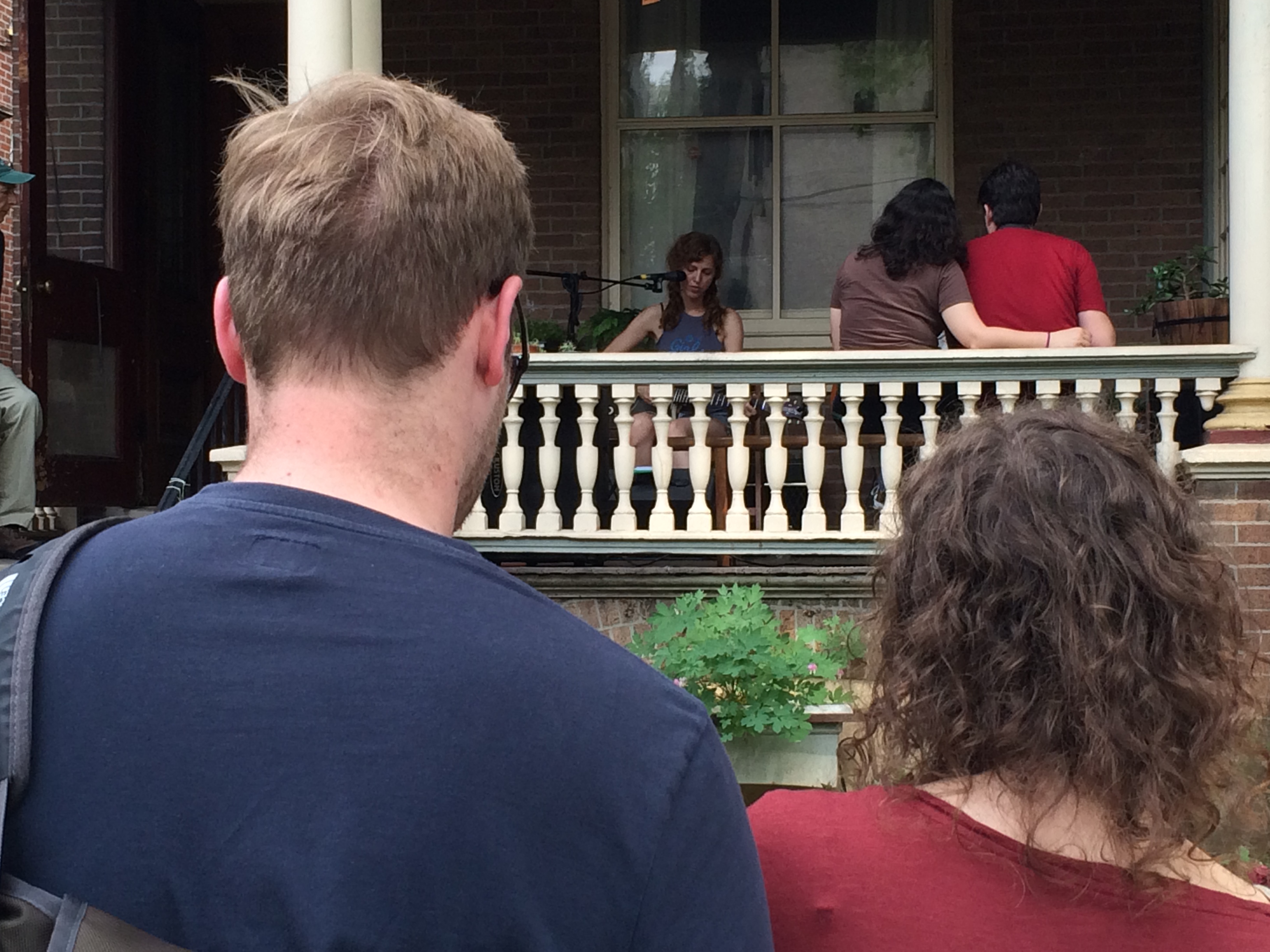
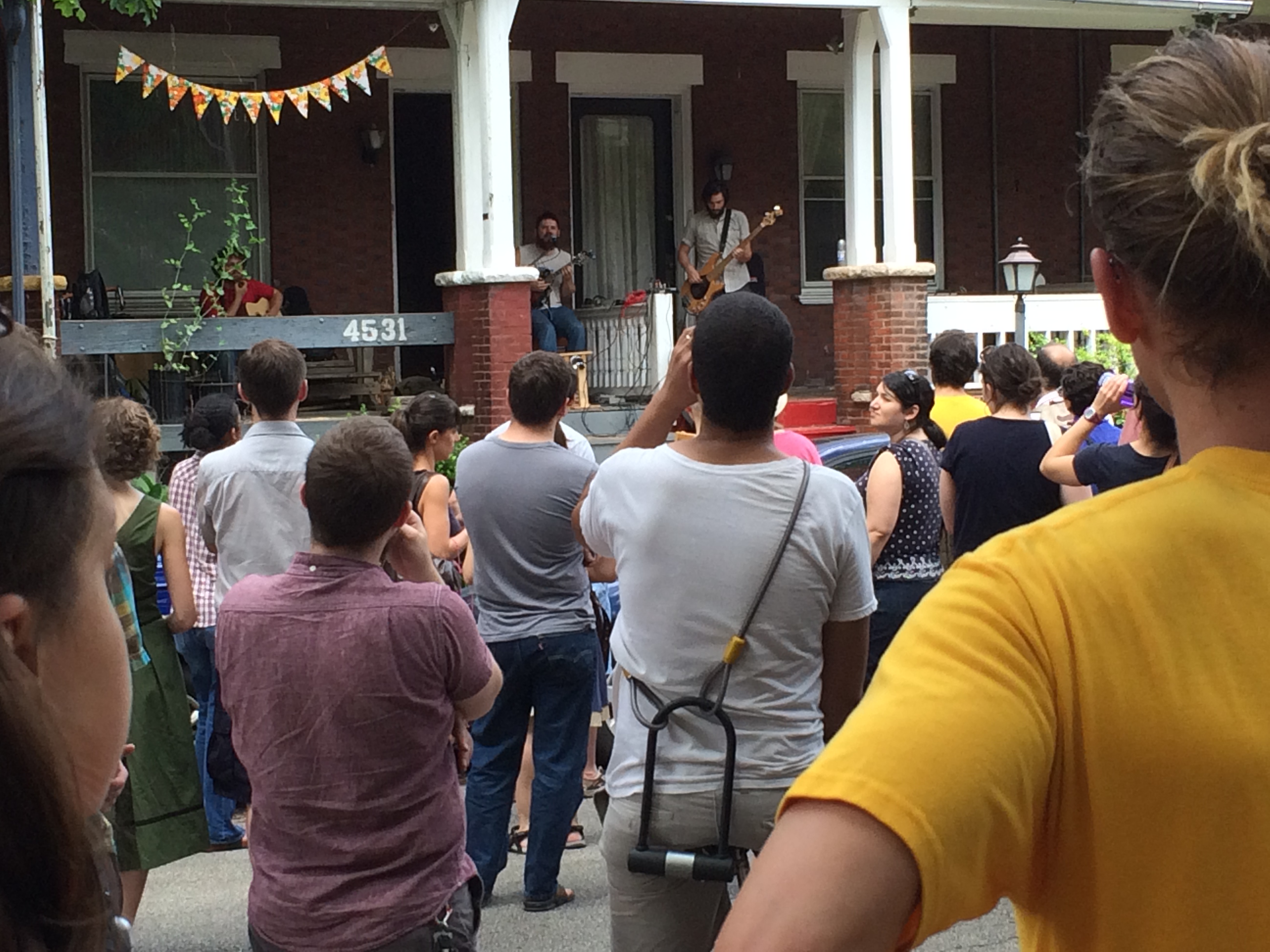
West Philly Porchfest’s boundaries were broad, about 12 blocks east to west and likewise north to south, encompassing much of what has come to be known as University City due to the area’s proximity to the University of Pennsylvania. Over 30 porches participated. The event began at noon on June 4 and ended at 6 PM. I was an attendee, taking in parts of six shows during a two-and-a-half-hour period. Man, I loved it. I heard an acoustic folky rock trio (Darlington); two singer-songwriters (Jon Veit and Emily Zeitlyn); a damn good jam session between, of all things, an African-drum percussionist, a fiddle player, an acoustic guitarist and a flugelhornist; a vocal-less rock band (I Think Like Midnight) that, to my ears, sounded like a cross between The Grateful Dead and Television; and a folky duo that smoked and crunched. I’m going to zero in on the duo, who go by the name Driftwood Soldier, because I liked them the best of the acts that I caught. I seemed not to be alone in that. They drew the biggest crowd, around 80 people, that I saw all day, and the loudest applause too.

Driftwood Soldier.
Driftwood Soldier.

Owen Lyman-Schmidt is Driftwood Soldier’s singer, mandolin strummer and songwriter. Bobby Szafranski is the band’s not-your-average electric bassist. Both guys pitch in to move the groove by banging on percussion instruments with their feet. I tell you, Driftwood Soldier has it. Owen sang, in a wild and wooly baritone, about underdogs, colorful characters, people who deserve better than they’ve got. He reminded me a lot of the late Dave Van Ronk. And Bobby sent the tunes aloft with bass lines that gleamed and grinned. I would not be surprised if Driftwood Soldier breaks through nationally one of these days, though to-date they are unknowns. They are that good. And they’ve got the work ethic that might lead to fame and glory, touring our fair nation with gusto. Thanks to the wondrousness of the Internet, you may watch Driftwood Soldier performing their song Rosalee by clicking right here.

IMG_0493IMG_0494
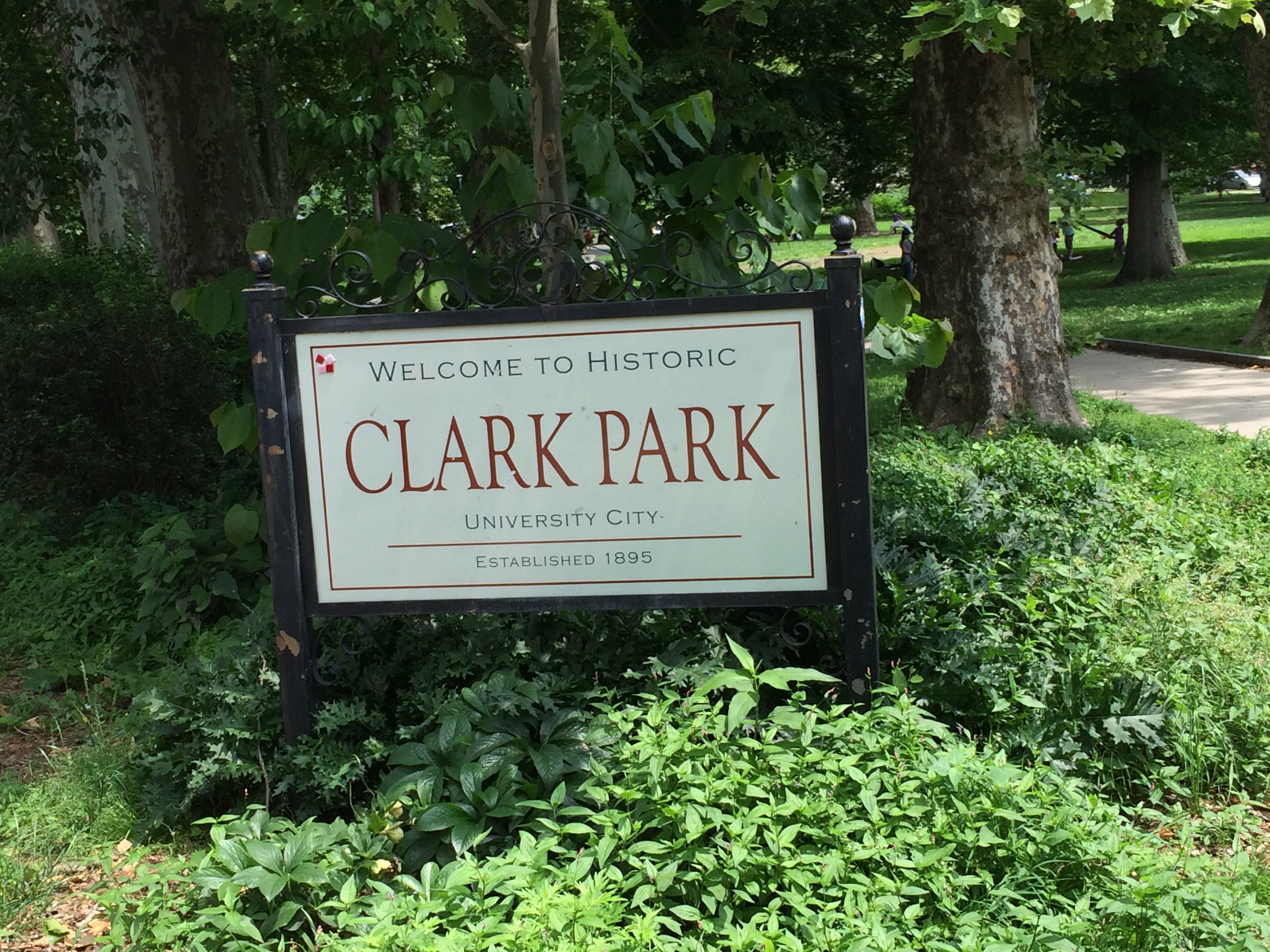
You know, I lived in University City during the 1970s and 80s on a beautiful, tree-filled block oh so close to a few of the shows I watched the other day. I liked the area mucho back then, and still do. I go back now and again. On the day of Porchfest it was fun walking the streets upon which I’ve trod so many times before. And it was equally swell strolling through Clark Park, a lovely place, a hub of peace and calm in University City. Kids were playing, food truck and farmers’ market vendors were vending, and teenagers and adults were milling around. The coolest sight I saw in the park was a little girl climbing all over the Charles Dickens statue. That’s right, Charles Dickens. It’s the only statue of him in the USA. And, apparently, one of only two in the world. The other, by the way, is in Australia, not Great Britain. A good idea would be for the Brits to commission and erect a Dickens statue too, since Dickens  — duh — was one of their own.

(Don’t be shy about adding your comments, or about sharing this article with others)

(If you click on any photo, a larger image will open)

Lindi Ortega Revisited

Last July I penned an essay about Ashes, a brilliant tune from the heartbreak canon that came out on Lindi Ortega’s 2015 album Faded Gloryville (if you’d like to read my words, click here). Lindi is a singer-songwriter in love with pensive ballads, country music in various varieties (gritty, rocking, bouncy), the blues and soul music. She has reached a modest level of success. My story, though, didn’t go into much detail about Lindi, a Canadian who relocated to Nashville five years ago, because I didn’t know all that much about her or her music (not that I’m an expert now). I concentrated on the song. In a nutshell, what I said was: “Ashes to me is perfection.”

Well, for reasons that probably always will remain unknown to me, my Ashes opus became pretty well read. Most of my stories are looked at for a few weeks at best, rarely to be discovered by any member of humanity after that. But the Ashes piece was different. Week after week, month after month, folks kept finding it. About three months ago its audience finally petered out.

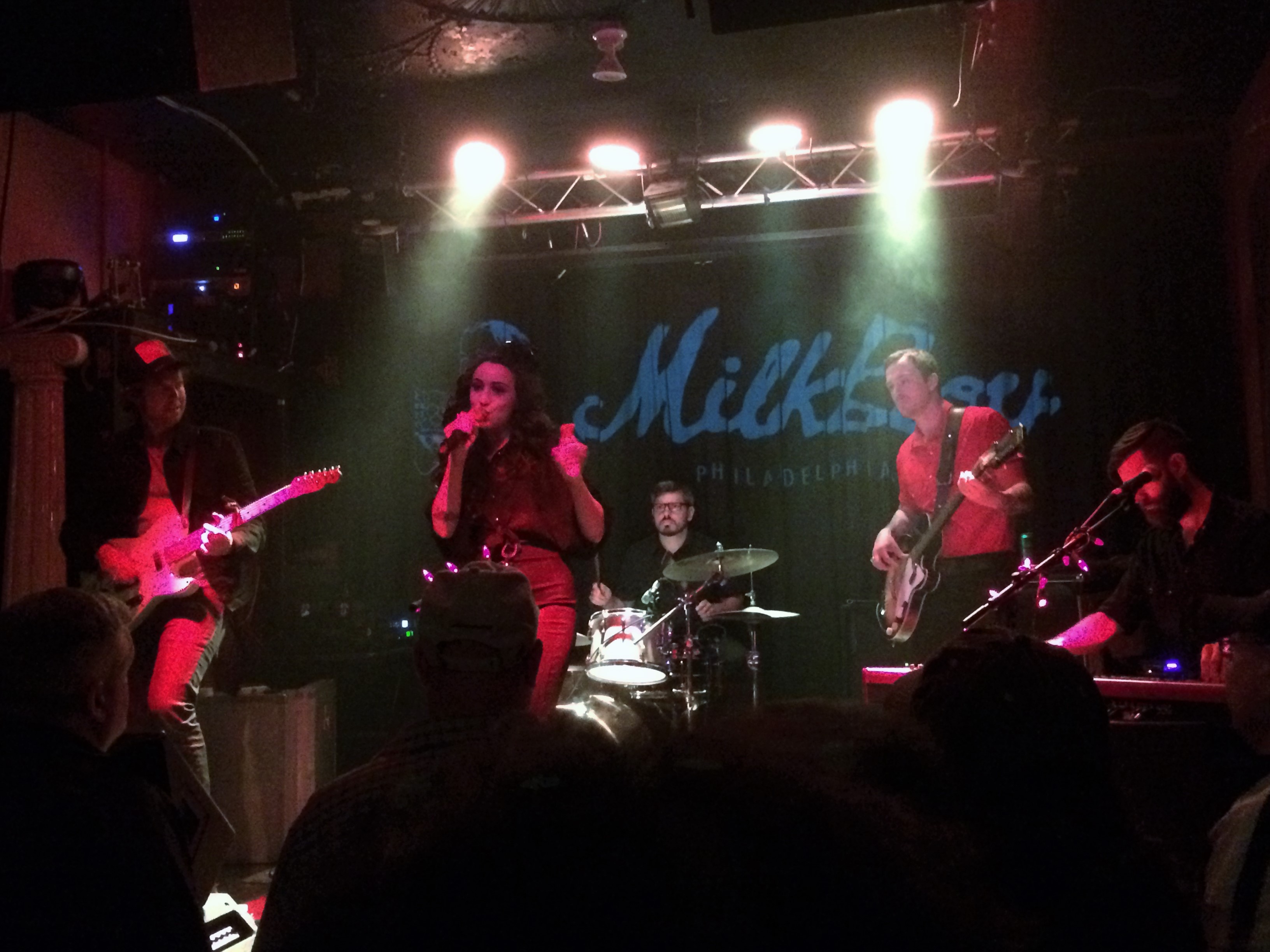
Me, I didn’t forget about Lindi after I wrote the story. She and her great song became so stuck in my mind, I knew I had to see her in concert. A few months ago, voila! I noticed that Lindi and her band, who tour like mad around the USA and Canada, were on the schedule of MilkBoy Philly, a smallish and mostly rock-music club in the heart of Philadelphia. On May 22 I left my home in the burbs to take in that show.

IMG_0368 (2)
Was Lindi a let-down? Had my infatuation with Ashes set the bar of expectations way too high? Hell, no. I, who was familiar with not a one of the Ortega-composed songs performed at MilkBoy, other than Ashes, had a great time. Lindi and band were terrific, as I’d assumed they would be. And it was a gas hanging out in funky MilkBoy, where I squeezed close to the stage like a frigging fanboy, inches away from a gaggle of new-found, swaying and shimmying friends.

IMG_0369 (2)
Lindi, who is in her mid 30s, hit the stage at 9:05 PM and bid us adieu 75 minutes later. In between she sang her heart out, ripping it up on hard rockabilly and honky-tonk and bluesy numbers, pouring out her soul on the slower, more doleful part of her repertoire. She and her four-guys band knocked  each song (19 in all) out of the park. Lindi wrote or co-wrote 16 of them, and those 16 came from her four most recent studio albums. Most of the lyrics were finely wrought, sweet metaphors and similes abounding. Without a doubt, Lindi’s my kind of girl . . . a wordsmith.

Lindi Ortega sings about the subjects that have fueled country and blues and soulful songs since time almost immemorial. We’re talking loneliness, regret, broken hearts, drinking to drive the troubles away, lovers who can’t help but disappoint. Her voice and delivery might remind you of Dolly Parton and Lee Ann Womack at times, and of Emmylou Harris and Patty Griffin at others. In her trademark red cowgirl boots at MilkBoy she leaned into her hand-held mic and told it like it is.

IMG_0364 (2)
Take one of the fast numbers, for example. The evening began with a Faded Gloryville song, Run Amuck. Wham, bam! It was a honky-tonking blues blasted into fourth gear by James Robertson’s red-hot Telecaster guitar and Noah Hungate’s precise, rip-roaring drum work. Robertson and Hungate threw out sparks for 45 seconds before Lindi sang the tune’s first lines. “Daddy, where you going?/Going out again?/You keep messing round town with your floozy little friends,” Lindi finally unloaded. And she didn’t quit unloading till the tune ended a few minutes later. Man, I was sold. And psyched.

And take one of the slow tunes. Near show’s end she broke my heart with Tin Star, from the album of the same name. Voice quivering, she sang sorrowful words: “Like an old tin star I’m beat up and rusty/Lost in the shining stars of Nashville Tennessee/Well I wrote this song for those who are like me/Lost in the shining stars, the shining stars.” She held that final stars fragilely, with a high note, and for only half a second before continuing Tin Star’s tale of a very struggling and conflicted musician. The song was gorgeous. Absolutely gorgeous.

You get the idea. If Lindi and her band pass your way, plunk down a few bucks and catch them. In the interim, you can watch part of the MilkBoy concert courtesy of YouTube. Someone whom I didn’t notice, but who no doubt was standing near me, recorded and uploaded seven of the MilkBoy songs. If you click here you’ll see and hear Run Amuck. And if you do likewise right here, Tin Star will come your way.

I can’t leave without mentioning Ashes, which, sadly, the MilkBoy YouTuber didn’t post. I went half limp when, halfway through the show, I heard the chiming guitar riffs and the dirge-like drumming that introduced the song and gave it gripping power. And what might I say about Lindi’s shiver-inducing voice and the intelligence and sadness of the lyrics? Well, to repeat, Ashes to me is perfection. By clicking here, you will hear the album version of one of my all-time favorite songs.

(Don’t be shy about adding your comments, or about sharing this article with others)

(If you click on the photos, larger images will open)