If (A Musical Story)

a2z_logo_final_social-620x324If, if, if. If only WXPN, a supremo radio station in Philadelphia, hadn’t come up with the idea to play almost 6,000 songs in strict alphabetical order, based on their titles, then I’d never have been flailing around helplessly in the monstrously deep rabbit holes that abound within my cranium. But XPN did, starting at 6:00 AM on November 30 with The Jackson Five’s smash hit ABC (click here to listen), and proceeding around the clock for what seemed like forever. The station finally closed the lid on the affair mid-day on December 17 after airing a song that just about nobody knows, ZZ Top Goes To Egypt (click here), by a band that just about nobody knows, Camper Van Beethoven. A tune with a title that begins with a double Z . . . who’d have thought that an animal like that exists? Leave it to the music worshippers slash obsessives at WXPN to come up with a stunning conclusion to the marathon.

And talk about obsessives. Me, I thought I was done with being one of them. Over the last few decades I’d shed a good ninety percent of my excessive tendencies. Still, backtracking happens, and I found myself being swallowed whole by what XPN was up to. Yeah, I got so involved with the A-to-Z my bodily systems started backfiring. For days I couldn’t sleep, couldn’t eat. Even worse, I didn’t watch my favorite episodes of Duck Dynasty and The Real Housewives Of Atlanta over and over on demand. And not just because I was hopelessly involved in listening to that avalanche of music. Uh-uh. I also had been captured by letters, words, the whole alphabet thing. I was beaming in hard on alphabetic considerations of song titles. Pathetic, man.

I’d never before given more than a cursory thought to the words that song titles begin with or to the patterns that the titles form. Who knew that tons of titles begin with Just, for example? Or that there might be any titles starting with X (such as X Offender, by Blondie). Or that some letters (e.g. T, S and I) are the first letters of an astounding number of song names. Or that one artist (David Bowie) might show up with back-to-back songs (Fascination and Fashion), so tightly are their names alphabetically related.

“What’s going to follow Patti Smith’s Dancing Barefoot?” I frantically wondered during December 3rd’s early moments, unable to come up with the fairly obvious answer that soon hit the air: Dancing Days by Led Zeppelin. And I frantically wondered about countless other minutia throughout the A-to-Z, following along online as XPN posted each addition to its playlist (click here to see the playlist). Letters! Words! Sequences! My geeky and anal ponderings were getting the best of me. I needed relief, blessed relief. Who or what might be my savior?

“Snap out of it, you fool!” my wife Sandy commanded me, eight days into XPN’s extravaganza, as she dumped a pitcher of cold water onto my head. I was seated on the living room sofa, ears glued to the radio. “Thanks, Sandy, I needed that,” I said as the refreshing liquid ran lovingly from my head to my toes. I rose, gave Sandy a well-deserved hug and walked across the floor to turn off the radio. Over the following days I continued to listen to XPN, but in reasonable servings.

I guzzled many hundreds of the thousands of songs that spewed from WXPN’s studios during the festival. Great music abounded, yet one song more than any other brought me up short and went straight to my heart. It’s an oldie that most folks know. And, for reasons unknown, I heard it — no, felt it — much more powerfully than ever I had before.

Many sublime songs (Love Train; I Love Music . . . ) flowed from the minds and pens of Kenny Gamble and Leon Huff, but did any equal or surpass If You Don’t Know Me By Now? No way. Gamble and Huff, two of the progenitors of The Sound Of Philadelphia that soulfully and majestically conquered the world in the 1970s, surely realized that they had created a diamond when the writing sessions for that number reached their end. What a song, its finest version being the 1972 original by Harold Melvin & The Blue Notes. It’s a manifesto about the need for trust and honesty and, more than anything, a declaration of true love. You quiver when Teddy Pendergrass, lead singer for HM&TBN, unleashes pleas robed in frustration. When the rest of the group fills in all the blanks with angelic vocals that cushion and counterbalance Teddy’s hot emotions, you levitate and maybe find a few tears drizzling down your cheeks.

Sandy doesn’t know this yet, but one evening soon I’m going to dial up If You Don’t Know Me By Now’s number, turn the volume to a gentle but firm level and swirl with her around our living room. The song is in waltz time, and even a four-left-footed sloth like me can handle a waltz. Here, then, is the best song I know of whose name begins with If.

The Final Curtain . . . Oy Vey

finalcurtain-hqdefaultMortality, one of the less-than-fun subjects to ponder, has been on my mind a tad more than usual of late, and I’ve been dealing with it like the well-adjusted adult that I fantasize being. I know why my gaze has moved slightly in that direction, and I’ll get to that shortly. Luckily, though, I normally don’t give the topic a whole lot of thought, which I suspect is the case for nearly all of us. Most days I subconsciously shrug my shoulders in the face of the inevitable and continue performing my clumsy dance through life. There’s nothing we can do about the final curtain, so why sweat it? It’s out there. We know that. And one of these days it’s going to drop . . . Hey, wait a minute. That’s really true, isn’t it? One of these days it is going to drop. On little ol’ me. Me, who never hurt more than a few thousand flies in his life. Me, who makes it a point to help the elderly cross the street whether they want my assistance or not. It’s not fair, I tell you! It’s not fair! Holy crap, I’m bumming myself out. I need to walk away from my computer’s keyboard and try to calm down before I resume work on this depressing essay. A beer, that’ll help. Let’s make it a six pack. Better yet, a full case. I’ll be back at some point, unless that f**king curtain falls sooner than I expect it to.

(Three days later). As promised, I’ve returned. And I’m in fighting shape once again. It’s time to continue. I recall a conversation I had six or seven years ago with a childhood friend. I was in my early 60s at the time and recently had celebrated a birthday. “You know, I’m not getting any younger,” or something similarly clichéd I said to her. “Neil, you’re not old. To me you’re youthful,” she more or less said to me. What? Was she kidding? All I could think of was an indisputable fact: Even if I were to live for another 30 years, I was a whole lot closer to the end than to the beginning. And today, as I barrel down the track towards age 70, which is a mere 10 months away, that’s far truer than it was then. Oy vey, what’s a poor boy to do?

Aging. Closing in on the finish line. They are mystifying phenomena. And when you’re truly getting up there in years they can be hard to wrap your head around. My mother, for example, couldn’t believe it when she turned 70. She laughed and laughed when talking to me about the dubious milestone she had reached. 70? Hah! She probably thought of herself as being 45 or 50, and those numbers pretty well reflect the way I think about myself today. But time marches on unconcernedly, despite what’s going on in our imaginations. My mom, a wonderful person whose health problems were considerable and heartbreaking, is long gone. The grains of sand in her hourglass’s upper section emptied pretty quickly after her 70th spin around the Sun.

Photo by Tim Mosenfelder/SoundSpike

And now it’s time to mention the reason I’m writing this story, which for sure is not of the fluffy and puffy sorts that I usually populate cyberspace with. Yes, philosophy fans, once in a blue moon I cautiously reach into my mental library of deep thoughts and pull out a couple. Problem is, my supply is incredibly limited, so I have to ration them carefully. Right, I still haven’t mentioned the reason. Well, Sharon Jones is the reason. Sharon Jones, the gritty and splendid soul/funk singer. Sharon Jones, who didn’t find musical success until firmly in her middle age and probably was all the more appreciative of it for that. Sharon Jones, who a couple of weeks ago joined the long list of notable musicians (Bowie, Prince, Maurice White, Leonard Cohen, et al.) whose tenures on Planet Earth ceased in 2016. She made it to only age 60.

When I heard about Sharon’s death I felt sad. Quite sad. And not because I was a devout fan of hers. I wasn’t, though probably I should have been, as she was really, really good. Instead, her passing brought me up short because of something that I suspected to be very true. Namely, that undoubtedly she was a lovely person, someone whom I’d have been lucky to know and be pals with. I came away with those observations five years ago when my wife Sandy and I went with a group of friends to see Sharon perform in Philadelphia. As always, she was with The Dap-Kings, a horn-heavy, swaggering band she’d hooked up with in 2002, and found acclaim with over the succeeding years.

Sharon and The Dap-Kings’ performance was part of a weeks-long arts celebration that Philadelphia put on in the spring of 2011. On April 30 of that year she and her bandmates climbed the outdoor stage set up in the heart of town. They were the final act of that day’s street fair. The stage sat in the middle of Broad Street, Philadelphia’s main thoroughfare, and all around it were oceans of human bodies. I don’t know how, but Sandy and I and our friends found a few feet of open space pretty close to stage right. I was pumped. I knew that Sharon and company would be good, but had no idea they’d be fantastically good. And Sharon led the way. For an hour and a half or so she absolutely commanded the stage, shimmying and strutting and testifying and propelling songs to the skies with her powerful vocal cords. My God, she and The Dap-Kings rocked the city to its knees.

I was entranced. Not only that, I could tell that Sharon Jones was beyond ordinary in more than musical ways. That became obvious when she invited a group of little kids, who had been dancing their hearts out a few feet in front of her, to join her onstage. Sharon went wild with them, and the crowd roared. And they also roared, during the group’s signature song (100 Days, 100 Nights), when, with a “Come on, baby,” she motioned to a young man in the audience, Thomas, to climb up and party madly with her. She and Thomas made an exuberant couple. Here is the video of Sharon Jones, The Dap-Kings and Thomas:

What can I say? Beautiful people, those who are open and joyful, behave as Sharon did that afternoon. By that I mean that Sharon was a beautiful person. Which is why many in this world will miss her. It’s a sorrowful day when a bright light goes out.


(Don’t be shy about sharing this story or about adding your comments. Or about signing up to follow this blog)

From Out Of The Blue Came Hoyt Axton

Photo (c) MGM.
Photo (c) MGM.

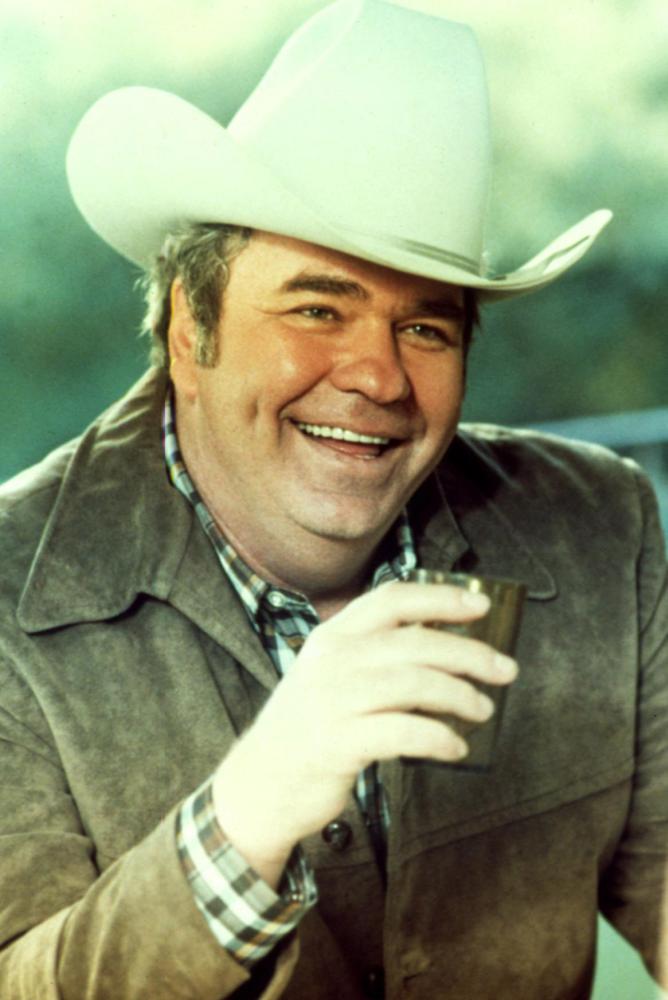
Hoyt Axton? Am I really writing about Hoyt Axton? Why, prior to 12:30 PM of last week’s Tuesday I hadn’t thought about this gentleman in so long it might as well have been forever. And although I’m certain that I used to know a few bits about him, I couldn’t in a million years have told you more than one-tenth of an iota of what I used to knew. Was he once a presence on TV and in movies? Did he write some songs that made it into the mainstream? I’d have guessed yes to both queries, but any specifics would have been beyond my reach. My memories of Hoyt were nothing but the dimmest and vaguest, buried in the dark and dusty recesses of what passes for my mind.

I’ve done some research on Hoyt since then, as any good reporter would. A few hours delving into the vaults of Wikipedia and its brethren have helped bring him to life for me. And what I’ve learned tells me that a lot of people knew about him in his heyday, which took up much of the 1960s, 70s and 80s. I should have remembered that. Hoyt, who died in 1999 at age 61, was a fairly big star. He was an occasional actor on the small and big screens, popping up in I Dream Of Jeannie and McCloud, for example, on the former, and in The Black Stallion on the latter. But, more than anything, Hoyt was a music man, a singer-songwriter mostly in the folkie/country/pop veins, who recorded around 25 albums filled with many of his own compositions and who toured all over the place for years. He often imbued his lyrics with wry or idiosyncratic slants and visions. And though he never exactly set the Billboard music charts afire with his own waxings, some of his songs found fine and enduring success in the hands of others. How many millions of people have heard Three Dog Night’s version of Joy To The World (click here to listen)? Too many to count. And though there are some who haven’t encountered Ringo Starr’s irresistibly bouncy immersion in The No No Song (click here), or Steppenwolf’s grinding take on The Pusher (click here) . . . well, that’s their loss.

But you know what, I’ve digressed as far as I need to. Just a little bit to my left, and I can see it clearly, is the bottomless rabbit hole that an extensive investigation of Hoyt, or of just about anybody for that matter, would ensnare me in. Help! I’m a muser, not a biographer. Rabbit holes and I don’t get along! This story, you see, isn’t meant to be so much about Hoyt as it is about getting jazzed by the simple things in life, good things that show up from out of the blue and make you say wowza. Such as hearing a song you’ve never heard before that sets you flying.

There I was, then, at 12:30 PM a week ago Tuesday, driving home from who knows where, when I flipped the car radio to WPRB, Princeton University’s radio station whose programming is unpredictable, wild and sometimes wooly. A song was in progress, and immediately I liked what I heard. The song moved at a languid pace, buoyed by spare, shimmering keyboard notes, quiet yet urgent vocals and delicate percussion work. It floated, it drifted and it took me aboard. Spacey and wispy, it made me wish that I was 30 or 40 years younger, toking up to enjoy the journey even more. Potless though I was, the song put me in a most excellent frame of mind: Calm, open. Yeah, man . . . a superb way to be.

What song was I listening to? Undoubtedly something by a modern day neo-psychedelic conjurer, I figured. But noooooo. A few minutes later the song ended and the DJ started talking. You could have knocked me over with a magic mushroom when he said that the track, Kingswood Manor (click here), was performed by Hoyt Axton, he whose name, as I mentioned, I hadn’t thought about in eons. I couldn’t recall ever hearing Hoyt sing a song before.

griffin-hoyt-515djbjzfl__sx425_Well, my mini high lasted for a decent spell beyond the song’s end. And I’ve since revisited Kingswood Manor a number of times, diligent and conscientious blogger that I am. It comes from Hoyt’s obscure 1969 album My Griffin Is Gone. Hoyt solely wrote or co-wrote all of its tunes. I’ve listened to it from start to finish on YouTube. MGIG, I imagine, isn’t a conventional Hoyt album, dressed up as many of its songs are with strings and baroque strokes. I also gave a listen online to his 1977 album Road Songs, a country and honky-tonk workout that probably is more typically Hoyt. And I have to say that overall I prefer Road Songs to Griffin. Road Songs’ songwriting seems more focused and stronger. But Kingswood Manor? Sure, lyrically it’s unsettling, what with its trippy looks into a troubled mind. At song’s finish, has the protagonist escaped from madness, finding bliss? I believe you can argue the puzzle either way. Whatever the case, I find the words fascinating. It’s the sonics and mood, though, that I concentrate on, because for me that’s where Kingswood Manor’s power is at. To me the song is magnifique, the type of creation that rings my astral bells just right. I don’t know how the Princeton DJ ever came across Kingswood Manor. It’s one of those tunes that only relative handfuls of folks are familiar with. But glad I am that he did.


(Don’t be shy about sharing this story or about adding your comments)

Stoned Again And Again (A Semi-Obsession With The Rolling Stones)

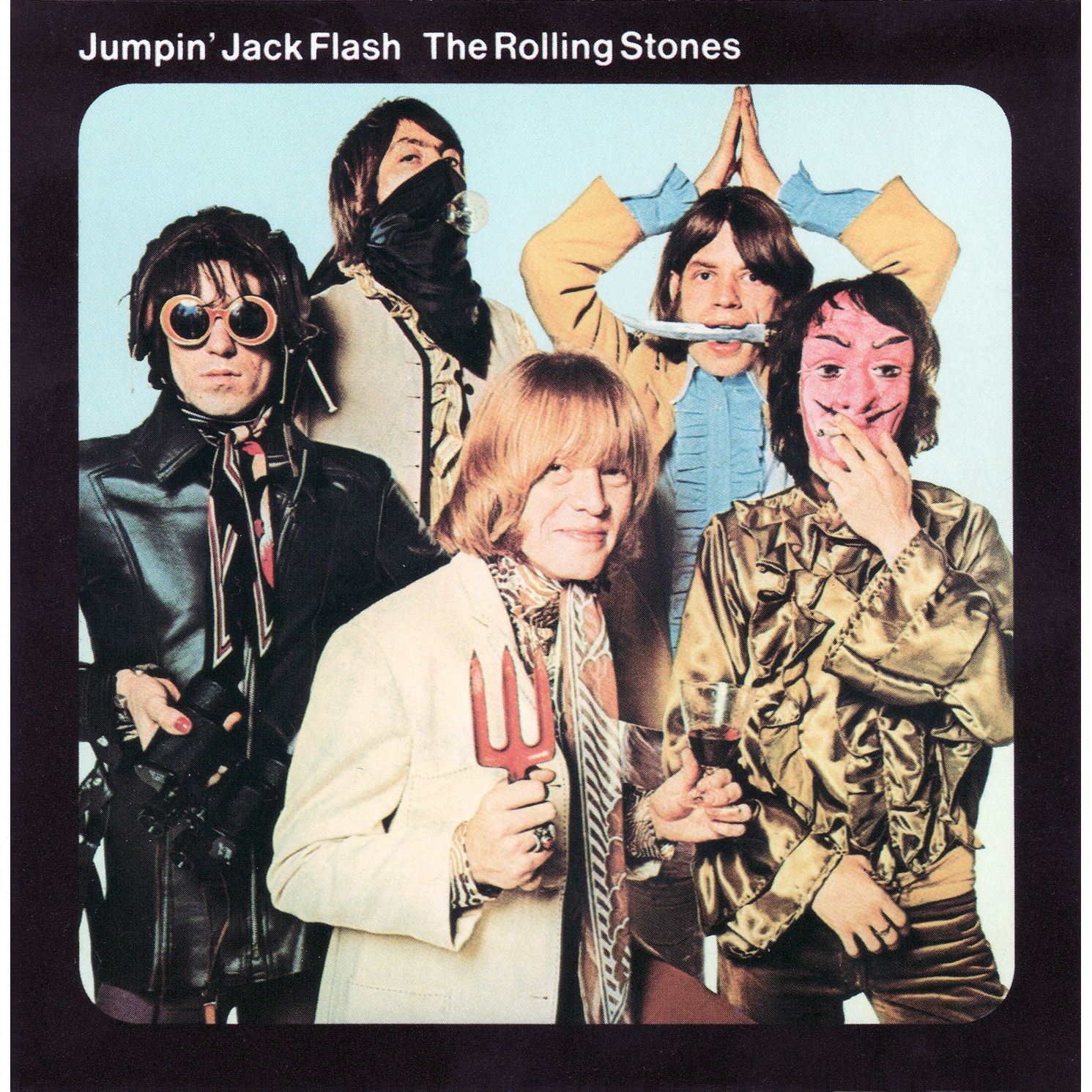
jumpin-jack-flash-coverIn the summer of 1968 I did a stint as a counselor at a boys’ sleepaway camp nestled in the Berkshire Mountains of Massachusetts. It was a good gig. I liked the kids in the bunk that I oversaw. And for some reason they seemed to like me. The air up there in the mountains was fresh, the water in the camp’s lake was clean and inviting and the female counselors in the nearby girls’ camp were cute. Like I said, a good gig. The best thing of all during that summer, though, was completely camp-unrelated. It was a tune that I heard for the first time ever while lying one evening on my bunk cot. A new song, it exploded from my teeny-weeny radio, and for the rest of my Berkshires sojourn I flipped that radio’s dial as often as possible each day, seeking out the music that had blown me away. Whenever I found it, which was pretty often, I shook my head in disbelief and let it rock me anew unmercifully. And you know what? To this day, a mere 48 years later, the tune has just about the same effect upon me. We’re talking The Rolling Stones’ Jumpin’ Jack Flash, birthed in the era when those British lads were idolized, really mattered and were flabbergastingly creative, writing and recording amazing new songs prolifically and seemingly with ease.

Stones on stage in 2016. Photo by Nelson Almeida/AFP -- Getty Images
Stones on stage in 2016. Photo by Nelson Almeida/AFP — Getty Images

In 2016 the Stones are still idolized, at least by some. But really mattering and in possession of creative zing? Those days passed the Stones by long, long ago. Sure, the boys, who range in age from 69 (guitarist Ronnie Wood, a longtime but not original Stone) to 75 (drummer Charlie Watts) haven’t broken up, and for each of the last five years they’ve toured a decent amount, rocking ferociously on stage (meaning, they remain fairly active and haven’t lost their chops). Problem is, though, in concert they are nothing more than rehashers of their own well-worn classic material. And that’s because, when it comes to composing and then recording new songs, they’re plenty constipated. Guys, I’m going to ship 20 cases of prune juice to your manager’s office. You need it.

Hey, Paul McCartney, Bob Dylan and Neil Young, all of whose tree rings number about the same as those of the various Stones, continue to gift the world with albums of original material. But the Stones? Nah. The only album of new bonbons they produced this century was 2005’s A Bigger Bang. And in 2011 they managed to record and release two more original songs. The well dried up after that. They do have a studio album coming out next month, but it’s filled strictly with cover versions of old blues numbers. Apparently they had entered the studio to try and crank out an album of newbies, but got nowhere with that. Trying to salvage the sessions in some way, they fell into a blues groove, jamming on numbers composed by Willie Dixon, Howlin’ Wolf and other blues guys, and ended up with enough material for an album. I bet the record (Blue And Lonesome) will be good. But me, I’d much rather have the Mick Jagger-Keith Richards songwriting team on fire like they were looong ago. Who knows? Maybe it’ll happen again. Prune juice works.

Right, it’s kind of weird that I know about all of this Stonesy stuff. But I do. And the reason is that, in my wondrous dotage, I am, as I’ve been for nearly forever, a dopey fanboy of the Stones, though far less fervent than I used to be. I rarely play their albums at home anymore, something I once did religiously. But I keep my Stones jones alive by regularly checking up on their musical and other escapades on Google News. Did you hear, for instance, that Wood became the father of twins earlier this year? Or that Jagger will become a dad for the eighth time, at age 73, when his decades-younger-than-him girlfriend gives birth soon? Ah well, small news items like those fit comfortably into my small brain cavity. Decades ago I probably wouldn’t have thought my semi-obsession with the Stones would continue this far into eternity. Similarly, Jagger, when he was in his twenties, used to say that he couldn’t imagine performing rock and roll beyond age 30. So I guess I don’t feel too goofy about following him and his bandmates on their continuing trip. We spit at Father Time’s wrinkled face!

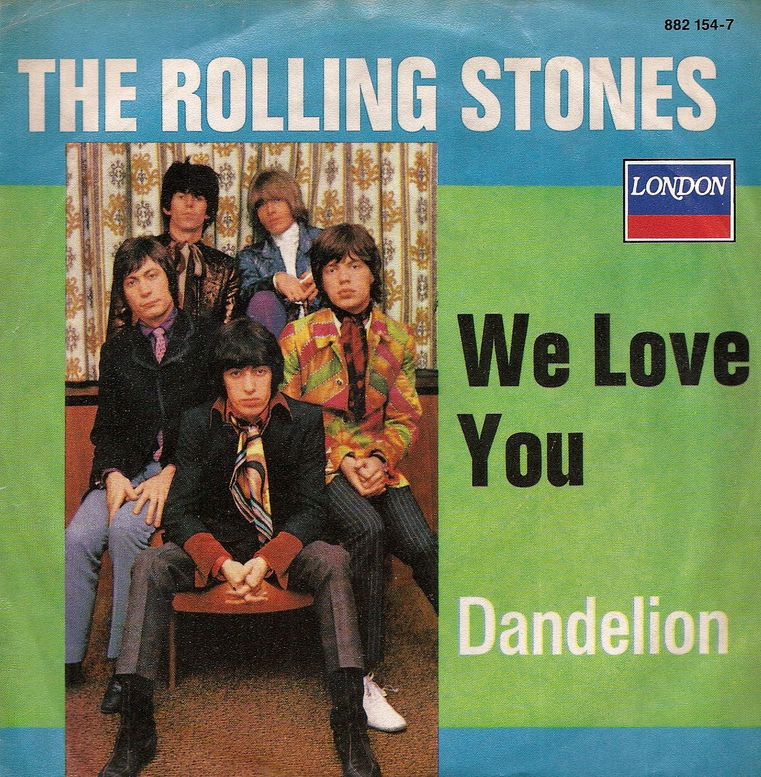
the-rolling-stones-we-love-you-london-3My best Stones moments in a while came recently courtesy of WXPN, a Philadelphia radio station adept at playing just about every style of music you can name. The morning DJ announced that she was spinning songs that originally had come out together on seven inch 45 rpm vinyl singles. In other words, she was playing sides A and B from a bunch of singles. When I heard her offer up the Stones’ Ruby Tuesday/Let’s Spend The Night Together something sparked in my head, turning my thoughts to another Stones 45 that I’ve always thought of as one of the ultimate singles, and whose two tunes I hadn’t heard in at least a few years. Released in 1967, during the Stones’ brief foray into psychedelia, We Love You and Dandelion found their most meaningful home on that single, as neither ever was part of a regular studio album. They did, however, eventually take up space on some of the greatest hits and compilation discs that the band is talented at issuing unnecessarily often. Great, great songs they are, despite being among the group’s lesser-known efforts.

I used to own the seven inch We Love You/Dandelion single. No more. My collection of 45s, unlike that of my vinyl albums, long ago found new abodes and/or an assortment of landfills in which to reside. Therefore, thank the stars above for YouTube, to which I turned to please my ears soon after the tunes popped into my mind. They sounded as good as I remembered them. Blessed with catchy-as-hell melodies, swirling and cascading vocals and pulsating instrumentations, We Love You and Dandelion set my head a-boppin’ and my mind a-floatin’. As always, shivers ran up and down my back as the songs’ high harmony vocal interweavings kissed the sky.

We Love You arrived in the wake of Jagger’s and Richards’ 1967 drug bust, short-term jailings, trials and, in the end, very light sentences. It was both a thank you to Stones supporters and a poke at the British legal system. Dandelion is less heady, a harpsichord and drum-driven relative of children’s songs aimed at anyone who likes to smile and groove. Both songs swell with musical daring, panache and beauty. I can’t recommend them enough. Such being the case, clicking here is what you’ll want to do to listen to the former, and here for the latter. I accept your thanks in advance.


(Don’t be shy to share this article or to add your comments)

Guys With The Same Initials: Terell Stafford, Thomas Shields And Thomas Sully

The Philadelphia Museum Of Art is loaded, duh, with works by famous folks. Van Gogh, Picasso, Monet, Manet, Cassatt, O’Keefe, etc., etc. The other day at the museum I walked past creations by all of them with barely a second glance, not to mention a first glance. Instead, on a goofy mission I spent a bit of time looking at objects produced by the hands and minds of Thomas Shields and Thomas Sully, names that ring a bell with just about nobody. That’s all I wanted to see before settling down with my wife Sandy in the museum’s Great Hall for an evening jazz concert led by the very a-ok trumpeter Terell Stafford.

Here’s why I did what I did: “Does the museum have anything on display by people with the same initials as tonight’s bandleader?” I wondered at home a few hours before Sandy and I headed museumward. “If it does, that’s what I’ll look at before the show.” Had any PMA visitor ever had the same sort of game plan as this? Yeah, right. Why did I come up with this idea? Uh, our orb is awash with cockeyed people.

PMA has a searchable online database. I scoured it. There were 33 artists whose first names and surnames began, respectively, with T and S. Of them, only three had works on display in the galleries (in other words, not in storage), according to the database. But one of those works, by a guy named Thomas Stretch, was the inner mechanism of an old grandfather clock. Stretch hadn’t designed the parts of the clock that anyone cared about. Namely, its cabinet or face. I’d have to disassemble the clock to see the gears et al that Stretch had fashioned, and I had a feeling that the museum’s guards, let alone its CEO, wouldn’t approve. Ergo, I scratched Stretch’s name off my list and, at the museum, went to check out what Shields and Sully were all about.

img_1013img_1031A silver sugar bowl. From the 1770s. Made in Philadelphia. That’s the Shields piece I looked at and admired. It’s beautiful. Shields was a well-known Philadelphia silversmith in his time and obviously damn good. If he were alive today I’d buy one just like it from him. It would look a whole lot better sitting next to Sandy’s and my Mr. Coffee machine than the bowl we’re currently scooping out of.

img_1016-2And Sully? Long ago he was a successful Philadelphia portrait painter. A few of his oils were on display at PMA. Mostly I looked at the one he did in 1833 of Thomas Cadwalader, a lawyer, landholder and military general. Man, Thomas looks great in this picture. Can you believe it, though? He was in his early 50s when Sully put him on canvas yet looks to be . . . what? . . . 35 at most? His skin glows with dewy freshness. His sun-lightened locks are enviably tousled. Bummer: TC might appear to hold the key to eternal youthfulness, but he lasted only eight more years before saying goodbye to Planet Earth.

Okay, show time was approaching. Back I went to a cocktail table in the Great Hall where Sandy sat. We have been to many dozens of jazz concerts at this venue since discovering the museum’s Friday night music series in 2002, one year after it launched. But we don’t go anywhere near as often as we used to, because you have to arrive at least an hour early to nab a decent seat. Which is a pain that we got tired of enduring. The show’s first set began right on time (5:45 PM), a miracle in the music world, and ended exactly one hour later. Being kind of anal, I admired those examples of precision and efficiency. And I also admired the limited amount of between-song patter that Terell Stafford engaged in. Out of the 60 minutes that he and his mates were on stage, sounds came out of their instruments for about 55 of them.

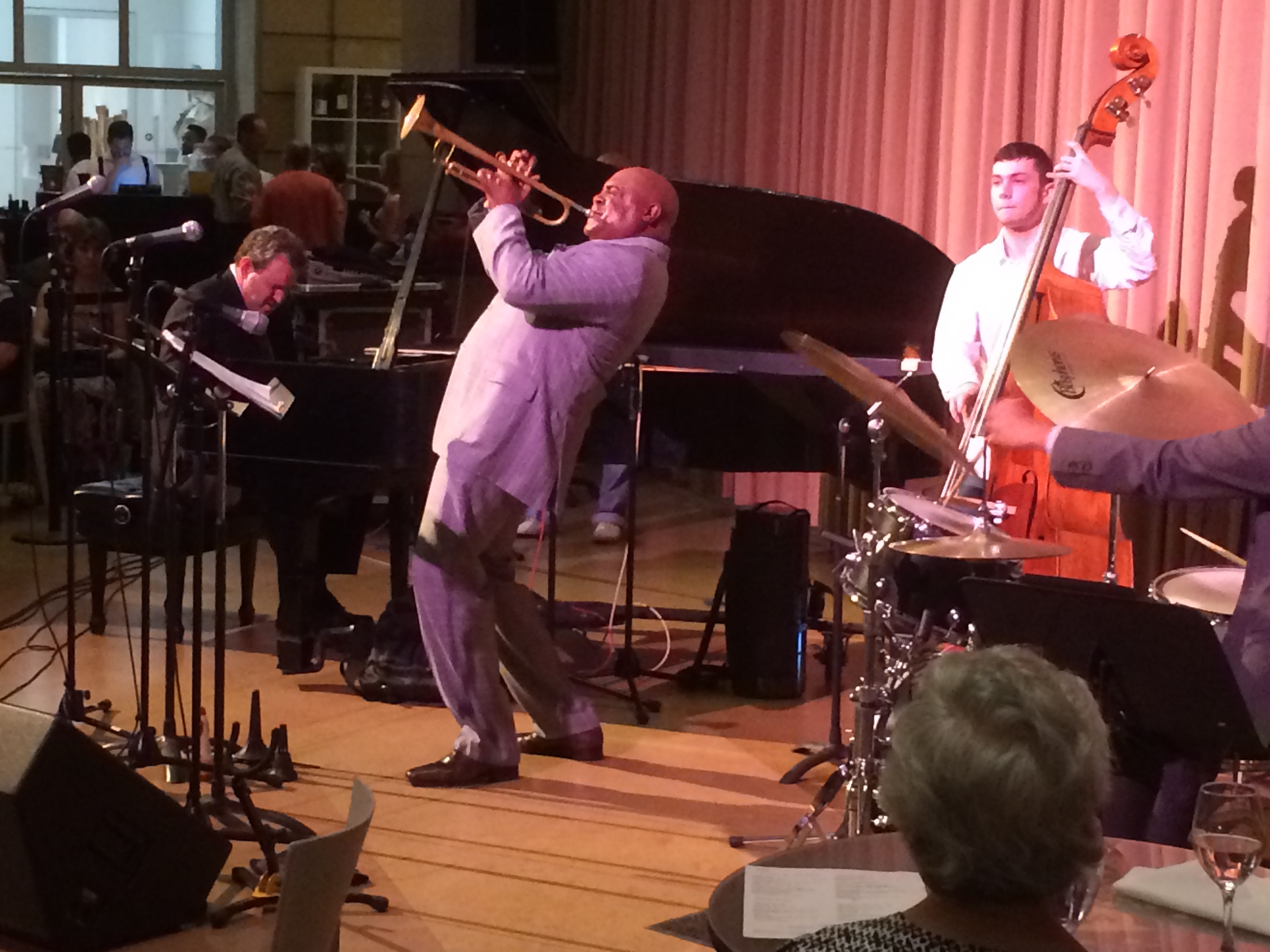
img_1028But what I admired above all was the quality of the music that the Stafford quintet produced. They played with a whole lot of heart and soul. They were into it. You could tell by watching Terell arching his back, his knees pushing forward — all in the name of generating thrust — when he ripped hard and fleet notes from his horn during certain solos. And by watching pianist Bruce Barth’s noggin bopping side to side, front to back, when he reached the heady parts of his improvisations. And by watching Stafford and tenor saxophonist Tim Warfield smiling big smiles and nodding their heads in lockstep as they watched drummer Billy Williams unload a wham-bam solo near the end of the set’s first song (Hocus Pocus).

img_1567Hocus Pocus, composed by the late, fantastic and Philadelphia-born trumpet player, Lee Morgan, began with Stafford and Warfield pouring out the tune’s careening, irresistible melody with panache. After which Terell took the tune’s first solo, Barth pounding out heavy chords behind him. Cutting loose, TS spent mucho time in his instrument’s high register. Next to grab the solo spotlight was Warfield. He began studiously, exploring and probing, and when he found the door he was looking for the hot notes began to fly. A few minutes later Barth’s turn arrived. His left hand struck broad, loud chords while his right danced exuberantly. Throughout the tune the band was tight and relentless. Hard to believe that the upright bass player, Drew Gaunce, was a last minute fill-in for the gig. He, to my amateur ears, was rock solid all night.

Speaking of Lee Morgan, I realized after the fact that he composed four of the set’s five numbers. And that the remaining tune (Candy) was a song that he covered on his 1958 album of the same name. And I also was late to learn that the songs that TS and company played comprise the first five tracks on Brotherlee Love, the fine Morgan-honoring album that Stafford released last year. Of the four Stafford compadres appearing with TS at the museum, two of them (Barth and Warfield) played on that album. If you click right here you’ll hear Hocus Pocus as it appears on Brotherlee Love. And if you click here you’ll catch the Brotherlee Love version of Candy. On the album, Candy is performed by a trio, sax and drums sitting it out. At the museum the Candy personnel shrank even further. And the performance was lovely, a languid and captivating two-person discussion between Stafford and Barth.

I’d be remiss not to mention that Terell Stafford is known to jazz musicians and jazz fans in many places on the globe. Ditto for Barth and Warfield and Williams. And that TS, BB and TW also have long histories as jazz educators (all three teach at Philadelphia’s Temple University, for example). As for Gaunce, well, he’s in the wee stages of his career, so we’ll find out where the winds and his talents take him. After the first set ended, those winds carried me and Sandy out of the museum to a nearby tavern. There, we chowed down on good pub grub and drank good beer (me) and wine (her) before motoring home to the burbs.

(Don’t be shy about adding your comments, or about sharing this article with others)

(If you click on any photo, a larger image will open in a separate window)

Mann Oh Mann: Richard Thompson And Bonnie Raitt In Concert

Philadelphia’s Mann Center For The Performing Arts is a great outdoor concert venue that can be a bitch getting to and leaving from, depending on where you live and what mode of transport you opt to use. The Mann, built into a hilly section of enormous public parklands, is decently accessible for those who reside not too far from it and who visit using foot power or public transit. Not so for just about everyone else. That’s because just about everyone else drives. For them, the traffic jams they usually run into and the post-concert nightmare of trying to exit the parking areas at the same time as thousands of their fellow citizens . . . oy frigging vey, to say the least. In the early 1990s, an incredibly awful Mann traffic experience sent my now-wife Sandy’s and my blood pressures to Guinness World Records levels. And, amid the type of shouting matches in the car that would have made us stars on The Jerry Springer Show, nearly caused us to divorce one another, even though we weren’t even married yet! Shell-shocked, we stayed away from The Mann for eons after that memorable night. Until a week and a half ago, that is, when we learned about a pleasant method of Manning-it, and took in a terrific show.

In Philly, we boarded the bus at 12th and Market Streets.

The concert-in-question’s headliner was Bonnie Raitt. The opening act was Richard Thompson. Double bills as strong as this one are not everyday events. Sandy and I were there with our great pals Cindy and Gene. The two couples ended up sitting in different sections of The Mann, but arrived at the scene in the same vehicle. Turns out that SEPTA, the Philadelphia region’s transit authority, runs a dedicated bus on Mann concert nights. Sandy and I never knew about this till Cindy clued us in. And thus we took a train from our home in the burbs to central Philadelphia and hopped on the special bus soon after arriving in the city. Several stops later, Cindy and Gene, Philadelphia residents, hopped aboard too. Mannward we headed. Calmly.

Raitt and Thompson are pushing 70 and, judging from the crowd at The Mann, don’t exactly have a huge fan base among Generations X and Y. Despite this, they can sell plenty of tickets. Between them they stimulated about 6,000 bodies to lay down dough for seats the other night. As opening acts are prone to do, Richard played first. I’ll come back to him soon, but have decided to say a few things now about Bonnie Raitt.

IMG_1540For two hours Bonnie was on stage with her backing band of four (drummer, electric bassist, keyboardist and electric guitarist/mandolin player), a well-oiled and flexible machine. She was wonderful. Bonnie’s music goes down easy and brings together currents of the blues, singer-songwriter, rock, gospel and folk music streams. She is famed for her electric slide guitar work, but to me, to tell you the truth, she seemed not a guitar slinger. And she didn’t emphasize her songwriting efforts. Though she has written or co-written a decent number of songs during  her 48-or-so-year career, she hauled out only two of them (What You’re Doin’ To Me and The Comin’ Round Is Going Through, both from her new album Dig In Deep ) for her 20-song set. What she had going for her, more than anything, was her voice. Warm and natural, Bonnie’s pipes drew the crowd into each song’s lyrics. And, without strain, she belted out whatever needed to be belted out whenever the occasion arose. I held on tight when I knew that high and powerful notes were a-comin’, expecting to be swept up into the clouds. And that’s what happened. Her voice may have burnished oh so slightly since her younger days, but basically Bonnie sings as well as she ever has. Which is saying something.

Take John Prine’s Angel From Montgomery, for instance. This song about a beat-down elderly woman began with only Bonnie and her acoustic guitar. She sang majestically, probing Prine’s chilling narrative. Halfway through the tune the rest of the group entered. Ricky Fataar’s cymbal and high-hat work was simple and quiet and appropriate. George Marinelli’s mandolin solo was sweet. Goosebumps, I think, swelled throughout The Mann, whose audience jumped into a standing O, the evening’s second, at Angel’s end. You will find a recent live version of the song by clicking here.

I have a feeling that most people have heard of Bonnie Raitt, and that far, far fewer know about Richard Thompson, though his abilities are extraordinary and his career long (he was a founder of the British folk-rock band Fairport Convention in 1967). Me, I believe that RT is one of the greatest musical talents among us. What a singer. What a songwriter. What a guitar player. In a fair and just world he’d be a megastar. Poor guy, he has to settle for truckloads of praise instead of ocean liner loads, and for making a really nice living instead of raking in countless millions. Life’s tough.

This is probably the worst photo ever of Richard Thompson, who is on the left.
This is probably the worst photo ever of Richard Thompson, who is on the left. Mea culpa.

Well, if I ran The Mann, BR would have opened for RT, not the other way around. Forty-five minutes of him and his band (Taras Prodaniuk on electric bass, Michael Jerome on drums) weren’t enough. Sandy and I have seen Richard in performance a number of times, and he hasn’t lost a beat. His steely, deep voice cut like a knife at The Mann. His electric guitar playing snarled, jabbed and tunneled into realms so dense he left me in disbelief. During some RT solos, Sandy said she thought I was going to give myself whiplash, what with my head pivoting and swiveling so much. Such as on his piercing song If Love Whispers Your Name, during which he went atomic on his guitar (click here for a version of this tune from three years ago, and note that RT’s long, amazing guitar solo begins at about the 3:20 mark).

Back to Bonnie. She is more than a Richard Thompson supporter. She said to the audience that he is one of her heroes, and brought him onstage in the middle of her set for two songs. In case you were wondering, the guy has a delicate side that adroitly examines life’s heartbreaks and mysteries in some of his quieter compositions, such as 1952 Vincent Black Lightning and Dimming Of The Day. To be sure, Dimming Of The Day is a remarkable creation. When in the correct hands it will stun you. Which is what occurred when Bonnie and Richard, each working an acoustic guitar, intertwined their voices in a heavenly manner and, totally deservedly, received the evening’s first standing O when Dimming’s final notes slipped into the air. A beautiful version, from some years ago, of Bonnie and Richard performing Dimming Of The Day exists on YouTube. By clicking here you will see what I mean.

(Don’t be shy about adding your thoughts, or about sharing this article with others)

The Short And The Long Of It: Scattered Thoughts About Music

Tomaz oYou know, when earlier this summer I showered cyberspace with a three-part recap of my wife Sandy’s and my recent European frolics, I thought I was done with that subject. Next thing I knew, though, I was typing out a story that had its genesis during that same trip, in Amsterdam. In said story (which is viewable by clicking here) I wrote about the owner of a bistro we had dinner in. The restaurant’s name is Tomaz, and possibly the owner’s name is that too. But seeing that I don’t know for sure, I referred to him in the piece as Maybe It’s Tomaz. Man, I can’t believe it, but I’m about to talk about MIT again. Obviously it’s a good thing I met the guy, because he has become fodder for your frequently-devoid-of-story-ideas narrator. MIT, if by some fine miracle you ever read this post or the previous one in which you star, please know that I’m in your debt. Figuratively, not financially. Anyway, I’m certain you’d feel fully compensated by basking in the limelight that my epic tales place you within. Well, maybe limelight is too strong a word, considering that this blog is among the least-read publications on Planet Earth. Nevertheless, write I must. Or must I? I’ll have to think about that.

MIT became part of this article’s thought process the other day while I was listening to WXPN, a sharp radio station based in Philadelphia. They play so much music from so many genres, and know so much about music, it’s amazing. And the station always is trying to come up with cool ways of packaging its product. For example, during the other day that I mentioned, they hit upon a great idea. For hours on end they played only short songs. Short meaning under three minutes.

Now, I’m no music historian or researcher. My brain capacity, not to mention my patience, isn’t sufficient to take on either of those roles. However, I’m pretty sure that, before the hippie era bloomed in 1967, the bulk of recorded songs were under five minutes, and oodles of those — the truly short ones — topped out beneath three. This partly was due to the limited storage capacity of vinyl singles and albums. And there also were commercial considerations. Namely, if songs were short, then pop/Top 40 radio stations would be able to play a sizeable number of them per hour and still have plenty of time left over for ads. Things loosened up in many ways in and after the late 1960s, including the length of songs. To this day though, some still don’t surpass the three-minute mark.

3MinuteLogo riattrezzare-macchina-in-3-minutiOK, as with much of life, all of that is neither here nor there. Or is it? I’ll have to think about that one too. Getting back to WXPN, I listened on and off the other day for a total of an hour or so and was pleasantly blown away by all the great tunes that they spun. I’ll name a few (if you click on each title you’ll hear the songs). The Lovin’ Spoonful’s Do You Believe In Magic?. Paul McCartney’s Man We Was Lonely. The Box Tops’ The Letter. Patsy Cline’s I Fall To Pieces. Remember (Walking In The Sand) by The Shangri-Las. Each song has a wonderful melody, an alluring arrangement and is packed with feeling. And each satisfied my soul completely and then . . . bam! . . . was over just like that. They are perfect.

Would MIT have loved the XPN playlist as much as I? Let’s see. As Sandy and I ate in his restaurant, MIT and I gabbed away about music. Like me, MIT is a music nut. MIT piped sweet stuff through the restaurant’s speakers by Harry Manx, Jonathan Wilson and Israel Nash, artists I wasn’t familiar with (examples of their work are embedded in the aforementioned article in which MIT appears). The songs were on the long side (six minutes and up I think), transporting and satisfyingly spacey. And were, said MIT, typical of what he mostly listens to nowadays. He made a point to say that a song’s length, not just its style, was part of his selection method — he was into music that took its time telling a story. I liked the Manx, Wilson and Nash numbers. A lot. If I hadn’t been involved with swigging beers and downing a steak dinner, I might have laid my head on the table and gone on a magic carpet ride. Yes, I imagine that MIT would have said “yeah, terrific” about WXPN’s focus on the short the other day, but would have turned off the station after a bit and gone to Spotify or wherever to get his massive daily requirements of the long.

What’s my point, then? Good question. I’m likely to nab the trophy awarded to “The Person Who In 2016 Made The Most Obvious And Lame Observation” for the upcoming sentence, but here goes anyway: Music, as everyone knows, can be a joy and an inspiration and a release. (Oy. Let’s continue). The need for music is somehow built into the human genome. And my guess is that the need’s long form is the dominant gene. Really, not much is better than closing your eyes during a worthy, lengthy number, letting the sounds wash over you and take you on a journey. That’s true whether you’re listening to recorded music at home or on the go or grooving at a concert. On the other hand, there’s no denying the rush that just might overtake you from good songs that are oh so brief and tight. Me, I’ll keep listening to both the short and the long. And to whatever’s in between too.

Amen.

(Don’t be shy about adding your thoughts, or about sharing this article with others)

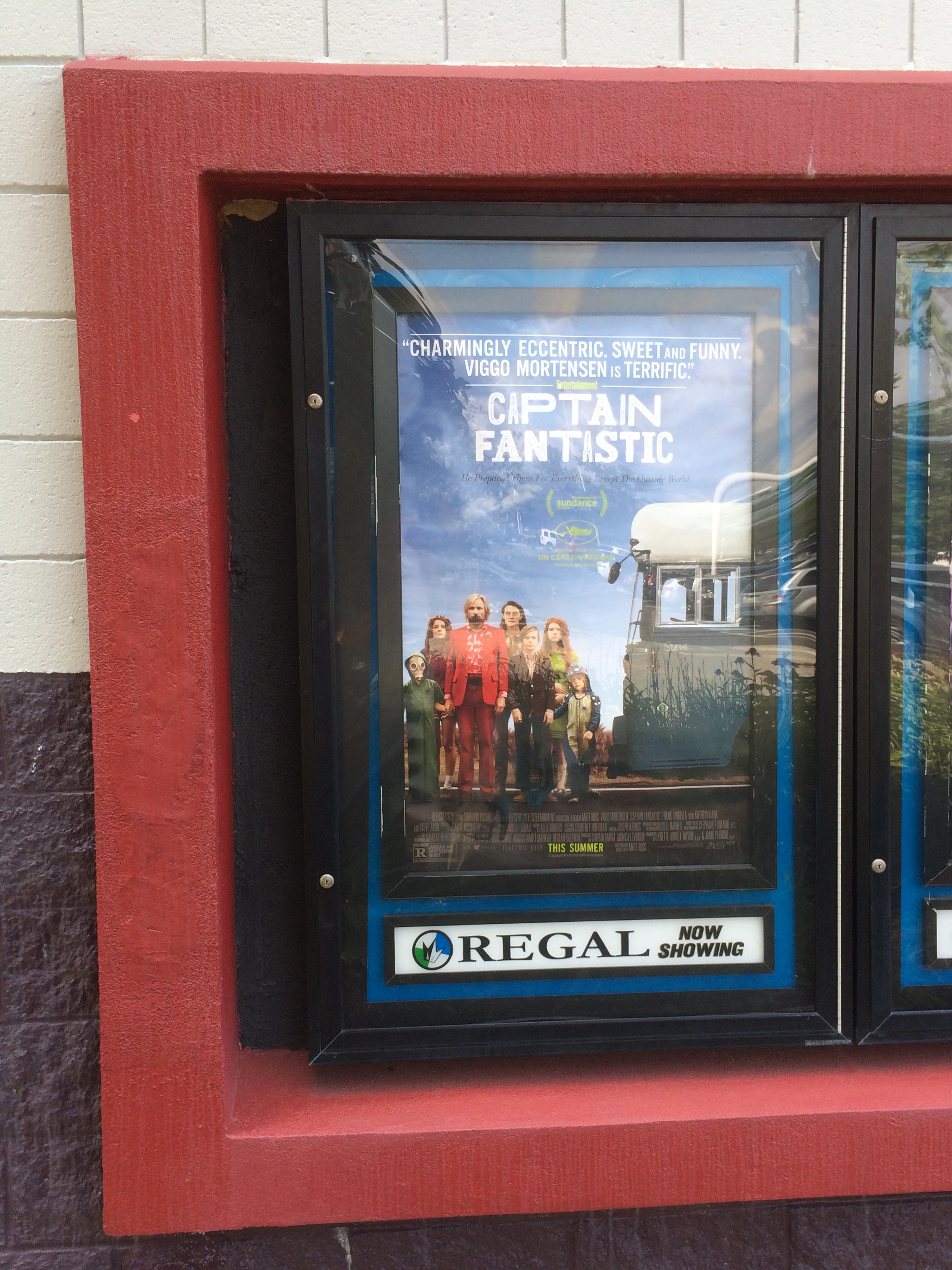
Not Your Average Family: A Review Of Captain Fantastic

IMG_0844A few weeks ago my wife Sandy and I ventured out to see Captain Fantastic. It’s an oddly named movie and quite a good one. Captain Fantastic is a tale about a family, the Cashes, that for many years has been living in semi-seclusion deep in Washington State mountain wilderness. Why? Because Ben and Leslie Cash, early in their adult lives, walked out mainstream American society’s exit door. They were turned off by, and wanted no part of, the USA’s big business and big government, and the wasteful and extravagant lifestyles of many of their fellow citizens. Self-sufficient and resourceful in their wooded paradise, they have grown their own food, hunted animals and fruitfully made their way. And, via unorthodox and vigorous home schooling, they have passed on their beliefs, skills and knowledge to their progeny, all six of them, the oldest of whom, a son, is about 17. Part hippies, part isolationists, part radical thinkers, Ben and Leslie have helmed what ain’t your average family, to say the least. Average, no. Smart, book-loving and full of spunk, yes. In other words, very likeable.

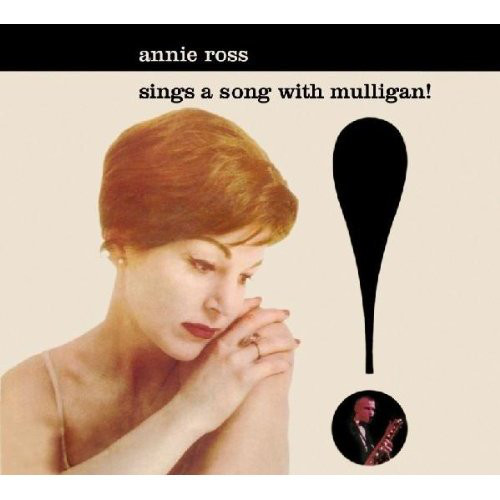
Give Me The Simple Life is on this album.

I wanted to write a story about Captain Fantastic shortly after seeing it. The story definitely was inside me, pawing to get out, but it just wouldn’t congeal. Still, I kept thinking about Captain Fantastic a little bit now and then while hoping for the arrival of a special something that would set a zippy analysis of CF in motion. Such occurred recently when I heard a song on the radio, vocalist Annie Ross’ 1959 version of Give Me The Simple Life, an All-American standard recorded by many over the years (click here to listen). Harry Ruby and Rube Bloom wrote this number around 1945, meaning it to be a paean to modesty in one’s approach to living, to being happy with a small abode, basic possessions and the ones you love. As such, it would make a fairly decent though incomplete theme song for the Cashes. But Annie Ross took big liberties with the Ruby-Bloom creation. Someone, maybe she, penned some additional lyrics that turned the original song on its head. Turns out that Annie had been playing with us. “Here’s what I really want,” she in effect sang in the tune’s closing verses. “Plenty of dough, a Cadillac, caviar and really nice clothes.”

Ben and Leslie Cash, had they ever heard Annie Ross’ take on Give Me The Simple Life, would have shaken their heads knowingly. “That’s the American way.” they’d have said. “F*ck that. This mountain is where we belong.”

Ah, if only things were that clear. If they were, life would be a breeze (and there’d be little for moviemakers to make movies about). But, duh, circumstances change and situations develop. And people, if they are wise and with it, choose to or are forced to adapt. Or at least contemplate the possibility of adapting.

At the start of Captain Fantastc, we see seven of the eight Cashes in action. All but Leslie, who has been away from the household for several months, a hospitalized victim of mental and emotional disturbances. In her absence Ben is fully in charge, leading his troops through the same rigorous activities as when Leslie was present: killing deer, climbing rock walls, reading and discussing books, to name a few. The Cashes, if anything, are, with exceptions, very well-rounded. One day, though, bad news reaches Ben. Leslie, his soul mate, took her life. Apparently troubled for a long time, she had soldiered on till the pain grew too intense.

Leslie, in her will, left specific instructions as to how her death is to be observed and how her body is to be disposed. The Cashes’ quest to honor her wishes takes them off-mountain, where they ram hard into modern American life. For the Cash offspring, supermarkets and video games and big houses, all of which they encounter, are disorienting. And for Ben, the temporary immersion in society makes him look at his kids anew. He and they love their mountain home, but is it ultimately a prison for the children? To truly blossom might they need to live among their countrymen, at least in some modified manner?

Plot-wise, I’ll say no more. Now it’s gripe time, which I’ll keep very short by mentioning only one of several quibbles: Maybe I missed something, which is likely, but I didn’t come away with a good understanding of when or why Leslie’s mental problems developed and grew. I thought that the presentation of this subject was more than a little confused and hard to follow. Like me.

Which awkwardly leads me to note that for eons I’ve been amazed by how many good movies are written and/or directed by persons whom I’ve never heard of before. That’s a reflection of the amount of talent out there, and also shows that I’ve got miles to travel if I ever hope to get back in the loop. All of which is a delayed way of saying that Matt Ross wrote and directed the good Captain. As for actors who do a great job, well, everyone shines in Captain Fantastic. Viggo Mortensen, whom I do know about, gets far more screen time than anyone else. He has no trouble revealing the many moods and facets of Ben Cash. And George McKay too is wonderful. Previously an unknown to me, he plays Ben and Leslie’s sweet and low-in-certain-life-experiences oldest child.

Movie fans, that’s a wrap.

(Don’t be shy about adding your comments, or about sharing this article with others)

I Was Destined To See Israel Nash In Concert, Wasn’t I?

IMG_0842Everything was going smoothly. The train I’d boarded in the suburbs deposited me in downtown Philadelphia at 8:30 PM. Four minutes later the blazing neon sign of one of rock and roll’s heavenly venues, MilkBoy Philly, stared me in the face. I snapped its picture. Then I entered MilkBoy and climbed the stairs to the second floor music hall. A band was playing, undoubtedly the opening act. They were loud, man, loud. I stopped two stairs shy of the top and took in the scene, the little of it that I could make out. The place was so dark my eyes would’ve performed no worse in the dead of night in Amazonian jungles. One light, the only light anywhere near me, turned towards me. It was attached to the forehead of the keeper of the gate, the guy who used the light to check IDs and sell tickets at the top of the stairs, and maybe to do some mining in his spare moments. I couldn’t make out his face or body. “How’s it going? Didya find any promising coal seams tonight?” I almost started to say, but decided against it. In half an hour or so, no doubt, I’d be watching Israel Nash in concert. Destiny, which had begun spinning its threads five weeks earlier, was playing out. That’s a swell word, isn’t it? Destiny. How sweetly it rolls off the tongue.

Here’s where this little saga began: On the final night of our stay in Amsterdam in June, my wife Sandy and I had dinner in a great, intimate place named Tomaz. A gastropub is what we’d call it in the States, but I don’t know if that term is used in The City Of Canals And Marijuana. Hardly matters. Sandy drank wine, I downed a couple of beers, and we each had a steak dinner and, for dessert, a chocolately, moussey concoction. A delicious meal. Our waiter was the bistro’s owner. I didn’t ask his name, but maybe it’s Tomaz.

Anyway, Maybe It’s Tomaz is a music lover. Has been for decades, like me. As soon as Sandy and I sat down I was taken with the song playing in the restaurant. I commented on this to MIT. “That’s Israel Nash,” he said. The tune was the type that will carry you away on a long, spacey ride. MIT purposely had programmed it, via Spotify, because, as MIT told me, the music he liked best these days are the dreamy, atmospheric sorts that emerge from various just-so combinations of country, folk, rock, blues and sometimes other styles. And he mentioned two more practitioners of the amorphous genre whom, as with Nash, I’d heard of but knew next to nothing about: Harry Manx and Jonathan Wilson. MIT played multiple tracks by all of them for my listening pleasure. Between bites and between conversation with Sandy and MIT, I half-listened to the songs. And eventually Sandy and I bid our music-drenched host our adieus.

Back home in the States I did some barebones research into Messieurs Nash, Manx and Wilson and checked out a handful of their tunes on YouTube. What I heard sounded very good (click here and here and here for the smallest of samples). Perhaps I’d get to see one or more of them on stage some day. That would be nice, I thought. And then my short attention span kicked in and I moved on to other important topics, such as pondering how many new varieties of Cheez-Its I might give a whirl, and whether my shampooing regimen needed an update.

I should have seen it coming. A few weeks ago, checking out a local music website, the name Israel Nash jumped out at me. Good gawdalmighty, he would be at MilkBoy in three days, it indicated. And when, in the blink of an eye, the third day arrived I looked at MilkBoy’s website to see when the show would begin. The site said 7 PM. What? The last time a show began that early at a rock club was . . . well, never. Must be a misprint. I called MilkBoy for clarification. No answer. Called again and again and again. No one picked up. It figured.

But I had a good feeling all along. It wasn’t by chance that five weeks earlier I had heard, for the first time ever, a song by Israel Nash. And in a foreign land, no less. Some elusive guiding force had befriended me that night in MIT’s restaurant and was leading me to the proper culmination of the storyline. I was meant to see Israel Nash in concert. At MilkBoy.

“Who’s this? The opening act?” I inquired of the gatekeeper. The light attached to his forehead was tremendously focused. Only a few strands of illumination were able to make their ways sidewards. But those faint rays revealed to me that MilkBoy was incredibly packed with human bodies. That night, the phrase Standing Room Only didn’t apply. Standing Room Nearly Impossible did. Not only that, the air was thicker than thick with perspiration and other inspired body odors. Any high school gym’s boys’ locker room smelled a lot better.

“No, this is Israel Nash,” said the man with the light. “He has only half an hour left in his set. Do you have a ticket?”

“Uh,” I mumbled, and turned around. Down the stairs I went.

So, what’s the thrust of this story? Is there a moral? Something to be learned? Well, those questions usually are pretty much out of my league. I’m not all that bright. However, I have a half-decent answer in this case: When destiny appears to be knocking on your door, do what the man with the light would do — check its ID.

(Don’t be shy about adding your comments, or about sharing this article with others)

Great Blue, Good Blue, Bad Blue: Thoughts About A Joni Mitchell Song

My well-worn copy of Blue the album.

Probably it was inevitable that Joni Mitchell’s album Blue would find its way into one of my essays. That’s because it is one of my all-time favorite records. And I hardly stand alone. Blue, after all, appears high on the “greatest albums ever” lists of music critics galore. With good reason. It’s an awfully brilliant work. Joni’s naked emotions, from high to low, saturate Blue’s songs, all of which she wrote. By no means am I an expert on the Mitchell canon, but from what I hear when I listen to Blue, and from what I’ve read, Joni’s openness was at its acme during the writing and recording of Blue, which came out in 1971. As self-revealing as many other of her albums are, Blue walks away with the “Here’s What I’m All About” prize. If you aren’t familiar with Blue, you will add some wows to your day by tracking it down and giving it a whirl.

But you know what? I’m not going to write any further about Blue the album on this virtual sheet of paper. That’s just like me . . . erratic. I won’t stray too far off course, however, as I now turn my gaze to Blue the sad song. It is the final track on side one of Blue the album’s vinyl incarnation. Although I’ve heard this song more than 100 times, I’d guess, over the years, it wasn’t till last week that I paid devoted attention to its lyrics. That’s just like me, too, a guy who has had trouble figuring out the meaning of 99% of the tunes he’s listened to during his life, including Happy Birthday To You and My Ding-A-Ling (it was a Chuck Berry hit). As an aside I’ll mention that my poor levels of lyrical insight and understanding are predictable. Back in my freshman year at college I stunned my Introduction To English Literature professor with my denseness. He had to create a new grade for me. An F wasn’t low enough, so he gave me a G, which stood for Gawdawful. Miraculously, my interpretative powers have inched upward a bit since those days.

Blue the song is track five on side one.

When I heard Blue the song last week, it struck some heavy chords with me, as it always does, and I began trying to figure out a way to work it into a story. I was all set to compare it to a couple of other sad tunes with blue in their titles. Such as Dinah Washington’s 1955 version of Blue Gardenia and Willie Nelson’s 1975 take on Blue Eyes Crying In The Rain. But before I could do that I needed to examine Blue’s lyrics and attempt to decipher them. I looked at them and came away, I think, with a reasonable understanding. And that’s when an interesting thought entered my brain. Lyrically, Blue is so Joni-personal, and musically so shape-shifting, I wondered if anyone ever covered it. Nah, that’s pretty doubtful I decided. But oh so wrong I was, as some Googling revealed. Amazingly to me, lots of people have taken a crack at it, some more successfully than others. Wham! “There’s a story in there,” I said to myself. Probably many. However, we’ll save many for future days and keep the remainder of this analysis on the modest side.

There’s no better place to continue than with Blue’s words, which are relatively few. Here they are:

Blue, songs are like tattoos.
You know I’ve been to sea before.
Crown and anchor me
Or let me sail away.

Hey Blue, there is a song for you.
Ink on a pin
Underneath the skin,
An empty space to fill in.

Well there’s so many sinking now,
You’ve got to keep thinking
You can make it thru these waves.
Acid, booze, and ass.
Needles, guns, and grass.
Lots of laughs, lots of laughs.

Everybody’s saying that hell’s the hippest way to go.
Well I don’t think so
But I’m gonna take a look around it though.
Blue, I love you.

Blue, here is a shell for you.
Inside you’ll hear a sigh,
A foggy lullaby.
There is your song from me.

Those lyrics startle me. They rock, they roll, they roil. Delicately. They paint a picture of fragile love. And until last week I hadn’t realized that they are addressed to a specific person (James Taylor, Joni’s boyfriend during parts of 1970 and ’71, is many observers’ guess) whose identity she isn’t revealing but, for the song’s sake, she has nicknamed Blue. Joni loves Mr. Blue, but can’t quite reach him. There are more than a few degrees of disconnect. A head-over-heels-in-love song for him wouldn’t fit the nature of their relationship. The best she can do is to pen a foggy lullaby to help fill in an empty space. Ouch. Love hurts.

Joni Mitchell sings Blue fervently, her voice sometimes quivering, accompanied only by the piano whose keys she hits good and hard (click here to hear the song). Her vocal is forthright and drips with pain and uncertainty. She didn’t want additional instruments or voices to distract from her message. She aimed for simplicity in her rendition.

Joni’s Blue is pretty perfect, don’t you think? The world would be just fine with no version of the song but hers. I can understand, though, why others would approach it. For some artists, Blue might cut so deeply they are uncontrollably compelled to record it. For others, putting a different spin on singular Blue seemingly becomes a challenge they can’t resist undertaking.

Roughly 100 cover versions of Blue have been recorded. And I gave a listen to a dozen of them before I said to myself: “Yo, anal dude! Enough already.” But the 12 I visited comprised an ear-opening experience. And speaking of yo . . . Yo, Kevin Sandbloom! What the fu*k were you thinking? Kevin — your jumpy Blue is wrong, man, wrong. Haven’t you ever heard of subtlety? And what’s with your vocal undulations? They send the song on a nasty roller coaster ride. Joni should sue you, man. Driver, let me off! (Click here to listen)

On the other hand . . . Yo, Dubistry! I shuddered at first listening. But your version grew on me. Who’d have thunk that a reggae-clothed Blue would work? Those crashing drums and cymbals send shock waves. But, in the end, your Blue can handle them because you didn’t allow the spirit of Joni’s Blue to disappear. (Click here to listen)

Yeah, the spirit of Joni’s Blue. I guess that’s what I was looking for all along. And I found it in the Blues lofted to us by Cat Power and Sarah McLachlan. Picking one over the other is tough, but I’m going to go with Sarah’s, which you can listen to by clicking here. Sarah does Blue proud. She sings the song slowly, buoyed by quiet and well-placed electric bass notes, by shimmering electric keyboards, and dramatically by a multi-tracked heavenly female choir. Sarah’s Blue sounds better and better to me the more I return to it. It is ethereal, majestic. A week ago I’d never have believed I might say this, but the McLaughlin Blue equals and possibly outdoes Joni’s.

(Don’t be shy about adding your comments, or about sharing this article with others)