We Said “Cheese Please” At Iron Abbey

I’ve grumbled before on these pages about the paucity of loveliness in the townships that surround my suburban Philadelphia home base. Stuck in the middle of a large section of this haphazard overdevelopment is a place that I think is a-ok. Iron Abbey is its name, and beer and good food is its game. It is a gastropub. Location: Horsham, Pennsylvania. My wife Sandy and I ate dinner there recently. One part of the meal, a cheese plate of all things, particularly opened our minds and eyes.
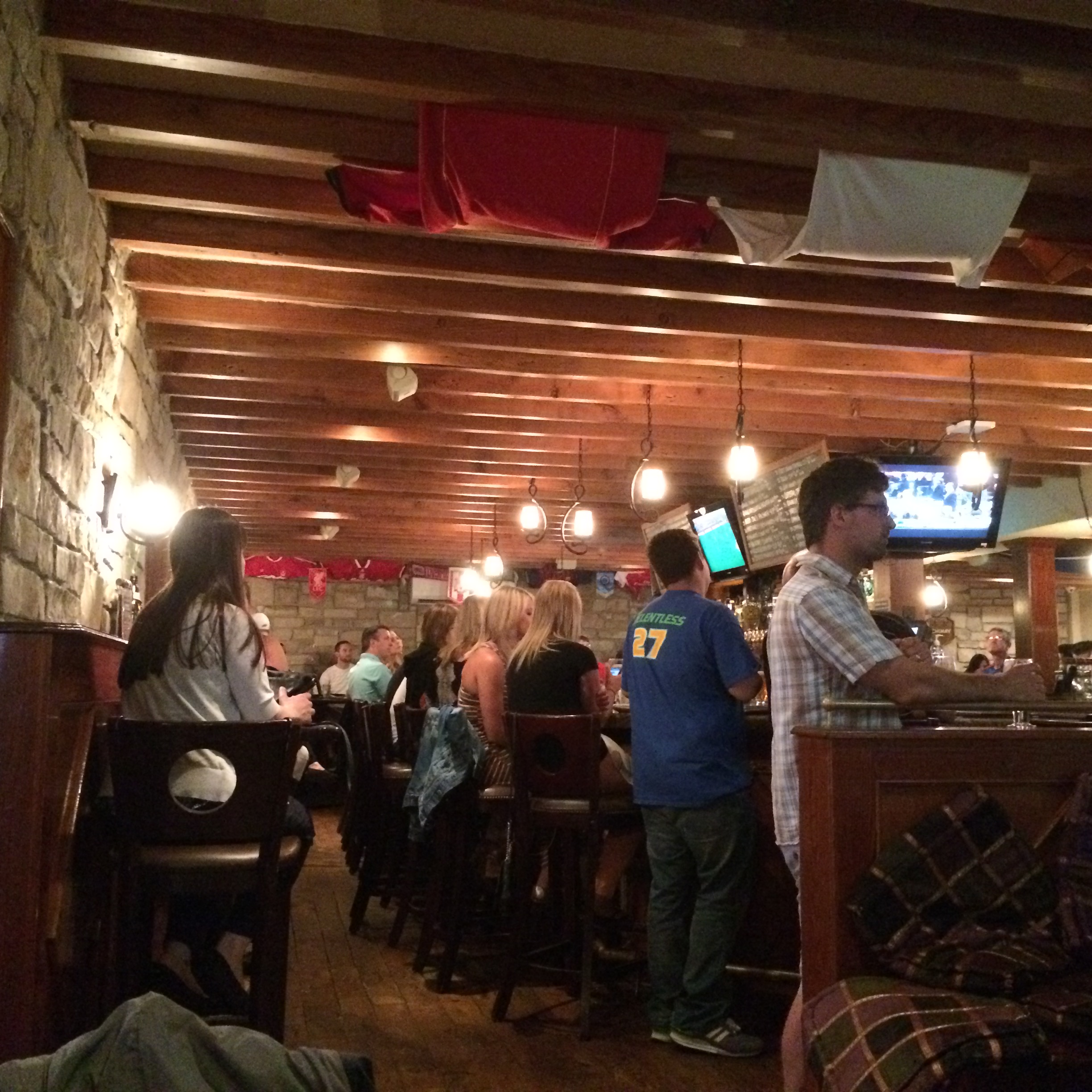
Part of the scene at Iron Abbey.

Iron Abbey is a large establishment. Its dining areas and bar are on ground level where the look is woody and stoney rustic. Kind of like, who’d have guessed, an abbey. Upstairs are an espresso café and rooms filled with beers for takeout purchase. The beer rooms are wondrous, packed with microbrews, many obscure, from the corners of the globe. For this article, let’s stay on the ground floor, where the beer selections are no less mind-blowing.

Sandy doesn’t like beer. She is a wine lady. Unfortunately for her, Iron Abbey does not cater to wine-by-the-glass ladies or gents. Those selections are slim. The two Sauvignon Blanc choices were overpriced at $10.50, so Sandy, a white wine devotee, instead sipped an eight dollar glass of Cielo Pinot Grigio, direct from Italy. Sandy says she has had better. I took a sample and approved of its dryness but quickly decided its flavor could be richer.

Enough about wines. The Philadelphia region has become a haven for beer geeks, and Iron Abbey is a top example why. I spent five minutes poring over the beer menu. The choices were nearly endless, around 40 on tap and 250 in bottles and cans. The pressure was on. Twice I told our waitress that I needed more time to decide. On her third visit to the table I was too embarrassed to ask for another extension. Firestone Walker Easy Jack IPA I said, pointing it out on the menu’s draft beer section. With craft beers, one usually can’t go too wrong, so skilled have the world’s brewers become. My selection, birthed in sunny California, was proof. Bitter and hopped-up it was, as all good IPAs should be. One of the hops varieties in the recipe imparted a husky tinge of grapefruit flavor to the brew. I liked that a lot.

The best segment of the meal came next. Sandy and I were all set to bypass any starters and simply place our main course orders when I absentmindedly began to pay some attention to the menu section titled “The Board.” There, one may select from various cheeses and meats, all of which are accompanied by an eclectic mix of nibbly stuffs. Why not, we decided. When the waitress reappeared we picked two cheeses and sat back with our drinks. We’re not naïfs, but neither of us had ever before ordered a cheese plate at a restaurant.

The cheese board that we loved.
The cheese plate that we loved.

The cheese plate arrived and we couldn’t have had a better time. It came with salty olives, crunchy excellent French bread, fig and apricot jams, roasted Macadamia nuts,  pickled red onion slivers and membrillo. Yes, I hadn’t a clue either as to what membrillo is. Turns out that it is a firm soft paste made from quince pulp, sugar and water. Some post-Iron Abbey research told me it’s commonly found in Portugal, Spain and Italy. I caught what I thought were flavors from the apple and pear family. Quince, as additional research told me a little while ago, is indeed related to those fruits. Bottom line, the membrillo was delicious. The other accompaniments were too. As for the cheeses, we had selected  Ubriaco Classico from Italy and Ossau Iraty from France. As with membrillo, I’d never heard of either of those cheeses before. For the most part I’m a Kraft swiss and Cracker Barrel cheddar kind of guy. But I know there’s a world of cheeses out there to be explored. The Ubriaco was semisoft and hinted of wine and citrus. The Ossau Iraty was dense and dry and pungent. Sandy and I swooned over both of them and the bread and the nibbly stuffs. This was the most exciting platter of food we’d had in quite a while.

Crab cake entrée (top). Chicken burger (bottom).

After the cheese extravaganza we’d have been happy to pay up and leave. We knew that it would overshadow the next course. Which it did. My grilled ground chicken burger, though, was awfully tasty, a comfort dish covered with melted Monterey Jack cheese and sautéed bits of red peppers and onion. The side salad I opted for in lieu of fries was fine too. Sandy’s crab cake entrée was done nicely. The grilled crab cake was charred outside, soft inside and good. Some extra doses of spices and flavorings wouldn’t have been a bad idea, though. It sat atop dreamy mashed potatoes, mushroom slices blended through. Blanched then sautéed itsy bitsy asparagus and carrot pieces, very flavorful, surrounded the mountain.

We had no room for dessert. We paid our bill and thanked our waitress, then squeezed past the crowds to the front door. Iron Abbey is a popular spot. Though it is by no means perfect, there are good reasons why it’s bustling.

(Photographs by Sandra Cherrey Scheinin. If you click on any photo, a larger image will open)
Yeah, Another Beach Boys Article

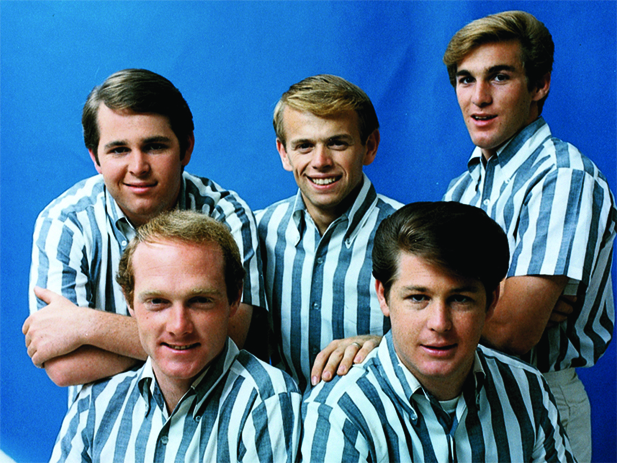
The Beach Boys early in their career. Photo: Capitol Records Photo Archives
The Beach Boys early in their career.
Photo: Capitol Records Photo Archives

Since The Beach Boys broke big on the charts in late 1962, media coverage devoted to them, collectively and individually, has been enormous. And now with the theatrical release of Love And Mercy, a biopic not so much about The Beach Boys as about their once-brightest star, Brian Wilson, the attention has been renewed. At first I was reluctant to add my puny thoughts to all these decades’ worth of Beach Boys coverage. But I’ve maintained a very warm place in my heart for the Boys, and viewing Love And Mercy has inspired me to set my fingers on a keyboard.

The Beach Boys’ history is immensely complicated and convoluted. I’ll summarize what I know fairly briefly: Three of the five original Beach Boys were siblings. From oldest to youngest they were Brian, Carl and Dennis Wilson. Add one cousin, Mike Love, and one pal, Al Jardine, and the recipe is complete. Brian, the band’s leader and creative pulse, was a gifted composer and orchestrator whose talents burgeoned, though for only a few years, as the 1960s progressed.

Teen and twenty-something idols, the Boys knocked out hit after hit right from the start (Surfin’ Safari, Surfin’ USA) through 1966 (Wouldn’t It Be Nice, Good Vibrations). But Brian was a victim of mental and emotional demons that caused him to begin losing his grip in 1967 during sessions for the high concept album Smile. Brian guided the band, and many studio musicians, part of the way through Smile, which was meant to be a celebration of earthly and universal creation. But his troubles brought the work to a sputtering end. Unfinished, the album was shelved. At that point, age 24, Brian’s best musical days were behind him. Though he remained a Beach Boy, his songwriting and studio session contributions to the band soon grew fewer, and his appearances with them on stage over the next several decades were sporadic. The Beach Boys soldiered on nonetheless, churning out many albums and nabbing a few more hit singles. And they toured the world (usually sans Brian) over and over.

As started to become public knowledge in the mid 1960s, Brian’s problems hardly were the only painful situations within The Beach Boys. Their story, beyond the music, is a messy one of endless internal conflicts and legal disputes, drug abuse and, ultimately, death. Very sadly, two Beach Boys passed at youngish ages. Dennis Wilson drowned in 1983 soon after his 39th birthday.  Carl was taken by lung cancer in 1998 when he was 51. Carl many years before had become the band’s chief, taking over from the no-longer-able-to-lead Brian. The band fell apart after Carl’s death.

Hey wait, you say, The Beach Boys are on the road every year, just as always. Well, Mike Love and Bruce Johnston (who had joined the group in 1965) have continued to tour as The Beach Boys. But without any of the Wilson brothers the Love-Johnston unit is hardly the real thing. In 2012, though, Brian (and Al) joined Mike and Bruce for a 50th year reunion tour that went well, only to conclude on a sour note.  Love refused to add additional concerts beyond the tail end of the original schedule and in effect booted out Wilson and Jardine. As usual, fun fun fun might have been the image The Beach Boys wished to project, but reality was a whole different ballgame.

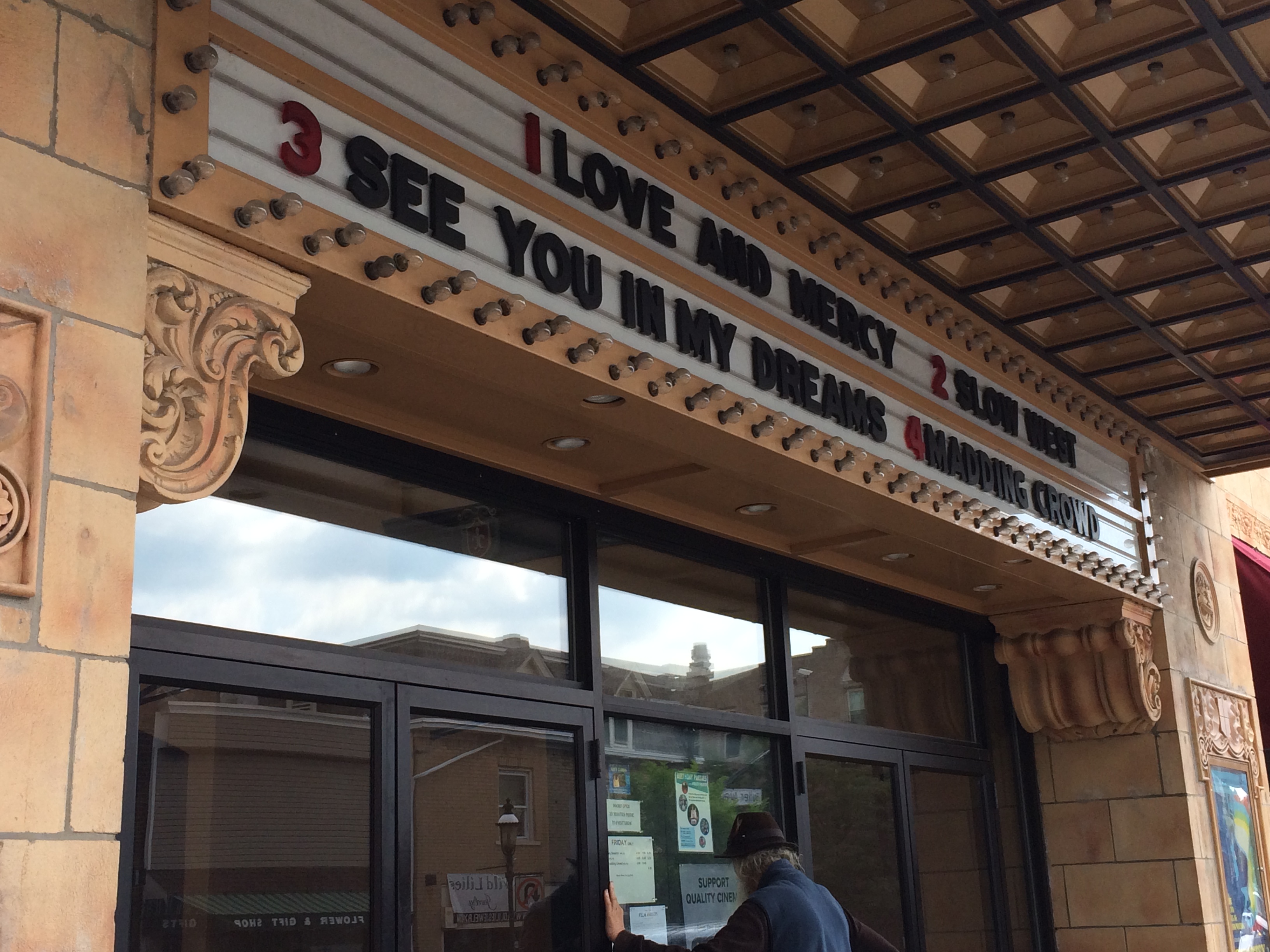
Love And Mercy, playing at the Ambler Theater.

Who, then, in 2015 would have expected the release of Love And Mercy? Not me. At first I didn’t want to see the movie. I’ve read more than enough about The Beach Boys over the years, spent many hundreds of hours listening to their music. No offense to the Boys or their legacy, but my limit, or so I thought, had been reached. Until a friend told me that the movie is really really good. And thus my wife Sandy and I found ourselves on a recent Saturday at our favorite suburban art house, the Ambler Theater. There I learned that my friend was correct. Love And Mercy is really really good. Three and a half out of four stars.

Love And Mercy has the feel of truth. And from what I’ve read, its portrayal of events actually is quite true. The acting by the leads is nuanced and impressive. The script is tight, the direction too. There are a few cardboardy plot and dialog lines here and there. The rest, however, is gold. One need not be a Beach Boys freak to enjoy this movie. Sandy isn’t. She doesn’t know much about their musical history or their problems. She found the movie to be what in fact it is, a powerful drama. She agrees with my rating.

As I’ve mentioned, the movie is only partly a full examination of the Beach Boys. Dennis, Carl and Mike are portrayed a good bit, but they aren’t central to the story, and the actor playing Al Jardine is barely on camera. Love And Mercy largely is the tale of Brian Wilson and Melinda Ledbetter, the lady who loved Brian and brought him back from agony’s door and the clutches of manic psychotherapist Eugene Landy (potently depicted by Paul Giamatti) in the 1980s. The main action takes place in two time periods, 1965 through 1967, and 1985 through 1989 or so. The movie jumps back and forth between those eras. Paul Dano portrays the younger Wilson, John Cusack the older. Both are wonderful, as is Elizabeth Banks as Melinda.

A good number of the movie’s sequences with Dano realistically and clearly show Brian’s studio wizardry. The Cusack sections often touchingly shine a light on the developing romance between Wilson and Melinda, whom Brian met in 1985. I think that to tell any more about Love And Mercy wouldn’t be fair. Putting the movie aside, what to me is quite astonishing is that Brian Wilson is above ground and going strong. He has dealt with abusive forces that no decent person deserves to encounter, and has rebounded from low-as-you-can-go points to a most active musical career. He’s on tour right now. With a lot of courage and strength, and with a lot of help, he has survived.

Beer Here!

I’m not much of a shopper these days. I don’t spend a lot of time in most stores. A huge indoor mall is near my home, but I rarely go. My visit there recently, a fruitless search for a pair of humble bedroom slippers, was my first in several months. Supermarkets, though, are another story. They are where I head to  indulge what’s left of my urge to buy. I look forward to visiting them, not only to purchase the items that my wife and I inscribe on our refrigerator notepad, but also to check out the remarkable amounts and varieties of just about anything you can name that Americans are able to choose from. There are two supermarkets not far from my house that I especially like to visit, though not to buy food. I go to these stores, Wegman’s and Weis, to ogle (and buy) beers.

In my pre-beer days as a kid in Brooklyn and then Long Island years ago, I wasn’t too big on shopping either. But I did like to spend plenty of time in candy stores. Candy stores were modest establishments that sold a wide variety of items, and usually included a soda fountain and lunch counter. Adults might pop in for cigarettes or greeting cards or a grilled cheese sandwich. The younger set primarily was interested in candy bars and other important stuff like comic books and yo-yos. At candy stores I used to gaze at the colorful rows and rows of teeth-destroyers before making a pick. PayDay, Mr. Goodbar, Chunky, Milky Way, Chuckles and on and on. What a choice. What a decision. What a pleasure. Candy stores linger fondly in my memory bank, but probably all are long gone. I haven’t seen any in decades.

For the last three or so years great pleasure has been mine at Wegman’s and Weis, whose beer aisles are my adult candy store. Wegman’s and Weis are among the few supermarkets in my area near Philadelphia that sell beer. I guess I’m lucky to have them, because it’s not easy for Pennsylvania supermarkets to sell suds. Only a few years ago, Pennsylvania’s State Liquor Control Board, the alcohol overlord, opened the door a crack to supermarkets willing to jump through hoops to obtain a license. So far not many supermarkets have chosen to deal with the process. Pennsylvania has gained fame for its archaic and labyrinthine rules governing the sale of alcohol. Possibly a Talmudic scholar would be able to understand them.

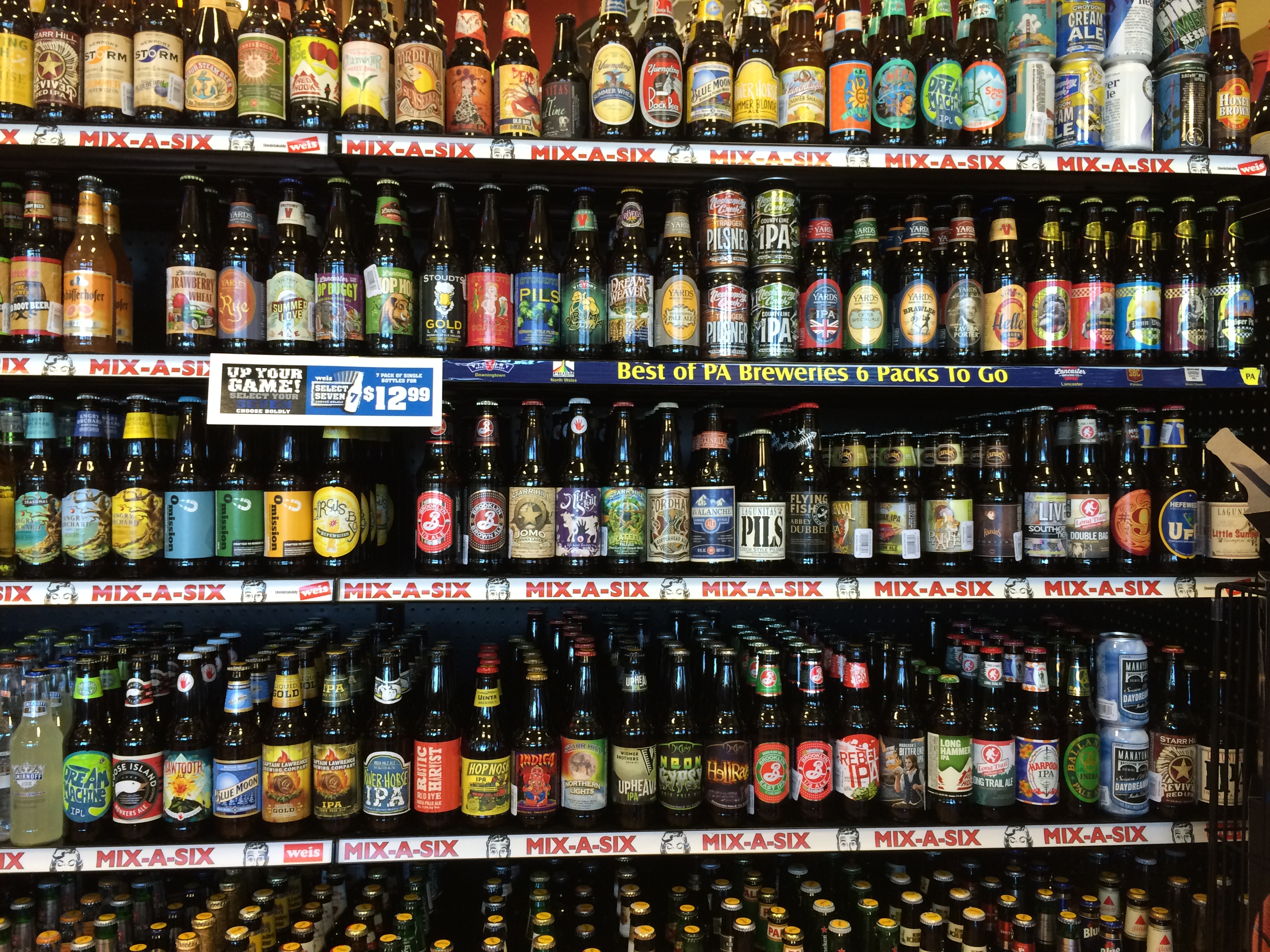
A beer rack at my local Weis supermarket. What's not to love?
A beer rack at my local Weis supermarket. What’s not to love?

In any case, my eyes widen and my heart flutters when I enter the beer section at my local Wegman’s or Weis. Loyal supporters of the microbrew revolution, these stores specialize in the types of beers that I swoon over. Hoppy ones and dark ones and spicy ones, for example. I love nearly all of them, as long as they are loaded with flavor. To me, the craft beer explosion in our fair country is one of the greatest and most positive developments of the past 20 years.

The thrills that rock me in the beer aisles are not very different from my younger self’s thrills in candy stores. Basically, eagerness to ingest the products and giddiness from staring at terrific looking packaging. Yes, not only do most microbrews taste really good, as with candy bars they also are well-dressed. In fact, beer labels are way cooler than candy wrappers ever were.

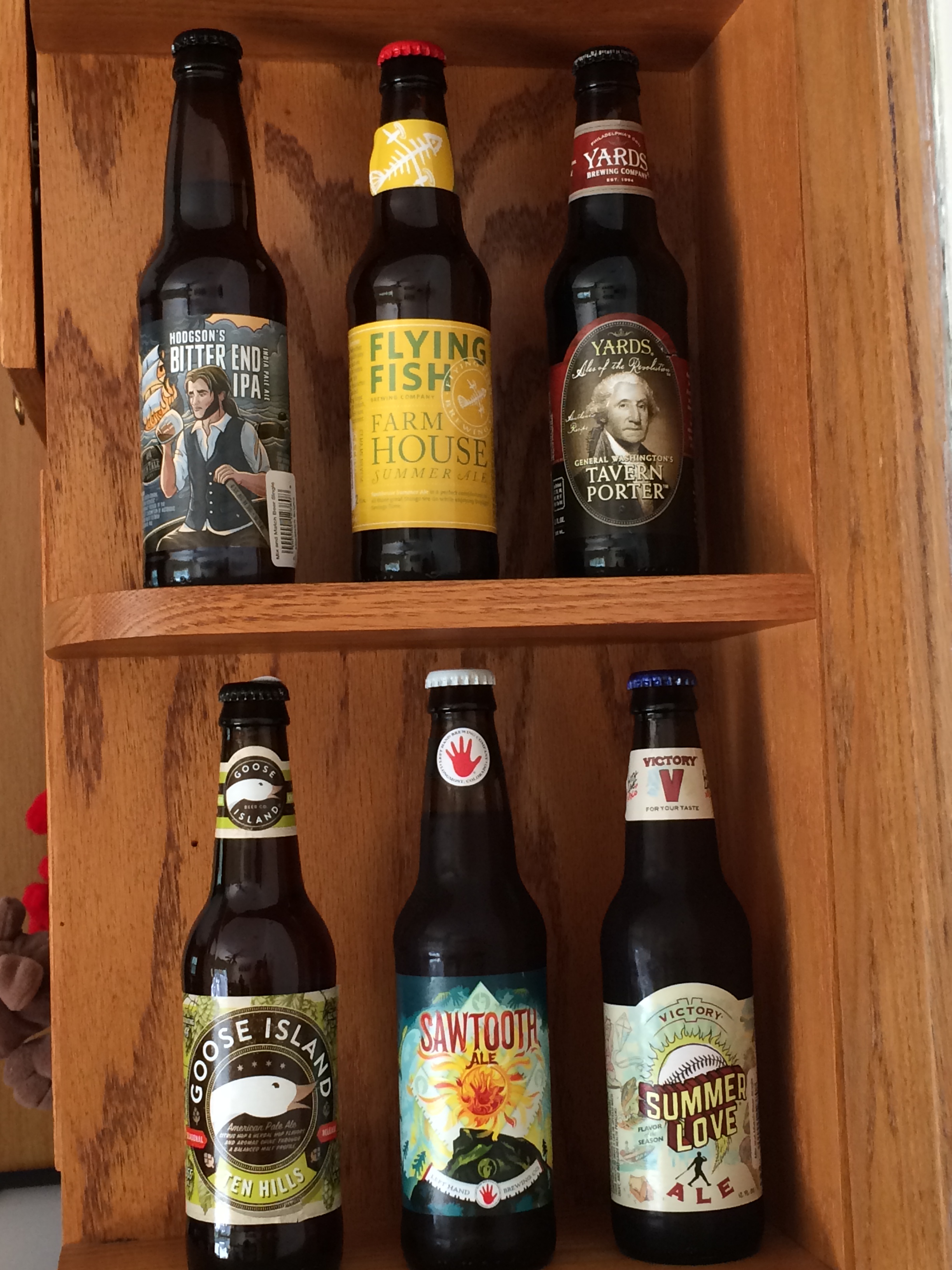
The six beers that I brought home from Weis.

My aim during my visit to Weis last week was to assemble a create-your-own six pack mostly of beers that I hadn’t had before, and I know that in a few instances my right hand was stealthily guided towards bottles whose labels were too pretty or funky to ignore. I headed home with winners, taste-wise and label-wise, such as Victory Brewing’s Summer Ale and  Left Hand Brewing’s Sawtooth Ale. The photo to the left shows all six purchases (click on the photo to get a bigger image). Dig those crazy labels (excepting the one on Flying Fish’s offering).

More about beer as this blog progresses. Till then, drink in moderation and drive safely.

Raul Malo Alone On Stage

New Hope Winery. The concert took place inside the Event Center.

I don’t much enjoy the artsy and touristy central section of New Hope, Pennsylvania. Haven’t been there in several years. The crowds, the traffic, the bad news parking situation. Who needs it?  But I have been to New Hope’s fringes a bunch of times last year and this year, as I mentioned in my article about Kim Richey. The New Hope Winery lies a couple of miles south of the “I’m not going there” zone, and that’s where my wife Sandy and I have become semi-regulars.

Pre-showtime.
Before showtime.

Behind the winery’s gift shop is a roomy building dubbed the Event Center. On its small stage the winery presents a nice variety of musicians year-round. On Thursday evening, June 18, Raul Malo, lead singer of The Mavericks, stepped into the spotlight. Malo is on tour with The Mavericks but took a short solo side trip to New Hope, where he had played the previous evening too. The next day he’d be back rocking and rolling with his band in Rochester, New York. But in New Hope the audience got a full dose of his contemplative side. He picked up his acoustic guitar at 8:10 PM, and for the next 100 minutes had the audience, me and Sandy included, in the palms of his hands.

Raul Malo has been a pretty big name for the last 25 years. His voice is the reason why. It’s a rich tenor, wide-ranging, and moves nimbly in upper registers where others may fear to tread. In New Hope Malo brought the volume and assured passion at appropriate times, but largely kept things reined in. The point is that he has wonderful vocal taste and great control. His singing is a thing of beauty.

Raul Malo in action.

I’d seen Raul on television, heard him perform on the radio, but New Hope was my first live visitation with him. He sang 17 songs, ten of which he wrote or co-wrote. I was smitten from the git go, but in a million years wouldn’t have guessed his choice for show opener. Picking his guitar slowly and easily, he quietly sang not one of his own numbers, but Summer Wind, the tune made famous by Frank Sinatra in 1966. Raul did the song proud.

Summer Wind is a lament about lost love. All 16 songs that followed, self-penned and not, also were about love in one way or another. Love in bloom, love desired, love remembered. Raul covered all bases. I never thought I’d hear a version of Harvest Moon, a gorgeous and pure love song, to rival that of its author, Neil Young. But Raul came close, singing with restrained emotion, hitting the high notes with clarity. He did excellent work on his own Born To Be Blue, and Lucky One, the Roy Orbison-like operatic qualities of his voice emerging on those two numbers.

The most stunning moments arrived late in the show. (Call Me) When You Get To Heaven gave me goose bumps. Raul wrote this song for The Mavericks’ In Time album. From my seat 15 feet from stage left, I took it as a song about a breakup, a relationship not meant to succeed on planet Earth but destined to flower in a better place, maybe one of the mind. Raul sang slowly, mournfully. He drew out the song for many minutes. When introducing the tune, he had asked the audience to join in towards the end. They did. And that’s where the goose bumps came in. Though surely some males were part of the choir, somehow I heard only female tones. As Raul fingered the refrain’s chords over and over, angelic sweet voices rose throughout the room. Call me when you get to heaven . . . Call me when you get to heaven. It was just so beautiful.

Raul Malo from a different angle.

During that number I realized who Raul reminds me of. José Feliciano. Like Feliciano, Malo possesses both fervor and quiet strength, and the ability to be in-the-moment. None of this was lost on the near-capacity crowd seated at the room’s red tablecloth-covered cocktail tables. They went wild with claps and yells between songs. But when Raul sang, they were seriously silent and attentive. Raul loved them back. Happy, laughing and joking around during the interludes, he especially made the night for a lady celebrating her birthday at the show. She was a super fan, it turns out, saying that this was the 80th time she had seen Raul perform. To honor her, he sang Can’t Help Falling In Love, the Elvis hit from 1961. And then he threw out two of his best and funniest lines of the evening. I hadn’t planned to use any profanity in this blog, though I curse aplenty in my non-blogging life. But I’m going to repeat verbatim what Raul Malo said after the final guitar strums of Can’t Help faded away. “That ought to buy me some karma points. Now I can go back to being a shit.”

A worthy side note about choice. The night that Sandy and I were in Malo pastures, two other splendid musical events were available not far away in the Philadelphia suburbs: The Richard Thompson Electric Trio and Graham Parker And The Rumour, great bands that must have brought down their respective houses. For discriminating music fans of any age, June 18 presented one of those uncommon convergences when deciding where to pay one’s money was a tough call.

John Gorka Brings Love To The Philly Burbs

The audience, before twilight set in, at Bryn Mawr Twilight Concerts.

I’m always on the lookout for live music. My musical tastes are wide, so my antenna is open for jazz, rock, Celtic, classical  . . . the list keeps going. One series I keep tabs on is Bryn Mawr Twilight Concerts, held on mid-year Saturday evenings at a park in the center of Bryn Mawr, Pennsylvania, a handful of miles west of Philadelphia. This series brings in some rock and R&B bands, but primarily sticks to acoustic folkie singer-songwriter types, most of the latter well known in that genre’s circles. The musicians set up shop in the park’s large gazebo. I had noticed a few weeks ago that the series opener on June 6 would be John Gorka, a singer-songwriter road warrior with over 30 years’ worth of original material to draw from. On Gorka Day, I checked the Bryn Mawr weather forecast. It emphasized a zero chance of rain. Bryn Mawr here we come. As the sun began approaching the horizon, my wife Sandy and I plunked ourselves down in our folding chairs, joining about 200 others at the park, and settled in for what we expected would be a night of good music. The skies were filled with friendly clouds, the air cool and dry. Hardly a better place to be.

I’ve been familiar with John Gorka for many years, but had seen him in person only once. That was about six years ago at the Philadelphia Folk Festival, where he was part of a round-robin song swap with other musicians on a small stage. I knew his backstory a bit, how he had honed his craft at the legendary Godfrey Daniels folk music club in Bethlehem, PA, and how his career began to take off around the time his first album, I Know, came out in 1987. Since then, he has logged too many miles to count in North America and overseas. The Bryn Mawr show probably was somewhere around the 3,000th concert performance of his career. During that career, Gorka has tended to take the solo route — Have Guitar, Will Travel — but on this refreshing Bryn Mawr night he brought along a friend.

Music critics often note the fine quality of Gorka’s baritone. That’s true. His voice is deep and burnished, but he doesn’t go for extra volume. Soothing and comforting are words I’d use to describe his singing.  He’s like a lower register version of James Taylor. Between songs he is funny and somewhat jittery, slyly putting himself down and reminding me a bit of Woody Allen. The Bryn Mawr audience loved his on-stage personality, which might very well be his real life personality too.

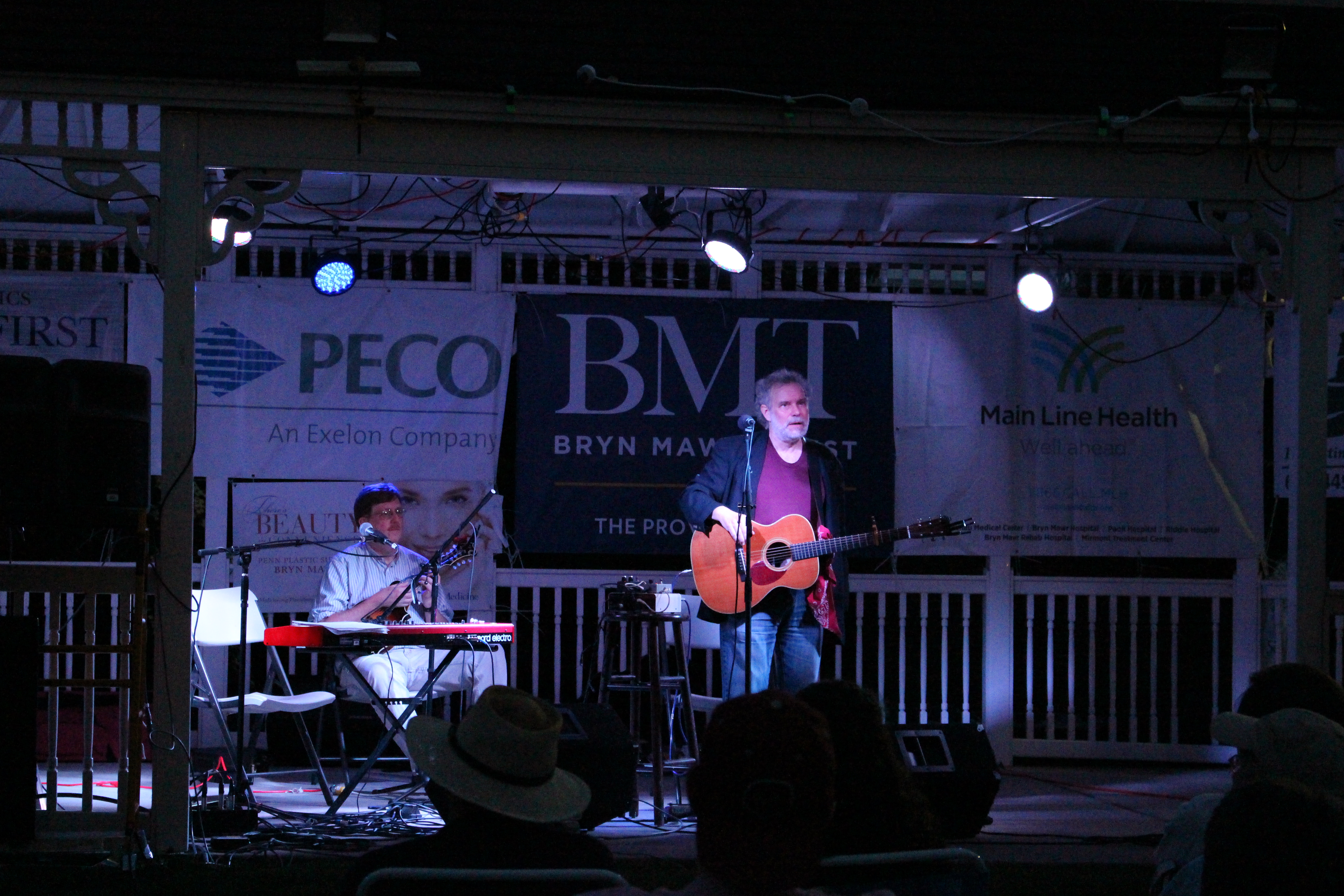
John Gorka with guitar, backed up by Russ Rentler with mandolin.

From within the gazebo he sang only self-penned songs, 20 in all. Four came from I Know, and five from his latest release, 2014’s Bright Side Of Down. The newer material was as smart and flavorful as the songs from his young man days. His pool of inspiration hasn’t dried up. For the ninth song of his 100 minute set he brought to the stage Russ Rentler, his mandolin-playing pal since the late 1970s. I figured that Russ would garnish a couple of tunes and then depart. Better, he remained till the concert’s end. The mandolin’s tight and high tones, the swirling notes from Russ’s fingers, added a lot of energy and contrast to the music. Gorka’s vocal and guitar work through the first eight songs were just fine, but Russ took the performance upward.

John Gorka’s makeup leads him to produce songs that unfold mostly at slow or medium paces. Which is fine with me. He examines love and relationships regularly, as do nearly all songwriters. And he also writes about people’s day to day struggles. I connected with nearly all of the songs he sang. I’ll mention some lines that made my ears bend stageward.

Love Is Our Cross To Bear is a gentle song about falling in love. It comes from I Know. As the air began to chill with descending twilight, and I realized how wise Sandy had been to tell me to bring along a light jacket, Gorka sang, “I didn’t know that I would find a way to find you in the morning/But love can pull you out of yesterday as it takes you without warning.” Beautifully put, John. And five tunes later he reached into Bright Side Of Down and gave us Outnumbered, a love song for his wife. Gorka’s voice, steady and strong, was something you could believe in. He sang, “Suddenly you were there behind a smile, behind a name/After that summer day I’d never be the same.”

John Gorka is a romantic. And he put on a good show.

Two Movies Talkin’ About Freedom

This year started a bit sluggishly for me moviewise, but I’ve been picking up the pace. The final weekend in May was a busy one. Two movies in two states. The movies couldn’t have been more different, one a somber sci-fi thriller, the other an anarchistic romp. But at their cores was a common theme that has been part of the human experience for millennia. The Rascals summed it up very nicely oh so many years ago when they sang, “All the world over, so easy to see/People everywhere just wanna be free.”

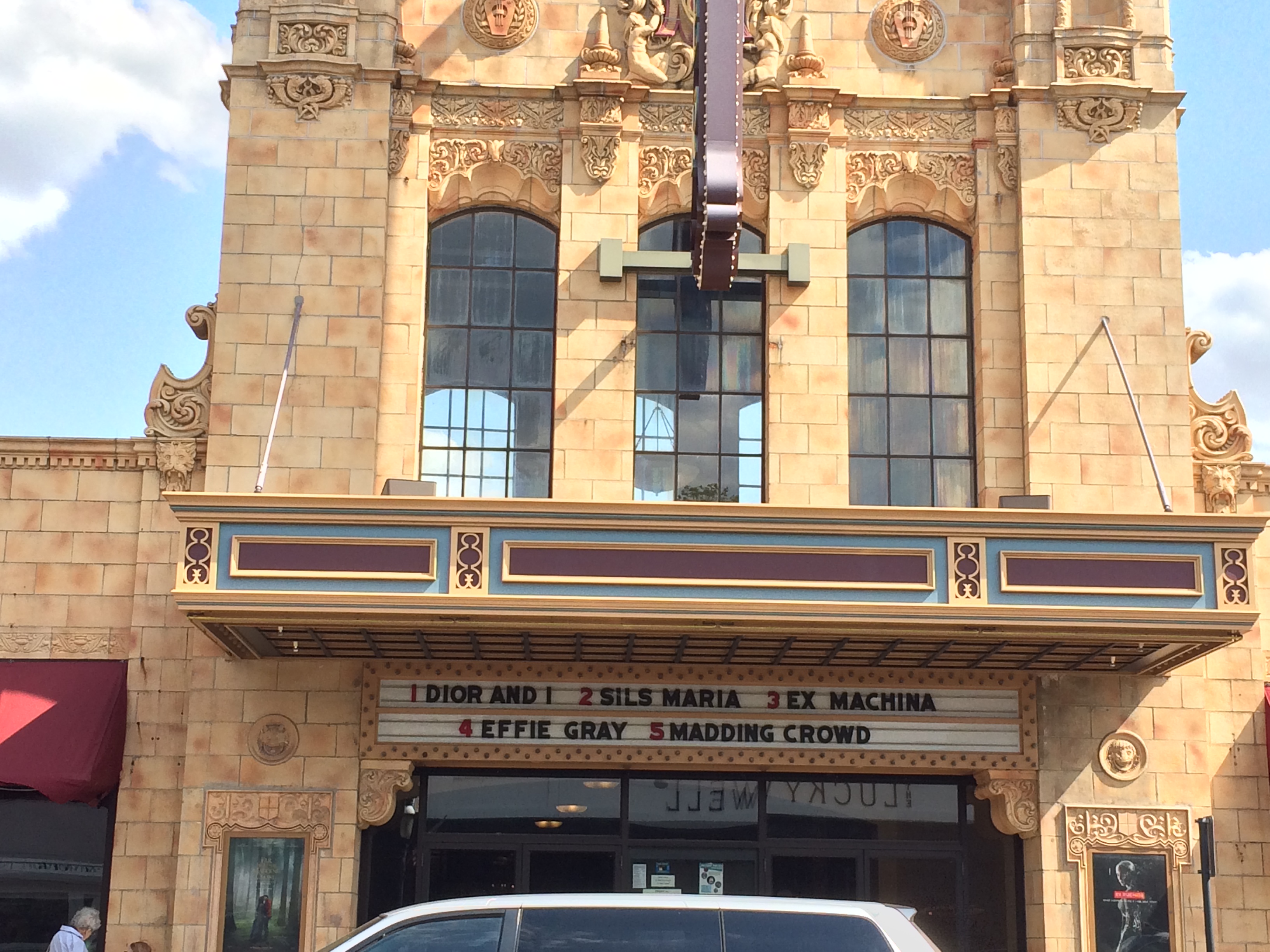
Ex Machina, one of five movies listed on the Ambler Theater's marquee.
Ex Machina, one of five movies listed on the Ambler Theater’s marquee.

That Saturday evening in Ambler, Pennsylvania, my wife and I caught the very well-wrought sci-fier, Ex Machina, at the Ambler Theater, an art house cinema. This movie has broken into the multiplexes a bit, and I think it might grow there yet. Its edginess, as I see it, makes it a match for adults young to old. For now, though, it mostly is confined to theaters like the Ambler, where the under 30 crowd doesn’t tend to congregate. We grabbed two seats in the first row, no better seats available. For the next two hours, our heads craned back, we risked developing stiff necks. Our necks survived just fine. The movie too was fine. It’s an unsettling creation.

Ex Machina’s Nathan Bateman (played by Oscar Isaac) is a techno genius who has made billions from the world’s most popular Web search engine, Bluebook. Nathan is pretty much a recluse, hidden away in an almost inaccessible mountain retreat which serves as his ultramodern home-cum-laboratory. For years there, Nathan has devoted himself to developing the perfect Artificial Intelligence robot, one so humanlike that, well, it would pass for human. And possibly surpass the average Joe or Jane. He has dubbed his newest robotic pride and joy Ava (Alicia Vikander). Ava’s mental abilities are exemplary, her personality coy and inquisitive. Brilliant as he is, though, Nathan wants confirmation of Ava’s wondrousness. Ergo, he flies in one of his Bluebook employees, Caleb Smith (Domhnall Gleeson), to vet the robot’s capacities. Nathan, Caleb and Ava, for the next week, engage one another in mind games and seductions. Honesty sometimes comes to the fore. More often, deceptions dominate.

The three leads couldn’t be better. Isaac’s Nathan is a most unlikeable fellow, his nasty and vain streaks miles wide. Nathan doesn’t get along well with fellow humans. Or robots. Odd then that his life’s passion is to build human replicas? I think that the challenge is too much for him to resist. Baby-faced Gleeson finds the right balance for Caleb’s young guy innocence and bright guy brains. And Vikander is a stunner. Her Ava is dewy eyed and flirtatious and, as noted, smart as a whip. She knows that there’s a big world out there beyond Nathan’s claustrophobic digs, a world she has never seen. For Ava, a high IQ laboratory rat, freedom chez Nathan is not much more than a concept. But it is also a goal, though its attainment might be nothing more than a pipe dream.

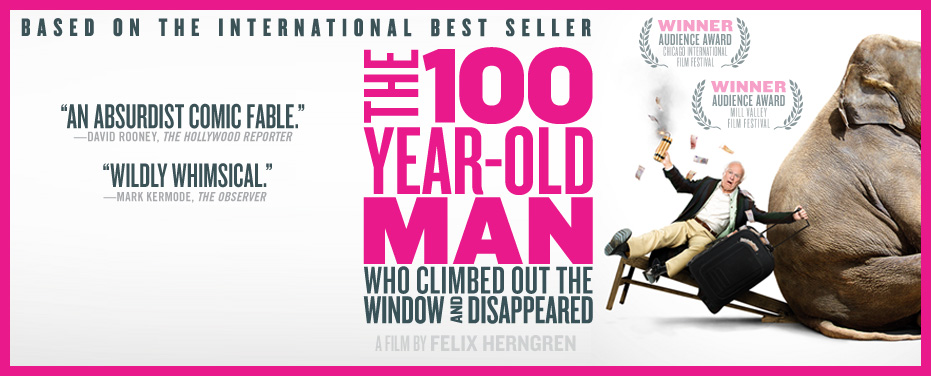
The 100 Year Old Man's official poster.
The 100 Year Old Man’s official poster.

Freedom, something easy to take for granted. And something I should ponder more frequently. One day after seeing Ex Machina I drove to New Jersey, near Princeton, and met up with a long-time friend. We went to Montgomery Cinemas to watch a movie with one of the longest titles of all time. Namely, The 100-Year-Old Man Who Climbed Out The Window And Disappeared, an absurdist black comedy that treats both life and death with a bouncy attitude. I thought it was a hoot, and looking hard for meaning in its looniness I realized that, as with Ex Machina, the quest for freedom is part of its inner workings.

A globetrotting and subtitled film embracing numerous languages, including English, The 100 Year Old Man follows Allan Karlsson (the excellent Robert Gustafsson) from birth to his 100th year. Born in Sweden, Allan at film’s end is still going strong, contentedly savoring life with a gang of recently-made Swedish pals, and an elephant to boot, on a beach in Bali. How did he get there? Let’s just say that Allan is one of the blessed beings. Serendipity has smiled upon him at most junctures of his life.

An explosives enthusiast since early childhood, at age 99 Allan lives alone in the Swedish countryside with his best friend, a cat. One day a fox kills the feline, so outraging Allan that he lures the killer to a lunch of dynamite-encased food treats. The ensuing boom boom boom that promptly dispatches the fox doesn’t go over well with Swedish authorities, who relocate Allan to a heavily supervised retirement home. A life of incredible adventures behind him, Allan follows his gut instincts on the afternoon of his 100th birthday. Out the window of his retirement home bedroom he goes, and fairly nimbly too. Wild and crazy events ensue, quickly multiplying in consequences. Unfazed through it all, Allan more than survives. He goes for the gusto like few centenarians are able. He loves the freedom that allows him to motor on.

Freedom can be stifled, people can be subjugated. But the desire and need for freedom are built into mankind’s genetic code. For many of us in the world, fortunately, freedom allows life to blossom. Allan Karlsson, on the road and at the beach at age 100, seems almost to skip through his days with joy. Ex Machina’s Ava isn’t remotely in Allan’s circumstances. She is a freedom neophyte. But Nathan Bateman has programmed her in a fully human way. Ava feels freedom’s call. Watch out.

Dinner Was Better Than The Movie

When my wife Sandy and I go to movie theaters, which is often, we usually go to a restaurant for dinner too. Movie times dictate when we eat. Seems to me that when we both were gainfully employed we’d dine around 7 pm and catch a flick about two hours later. That meant we’d arrive back home at 11:30 or so. I can’t recall exactly why or when that pattern changed a bit, but getting home late at night, and to bed even later, must have set us thinking about schedule alternatives. A sign of aging? Nah, not a chance. In any event, these days we seem to watch maybe one third of our movies in late afternoon, which allows us to dine at a pleasant hour and arrive back at the ranch before 9 pm.

The Ambler Theater, cornerstone of beautiful downtown Ambler PA

Such was the case this past Friday at the Ambler Theater in downtown Ambler, Pennsylvania. There we settled into our seats for the 4 pm showing of Far From The Madding Crowd, the fourth film adaptation of Thomas Hardy’s apparently still-beloved novel, first published in 1874. As far as I can recall, I never read the book nor saw the previous cinematic versions. I’m not a completist, so after watching the latest incarnation of Far I have no plans to visit any of the previous efforts.

Far From The Madding Crowd is by no means a bad movie. I’ll hand it, generously, two out of four stars. But it certainly didn’t floor me. It’s kind of slow, which didn’t put me off. It is also a soap opera, which didn’t rub me too wrong either. Soap operas can be fun. What I think I mainly didn’t enjoy were the lines of dialog that seemed to fall flat, or were poorly captured by the boom operator so that I couldn’t make them out (this English-speaking movie cried out for subtitles now and then). And the transition from scene to scene sometimes needed oiling. Other than that . . .

Set in rural England in the early 1870s, Far From The Madding Crowd concerns one Bathsheba Everdene, a young lady aged 18 or so whose innate charms knock men off their feet. Smart and independent, she is not seeking a husband, however. She does not wish to be stifled by the opposite sex. Politely rejecting two decent suitors, she eventually falls for and ends up marrying nogoodnik Frank Troy, an army sergeant who looks so fine in his uniform that Bathsheba’s latent sexual yearnings are forced to the surface. The movie has many plot twists from start to finish. Wait, this is a spoiler alert: Suffice it to say that in the end all is well, or mostly. Frank Troy exits, and steady and sturdy Gabriel Oak, a shepherd and Bathsheba’s first pursuer, finally captures her heart.

One moment at the very beginning of the film didn’t compute, and I’m still wondering how it got past the screenwriter. In voiceover, Bathsheba says that her parents died when she was young and, as there was no one thereafter to ask, she never knew why they gifted her with her uncommon given name. No one? How about asking her aunt, on whose farm Bathsheba is working as the movie opens. Or how about asking the relative from whom, several scenes later, she inherits a farm.

Oh well, that’s a mere quibble. Let me say that I enjoyed the acting of three of the four leads. That trio is Carey Mulligan (Bathsheba), Matthias Schoenaerts (Gabriel), and Michael Sheen (Mr. Boldwood, a rejected suitor). I didn’t clap for Tom Sturridge’s portrayal of Frank Troy, though. Tom’s pencil-thin mustache and darting eyes brought back images of too many silent movie era villains.

The beer I fell in love with at the Broad Axe Tavern.

Time to eat. I’ll give three stars to the meal that followed Far, and much of that because of the lovely beer that I discovered. The repast took place in Ambler’s outer limits at the Broad Axe Tavern, where Sandy and I have dined at least 20 times. It’s a gastropub, meaning the food choices extend beyond hamburgers and hot roast beef sandwiches. And, like so many establishments in the Philadelphia region, it carries an incredible number of beers from around the world. That, more than anything, is the draw for me. After studying the beer menu for five minutes, at last I opted for one I’d never before tasted, Franziskaner Weissbier. It is a wheat beer from a German brewery that claims to trace its roots to a Franciscan monastery in 1363. Two thumbs up. Smooth, multi-spicy (pepper, coriander, who knows what else), a tad citrusy. And dig that satisfied monk on the label. Gotta love it.

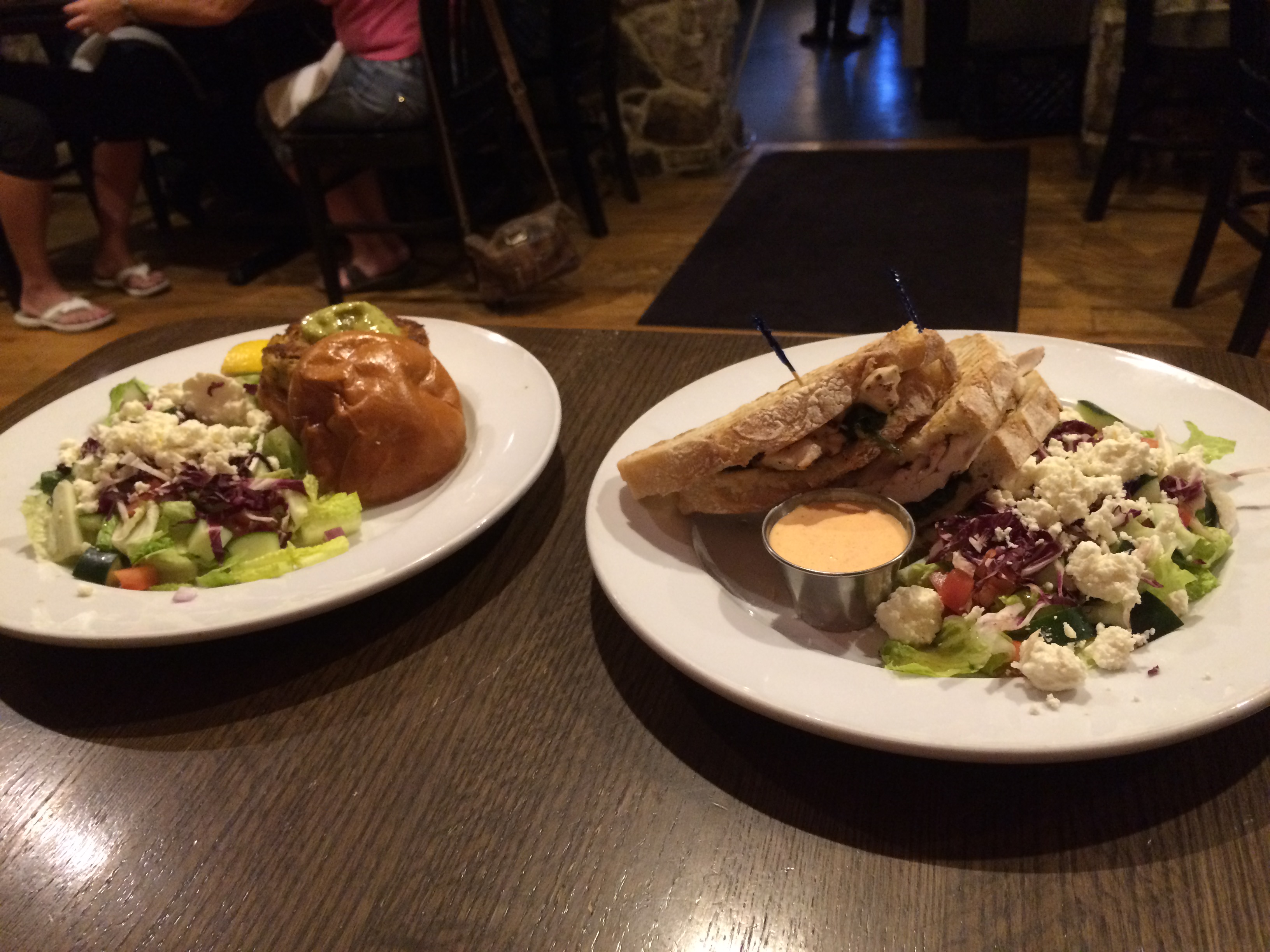
Crab cake sandwich on left. To its right is grilled chicken panini.

Broad Axe’s food is good. I went with the crab cake sandwich and my wife ordered the grilled chicken panini. The former was light on filler, heavy on excellent meat, and pan-sautéed. The latter was large and flavorful, its thick slices of rustic Italian bread delicious. Like countless places these days, Broad Axe, not giving a hoot about contributing to America’s collective expanding waistline, accompanies its burgers and sandwiches with fries. But we weren’t in a fries mood, so for an extra two dollars we each substituted a side salad. On the surface there was nothing unusual about this salad, but it was strikingly fresh and crisp, which is not always the case. The bouncy red wine vinaigrette dressing was an ideal host for romaine lettuce, cucumber, red cabbage and feta cheese. Simple ingredients, top-notch outcome.

We had no room for dessert, though. Around 8 pm, our Ambler evening concluded, home we headed.

Michelle Lordi, Jazz Singer

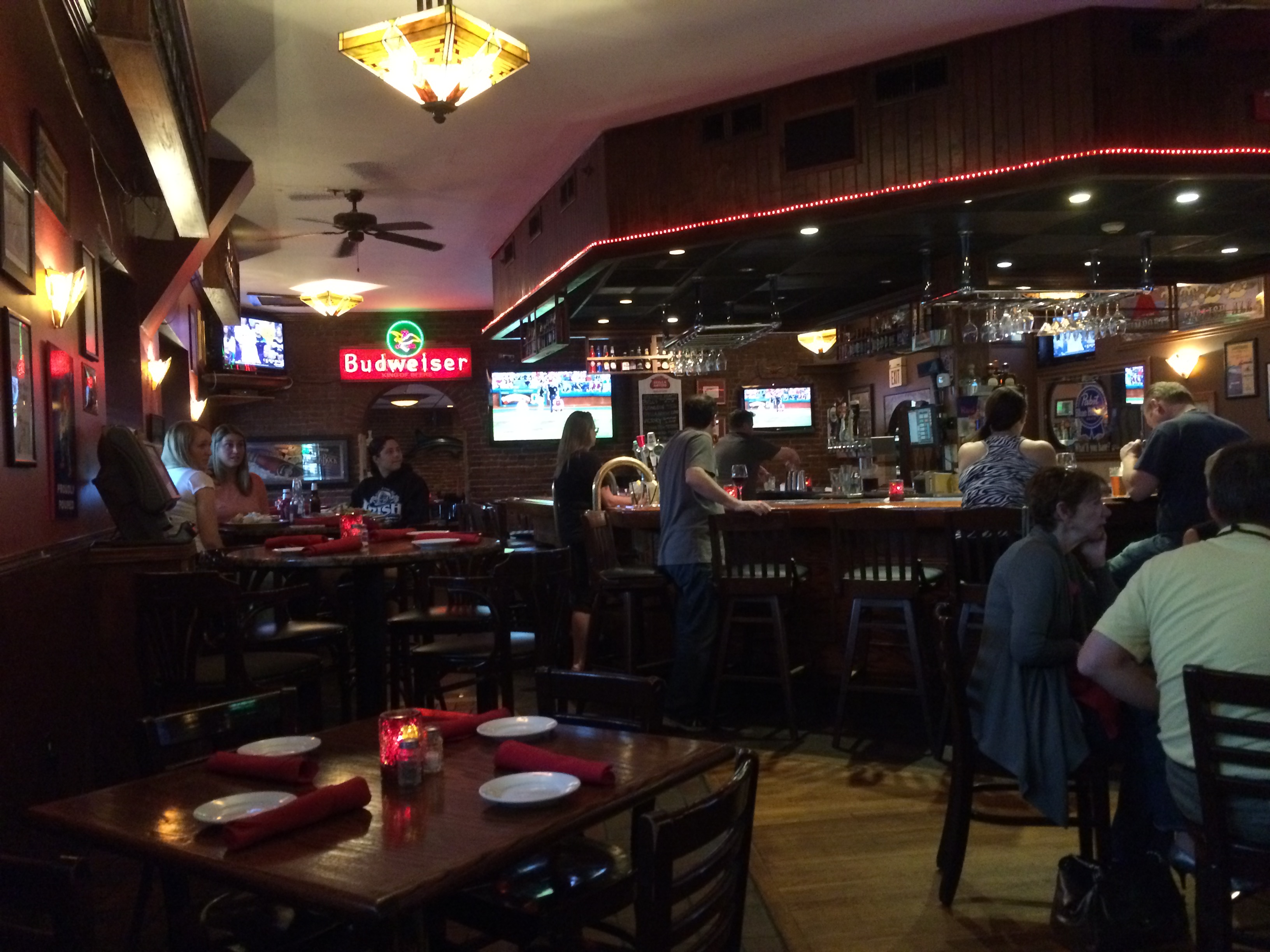
The main room at Vintage Bar And Grill, 10 minutes before the music began.

Vintage Bar And Grill in Abington, Pennsylvania is a good place. It’s a sports bar that serves up thoughtful food. There are plenty of televisions (seven in the main room), knick knacks all over the walls and a not bad selection of beers. And, duh, the place can get noisy, very noisy. So when my wife and I go there for dinner a couple of Fridays or Saturdays each year we are ready and willing to deal with mega decibels. Never had been there mid-week till a handful of days ago though, when on Tuesday we went not only for dinner but to hear some jazz. Most unlikely, Vintage is given over on Tuesday evenings to jazz vocalist Michelle Lordi and her musical partners.

The Philadelphia area, where I live, is home to lots of very good musicians in most musical genres, including jazz. The music biz being what it is, though, only a handful of musicians break through to decent-sized audiences. The rest, like Lordi, do what they can, sometimes maybe plying their craft at small unexpected spots like Vintage.

I’d known about Lordi’s Vintage gigs for a long time. I’d seen her name on a weekly email jazz-near-you schedule that I subscribe to, but I hadn’t given her much thought. Last week, though, the notion to see her bubbled up. Being musically in the dark about Michelle, I first checked her out on YouTube, and she sounded excellent. How was she in person? YouTube didn’t lie. She was great.

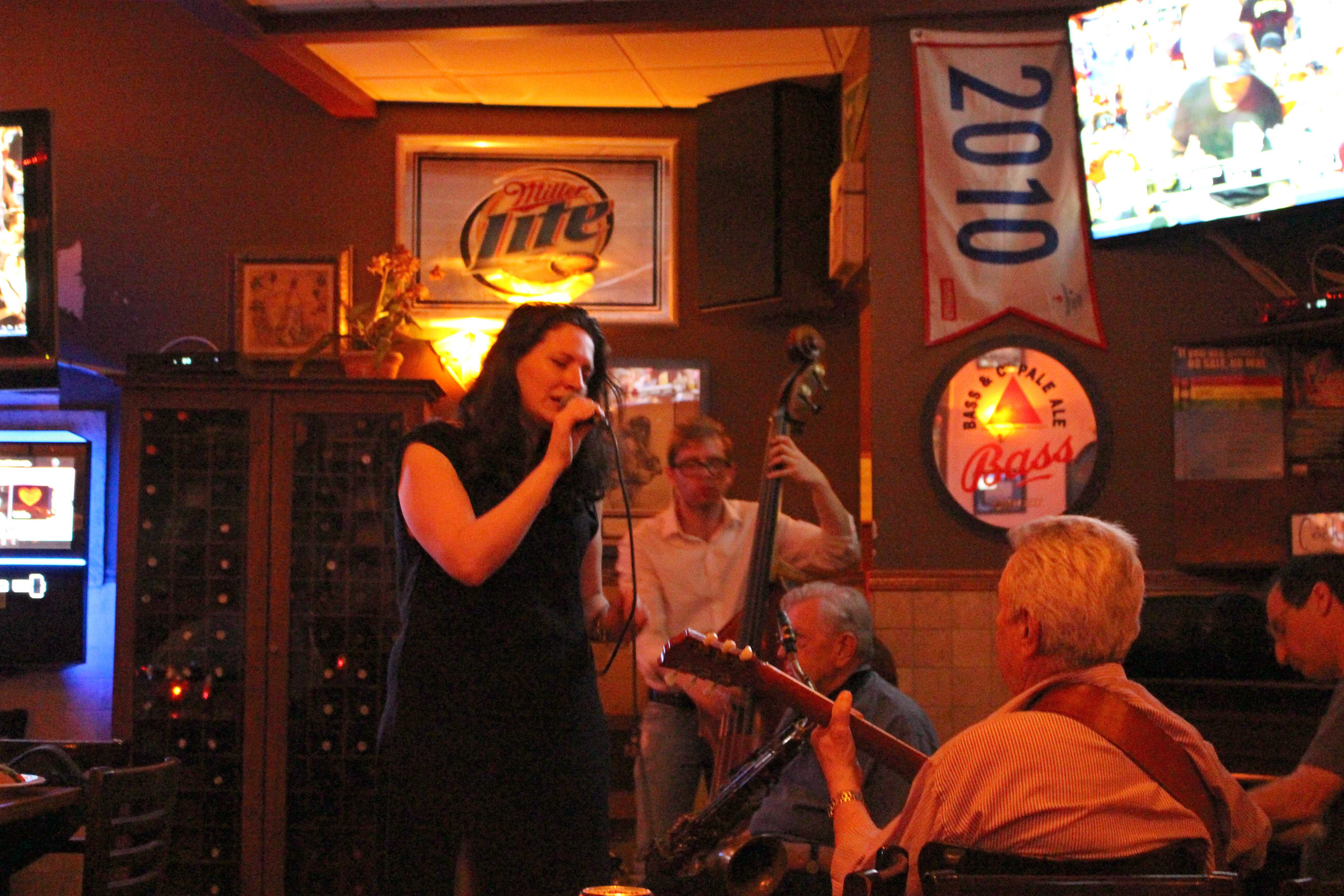
Lordi had with her four musicians she works with quite often. Two of them, tenor saxophonist Larry McKenna and electric guitarist Sonny Troy, are grizzled musical veterans, superb players with long and impressive resumes.  Neither I suppose is on the road much anymore, if at all. It says a lot about Michelle that they choose to play with her. The other two are young guys, Sam Harris on upright bass and Mike Frank on electric piano. They did a fine job at Vintage.

Michelle and her band set up shop in a tight Vintage corner near the main entrance. A hi-def TV, on mute, showed the Phillies baseball game above them. Maybe 30 customers were in the room for the first set, at best half of them listening to the music. Five feet from Michelle and one foot from Sonny Troy was a table of six. As the music played, these folks blithely chitchatted about their vacations and the goings-on of various relatives, groundbreaking news all of it. I tip my hat to musicians who learn to become immune to this kind of stuff.

Michelle Lordi is from the understated school of jazz singing. I’d bet that she has taken cues from Doris Day and June Christy, calm singers from the 1940s and 50s. Diana Krall is maybe today’s biggest jazz name who isn’t interested in vocal gymnastics or in bursting a vein reaching for a high note. I like this style of singing a lot. You hear it consistently with Brazilian bossa nova singers.

Michelle Lordi and her band at Vintage Bar And Grill.

During the one hour first set at Vintage, Lordi sang nine songs, standards from the American and Brazilian songbooks. She chose medium to slow tempos and sang efficiently and clearly in a firm and pretty voice. Lyrics came alive because she gave them room to breathe. Over Sonny Troy’s moody accompaniment, she slowed and elongated the words to Irving Berlin’s “They Say It’s Wonderful.” After a wise and moving Larry McKenna solo on Rodgers and Hart’s “I Didn’t Know What Time It Was,” Lordi sang unaffectedly, cleanly hitting the higher notes without strain or an excess of volume. The song  resonated.

Michelle Lordi performs pretty regularly at other venues in the Philadelphia area, such as Chestnut Hill’s Paris Bistro And Jazz Café. And she has done some recording too. But overall she is not exactly a household name. Unless I missed something, the set I took in at Vintage would have gone over just swell at the high-profile Village Vanguard or Café Carlyle in Manhattan or, closer to home, at Philadelphia’s Annenberg Center For The Performing Arts. Beautiful singing, assured and sympathetic instrumental work. Maybe one day I’ll be able to say “I saw her when . . . “

I Apologize For This Movie Review

There are quite a few reasons to visit the old village section of Doylestown, Pennsylvania. Art (Michener Museum), music (Puck), historic curiosities (Mercer Museum), restaurants (too many to mention) all make Doylestown a worthy destination. And movies too, which are to be found at the County Theater.

Recently my wife and I drove with friends to Doylestown for dinner and a movie. Dinner took place at Chambers 19 Bistro & Bar. The four of us enjoyed our meals. It’s a good spot in the center of the old village. After dinner, around the corner we went to the County, which has been on site since 1938. The present theater is a reinvention of the earlier County, a  mainstream theater whose fortunes began to decline in the 1970s. Since the early ’90s the County has been a  two-screen art movie house, and has helped secure Doylestown’s status as a fine place.

Binoche and Stewart among the clouds

The movie that we watched is Clouds Of Sils Maria, a hyper-wordy character-driven drama set mostly in Switzerland. Now, some people have a gift for understanding nearly every movie that they see. Film critics for sure, or so it would seem, and some laity too. I don’t have that gift. How many times has a movie (at theaters or on television) caused me to scratch my head intermittently? Oodles, thank you. Clouds is a challenge and makes me appreciate what professional critics do for a living. Dialogue and plot details fly by quickly in Clouds. If you aren’t in Sherlock Holmes’s league, plenty of both will elude you. Despite all of that, I think I came away with some understandings, in a broad sense if nothing else. And I wasn’t the only semi-lost soul. My wife and our friends weren’t certain about what they’d seen either. Each of us  recalled scenes differently, or maybe didn’t recall them at all. I believe that the writer and director, Olivier Assayas, would have beamed at our struggles, as I don’t doubt that he had in mind to create an open-sided movie elusive to pinning down.

Clouds Of Sils Maria revolves around the morphing relationships between a famous actress in mid-career, played by Juliette Binoche, and two far younger ladies. One is her personal assistant (played by Kristen Stewart) and the other is her co-star (played by Chloë Grace Moretz) in a play, a revival, being readied for the London stage. The play headed for revival is Maloja Snake, in which Binoche’s character, Maria Enders, had starred about 25 years earlier as a young woman involved professionally and apparently romantically with a much older lady. In the revival Enders has graduated to the older person’s role and fantasy/action movie star Jo-Ann Ellis (Moretz) takes on the young lady. Enders’s personal assistant Valentine (Stewart) helps Enders prepare for the play, reading and discussing the script with her. But all is not easy or simple in Maloja Snakeland. For our three protagonists, real life and the stage play uncannily and surreally seem to intertwine. Where does reality lie? Art, after all, reflects life. Binoche, Stewart and Moretz do fine work in this dizzying stew, playing off one another with panache and believability.

Well, like one of my friends said after the movie, this one is not for everybody. Plot offshoots overstretch its length by at least 20 minutes. And getting back to those pesky details . . . This morning I read the New York Times review of the movie, which is where I learned that the younger woman in the play has a sexual thing going with the older. Was this actually mentioned in Clouds? I sure don’t remember hearing about it. Maybe the Times reviewer had been given a crib sheet by the film’s producers before he saw the movie. Maybe I’m just slow. Probably both. I could mention many other such puzzlers. But that’s enough.

Yet, you know, I liked Clouds Of Sils Maria. It made me think, usually a good thing. My ultimate take on the movie is that the Binoche and Stewart characters were emotionally close but not quite right for each other, and needed separation in order to move on with their lives. Separate they did, though the circumstances and motivations involved are ripe for long discussions. I’m betting that as years went on, Enders and Valentine ended up just fine. Not so sure about the quality of Ellis’s fate down the road, though.

If you are wowed by nuanced acting, beautiful scenery and swirling dialogue, I recommend Clouds Of Sils Maria to you. I also recommend that you read at least two reviews, other than my mediocre effort, before you head off to view it. I should have done some advance reading myself. The Times review will be helpful. The New Yorker’s too. Like me, Anthony Lane, The New Yorker critic, seems to be more than a bit unsure about what the heck was going on. Which makes me feel better about my own perceptual shortcomings.

Mason Porter And The Chris Kasper Band Take On The Grateful Dead

1970 was a very good year for the Grateful Dead and a fairly good one for me. I was one year out of college, no long-term success plans in place, working here and there to earn a few dollars. But I was happy enough, I’m pretty sure. Unlike me, The Dead mined gold in 1970, recording and releasing that year what many agree are their two best studio albums: Workingman’s Dead and American Beauty. These albums were a big change from Aoxomoxoa, their pretty darn trippy effort from the previous year. The 1970 albums presented tightly arranged songs, many of them quiet and lovely ballads, straight out of the folk, blues and mountain music traditions. The 18 songs on these records shine with a timeless aura and are nothing but grand. The quality of the material probably took the Dead, and most everyone else, by surprise.

During a vagabond-like tour of the USA in summer 1970 I found myself in San Francisco for two or three weeks. I knew about the Dead (who didn’t?), but I don’t think I had any of their albums in my collection at that time. I wasn’t yet a fan. But in San Francisco, the Dead’s home base and where they had become emblematic of hippie culture,  I was smart enough to realize that I should go and see them if I had the chance. The chance arose, as they were booked for three nights in mid-August at the Fillmore West. I went to one of those shows. Workingman’s Dead had come out two months earlier, and the guys were already hard at work on American Beauty. It was a rich period. Sadly, for me the concert has almost disappeared into the fog. Well, I do recall a few things, such as standing in the middle of the Fillmore’s crowded open auditorium gazing at the stage. I also vaguely still can hear the band playing Casey Jones, the tune that brings Workingman’s Dead to its end. And I remember thinking that the concert was good but not great, an opinion that would have left Deadheads shaking their noggins in bewilderment. But memories about the show other than those  . . .  man, I could fill fifty books with all the things I’ve forgotten in my life, if the details magically could be jolted back into place.

Which brings us to April 29, 2015 at the Ardmore Music Hall in suburban Philadelphia. That evening I went with friends to watch two locally-based bands, musicians who had had the superb idea to play the Dead’s 1970 albums in their entirety, track by track. I’m writing this not long after seeing the concert, so my brain hasn’t had a chance yet to get fuzzy about the experience. And the experience was great. I enjoyed the concert in Ardmore more than I did the one in San Francisco 45 years ago.

The Ardmore Music Hall is in the midst of presenting five shows that celebrate the 50th anniversary of the Grateful Dead’s founding. The centerpiece show for me easily is the one I attended. Handling Workingman’s Dead was Mason Porter, which is a band not a person. The American Beauty duties fell to The Chris Kasper Band, a quintet that grew bigger on some songs with guest musicians. Both units lovingly approached the landmark albums, but didn’t try to duplicate the Dead’s sound. Each was pure rockier than the Dead, and each possessed something the Dead didn’t: a fiddler.  Three hundred or more folks packed the Ardmore, ages 20 to 70 all heavily represented and swaying and hippie-dancing to the tantalizing beats.

Mason Porter at Ardmore Music Hall

The five-person Mason Porter had me going from note number one of song number one, Uncle John’s Band. The group built the tune in stages, reaching heady heights with lead guitarist Paul Wilkinson’s soaring Eight Miles High-ish solo. And they nailed the seven songs that followed. Lead singer Joe D’Amico had an easy and calm delivery, very much in the Jerry Garcia vein. Sarah Larsen’s Appalachian fiddling infused the band with a whole lot of grit. The crowd erupted in applause after her long solo on Dire Wolf. She was overwhelmed by this outpouring and smiled the biggest smile I’ve ever seen on a musician’s face. It stretched out of the hall and halfway to the next town.

The Chris Kasper Band at Ardmore Music Hall (CK is second from left)

For some reason I was delayed getting into The Chris Kasper Band. But they hooked me with Candyman five songs into the set and didn’t let go after that. Keyboardist David Streim brought strong and broad chordal waves to Candyman and the song took flight with Chris’s electric guitar work and fiddler Kiley Ryan’s sweet solo turn. Quite a night for female fiddlers, and not usual to find two at the same concert. On some songs Ryan exchanged the fiddle for an acoustic guitar.

Chris Kasper’s lead vocals were crisp and mellow all set. Like Joe D’Amico and many others, he’s partly from the Garcia school of singing. He alternated between acoustic and electric guitar and used the latter to drive Till The Morning Comes, snapping off white hot riffs like Keith Richards. Matt Muir’s firecracker drumming bounced that song outrageously, pop pop pop. Tremendous.

Truckin’ brought the band’s American Beauty homage to a close. But the night wasn’t over. Mason Porter and a few guests joined the Kasper outfit on stage and a four song Grateful Dead encore ensued. The energy in the Ardmore Music Hall grew to dangerous levels as the huge ensemble ripped through Goin Down The Road Feeling Bad, Bertha, Franklin’s Tower and Mr. Charlie. The music was ferocious, the audience insatiable. At 11:30 PM the last notes rang out.