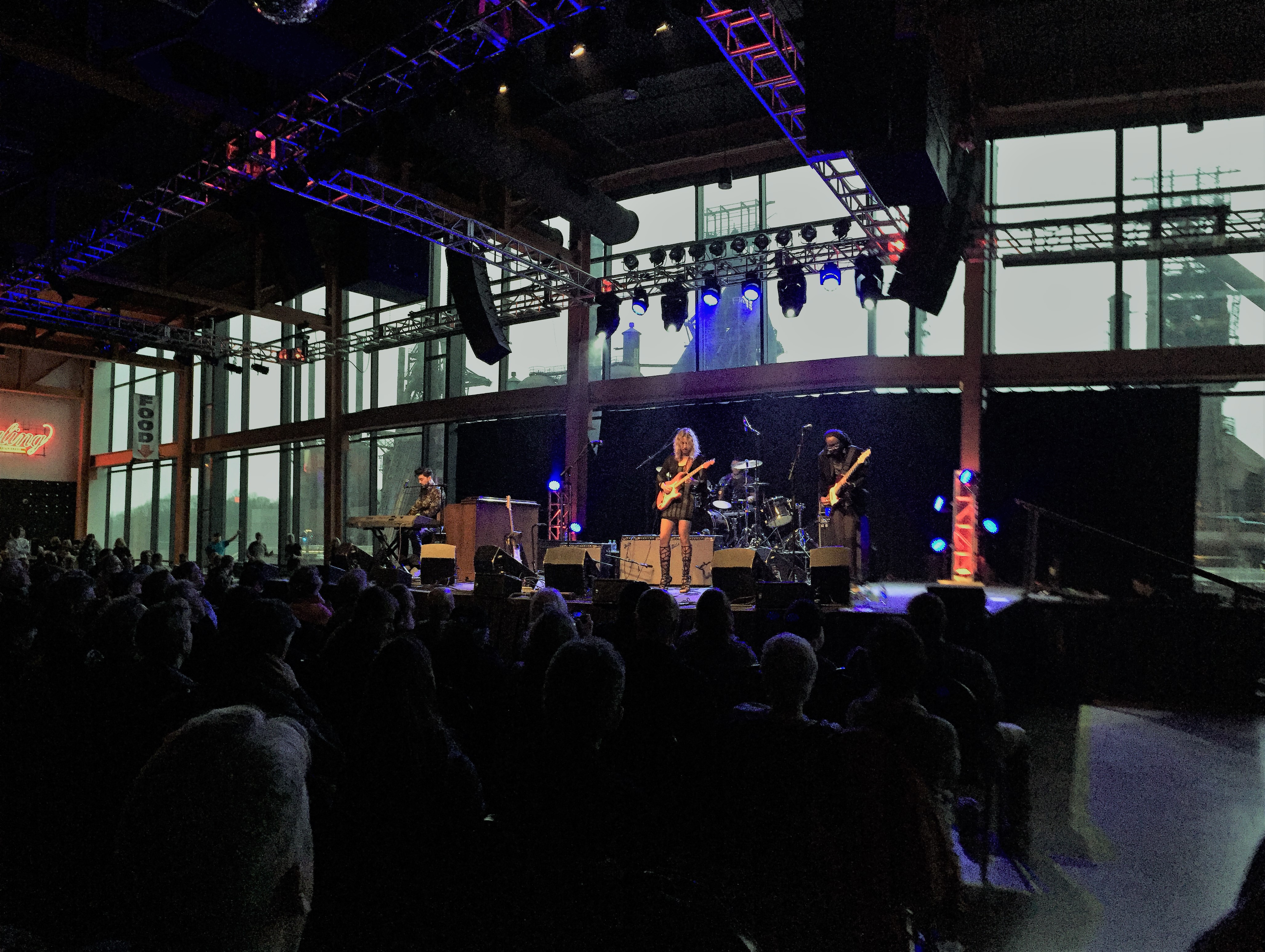
Here Come The Docs (Movies, That Is)

They’re everywhere! They’re everywhere! And I ain’t talkin’ about nail salons or Buffalo chicken wings or right-wing crazies.

Documentaries, that’s what I’m here to discuss. Docs are out there by the thousands, old ones and new ones. You can catch them on the small screen on HBO, SHOWTIME, PBS (NOVA and Independent Lens, are two of its documentary series), CBS (60 Minutes), etc., etc. Not to mention the oceans of docs you might peruse via Netflix.

Now, I’ve seen various documentaries on the tube over the last few years, but I’ve watched more on the silver screen than at home. That’s partly because I haven’t been partial to plopping myself in front of the magic box too much. On the other hand, my cinema attendance always has been robust. Another reason, the more important of the two, is that, starting in the early aughts, many documentaries have found their way into theaters around much of the globe. That’s very true in the Philadelphia region, which I call home. My wife Sandy and I, fans of the genre, approve.

Here’s a cool thing about documentaries, which tend to be low-cost affairs and never rake in dough à la, say, Logan or La La Land: Once in a while one of them will settle into the theatrical marketplace and take nearly forever to depart. In saying this, I have in mind a doc that Sandy and I saw with friends in Philadelphia last November.
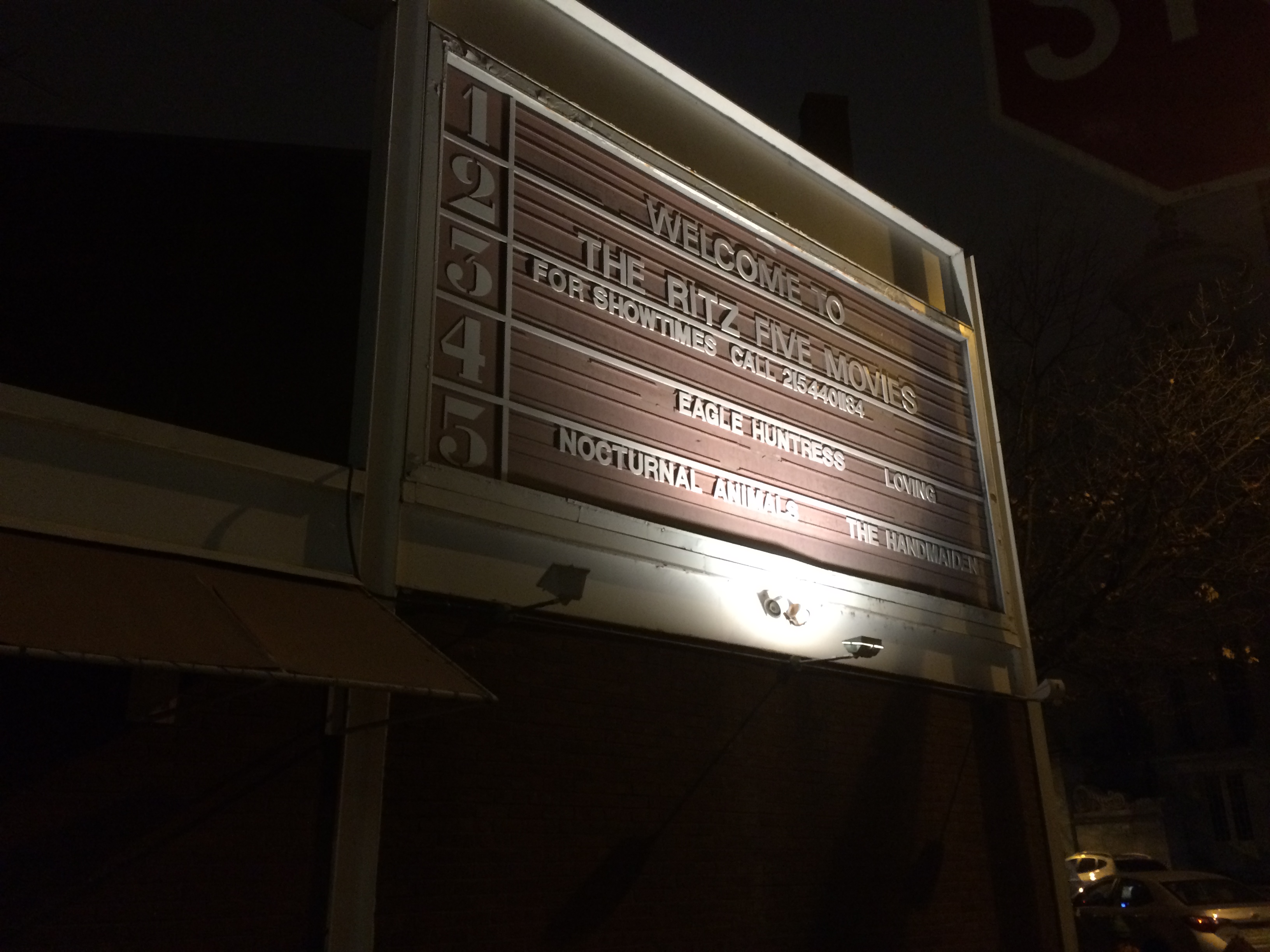
The Eagle Huntress, the film to which I refer, opened in The States one month before we viewed it. Remarkably, it’s still in some theaters across this fair land and still in the Top 100 of money grossers, as measured by the fascinating website Box Office Mojo. That’s staying power, folks, that few movies of any sort possess.
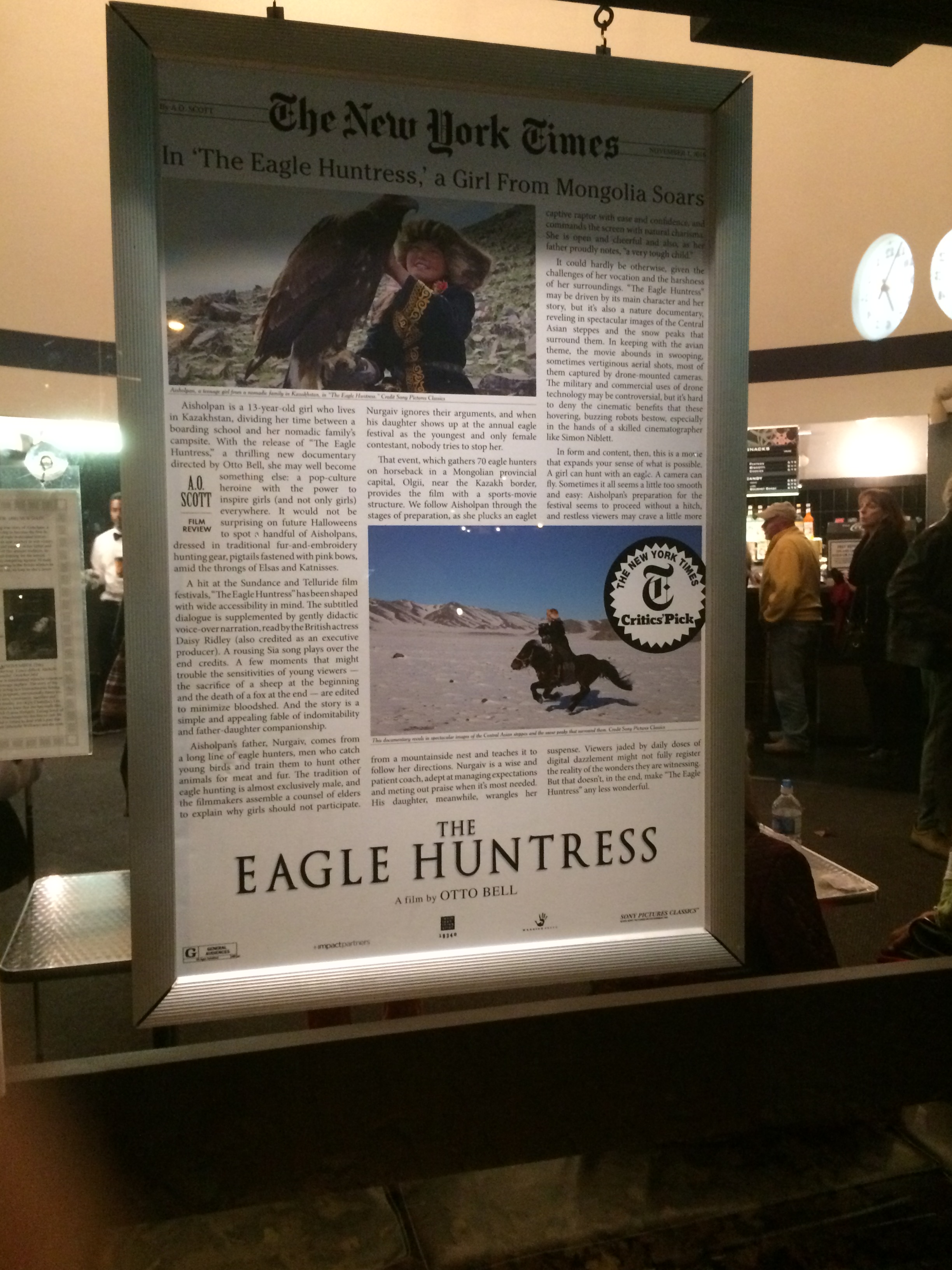
A nice movie, The Eagle Huntress spins the tale of a young Mongolian girl who is drawn to the historically male-only endeavors of taming and bonding with eagles and training them to race and to hunt in specific ways. Its central Asian scenery is gorgeous (what’s not to like about deserts and glacial mountains?), and the story line is not your everyday fare. But, to me, the plot didn’t ring quite true. I’m convinced that the final test of the girl’s gifts — to have her eagle chase down and kill a fox on treacherous mountain slopes  — didn’t go as neatly and smoothly as the director hoped for. I believe he’d have stayed out in the wilderness, filming take after take, until the desired outcome was achieved. Otherwise the movie would not have had a clean and tidy ending.

Enough quibbles. On to the three docs that Sandy and I went out to see in the past month: Kedi; In Search Of Israeli Cuisine; and I Called Him Morgan. As with The Eagle Huntress, they are playing here and there in cinemas around the USA and other countries. And if they haven’t yet made their way to Netflix or the like, indubitably they fairly soon will.

In a nutshell, I recommend these movies highly. Kedi tells the tale of street cats (felines, not hipsters) in Istanbul that have developed beneficial relationships with various humans with whom they share space. In Search Of Israeli Cuisine is a flick for foodies and for travel buffs. The goods on display in this movie, and the rural and urban settings in which they are grown, cooked, and consumed, look great. As for I Called Him Morgan, well, it made my knees go weak, as it is about one of my jazz heroes, trumpeter Lee Morgan. It also is about Helen Morgan, Lee’s common-law wife who shot him to death in a Manhattan jazz club in 1972. When Lee passed, the world lost a magnificent talent. He could play like nobody’s business and penned irresistible songs, from the nimble and fleet to the panoramic.

It’s a funny thing about Kedi. Sandy, a cat lover, liked it, but not as much as I did. That’s saying something because I decidedly am not a cat person. You’d have to pay me a few thousand dollars weekly to house one in my abode. But Kedi put me under a spell. I suppose it was the cinematography, more than the story, that got to me. I don’t know where, other than in Kedi, you’re going to see the world from cats’ perspectives. What did the director do, train a coterie of cats to become cinematographers and to follow their feline buddies around town?  Wow, seeing Istanbul from inches above the ground was, I thought, the coolest. On the opposite hand, so were the aerial shots of the city, for which feline cameramen had no input. Those images served no particular purpose, as far as I could tell, other than to look amazing. And amazing they did look.

After viewing In Search Of Israeli Cuisine I started thinking about a movie that hasn’t been made but could be: In Search Of American Cuisine. That is, it’s not easy to define what a nation’s cuisine is. Or was, for that matter. As with most issues and subjects, things often are more complicated than you might at first assume. In the Israeli case, culinary traditions from many dozens of countries and cultures have been brought to, or already existed in, the land of Israel. There they have intermingled, evolved, and been experimented upon. I went into the movie thinking that there would be an emphasis on Eastern European Jewish cooking (brisket of beef, smoked meats, kugels, etc.), but in Israel those dishes are not dominant in the least. Today’s Israeli cuisine draws more from Middle Eastern and North African cultures than from any others. Fruits, vegetables, grains, beans and seafoods are what Israelis, as do many peoples the world over, place into their mouths. I left the movie hungry for grilled fish and for hummus, Israeli staples.
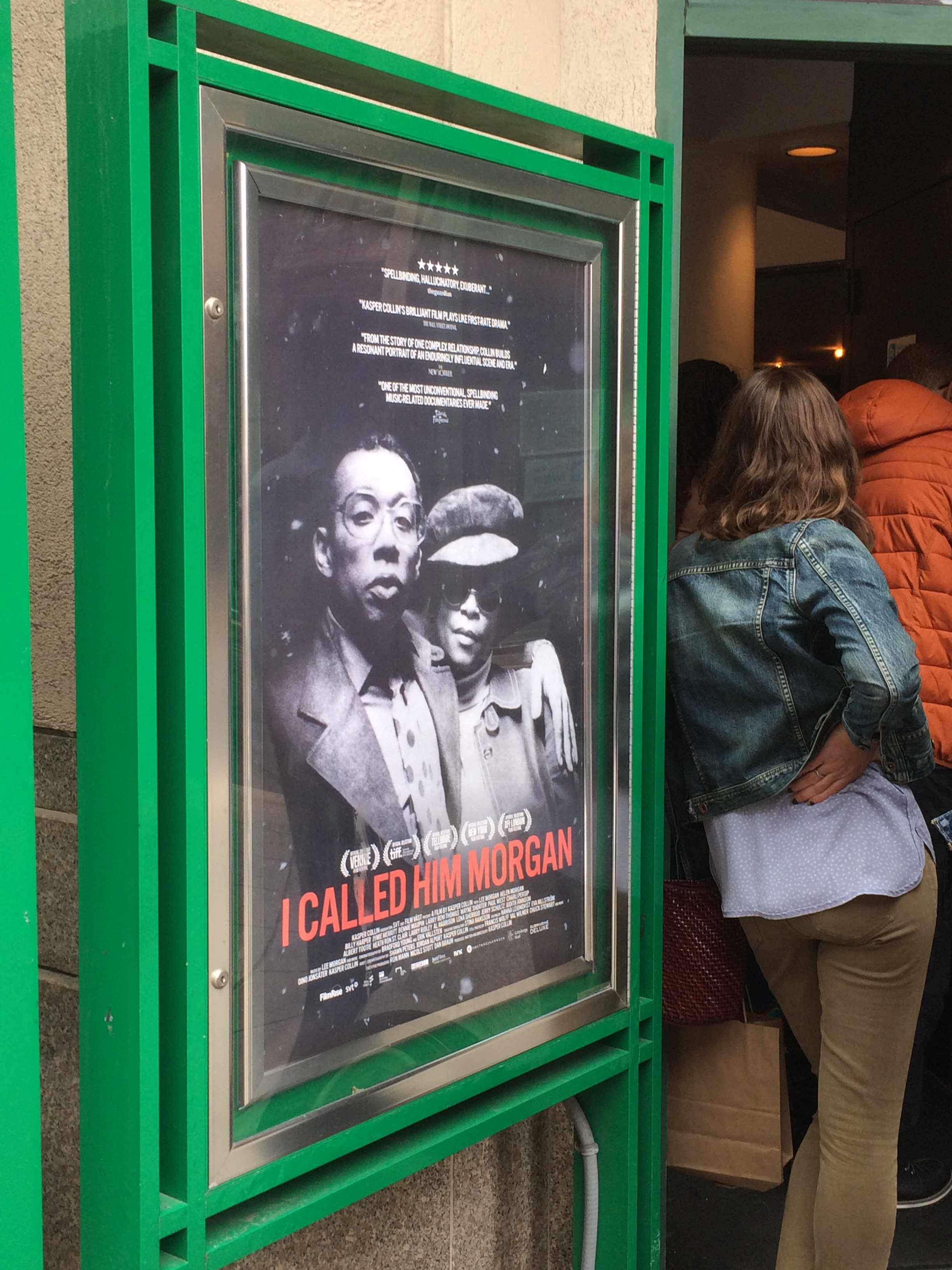
What can I say about Lee Morgan? I’ve been listening to his recordings for almost 50 years. I’ve been in the long-defunct, grubby jazz club, Slugs’, where he was murdered. And for years I’ve wondered about the circumstances that led to his death. Possibly I’m wrong, but it always seemed to me that not much information ever came out about his shooting. If it did, I don’t know where. But now, lo and behold, Kasper Collin, a Swedish director and jazz lover, has seized upon and told Lee Morgan’s story, its bright beginnings and sad ending. But not fully, because that ending does not fit itself into a tight package. It never will be completely understood.

Would you have to be a jazz fan to enjoy I Called Him Morgan? Well, I’m going to say that even the non-aficionado will go for this one. The movie has a brooding, moody quality, especially in the snow-filled wintery sequences leading up to and following Lee’s death. And, in marvelous film clips, it shows off his bristling musical chops. What got to me the most, though, was the telephone interview, captured on cassette tapes, that Helen Morgan gave to Larry Reni Thomas in North Carolina, where she lived after serving hard time in New York for her crime. Thomas, who has worked as a writer, teacher and radio host, conducted the interview in 1996, a few months before Helen’s death. The slow relating of her life story in her creaky voice and her explanations of why she came to pull the trigger were, I thought, the movie’s core and backbone. And maybe its heart. Without the interview there’d have been not much of a movie.

Lee Morgan, famed though he once was (his hard-bopping song The Sidewinder was a pop hit in 1965), has faded into semi-obscurity. I Called Him Morgan might help to reverse that truth a bit.

(Don’t be shy about adding your comments or about sharing this article)
Spring Is In The Air: A Search For Colors

For the last seven years I’ve had a Tuesday morning volunteer gig at a suburban Philadelphia hospital’s medical office building. There, I man the information desk from eight o’clock till noon, helping people locate their doctors’ offices, the cleverly hidden restrooms, and ATMs so that they can pay to get out of the cash-only parking garage behind the building. Incredible to me, it seems to be de rigueur for lots of folks these days to carry nary a dollar on their persons. Plastic rules, except at the parking garage. Wouldn’t you know it, though? . . . there isn’t an ATM in the garage or the medical building. So, off on a two-block trek to the closest ATM the short-on-cash folks depart.

I was at my post last Tuesday, the 11th of April. Looking through the lobby windows I could tell that the Sun was blazing away deliriously. My iPhone said that the high for the day would be 83°F. Yeah man, that sounded fine to me, a non-Sun-worshipping guy who normally isn’t thrilled when the thermometer climbs above 74 degrees. But after all the rains we’d had in recent weeks I was psyched for a bright, overly-warm spring day.

I wasn’t alone in that feeling. Inside the medical building two humans of the male variety were taking their cues from our winged friends that undoubtedly were chirping away merrily outside. I heard one of the patients singing freely and loudly as he entered the elevator, on his way to get checked out in an upper-level doctor’s office. And I heard another whistling a happy tune as he exited the building through the main door 20 feet from the information desk. His doctor must have given him a good report. Good golly, Miss Molly, there and then I decided to have a look that afternoon at how spring was shaping up in my neck of the woods. I would be in search of colors.

I was possibly, even probably, wrong, but for a couple of weeks I’d been thinking that spring was taking its good old time unfolding in the Philadelphia region. I could have sworn that in most years, for instance, masses of forsythia were showing off their yellows by early April and that flowering trees were ablaze aplenty. But I’d noticed not too much activity so far in 2017 during my drives through the burbs, though I hadn’t really been paying strict attention to the situation for the last four or five days. “Let’s see if things are starting to get more colorful out there,” I said to myself. “I’m ready to be impressed.”

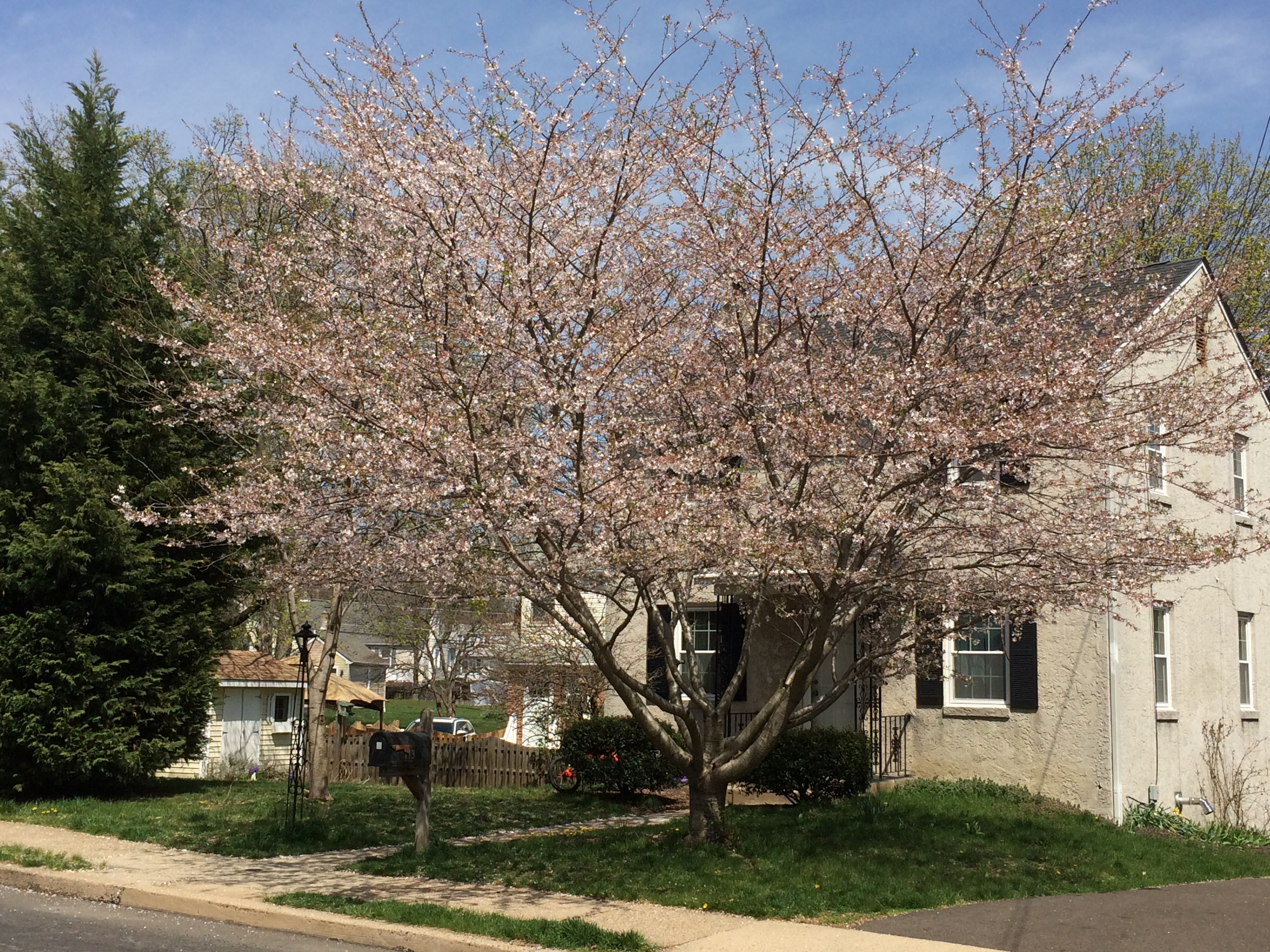
And so I spent an hour and a half in early afternoon wandering, on foot, in three of my town’s neighborhoods, including my own. These are modest areas filled with no-nonsense homes from the last century’s early and middle sections. Things are neat and tidy here, but usually not exactly eye-grabbing. But when cherry and dogwood trees and azaleas and rhododendrons and all the rest open their floodgates, watch out! The streets then, for me anyway, rise above snooziness. Charm and loveliness take over.

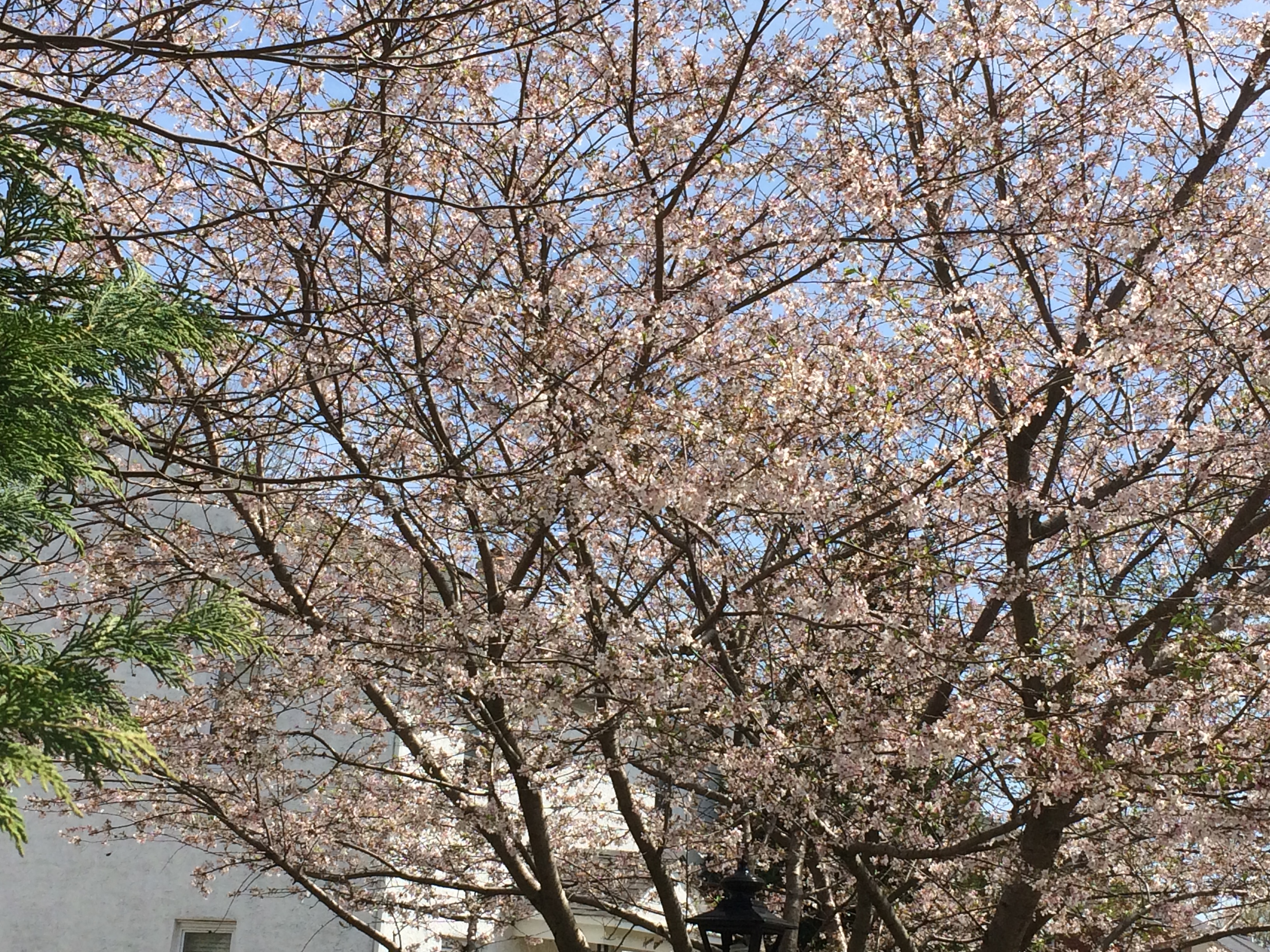
Alas, I’m here to report that not much out of the ordinary was happening color-wise on April 11. Bummer, indeed. In fact, many streets hadn’t escaped from their leafless winter doldrums, though here and there some trees were beginning to sprout delicate, new leafage. As expected, there were plenty of greens to be seen — lawn grasses and evergreen trees. And there was no shortage of browns, obviously, what with tree trunks all over the place. But soft colors that make you ooh and ah, and vivid colors that go pow? Well, some cherry trees were in bloom, and a smallish number of  azalea bushes were festooned with flowers tinted in strong lavender, and a far-less-than-I-expected quantity of forsythia were unfurling their yellows, and . . . that was about it. There even was a shortage of revved-up flower beds.

And yet I strolled in a contented mood. I don’t go out for walks anywhere near often enough, so the excursion put some purpose into my footsteps. I investigated block after block, taking pictures, neck craned and eyes darting everywhere in quest of color. I was surprised by how few people I passed, other than four dog walkers. Where was everybody? “Yo, genius,” a little voice inside my head muttered, “half the people are either at work or in school. And most of the others probably are at the mall, at Macy’s. Macy’s is having an incredible two-hour sale on underwear: Buy one and get six free. Genius, you’ve been wearing the same briefs for the last 15 years. Raggedy doesn’t begin to describe them. Do your balls a favor and head to Macy’s now.”

Thus, I hurried to my car, snapping the last of my photos. Macy’s, not Nature’s hues, called! Maybe in a future article I’ll report on the degree of shopping success I encountered at the mall. The world, I know, anxiously awaits that information. In any case, I’ll wind up these proceedings by saying that I hope you have enjoyed the photographs that I’ve placed on this page. Though my springtime adventure wasn’t a 10 (hell, it was more like a 4), I managed to document some decently lovely and colorful vegetative sights. Next year, perhaps, I’ll improve my timing and write a piece about spring in all its glory.


(Don’t be shy about adding your comments or about sharing this story)

(If you click on any photo, a larger image will open in a separate window)

Time For A Checkup

Soon after I hit the Publish button last week in the very wee hours of Wednesday morning, sending yet another of my numerous music-related narratives into the ethers, I also hit something else. Namely, the sack. Not a grand number of hours later I arose, all bright eyed and bushy tailed, which to tell you the truth isn’t a pretty sight. I mean, I don’t know about you, but my tail hasn’t been looking too good for the last 30 years.

Anyway, an hour later, over breakfast, I began thinking about what I might write for the following week’s article, which is the one you are reading right now. I let my mind wander. And when nothing came of that I focused on a few specific story ideas that I’d been contemplating for a while. But the time seemed not quite right for any of those to flower. Uh-oh, the clock was ticking. If I failed to produce, who knows what ghastly consequences might result?

Dr. Mel Ifluous (in a playful mood)

Beginning to panic a bit, sensing sweat beads making their way onto the palms of my hands, I suddenly realized that a more pressing concern than story writing was attempting to stare me in the face. Somehow I’d forgotten that this blog’s two-year anniversary had arrived. Which meant, of course, that a two-year checkup was highly in order. Dashing to the phone I dialed the number of my internist, Dr. Mel Ifluous. His office manager answered. After I explained the situation to her, stressing its urgency, she squeezed me in for an appointment the following day. Dr. Ifluous is a wonderful physician, perceptive and sharp. I knew I’d be in good hands.

At 11:00 AM Thursday I was ushered into Dr. I’s examining room. A few minutes later he entered. We shook hands.

“Neil, it’s good to see you. How are you feeling?” Dr. Ifluous asked while thumbing through my medical records. “Hmmm, you were here three months ago complaining about sunburnt ear lobes, an inability to look at any and all green vegetables, and pains in your fingers from prying off the caps, using only your digits, of the 20 or so bottles of beer you drink each day. I take it that my prescriptions and suggestions didn’t solve the problems. Otherwise you wouldn’t be here right now.”

“Dr. Ifluous, to the contrary. I’ve followed your advice and, for the first time in decades, I’m feeling fit as a fiddle. My ear lobes, as you can see, are as pale white as the rest of my body. I now eat arugula and its kin and green beans like they’re going out of style. And I’m down to 12 bottles of beer per day, which has made all the difference in the world to my fingers. Doctor, I thank you.”

“This is good news, Neil. Why then, though, are you here?”

“Doctor, I made this appointment not for me, but for my blog. You see, I began the blog almost exactly two years ago, and I’ve written quite a few articles for it during that time. Two years is a long stretch, Doctor. Things can go wrong. Basically, I’m worried about the blog. I’m uncertain about its health. It needs a checkup.”

“I understand, Neil. I understand. What exactly are your concerns? I look at your stories now and then and I have to tell you that they seem alright to me.”

“It’s very nice of you to say that, Dr. Ifluous. But I’m not so sure. What’s bothering me more than anything are the topics I write about and the tone I take. Wouldn’t you say that my stories seem kind of light and fluffy? That too many of them are just plain loopy? And that my impressionistic ruminations about music, art and nature really aren’t making any kind of difference? Doctor, I’ve been thinking that I should move in headier directions and start writing about politics, science, religion, philosophy, not to mention the complexities of human relationships. The blog might be far superior if I did.”

Dr. Ifluous gave his chin a thoughtful rub, adjusted his eyeglasses and then laid my medical records on his desk. Looking deep into my eyes he said, “Neil, I’ve known you for a long time and, to be honest, you’ve never struck me as a PhD sort of guy. What do you know about philosophy, for instance? Tell me a thing or two about Kierkegaard and Sartre.”

“Well, Doctor, they both lived in Europe, right? I’m fairly sure about that. And Sartre, I think, smoked cigarettes by the truckload. Anything more I’d have to take a look at Wikipedia — that’s what it’s there for, you know.”

“Very deep, Neil, very deep. And please expound upon human dynamics.”

“Uh, that’s a complicated area. One thing I’m confident in saying is that life is like a checkout counter . . . you’re usually on line in one way or another.”

“Huh? I have no idea what that means. Neil, sit back and take a deep breath. Good. Now, listen to me. Go home, take two aspirin and don’t call me in the morning. Your blog is healthy. It is what it is meant to be. So, tell me . . . what’s your next story going to be about?”

“Doctor Ifluous, I wish I knew. Once I sit down to write a piece the writing process goes pretty smoothly. But before that, trying to come up with something to write about — that’s the tricky part.”

“Neil, keep on truckin’. That’s all I can say.” With those words of wisdom, Doctor Ifluous got up from his chair and left the room, with me on his heels. A weight had been lifted from my shoulders.


(Don’t be shy about adding your comments or about sharing this story. Thanks.)

Up, Up And Away (High As A Kite On Music)

As I barrel down the highway that before year’s end will bring me to the road marker labeled The Big 7-0, assuming that I don’t kick off before then, I mean it when I say that I consider myself a fortunate guy. I’ve got a couple of biggies to worry about — who doesn’t? But for the most part I’m rolling along pretty nicely, doing most of the sorts of things that gave me a bang years ago, and still getting a bang from them. Such as palling around with my wife Sandy and with other pals; poking around in the great outdoors and in cities that have zing and depth; downing good foods and beers in taverns and restaurants.

And listening to music, which I’ve left for last to give it the space it deserves. And that’s because music sometimes takes me to realms — excellent realms — that otherwise I wouldn’t be setting foot in. Music, like nothing else, can get me high as a kite. Well, pot can get me high as a kite too, but I haven’t smoked any in, what? . . . 30 years? It’s a habit I dropped that maybe, to tell you the truth, I’d be interested in picking up again. But that’s another story.

It’s not as if listening to music always is a transporting experience for me, though. At home I usually am struggling with a Sudoku puzzle or thrashing through the Web as tunes play on the stereo, so the musical vibes sink in only partially. And in the car I make a modest effort to keep my eyes on the road, even if a great song is trying to liberate me.

Nor does music always lift me to the skies at concerts. A week and a half ago, for example, Sandy and I went with friends to see Peter Mulvey, a solid singer-songwriter who put his palette of emotions on display in a small space in Philadelphia. I dug him, but I remained Earthbound. Here’s why:

Volume. I need a lot of volume for liftoff to occur, and the Mulvey concert, consisting of  Peter and his acoustic guitar, was merely in the middle of the decibel scale. And, usually, there’s got to be strong drumming. And, usually, long and soaring solos from an electric guitar, though their counterparts from a piano or saxophone also might do the trick.

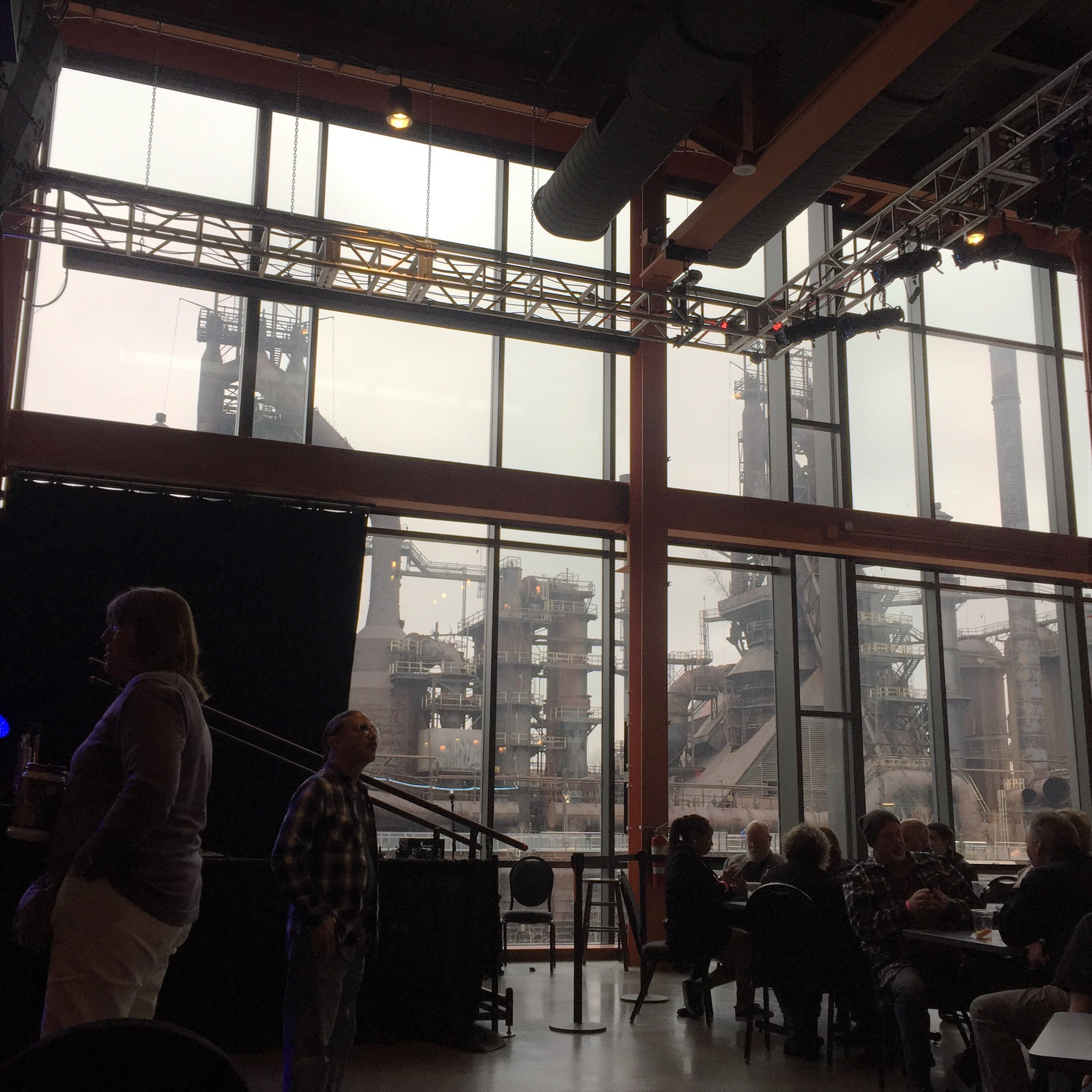
Hallelujah! High volume, crashing drum strokes and gorgeous guitar work soon came my way, because Sandy and I headed to Bethlehem, Pennsylvania 15 hours after the conclusion of the Mulvey show. There, in an arts center built on the grounds of the defunct Bethlehem Steel Corporation, day three of the three-day Blast Furnace Blues Festival was marching on. We stayed for five hours, catching three acts and gazing at the rusting Bethlehem blast furnaces through the music room’s huge windows, before taking to the roads once again.

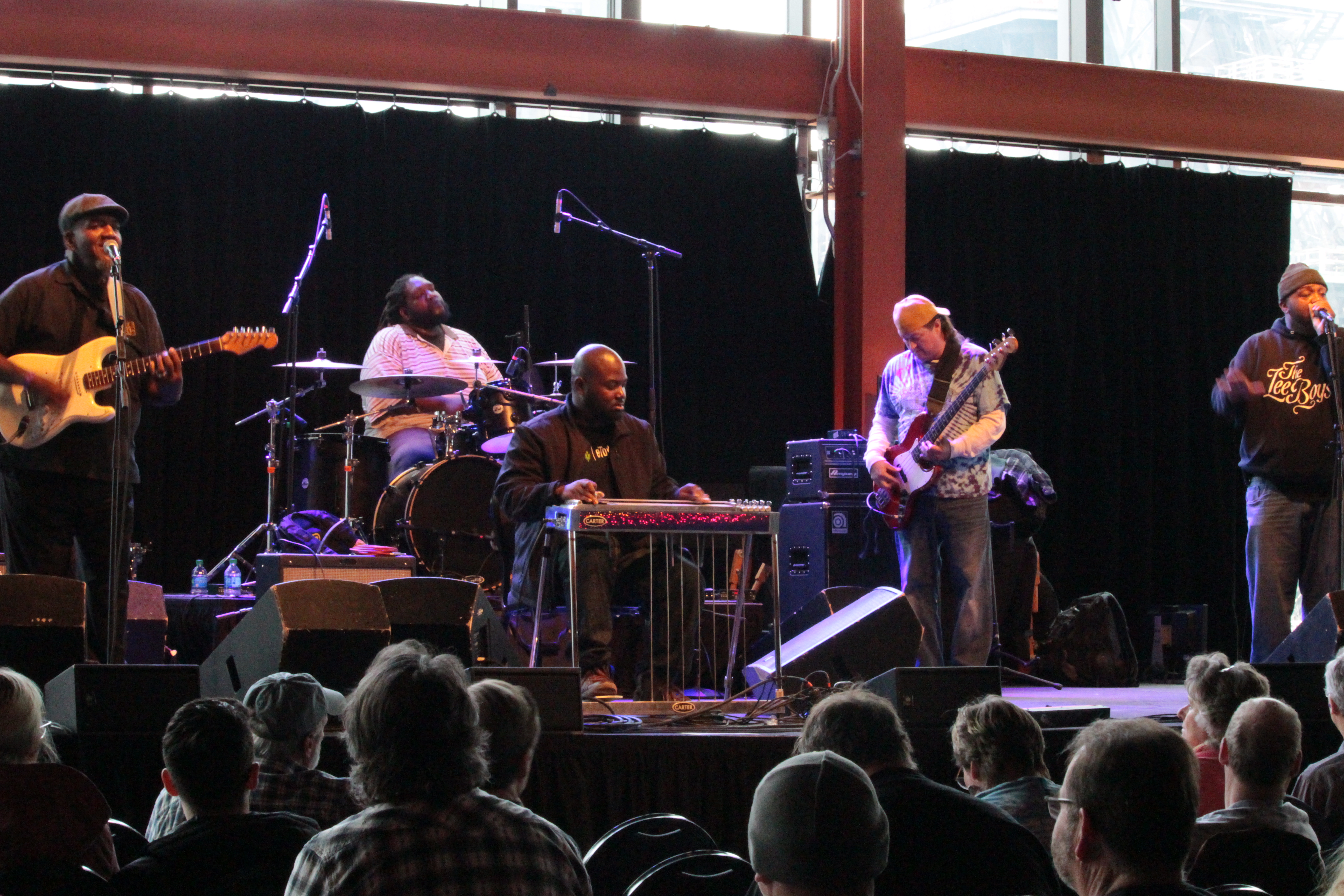
The Lee Boys, Victor Wainwright, Ana Popovic . . . I wasn’t familiar with any of them before arriving in Bethlehem. If you like rip-roaring music, then these guys probably are for you. They all bring the noise, and then some, with skill and soul. And they all tour a lot, so they might show up in your corner of the world.

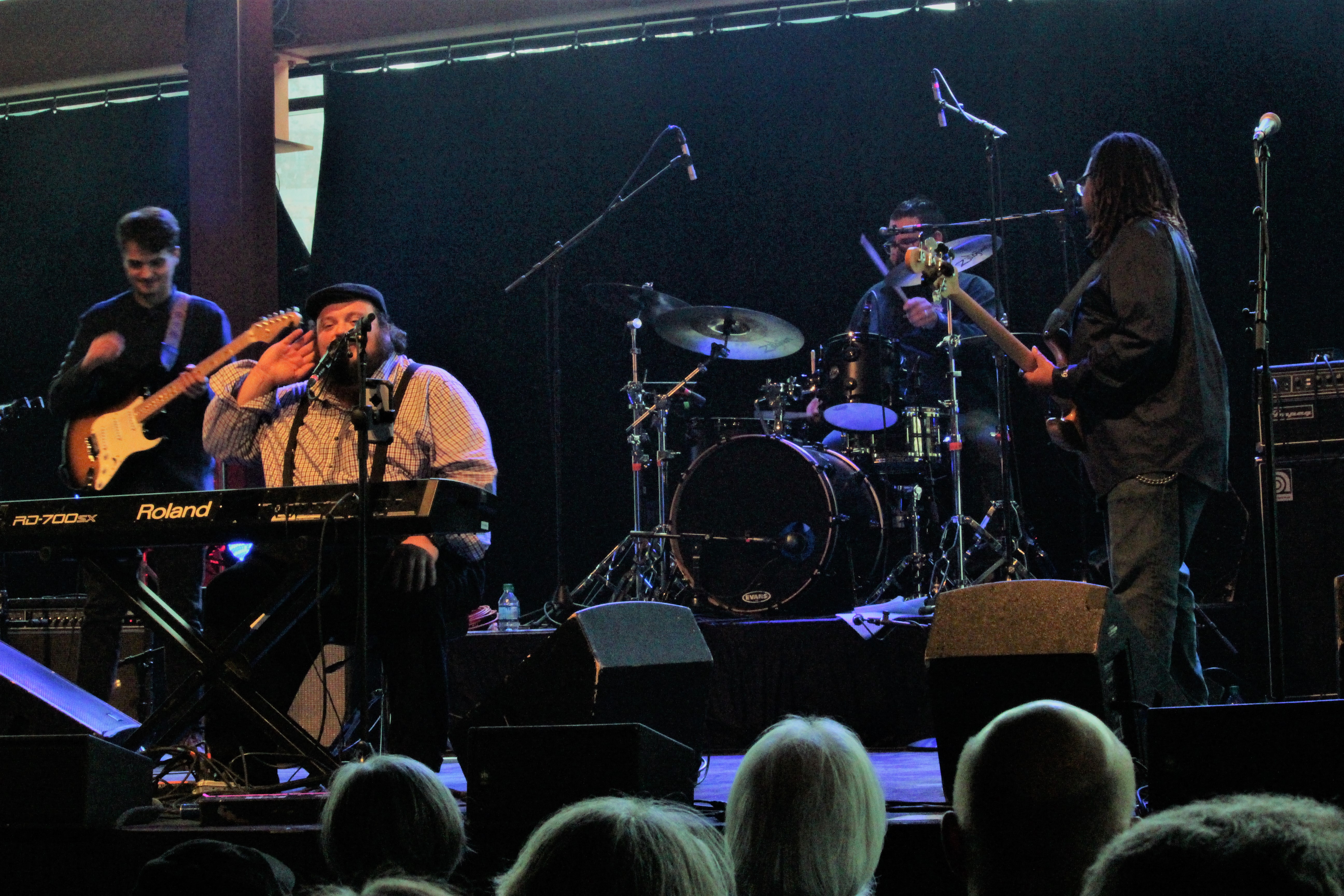
None of the acts plays straight-blues-all-the-way by any means, though their underpinnings are heavily molded from the blues. The Lee Boys mostly serve up gospel tunes, though you might have a hard time recognizing them as such, heavily wrapped in funky R&B drapery as they are. Victor Wainwright is a sweet-toned shouter who can put a little gravel in his voice, a suspendered showman who loves feeling close to his audience almost as much as he loves to pound out red hot boogie woogie licks on his keyboard. And Ana Popovic is, at heart, a rock and roller. She sings well, but it’s her string work that you go to see her for — she’s an electric guitar goddess.

Sandy and I took seats 25 feet from the stage. The place was mobbed. The audience was pumped. And when The Lee Boys, the first group we saw that day, tore into their opening number I tipped my hat to the guy twisting and sliding the sound board’s dials. He had the music pouring out loud, really loud, but not so utterly powerfully that my ears ever felt like they were in danger. I was bopping with the beats, pounding the heel of my left foot up and down like a piston. And then the magic carpet rides began when Roosevelt Collier slid into the first of his lengthy, involved pedal steel guitar solos. Dreamy at times, growling at others, stuttering and whooshing, his electric journey rushed inside me. Closing my eyes I became lost in the sounds, bouncing my head back and forth gently, uncontrollably, as they swept me along, swept me upward, seduced me. When his solos reached their ends in each Lee Boys tune, it took me a few moments to decompress.

I’m not sure why the same didn’t happen during Victor’s set. He and his band were on fire, and Pat Harrington, the electric guitarist, tore into his instrument like a demon. But for reasons unknown, my eyes remained open throughout the wild ride. Which isn’t to say that I didn’t groove madly. I did, but I didn’t levitate.

But I floated and communed once again when Ana and her gang took the stage. Ana’s electric guitar solos saw to that. This girl can play. Pulling on the guitar strings almost maniacally, she had them snarling, moaning, pleading, testifying. Ana took me to regions even loftier than those where Roosevelt Collier had wafted me. Amen.

Yeah, music can be a temporary cure for what ails us. Me, I love rising into the clouds, feeling gravity and neuroses slip away. Whenever it happens I’m grateful. And amazed that my body is able to latch onto and meld with invisible good vibrations. One of these days maybe I’ll figure out how to transfer some of what I feel when afloat into my regular daily regimen. Whatever, this I do believe: Get your kicks while you can, kids, because you never know when the final curtain will descend.

Here now are videos from the Blast Furnace Blues Festival:


(Photos by Sandra Cherrey Scheinin)

(Please don’t be shy about adding your comments or about sharing this article with others)