To The River!

If, like me, you’re an oldster fortunate enough to be in halfway decent shape, it behooves you to indulge your interests pretty damn frequently. That’s because time sure as shit ain’t on your side. I mean, I envision myself doing my thing for plenty more years to come. But who the hell knows?

Anyway, doing my thing partly involves taking a healthy number of walks, an activity I’ve enjoyed for decades. Villages, forests, beachy coastlines and cities are among my favorite locales to poke around in. When it comes to the latter, I’ve racked up far more miles within Philadelphia than any other. It’s the city I know best, having lived in or near it for most of my adult life.

My latest Philly trek began on the Ides of March an hour after I boarded a train that transported me from my little town, Willow Grove, to Philadelphia’s 30th Street Station. From there it was a short walk to my destination, the Schuylkill River, a lovely, narrow waterway that has its origins in Pennsylvania coal territory and flows southeastward for about 100 miles before reaching and, eventually, partially transecting Philadelphia. At the bottom of Philadelphia, the Schuylkill (both SKOOL-kil and SKOO-kil are accepted pronunciations) says goodbye by emptying into the mighty Delaware River.

With the construction in recent years of walking/biking pathways and parklands that border the river in central and southerly Philadelphia sections, most of the Schuylkill’s east bank in the city now is accessible and available for recreational use. Yet I hadn’t walked alongside the Schuylkill in a long while, a big oversight on my part.
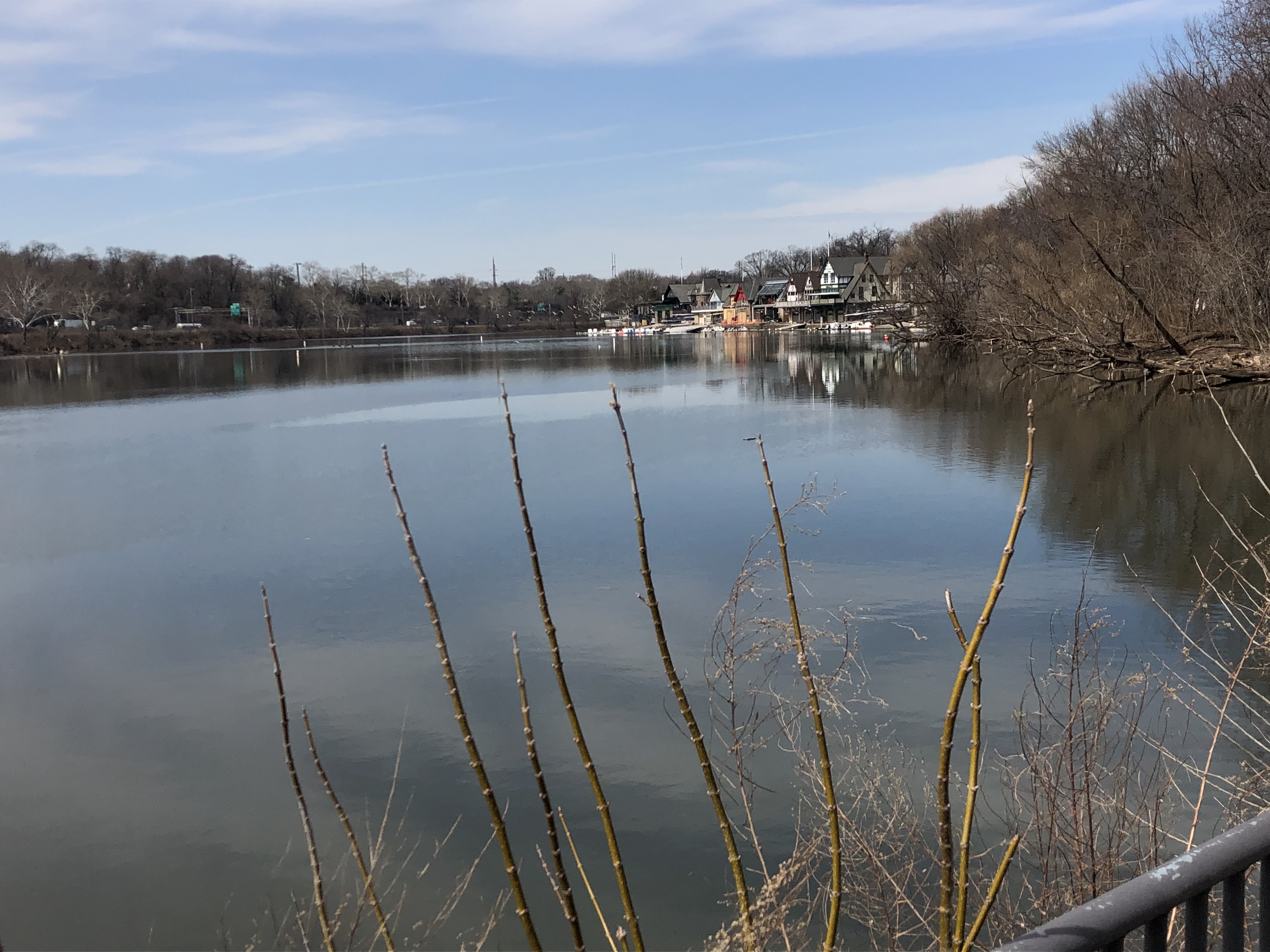
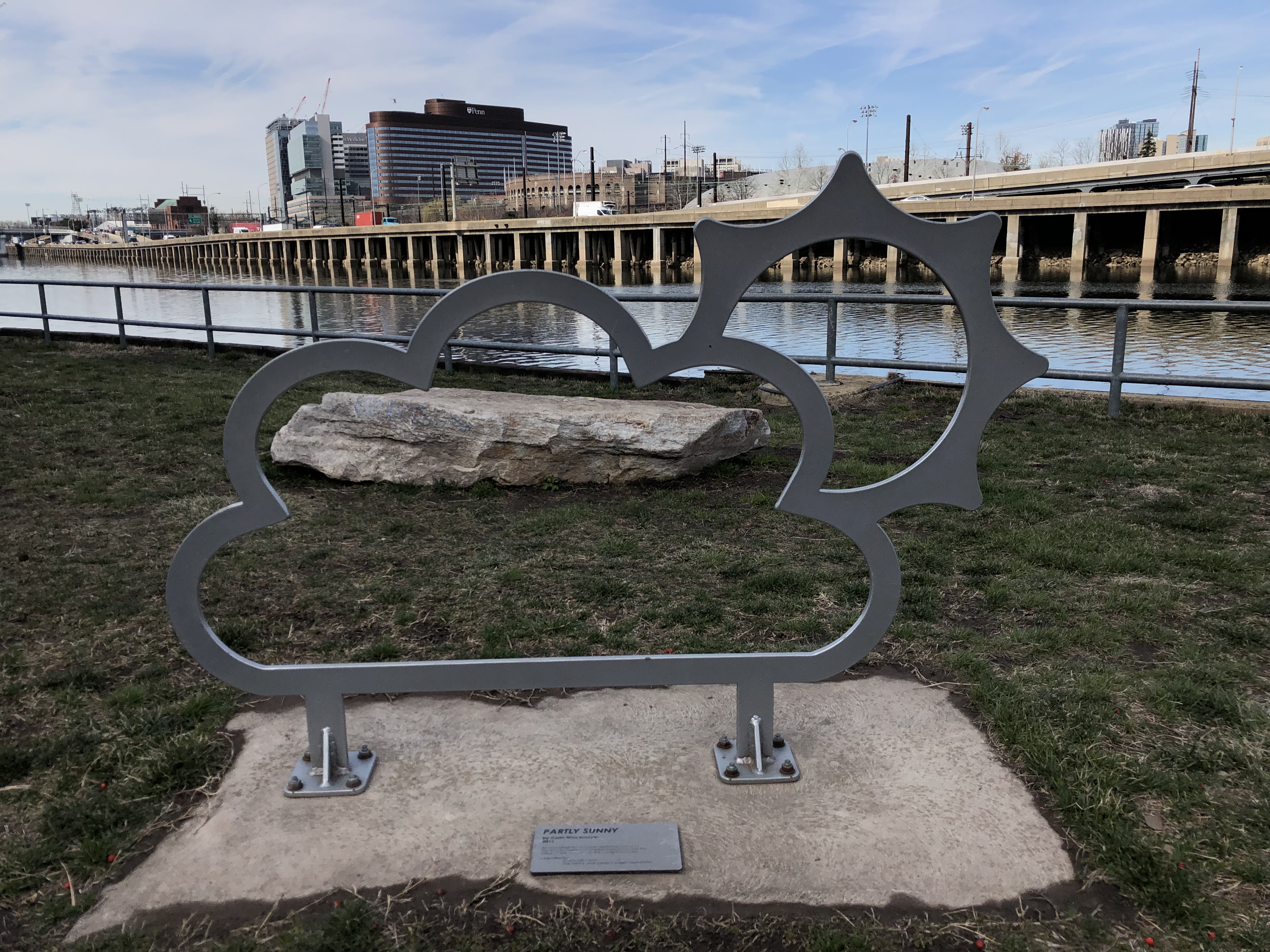
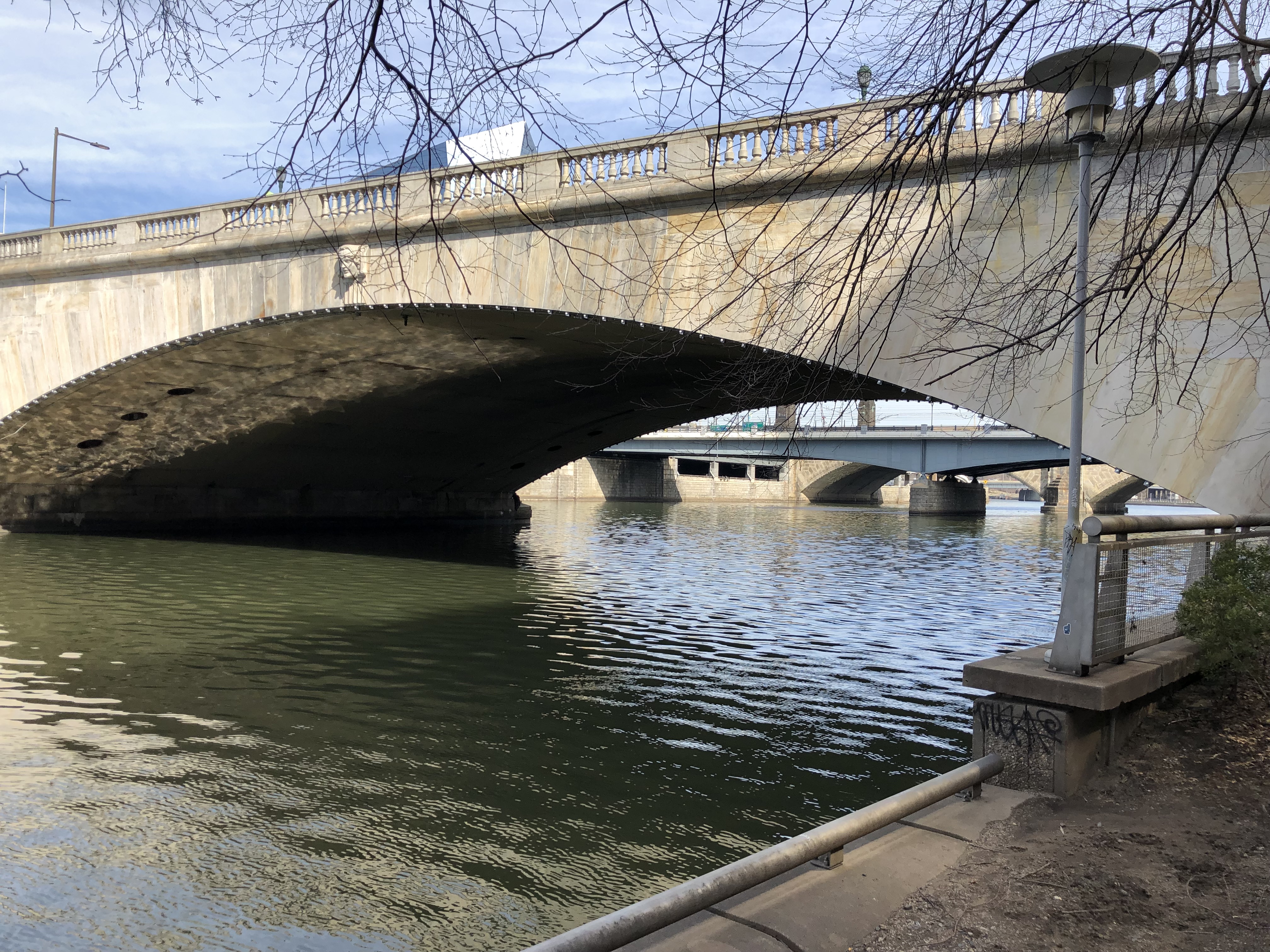
The Philadelphia Museum Of Art is near here.
The Schuylkill Expressway can be seen in this photo.
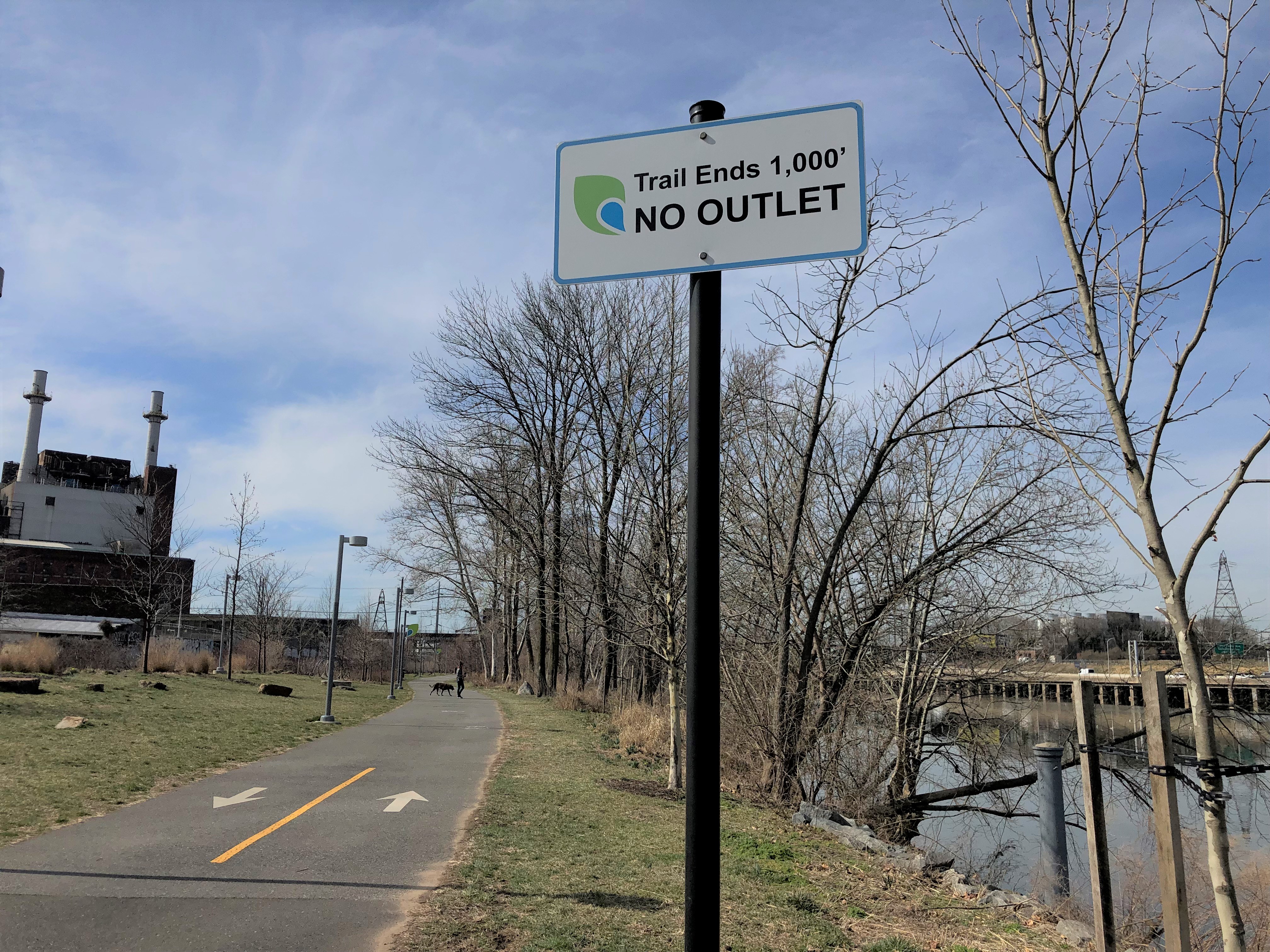
The power plant is on the left.

And so, taking advantage of the Ides’ mild temperatures and blue skies streaked with happy clouds, I stretched my legs nicely while looking here, there and almost everywhere. The views were quiet and charming in some areas, such as those near the Philadelphia Museum Of Art. But most of the time I was very aware of the busy, often gritty city surrounding the river. On one long stretch across the river from where I walked, for instance, cars and trucks whizzed by non-stop on the Schuylkill Expressway. And an imposing power plant a block or two from the river wowed me as I neared the pathway’s current southern terminus (funding hasn’t been arranged yet to create pathways and parklands from the current southern terminus to the bottom of the city).

All in all, I walked about three miles, which is one-quarter or so of the total length of Philadelphia’s Schuylkill riverwalk. And I trod a short distance above the river too, having climbed the stairs that lead to the South Street Bridge’s walkway. (The South Street Bridge is one of many bridges in Philadelphia that span the river.)
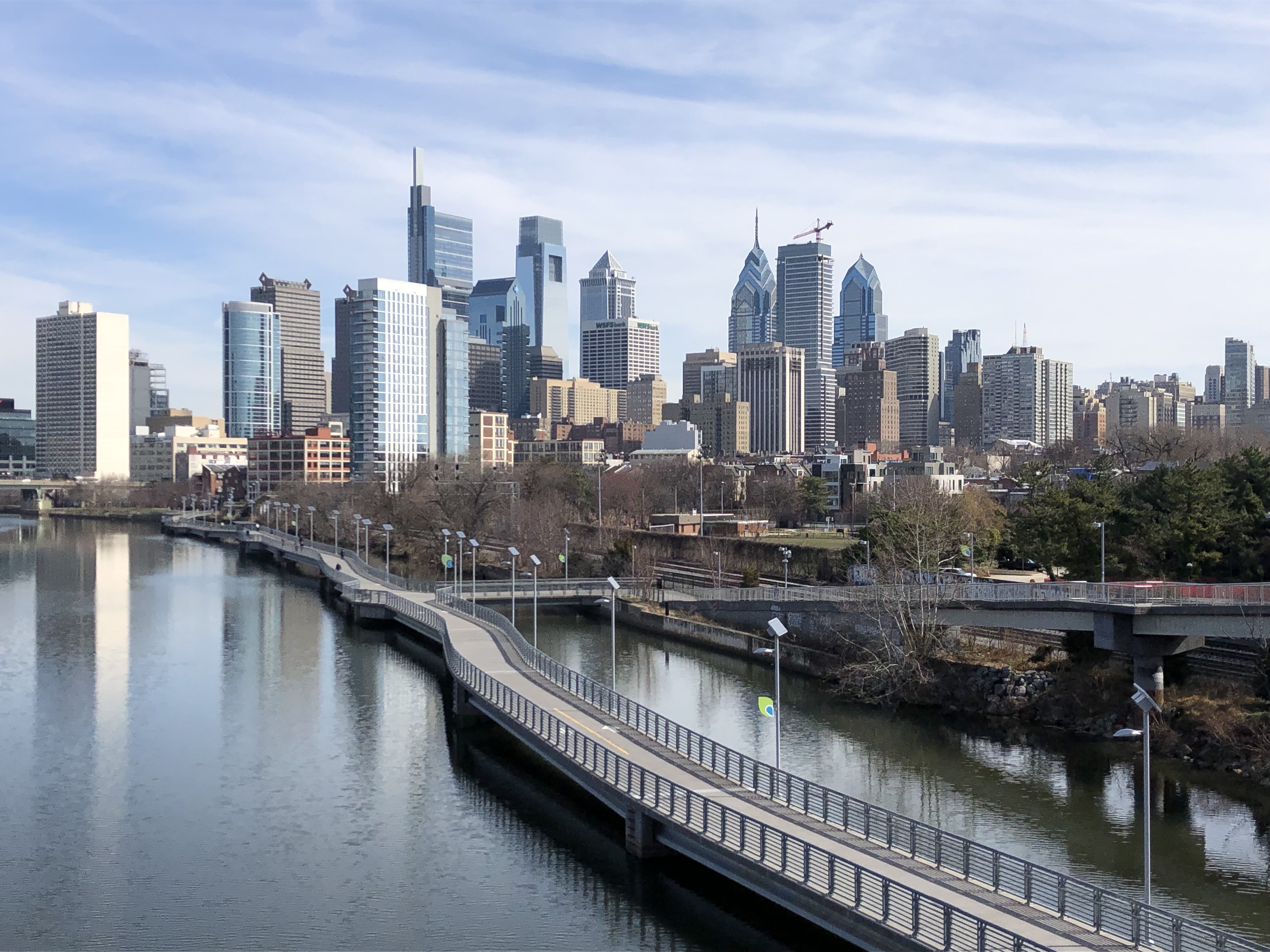
Downtown Philadelphia as seen from the South Street Bridge.

Man, the sights were impressive from the bridge, because, duh, it’s way up there. As always, I was amazed by the undeniable fact that downtown Philadelphia is a place where towering modern structures and old buildings imbued with character get along absolutely just fine. And the heavy volume of those skyscrapers caught my attention more than it usually does. There weren’t all that many of them until the 1980s, you know. Since then they’ve sprouted vigorously.
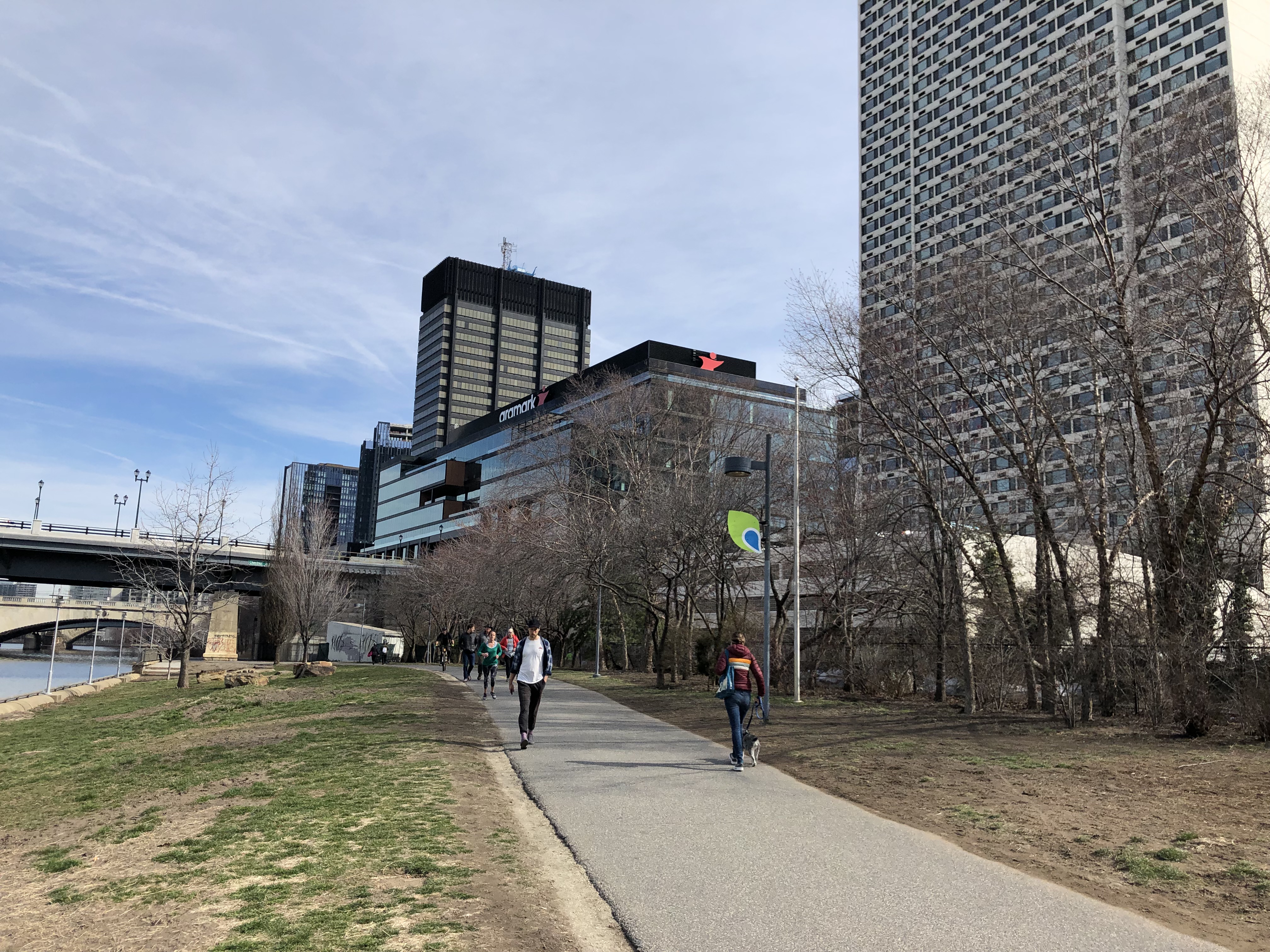
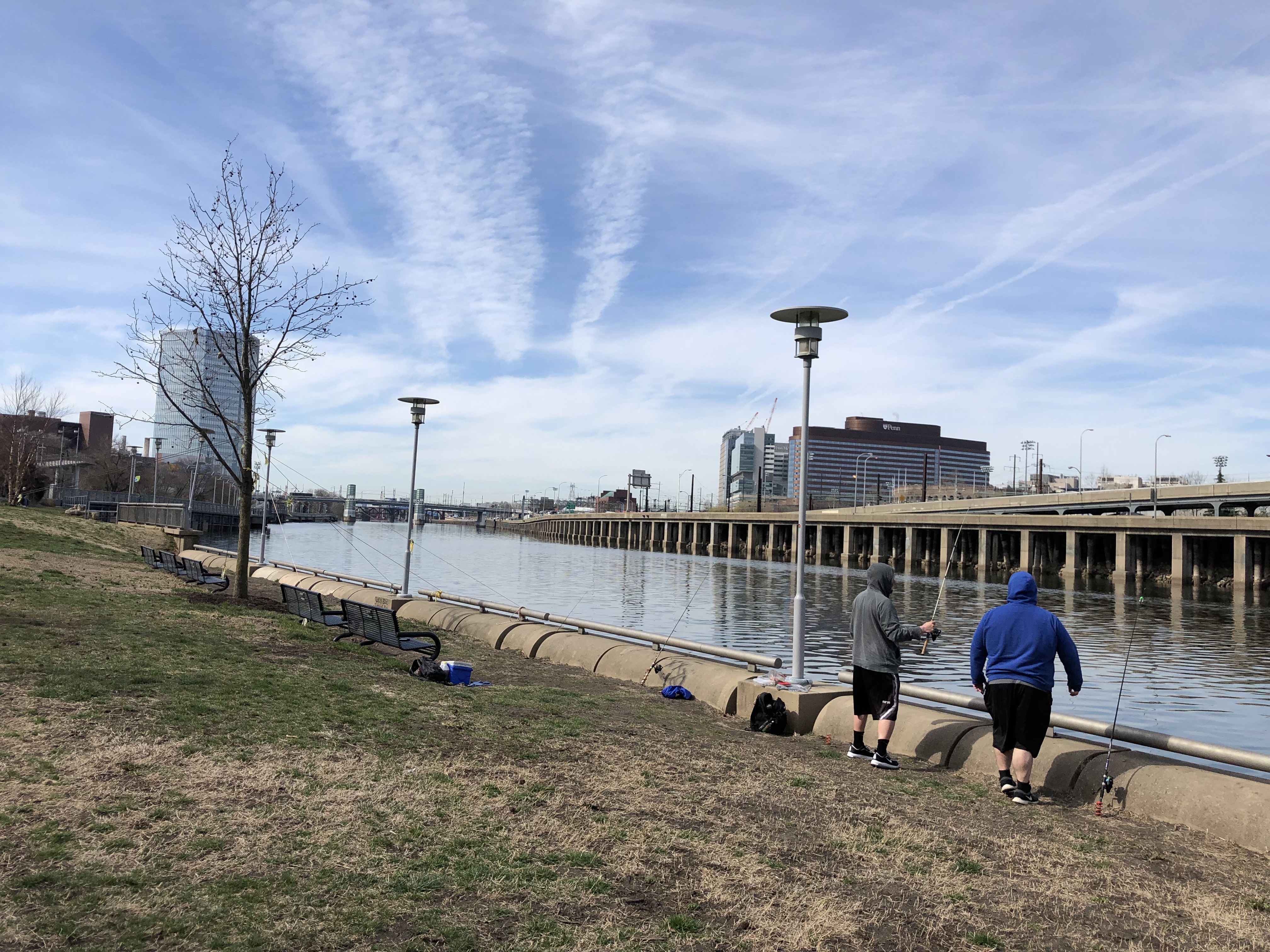
What really made my day, though, was the human component. The pathways and lawn areas were by no means overrun, but substantial numbers of people, all of them on their best behavior, were around. I saw walkers, some of them with dogs, some of them pushing baby carriages, some unencumbered. Plenty of bicyclists too, and two guys fishing. And at least 30 joggers, a majority of whom were cute twenty-something ladies. Did I mention they were cute? Girls, wait for me! I know you’ve been praying for a wrinkled, balding geezer to join you.

After giving the matter a little thought, however, I think I’ll skip jogging. For one thing, I don’t enjoy getting sweaty. Plus, jogging might be dangerous to my health, precipitating a meeting between me and my maker, whoever or whatever it might be. Such an occurrence, needless to say, would suck, suck, suck.

I’m going to stick with walking.

(A note: Riverwalks have been constructed along much of the Schuylkill River, not just in the river’s Philadelphia leg. If you’re interested in learning more, click here.)
A Decently Joyful Story

It’s an understatement to remark that ours is a perplexing species. Yes, most people might be pretty good at heart for the most part. But you’d hardly know that by the wars that have raged in one place or another throughout recorded and, I have zero doubt, prerecorded history. The latest nightmare, of course, is the Russian assault on Ukraine. It is only one of many post-Second World War examples of cruelty and of refusal, inability even, to live harmoniously. Horrible conflicts in Syria, Yemen, Rwanda and the former Yugoslavia are others. The Russia/Ukraine situation is by far the most worrisome, needless to say, because a f*cking asshole with nuclear weapons at his command, good ol’ Vladimir, is its lead villain.

Okay, I needed to get that off my chest. And seeing that I’m not in the mood to bum myself out any further, nor anyone else, I now will pivot sharply and head into my comfort zone. Sitting there patiently are a song I first heard in February and a television series that my wife Sandy and I watched earlier this month. I kind of have to write about them. Why? Well, they brought me joy. And I don’t take joy lightly. When I experience it I thank my lucky stars, because joy, though weightless and invisible, is a sweet substance that we require at least now and then. Joy helps us feel whole. It is one of the finest things in life.

First up is Broken Heart, a tune by The Fiestas, a New Jersey vocal quartet (and at times a quintet) that inhabited the worlds of doo wop and rhythm and blues. I’m certain that just about everyone knows this group, if not by name then by their song So Fine, which was released in late 1958 and which I love. So Fine became a smash hit a few months later and receives substantial airplay to this day.

Little did I know that The Fiestas were more than So Fine. Little did I know, that is, until one night last month when a SiriusXM radio channel delivered Broken Heart to our ears while Sandy and I were at home having dinner. Man, in an instant I was hooked. I stopped chewing to let the song give me some thrills. And, via YouTube, I’ve listened to Broken Heart a bunch of times since that evening.

Subsequent research taught me that The Fiestas, whose career lasted into the late 1970s, scored a medium-sized hit with Broken Heart in 1962. Which is why I’m surprised I’d never heard it before. Such a song! Sure, its exuberance belies the warnings about love that are embedded in the lyrics, but who cares about that incongruity? I mean, you don’t run across singing as majestic as this very often. Lead vocalist Tommy Bullock soars, hitting notes so fluidly, so gleefully, he almost brings tears to my eyes. And his partners wrap their voices around his with precision and power. I’m listening to Broken Heart as I type this sentence. Am I feeling joyful? Damn straight! Without further ado, here’s Broken Heart:

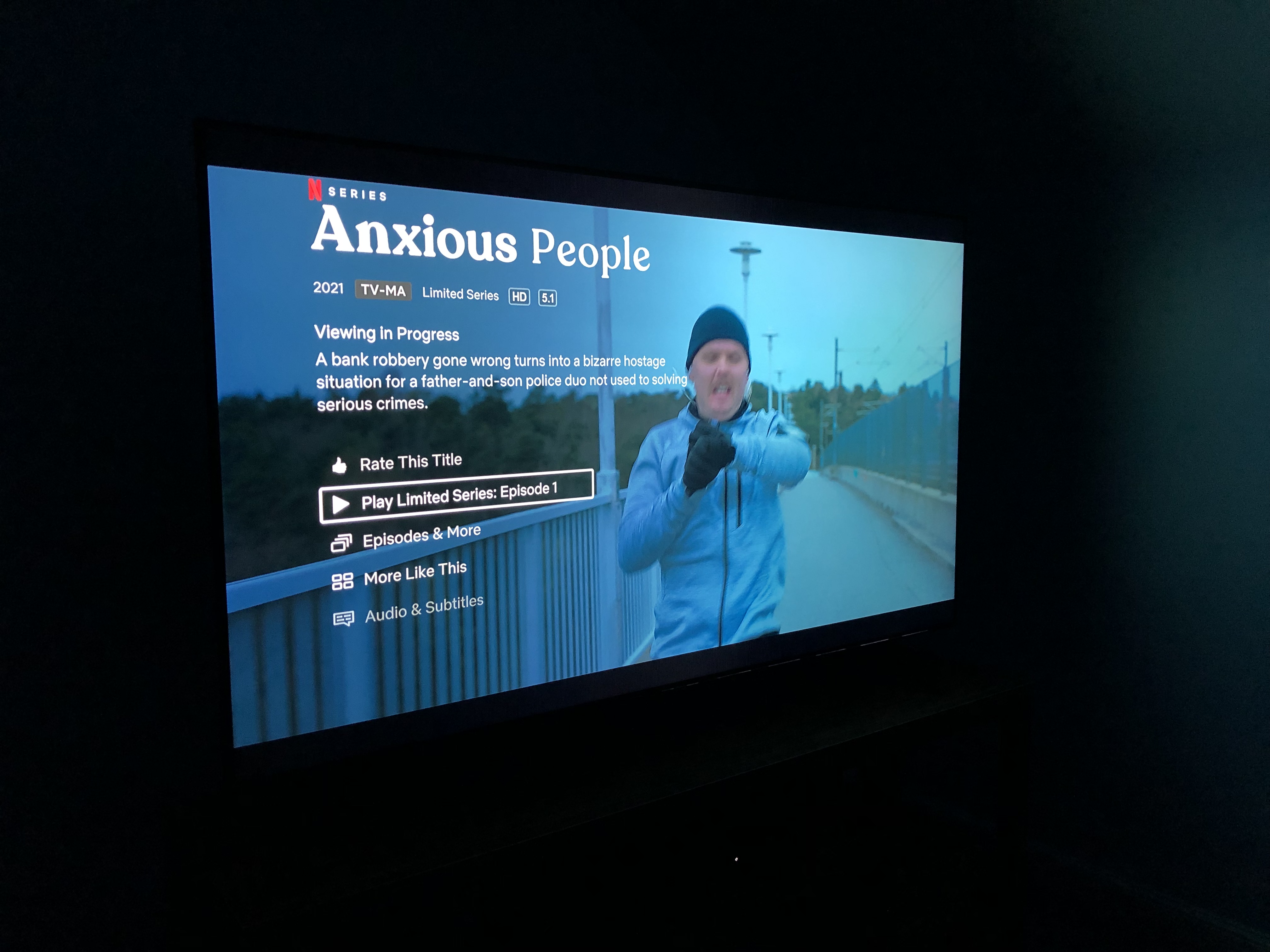
Let’s move on now, joyfully, to Anxious People, a Netflix mini-series (six episodes of about 30 minutes each) set and produced in Sweden and based on a novel of the same name by Fredrik Backman. Backman, by the way, is famous, having penned the international bestseller A Man Called Ove.

Sandy and I knew almost nothing about Anxious People before dialing it up, and are pleased as punch that we took the leap. It’s a whimsical tale centered around a group of folks who find themselves held hostage, in a loose sense, by an inept bank robber, and the police investigation that follows. I’m tempted to divulge a whole lot about Anxious People, multi-layered and fascinating as it is. For me to do so, though, would be a crime on my part, as telling too much would spoil the show for anyone interested in giving it a try.

So, I’ll add but a few more handfuls of words. To begin, are there flaws in the series? I, who can be picky to a fault, didn’t find any. The plot lines unfold and interweave deliciously, and the characters, nearly all of whom are laden with foibles and self-doubts, ring true. What we have here, then, is a gentle story that warmed the hell out of my heart. When the final episode reached its end I was filled with joy that carried over to the next day.

Boys and girls, that’s a wrap. I’d be happy to learn about who or what has given you joy of late. Till next time!

A Doors-Filled Story (Fourth Edition)

A lovely day it was indeed. The Sun beamed and gleamed. The skies, nary a cloud within them, were an expanse of blue at its finest. Unexpectedly mild for winter (51°F/11°C), a steady breeze on hand to keep me refreshed, the afternoon of February the ninth presented to me a perfect opportunity to go out and peruse doors in Hatboro, a town in the Philadelphia burbs that’s a couple of miles from the one I call home. I grabbed the opportunity.

Doors? Yes, doors are a favored subject for a fair number of WordPress scribes, including, occasionally, yours truly. I’ve written about them three times before. And, it should be noted, the hub on WordPress for all things doors is the Thursday Doors project run by Dan Antion on his No Facilities blog. So, if you click here you will be directed to Dan’s handsome site, where links to the writings of and photographs by doors enthusiasts may be found.

As I drove to Hatboro I was confident about what I’d find, because I’ve been there a multitude of times over the years — to shop, to dine, to stretch my legs on its sidewalks. It’s a down-to-earth community with pleasant residential blocks and a commercial area that, though hanging in there, has seen better days. Sure, maybe a unique or snazzy door or two awaited me. But no more than that, I figured.

And you know what? I was right. Of the hundreds of doors that passed before my eyes that afternoon as I wandered around many of Hatboro’s streets, alleys and parking areas, nearly all were of one standard style or another and also plain as can be in the color department.

And you know what else? I was absolutely fine with that, as I’ve long believed there is value and beauty in just about everything if I look hard enough and, when needed, adjust my way of thinking. After all, who am I not to admire the seemingly ordinary? I mean, I understand what it’s like to be ignored. I ain’t exactly Bradley Cooper when it comes to looks, you dig, proof of which is the fact that I can count on two hands, probably one, the number of times in my life that a girl has given me the eye. And those occurrences were decades ago. Shit, now that I’m pretty damn deep into my senior citizen era, there ain’t a chance in the world that I’ll ever again be gazed upon with interest, unless it’s by somebody working on a doctoral thesis about old farts. Boo hoo, man! Boo f*cking hoo!

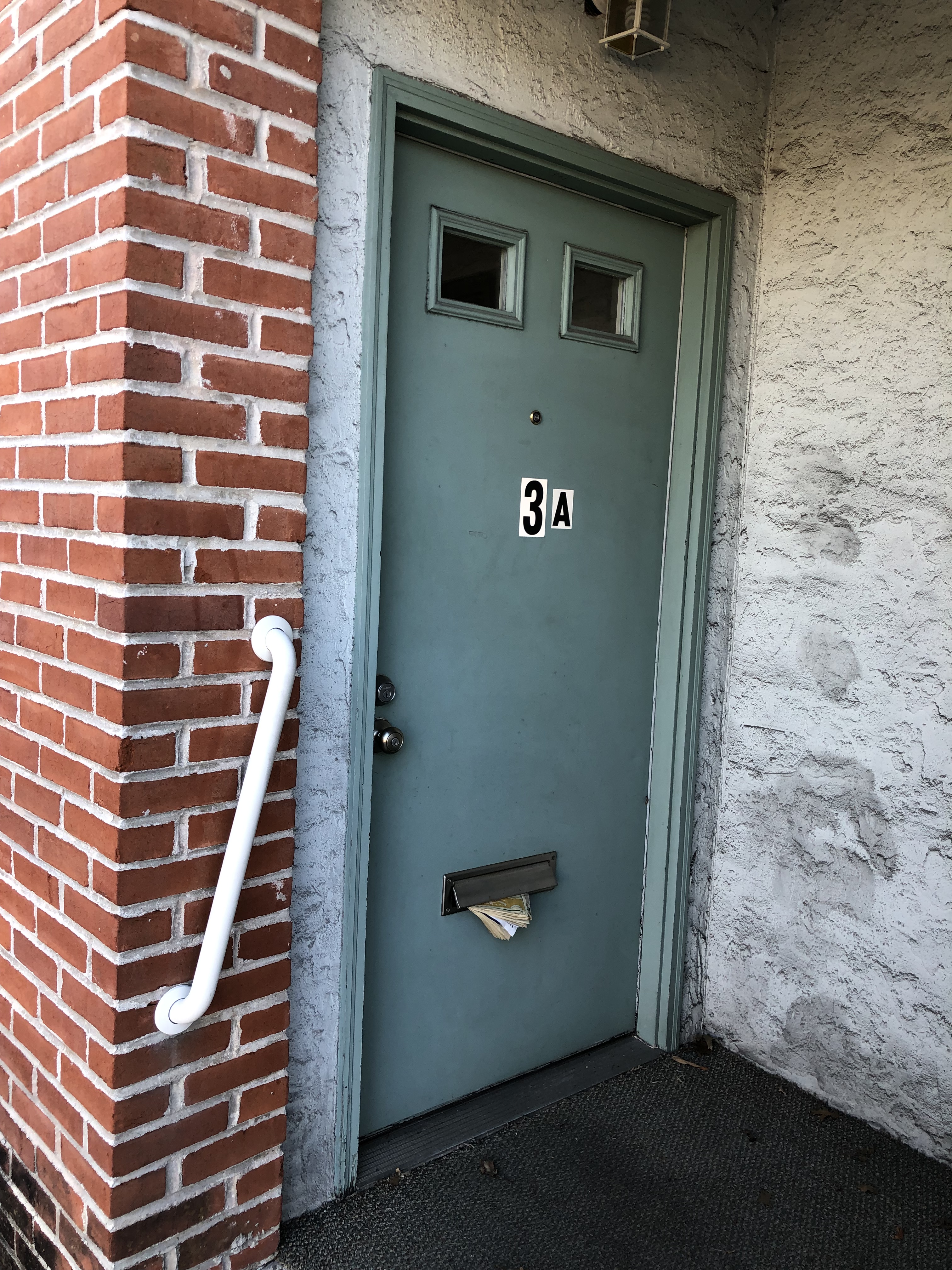
Ordinary and admirable
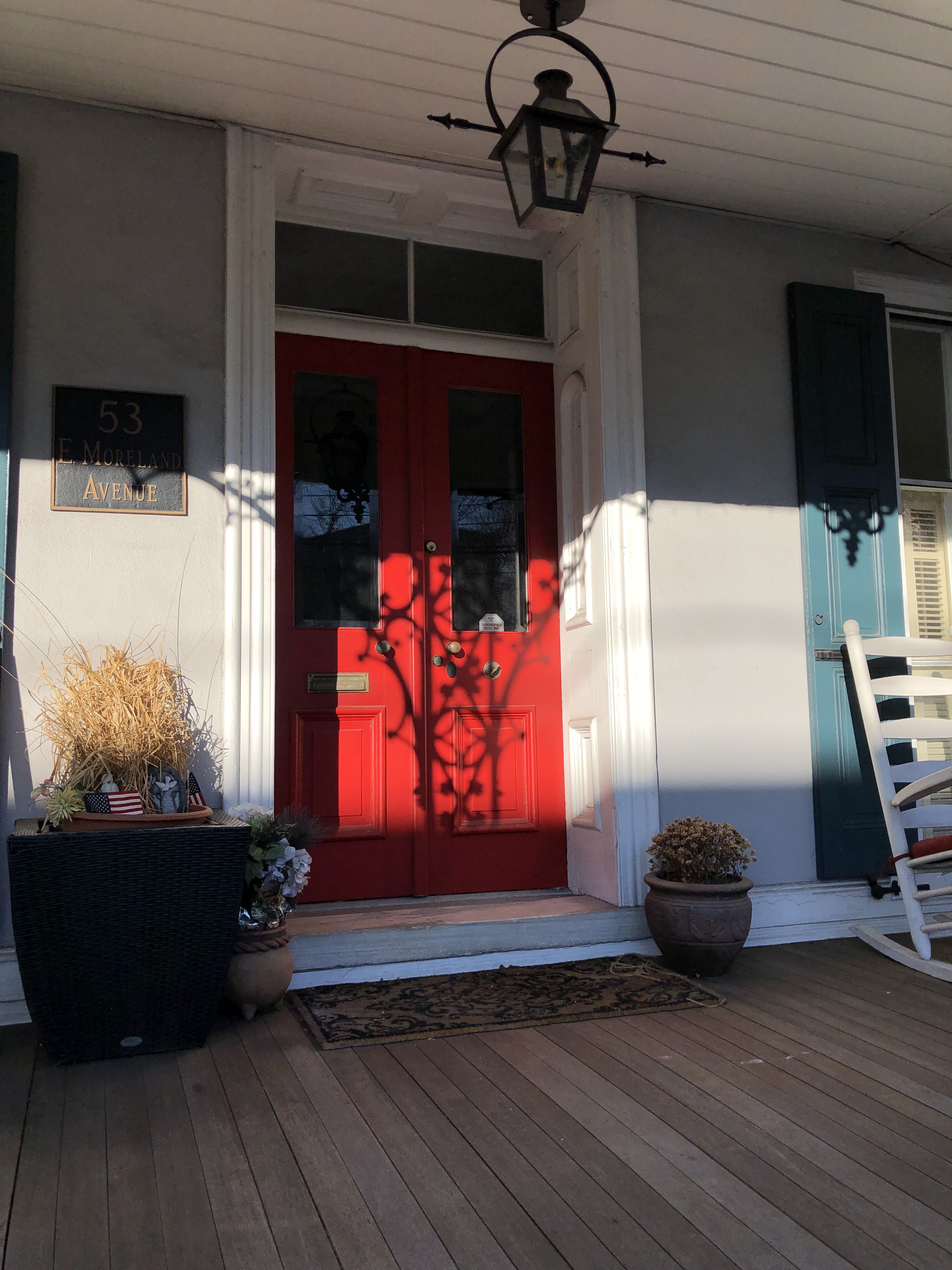
Ordinary and very admirable

Among the “ordinary” portals that made a real impression on me in Hatboro, two of whose portraits I’ve included above, my top pick is the one identified by a nice big 3A. It more or less stopped me in my tracks because, I now realize in hindsight, its grey-green coloration struck an oceanic chord within me. I’m an ocean lover, and over the years I’ve seen the Atlantic’s waters take on a hue similar to 3A’s. Plus, how could I not fall for a door with a newspaper sticking out of its mail slot, like a tongue looking for attention?

Still, there were two doors that I preferred to 3A, both of which struck me as being a step or two above “ordinary”: a swinging door made of wood planks and metal, and the front door to a house. The latter, alive in orangey-red and decorated with a display of shadows that dazzled, easily garnered the gold medal in the doors competition that day.

In honor of Hatboro’s très cool red door, I’m going to end these proceedings by presenting an equally cool song titled — what else? — The Red Door. It was recorded in 1952 by a group led by tenor saxophonist John “Zoot” Sims and was released the next year. Zoot, who co-wrote the tune with Gerry Mulligan, takes the first sax solo. Mulligan, by the way, doesn’t appear on the recording.

Sims, a hell of a musician, was a presence in the jazz world for about 35 years (he died in 1985, having made it to only age 59). I had chance after chance to see him perform in New York City clubs during the 1970s and 80s, but, stupidly, let them pass me by. I’ve regretted those decisions ever since.

Here then is Zoot and his compadres on the lovely, swinging tune that The Red Door is. Enjoy.