Stuff And More Stuff (Part Two)

So here I am, about to attempt a Part Two rumination on the time that my wife Sandy and I spent recently with our friends from France, Alan and Martine (click here to read the first installment). Part Two? Man, it’s hard enough for me to write about any topic, let alone something that requires follow-up thought and analysis. In the future I’m going to stick strictly to Part Ones.

As I’ve previously mentioned, the weather was ungodly hot while Alan and Martine stayed with us in the Philly burbs. We all decided to take outdoor activities off the table. On the first full day of the visit, we beat the Sun by looking at 150-year-old American artifacts inside the Mercer Museum, in Doylestown, PA. Where to on the second full day? Hey, we’d had enough history and culture at the Mercer. Why not aim lower and head to a locale whose charms are undeniable and, for some, irresistible? Namely, Willow Grove Park Mall, a gigantic and enclosed shopping mecca a mere half mile from Sandy’s and my abode. Alan and Martine, non-fussy sorts, readily agreed.

At the mall, we split up into pairs, females banding together, ditto for the lesser gender. Alan and I said goodbye to our wives within Macy’s, the establishment we all first had entered from the parking lot. “Call us when you’re done,” he and I said, and off we went. As Alan and I made our way past Macy’s cosmetics counters, heading towards an exit that would bring many of the rest of the mall’s retailers into view, I mentioned something I’ve thought about over the years. “This place,” I said, referring to Macy’s, “is like a museum.” The same could be said for the mall in toto.

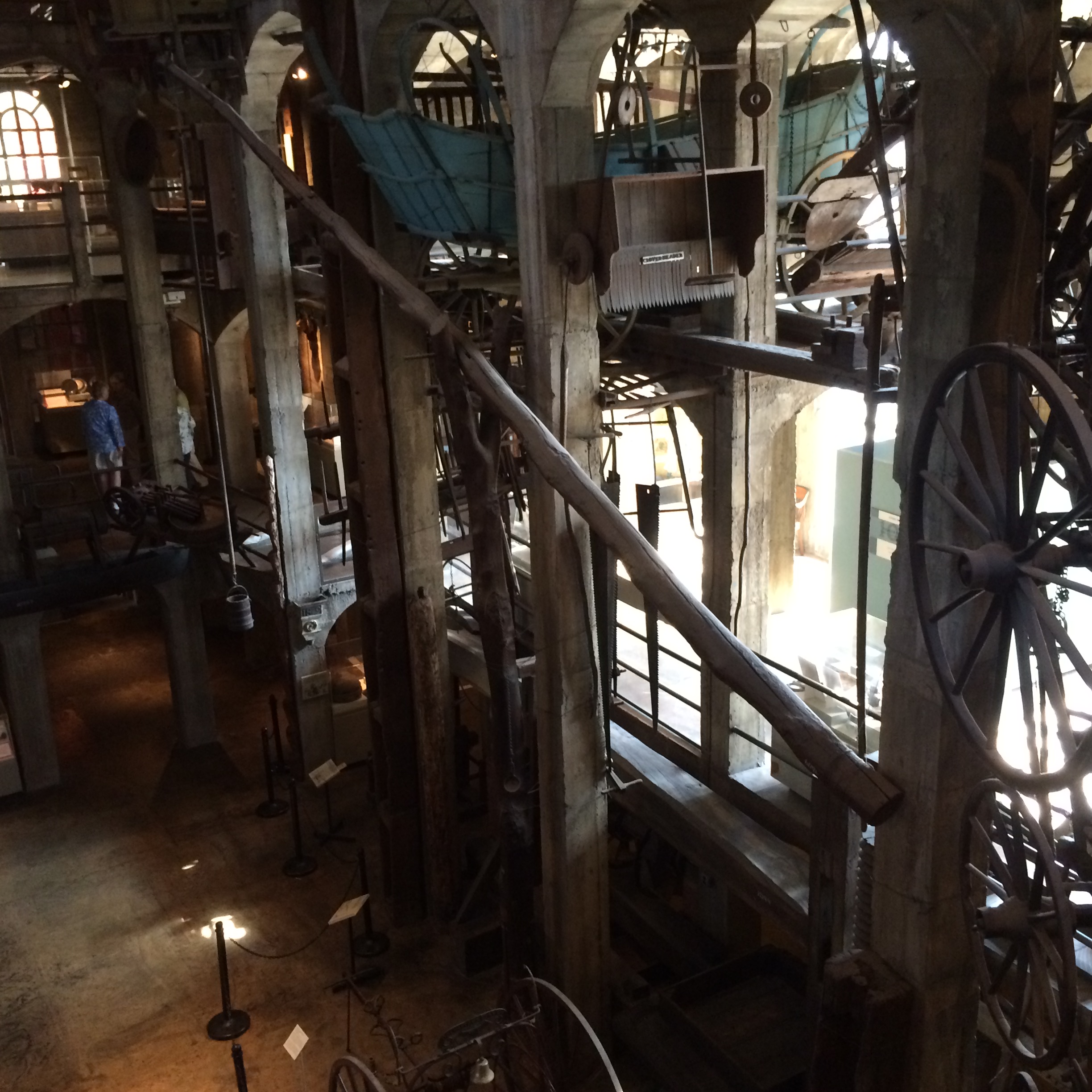
Partial view of the Mercer Museum's central court.
Partial view of the Mercer Museum’s central court.
Partial view of the Willow Grove Mall's central court.
Partial view of the Willow Grove Mall’s central court.

The Mercer Museum displays 30,000 or more everyday implements and goods from America’s olden days. It’s a fascinating place. The Willow Grove Mall is no less fascinating, when you think about it. You want artifacts? The mall has 1,500,000 of them, I bet, putting the Mercer’s count to shame. Not only are the Mercer and the mall both repositories, they’re laid out kind of the same too, with large open courts (really large at the mall) ringed by several levels of rooms. At the Mercer the rooms (i.e. galleries) are small, each displaying tools and wares from a specific occupation or other category. At the mall the rooms (i.e. shops) may be bigger, but, excepting the department stores, each is narrow in its focus, just like at the Mercer. Shoe stores display only shoes. Electronics stores display only electronics. See, what’d I tell you? . . .  The Mercer Museum and the Willow Grove Mall are pretty similar. Except, of course, that the stuff inside the Mercer Museum ain’t going anywhere. At the mall, a museum in constant flux, the faster the stuff makes its way out the doors, the better the store owners and managers like it.

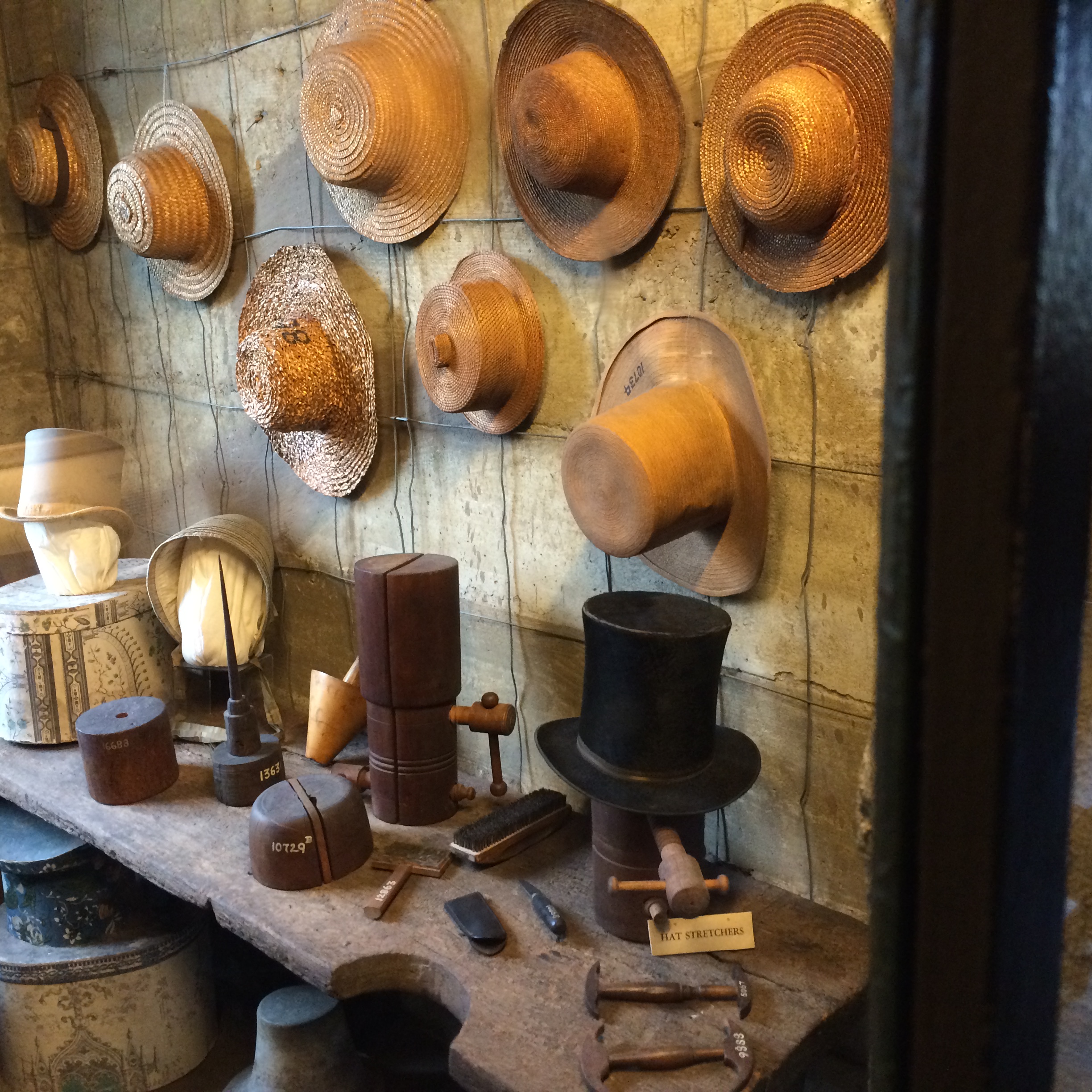
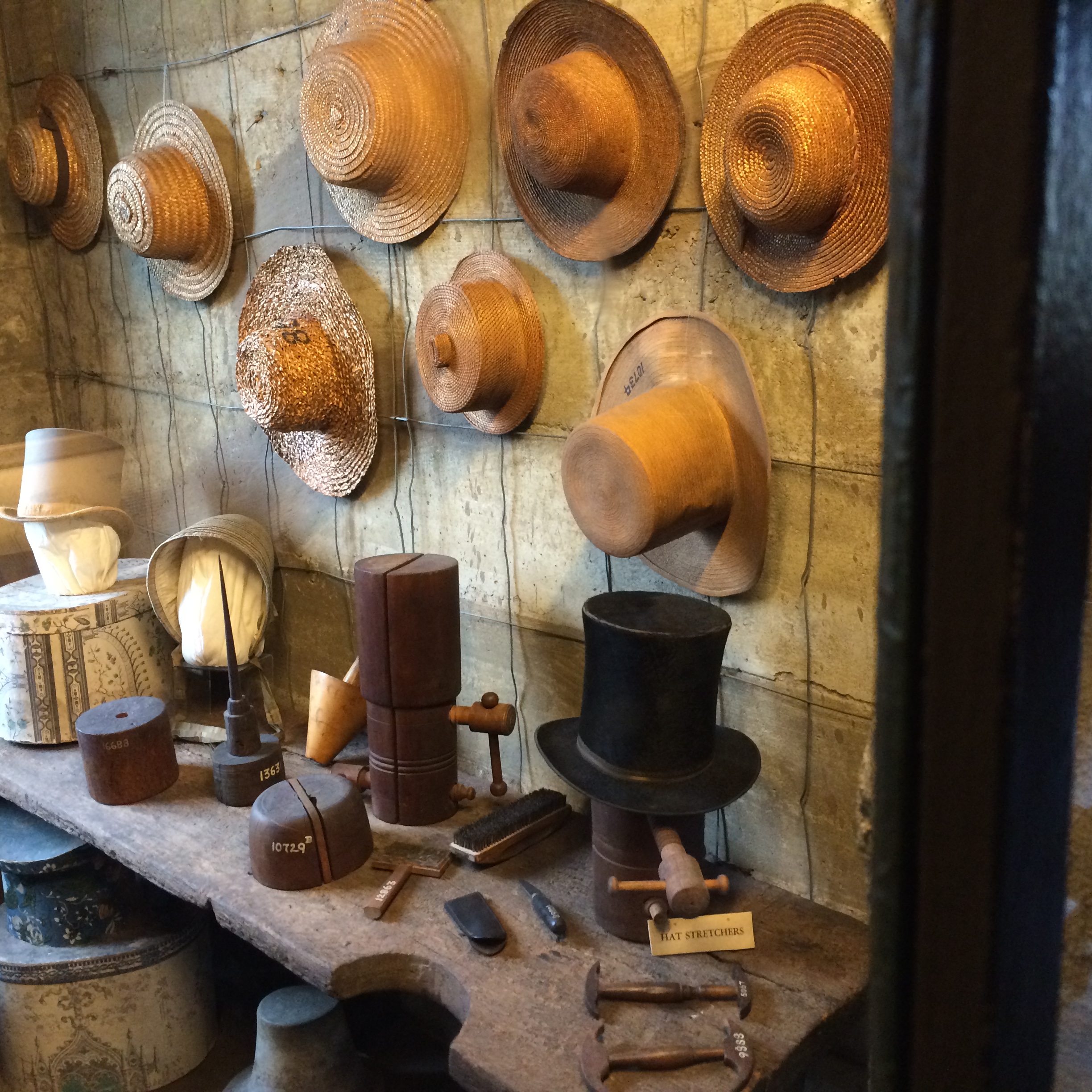
Hats at the Mercer Museum.
Lids, a hat store in the Willow Grove Mall.

Department stores aside, the variety of items at the Mercer is, I think, a lot greater than at the mall. But there is definitely some overlap. No, you won’t find smart phones at the Mercer, or a whaling boat at the mall. But how about hats, for one example? Mercer has a room devoted to them and their manufacture. And Willow Grove Mall contains Lids, a sharp little shop stocked from floor to ceiling with caps, mostly of the baseball type.

While Sandy and Martine (as Alan and I later learned) happily wandered through Macy’s, Bloomingdale’s, Uniqlo and other wondrous spots, Alan and I strolled around the second and third level walkways overlooking the great court. We passed one emporium after another, but entered not a one. Neither of us were in need of any new duds (I mean, we’re talking here about two of the already-sharpest-dressed guys on the planet!), nor of much anything else. And thus to the food court we finally headed, where we sat and chatted about this and that, coming close to solving a couple of the world’s problems, though not quite close enough.

Eventually, Sandy and Martine rang us up. And came to join us at the food area. They’d had a grand time. So had Alan and I, in our own way. Sandy and Martine had made a few small purchases. And, before heading back to the Scheinin hacienda, Martine dropped a few dollars more, taking away some old timey candies and roasted nuts from a colorful and alluring sweets stand at the food court. These were gifts for relatives whom she and Alan would be visiting in Massachusetts in a couple of days.

Thank you, Willow Grove Mall, provider of fun, enlightenment and relief from the Sun’s punishing rays. I bow in praise.

(Photos by Sandra Cherrey Scheinin. If you click on any photo, a larger image will open)

(If you enjoyed this article, then please don’t be shy about sharing it)

Stuff And More Stuff (A Visit To The Mercer Museum)

One of my closest friends, Alan, lives in Paris, France, so we don’t get to see each other too often. My wife Sandy and I are crazy about him and his wife Martine. Wonderful people. Smart, gracious and, if the conditions are right, up for pretty much anything. Alan and I have been buddies for 50 years. We met at college in Vermont lo those many years ago. He and Martine were in the USA for a couple of weeks recently for family gatherings and to tour New England a bit, and they also visited Sandy and me for a few days. We all had a terrific time together.

The weather was hot while they were with us. By 10 AM each day the sun was kicking ass. Sandy and I had hoped to show Alan and Martine some beautiful outdoor sights in Philadelphia or its environs. Maybe Morris Arboretum. Maybe Longwood Gardens. Maybe Philly’s Old City section and its nearby Penn’s Landing waterfront. But we scratched all of those ideas off our list. None of us felt like dealing with the heat. Where to, then?

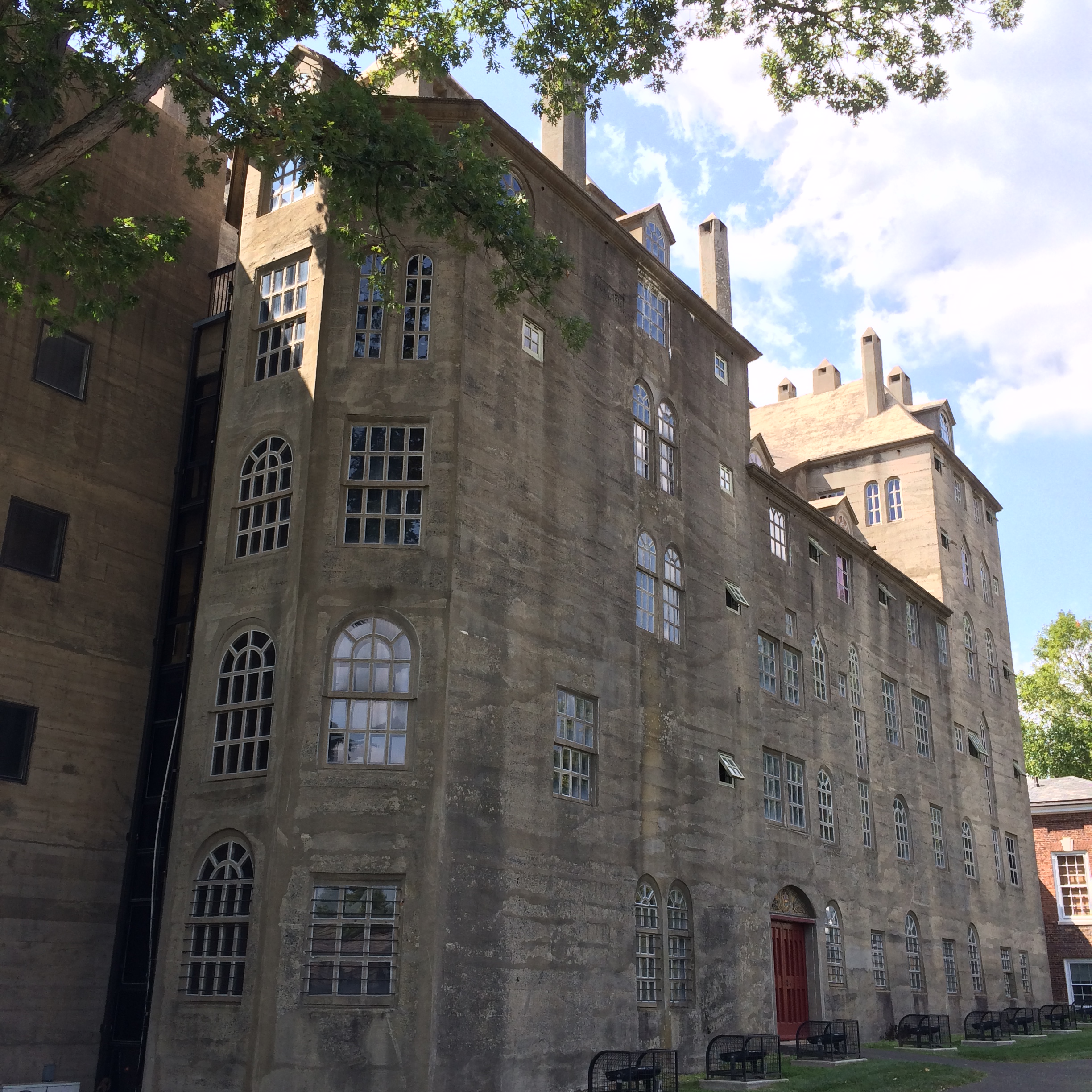
Doylestown's Mercer Museum.
Doylestown’s Mercer Museum.

I’ve written a number of times about Doylestown, PA, a fine village in Bucks County about 20 miles from Philadelphia. Doylestown was the home of Henry Chapman Mercer, a talented and brilliant chap with eclectic interests who lived from 1856 to 1930. He designed and constructed three large and unusual buildings in Doylestown, one of which, the Mercer Museum, fit the bill as an indoor destination for Sandy, me and our friends. On the first full day of Alan’s and Martine’s visit, that’s where we headed.

Henry Mercer was a traveler, an archaeologist, an outside-the-box thinker and a collector of myriad objects. He also was well-heeled, a circumstance that allowed him to indulge his passions and to live pretty much as he chose. The collecting bug bit him early in life and took hold very strongly in the 1890s when he saw the effects that industrialization was having on the American way. Before they would be entirely phased out and disappear, he decided to amass examples of the handmade objects that once were, and in some cases still were used in typical homes, in everyday trades, on farms and in workshops. The tools and household and recreational goods, in other words, that defined how folks lived in the 1700s through roughly 1850.

Mercer spent much time at junk dealers, auctions and country sales, and often for little money purchased an astonishing array of items, thousand and thousands of them. But where would he keep all of this stuff? No problem. The amazing Mercer designed a sprawling idiosyncratic castle of sorts to house his Americana collection. A small team of workers built the structure in just a few years. The Mercer Museum opened in 1916, and Henry immediately donated it and the stuff to the Bucks County Historical Society, which to this day owns and runs the operation.

I was pretty certain that Alan and Martine would like the Mercer Museum. It’s not well-known, why I don’t understand. But it is fascinating and maybe one of a kind. The building alone is worthy of examination, a concrete behemoth awash with windows and topped with a dizzying display of towers and chimneys and who-knows-whats. Mercer selected concrete as his primary construction material because he desired a fireproof enclosure for his collection, and it certainly seems as though he made the correct choice. To date, no flames.

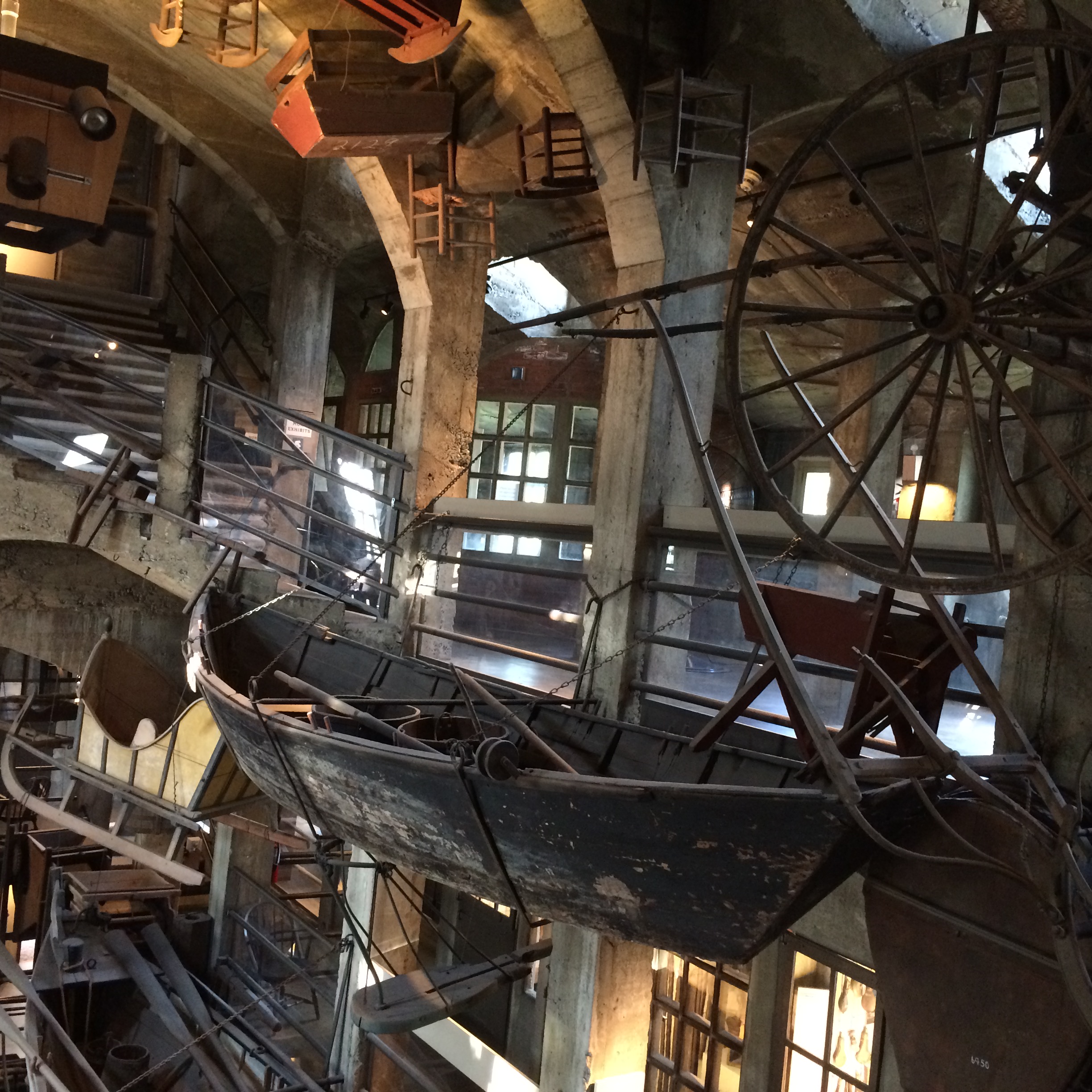
A dory, a sleigh and much else, all suspended from the ceiling and arches in the atrium.

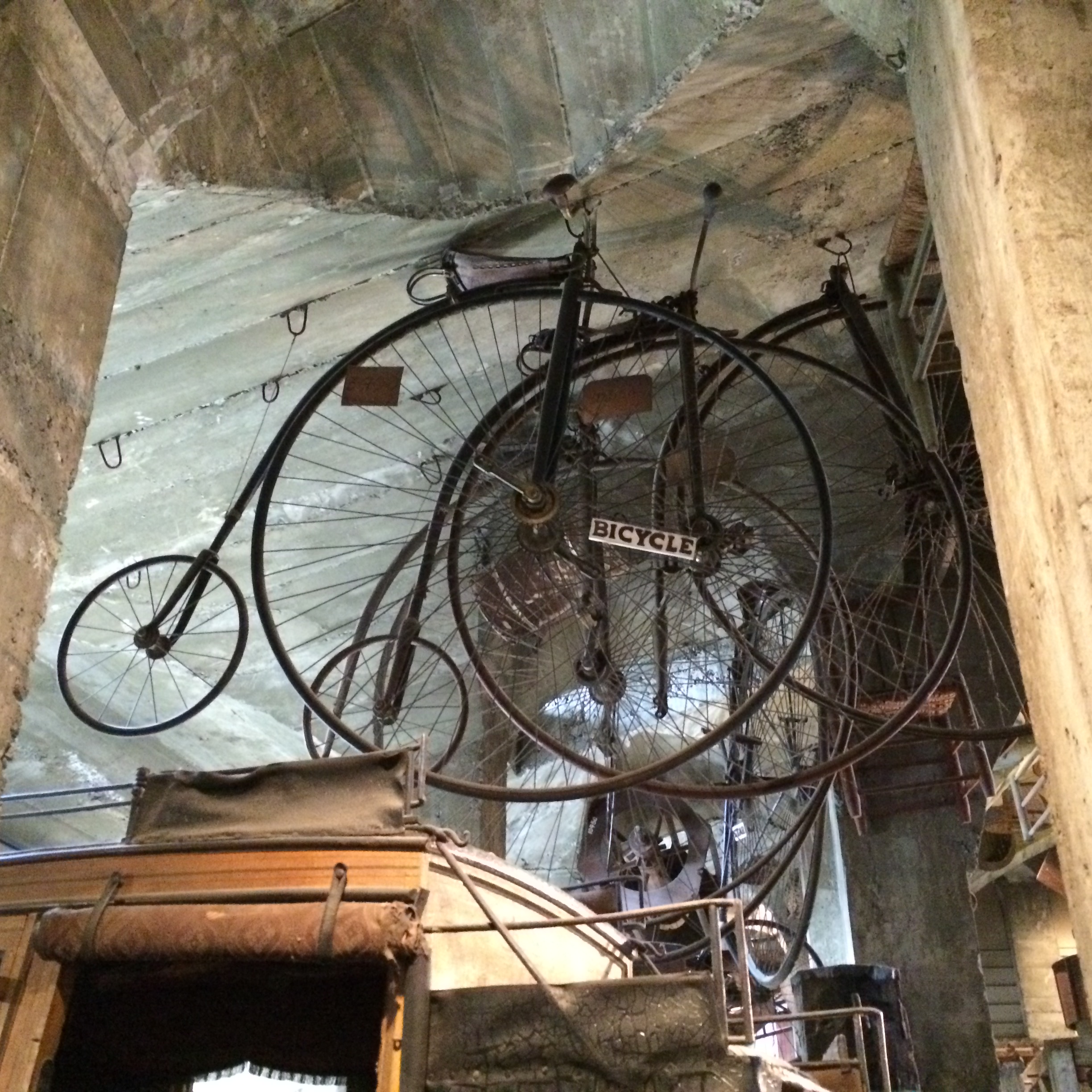
And the collection? “Incredible” is an understatement. Thirty thousand or more things to eyeball, many of which you’re not likely to encounter elsewhere. A well sweep (it drew water from wells in pre-pump days), a stagecoach, a hay rake with 24-inch-long teeth, components of a water power saw mill . . . not to mention smaller items such as tools used in hat making, tinsmithing, coopering, the healing arts, you get the idea. Mercer suspended some of the big boys (a dory and a whaleboat, for instance) and also some of the little guys from the ceiling and arches of the museum’s large central atrium, where the effect is hallucinatory. It takes long looks to figure out just what it is you’re looking at, despite the quite good signage. And Mercer apparently had a real sense of the whimsical, as chairs, chests, baby cribs and other artifacts I couldn’t easily identify dangle from the ceiling, often upside down.

The Hat Making room.
High Wheeler bicycles "floating" above a stagecoach.
High Wheeler bicycles “floating” above a stagecoach.

Most of the tools and results of America’s myriad trades, thankfully I suppose, are much more neatly displayed. They are divided up, by occupational use or other categories, in rooms, alcoves and niches that surround the atrium on six different floor levels.

Brown is the color of the day at the Mercer Museum, since so many of the objects on display, especially the hefty ones, are made of wood. Alan and Martine and Sandy and I took our time in the Mercer forest, but after two hours started to run out of gas. Alan said the museum is one of the best he has ever been in, and I concur. This trip to Mercer was my third or fourth. A fellow visitor, whom I chatted up slightly while we both gazed at eight-foot-tall High Wheeler bicycles hanging from the ceiling above a western Concord stagecoach, got it right when she said that “[Henry Mercer] makes hoarders look good.”

A few suggestions to the interested. Go, definitely go to the Mercer Museum. But make the voyage on a sunny day, as there is a paucity of artificial light there. And skip the dead of winter. The museum is unheated.

As mentioned hundreds of words above, the day following the Mercer experience featured temperatures just as disagreeable as its predecessor’s. Once again, an indoor attraction it would have to be. Where? (To be continued)

(Photos by Sandra Cherrey Scheinin. If you click on a photo, a larger image will open)

(If you enjoyed this article, then please don’t be shy about sharing it)

The Michener Museum Shines Yet Again

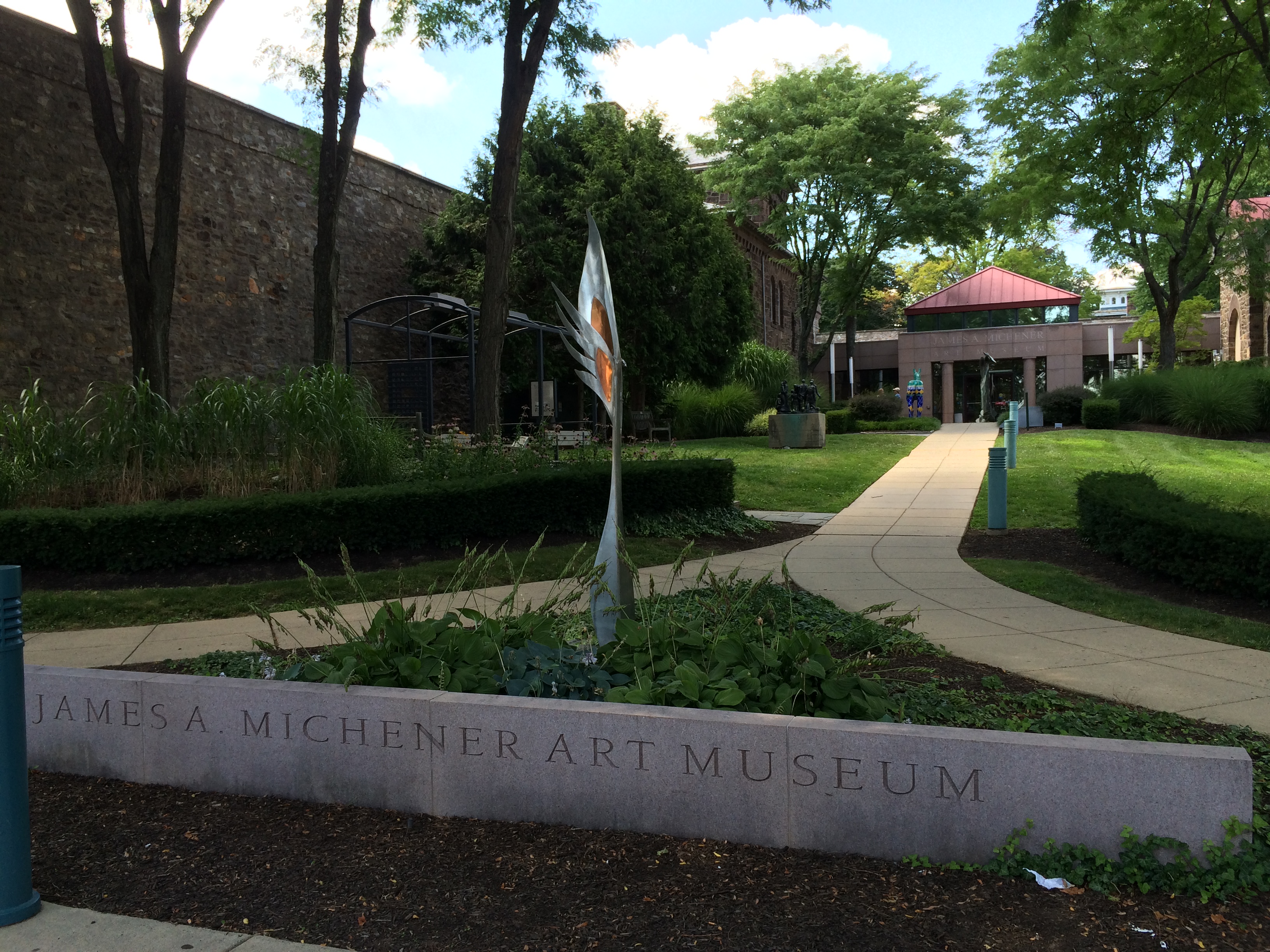
James A. Michener Art Museum.

One of the things I like about art shows is that they can surprise you (in a good way). It’s a gas when a museum or gallery curator comes up with a new slant or assembles a themed exhibition that makes you say “great idea!”  That’s part of the fun of going to places such as the James A. Michener Art Museum in Doylestown, PA. Not always, but often you can expect the unexpected there. Five years ago the Michener mounted a fascinating display of costumes worn by movie stars in famous movies. Arnold Schwarzenegger’s black leather jacket from The Terminator was in the house. So was Elizabeth Taylor’s gown from A Place In The Sun. That show caught me off guard by its coolness and inventiveness. Its idea seemed obvious, but only after the fact.

A similar sense of forward thinking surrounds a current Michener exhibition, the long-titled Iron And Coal, Petroleum And Steel: Industrial Art From The Steidle Collection. The works on view have been borrowed from their permanent home in State College, PA. There they reside within Penn State University’s Earth And Mineral Sciences Museum And Art Gallery, another mouthful. Hats off to the Michener for knowing of the off-the-beaten-track Steidle collection’s existence and for smartly organizing the paintings and their messages.

Edward Steidle (1887-1977) was a mover and shaker for many years in the worlds of mineral and petroleum extraction and use. An engineer, teacher and college administrator, he was dean from 1928 to 1953 of Penn State’s College Of Earth And Mineral Sciences. He also collected art, much of which he commissioned, that depicted the earth industries in action. The students at Penn State’s earth and minerals school were surrounded by examples of ores and extraction implements in the school buildings. Steidle, to my mind somewhat of a visionary in this respect, wanted artistic representations of the same also to be on view at the university.

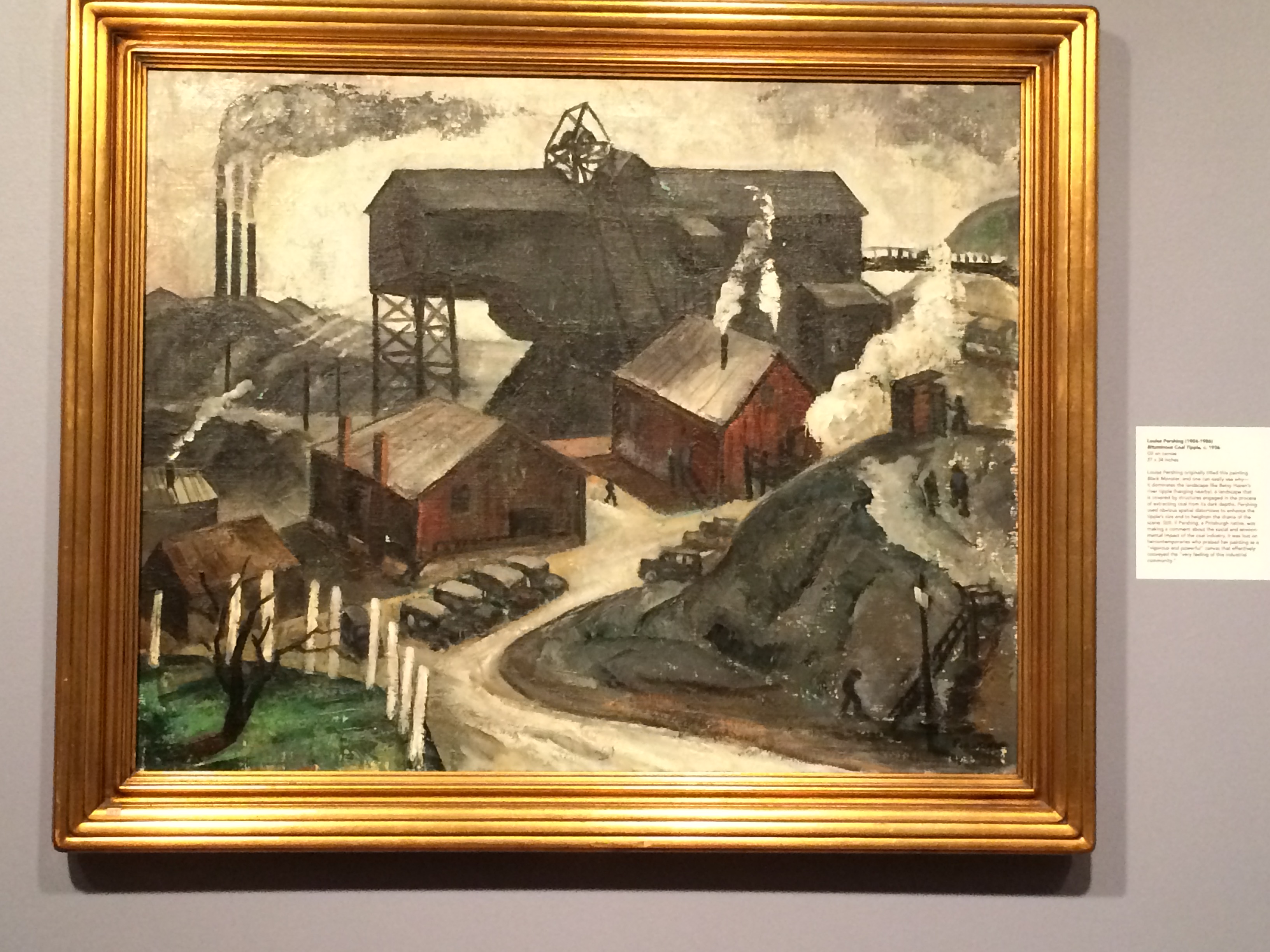
Bituminous Coal Tipple, painted by Louise Pershing in 1936.

Louise Pershing’s Bituminous Coal Tipple, from 1936, was the first work I grabbed onto at the Michener after quickly scanning the collection.  I loved its muted tones, the hulking mass of the tipple and of the hill in the foreground, the clouds of smoke issuing from all over the canvas, the lonely patch of green grass. Pershing mapped out her painting precisely and filled it with feeling.


Pershing’s oil painting represented a pretty good number of the ah-hah moments that I had in the Steidle galleries. What struck me first when I walked into the exhibit were the colors on the canvases. As with Pershing’s work, largely they were subdued or somber, the hues of earth and coal, of heavy equipment. As I walked around the galleries I noticed some other things. For one, nearly all the paintings were strongly designed and observant. Steidle had a good eye for art. Also, I was completely unfamiliar with the 40 or so artists in the show, excepting one or two. Post-Michener research confirmed that most of them had nice modest careers in their day but didn’t make it to the ladder of fame — only a few have garnered Wikipedia biographies. And I saw that a good number of the paintings were by women, not always the case on museum walls.

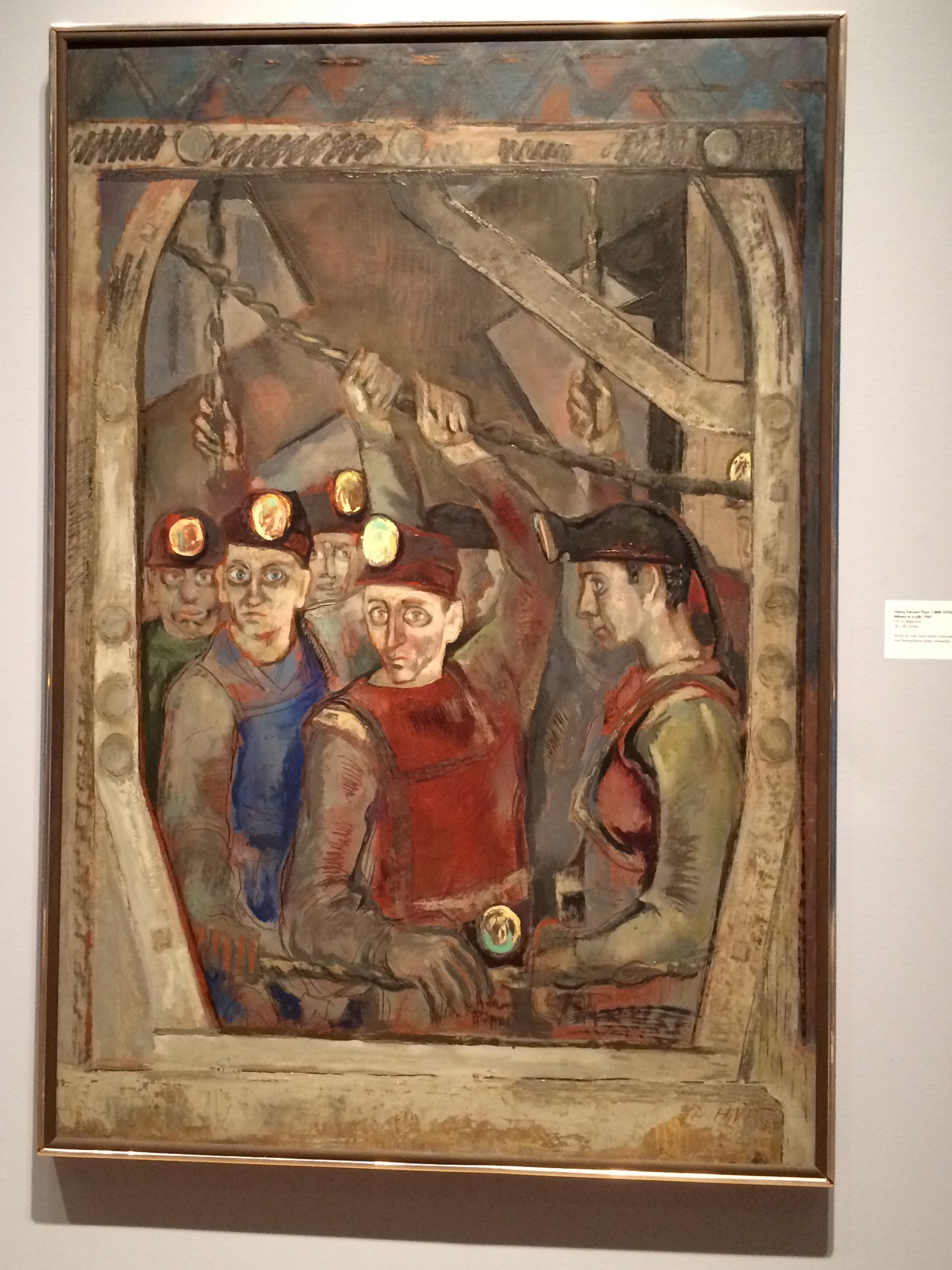
Miners In A Lift, painted by Henry Poor in 1947.

The Michener’s Steidle exhibition is a winner because it includes a boatload of works equal to Pershing’s Bituminous Coal Tipple, some maybe even better. Henry Poor’s Miners In A Lift, for example, which he painted in 1947. Five (or is it six?) coal miners are within the tight wooden cage, about to step outside the mine entrance, their shift over. Emerging from near-darkness into light, their eyes are hugely distended. The painting tells life stories, as the workers’ uneasiness about their dangerous occupation is on their faces. The confined framework of the painting brings power and immediacy to this work. It probably was my favorite at the Michener show.

The Steidle collection is said to be one of the best collections of industrial art in the USA. When these works were created, coal and steel were massively important industries in Pennsylvania and nationally. A few decades later they pretty much collapsed. The paintings are in that sense a time capsule of what once was. The historical aspect of the Michener show was presented clearly and didn’t make my eyes glaze over, the museum avoiding ponderous explanations on its informational placards. But, half-baked art aficionado that I am, I was more interested in the painterly aspects of the Steidle exhibit than in straight history.

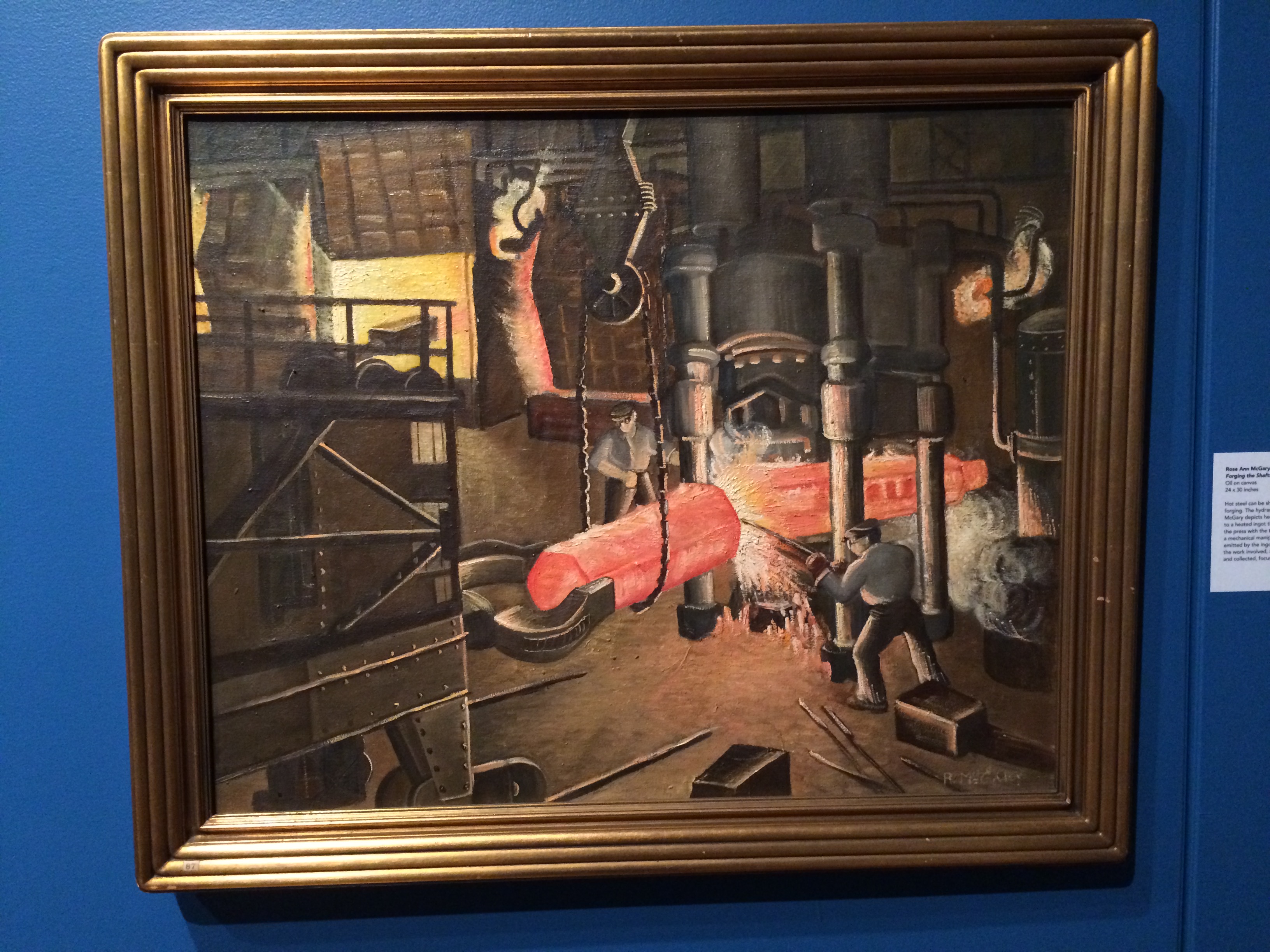
Forging The Shaft: Hydraulic Forging Press, painted by Rose Ann McGary in 1936.

Take, for instance, Rose Ann McGary’s Forging The Shaft: Hydraulic Forging Press. She painted this canvas in 1936. It shows workmen shaping red hot steel, and would have earned a thumbs up from the artist Fernand Léger and his fellow Cubism descendants. A carefully assembled construction of planes, cylinders and boxlike shapes, Forging The Shaft takes Cubism’s original color scheme of grays and browns and adds, just off-center, an explosion of pink. It is both a contained and dynamic painting.

The Steidle show closes on October 25. There’s still time to see it.

(If you click on any photo, a larger image will open)

(If you enjoyed this article, then please don’t be shy about sharing it)

One More Stop On The Road For Donna The Buffalo

My wife Sandy and I recently saw in concert an electric and eclectic band from upstate New York amusingly named Donna The Buffalo, and afterward I wanted to write about the show. Before sitting down to compose my magnum opus though, I mulled over my approach to the subject matter. The main question I posed to yours truly was: What should the subject matter comprise? Naturally, Donna The Buffalo needed to be a big part of the focus. But you know what? I knew little about DTB pre-gig, and possess only a cursory knowledge about the band now. We went to see them on little more than a whim. I’d heard of them, knew that their history was lengthy, and decided that taking a chance on them would be fun. When my mulling concluded, I was of the opinion that the path that brought me to this show also should be part of the story.

I think of myself as a music lover. I listen to a wide variety of genres and have been to well over 1,000 concerts during my earthly tenure. Yet, these days I feel like a tyro when I listen to radio stations or read music-related websites, magazines and newspapers. I mean, more often than not, I am unfamiliar with the musicians. To me, it is just incredible how many solo performers and bands are out there playing the game. In the USA alone, there must be 50,000 professional musical acts, maybe more. In my younger days I thought that I had a handle on a fair percentage of music makers. No longer, not now in the Internet Age when anybody and everybody can make his or her presence felt.

And so, ten or more years ago I largely gave up on trying to keep up with the avalanches of musicians plying their trade. It was just too much work, too exhausting. Better, I think, to stay in tune to a lesser extent, and also to take gambles and hope for the best. As with Donna The Buffalo.

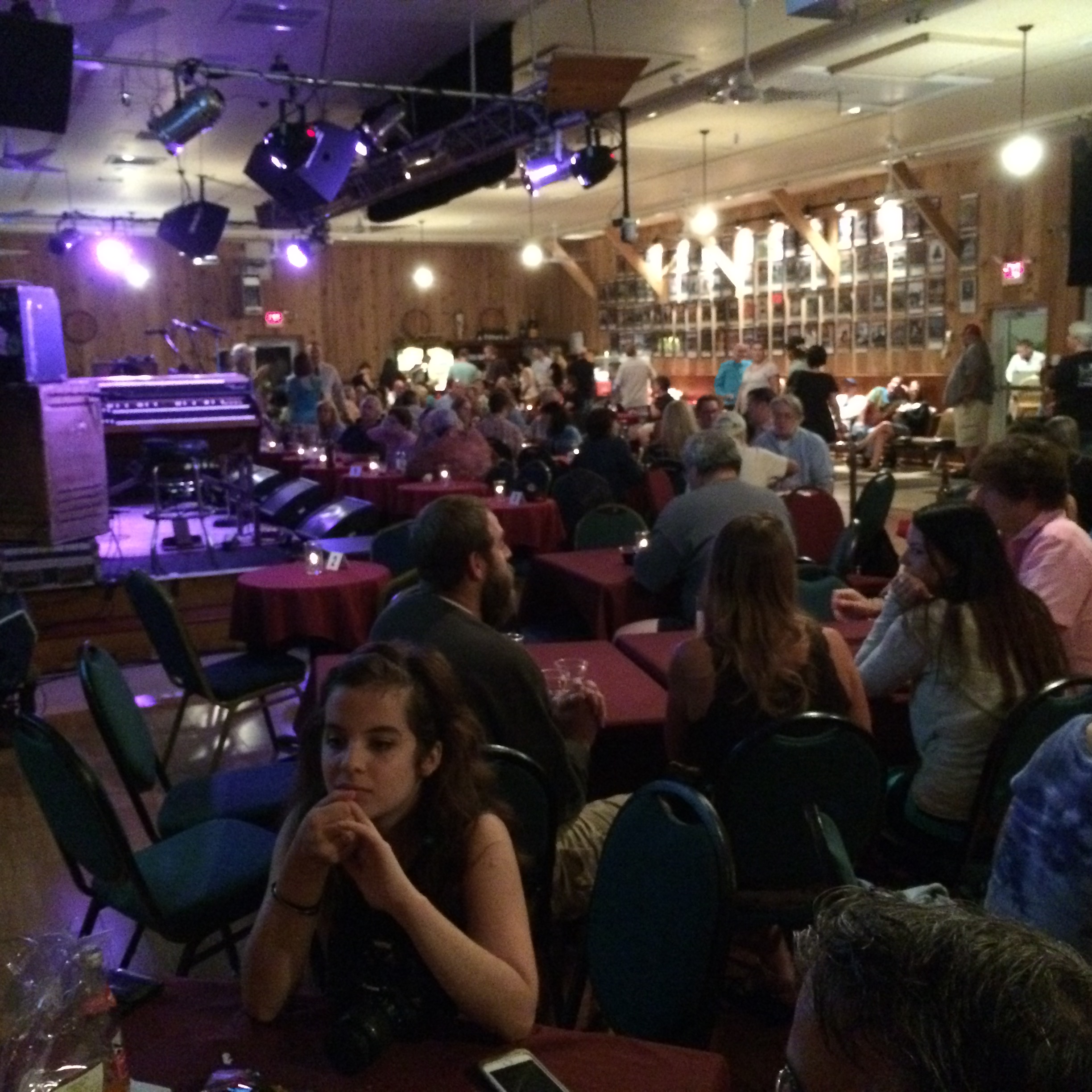
New Hope Winery, one half hour before showtime.

Donna The Buffalo appeared at New Hope Winery, a venue in the Philadelphia suburbs that Sandy and I discovered last year and have become very fond of. The joint was packed with 200 or more souls when DTB took the stage. A front-and-center area, where tables normally would be placed, had been cleared to create space for dancers. I looked over the crowd. At some previous visits to the Winery I’d seen demographics heavily tilted to the 50 and above bracket. Not this night. DTB had tipped the age scales downward substantially. Twentysomethings and thirtysomethings abounded. There even were a few very young children in the room.

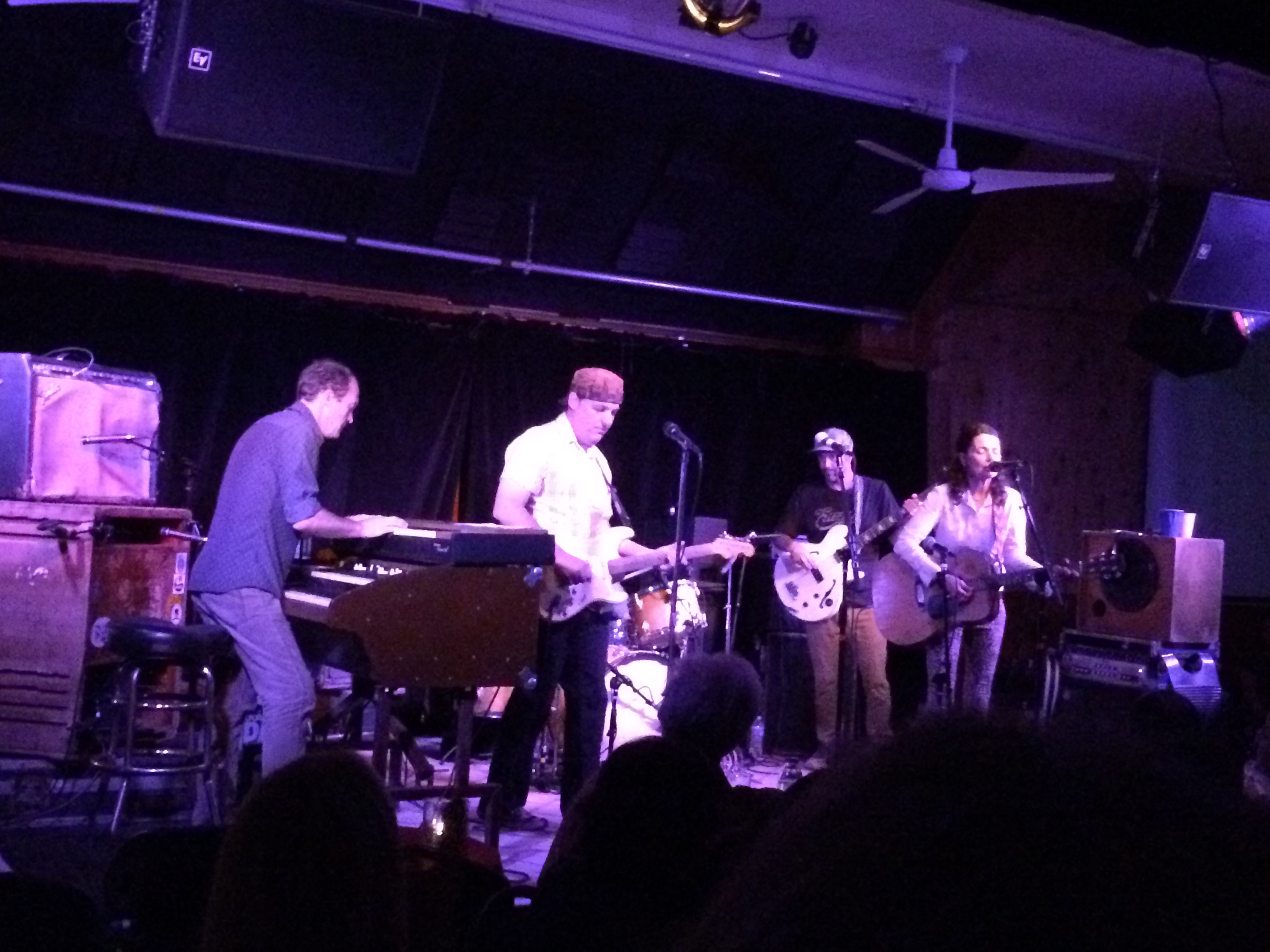
Donna The Buffalo in action at New Hope Winery.

What a band. Not having known what to expect, song number one told me that I had chosen wisely by attending this concert. A quintet, DTB was tremendously tight and intuitive all night long, and possessed a large catalog of songs to choose from. They held the stage for two hours and 10 minutes, filling their long set with 22 songs and little between-tune chatter. I was standing just behind the dance section, which was crowded with bobbers and weavers. After two or three songs, I too began to go with the flow. And kept going. But I was bouncing alone — Sandy stayed at the extremely stage right table to which we had been assigned. Her view of the musicians from there was lousy, but in the dance area she wouldn’t have had a chance seeing over anyone’s head. Mea culpa.

DTB has blended a bunch of musical styles into their sound: rock, country, zydeco, reggae. Rock being the dominant force. On some songs (What Money Cannot Buy; Love and Gasoline) the power was relentless, Stonesy, irresistible. On others (The Ones You Love; Conscious Evolution) the groove expanded, contracted, widened once again, giving no mercy to the audience. All you had to do on those expansive numbers, Grateful Dead-ish and Allmans-ish as they were, was close your eyes to be transported to a higher and mind-opening plane. Yes, Donna The Buffalo was that good.

DTB began its journey in the late 1980s, picking up steam in the mid 90s, and in the current century has become a decently successful and popular unit. They tour like crazy and have amassed a loyal national fan base known as The Herd, a mini version of the Deadheads. Two original band members (Tara Nevins and Jeb Puryear) remain. Tara and Jeb compose most of the group’s songs, usually individually. At the Winery, each took the lead vocal spotlight on his or her compositions. Jeb opted for the laidback Jerry Garcia approach to singing and handled electric guitar sizzlingly. He’s a guitar hero unknown to 99% of Americans. Tara’s sweet and gentle mountain drawl pleased me much. And she was the band’s multi-instrumentalist. Fiddle, acoustic guitar, accordion, tambourine and scrubboard (for the zydeco numbers) were her arsenal.

A bunch of musicians have played alongside Tara and Jeb since DTB’s inception. The three current guys have been around for several years. Mark Raudabaugh killed on the drums. Kyle Sparks was all over his electric bass’ strings, drawing out lines that percolated and sang. And organist David McCracken was immense. So many times in so many bands, especially the poppier or atmospheric ones, the keyboard player is on the lame side, somehow fooling the audience with pretty chords and simplistic runs. Not McCracken. He can play. He jabbed, moved fast, reached for the skies, whatever it took.

So, how many acts that I’ve never heard of or barely heard of, and that I’d find to be great, are on the circuit? The question is a puzzle, the answer unknowable. Which makes music and, similarly, much else of life, delightful.

(Photos by Sandra Cherrey Scheinin. If you click on a photo, a larger image will open)

(If you enjoyed this article, then please don’t be shy about sharing it)

Puck’s The Place (A Venue And Concert Review)

I’ve written several times on this blog about Doylestown, PA. In the extensive suburbs of Philadelphia, Doylestown is perhaps the prettiest, the most charming, the most interesting village. I’m referring not to Doylestown’s generic housing developments, but to its quite large historic district. This section is worth a visit, and for many people, such as my wife Sandy and me, multiple and regular hellos.

Puck's outstanding neon sign.
Puck’s outstanding neon sign.

You like art? Go to Doylestown’s high-quality Michener Museum. You like non-blockbuster movies? Try the County Theater. You like artifacts from America’s pre-Industrial Revolution past? The astonishing Mercer Museum was built for you. And if you are a popular music buff, the place to frequent in Doylestown is Puck, a spot with chic indoor and outdoor eating areas and, incongruously, a grungy cellar where singer-songwriters and rock and country and funk bands take the stage a few times each week.

I’ve been to Puck’s music room 15 or more times over the years. Puck’s management brings in a wide array of musicians, a few of whom are touring artists with decent-sized national followings. But generally the players at Puck are little-knowns from Greater Philadelphia. I once had a small career as a music presenter for a summer music series in Philadelphia’s Chestnut Hill neighborhood (see my article The Music Biz And I). It was at Puck that I found several local acts (Cheers Elephant; Toy Soldiers; The John Byrne Band) who knocked my socks off and whom I ended up booking for the series.

What I like about Puck’s music room is its casual and boho vibes. Aside from the handsome bar, the space has been inspired by Frat House Finished Basement Magazine. The mottled floor could be mistaken for a Jackson Pollock painting. There are pillars that obstruct views of the stage. My kind of place.

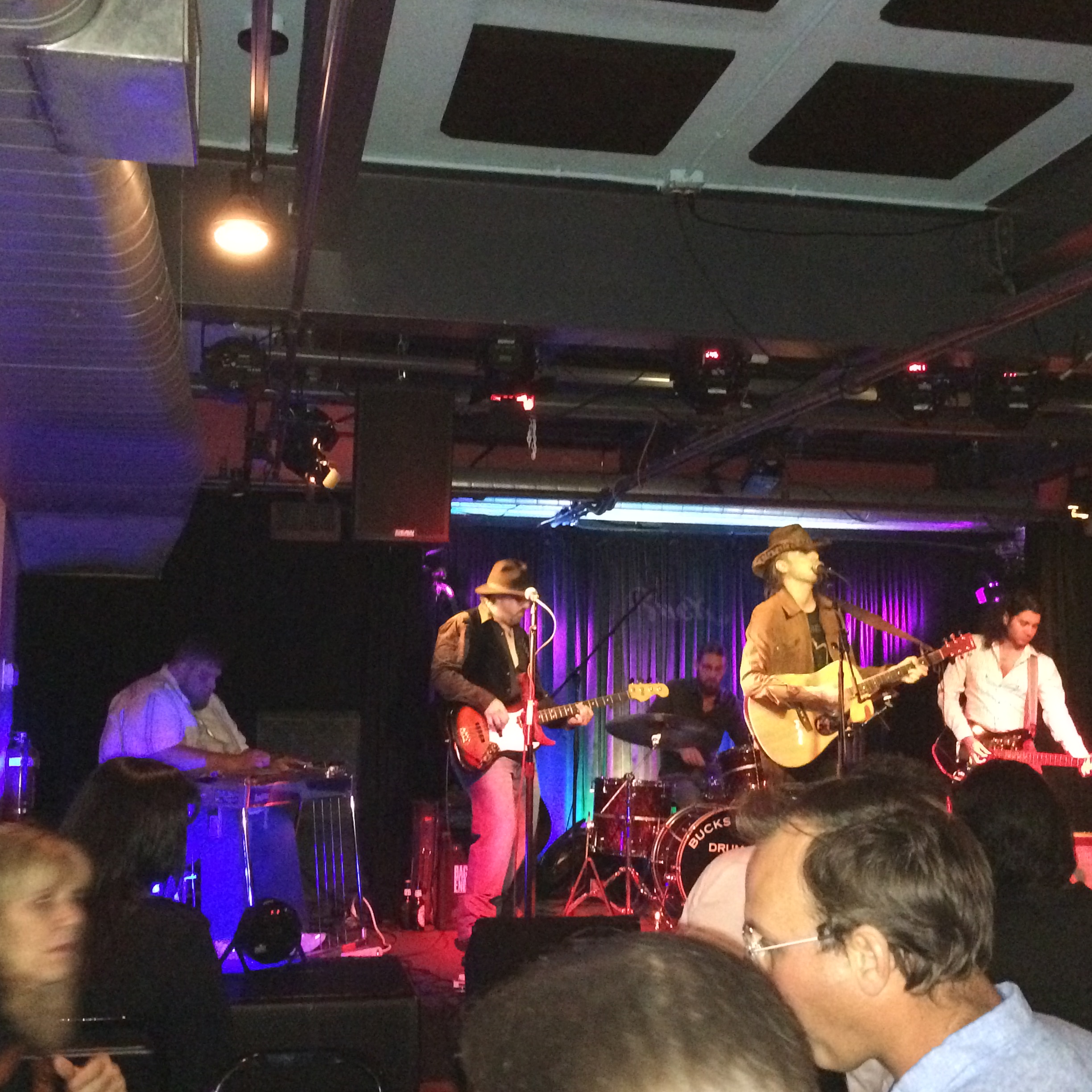
As for the music, I tend to approach Puck with an open mind, with few expectations, and usually everything works out just fine. Many times I find the music to be good but nothing special. And sometimes, as with Cheers Elephant et al., I’m wowed. On a recent Saturday night, Sandy and I both were floored by Grady Hoss And The Sidewinders, the opening act of a double bill. I’d never heard of them, had little idea how they would be. What they were was tight and exciting, a country band in the classic mode, with some latter day tweakings. Anyone who favors Waylon Jennings, Gram Parsons and Dwight Yoakum would find good fun with Grady Hoss And The Sidewinders. For me, their 45-minute set was 45 minutes too short.

Grady Hoss And The Sidewinders, as I’ve learned from post-concert research, is a Philadelphia area band just starting out. They are working on a maybe-soon-to-be-released EP. Their Puck engagement, much to my amazement, was their public debut. Lance Davis, the leader, apparently had a fairly long career as an engineer and producer and rock musician, but for various reasons put all of that on an extended hiatus a number of years ago. In 2014 he emerged from his musical hibernation with country tunes on his mind. As the band came together, Lance decided that each member needed a colorful stage name reminiscent of the kinds of names (Ernest Tubb, Buck Owens) that once populated the country charts. Voilà, Lance adopted Grady Hoss as his moniker. The others in the group were dubbed Bucky Vennerson (in real life, Vince Federici), Dusty Reigns (Dan O’Neil) and Earl Smokesman (Charlie Heim).

Grady Hoss And The Sidewinders on stage at Puck.

Lance and pals played nine songs at Puck, eight of them originals. The songs were good. Lance’s vocals were heartfelt, his high notes reverberating with longing or regret, as they should in tales drawn from country music’s traditional wellspring. Lance strummed an acoustic guitar all evening, his face half-hidden beneath a big Stetson hat, and The Sidewinders created a rich palette of sounds around him. I knew I was in for an evening of treats right from the opening moments of the opening song, Rivertown. The chuga-chuga Johnny Cash-like beats from Heim’s drums and O’Neil’s electric bass built a strong template. Federici’s guitar licks ignited and pushed. And guest pedal steel guitarist Dave Van Allen’s poignant statements were as Nashville as you can get.

Two head-nodding honky tonk numbers followed Rivertown. I didn’t catch their titles, but their themes were classic country: lost souls and drinking. “Lord, I don’t know where I’m going/But I just want to get there” came from the first, and “I’m going back to the bottle/Back out in the rain/Back to the girls I need to see” from its successor.

So, how were these guys able to sound so good in their first-ever club performance? I imagine it’s because they’ve practiced a whole lot, and because they have heaps of talent. I can see this band going places. They without doubt have the chops, the look and the laidback attitude. What they will need to make it, if indeed making it is part of their game plan, is a bunch more original songs. As I discovered at home a few days later, two of the eight originals that I heard at Puck predate GHATS. They come from a rock album, The Hovercraft Diaries, that Lance released nine years ago. Maybe Lance possesses much new countrified material that he didn’t reveal at Puck. If not, I hope that composing sessions are on his agenda. Grady Hoss And The Sidewinders are a band about which I’d be happy to say one day, “I saw them when . . .”

(Photos by Sandra Cherrey Scheinin. If you click on a photo, a larger image will open)

(If you enjoyed this article, then please consider sharing it)

A Meditation On Pizza

Pizza, pizza, pizza. For how long have you been a part of my life? Why do I adore you so? Have my feelings about you changed over the years? And most importantly, where the heck can I find really good examples of you? These are questions I am about to answer. They also are questions to which I will return in future articles on this blog.

Some people write about politics or religion or nanomechanics. I have yet to address those and other heady subjects, and probably never will. I don’t have the smarts for that. I’m not too sure I have the wattage to say anything dynamic about pizza either, for that matter. I’m a preschooler compared to the Einsteins out there whose knowledge of and insights into the world of pies are dazzling. But I’m not embarrassed to lay out some thoughts and observations. Take it away, Neil.

Pizza is my favorite food and has been for 40 or so years. I grew up on Long Island, and it was there in the early 1960s that my pizza habit began. The habit grew, and somewhere in the early 1970s became pretty well an obsession. I was living on Long Island for part of that decade, and in Manhattan and Philadelphia at other times. In all of those locales the pizza was similar. I, and I’m sure most people, didn’t spend a lot of time discussing pizza in those days. Basically, you ate it and you liked it. There were only two varieties back then, regular (a round pie that I suppose now would be referred to as New York style) and Sicilian (a square pie whose crust was thicker and chewier than the regular pie’s). You could get mushrooms or pepperoni with the former if that was your wont.

By the late 20th century though, pizza became a complicated subject with a nomenclature that I can’t keep straight. New York style, Chicago style, Neapolitan, Margherita, thin crust . . . on and on it goes. And then there’s the whole matter of toppings. We live in an age when figs, pineapple, you name it, are fair game to bake atop a pie. For ease of discussion I’m going to keep this essay focused on the type of pizza I like best, the humble round darling composed of crust, cheese and tomato sauce. No toppings.

In the 1970s regular pizza seemed a-ok to me. It was chewy and floppy, often heavily laden with cheese and tomato sauce and usually dripping with oil. That variety is alive and well to this day. Its top makers, such as Di Fara (in Brooklyn) are truly famed. I’ve never had a Di Fara slice, but I gather that that establishment has taken the regular (aka New York style) pie to a new level, probably by using higher quality ingredients than those I grew up with. I wish that Di Fara would open a branch near me. While I wait two or three millennia for that to happen, I’ll instead continue to visit a couple of places in the Philly burbs that make New York style pizza similar to what I devoured years ago. The quality varies from visit to visit at these parlors, but I can’t complain too much. I like their wares fairly well overall, though I now have better alternatives.

There’s something about pizza that strikes a chord with my elemental self. It’s not a fussy or complicated product. The three main components seemingly were created to join blissfully together to make taste buds swoon. But as I’ve learned over the last 20 years, a great gastronomic marriage can become even greater. In other words, pizzas better than those I knew in my youth and middle age exist in this world. Di Fara’s baby is an example. In the USA, pizzas have reached rarified heights of deliciousness.

I’m not talking about all pizzas by any means. Most American pies still are very ordinary, maybe way too heavy on the cheese or cursed with a cardboard crust or hampered by an indifferent tomato sauce. However, new pizza orientations have taken hold in many establishments, and the one I’m especially all for is this: Thinner and charred crust. High quality cheeses and tomato sauce in balanced proportions. Oil in moderation, not cascading from each slice like a waterfall. This is not New York style pizza, though I’m a bit uncertain as to the name(s) it has been given by the pizza intelligentsia.

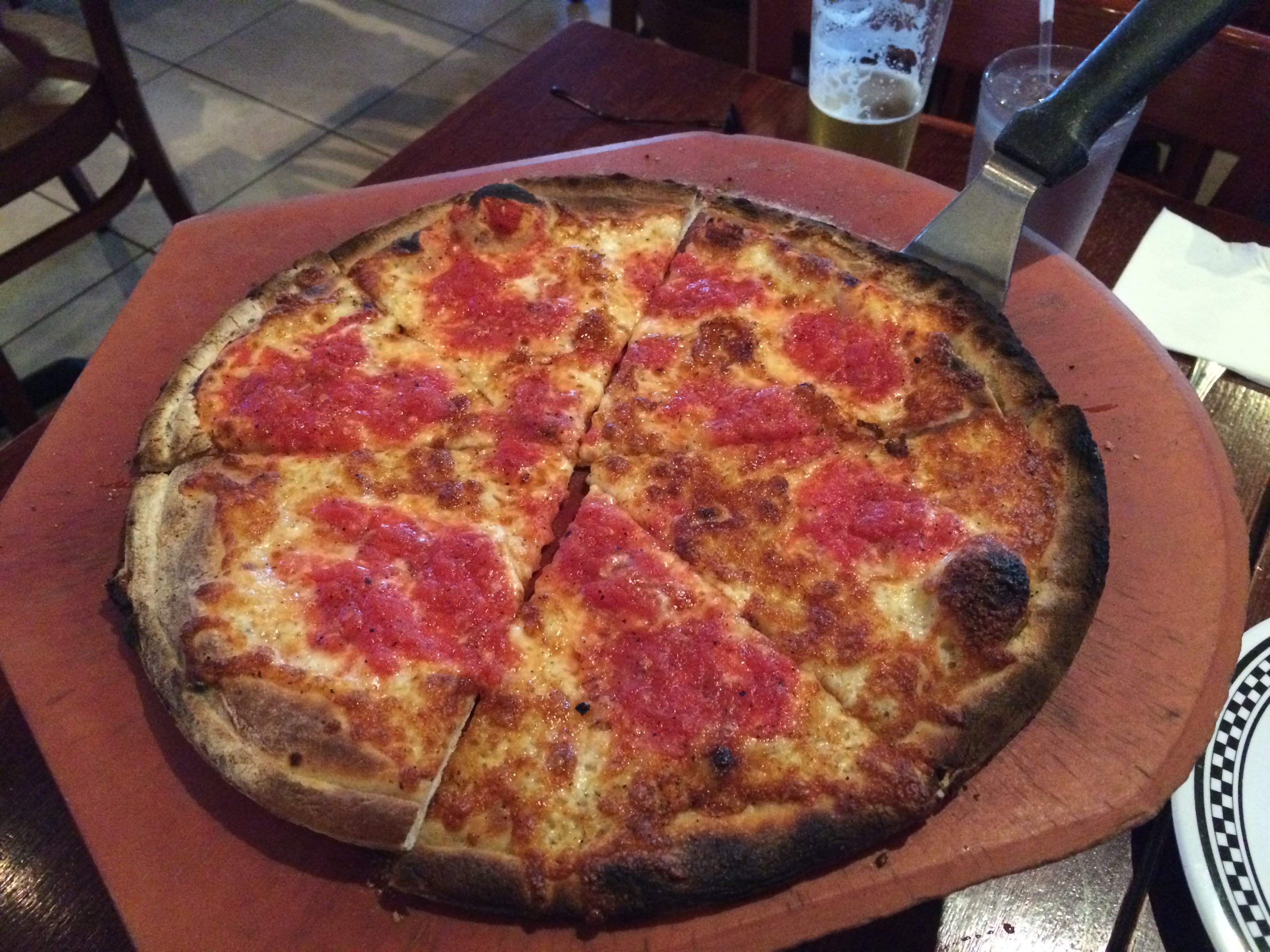
The above paragraphs are a long lead-in to my recent visit to Anthony’s Coal Fired Pizza, a chain with a branch in Horsham, PA, not far from my home. My wife Sandy and I dropped in on a hot August Saturday night. We’d been there before, each previous visit knocking our socks off. I know of a few places in Philadelphia with pizzas that match my updated criteria for excellence. In the burbs, Anthony’s is the one and only that I’ve discovered.

Our lovely salad at Anthony's Coal Fired Pizza.
Our lovely Italian salad at Anthony’s Coal Fired Pizza.

Anthony’s has a small menu. I’d guess that pretty much everything on it is swell. Sandy and I, though, have had only the Italian salad and what Anthony’s calls its traditional pizza. Both are so good we order them again and again. The other night the salad was fine as usual. Crisp lettuce, chick peas, tomato and hard boiled egg wedges, all glazed with a tart light vinaigrette dressing. Simple and satisfying.

Our majestic pizza pie at Anthony's.
Our majestic pizza pie at Anthony’s.

The pizza came on a flat wood throne. Visually the pie was beautiful — you have to love those darkened areas, the basic color palette. Tastewise, beautiful too. The cheeses, mozzarella and romano, were earthy, the plum tomato sauce bright and lively. And the crust’s charcoal bite brought me joy. I’m an easy guy to please, given the right circumstances. At Anthony’s I was a happy eater. Good salad and superb pizza. And a hoppy brew to wash them both down, Arcadia Brewing Company’s Cheap Date Pale Ale. There was nothing more I needed or desired.

I’ve previously written about Capofitto, a fine joint in Philadelphia serving up blackened soul-satisfying pies. I know that pizza greatness extends far beyond Capofitto and Anthony’s. Fussy me will continue to search for pizzas way above the pedestrian, and will report back now and then as I discover them.

(Photos by Sandra Cherrey Scheinin. If you click on a photo, a larger image will open)

(If you enjoyed this article, then please consider sharing it. Thanks.)

Sunday In The Park With Duane (Jazz Concert Review)

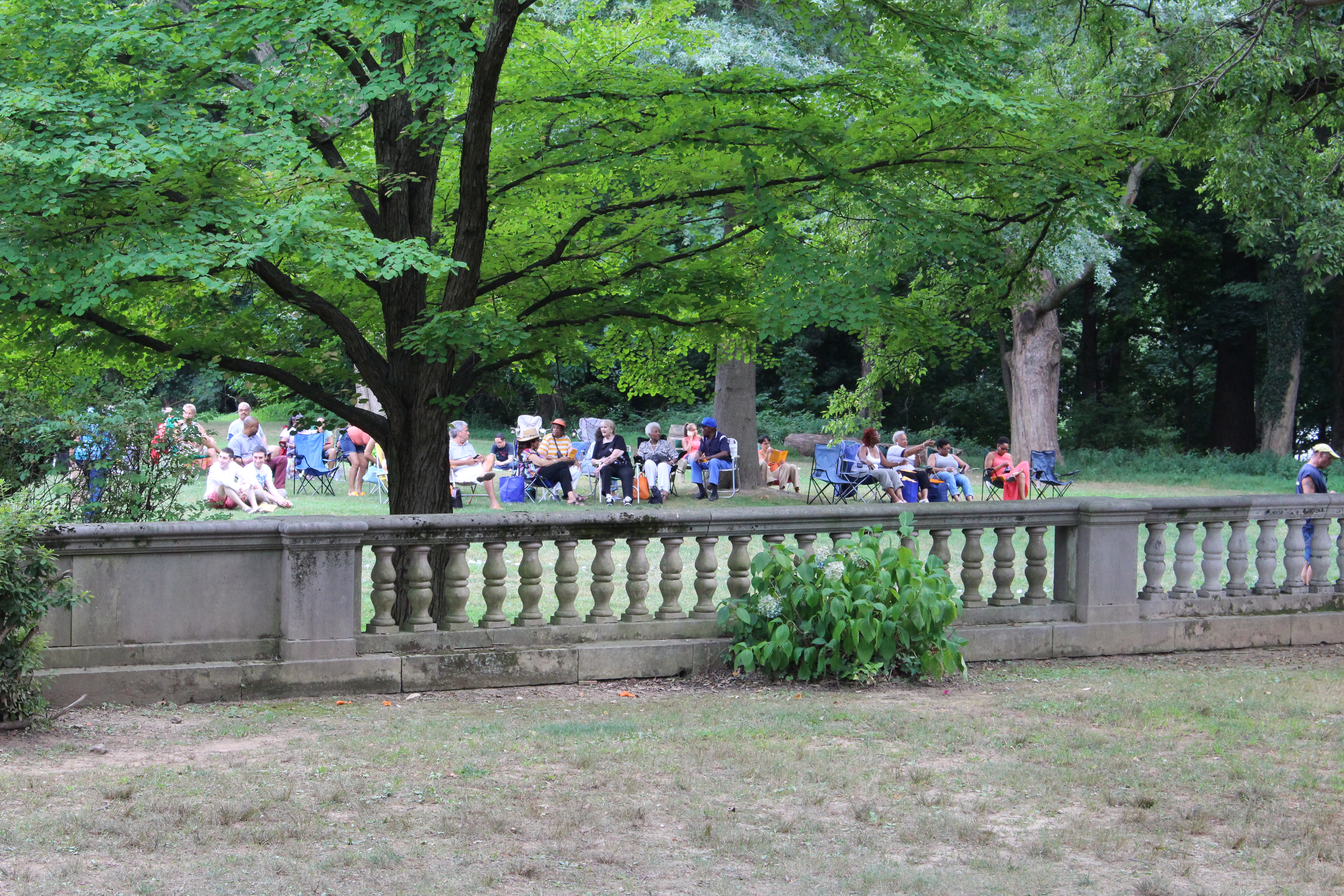
Some outdoor summer music series are better than others, but not everyone would agree on which are the good ones. Personally, I most like those that have an eclectic mix of musical genres and that also avoid tribute bands. Luckily for me and my tastes there are a number of summer series in the Philadelphia region that hire the kinds of acts that I’m a sucker for. One of those is Cheltenham Township’s Concerts In The Park, whose shows are staged in the sprawling and meticulously maintained Curtis Arboretum. There, a mile or two from Philadelphia, musicians mount a modest stage at 5 PM on five summer Sundays. They and their audiences are surrounded by, and are under, many large trees.

I’ve been impressed for years by some of the Cheltenham bookings. In 2014 my wife Sandy and I, accompanied by two of our friends, went to the Curtis Arboretum to see and hear Geoff Muldaur, who has been crisscrossing the USA and other countries as a musician for decades. Geoff began to make his name in 1963 as a member of the Jim Kweskin Jug Band. And there he was, so many years later, performing his folky-bluesy-jazzy repertoire on acoustic guitar at the arboretum.

The pre-show crowd at Curtis Arboretum.

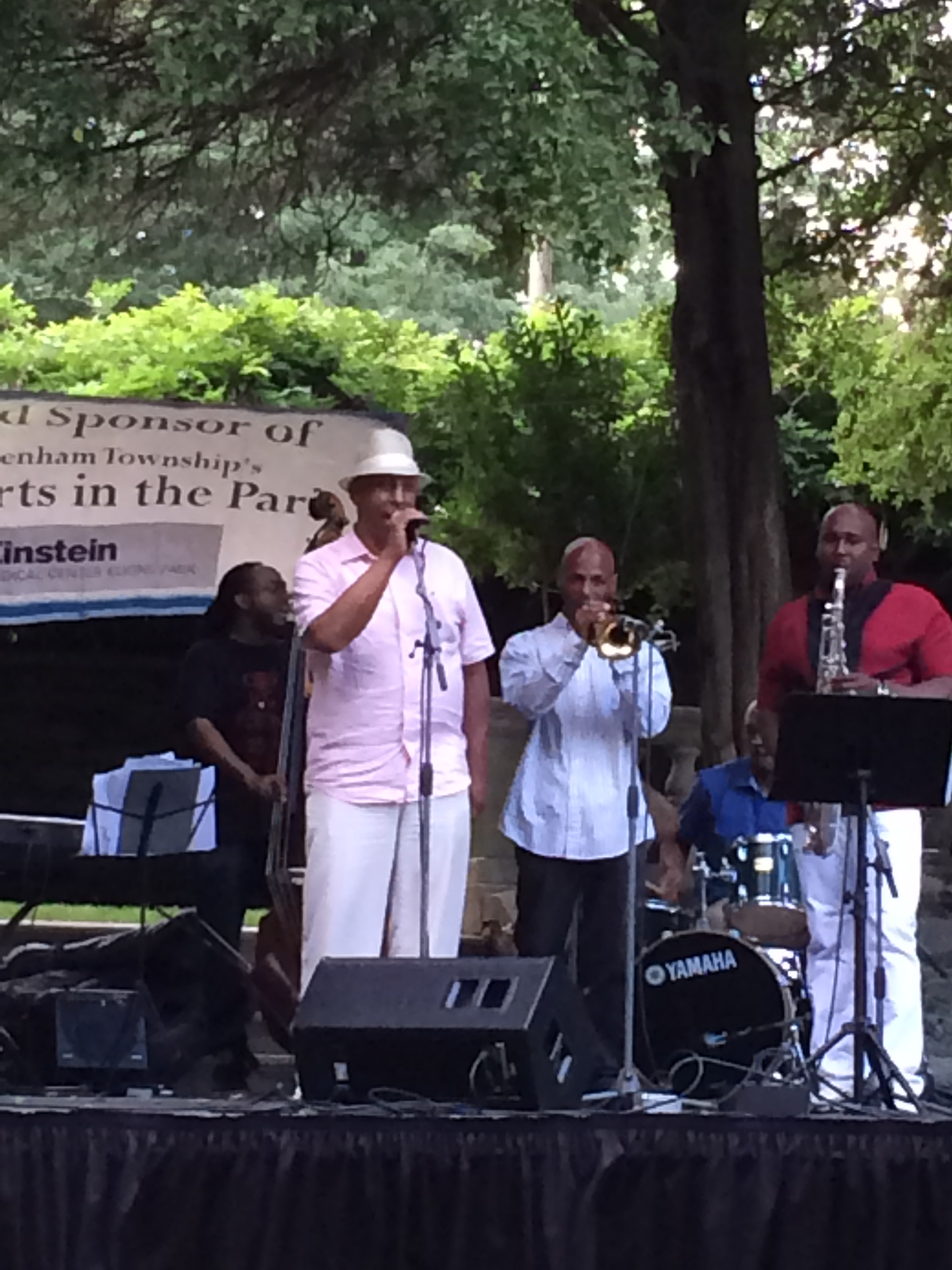
On a recent Sunday, Sandy and I, with the same two friends, sat beneath some leafy limbs at Curtis to take in another example of thinking-outside-the-box scheduling, the Duane Eubanks Quintet. This jazz outfit is more commonly witnessed in clubs. Somehow I didn’t hear Duane say from the stage that he wasn’t used to playing at settings such as Curtis, but my friend assured me that he did. Eubanks, a suburban New York City-based trumpeter with a first-rate résumé, brought along with him four fine and established members of the jazz world.

Duane Eubanks comes from a very musical family. He grew up in Philadelphia’s Mt. Airy section, so his Curtis gig wasn’t far from his childhood home. His pianist mother, who gave lessons to prominent jazz players, helped spark a musical flame in some of her children. Look at the results: Duane’s oldest brother, Robin, is a well-regarded jazz trombonist. Duane’s second-oldest brother, guitarist Kevin, became famous as the band leader for The Tonight Show With Jay Leno. Of the four male Eubanks offspring, only Shane, Duane’s twin, is not motoring on the professional musician highway.

Duane plays trumpet really well. Throughout the Curtis show I gave a mental thumbs-up to his imagination and clean lines. He wasn’t flashy, didn’t spend inordinate amounts of time swirling around in his instrument’s nosebleed zone. What he did was this: He spun worthy tales with his horn, filling his solos with strong ideas, and balanced that with terrific technique. I don’t think I had ever seen him in concert before. I was impressed.

Duane Eubanks Quintet at Curtis Arboretum.

Eubanks and company primarily stayed in the hard bop bag, with two excursions, which I wasn’t crazy about, into the borders of smooth jazz territory. The tough and driving stuff and the one unadulterated ballad, though, were terrific and had my head swaying. On board with Duane was tenor saxophonist Abraham Burton. Burton’s robustness and energy owed debts to John Coltrane, his more meditative moments to Dexter Gordon. David Bryant was a whiz on electric keyboard, an attentive musician filling spaces deftly when Duane or Abraham soloed, his fingers flying fast and furious when he himself took the lead. Corcoran Holt, on upright bass, helped power the band with notes that sometimes boomed, sometimes cooed. I thought that he was great. And the in-demand drummer, Eric McPherson, was all over his kit, rat-a-tat-tatting on his snare drum, whacking à propos accents on his cymbals. I didn’t particularly enjoy his work on the two aforementioned smoothed-out numbers, but let’s put them aside. I already have.

The tune I maybe liked the best was the first set’s opener, a Eubanks original titled Slew Footed. It went on for 20 minutes. Slew Footed was a hard romp, a controlled yet convulsive affair. Each musician took long propulsive solos. Each listened carefully to what the others were saying. The onstage musical conversations were animated and keen.

Guest vocalist TC III with Duane Eubanks' group.
Guest vocalist TC III with Duane Eubanks’ group.

Halfway through the second set Eubanks brought to the stage a guest vocalist, TC III. I used to see him perform at venues all over Philadelphia, but hadn’t in 20 or more years. He sang on two songs. TC III took hold of the first tune, Moanin’, from its opening notes. I had forgotten just how fine a singer he is, bluesy and direct. Think Eddie Jefferson. Think Joe Williams. Moanin’, a gutsy marriage of the blues and gospel, was a staple of Art Blakey And The Jazz Messengers. I loved the way that TC III and the Eubanks group belted it out.

I’m a stickler for good audio projection. Too often at concerts, in venues small to enormous, the sound quality doesn’t cut the mustard. At Curtis the sound guy got it right. Every instrument, and TC III’s vocals, came through loud and clear. There was no muddiness in the mix. All of this added to my enjoyment of the show. As did the weather. For much of the late afternoon and early evening, dark clouds massed and inched along far overhead. I was certain that a downpour was in the works, especially after a dozen or so raindrops plunked me around 6:30 PM. Amazingly though, not another drop fell after that.

(Photographs by Sandra Cherrey Scheinin. If you click on a photo, a larger image will open)

(If you enjoyed this article, then please consider sharing it. Thanks.)

Putting Up The Good Fight: A Review Of Mr. Holmes

Arthur Conan Doyle published his final Sherlock Holmes opus in 1927. Copyright laws in Great Britain and the USA allowed him and subsequently his heirs to collect gazillions of pounds and dollars in royalties and fees since then, but the flow of those monies has become a trickle. Wikipedia tells us that the last of the copyrights expired in Britain in 2000. In the States, a handful of the final Holmes stories still are under copyright, but all the rest have fallen into the public domain. And a 2014 federal appeals court ruling stated that the creators of books and movies and television shows inspired by Sherlock no longer are obligated to pay licensing fees to the Conan Doyle estate, whose members must be grinding their teeth. I mean, is there a more enduring fictional figure than Holmes, the masterful detective? He’s hard to miss. Robert Downey Jr. starred as Holmes in two big screen productions from the 2000s, and a third undoubtedly will be heading our way in the near future. And two Holmes series currently are alive and well on the small screen: In the aptly named Sherlock, Benedict Cumberbatch portrays a modern day version of the great man in London for BBC television. Also set in the present day is Elementary, a New York City-based Sherlockian study, this one on CBS.

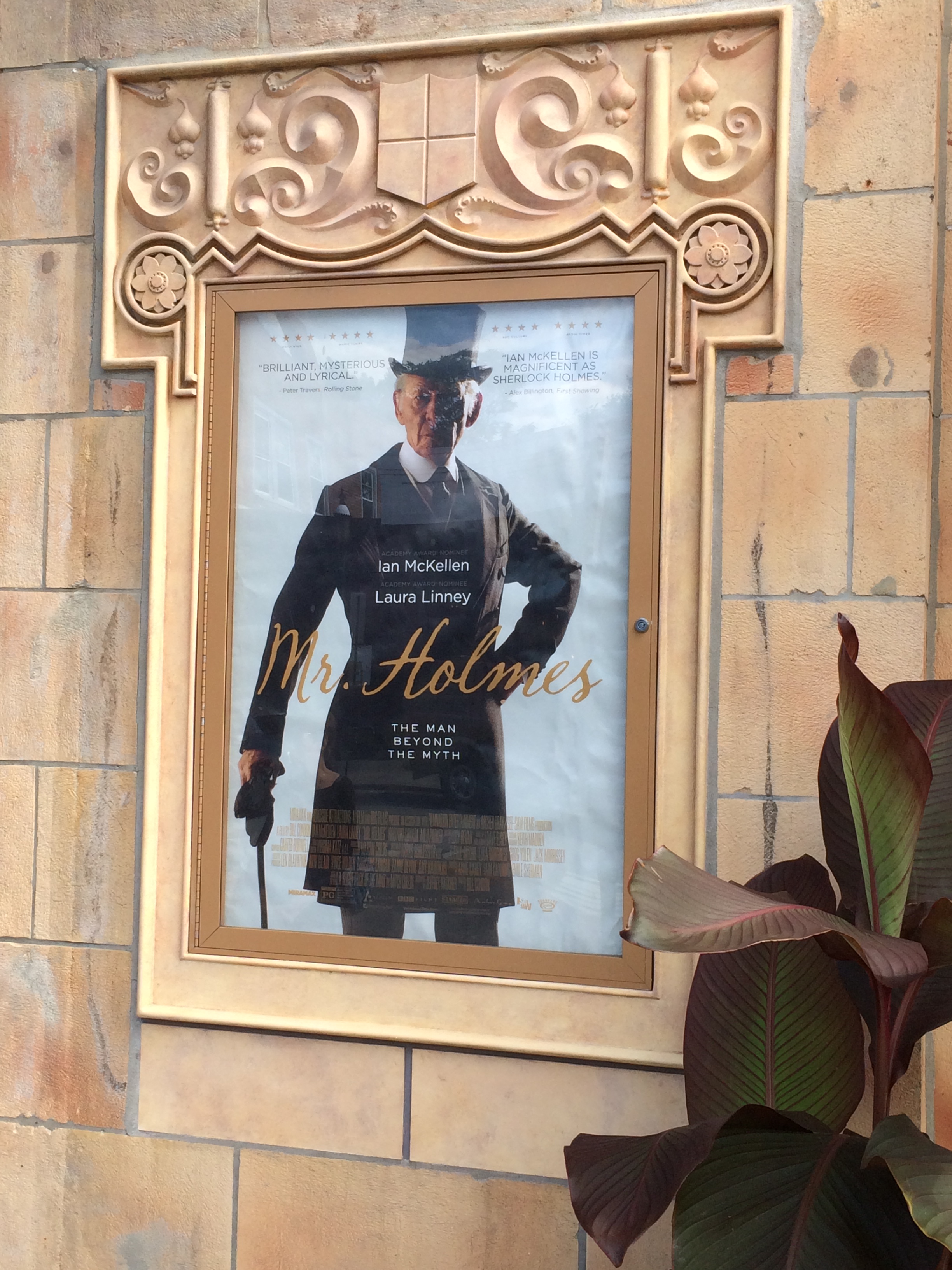
Books too have kept alive the Sherlock character. Dozens and dozens of them. For example, 2005’s A Slight Trick Of The Mind. Mitch Cullin wrote Slight Trick, and it is the basis for Mr. Holmes, the movie now gracing art houses and multiplexes worldwide. My wife Sandy and I recently watched it, and liked it, at the friendly and classy Ambler Theater in beautiful downtown Ambler, PA.

We saw Mr. Holmes at the Ambler Theater in Ambler, PA.

I’ve given some thought to Mr. Holmes, not an easy feat for me to undertake or accomplish. And I’ve come away with the opinion that the flick needn’t be looked at as part of the Sherlock Holmes continuum. It certainly is about Holmes, in fact a 93-year-old version of himself trying to stare down his failing mind and the end of his earthly existence. But the movie would stand just as handsomely if a few plot strands were reworked to undo the Holmes references, and if the lead figure were given another name. The movie I’d say is less about Holmes and more about understanding oneself, coming to grips with one’s shortcomings, trying to become a better person even as the end of the line draws near.

It is 1947 in the county of Sussex, England. By choice, Sherlock Holmes lives there in semi-obscurity on a small farm near the English Channel. He has been retired from the investigator game for about 30 years, having decided to hang up his detective tools because, because, because . . . Sherlock cannot remember why. His brain power, and body for that matter, are pretty strong, but some memories have begun to fade away. Holmes knows that his powers are slipping. An avid bee cultivator, he has doused himself for some time with his colonies’ royal jelly, a presumed mental strength rejuvenator. As the movie begins, he returns to Sussex from Japan, laden with that country’s prickly ash, a herbaceous product likewise touted for its restorative powers. Sherlock Holmes is not one to settle back and accept a drowsy and inevitable descent into a muddled mind.

At home, Sherlock and his property are tended to by Mrs. Munro, a widow with a bright as can be 12-year-old son, Roger. And it is here, in the mixings of these three lives, that the story finds its epicenter. Holmes, who has aged gracefully, is no longer the flinty and brusque superman of his younger days. He is fairly gentle with fellow humans and tolerant of their ways. Yet deep love is not, never was, an emotion he feels at home with. Spoiler alert: By movie’s end he will have opened his heart wider than ever.

A good chunk of the movie concerns a mystery from the past, from the years of the First World War. And that mystery, which involved Sherlock and a troubled woman, led to Sherlock Holmes’ abandonment of his Baker Street digs in London and his retirement to the English countryside. Throughout the film he strains to remember the why of his resettlement. But put aside this artistically designed and developed aspect of the movie and you still are left with a lovely character study. Ian McKellan, face creased like an accordion’s bellows, handles the elderly Holmes character with nuance and charm. His Holmes is quite yet smart as a whip, and not ashamed of the emotional vulnerabilities he has begun to develop in his golden years. His is the most complicated character on screen, the most multifaceted and the one with the most growing to do. Laura Linney (Mrs. Munro), the great American actress who to my ears has her English accent down pat, and Milo Parker (Roger Munro) at varying times coexist, bond and brawl with McKellan’s Holmes marvelously.

Bill Condon sure-handedly directed Mr. Holmes. The movie’s languid pacing feels right, and I’d bet that much of the credit for the actors’ strong performances belongs to him. Mr. Holmes is not a tearjerker. Oh, maybe one Kleenex will be of use. What we have here is a mostly cliché-free look at the tail end of the life of a proud man determined, maybe destined, to be a mensch.

(Photo by Sandra Cherrey Scheinin. If you click on the photo a larger image will open)

(If you enjoyed this article, then please consider sharing it. Thanks.)

A Pretty Park Can Be Pretty Hard To Find

Back in 1981 the Philadelphia Museum Of Art mounted an exhibition of photographs by Robert Adams. Adams took the photos in the 1970s. They were images of western American states, the desolate areas, primarily deserts and mountains. I remember the show fairly well. No matter how remote the locale, nearly every photograph bore evidence of man’s hand: A telephone pole, tire ruts in the sand, roads winding like barber pole stripes around magnificent mountains. One of Adams’s points was that pure wilderness is long gone, so we better get used to it and be glad for the great though adulterated spaces that exist. I imagine that even if you found yourself in the middle of Antarctica’s biggest ice shelf, and I don’t wish that fate on too many of us, you wouldn’t have to wait impossibly long before an airplane passed overhead. Man is everywhere. Yikes.

Now, a half-baked embryonic distillation of those thoughts was in my head recently when my wife Sandy suggested that we walk around the grounds of Abington Art Center, a few miles south of our home in the Philadelphia suburbs. “Sure,” I said, “good idea.” But what I didn’t say is that I’d prefer to stroll some expansive Adams-like terrain. In my dreams. Around here in the burbs, man for the last 75 years has been relentlessly busy cutting down trees and pouring cement. Around here, you have to count your lucky stars that any good-looking patches of territory of any sort still exist.

Manor house and lawn at Abington Art Center.

Abington Art Center is one of those patches. The center contains the manor house and some of the grounds of a former estate. The house is used for art classes and gallery exhibits and the like. The grounds mostly are a huge lawn that slopes away from the rear of the house and 10 or 15 acres of woods. It’s a lovely place. And it is more than manor, grass and trees. Scattered here and there on the great lawn and on side lawns and in the woods are all manner of sculptures, about 50 all told. Sandy and I had a good time at the center. For two hours we looked at trees and artworks and burned off a few calories while walking a couple of miles.

The play of light in the woods at Abington Art Center.

I like the outdoors. But I’m hardly a naturalist. My knowledge of flora and fauna has more holes than you can count. And so at Abington Art Center I found myself admiring a specific leafy tree species, of which many examples exist in the center’s tiny forest, having no clue what I was looking at. They weren’t maples or oaks. Those I can identify. Whatever the trees were, they were  the tallest at the center. They measured well over 100 feet from bottom to top and didn’t wander leftward or rightward on their way towards the heavens. Their mothers must have told them from an early age to stand up straight. What also fascinated me was the play of light within the woods, how one tree’s upper reaches might be caught by the day’s intense sun, while others only a few feet away were out of the sun’s direct path. Contrasts of this sort always have appealed to me.

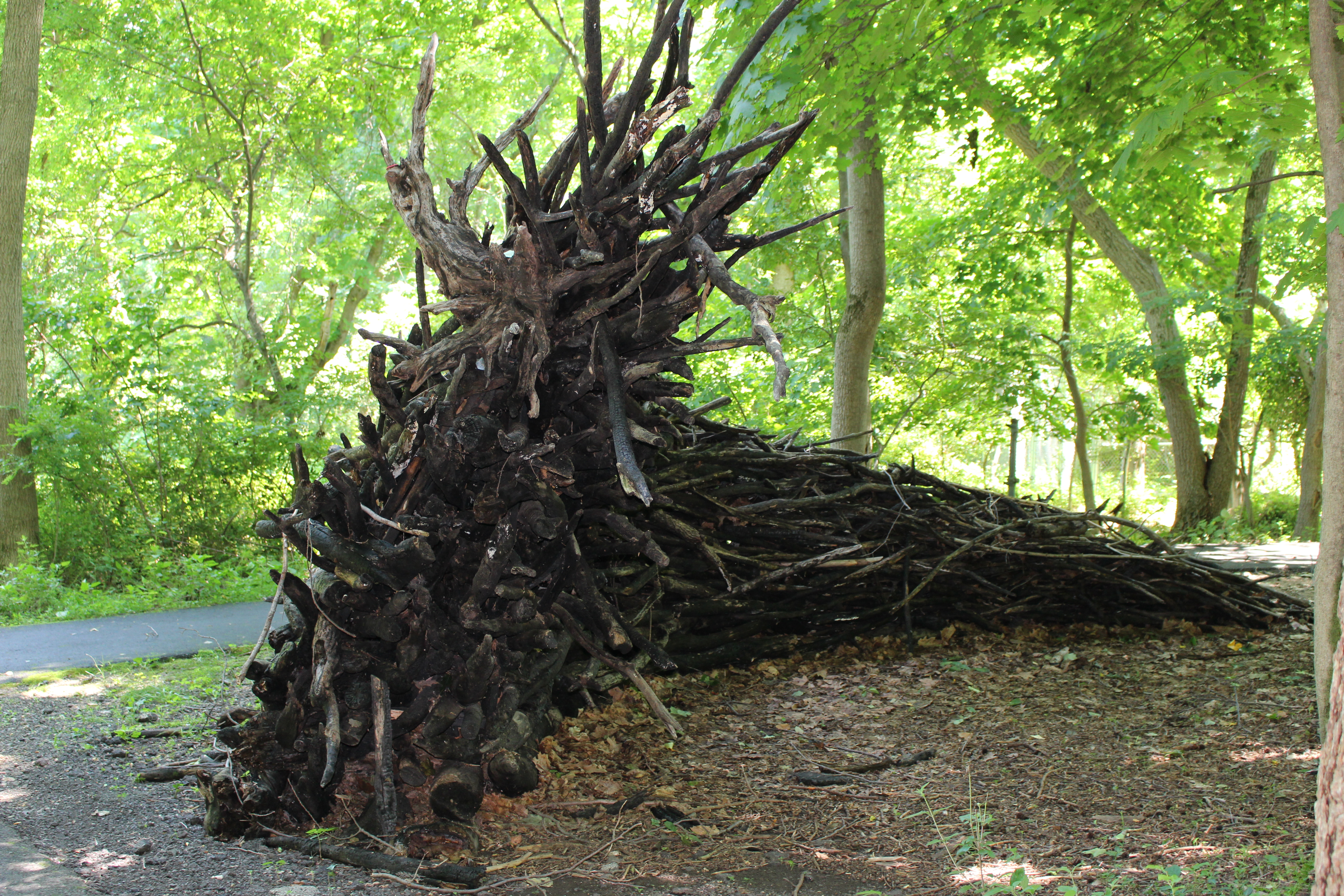
Mazzaroth is Alison Stigora's construction of burnt tree branches.
Mazzaroth is Alison Stigora’s construction of burnt tree branches.

The sculpture I thought the most of in the woods was Alison Stigora’s Mazzaroth. It’s an assemblage of burnt tree branches fitted together tightly to portray . . . what? A serpent? The movement of time? As the years go on, Mazzaroth will crumble and become one with the forest floor, as will the trees surrounding it.

You’re not going to confuse many of the sculptures at Abington Art Center with creations by David Smith, Louise Nevelson or other deservedly famed artists. Few if any are on that level. Some though, like Mazzaroth, had me looking them over from different angles because I liked them a lot. Take two on the great lawn, for instance. They are placed near each other and are as different as they can be.

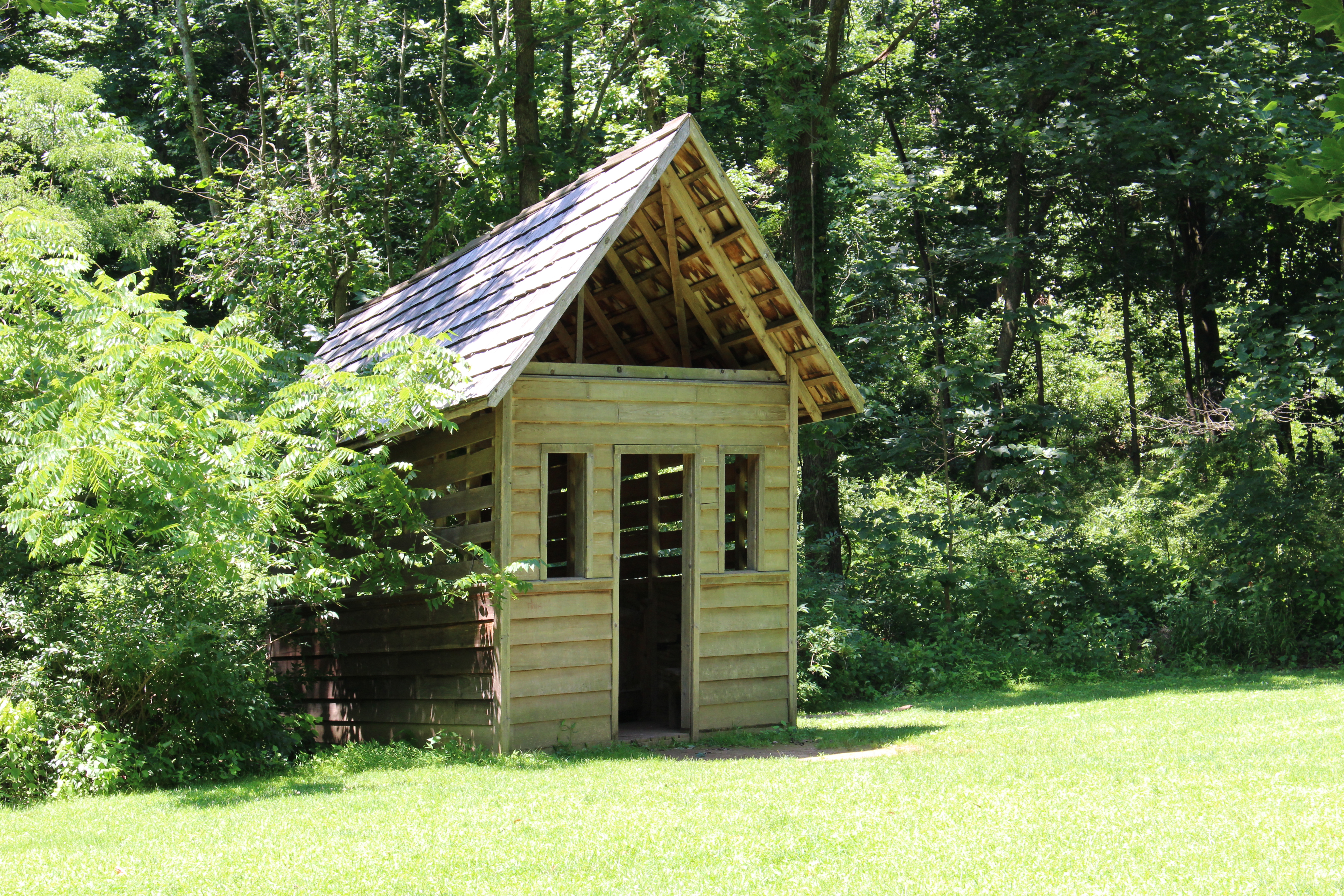
Cabin Van Gogh at Abington Art Center.
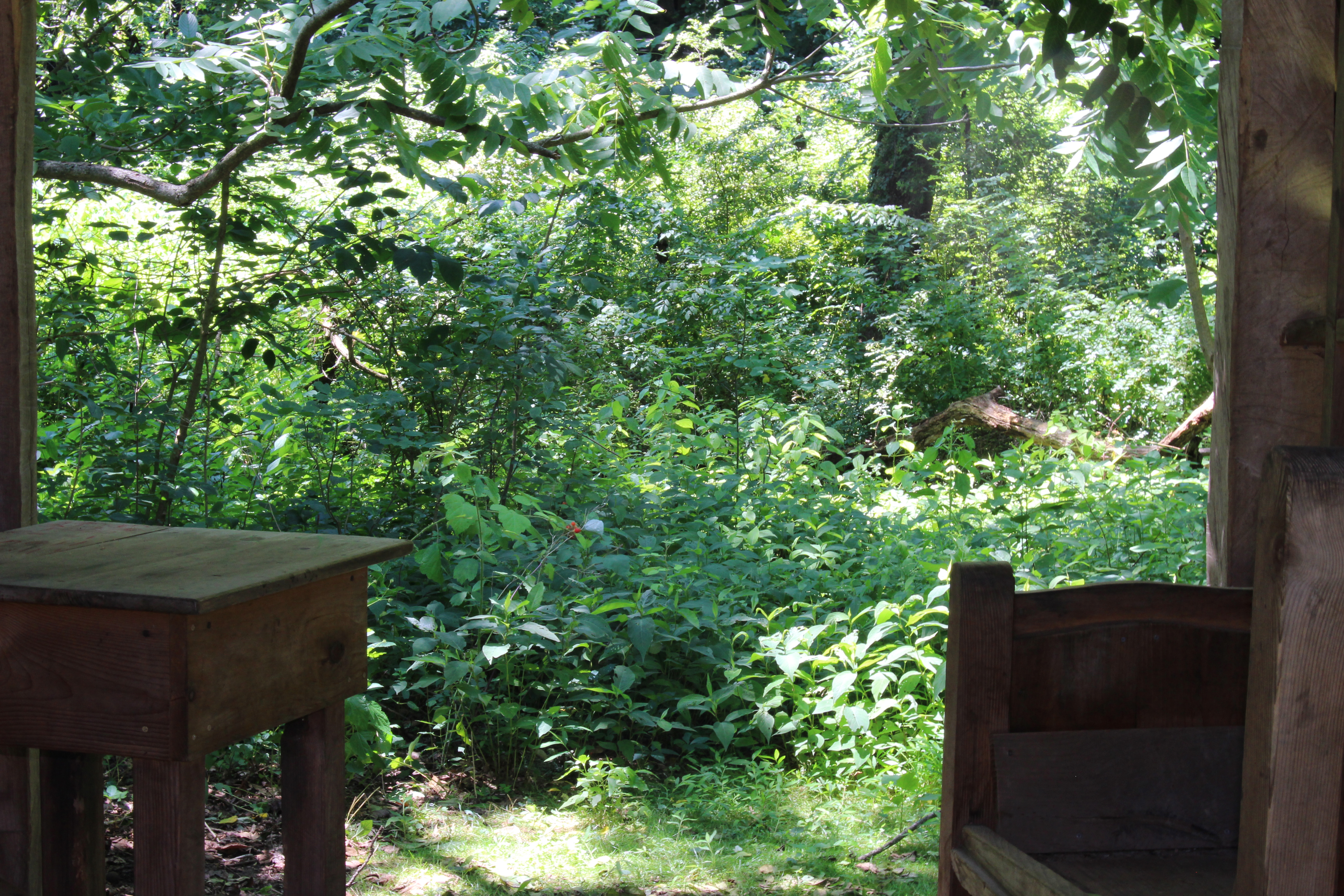
Partial view of bed and table inside Cabin Van Gogh.

What is a lopsided small wooden cabin doing on the grass at Abington? Well, it’s a whimsical piece of art and is right at home there. Weather-beaten, cute and loveable, it contains within, of all things, a bed, chair and table lifted straight out of Vincent van Gogh’s paintings of his bedroom in Arles, France. This work is Knox Cummin’s Habitation Suite: Cabin Van Gogh. Vincent I believe would have been charmed  by Cummin’s idea to build such an unlikely homage, and also by the view of foliage from the cabin’s open back side.

David Schafer's orange sculpture at Abington Art Center.
David Schafer’s orange sculpture at Abington Art Center.

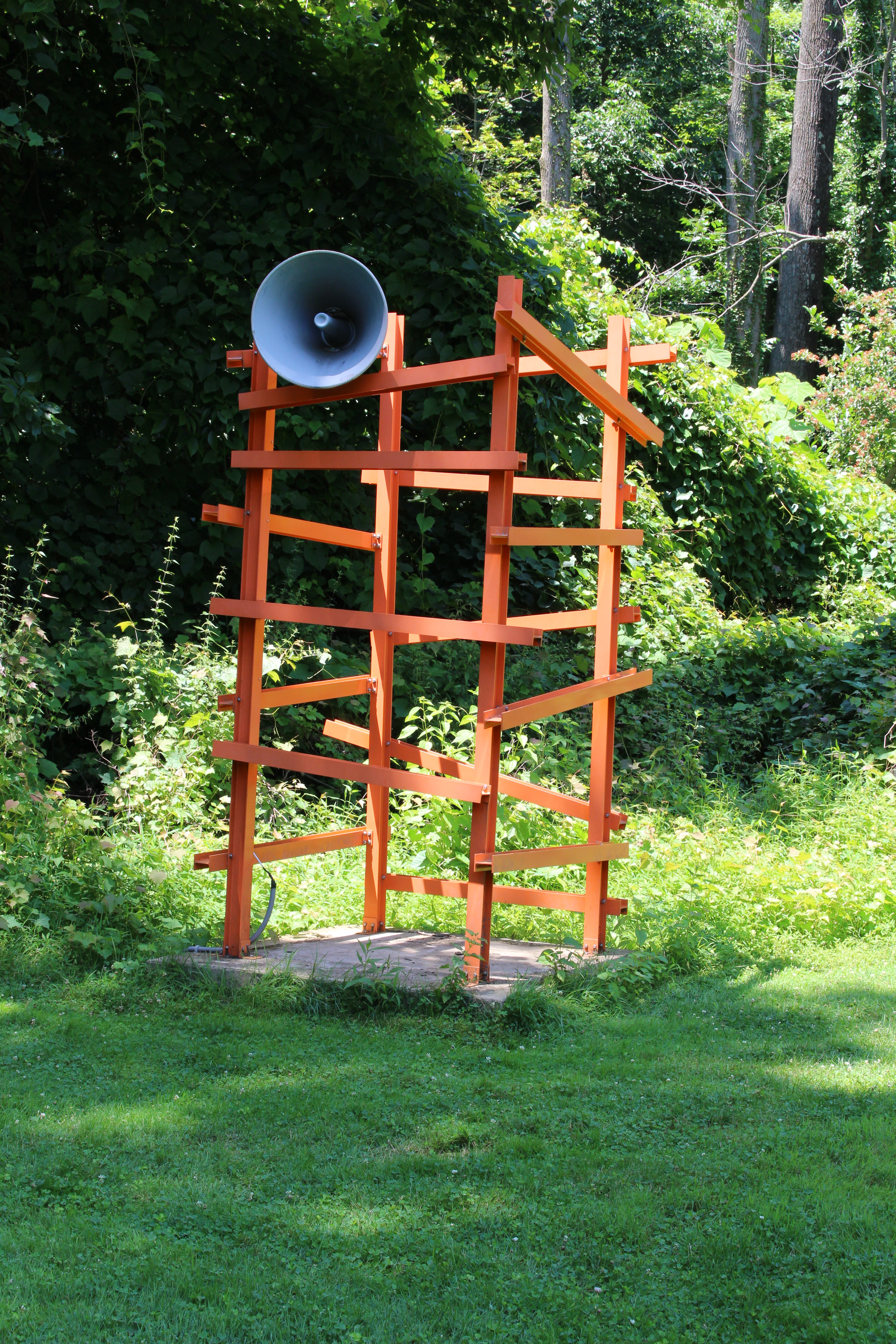
Uphill from the cabin stands what looks a bit like a lifeguard tower painted in bright orange, some of its support slats atilt. David Schafer, the creator, named his piece Untitled Expression: How to Look at Sculpture. I suspect that the notions behind the giddy orange tower are partly conceptual. Sculptures, like just about anything, are multifaceted. No need to try and pin down a precise meaning. Observe, surmise and enjoy. One of my takes, subject to change, is that the sculpture is alive yet indecisive, that it is shaking out its stiff bones and readying to inch forward but hasn’t gotten into gear quite yet. And what’s going on with that public address system speaker? I remembered later that it had a practical purpose once, as a recorded message played from it for months after the sculpture was first installed about six years ago. Sandy and I were at Abington Art Center at that time and heard the message. If we were put into a deep hypnotic state, maybe we’d recall what the message was. Gone silent, to me the speaker now just looks cool.

(All photos by Sandra Cherrey Scheinin. If you click on any photo, a larger image will open)

(If you enjoyed this article, then please consider sharing it. Thanks.)

We Said “Cheese Please” At Iron Abbey

I’ve grumbled before on these pages about the paucity of loveliness in the townships that surround my suburban Philadelphia home base. Stuck in the middle of a large section of this haphazard overdevelopment is a place that I think is a-ok. Iron Abbey is its name, and beer and good food is its game. It is a gastropub. Location: Horsham, Pennsylvania. My wife Sandy and I ate dinner there recently. One part of the meal, a cheese plate of all things, particularly opened our minds and eyes.

Part of the scene at Iron Abbey.

Iron Abbey is a large establishment. Its dining areas and bar are on ground level where the look is woody and stoney rustic. Kind of like, who’d have guessed, an abbey. Upstairs are an espresso café and rooms filled with beers for takeout purchase. The beer rooms are wondrous, packed with microbrews, many obscure, from the corners of the globe. For this article, let’s stay on the ground floor, where the beer selections are no less mind-blowing.

Sandy doesn’t like beer. She is a wine lady. Unfortunately for her, Iron Abbey does not cater to wine-by-the-glass ladies or gents. Those selections are slim. The two Sauvignon Blanc choices were overpriced at $10.50, so Sandy, a white wine devotee, instead sipped an eight dollar glass of Cielo Pinot Grigio, direct from Italy. Sandy says she has had better. I took a sample and approved of its dryness but quickly decided its flavor could be richer.

Enough about wines. The Philadelphia region has become a haven for beer geeks, and Iron Abbey is a top example why. I spent five minutes poring over the beer menu. The choices were nearly endless, around 40 on tap and 250 in bottles and cans. The pressure was on. Twice I told our waitress that I needed more time to decide. On her third visit to the table I was too embarrassed to ask for another extension. Firestone Walker Easy Jack IPA I said, pointing it out on the menu’s draft beer section. With craft beers, one usually can’t go too wrong, so skilled have the world’s brewers become. My selection, birthed in sunny California, was proof. Bitter and hopped-up it was, as all good IPAs should be. One of the hops varieties in the recipe imparted a husky tinge of grapefruit flavor to the brew. I liked that a lot.

The best segment of the meal came next. Sandy and I were all set to bypass any starters and simply place our main course orders when I absentmindedly began to pay some attention to the menu section titled “The Board.” There, one may select from various cheeses and meats, all of which are accompanied by an eclectic mix of nibbly stuffs. Why not, we decided. When the waitress reappeared we picked two cheeses and sat back with our drinks. We’re not naïfs, but neither of us had ever before ordered a cheese plate at a restaurant.

The cheese board that we loved.
The cheese plate that we loved.

The cheese plate arrived and we couldn’t have had a better time. It came with salty olives, crunchy excellent French bread, fig and apricot jams, roasted Macadamia nuts,  pickled red onion slivers and membrillo. Yes, I hadn’t a clue either as to what membrillo is. Turns out that it is a firm soft paste made from quince pulp, sugar and water. Some post-Iron Abbey research told me it’s commonly found in Portugal, Spain and Italy. I caught what I thought were flavors from the apple and pear family. Quince, as additional research told me a little while ago, is indeed related to those fruits. Bottom line, the membrillo was delicious. The other accompaniments were too. As for the cheeses, we had selected  Ubriaco Classico from Italy and Ossau Iraty from France. As with membrillo, I’d never heard of either of those cheeses before. For the most part I’m a Kraft swiss and Cracker Barrel cheddar kind of guy. But I know there’s a world of cheeses out there to be explored. The Ubriaco was semisoft and hinted of wine and citrus. The Ossau Iraty was dense and dry and pungent. Sandy and I swooned over both of them and the bread and the nibbly stuffs. This was the most exciting platter of food we’d had in quite a while.

Crab cake entrée (top). Chicken burger (bottom).

After the cheese extravaganza we’d have been happy to pay up and leave. We knew that it would overshadow the next course. Which it did. My grilled ground chicken burger, though, was awfully tasty, a comfort dish covered with melted Monterey Jack cheese and sautéed bits of red peppers and onion. The side salad I opted for in lieu of fries was fine too. Sandy’s crab cake entrée was done nicely. The grilled crab cake was charred outside, soft inside and good. Some extra doses of spices and flavorings wouldn’t have been a bad idea, though. It sat atop dreamy mashed potatoes, mushroom slices blended through. Blanched then sautéed itsy bitsy asparagus and carrot pieces, very flavorful, surrounded the mountain.

We had no room for dessert. We paid our bill and thanked our waitress, then squeezed past the crowds to the front door. Iron Abbey is a popular spot. Though it is by no means perfect, there are good reasons why it’s bustling.

(Photographs by Sandra Cherrey Scheinin. If you click on any photo, a larger image will open)