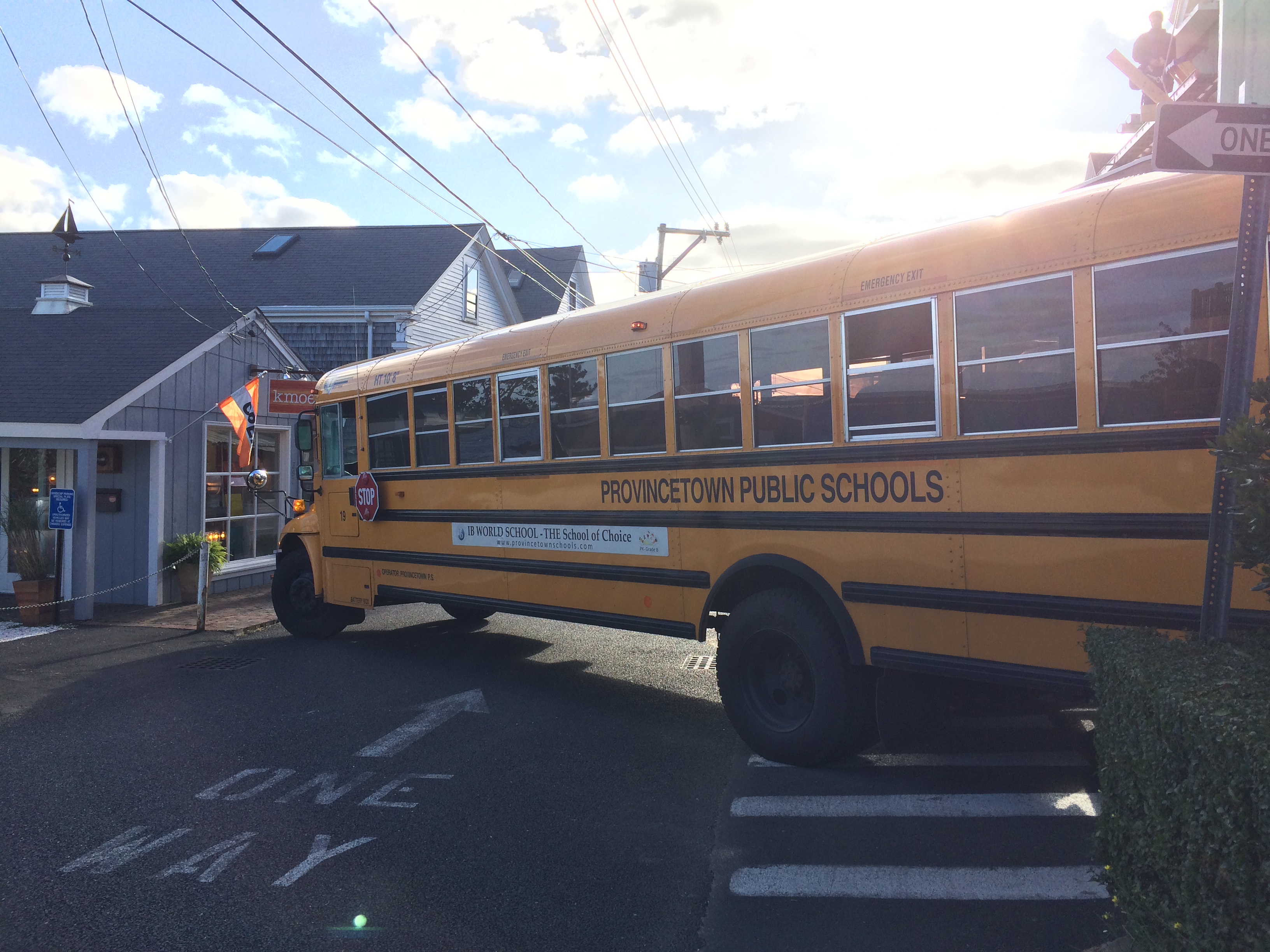
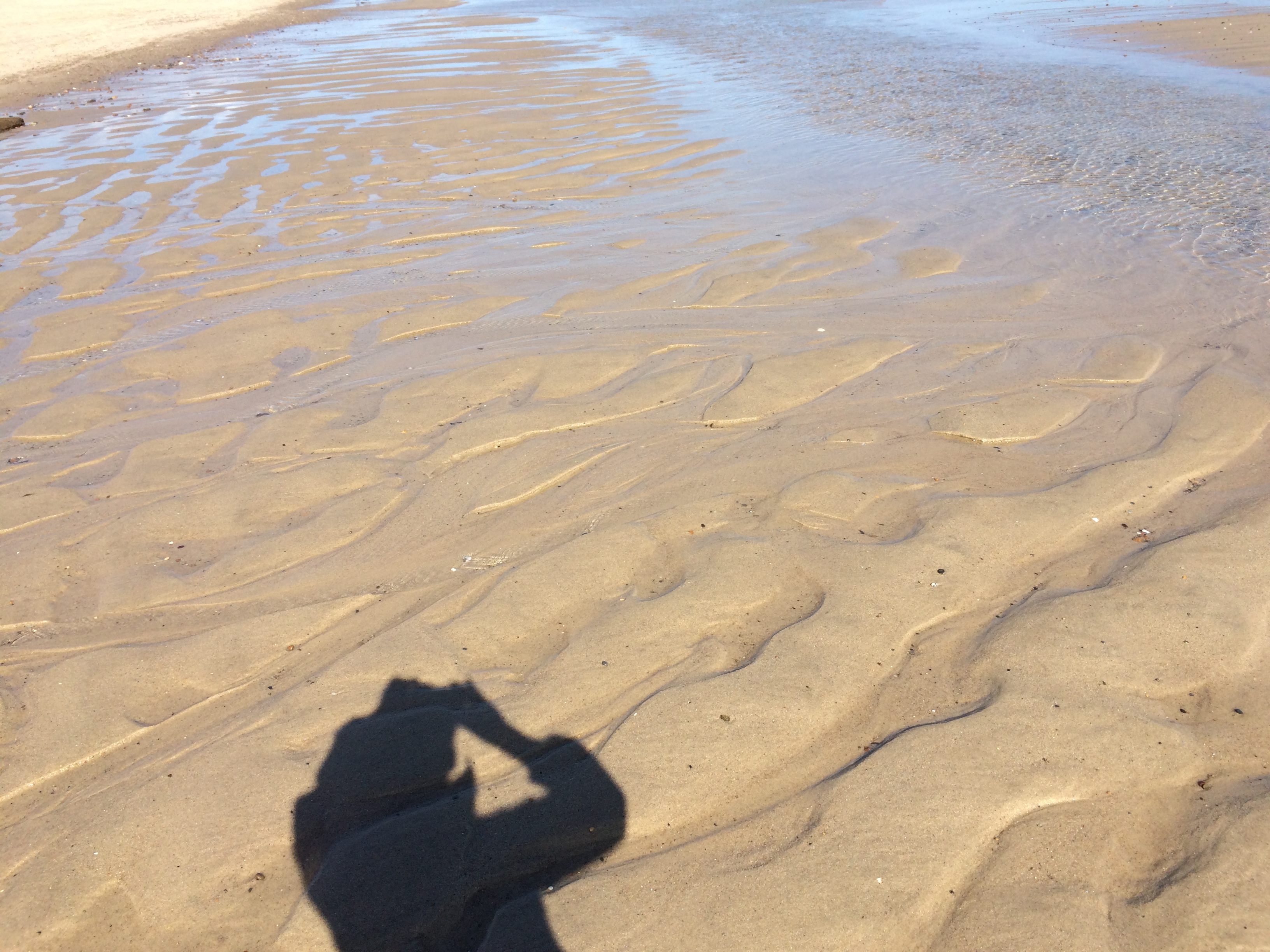
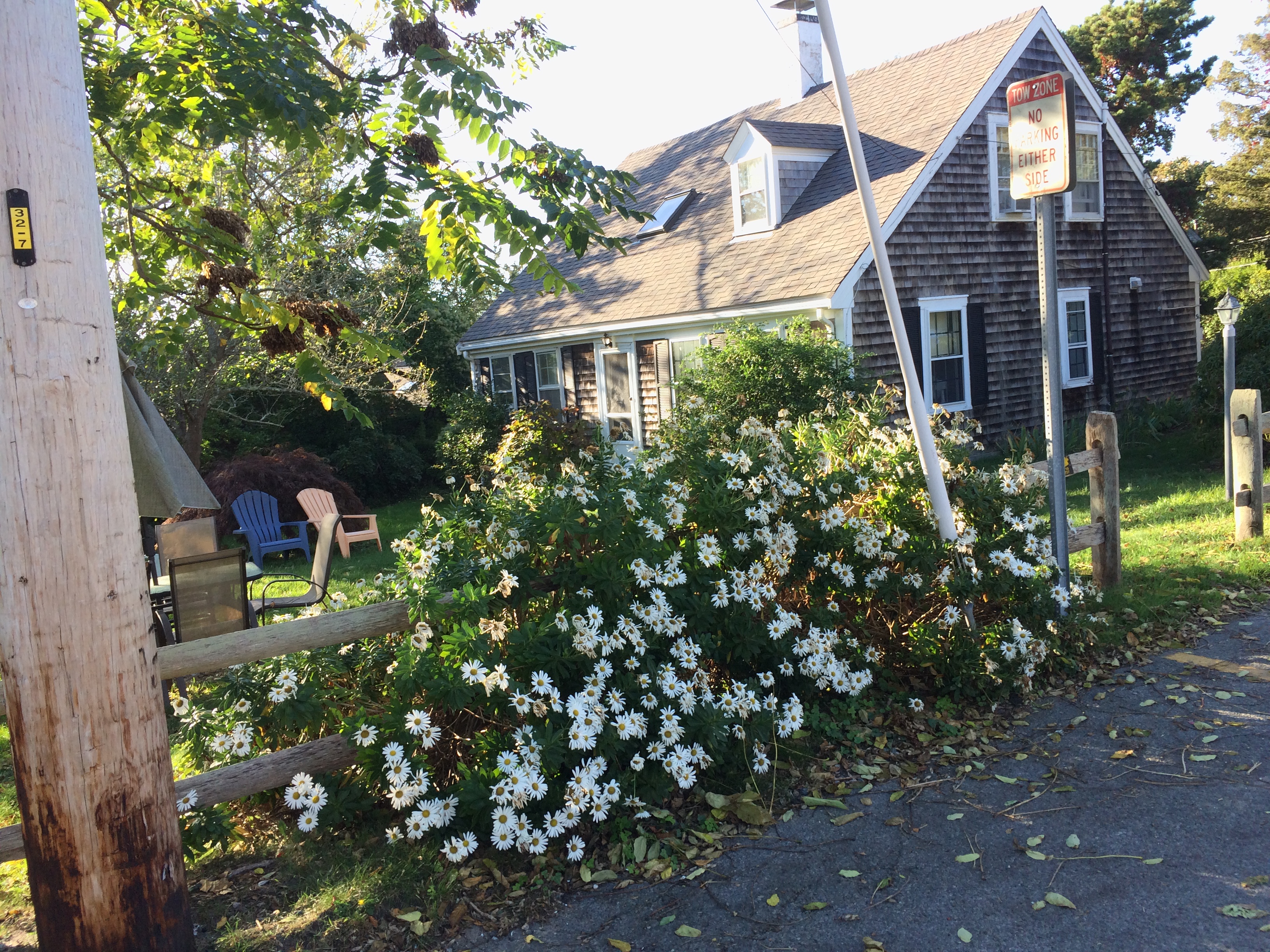
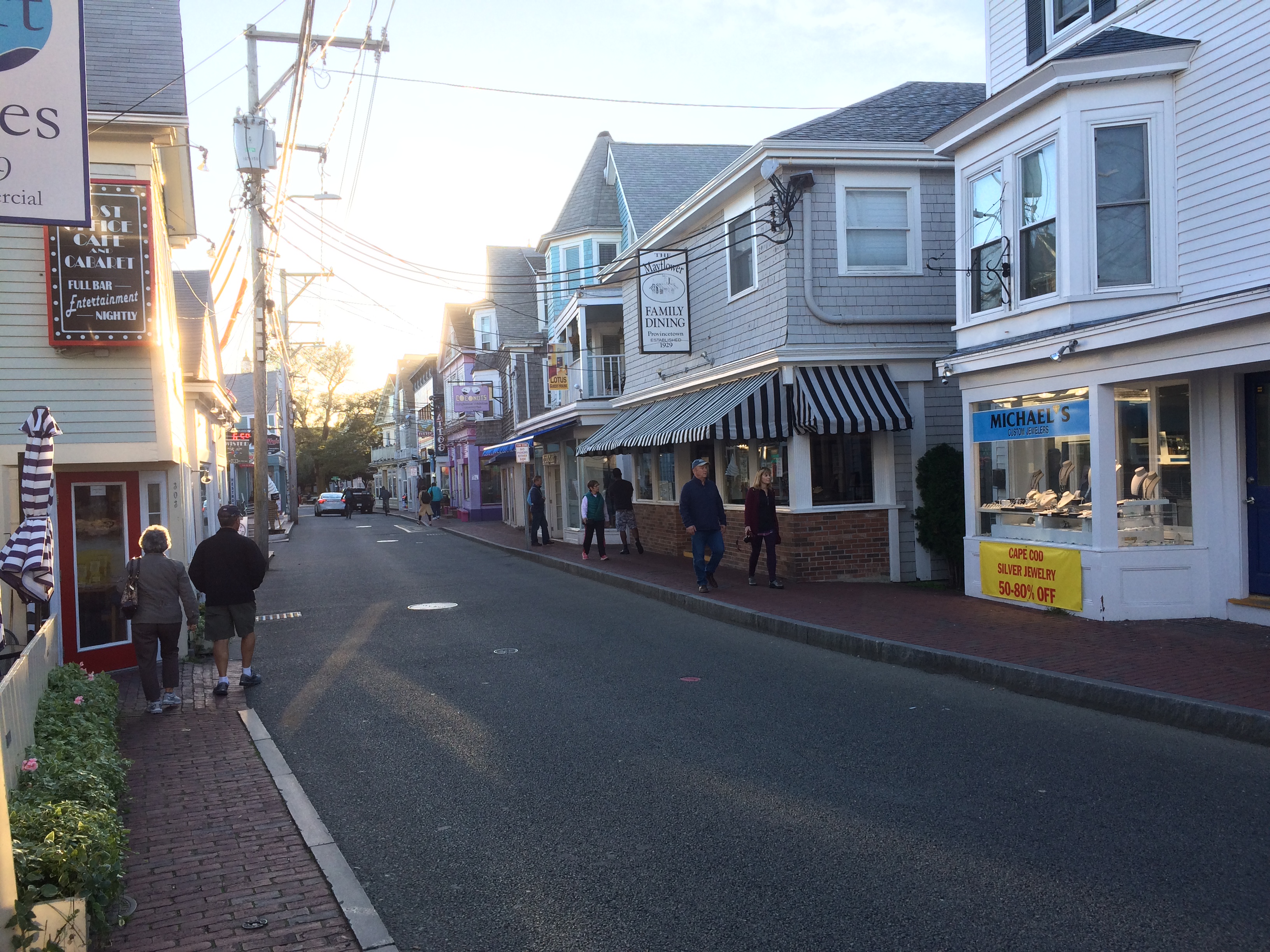
A Monumental Provincetown Story

Let no one declare that I don’t follow up on my threats, for here I am at my writing desk penning another story about Cape Cod, just as I intimated I might do in my previous essay (click here). For those of you who have read more than enough about the Cape on these pages over the last two years, now’s a good time to turn your attention to a different sort of activity, such as sending one of Hallmark’s What The Hell Is Wrong With You? cards to Donnie Trump. But please promise to return to check out what I have to say next time around . . . unless it too turns out to be a Cape opus. In which case I give you my permission to send one of those cards to me.

Provincetown’s village section (as opposed to Provincetown’s enormous and mostly uninhabited areas of beaches, woods, marshes, sand dunes and sand valleys that separate the village from the Atlantic Ocean) — that’s what I had in mind to write about after strolling along many of its streets for several hours a couple of weeks ago. I was in P-Town, as those in the know call it, during my wife Sandy’s and my annual Cape Cod vacation. Our home base was Orleans, about 25 miles away.

I meandered very contentedly, snapping a bushel or two of photos and figuring I probably would have little problem turning the excursion into a blog-worthy piece. But as one and then two and then three days following the jaunt went by, no satisfactory story slant entered my mind.

Remarkably, panic-prone me didn’t panic. Instead I took a few deep breaths, dropped to my knees and prayed to the blogging gods for assistance. “Get up, you schmuck, before you hurt yourself! Did you forget that you’re about as flexible as a baseball bat?” they immediately shouted at me. I rose slowly, creaking like an ancient wooden chair. “Okay, that’s better. Listen, you definitely should write about your Provincetown amble. But put the Pilgrim Monument near the center of the story, because you’ve always loved the Monument more than anything else in Provincetown. That’s the best advice we can give you.”

Hey, they were right. The Pilgrim Monument, located just two blocks from Provincetown village’s central area, is a stunner. And when I’m Cape-side it’s in my thoughts or pleasing my eyes a fair amount of time. That’s because I admire its enormous size and equally enormous aura. I mean, it’s got presence up the wazoo and seems almost supernatural to me, so unlikely is it in appearance compared to all that surrounds it. The Pilgrim Monument is the stolid, solid and protective alien creature that Provincetown and the rest of Cape Cod didn’t know they needed until it was erected in the early 1900s.

Provincetown village is charm personified. And it was made for strolling. Lovely, sea-sidey houses abound. As do more-polished abodes with beautiful gardens, and art galleries and food venues ranging from grab-a-bite to haute-cuisine. Not to mention funky stores of one kind or another that, with the galleries and eateries, run along Commercial Street, P-Town’s main shopping drag, and to a lesser extent along the village’s other lengthy artery, Bradford Street. And you’d have to possess a heart made of granite not to be beguiled by Provincetown Harbor, whose waters are fed by gargantuan Cape Cod Bay. The harbor is but a stone’s throw from Commercial Street.

The small and smaller streets in Provincetown, which occupies the far tip of Cape Cod, never cease to amaze me. Some are half-hidden, some little more than cubby holes — good luck ever finding those again if you fail to jot down exactly where they’re located. All of that suits me just fine, as I’m a fan of the whimsical. I’m also a fan of  peace and quiet, and things were real tranquil during the day in question. Artsy, open-minded and gay-friendly Provincetown, population around 3,000, is overrun with visitors and vacationers during the summer, but not so in autumn, which is when Sandy and I plant our temporary roots on the Cape.

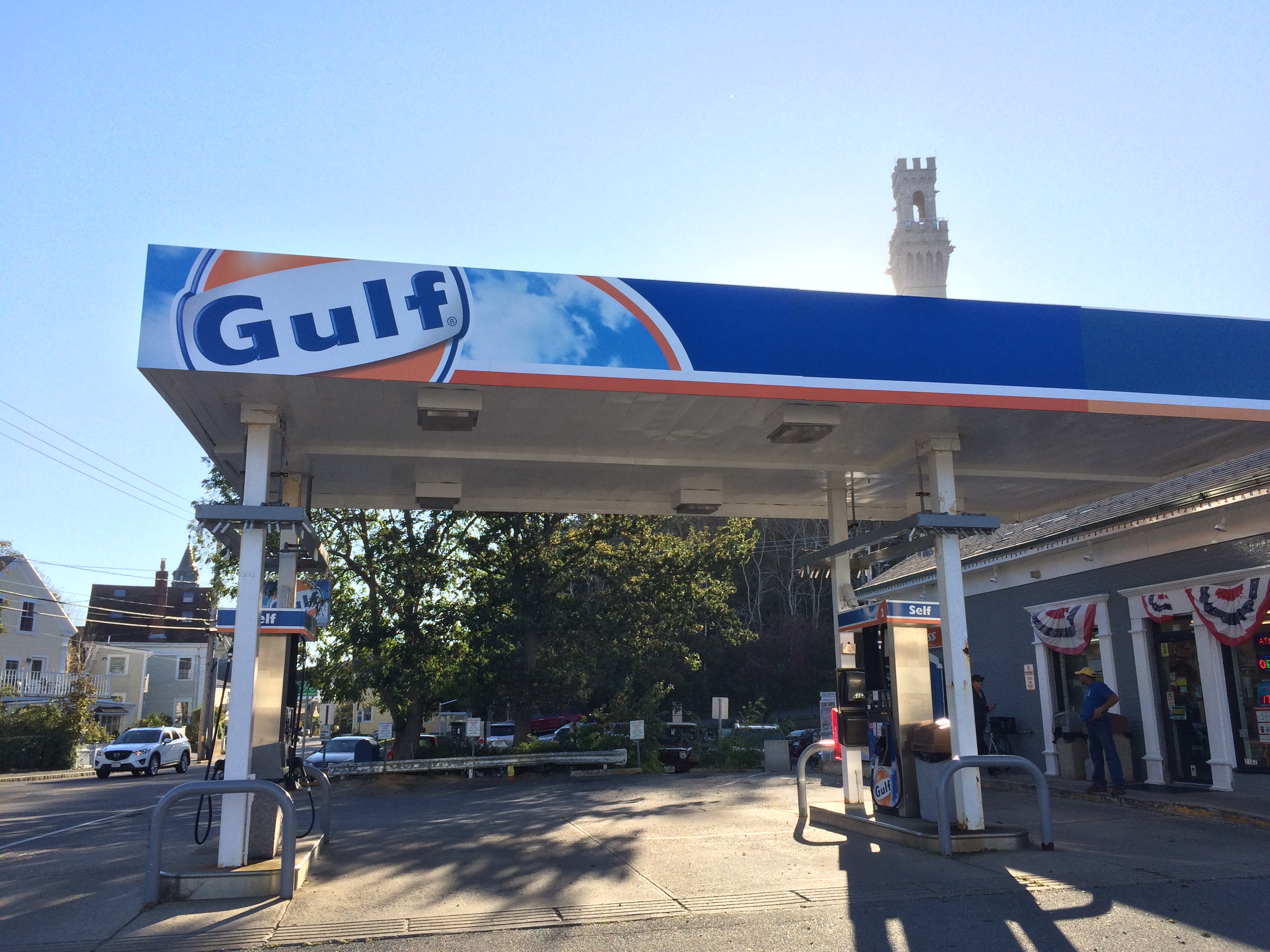
Fifty minutes into my exploratory venture, I caught a glimpse of that which the blogging gods suggested I focus on. Despite its being 252 feet from toe to head (it’s by far the tallest structure on vertically-challenged Cape Cod), and perched on a hill to boot, you can’t see the Monument from everywhere in town. Trees and buildings, though nowhere near as tall as the Monument, commonly obscure the view. But as I got closer to the old soul, I sought out perspectives that partly or fully brought it into my field of vision. I especially liked the way the Monument, three or four blocks away at that point, stretched its torso above a Gulf gas station’s sign on Bradford Street.

Funny thing about the Pilgrim Monument. It was created to honor the Pilgrims who voyaged in 1620 from England aboard the good ship Mayflower and helped colonize these here United States. They made their first landfall in what would later be known as Provincetown, before moving on soon after to a permanent home, across Cape Cod Bay, in Plymouth.

You’d think, then, that the Monument’s basic design or at least its adornments would acknowledge the Pilgrims or the Mayflower or the European settlement of the States. A plaque near the Monument takes care of those matters, but not the Monument itself. The decision was made to pattern the Monument after a bell tower that was built in the 1300s in the hilly, landlocked Italian town of Siena. Huh? Wha? An Italian tower in a bohemian New England fishing village? But as it turns out, for me anyway, the Monument’s fish-out-of-water aspect, not to overlook its stateliness, makes it the brightest star in town.

There are other reasons why I enjoy the Monument as much as I do. I find it more than cool that the tower is visible from miles away along certain sections of Cape Cod Bay. Though it’s only twig-sized from those vantage points, I feel good knowing that it’s there. And more than once I was gassed to see the big guy poking up its head while I was scampering in the aforementioned Provincetown sands just outside the village.

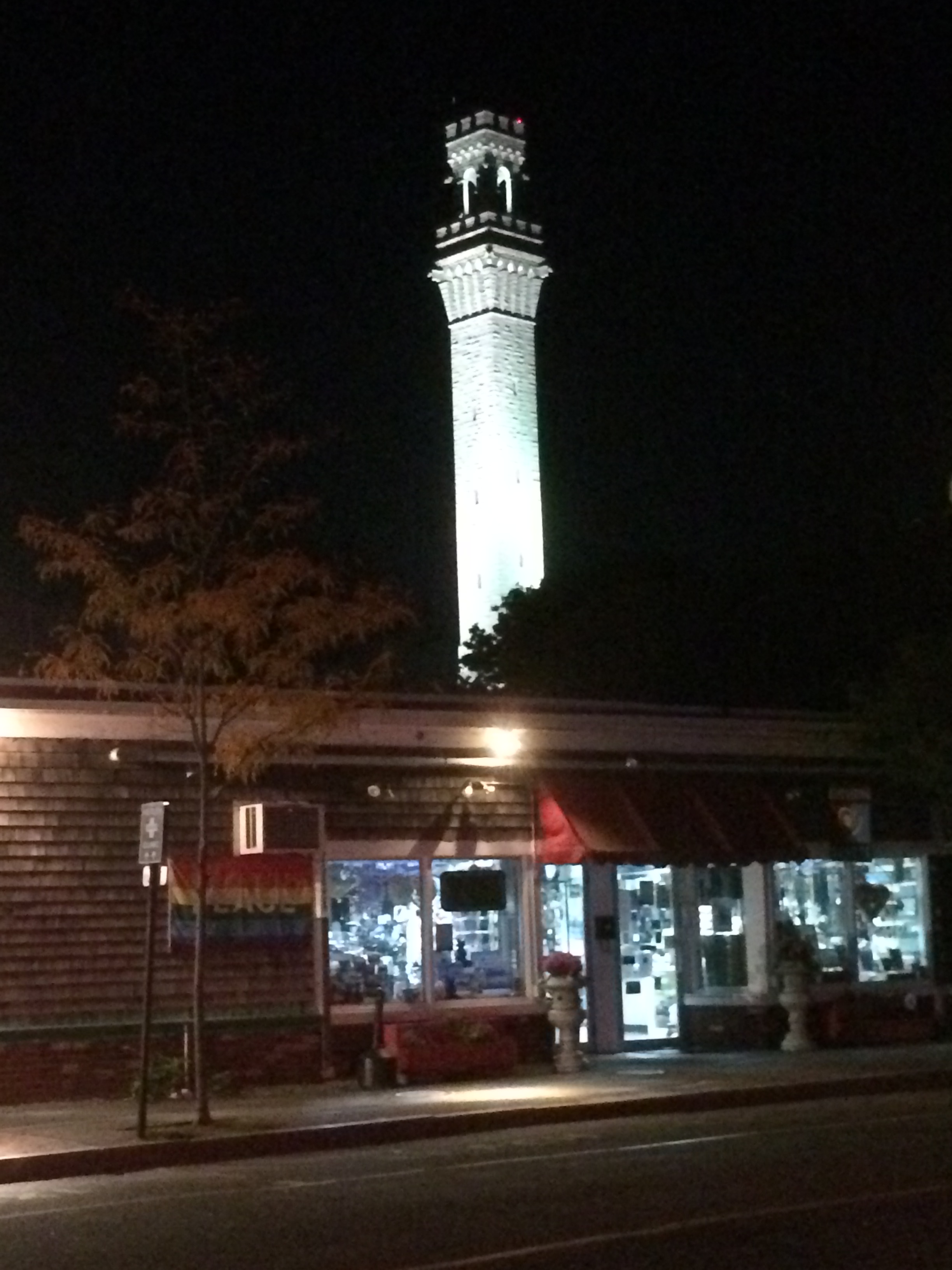
But more than anything, I get kind of weak in the knees when I’m near the Monument at night. When the Sun goes down, lights illuminate the giant. I don’t know, I guess I’d have to say that the nighttime Monument is one of the finest sights I know of, not only beautiful but curiously otherworldly. As my afternoon in Provincetown segued into night, I stared more than once at the Monument. And took a couple of pictures. One of them is the money shot.

(Don’t be shy about adding your comments or about sharing this story)

(If you click on any photo, a larger image will open in a separate window)

Where To? The Beach, Of Course!

Well, here we are again. We being my wife Sandy and I, and here being that most fine 65-mile-long ribbon of Massachusetts territory, nearly all of which is lovingly surrounded by majestic waters, that goes by the name Cape Cod. I’ve rhapsodized any number of times before about The Cape, as a few glances in the right places of this blog’s archives clearly prove. And I’m all set to pen yet another paean to that which is one of my favorite locales on Planet Earth. I can feel the oohs and ahs welling up inside me.

To begin: On a recent Monday evening we arrived at our rented house in Orleans, one of Cape Cod’s 15 townships, as the Sun was dipping toward the horizon. Too bad, we each commented, that said house is 360 miles from our Pennsylvania home. We’d been on the road for eight hours and were bushed. We’ve been making this trek once a year for about 20 years, and the mileage, which to some might not seem like all that much, never agreed with us. Long-distance truck drivers neither Sandy nor I, at any time in our lives, could have been.

Nevertheless, we woke up Tuesday morning feeling decently energized. Which was a good thing because our daily Cape Cod pattern always has been to fit a lot of activities into our waking hours, albeit in a relaxed and appreciative manner. Why be on Cape Cod, after all, if we don’t take advantage of the gorgeous seascapes and landscapes, of the little museums and theater companies, of the pretty villages and of restaurants that serve up tasty foods? Hey, I do plenty of hanging around the house in Pennsylvania. But on The Cape I rev up my motor and act like a geezer in a candy store. It can be good being a geezer . . . except for the old-as-shit part.

Hmmm, I wondered. What would be a meaningful and proper way to inaugurate this latest visit to The Cape? The answer flew into my head like a lightening bolt. Holy crap, that frigging smarted! When I recovered a few moments later I revealed my brainstorm to Sandy.

“You know,” I said, “I think we should walk out to the beach and fly our kite there. And take a look at the sights along the way.” Sandy was with me on all of that.

And the sights along the way, as anyone would agree, are sublime. Not only is our rented house set back in a cozy wooded area, it’s a mere block and a half from an ocean inlet, as calm and picturesque an inlet as you could ever hope to see. I don’t know why Sandy and I lucked out as happily as we did with this Orleans house. To be merely a few hundred feet from true beauty is incredible to me. I often feel as if I don’t deserve to be here, and I probably don’t. But I’m stayin’!

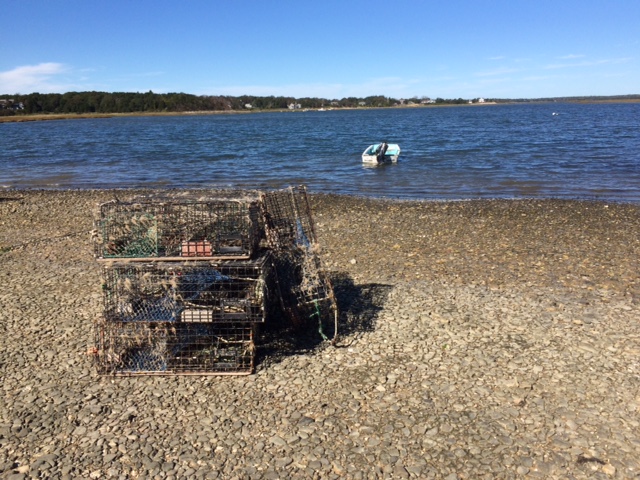
Sandy and I strolled over to the inlet late on Tuesday morn. We looked at the scene and sighed. It’s a ten. Where we make our permanent home, the surroundings are a four. And that’s being generous. The sky was clean and clear, the waters hypnotically still. Lobster traps were piled on the sands and rocks. A few seagulls had taken up position on the shore and were staring out at who knows what. And in the semi-near distance to the east were low dunes, heavily decorated with tall grasses, that run along the back of what is known as Nauset Beach.

As we walked around the inlet, admiring the marsh vegetation on its perimeter, the dunes neared. Soon they were at hand. We strode along a narrow walking path that had been cleared through them, and two minutes later found ourselves gazing at the broad beach and Atlantic Ocean waters that we know well. Hooray! The Scheinins were back!

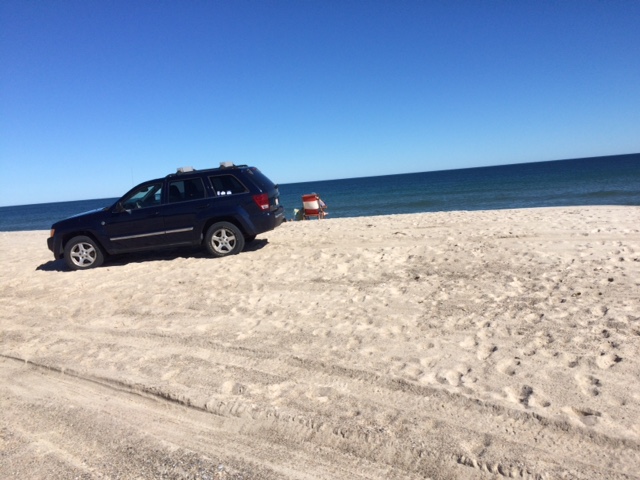
But here’s the thing. A bunch of vehicles were parked on the sands near waters’ edge. And their owners were lazing on chairs while reading books or contemplating their oversized navels. What the f**k? I’d been to this off-the-beaten-path stretch of sands plenty often before and never had seen more than one or two metal machines. Hell, if you ask me, they shouldn’t even be allowed on the beach. But nobody, as usual, has asked me.

Despite the monsters’ intrusions, Sandy and I smiled at the waters and the sky and the sands. They were and are beautiful. And they smiled back, indicating to us that the kite I held under my left arm would be warmly welcomed.

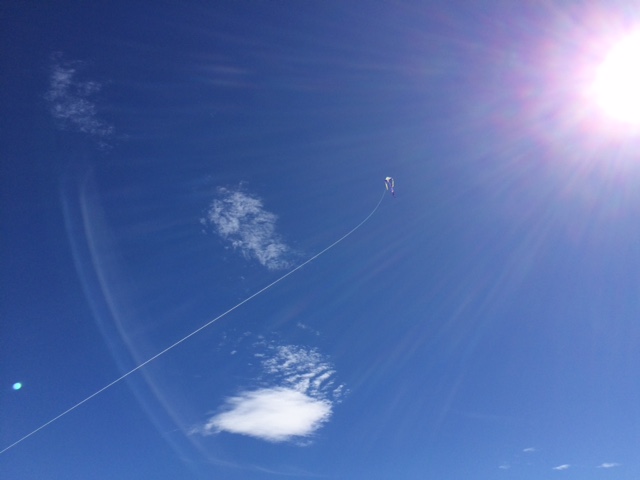
I say in total honesty that the kite, which we bought three years ago on Cape Cod, is one of the wisest investments we’ve ever made. For 20 bucks we came into possession of an object that has provided us with hours of fun and gladdened our hearts, so touching is it to see a sheet of thin, multi-colored plastic material soaring freely and giddily above us.

Prior to 2014 I hadn’t flown a kite in, what, five and a half decades? Sandy, for whatever reasons, never had in her life. So there we stood on Nauset Beach, undoubtedly about to become the oldest people to launch a kite at any time during 2017 anywhere on The Cape. It took a few attempts to get the old boy up there. But once our pal found wind streams that it admired, it rose and rose and begged us to never bring it down. Swirling and shimmying and loop-de-looping in the steady breezes, it set examples of  going for the gusto and shaking off the ol’ inhibitions that many of us might do well to follow.

But, as they say, all good things must come to an end. Reluctantly we pulled in the kite and took off southward for a walk along the beach. Cape Cod’s Atlantic Ocean coastline, of which Nauset Beach is one segment, is around 40 miles in length, mostly undeveloped and a perfect combination of natural elements. And it always knocks my socks off, despite the occasional mini-bummer you sometimes encounter, such as vehicles parked on the sands.

Two hours after having left the house, we headed back across the dunes and along the inlet’s shores. The ideal start to our vacation was in the books.

(By the time I publish this piece, Sandy and I will have returned to our suburban Philadelphia abode. But at least one or two more Cape Cod 2017 stories are kicking around inside me and surely will be birthed)

(Don’t be shy about adding your comments or about sharing this story with others)

(If you click on any photo, a larger image will open in a separate window)

Before, During And After Lunch: Slices Of Life And Of Pizza

I’ve been thinking recently about the nature of this blog. Not a whole lot, but enough to see that my stories — when you look at their sometimes straight, sometimes wavering and sometimes loopy as hell strokes — paint a pretty good picture of what I’m about. I’m not one to reveal all. I’ll never write a word, for instance, about the time, 40 years ago, when I went undercover in Nepal to help bring down the notorious Himalayan gang of bank robbers that dressed themselves in highly-convincing yeti costumes. Or about my space-boot shopping spree with Neil Armstrong a few days before he blasted off for the Moon. But I reveal plenty, I think.

Basically I’m a simple guy who does simple things. Well, simple cum lopsided things often might be a more accurate description. And for the last two and a half years I’ve been writing about them. My articles peer at, for the most part, typical days for yours truly, show what my interests are and have been, and show who has accompanied me (and whom I’ve accompanied) on this journey through what we affectionately call life.

Slices of life. Yeah, that’s what I usually find myself describing. And now that I’ve expended nearly 200 words in trying to establish a degree of context for this current opus, I’ll turn my attention in that direction. “Yo, you better, pal,” I hear a few voices saying. “Our time is limited. We’re this close to closing out your article and checking out some YouTube videos of skateboarding kangaroos.”

Right, right, ye whose attention span is shorter than Donnie Trump’s fuse (but not shorter than his dick). Here we go.

Last Friday I found myself heading north from my suburban Philadelphia abode. My car, having a mind of its own, drove itself two and a half miles to an establishment that ranks high on my ladder of places where I like to grab a bite for lunch. In fact, it probably is my favorite lunchtime eatery in my neck of the woods. And that’s because, speaking of slices, I believe that the slices of pie that one purchases at Nino’s Pizzarama are damn good. A card-carrying fool for pizza, I down them there two or three times a month (and I go to other pizza joints throughout each month too).

I ordered a slice of regular pie and one of Sicilian. They hit the spot regally, though I was slightly disappointed in the regular’s crust. Too chewy. The pie needed to have been left in the oven for another 20 or 30 seconds to become as crispy as it itself was hoping to become. Such is the life of pie.

While munching away, I couldn’t get out of my head a song I’d heard on the radio during my northward trek. It’s a very beautiful recording, one that I instantly became attached to soon after its release in 1968: Hickory Wind, by The Byrds. As always, it sounded wonderful.

Hickory Wind comes from Sweetheart Of The Rodeo, a magnificent country-rock album. The Byrds, famed for earlier numbers such as the psychedelic nugget Eight Miles High and the folk-rock staple Turn, Turn, Turn, had undergone some significant stylistic and personnel shifts by the time it was waxed. Three of the five original members were gone and new guys, most notably the space cowboy Gram Parsons, who helped push the band partly into country-music territory, were on board. Parsons is one of rock and roll’s legendary names, not only for his big musical talents, but for his wild and wooly and troubled life. He died of a drug overdose in 1973.

Gram Parsons is credited with having written Hickory Wind in 1968 with his musical compadre Bob Buchanan. (There is a dispute over the song’s authorship, by the way. Some claim that a little-known folksinger named Sylvia Sammons composed it, and that Parsons stole it from her. The truth never will be known, it seems.) It has been recorded by many since then, but The Byrds put it out first.

What a song. Wistful and melancholy, it stands you up straight and makes you think about the times when loneliness and an aching heart might have ruled your days. That’s Gram singing lead. In the car I melted as I listened to his yearning voice and to the sad, sad notes coming from Lloyd Green’s pedal steel guitar. Man, you want to be in a happy mood when you’re eating pizza. But me, I sat at one of Nino’s tables in a contemplative frame of mind, not fully able to concentrate on the powers of sweet tomato sauce, excellent melted cheese and could-be-better crust.

There’s much to be said for contemplative, though. It’s a state that can be good for the inner being, helping us to put things in perspective and, if we’re lucky, softening our defenses. On the way home from Nino’s I turned on the radio and found myself on the receiving end of another helping of such as Horace Silver‘s Lonely Woman filled the car. Silver, whose rich 60-year career in the jazz world ended with his passing in 2014, composed and recorded Lonely Woman in 1963. It came out in 1965 on his most famous album, Song For My Father.

There’s little I need to say about the song. It is subdued and righteous and should be better known than it is. A trio (Horace on piano, Roy Brooks on drums, and Gene Taylor on bass) perform Lonely Woman, Horace having decided that the tune would benefit if saxophone and trumpet, which appear on the majority of his recordings, sat this one out. Less sometimes is more. What’s more, Horace plays straight through Lonely Woman’s seven-minute length, having further decided that neither a bass solo nor drum solo were appropriate. Hats off to that.

Slices of life. Slices of pizza. I’m sure a spot-on connection could be drawn between them, and that slice-y metaphors are out there ripe for the picking. Those with bulbs brighter than mine would have no trouble drawing and picking. Which is why I now shall quietly exit the stage, before long to return with another tale of the sublimely simple. Till then, amigos . . .

(Don’t be shy about adding your comments or about sharing this story. Thanks.)

A Grunion Story

A few weeks ago I was at a suburban Philadelphia branch of the Weis supermarket chain. Nice store. Big, well-lit and damn fine when it comes to offering a sweet selection of beers. Beer shopping usually is my main reason for entering Weis’s doors. I’ve dropped a lot of dough there in that pursuit.

What I buy, being a beer snob, are brews other than Budweiser and Miller and their milquetoast cousins. Over the last 25 years I’ve developed a love affair with more flavorful brews: the bright and piquant in taste; the murky and dense; and the bitter as hell, to cite a few. And Weis is a mecca for such goods.

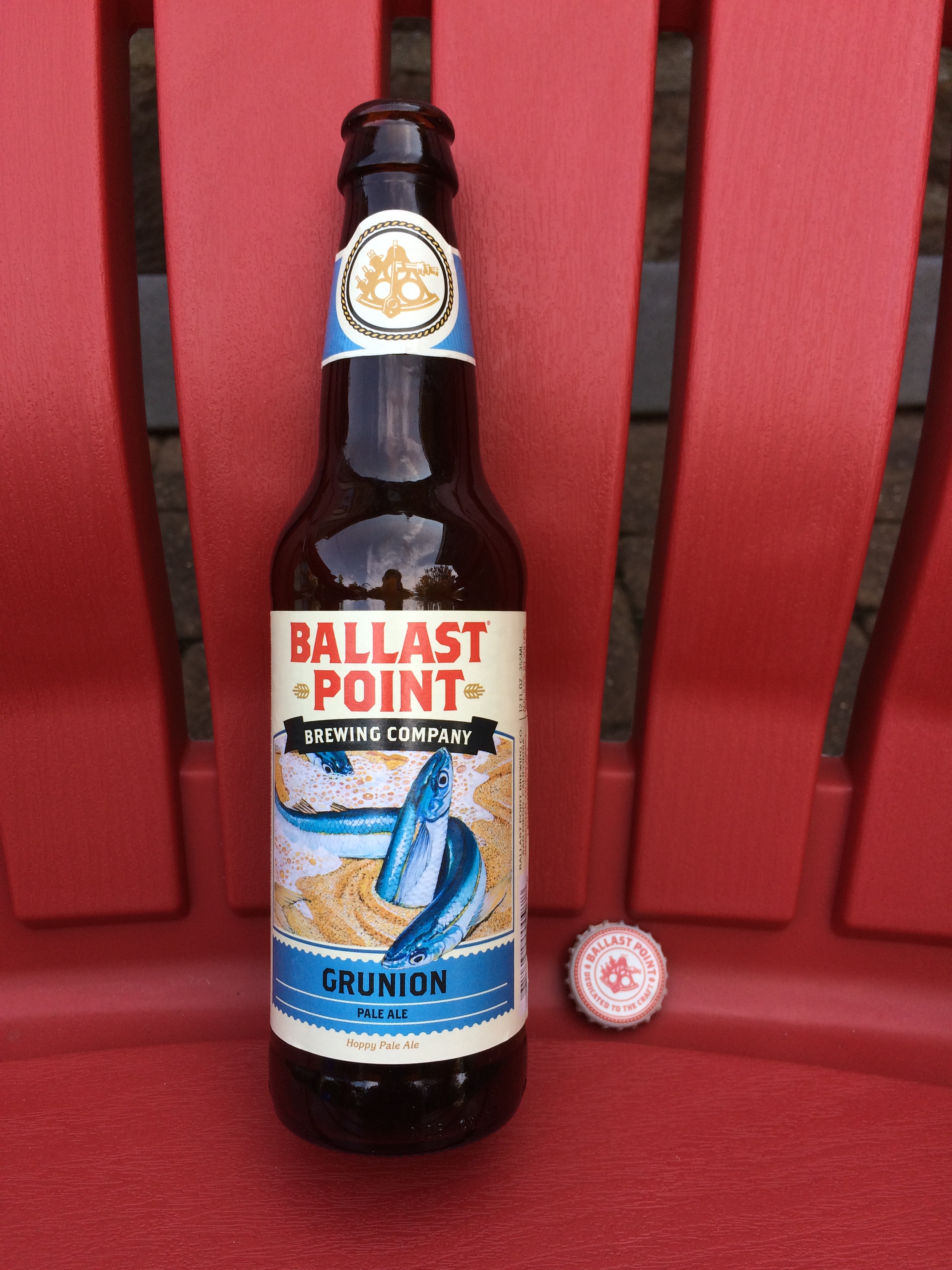
So there I was, eyeing Weis’s beer shelves with deep interest. I’m always on the hunt for beers I haven’t had before, and I came upon one that day. It was an example of a pale ale, which is a common species of bitter beer that breweries like to tweak and play around with. Its maker was Ballast Point Brewing Co., a San Diego-based enterprise I was slightly familiar with, and the name on the label was Grunion Pale Ale. Grunion? The word rang zero of my bells. What’s more, the label pictured two fish writhing on the sands. What the f*ck was that all about? I hadn’t a clue. I bought a bottle of it, natch, along with a bunch of other brews, and went on my merry way.

Not many days after that I brought the unopened, fish-labelled bottle with me when my wife Sandy and I joined two of our top friends, Liz and Rich, at a Thai restaurant in the Philadelphia burbs. The place is a BYOB. Rich asked me what beer I’d arrived with. I showed him the bottle.

“Ah yes, grunion,” he said. “They are tiny fish that crawl out of the ocean to mate on beaches in southern California. They are quite amazing.”

I stared at him in disbelief. “Are you kidding me?” I finally asked. “You actually know what grunion are? And you know about their sex lives? How is this possible? I doubt if you’ve ever been fishing in your life.”

“What can I say?” Rich coyly intoned. “Some of us are blessed with the gift of extensive knowledge.” Those weren’t his exact words, but they are close enough.

I looked at Sandy and at Liz. I asked them if they’d ever heard of grunion before. The answer was no. I then proceeded to begin drinking the beer. It was delicious. Bitter, slightly citrusy from the hops used in its creation, and not the slightest bit fish-flavored(and that’s because grunion are not used in the brewing process. They only are on the label!).

Twenty-four hours later Sandy and I were at dinner in downtown Philadelphia with two more of our top pals, Cindy and Gene. The conversation, profane and giddy, went all over the map. After a while I started recapping the previous evening’s beer story.

“Can you believe it?” I said to Cindy and Gene. “Rich actually heard of grunion. Have either of you?”

“Not me,” said Cindy. However, Gene, a polite and non-bragging sort, had this to say: “Oh, I know about grunion. They are tiny fish that crawl out of the ocean to mate on beaches in southern California.” Those weren’t his exact words, but they are close enough.

I stared at Gene in disbelief. “Man, you’re a city boy,” I said. “Why do you know about grunion? Seems to me that they’re as obscure as can be.”

“Well, when I was younger I used to read a lot about animals,” he said.

I guess he did!

I firmly believe that in the greater Philadelphia region, whose human population exceeds the 6,000,000 mark, you’d have to search far and wide to find people who could tell you what grunion are. Yet, on successive evenings I’d broken bread with two of them. Talk about infinitesimal odds. If only, after all these years of knowing Rich and Gene, dashes of their brain power had made their way over to me.

Anyway, since those two grunion-centric meals I’ve done a bit of research into grunion. Not much, because I’m not the scholarly type, but enough to get a feel for the subject. Grunion, it seems, come in two similar but somehow different varieties. Type One lives in the ocean waters off of southern California. Type Two inhabits the Gulf Of California in the Mexican region known as Baja California. And indeed both types do crawl out of the water to mate. They do this at night during certain months of the year. You can read about grunion by clicking here.

And you can witness grunion doing their slithery, entwining beach thing by clicking below. Thanks to this YouTube video we might learn some new sex positions from the grunion spectacle. Hey you!!! You’re blocking my view!!! Sit down!!!

Alas, it’s time for me to wrap up these proceedings. Before doing so, though, I’ll add that Ballast Point Brewing Co. was founded by a bunch of cool guys. They like to fish almost as much as they like churning out beers, which is why they name most of their products after fish and other occupants of the seas, and picture said creatures on many of their labels. I’m on the lookout for Ballast Point’s beers now that I’ve sampled Grunion Pale Ale. Supporting those who not only are talented but lean toward the offbeat side is a good idea, don’t you think?

(Don’t be shy about adding your comments or about sharing this story. Thanks.)

One Of Al Green’s Songs Righted My Ship For A While

Mount Digitalium

If I were younger by about 30 years I’d buy a good pair of hiking boots and some mountaineering gear and then haul my ass up to the top of Mount Digitalium. Once at its summit I’d catch my breath before laying into the resident gods who control the performance of the internet and of computer hardware and software on Planet Earth. These titans are, needless to say, magnificently intelligent. They also are f*cking pains. And they seem to get a big kick out of being the latter.

“Yo!” I’d yell at them. “I can’t take it no more. It’s bad enough that my desktop computer has had a nasty case of the freezing-ups for the last year. And a worse case of the displaying-message-alerts-that-make-no-sense. But did you have to slip a bottomless bottle of vodka to the computer monitor two weeks ago? I can barely make out anything on it since then. It’s taken wobbly and blurry to Olympian heights.”

“And that’s not all,” I’d continue. “This morning my wife Sandy wanted to take a look at her most recent credit card statement, wobbly and blurry be damned. She signed into her account, and you know what? That’s a stupid question because of course you know what, seeing that you caused the problem in the first place. I’ll tell you anyway — the statements section of the website was empty. Nothing was available to examine or to print out!

I would be shaking like crazy at this point. And the gods undoubtedly would let me shake for nearly forever before one of them made a comment or two.

“Thanks for stopping by, Earthling,” the chief god, Malfunctional, finally would say. “Now, though, it’s time for you to be on your way. Suck it up, fella, and figure out what your next steps should be. And, by the way, nobody ever said that life was easy for humans.”

That’s true. Nobody in their right mind ever did.

Back to what passes for reality. Still shaking, I fled the house and left Sandy to figure out what were the appropriate next steps, as I needed to be somewhere soon. Namely, at a local supermarket where once a week I bag and then load bakery items, donated by the market, into my car. Sandy delivers these goods to the food pantry she volunteers at.

Naturally, the credit card website situation wouldn’t disappear from my cranium. Man, I need to hire a personal assistant to handle tech issues for me and Sandy. It’d be worth it. That would free up more time for other aspects of living to rattle my very rattle-able nerves.

As I pulled out of the driveway, though, relief arrived. It came in the form of music, as often is the case for me. My benefactor was SiriusXM satellite radio’s The Loft, a channel that plays all sorts of good music. And the tune that filled the car’s interior and my ears as my journey to the supermarket began was a superb number that I hadn’t heard for some time: Al Green’s Tired Of Being Alone.

You know, there are hundreds of recordings that, when I hear them, I say to myself that they are just about as good as any recording possibly could be. That’s exactly what I thought when Tired Of Being Alone shot into my blood vessels and set me vibrating. A few simple, clear and rolling notes from an electric guitar, a handful of piercing trumpet blasts, and drums that snap steadily and regally set the table for Al’s entry. And what a pleading, powerful entry he makes. His is one of the great voices of the last 50 years, vulnerable when it needs to be, strong and sure when it doesn’t.

Not to downplay Green’s singing even a little bit, but I have to mention that I’m in love with the late Al Jackson Jr.’s drum work on Tired Of Being Alone. It couldn’t be more alive, even at the 1:47 mark when, empathizing with Green’s meandering, uncertain thoughts, it softens into a clickety-clack pattern for a spell. But when the spell breaks, Jackson’s drums explode, truly explode, as Green’s voice moves into vivid mode and female backup singers kick in loftily.

It all ends shortly after this, the dials in the studio having been gently turned to fade out the song. Maybe I wish that a different choice had been made conclusion-wise. I’d be a happy boy to be able to listen to another minute or more of Al’s and the gals’ and the instrumentalists’ amazing ride.

Or maybe it’s better that the proceedings were cut off artificially. After all, I was left breathless, a very good way to be left.

Al Green wrote Tired Of Being Alone in 1968. For various unimportant reasons it didn’t come out until 1971, and has been a pop music staple ever since. It’s a song about love, as most songs are. Al loves a girl. He can’t stop thinking about her. But she has sent him packing, and Al wants her back. He knows, though, that she’s unlikely to change her mind. But a guy can fantasize, can’t he? And that’s what Al does, ruminating during the song’s middle section about the nature of lost love and what he might be able to do to re-win a heart. With these words Al describes what many of us have felt at one time or another:

I’ve been wanting to get next to you, baby,
Sometimes I fold my arms and I say,
Oh baby, yeah, needing you has proven to me,
To be my greatest dream, yeah.

Many folks have heard Al Green sing Tired Of Being Alone not only on record but on stage. But will anyone ever encounter a stage version again? Hard to say. About 40 years ago religion called Al, and he, for the most part, left the pop music scene (his most recent tour was in 2012). He is the pastor of the Full Gospel Tabernacle church in Memphis, Tennessee. In an interview last year he left the door open for a return to public performance (click here), but I’m not holding my breath.

Yes, Al is doing what he must. And as he does so his many hits live on. I was a lucky individual to hear one of them on my way to the supermarket. It steadied my jangly nerves for a while. Thanks, Al. I needed that.

(Don’t be shy about adding your comments or about sharing this story)

Fishtown (As Seen Through Max’s Eyes)

I’m back! Not that I was gone for long. I wasn’t. I was on the road, for only a handful of days, with the Tingling Brothers Traveling Circus, with whom, on a whim, I’d taken a job as an apprentice elephant-dung shoveler. But the elephants ran into visa problems, what with Trump’s new, stringent guidelines, and had to be shipped back to India. End of job.

I apologize for not writing a story last week, and I totally understand the frustrations that my editor Edgar Reewright expressed in the piece that he posted concerning my absence (click here). Seeing that he’s not well-endowed (financially-speaking), he badly missed the paycheck that I neglected to issue to him. I’ve rectified my wrong. Edgar now is back on the books and once again is as happy as a poorly-adjusted, angry middle-aged guy might be expected to be.

With circus life behind me, for today’s sermon I shall turn my attention to the post-Tingling visit that our nephews (20-something Jesse and 30-something Max) paid to me and my wife Sandy. They were with us for a number of days, and we did so many enjoyable things together I’d have to write a 20,000-word opus to cover them. I’m not up to that, being very much low on gas. The circus gig took a lot out of me, you see. I had no idea how heavy elephant crap is. So, in order not to interfere with my current regimen of napping and thumb-twiddling, I’ll focus on merely one highlight — the time that Max and I spent in Philadelphia’s Fishtown section the day before he returned to his home in Texas. Jesse had, by then, gone back to his abode in the Big Apple. And Sandy sat out the Fishtown adventure. “Have fun, boys,” she told us. “I’m staying put. Did I mention that George Clooney will be stopping by the house this afternoon to show me how to operate that needlessly complicated Nespresso coffee- brewing machine he peddles on the boob tube?” She hadn’t.

But, f*ck Clooney. Fishtown was calling, and Max and I headed its way, arriving there around 12:30 in the PM. We wandered for close to two hours, checking out this, that and the other thing, and had a low-key kind of blast. Not everyone, I’ve discovered over the years, is into open-ended strolling such as this, which is why my meanderings often are done by my lonesome. But Max is. Which proves, I’d say, that sometimes a great mind (Max’s) and a middling one think alike.

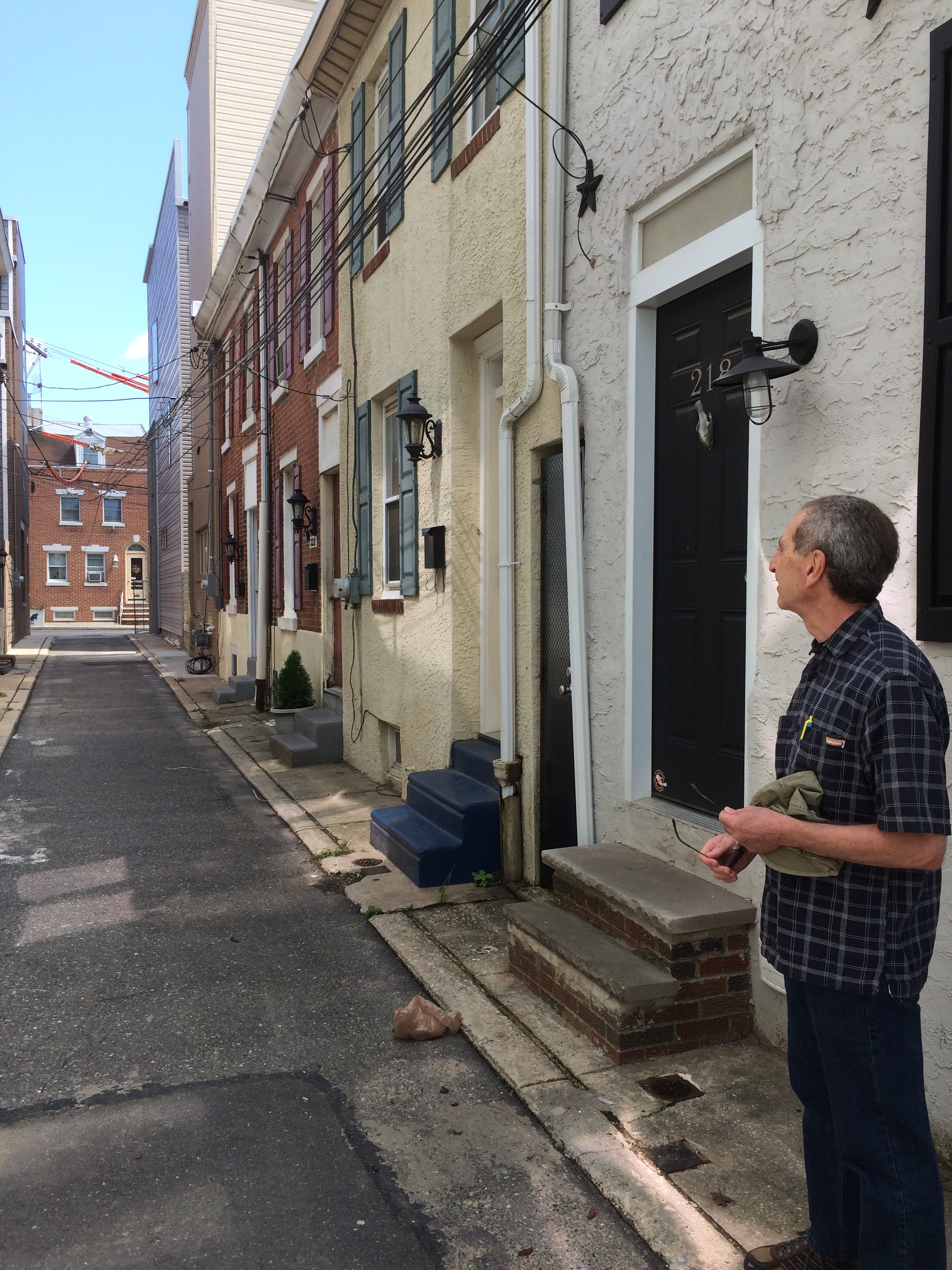
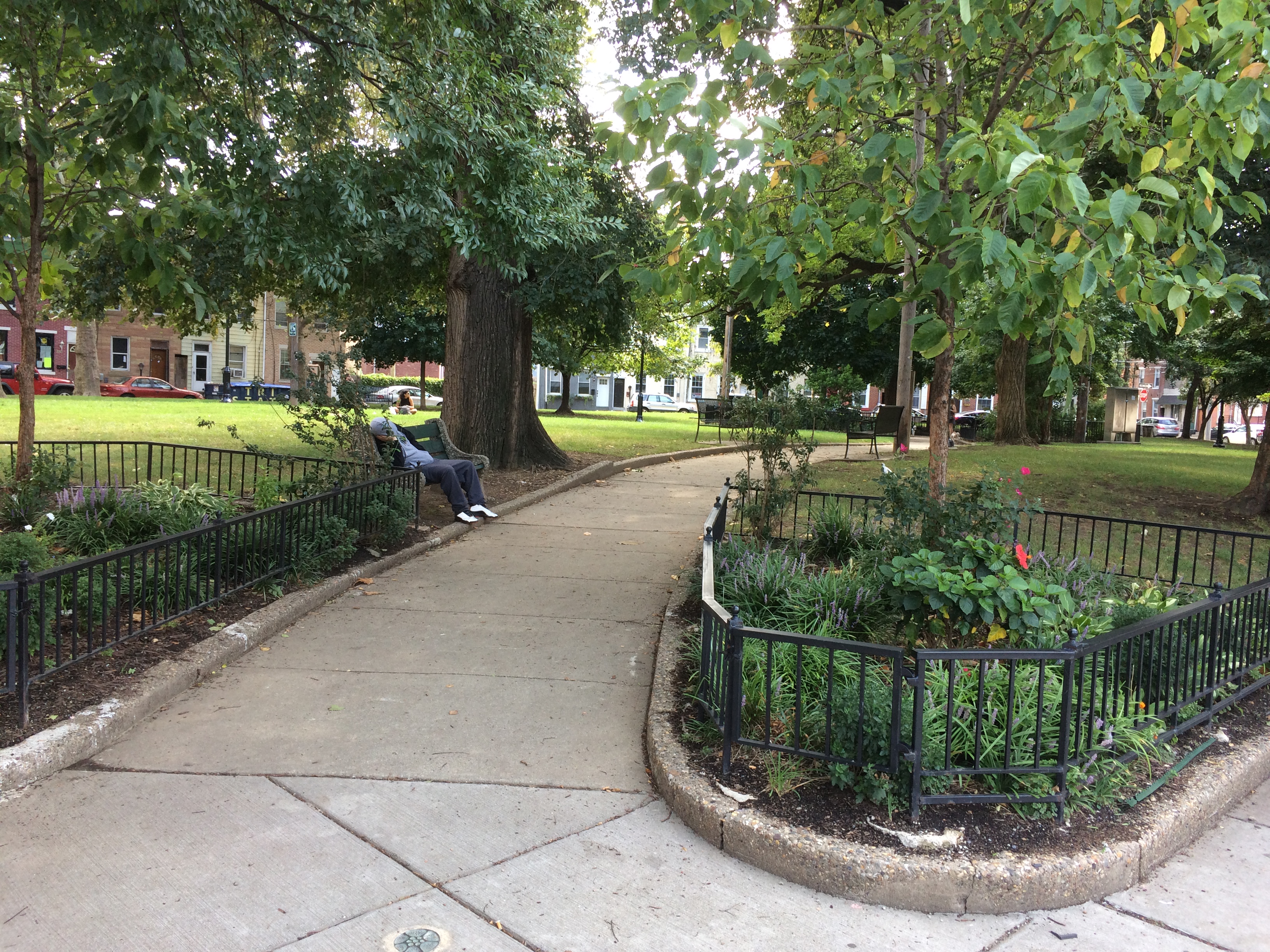
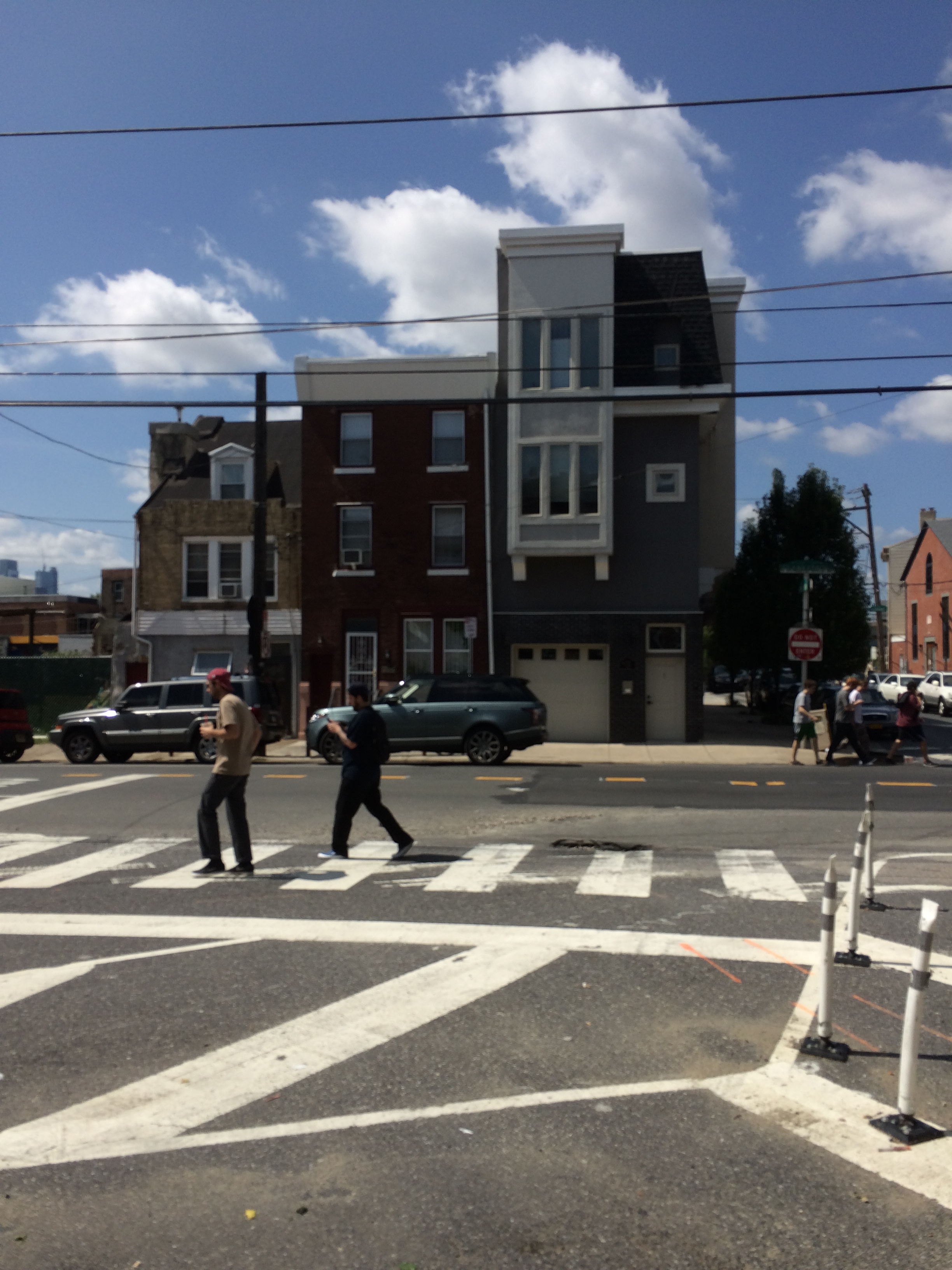
Fishtown, for sure, isn’t a knock-your-socks-off kind of neighborhood, but it has its charms. Unlike downtown Philadelphia, which is only two miles away, there are no tall buildings or crowds of workers and tourists to gaze at. But I’m a sucker for narrow, twisting streets and for houses, churches and factories that went up between the mid-1800s and early 1900s, and for calm, gracious neighborhood parks. Fishtown’s got plenty of those items. Not to mention a supply of new housing and restaurants and taverns and music venues to accommodate the millennials who discovered Fishtown earlier this century and have been changing it for the better. But none of the newer stuff is overdone, at least not yet, which is why you don’t see all that many people on Fishtown’s streets in the afternoon. The neighborhood hasn’t lost its small-town feel, and that’s a good thing.

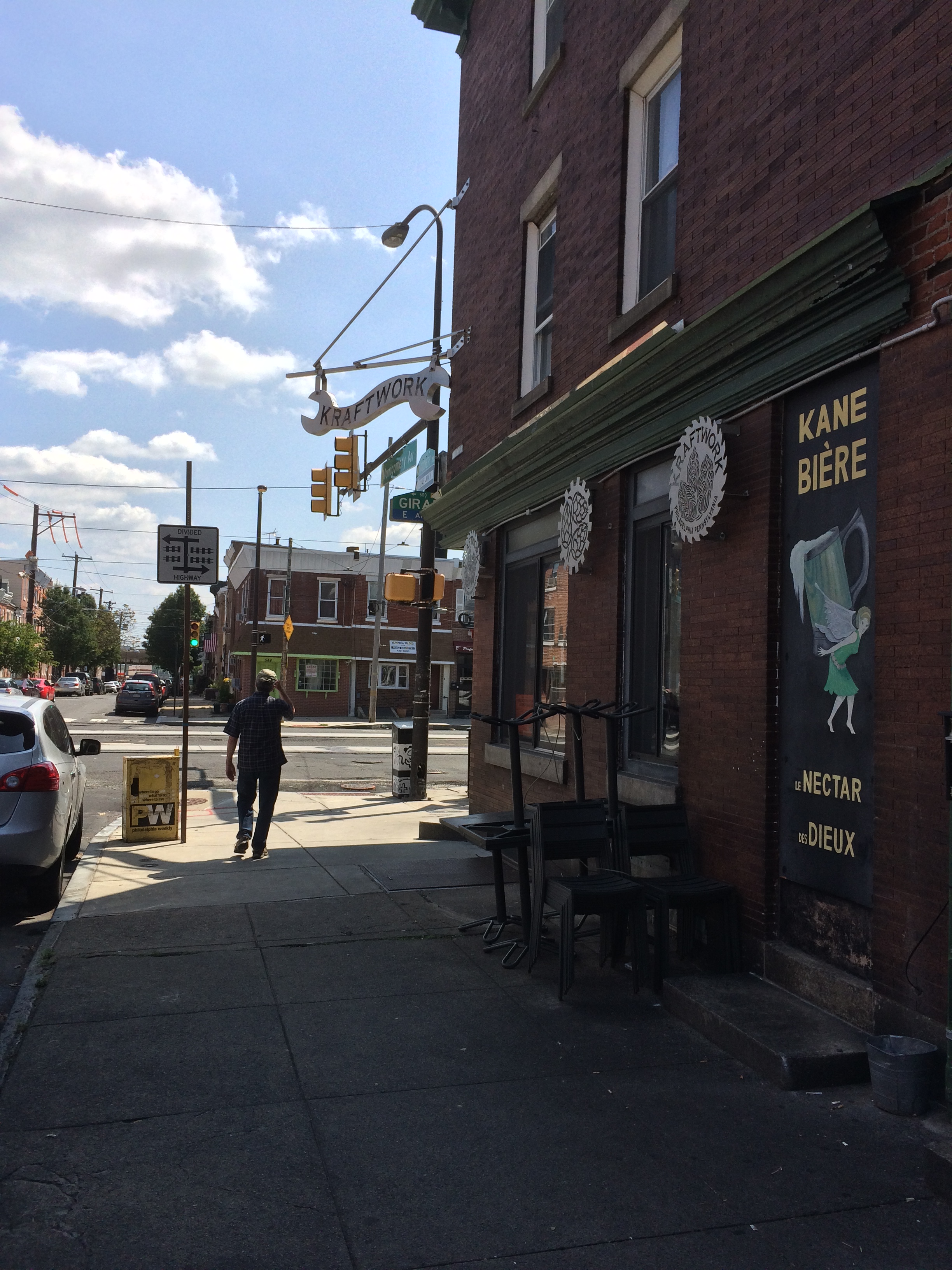
We began our expedition at the corner of Frankford and Girard Avenues, in front of Johnny Brenda’s, the tavern cum rock music club that set Fishtown’s rebirth in motion after Brenda’s opened in 2003. At that corner I had a brainstorm. I asked Max if he’d like to use my iPhone to take photos of whatever caught his eye as we made our way around the neighborhood. And that, if he did, I’d use some of them to illustrate a story I’d write about our day together. “Great idea,” he said, ripping the phone out of my hand. I’m going to sue him for bruising my pinky. Little had I known that Max is a photo-taking fiend. He, with his pix-snapping right index finger in tow, bopped through Fishtown happily and giddily. Dozens and dozens of shots were added to the phone’s memory that afternoon.

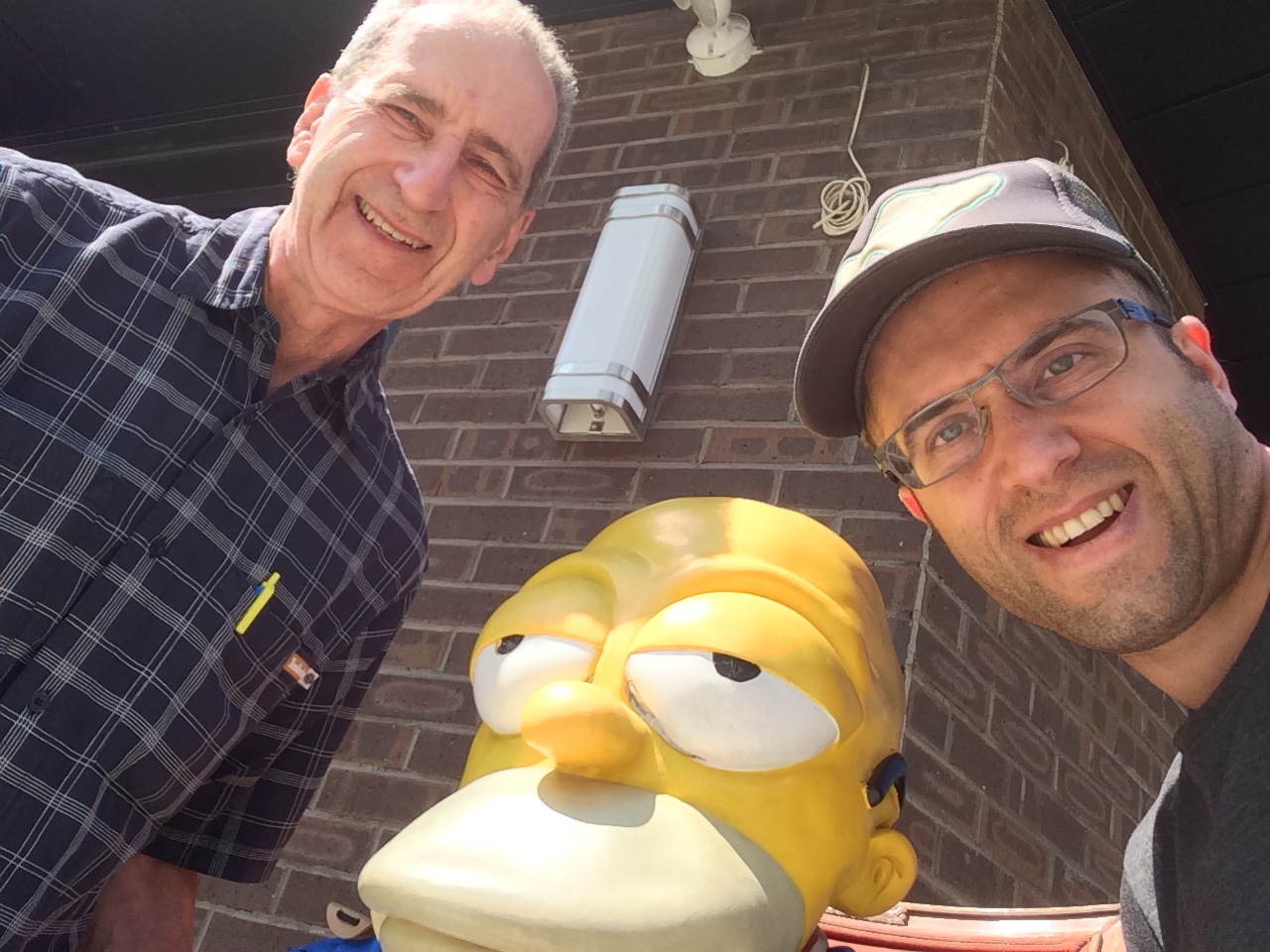
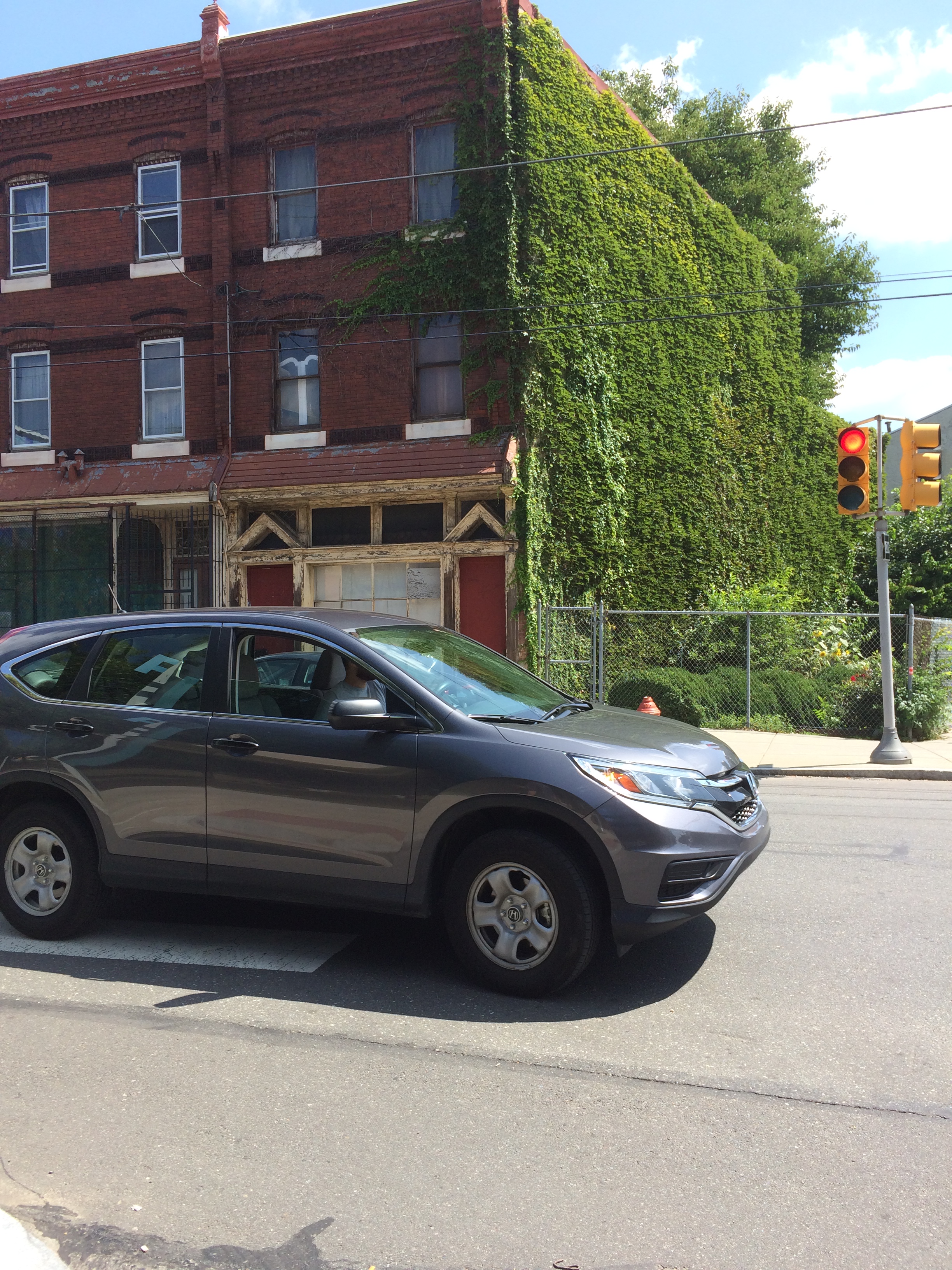
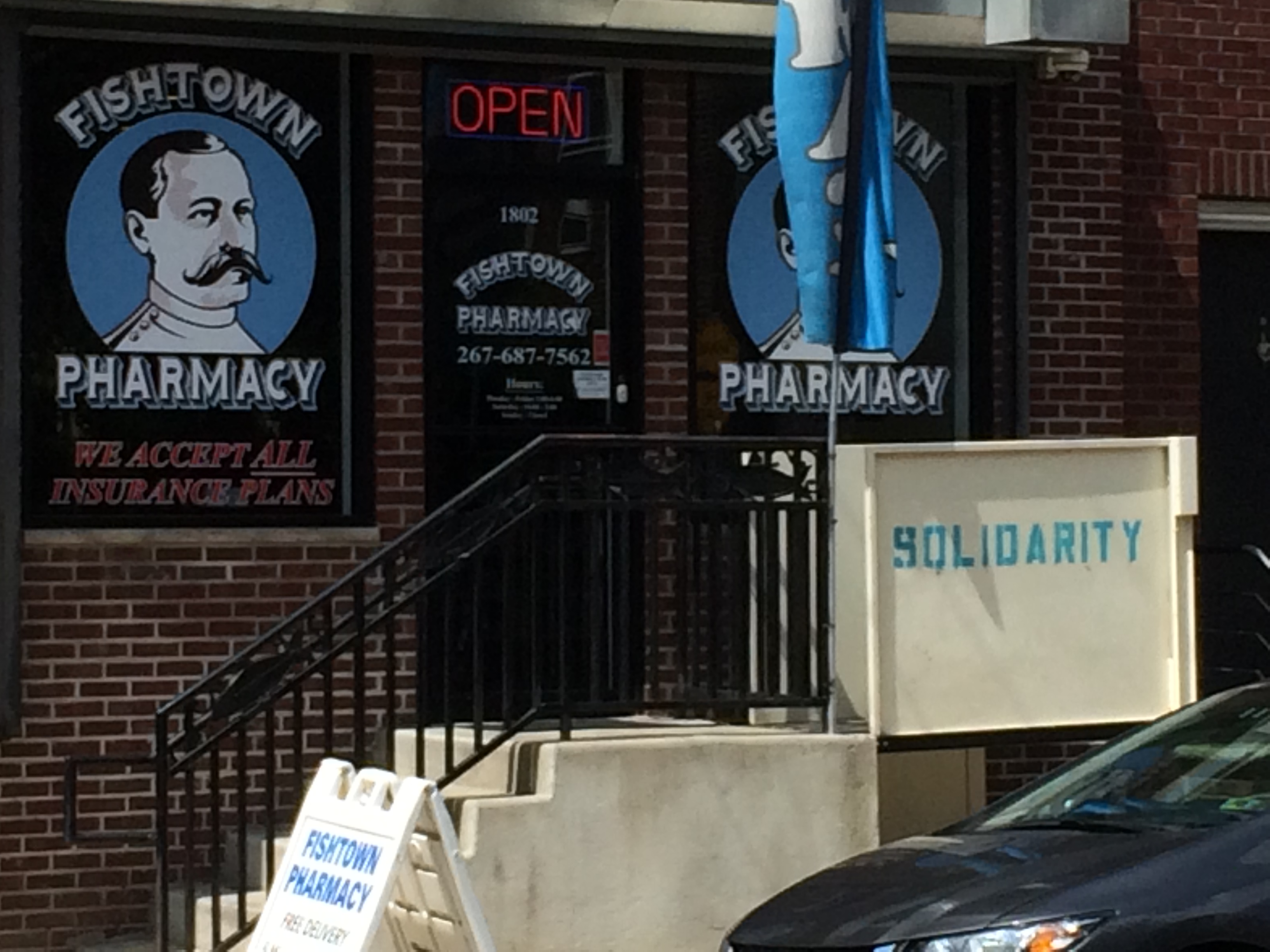
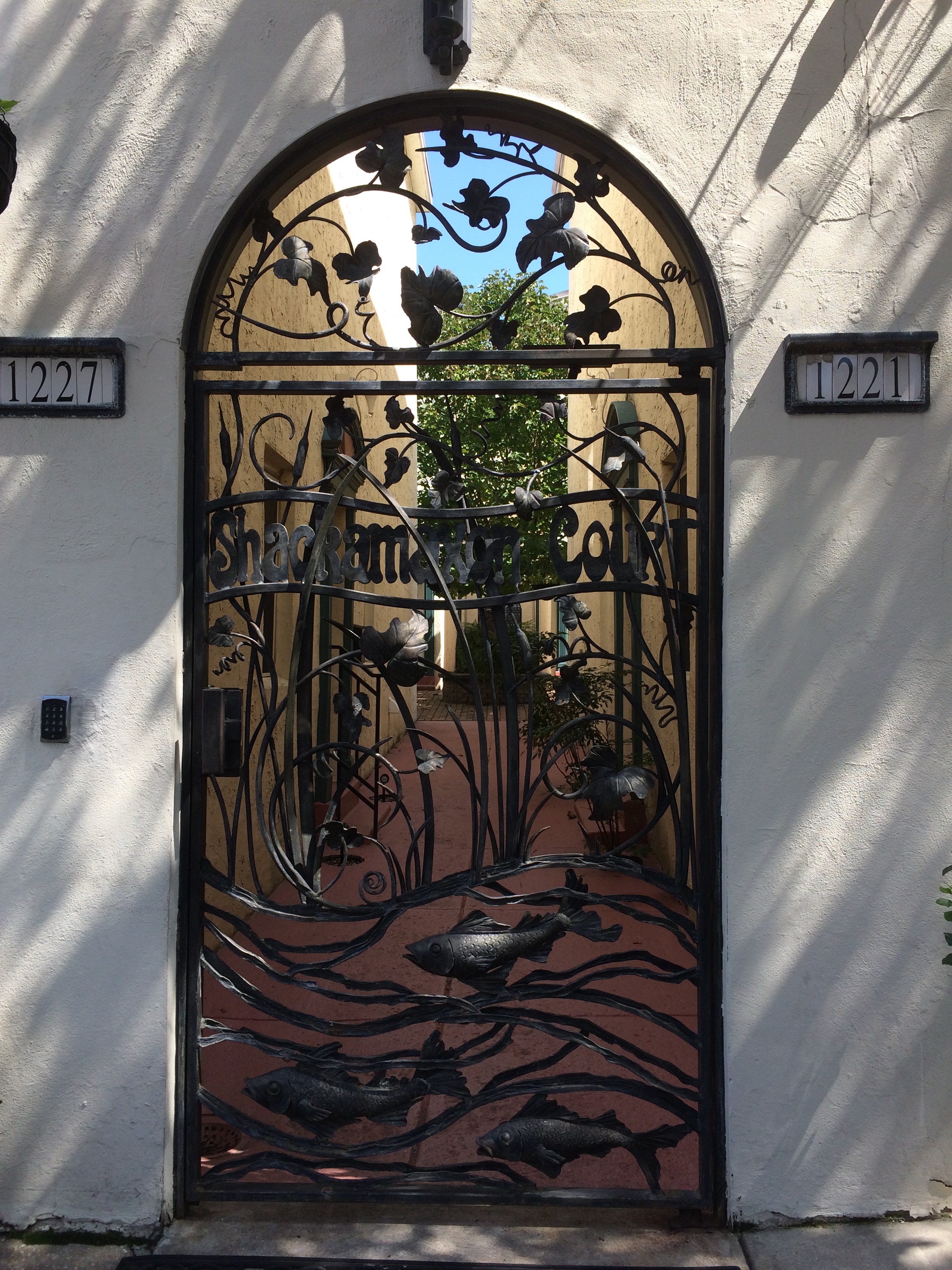
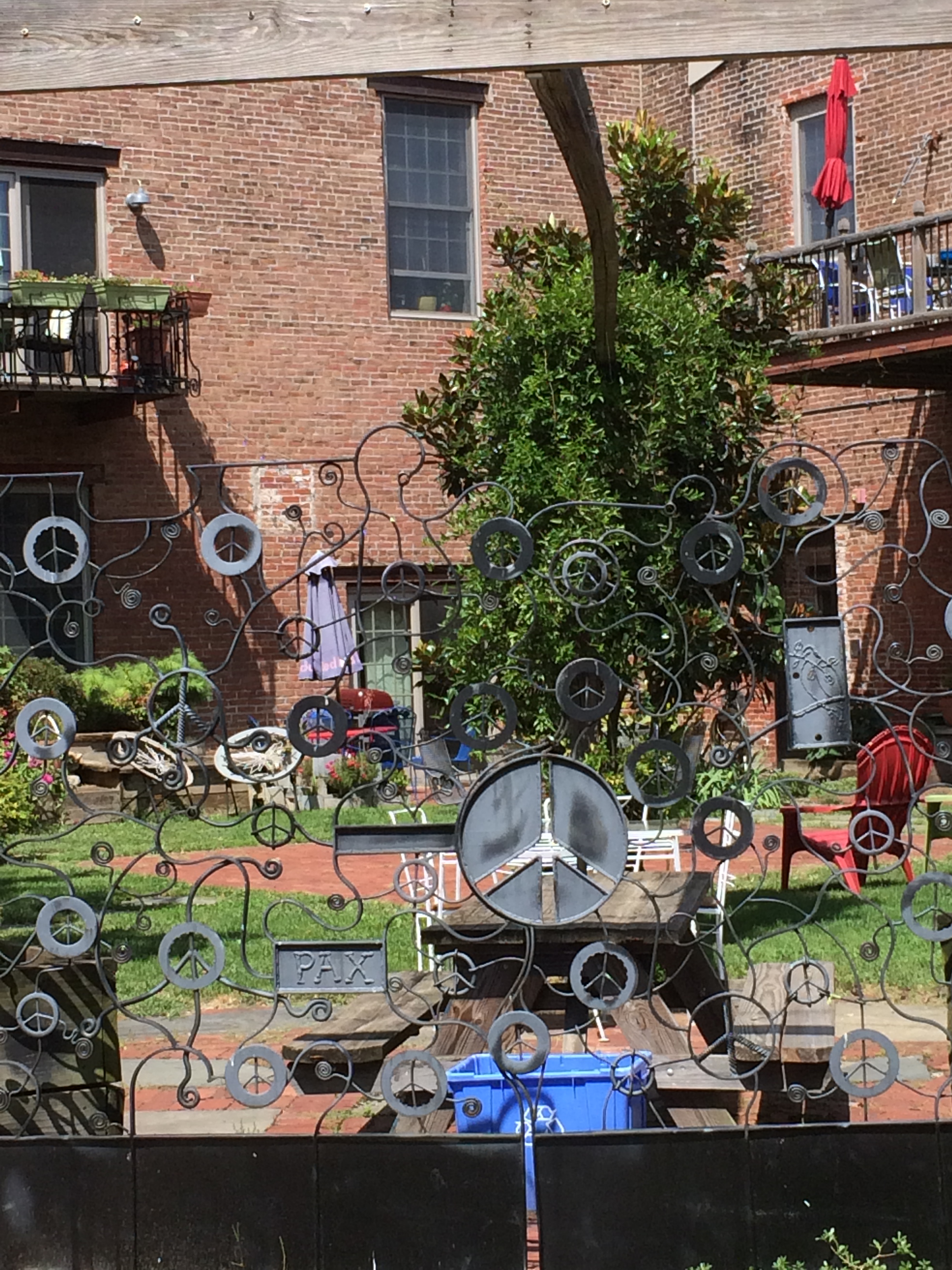
I culled through the images a few days later. What you see, then, on this page is Fishtown as Max saw it. He peered at lots of things, big and small, and framed them well in his photos. Store signs, well-aged streets, new home construction, a house one side of which is covered with an astonishing mass of ivy,  . . .

Max was drawn to hip color arrangements, to the nifty contrasts formed by buildings near to one another, and to the unexpected. And he asked me to make sure I included the selfie he snapped of us and Homer Simpson outside a store on Frankford Avenue. I don’t look all that good in said picture, but what the hell. Candid photography is where it’s sometimes at.

When Max next visits us, he and I probably will scout out another section of Philadelphia that’s off the touristy trail. Maybe an area that I, who despite having lived in or near Philadelphia for 40+ years of my adult life, barely know. Such as Port Richmond or Kensington. It’ll be fun. And, no doubt, will be documented by he and I.

(Photos by Max Scheinin. If you click on any photo, a larger image will open in a separate window)

An Important Announcement From Neil’s Editor: Neil’s Missing!

Greetings, Earthlings. My name is Edgar Reewright. I’m an editor. And I’m writing to you on bended knee, as I will explain a few paragraphs down the line.

Over the years I’ve worked at The New Yorker, The New York Times and, most recently, Playboy. Prestigious jobs they were, not to mention excellent distributors of cash and benefits to yours truly. But as we know, life can throw curveballs and spitballs at any of us at any time. And come my way they did.

I won’t go into too much detail. Let’s just say that I didn’t do myself any favors when, after having devoured two bottles of Jack Daniels at a dazzling party at the Playboy Mansion in 2014, I made a pass — actually, more like 15 passes — at Hugh Hefner’s wife. When I came to a few hours later I discovered myself to be robed in a Playboy Bunny outfit and draped over a traffic light, 20 feet above ground, on Sunset Boulevard. Hef’s boys don’t mess around. Needless to say, my career in big-time journalism was over.

Thanks are due, therefore, to the blogging gods of small-time journalism. A prime example of which is Neil Scheinin’s blog. The one you’re staring at right now. Neil fancies himself to be a writer. What the hell, I always say, let him believe what he wishes. He’s hardly the only delusional collection of skin and bones traipsing around among us.

Anyway, the flimsy quality of Neil’s opuses doesn’t mean a fig to me. What does matter is the paycheck that Neil sends my way weekly. Seven hundred and fifty dollars ain’t bad dough to someone in my situation. Damn good thing I answered Neil’s ad (“Help! Dork desperately in need of editorial assistance,” it read) in the January 2015 issue of All Praises To The Blogosphere. The rest is history. Or something along that line.

Here’s why I’m writing this article: I’m very, very worried. Neil has disappeared. Foul play? Nah, there’s no evidence of that. By his own volition? You can bet the house on it. The louse didn’t even have a story-in-waiting to be published this week. Who does he think he is, skipping a week of writing? His audience probably could care less, but me? I care like crazy. And that’s because Neil not only put down his story-writing pen, he also put down his check-writing pen. I have $236 dollars to my name. If Neil doesn’t come out of hiding, or wherever he is, and pay me my weekly allowance . . . hell, I don’t even want to think about it.

Readers of Neil’s blog, I’m pleading with you to try and find him. His wife Sandy has looked high and low for him and has reported Neil’s absence to the authorities, but so far they’ve come up with nothing.

Me, I think there’s a chance that, in search of inspiration and beneficial aura fields, he’s gone to visit one of his blogging buddies, people who, unlike him, truly fall into the category of writer. And who not only churn out essays with regularity but have penned books. K E Garland, for instance, whose The Unhappy Wife is a strong look at marriage and relationships. And Andrew Ferguson. He wrote The Wrong Box, a romp of a murder mystery filled with sex, laughs and a twisty plot. Neil has told me more than once that he too would like to create a book one of these days. Yeah, right. Believe me, holding your breath waiting for that to happen would be a mistake of the highest order.

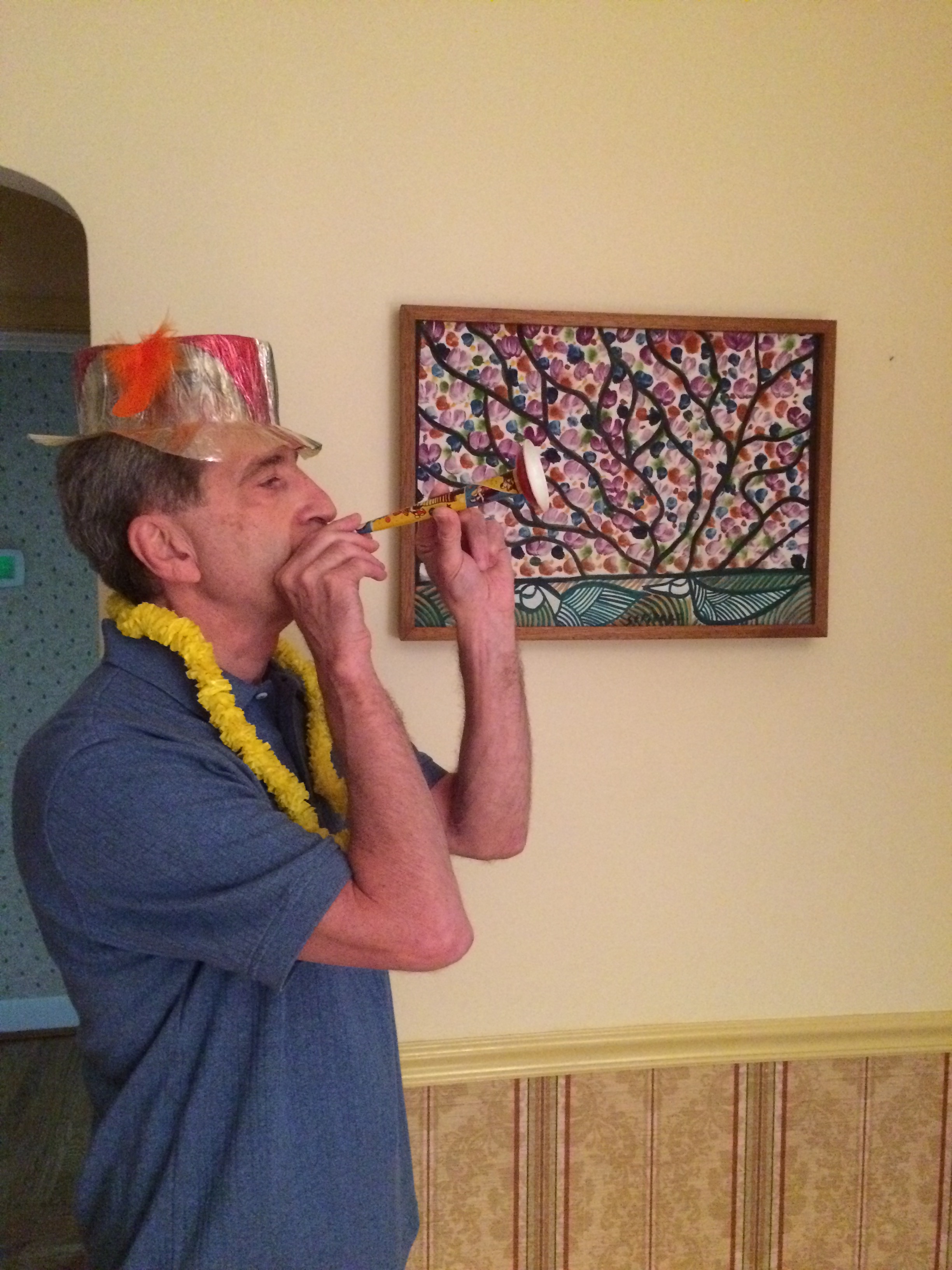
Send out the search parties! Spread the word on Twitter and Facebook! Neil is out there somewhere and he needs to return home. His wife will do just fine without him, sure. But not me. My bank account is staring at me with pitiful eyes. He better come back! And pronto. Here’s a photo of Neil. It’s the only one I have. It’s from a recent New Year’s Eve, and maybe will be an aid in finding him. Say what you will about Neil, you’ve got to admire his taste in leis.

Thanks for your help.

(Photo by Max Scheinin)

A Big Apple Day

Is New York City the apple of my eye? Well, once it was. I spent who knows how many hundreds (thousands?) of hours in one or another of its five boroughs while growing up on Long Island. And after moving to Philadelphia in the mid 1970s, to start what became a 34-year career in government work, I made pretty frequent trips to NYC, 10 or 15 each year. I was pulled there magnetically by its museums, architecture, music clubs, gracious and spacious parks, and streets just made for strolling and girl-watching. Nobody needs me to tell them that the Big Apple is one of the coolest kids on the planet. It has been for, what . . . at least 100 years?

But, for one reason or another, those Philly-to-NYC visits became less and less common when the early 1990s rolled around, petering out to a mere one every few years. Incredibly, New York City, with which I’d had the cuddliest of relationships, faded gently from my mind. “New York, wait for me! You’ve meant the world to me! I’ll be back semi-regularly, I promise. Hell, you’re only 100 miles away,” is what I should have felt and said. But I didn’t. Man, if you’d have told me before then that such ever would become the case, I’d have had you committed.

This, then, is where Dave, one of my greatest pals, enters the story that you’re reading. He, like me, used to be a Long Islander. We became friends there in high school, during the Middle Ages. And he used to love NYC. These days, though, the city’s hustle and bustle does a superb job of frazzling Dave’s nerves. He ain’t in love with NYC anymore.

Still, Dave, who took up residence on the West Coast 40 years ago, visits New York now and then, despite the jittery situation with his nerves. I guess he’s a masochist. And one of those now-and-then occasions occurred recently. “Yeah, I’ll see you there,” I told Dave when he informed me of his impending eastward trip. Thus, two Saturdays ago I headed north from my home in the Philly burbs to hang out with Dave for half a day in the greatest of the famed metropolis’ five boroughs. Manhattan.

We met where 42nd Street and Broadway colorfully come together. In other words, at the bottom end of Times Square. And for the next four hours we graced various neighborhoods, and Central Park, with our dynamic presences. Though on the cusp of age 70, we strode the streets like the titans we vaguely once were. And vaguely still are. Gorgeous girls couldn’t keep their eyes off of us the other day. Isn’t that right, Dave?

“Damn straight, Neil,” Dave just told me. “Damn f**king straight! Even though it could be that our 20/80 visual acuity distorted our view of things just a little bit.”

Speak for yourself, Dave. I know what I know.

Here’s how we spent our time together: We shot the breeze vigorously, catching up on each other’s doings. And we walked and walked and walked while shooting that breeze. And when we got tired of walking we sat on boulders in Central Park, and a little after that on chairs in a snazzy restaurant near the park’s southwestern corner.

What’s more, we didn’t have any interest in taking in any famous sights, though we saw some anyway (such as Carnegie Hall, Columbus Circle and horse-drawn carriages in Central Park). You can’t not see them in this history lesson of a city. To repeat, then, what’s already been said: Yapping, wandering, eating and girl-watching proved to be the items on our agenda.

The time flew by, as sometimes it does, and around 3:30 PM Dave and I said our goodbyes. He needed to go back to his hotel and start getting ready for the wedding that had brought him to NYC in the first place. One of his friend’s daughters was about to get hitched.

But my bus wouldn’t be leaving for an hour and a half. I had time to kill. And what better way to do that than to stroll along some of the streets of Hell’s Kitchen, the Garment District and Times Square. Those nifty sections of the city run into each other, and would keep me close to the Port Authority bus terminal, from which my Philadelphia-bound ride was scheduled to depart.

Which brings us to the final topic I want to talk about. To wit, photos. I didn’t take any while with Dave, except for a couple of selfies of him and me. Why? Man, if there’s one thing I’ve learned since starting this blog, it’s that obsessive photograph-snapping can interfere one whole lot with enjoying the time you’re spending with people you like. Besides, who the hell would want to see a picture of the roast beef sandwich that Dave tore into at the snazzy restaurant, or of the boulder we sat upon in Central Park? Oh, you would, would you? It figures.

All I can say is that it seems that you’ve come to the right place anyway. Because after Dave and I went our separate ways my picture-taking mode kicked into high gear. And the pix that I shot over the subsequent hour are the ones you’ve been looking at on this page. New York City is a lot of things. One of which is photogenic. So, even a clod like me can’t help but come away with some nice shots.

Thanks for reading and viewing. Till next time . . .

(If you enjoyed this article, then don’t be shy about sharing it or about adding your comments)

(If you click on any photo, a larger imager will open in a separate window)

Sue Miller The Novelist Got Me Thinking: Uh-Oh!

Who am I? Deep inside, I mean. For that matter, who are any of us? Man, those are questions I don’t think about too much. They make my head spin. You wouldn’t think they would, though, considering that my college major was psychology, some of whose branches attempt to help humans find answers to such concerns. I liked my psychology courses, and did pretty well grade-wise in them, but I guess that psychology and I never clicked meaningfully enough. We didn’t waltz together as a loving couple. At no time, then, did I see a psychology-based future for myself in my crystal ball. In fact, sad to say, when I gazed deeply into that glass hunk I didn’t notice any future career at all. Alas, with college degree in hand following graduation in 1969, I trod a long and winding road halfway to nowheresville, scrambling with little sense of direction to find steady employment and a decent-paying job.  Oy vey summed up my situation and prospects nicely.

Thank the baccalaureate gods above, the ship began to right itself a number of years later, the proverbial pieces starting to fit together. And in the end pretty much everything worked out quite attractively for me. But looking back on it all from five decades later, maybe I’d have found steady employment and a decent-paying job a whole lot sooner had I been more attuned to examining and answering the foreboding question, “Who am I?”. Not to mention another question, to which we’ll turn our attention shortly, that wasn’t at all on my radar screen in those days of yore.

In any event, here I am today, rolling “Who am I?” and its like around in my brain because of a novel I snatched off the shelf in a local library a few Fridays ago. Not paying attention to the hour of the day, I arrived at the library only 10 minutes before closing time. I realized this when the lights began to flicker, a signal to pack up and get out of Dodge.

Determined not to leave empty-handed I moved quickly down the fiction section’s M aisle, which is where I was standing when the lights started doing their thing. My eyes darted here and there and landed on books by various Millers. Should I try something by Andrew Miller, whom I never heard of but whose volumes were emitting vibes that appeared to be meshing happily with my own? Or one of Henry Miller’s opuses, HM being a hip and bawdy cat I’ve plenty dug over the years? Nah, I wanted a female author. In the intellectual, not the carnal sense. Which is why I grabbed a few of the novels by Sue Miller off the shelf and scanned the synopses on their inside covers. I knew of Sue, she of the bestselling The Good Mother and The Senator’s Wife, and made my decision pronto. Home I went with The Lake Shore Limited sitting beside me in the car.

Sometimes you win, sometimes you don’t. In this case I won, because The Lake Shore Limited is a fine, fine book. If you are in search of a handsomely-wrought creation whose characters act and talk and think believably, it might be for you.

The Lake Shore Limited not only is the name of Sue Miller’s novel, it also is the title of a play set within the novel. What’s more, it is a real-life passenger train that connects Chicago with several cities in the northeastern United States. The play, which is seen through the eyes of various characters in the book, is the novel’s fulcrum. Its powers cause them, including the play’s author, to take good, hard looks at themselves and in some cases at those in their immediate orbits. All find within the play circumstances that resonate with or parallel their own lives.

Wilhelmina “Billy” Gertz, the novel’s main character, is a playwright living in Boston when the book opens. The year is 2007. Her latest product, The Lake Shore Limited, is in performance at a small Boston theater. And gaining strong reviews. Billy felt compelled to write the play, which she battled with for years trying to discover what she really wanted to say, because her once-boyfriend Gus had perished in one of the planes that demolished the World Trade Center on 9/11. Billy’s play tells a tale of an emotionally-numb man, Gabriel, waiting for Elizabeth, his wife, to return from a trip. She is travelling on The Lake Shore Limited. For many a moon, he and Elizabeth have not exactly been the happy couple. In no real sense are they together.

But life can change fast. The Limited has been targeted by terrorists, bombs ripping through it as it reaches Chicago’s Union Station. Gabriel’s soul-plumbing, while he waits to learn of his wife’s fate, reveal him to be more alive than he or the play’s audience expected.

Moving back and forth in time, Miller lays out the lives, past and present, of Billy, Leslie (Gus’s sister), Rafe (who portrays Gabriel in the play), and Sam (Leslie’s friend and Billy’s pursuer). We view events and encounters through their differing perspectives. And we learn that each character often isn’t too certain of the solidity of his or her perspective to begin with.

Which, to me, sounds like the way things are in real life. That’s one reason I enjoyed The Lake Shore Limited as much as I did. Its players come across as true flesh and blood. Miller’s novel also is layered delicately and precisely, which makes it rich. And ripe for discussion. Care and concern, unbridled love, grief, selfishness, infidelity, deception . . . these primo examples of the human stew are on full display in the novel. Maestro-like, Miller elegantly weaves these themes and emotions through her pages.

Not to downplay those just-mentioned examples, two of the things that have stuck in my mind like glue about The Lake Shore Limited even more are the “Who am I?” question and another question with which it goes hand-in-hand. Miller doesn’t dwell on them, but I felt them running as undercurrents in her novel. Billy, for instance, thinks of herself as a semi-loner. And, I believe, she knows that not only is it her insecurities that lead her in the loner direction, but that trying to overcome them by adopting a less-defensive approach to life might result in a jump in her happiness quotient.

And Sam, a successful architect, can only feel bad about how he failed pretty considerably as a parent when his children were young. They, now well into adulthood, and he don’t have world-class relationships. “Who the heck am I?” I can envision Sam asking. “What do I need to do to change my course?”

Billy and Sam . . . I can relate. We homo sapiens are emotional and malleable creatures, open to improvement and expansion, and vulnerable to blows. Yes, “Who am I?” is a biggie as questions go. But even if you find the answers to it, you’re not going to bloom enough if you don’t get around to examining, and acting upon, “What sort of person do I want to be?” too.

(If you enjoyed this article, then don’t be shy about sharing it or about adding your comments. Thanks.)