Tomatoes, Beer And The Kominsky Method: A Sexy Story

Over the phone I could feel my editor Edgar Reewright’s blood pressure galloping towards very unhealthy levels. I could sense that the veins in his forehead were bulging more than his famously small pecker ever has. And, almost needless to say, I heard him roar loud and clear.

What the hell’s wrong with you, Neil?” Edgar screamed at me. “Why do you keep doing this? Is it so hard to come up with story ideas whose components go together like hats and gloves? It isn’t. In fact, it should be easy!”

“Neil, an essay about tomatoes, beer and The Kominsky Method just won’t cut it. They’ve got nothing in common, and I say that even though I don’t have a clue about who or what Kominsky is. If you want to write this story, then write it. But edit it yourself. Oh, where did I go wrong to end up with you as a client? If you weren’t a reliable source of income I’d drop you faster than my first three wives dumped me!”

“For crying out loud, Edgar, calm down,” I said. “What’s wrong with this story idea? The answer is nothing. I like writing about things that give me a buzz, and this story will be about the ones that have excited me the most lately. Not only that, somewhere in the piece I’ll ask the readers to let me know what’s been ringing their bells. They’re a discerning lot and will help to expand my horizons.”

“Horizons, huh?” Edgar snickered. “You’re old, Neil, remember? Your horizons are too stiff and achy to expand more than an inch.”

“Maybe so, Edgar,” I said, “but that inch is more than your famously small pecker is capable of expanding.” Edgar didn’t respond to that cutting remark.
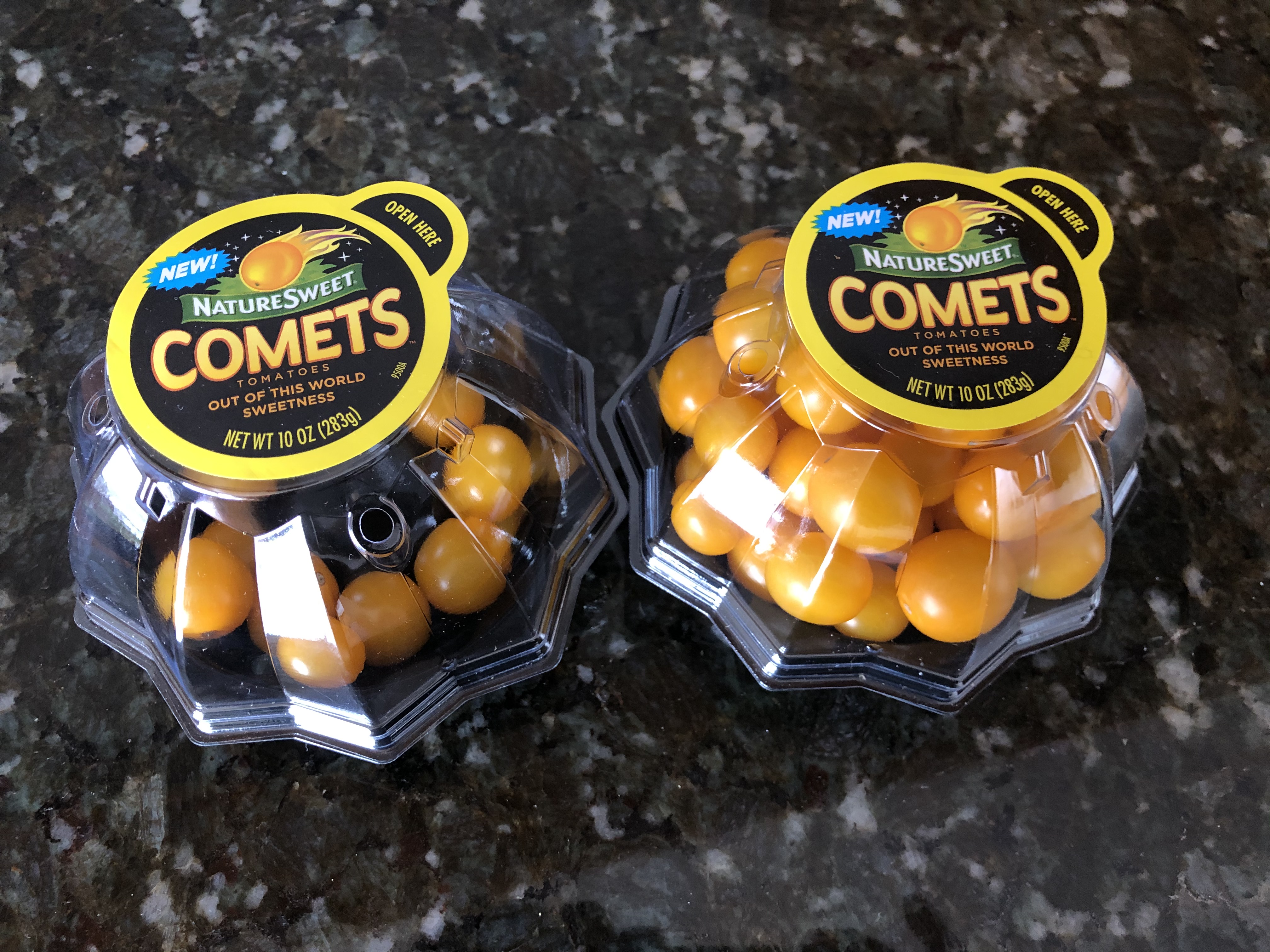
“Hear me out, Edgar,” I continued a few moments later. “Let’s start with tomatoes. Have you ever tasted little yellow ones? I never paid any attention to them until a few months ago, when they caught my eye at the supermarket. Now I’m hooked on them. “Comets” is the brand name of the ones I buy, and they’re damn fine. Sweet as sugar, with just the right amount of tang. They make any salad better.”

Edgar didn’t say a word.

“And how about the beers that Magic Hat Brewing Company, in Vermont, turns out?” I continued. “Magic is right. The brewers there are magicians, Edgar. Magicians! I have two Magic Hat variety packs at home. And every one of the brews in those boxes is absolutely delicious. I’ve been drinking their beers for years, but didn’t know about the vastness of the Magic Hat repertoire until the variety packs entered my life not long ago. That brewery rules!”

Once again, Edgar remained silent. What was wrong?

“Edgar, this conversation isn’t going well, so I think we should say our goodbyes soon. Then I’ll start writing the story. But I can’t leave without recommending The Kominsky Method to you. It’s a television series, a comedy/drama done charmingly and with a sharp wit. Netflix carries it. Edgar, I don’t turn on the TV too often, so I’m glad I decided to give Kominsky a try. Do you like Michael Douglas and Alan Arkin? I do. They’re the leads in the show and are fabulous. So is everyone else in the cast. Watching Douglas and Arkin try to deal with the slings and arrows that life throws at them in their old age is a blast, and touching too.”

I paused. Then I said, “Edgar, you haven’t talked in three minutes. I don’t hear you breathing. Speak to me, Edgar. Speak to me! Are you there?”

“Yes, I’m here,” Edgar, sounding sad, said ten seconds later. “I heard you talking all along, but nothing registered. I was deep in thought. Neil, how do you know about the size of my manhood? I thought that nobody knows except for my wife Loretta and my three exes.”

“Edgar, you’re kidding me, right? Everybody has heard about your short sword. Your third ex-wife went into all the details in a post on her Facebook page last week. She mocked you real good. In no time the article took off. You’re famous, Edgar. Maybe you don’t want to be, but you are.”

What? I’m going to sue her. I’ll have my day in court. I’ll tell the world that size isn’t everything. It’s quality that counts, Neil, not length! Quality is my middle name, in bed and, as you know, as an editor. I’ve got to go now. Good luck with your story. You’re on your own with it. Hopefully your next idea will be better than this one.”

Just before Edgar pressed the red button on his cell phone to end our call, I heard him yelling to his wife: “Loretta, I’ve been defamed! I need top-tier representation. What’s that lawyer’s name? You know who I mean. He used to star in porno films before he went to law school and became an attorney. Wait, I’ve got it. Big Dick Johnson! Please get him on the phone for me!”

(What’s been ringing your bells lately? Comments about that, and about Edgar or anything else, are welcomed. Ditto for sharing this story.)


Here We Go Again: Art On Wheels, Part Five

My editor, Edgar Reewright, wasn’t pleased when I told him last week that my next story, which in fact is the one you’re now reading, would comprise observations garnered and photos taken in my pursuit of nicely decorated motor vehicles.

“Edgar,” I said to him over the phone, “you know that I get a kick out of photographing these bad boys, and maybe an even bigger kick from writing about the photo shoots. What can I say? It’s what I do.”

“Well, Neil, editing your attempts at writing is what I do. And I don’t want to deal with yet another of your Art On Wheels efforts. You’ve done four of them already. That’s more than enough. Believe me, nobody has been praying that you’d turn out a fifth. Neil, if you insist on going ahead with Part Five, then you’re on your own until you come to your senses.”

Being more than somewhat of an asshole, Edgar then hung up. Screw him! Who needs an editor anyway? Well, I sure do, come to think of it. But if this story has to be editor-less, so be it. I’ll bring Edgar back on board after I launch Part Five into cyberspace. He may not be a fan of my journalistic output, but he damn well is in favor of the monies I pay him for his expertise.

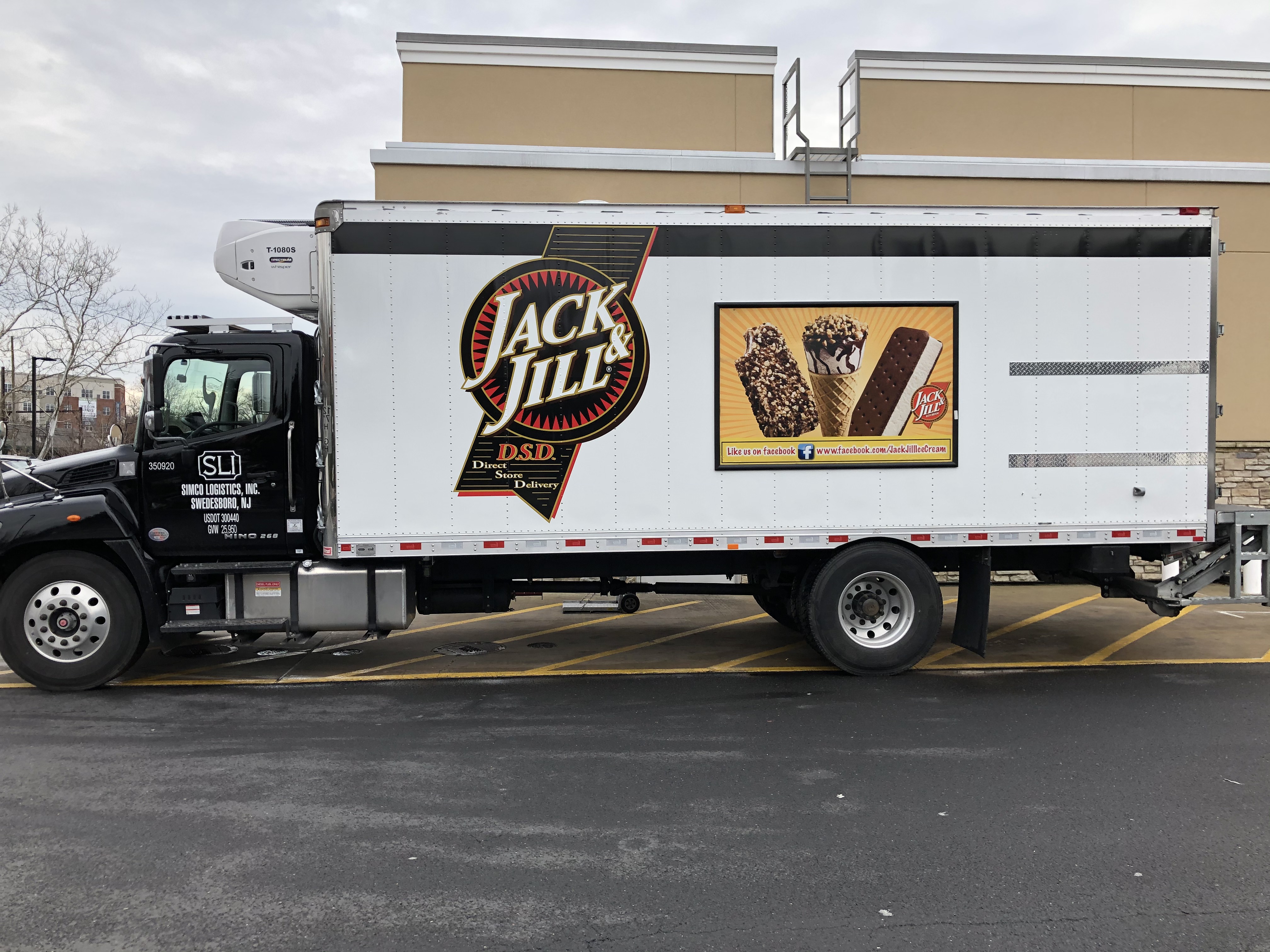
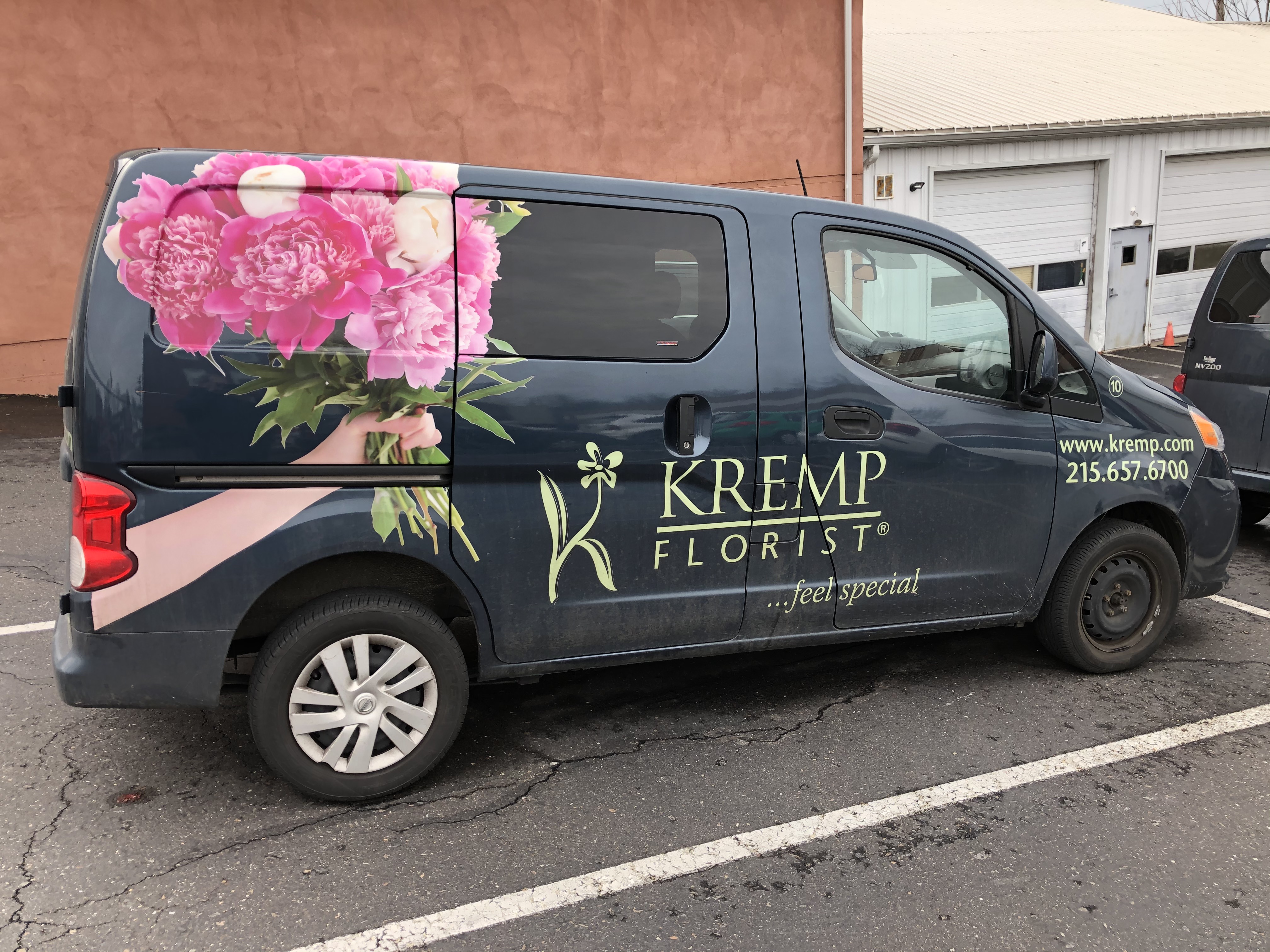
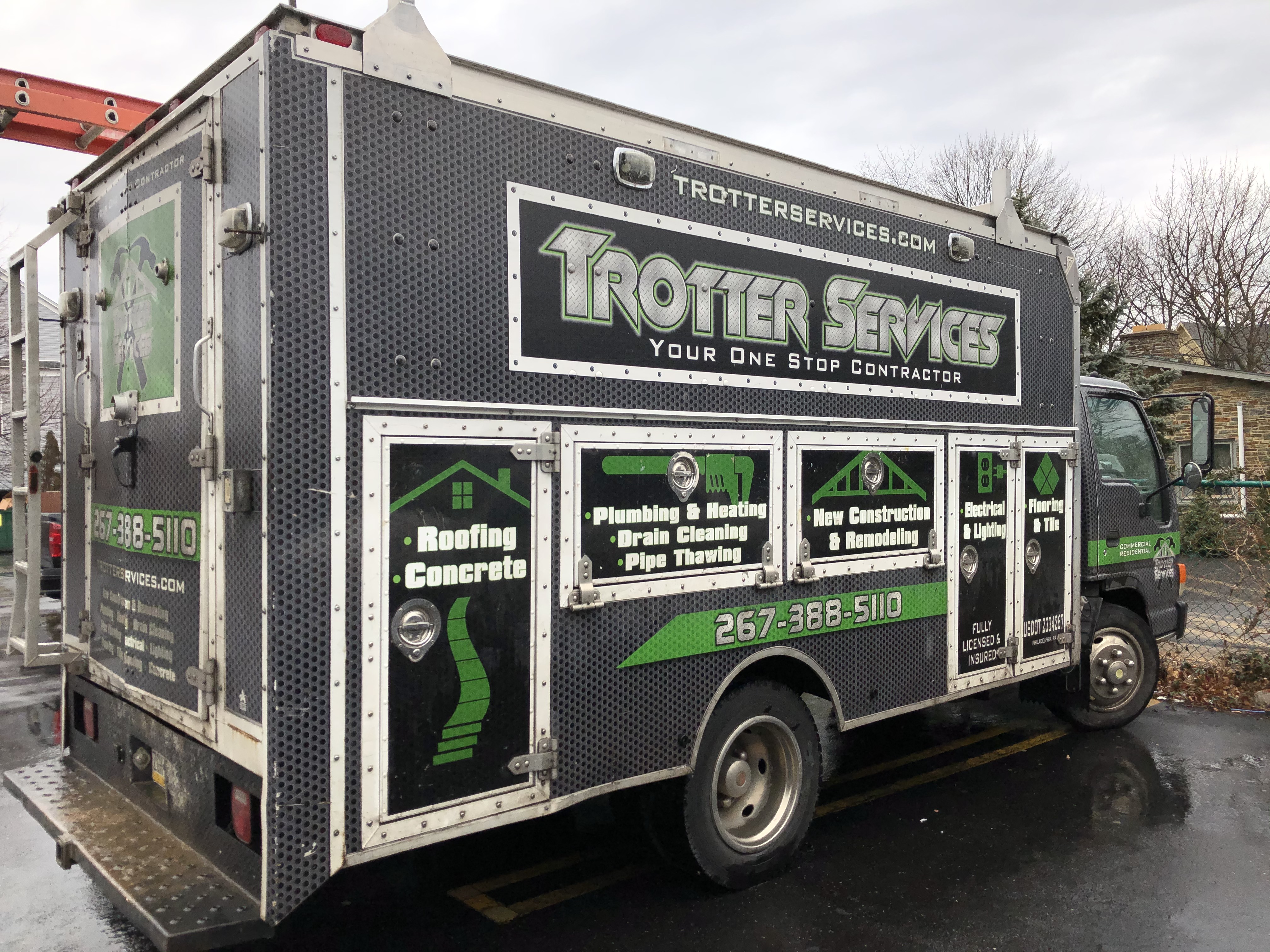
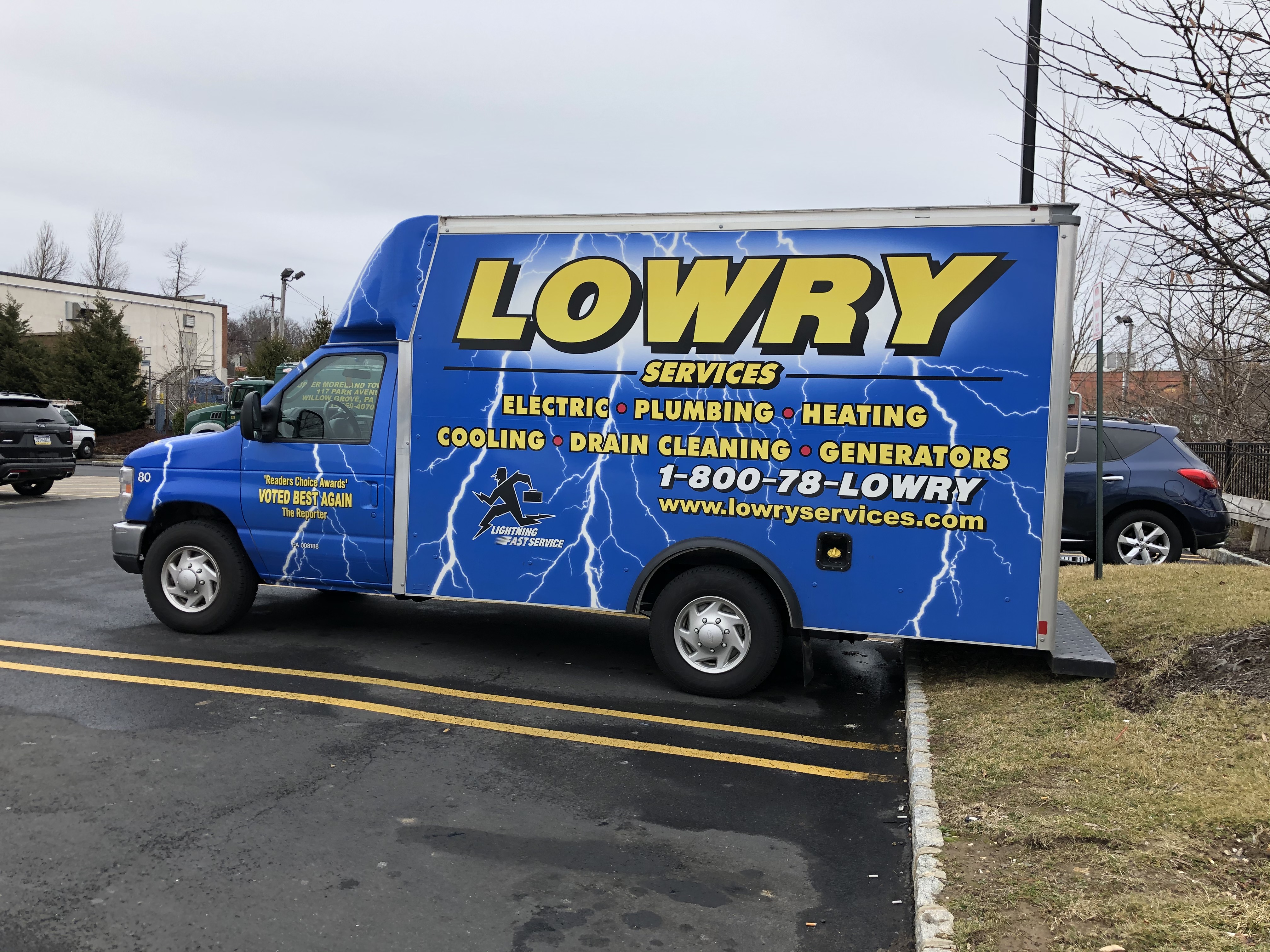
Yup, I surely enjoy an occasional quest for trucks and other vehicles whose bodies are artistically painted canvases that advertise goods or services. What’s surprising is that relatively few commercial vehicles, maybe one out of 10, fit that bill. The rest are either very plain Janes or are decorated not at all. As for the latter (the totally unadorned ones), more often than not they are monochromatic homages to one shade or another of white. Sure, there’s something to be said for going about your business anonymously. But, vehicularly-speaking, I prefer a nice amount or more of splash.

Parts one through four of this series (which you can read by clicking here and here and here and here) describe expeditions in my immediate area (I live near Philadelphia, Pennsylvania, USA). Each adventure was confined to one day, a day in which I spent a few hours trolling shopping centers, strip malls and wherever else I could safely and slowly drive my car. When I found my prey, I parked the car, exited from it, and documented with my phone’s camera the vehicle(s) that had caught my eye.

This time around, though, I took a different approach, which began on the first of this month while my wife and I were visiting The Big Apple. That evening, walking to Penn Station to catch a train that would take us part of the way home, we passed a trippy wonder of a truck that sold cannabis-infused sweet stuffs. Weed World Candies was painted in nearly every gleeful color under the Sun. Natch, I had to take its picture.

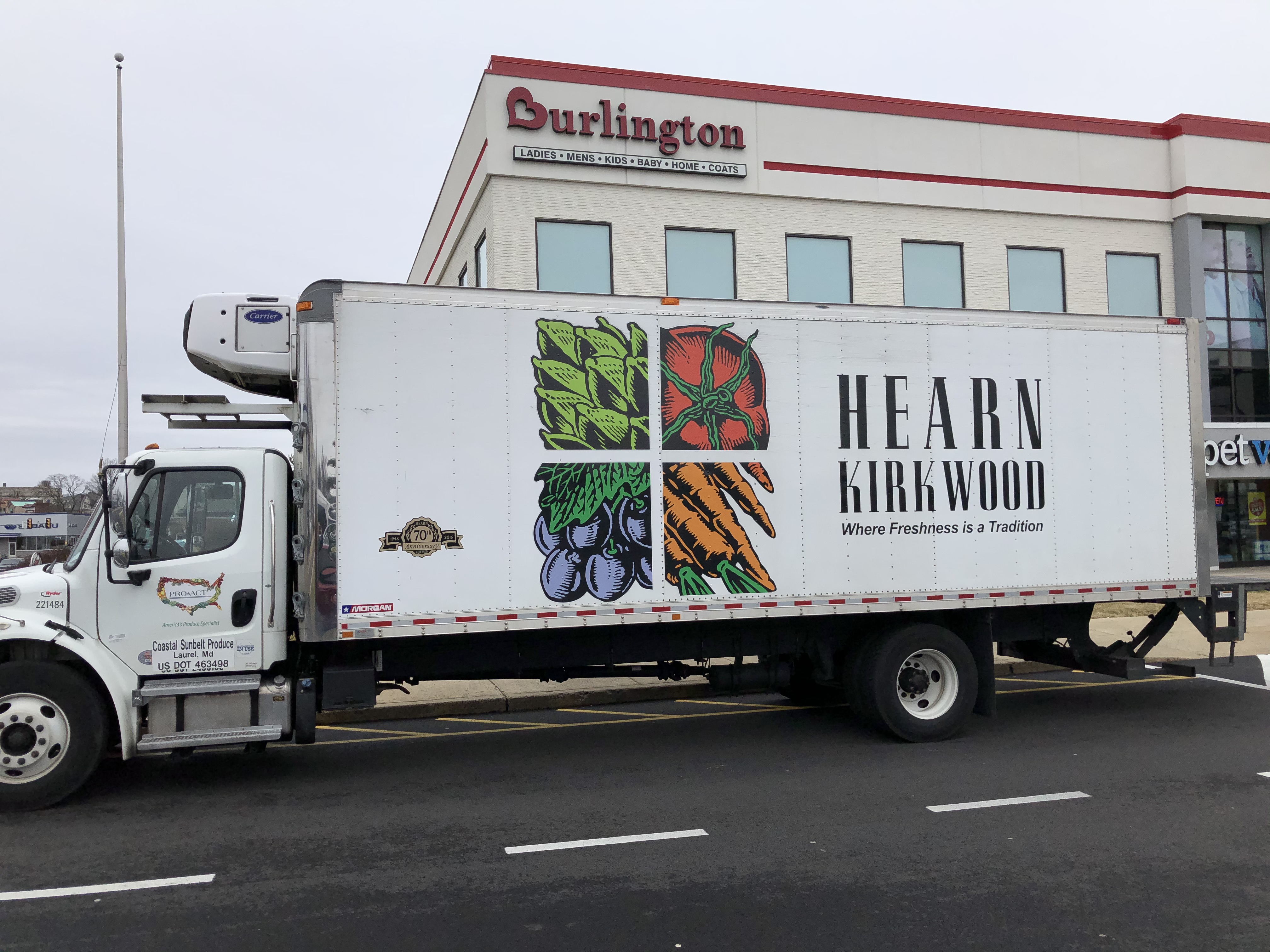
The idea for Part Five began to solidify in my mind at that moment. No need this time around to snap the photos in one day. And no need, necessarily, to troll in a car. Three days later, therefore, I wandered around my home area on foot, and found four victims that met my standards. But, lazy guy that inherently I am, I used my car the day after that to locate more artsy examples. The pictures of all the vehicles that passed muster on the various photo shoots are on this page, but in no particular order.

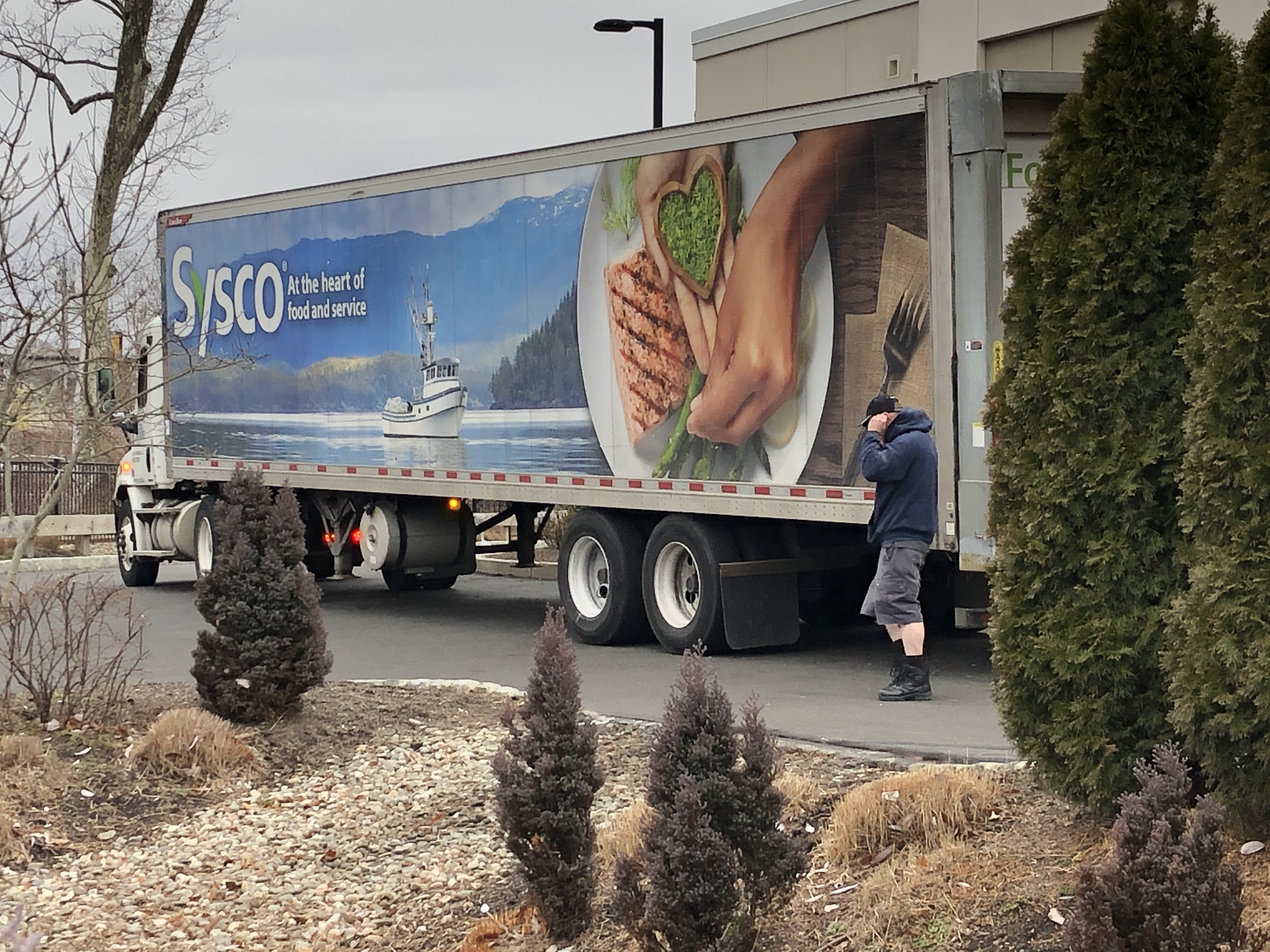
So, what do you think about the trucks and the one SUV (Kremp Florist)? Me, I’ve got to rate the cannabis truck as number one. It probably is as sharp as any example of art on wheels that I’ve ever seen. And my pick for second best is the Sysco truck. Its blues are calming, its message one of graciousness and welcome. The third-place prize? I grant it to the Trotter Services truck. The precise, hard-edged design, though severe, is oh so modern to my eyes.

By the way, when I was about 80 feet from Sysco, which was partially obscured from my view by plantings, I heard what I assumed was the opening or closing of the truck’s rear door. Not knowing which direction the door was moving, and not wanting to wait to find out, I quickly took up position behind some bushes, enlarged the truck’s image on the phone’s screen, and pressed the button. Man, I was lucky to get the shot. In the photo, that’s the driver only seconds away from climbing into the vehicle and taking off.

I tell you, the writing game can bring surprises. The longer you’re at it, the more likely your true nature and inclinations will emerge, not only in words and story lines but in real life. When I began this publication in 2015, never would I have expected that I’d be tracking down good looking vehicles, and liking it. I confidently say that, assuming I remain above ground for the foreseeable future, there will be another installment of Art On Wheels, Edgar Reewright notwithstanding. What, like I’ve got something better to do? As I’ve noted in my articles numerous times before, I’m an old f*cker. Humor me.

(As I almost always mention, please don’t be shy about adding your comments or about sharing this piece. I thank you.)

(If you click on any photo, a larger image will open.)

This Is My 200th Story! Will It Be My Last?

Image by Karma Willow Designs

It’s amazing! They said it couldn’t be done! I’m going to throw a party to which you all will be invited. I’m going to hire a sky-writing plane to fly over Manhattan and cover the heavens with this announcement: Neil Scheinin, a grand slacker, somehow has written 200 stories for his blog. A miracle has occurred!

And after all of that I might just hang up my writing boots forever. Why? Because writing mentally exhausts me. I mean, after I finish a piece I’m so limp you’d have no trouble folding me up and squeezing me into a goldfish bowl. I’ve gone through this 200 times now. Maybe that’s enough.

And if it is enough, that wouldn’t be so bad. With writing no longer on the menu, I’d devote the extra time on my hands to my living room sofa, where I’m already spending an average of 10 hours a day. The sofa is where I do my best kind of work anyway, you know. By which I mean that I am a master at twirling the handful of hairs remaining on the crown of my head while stuffing my maw with boxfuls of Cheez-It crackers. I love my sofa. My gratitude for having the comfiest place in the world to rest my ancient ass is eternal.

To write or not to write, that is the question. Making the decision isn’t easy. Which is why I’ve recently sought guidance from three individuals. The first conversation took place a week ago. It was with my esteemed editor, Edgar Reewright.

“Neil, the exorbitant fees that you pay me for my services are crucial to my financial stability,” Edgar screamed over the phone after I laid out my thoughts. “Do you hear me? Crucial, I say. My stable of writers has been shrinking like a Greenland glacier. Without you on board I don’t know what I’d do! Oh, why was I born? Why was I born? I should have listened to my parents and majored in philosophy in college. If I had, then I’d know the answer to ‘why was I born?’ Shit, maybe it’s not too late. Where are those volumes of the collected works of Plato and Aristotle that I occasionally glanced at years ago? Ah, I remember. They’re under my dog’s mattress, firming it up. Spot! Spot! Get off your bed! Daddy needs to get something.”

“Later, Edgar,” I said. “I’ll be in touch.”

Edgar’s situation is no joke. Though not many people depend on me, he definitely does. Conversely, my psychiatrist, Dr. R. U. Forereel, is someone upon whom many people depend. Including me. The day after I spoke with Edgar I attended my bi-weekly session with Dr. Forereel.

“Doctor,” I said to her after seating myself in her patients’ chair, “I know that we normally discuss issues that have their roots in my misspent childhood, such as why in my 71 years of existence I’ve never once bonded with a cat. If I weren’t so sphinxlike, maybe by now we’d have uncovered an answer or two to that one. My bad! But today I need your opinions about my creative outlet. I’ve been writing steadily for almost four years, as you know. My next story will be my 200th, a true milestone. But I’m weary, doctor. Writing has taken its toll on me. I’m thinking of ending my career.”

Career?” Dr. Forereel immediately exclaimed. “What career? Neil, the essays and other pieces that you produce are trifles, no? And you receive how much in payment for them? Wait, let me guess. The answer begins with a z and ends with an o and has an e and an r in the middle. Am I right? Neil, what you do with words amounts to nothing more than a hobby, a way to pass the time. There’s nothing wrong with that, of course, but it’s important to look at things realistically. I have no couch in my office for my patients, only a chair. But you, Neil, have a wonderful couch at home, as you’ve told me many times over the years. Take further advantage of that sofa. It’s one of your very best friends. Writing means little in comparison to the peace of mind that your sofa brings.”

At the end of the session I thanked the good doctor and then went to my car. Her advice echoed through my mind continuously during the drive back home.

Later that day I poured out my heart to my wife Sandy. Edgar Reewright had implored me to continue writing. Dr. Forereel had said, basically, “why bother?” What were Sandy’s feelings?

“Listen,” she began, “it’s entirely up to you. But I’ll say this: At least you’re not getting Cheez-It crumbs all over the couch when you’re at your writing desk. So that’s a good reason, in my opinion, for you to keep turning out your stories. However, there are how many projects around the house that you’ve never gotten to? Twenty? Thirty? Seems to me that starting a blog might be what you came up with to avoid doing what needs to be done around here.”

Valued readers, I’m in a quandary. I’m going to have to look deep within myself over the next several days. There’s plenty for me to ponder. Maybe I’ll be back on these pages. Maybe I won’t. Time, as always, will tell.

(Yo! Despite the uncertainties presented above, please don’t be shy about adding your comments or about sharing this story. Mucho gracias.)

Teeth And Gums And Music

“Yo, schmuck! Are you kidding me? You haven’t published a story in quite a while and the best idea that you can come up with now is a piece about dental health? Neil, you test my patience like no other of my writers. If you weren’t overpaying me for attending to your flimsy articles, I’d bounce you from my client list and send you into the deepest reaches of cyberspace, from which you’d never be heard from again!”

Those were the words that my editor, Edgar Reewright, flung at me over the phone three days ago when I told him about the essay I was planning to compose. Shit, I didn’t exactly appreciate his uncivil response. But what could I do? Fire him? No way. I mean, without his expert eye and guidance, my flimsy articles would be even worse: conceptually flawed, grammatically messy, stiff and awkward, etc., etc.

I need Edgar.

You know what though? I’m not going to let him critique this piece. I’ll mail him his weekly check, sure. But if he’s not interested in reading about a topic as important as dental health, he can shove his unreasonableness up his ever-widening ass. That’ll teach him!

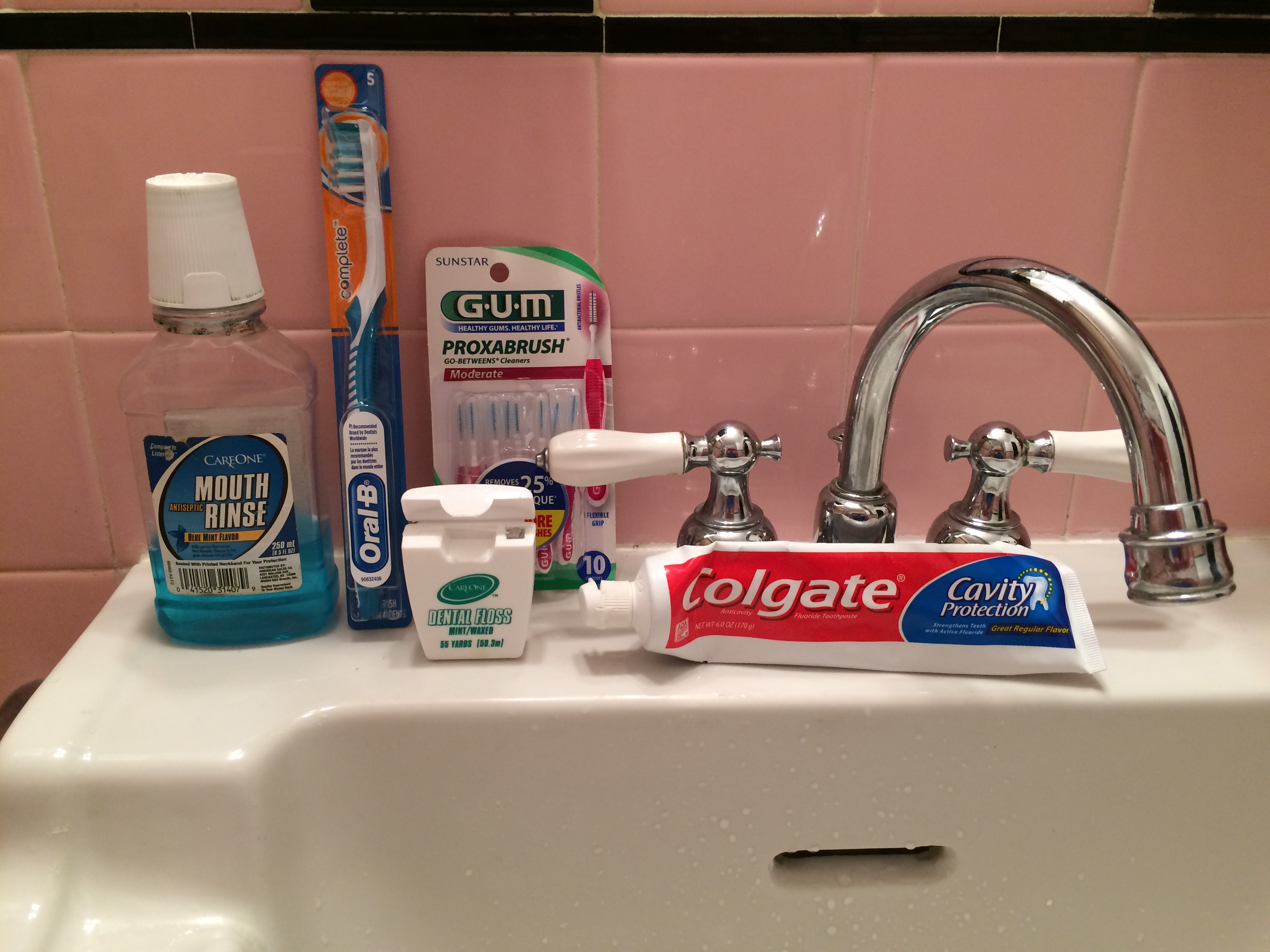
My dental implements.

Dental health. For at least six months I’ve been tossing around the notion of writing a story about it. But I couldn’t quite figure out what angle to take, what points to make. Anyway, late night on October 30 I began to see the journalistic light while brushing and flossing, which are parts of the nightly ritual that I maintain to try and keep periodontal disease (which can lead to tooth loss and possibly worse, such as heart disease) and cavities away.

And I received the kick in the butt that I needed to set the story in motion when, on November 6, I read a real good essay about canine dental health (click here) by Cristina Crawford, a fellow blogger. “Hey!” I said to myself. “It’s not coincidental that Cristina’s article came on the heels of the light you saw last week. Sure, she wrote about her dog’s dental situations. But so what? Dental health is dental health, no matter what species is involved. The time is now, fella! Write your story!”

Okay, I shall.

My dental history was unremarkable until the mid-1990s. I’d been to various dentists somewhat regularly over the previous 40+ years and had had numerous cavities filled, but nobody ever had raised anything resembling a red flag. Circa 1995 though, my dentist-at-the-time (she is still my dentist) did. What she told me, basically, was that my gums and teeth were infected to an extent that she was unable to treat, that the gums had regressed significantly, that I’d had bone loss in the middle and lower sections of my teeth, and that I therefore needed the services — pronto! — of a periodontist. My conditions, I surmised, were the results of poor dental hygiene, because for many years I’d definitely not been the poster boy for proper oral care.

To a periodontist I went, and what resulted wasn’t a pretty scene. Osseous surgery sessions — scraping away of infected bone and gum tissue areas, and repositioning of my gums on tooth surfaces — took place over a number of months. The procedures hurt, and they made my mouth look like a bloody, sloppy mess. But everything in time healed. And the procedures worked, putting a halt to periodontal disease, which is fueled by bacterial buildups. Ever since then I’ve very diligently done my best to keep my gums and teeth clean: Brushing after meals with a regular toothbrush; inserting a small brush (a Proxabrush) between the teeth to push out food particles; flossing; and rinsing with mouthwash. I do all of this, in various permutations, several times each day.

There’s nothing unusual about my regimen. Pretty much everyone reading this article, I imagine, is more or less taking the same measures. In any case, I’ve been fortunate, because periodontal disease, knock on wood, has not returned.

So, how does the late night of October 30 figure into this story? Well, dental routines ain’t exactly emotionally or spiritually invigorating, right? To help while away the boredom as I work inside my mouth, I listen to music on an old portable radio.

I’m not the music geek that once I was, but a seeker of fine tunes I remain. In between brush strokes or floss movements I flip the radio’s dial, hoping to connect with one station or another’s offerings. Often I connect pleasantly, sometimes fabulously. On October 30 the latter took place, for three songs that I’m compelled to mention came at me during the first quarter of the eleven o’clock hour. As they played I couldn’t help but bust out my sad attempts at bopping and boogying, being careful of course not to trip and stab myself with my toothbrush as I shuffled around the bathroom.

In the order in which I heard them, the recordings were as follows: The Memphis Train, by Rufus Thomas. St. James Infirmary, by Cab Calloway and his orchestra. Pass The Gin, by The Meadowlarks. The tunes hit the market, respectively, in 1968, 1930 and 1954. Rufus and Cab were big stars in their lifetimes, I should note, and retain plenty of fame to this day. The Meadowlarks, though, were pretty obscure, and are beyond obscure in 2018. But little matter. Millions of top-notch recordings have faded away in music history’s scrapbook. I’m glad that Pass The Gin was resurrected while I had the radio on.

I totally dig The Memphis Train’s pounding drums, funky and kinky electric guitar, and Rufus’s wild whoops. Ditto for Cab’s dramatic singing in St. James Infirmary, and for the horn players who, with twinkles in their eyes, send out cascades of sashaying and strutting notes. As for Pass The Gin, how cool and tight are the vocals, and how nifty is the guitar solo halfway through the song? Very. Very. Very.

With that, the current proceedings are coming to a close. Sleep well tonight, readers. Treat your teeth and gums well, if you’re not already doing so. And, as Sly And The Family Stone advised, dance to the music!

(Don’t be shy about adding your comments. Gracias.)

A Colorful But Awfully Flimsy Story

Some stories coalesce properly, their meaningful themes presented intelligently, their aims met, their pacing expertly handled. Such stories have a powerful reason for being.

And then there are those stories that don’t have any good reason for being at all, such as the one I’m attempting to bang out right now. Holy crap, sweat beads are pouring from my brow, straining so hard am I to create product out of the thinnest threads of inspiration. My editor, Edgar Reewright, whom you possibly might recall from his previous appearances on these pages (click here and also here, for instance), couldn’t believe how low I was reaching when I tried to convince him that it didn’t matter if I published a pretty pointless article, considering that an infinitesimally small percentage of the human population ever reads anything I pen anyway.

“Edgar,” I said to him over the phone recently, “I’m shit out of decent story ideas. But I have to publish something, you know. Can’t let too many days elapse between articles, right? Right.”

And then I quickly summarized for him what I had in mind. I was met with dead silence for 15 seconds after I stopped talking. Finally Edgar spoke.

“Neil, you’re out of your friggin’ skull if you green-light this piece. It’s ridiculous. It’s dumpster-worthy. I want no part of it. You’re on your own with this one, cowboy.” And he hung up. Brusquely.

I took a deep breath. Tried to steady my nerves. And decided that, yes, the next day (February 11) I would proceed with my plan by beginning the writing process. Which is what I’m doing right now, as today indeed is the 11th. On what date I’ll complete the opus and punch the Publish button, I can’t say yet. But it will, of course, be well before Hell freezes over, unless that event occurs within the extremely near future.

The saga began a few hours before I dialed Edgar’s phone number. I was sitting on my living room sofa, trying to come up with something to write about, when I picked up The Philadelphia Inquirer’s sports section and began perusing the box scores of the previous day’s National Basketball Association (i.e., professional) games. In the distant past, when I was one of the way too many sports fanatics stomping around on our blue planet, I not only read the box scores every day during the pro basketball season, I also knew who just about every player was. My fanaticism having dissolved long ago, these days I’m familiar with maybe one out of six basketballers. But I continue to read the box scores nonetheless. What, like I have anything better to do?

Lo and behold, when I reached the final box score on the page, a synopsis of the February 9 game between the Houston Rockets and the Denver Nuggets, my eyes were drawn to an oddity in the Houston listings. What the listings contained was something I can’t remember ever coming across before during the countless hours I’ve spent in my life studying box scores from various sports. To wit, the final three surnames listed for Houston, meaning the gentlemen who were the last three to enter the game for the Rockets, were Green, Black and Brown. Wow! Three colors in a row! I had no idea who the players were (it turns out that their first names, respectively, are Gerald, Tarik and Markel), but that didn’t matter. What did matter was that I, story idea-wise, now had something to work with. Colors would lead me to good places I naively assumed.

Maybe, I mused, I’ll package the green/black/brown coincidence with a discussion of my favorite colors then and now (yellow when I was a kid, blue in my adulthood), some thoughts on the insanely huge numbers of colors described and displayed in Wikipedia articles (click here, here and here to see them), and somehow bring the proceedings to a tuneful conclusion with entertainment by musicians whose names are those of colors.

But on second thought all of that seemed too much, too ungainly. What, after all, do I have to say about the infinity of colors out there? Not a whole lot, except that it’ll drive you crazy when you’re trying to decide which color to choose for your living room or bedroom walls. Too damn much choice, as is the case with nearly everything nowadays.

And so I was left with music. Poor, pitiful me. Down to the dungeon I lumbered. It is there that I store my vinyl album collection, not to mention my world-class collection of pet spiders. I’ve got about 1,000 albums in all. And about 700 spiders. I’d decided to search for color names among the vinyl platters, which hold a nostalgic and esthetic spell over me, rather than from my sizeable trove of CDs. That’s because vinyl album covers have a whole lot more charm than their CD counterparts.

On the way down the stairs I further decided that I wanted color names that were surnames, not first names, in order to continue the pattern established by Monsieurs Green, Black and Brown. And I didn’t want to duplicate the colors already taken by the basketball guys. Thus, Red Garland (jazz pianist) and Pink Anderson (blues singer and guitarist) were out, as were James Brown, Jackson Browne and Al Green.

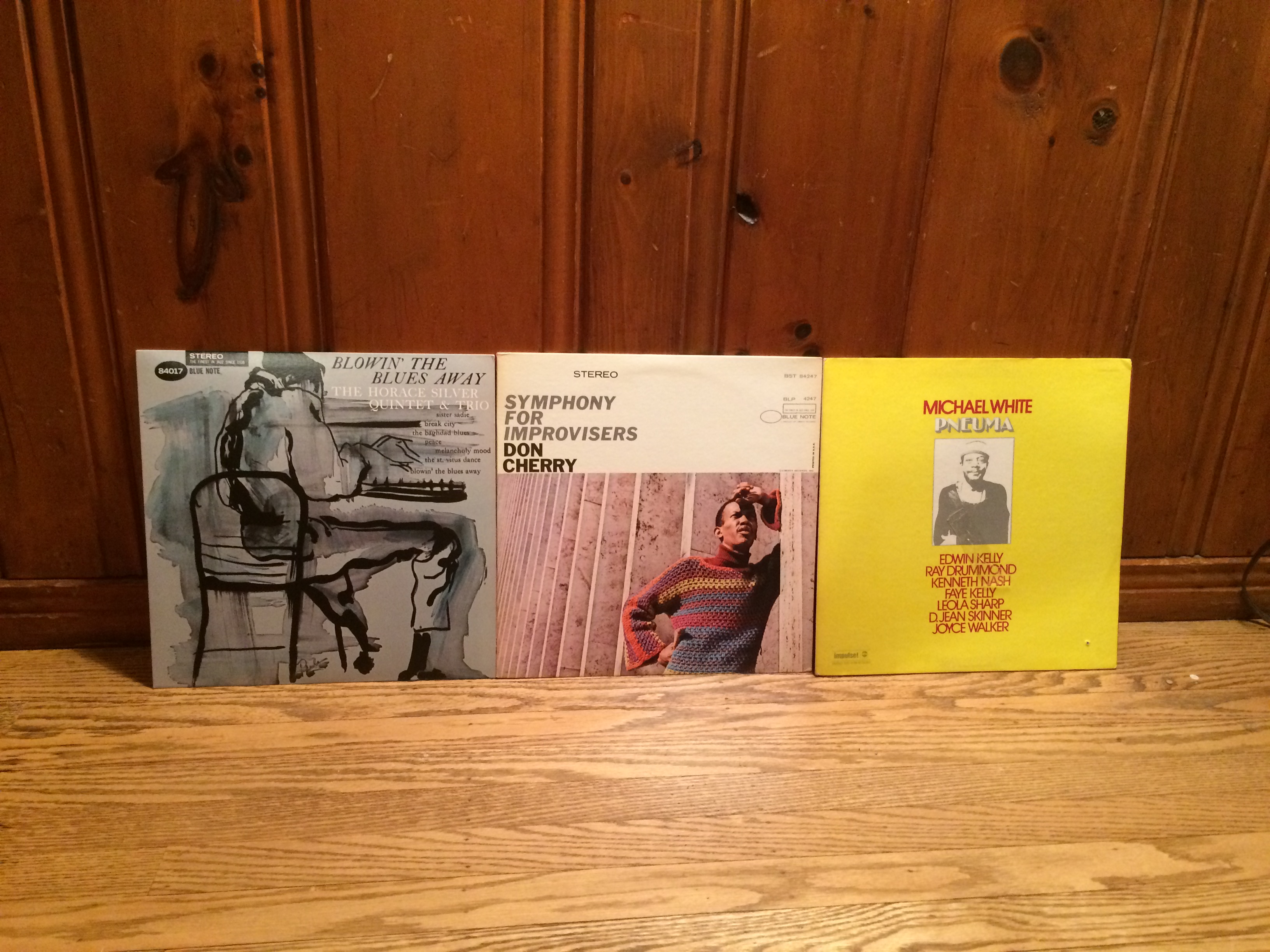
Patient readers, let me cut to the chase. I found only three musicians who met my goofy criteria. I selected one album by each. The musicians were jazz artists. I use the past tense because all of them, sadly, are gone. Only one (Horace Silver) is fairly well-known to the general public. The other two, Don Cherry and Michael White, decidedly aren’t, especially White. Silver, a prolific composer and hard-working band leader, played straight-ahead jazz. Cherry, one of my musical heroes, was an adventurer. His trumpet forays often would blister the atmosphere. White, who wielded an electric violin, possessed a mindset somewhat similar to Cherry’s. As a side note I’ll add that Horace and Don were major talents. Michael was good, but certainly not great.

Here then are three YouTube videos. Each offers a track from one of the albums whose front covers I’ve ever so lovingly photographed for this article.

A basketball box score. And three weirdly-chosen musicians. Yup, that’s what this story is all about. Don’t say I never did anything for you.

(Don’t be shy about adding your comments or about sharing this story on Facebook, Twitter and their ilk. I thank you.)

Fishtown (As Seen Through Max’s Eyes)

I’m back! Not that I was gone for long. I wasn’t. I was on the road, for only a handful of days, with the Tingling Brothers Traveling Circus, with whom, on a whim, I’d taken a job as an apprentice elephant-dung shoveler. But the elephants ran into visa problems, what with Trump’s new, stringent guidelines, and had to be shipped back to India. End of job.

I apologize for not writing a story last week, and I totally understand the frustrations that my editor Edgar Reewright expressed in the piece that he posted concerning my absence (click here). Seeing that he’s not well-endowed (financially-speaking), he badly missed the paycheck that I neglected to issue to him. I’ve rectified my wrong. Edgar now is back on the books and once again is as happy as a poorly-adjusted, angry middle-aged guy might be expected to be.

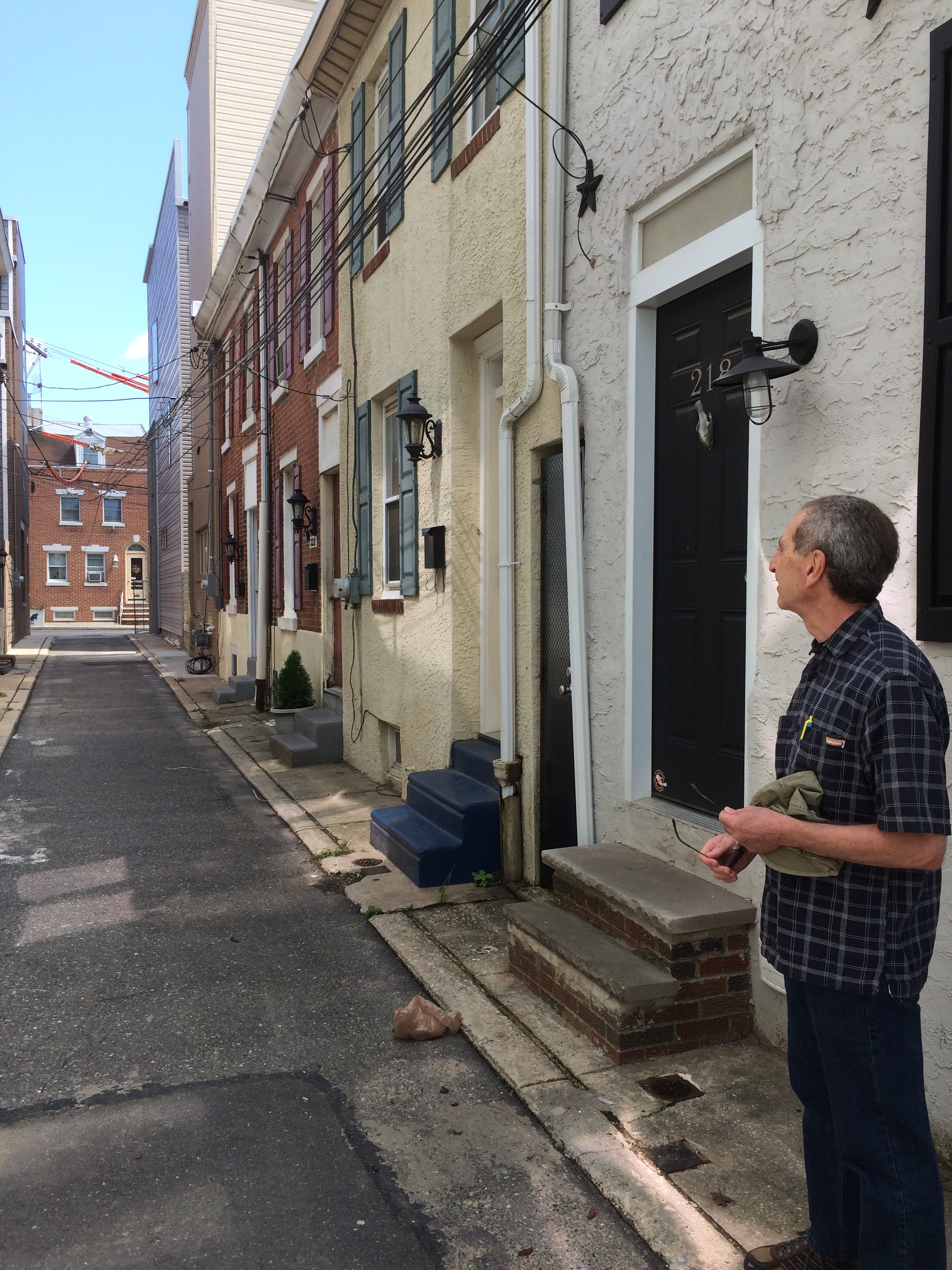
With circus life behind me, for today’s sermon I shall turn my attention to the post-Tingling visit that our nephews (20-something Jesse and 30-something Max) paid to me and my wife Sandy. They were with us for a number of days, and we did so many enjoyable things together I’d have to write a 20,000-word opus to cover them. I’m not up to that, being very much low on gas. The circus gig took a lot out of me, you see. I had no idea how heavy elephant crap is. So, in order not to interfere with my current regimen of napping and thumb-twiddling, I’ll focus on merely one highlight — the time that Max and I spent in Philadelphia’s Fishtown section the day before he returned to his home in Texas. Jesse had, by then, gone back to his abode in the Big Apple. And Sandy sat out the Fishtown adventure. “Have fun, boys,” she told us. “I’m staying put. Did I mention that George Clooney will be stopping by the house this afternoon to show me how to operate that needlessly complicated Nespresso coffee- brewing machine he peddles on the boob tube?” She hadn’t.

But, f*ck Clooney. Fishtown was calling, and Max and I headed its way, arriving there around 12:30 in the PM. We wandered for close to two hours, checking out this, that and the other thing, and had a low-key kind of blast. Not everyone, I’ve discovered over the years, is into open-ended strolling such as this, which is why my meanderings often are done by my lonesome. But Max is. Which proves, I’d say, that sometimes a great mind (Max’s) and a middling one think alike.

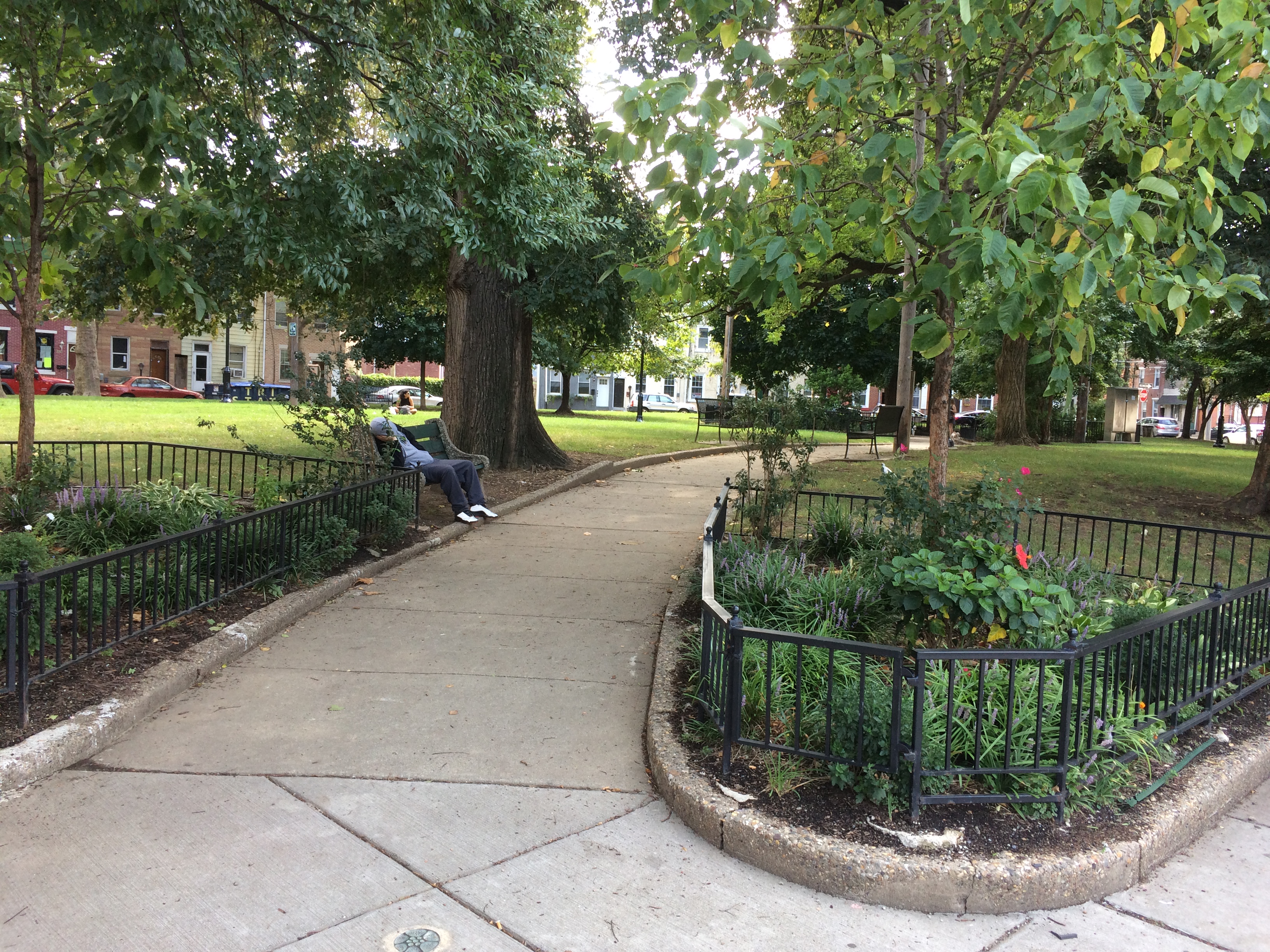
Fishtown, for sure, isn’t a knock-your-socks-off kind of neighborhood, but it has its charms. Unlike downtown Philadelphia, which is only two miles away, there are no tall buildings or crowds of workers and tourists to gaze at. But I’m a sucker for narrow, twisting streets and for houses, churches and factories that went up between the mid-1800s and early 1900s, and for calm, gracious neighborhood parks. Fishtown’s got plenty of those items. Not to mention a supply of new housing and restaurants and taverns and music venues to accommodate the millennials who discovered Fishtown earlier this century and have been changing it for the better. But none of the newer stuff is overdone, at least not yet, which is why you don’t see all that many people on Fishtown’s streets in the afternoon. The neighborhood hasn’t lost its small-town feel, and that’s a good thing.

We began our expedition at the corner of Frankford and Girard Avenues, in front of Johnny Brenda’s, the tavern cum rock music club that set Fishtown’s rebirth in motion after Brenda’s opened in 2003. At that corner I had a brainstorm. I asked Max if he’d like to use my iPhone to take photos of whatever caught his eye as we made our way around the neighborhood. And that, if he did, I’d use some of them to illustrate a story I’d write about our day together. “Great idea,” he said, ripping the phone out of my hand. I’m going to sue him for bruising my pinky. Little had I known that Max is a photo-taking fiend. He, with his pix-snapping right index finger in tow, bopped through Fishtown happily and giddily. Dozens and dozens of shots were added to the phone’s memory that afternoon.

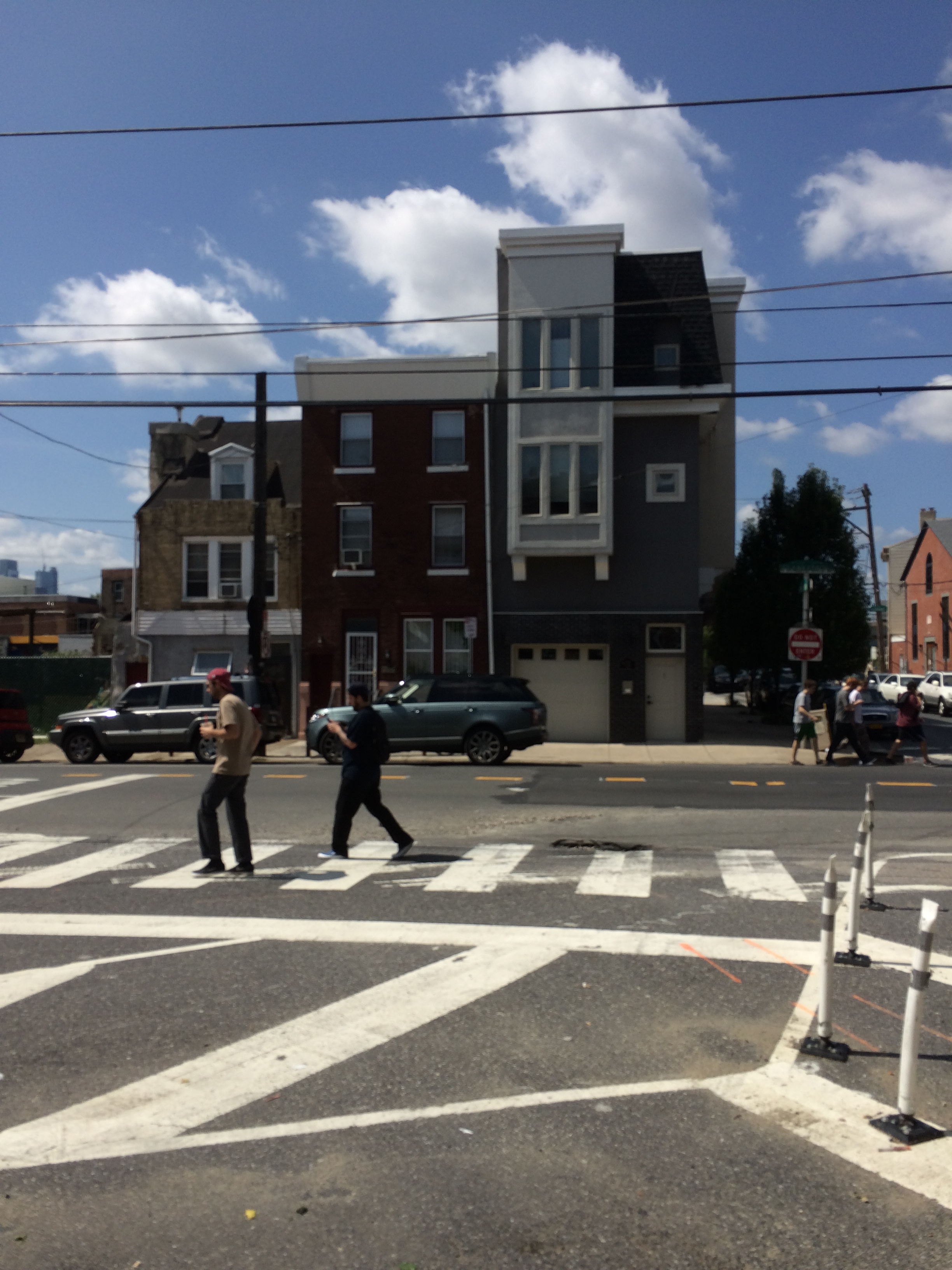
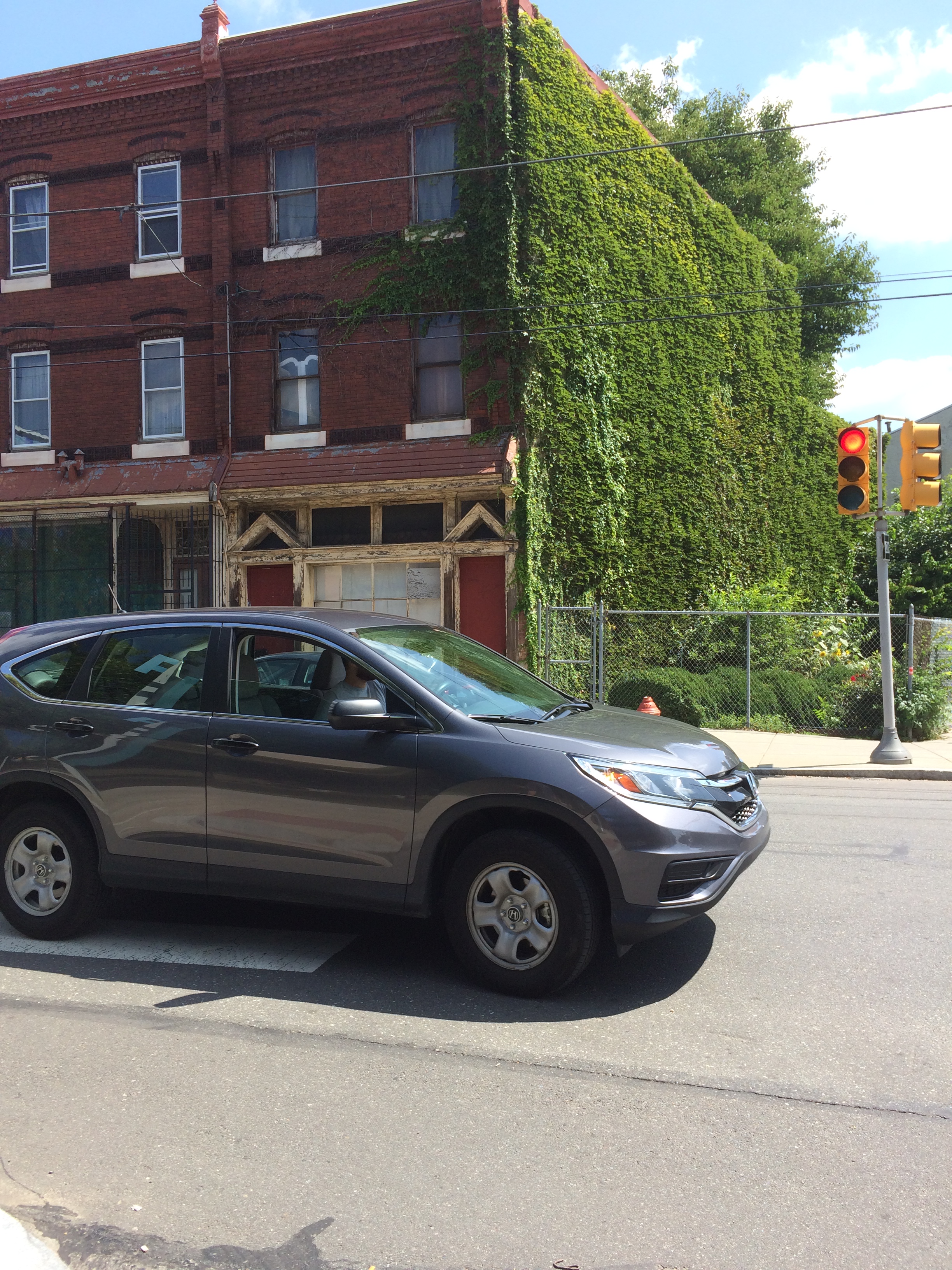
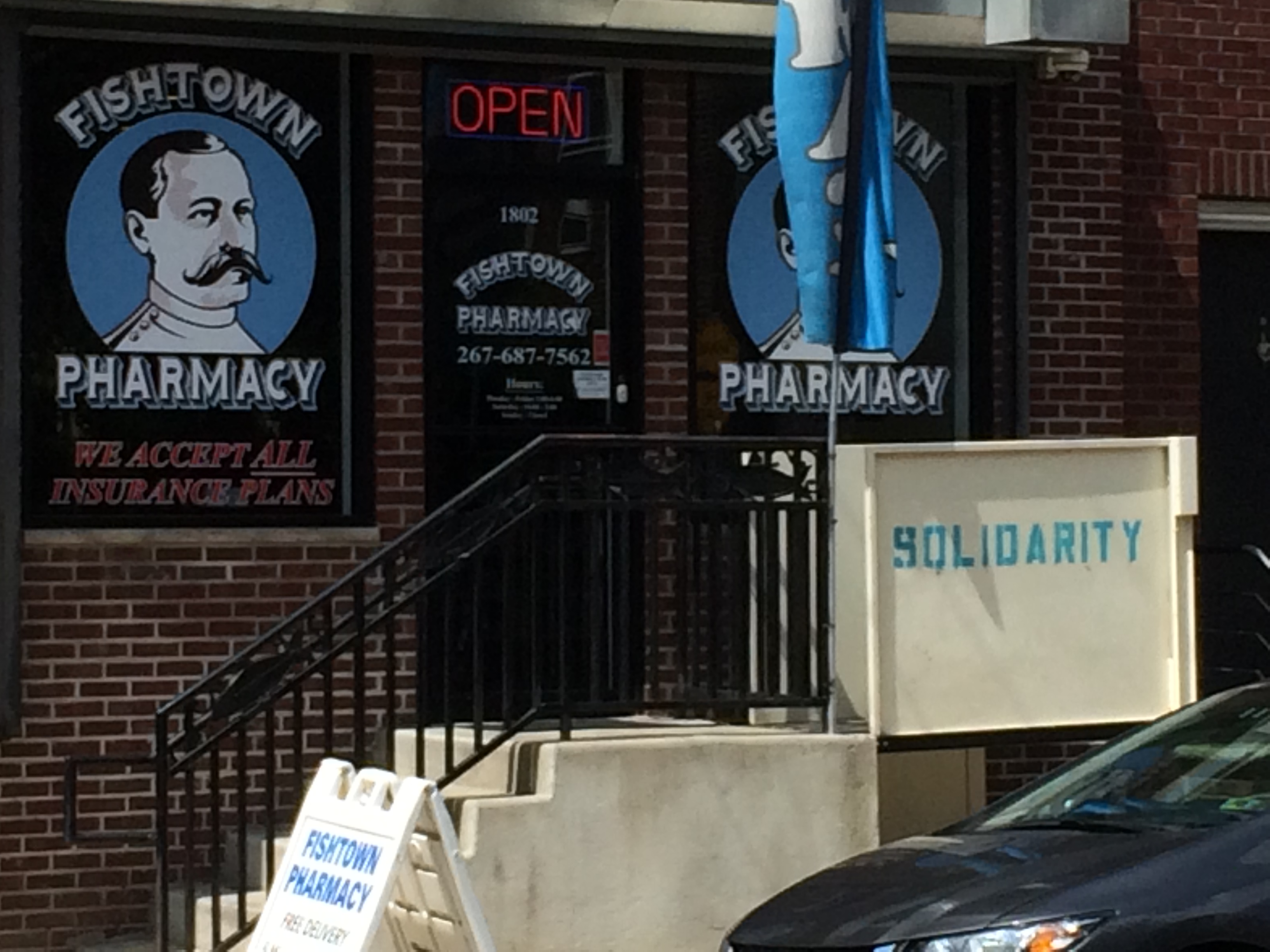
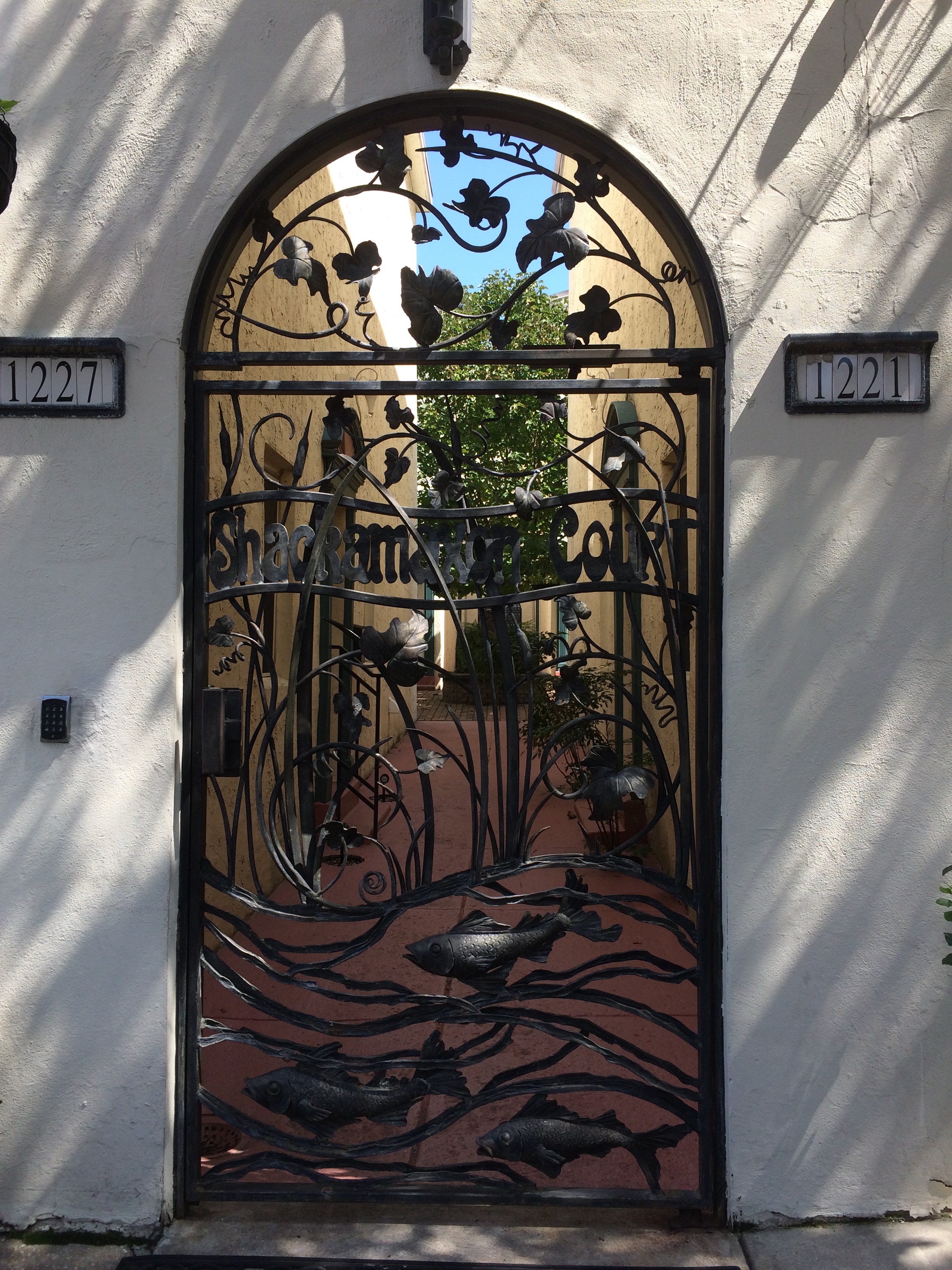
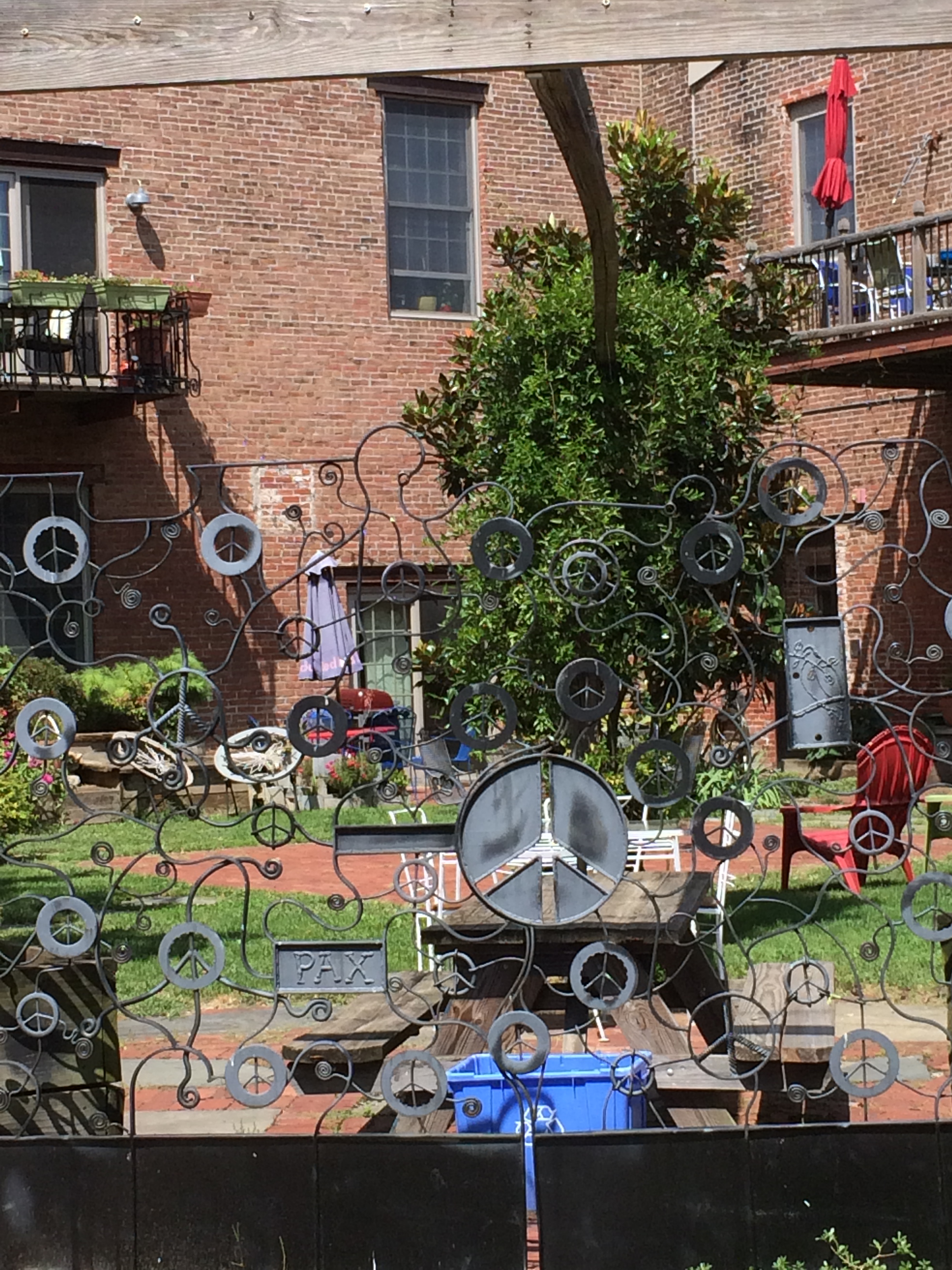
I culled through the images a few days later. What you see, then, on this page is Fishtown as Max saw it. He peered at lots of things, big and small, and framed them well in his photos. Store signs, well-aged streets, new home construction, a house one side of which is covered with an astonishing mass of ivy,  . . .

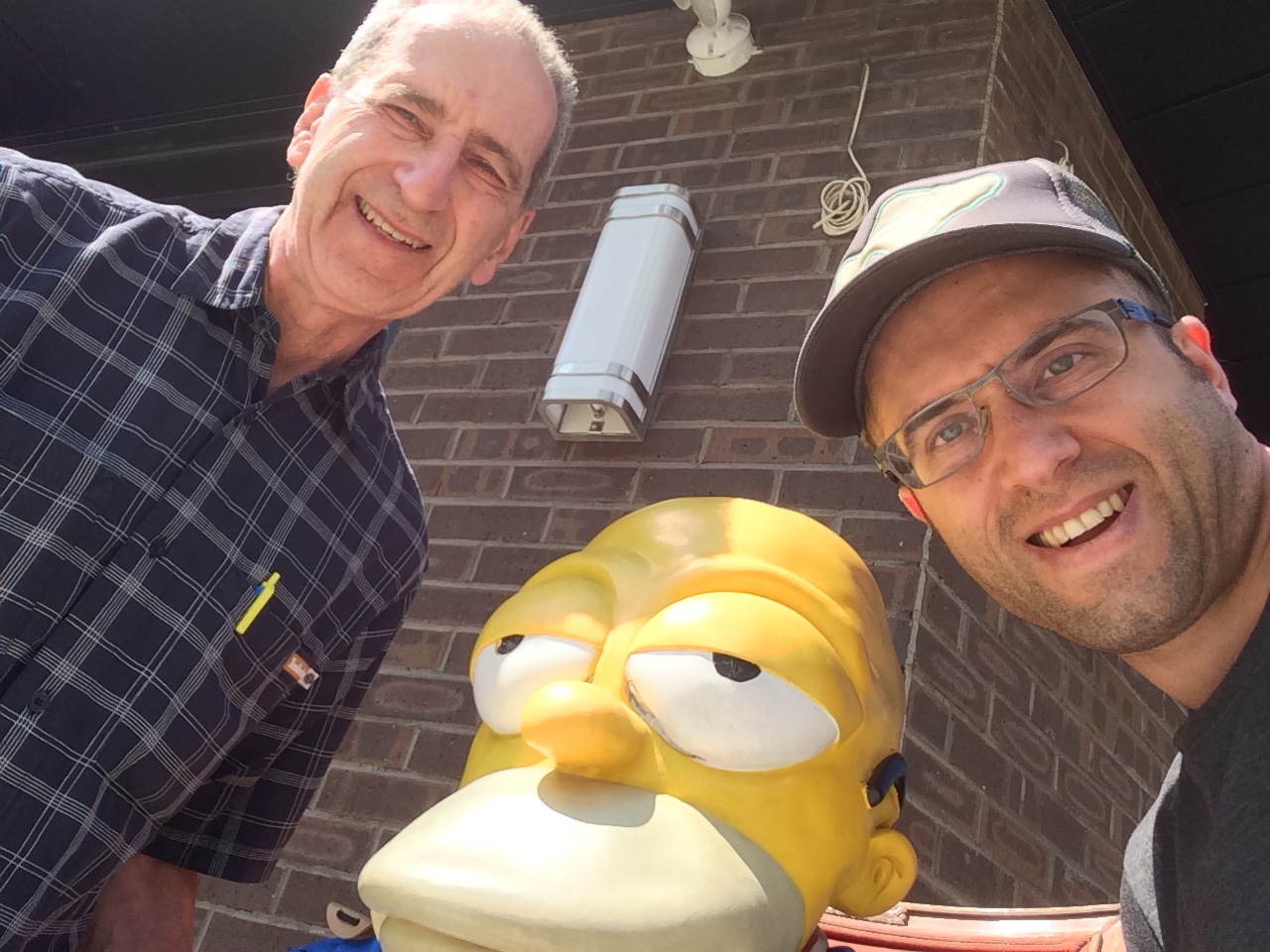
Max was drawn to hip color arrangements, to the nifty contrasts formed by buildings near to one another, and to the unexpected. And he asked me to make sure I included the selfie he snapped of us and Homer Simpson outside a store on Frankford Avenue. I don’t look all that good in said picture, but what the hell. Candid photography is where it’s sometimes at.

When Max next visits us, he and I probably will scout out another section of Philadelphia that’s off the touristy trail. Maybe an area that I, who despite having lived in or near Philadelphia for 40+ years of my adult life, barely know. Such as Port Richmond or Kensington. It’ll be fun. And, no doubt, will be documented by he and I.

(Photos by Max Scheinin. If you click on any photo, a larger image will open in a separate window)

An Important Announcement From Neil’s Editor: Neil’s Missing!

Greetings, Earthlings. My name is Edgar Reewright. I’m an editor. And I’m writing to you on bended knee, as I will explain a few paragraphs down the line.

Over the years I’ve worked at The New Yorker, The New York Times and, most recently, Playboy. Prestigious jobs they were, not to mention excellent distributors of cash and benefits to yours truly. But as we know, life can throw curveballs and spitballs at any of us at any time. And come my way they did.

I won’t go into too much detail. Let’s just say that I didn’t do myself any favors when, after having devoured two bottles of Jack Daniels at a dazzling party at the Playboy Mansion in 2014, I made a pass — actually, more like 15 passes — at Hugh Hefner’s wife. When I came to a few hours later I discovered myself to be robed in a Playboy Bunny outfit and draped over a traffic light, 20 feet above ground, on Sunset Boulevard. Hef’s boys don’t mess around. Needless to say, my career in big-time journalism was over.

Thanks are due, therefore, to the blogging gods of small-time journalism. A prime example of which is Neil Scheinin’s blog. The one you’re staring at right now. Neil fancies himself to be a writer. What the hell, I always say, let him believe what he wishes. He’s hardly the only delusional collection of skin and bones traipsing around among us.

Anyway, the flimsy quality of Neil’s opuses doesn’t mean a fig to me. What does matter is the paycheck that Neil sends my way weekly. Seven hundred and fifty dollars ain’t bad dough to someone in my situation. Damn good thing I answered Neil’s ad (“Help! Dork desperately in need of editorial assistance,” it read) in the January 2015 issue of All Praises To The Blogosphere. The rest is history. Or something along that line.

Here’s why I’m writing this article: I’m very, very worried. Neil has disappeared. Foul play? Nah, there’s no evidence of that. By his own volition? You can bet the house on it. The louse didn’t even have a story-in-waiting to be published this week. Who does he think he is, skipping a week of writing? His audience probably could care less, but me? I care like crazy. And that’s because Neil not only put down his story-writing pen, he also put down his check-writing pen. I have $236 dollars to my name. If Neil doesn’t come out of hiding, or wherever he is, and pay me my weekly allowance . . . hell, I don’t even want to think about it.

Readers of Neil’s blog, I’m pleading with you to try and find him. His wife Sandy has looked high and low for him and has reported Neil’s absence to the authorities, but so far they’ve come up with nothing.

Me, I think there’s a chance that, in search of inspiration and beneficial aura fields, he’s gone to visit one of his blogging buddies, people who, unlike him, truly fall into the category of writer. And who not only churn out essays with regularity but have penned books. K E Garland, for instance, whose The Unhappy Wife is a strong look at marriage and relationships. And Andrew Ferguson. He wrote The Wrong Box, a romp of a murder mystery filled with sex, laughs and a twisty plot. Neil has told me more than once that he too would like to create a book one of these days. Yeah, right. Believe me, holding your breath waiting for that to happen would be a mistake of the highest order.

Send out the search parties! Spread the word on Twitter and Facebook! Neil is out there somewhere and he needs to return home. His wife will do just fine without him, sure. But not me. My bank account is staring at me with pitiful eyes. He better come back! And pronto. Here’s a photo of Neil. It’s the only one I have. It’s from a recent New Year’s Eve, and maybe will be an aid in finding him. Say what you will about Neil, you’ve got to admire his taste in leis.

Thanks for your help.

(Photo by Max Scheinin)

Three Songs New To Me

“Yo, what the hell are you doing?” my editor, Edgar Reewright, shouted into the phone early last week. Wisely, I moved the receiver five inches away from my ear.

“I swear, never again will I take on a blogger as a client,” Edgar continued loudly. “Last week you wrote a story that featured three songs. And now you’re telling me that your next piece also is going to be about three songs? What gives, Neil? Can’t you come up with a different idea? How about writing about a childhood memory instead, like the time, when you were four years old, that you got your head stuck in an iron fence and Navy Seals had to be brought in to get you out? I tell you, if it weren’t for the $750 you pay me each week I’d drop you faster than I would a rattlesnake.”

“Edgar, maybe you mistake me for Ralph Waldo Emerson or John Updike,” I said. “They never lacked for things to write about. They were writing machines, for crying out loud. But me? Hey, story ideas don’t exactly flow from my cranium like lava. Right now, back-to-back pieces on music is the best that I can do. And how’d you find out about that iron fence incident anyway? The military’s report on it is locked away in their Too Weird To Be Made Public files.”

“Edgar,” I went on, “the check is in the mail. As always, it’s been a pleasure.”

I hung up. And Edgar didn’t call back.

Three songs it is then. A few weeks ago I heard them for the first time. They are good ones, two of them pretty spanking new and one an oldie that could be mistaken for a country-kissed soft rock number put on wax just yesterday. The tunes came to me via WXPN, a primo radio station in Philadelphia that should pay me a hefty fee for mentioning them as often as I have in my stories. WXPN loves to play new songs and obscure songs while finding plenty of space for ones we’ve heard a thousand times. I am one with the station’s mindset. That’s why XPN and I are pals.

I liked the three songs in question so much, I immediately made a note of their names and performers. Nightime Lady, by Rick Nelson & The Stone Canyon Band, was the first to reach my ears. Two days later, within minutes of each other, came Waxahatchee’s No Question and Zeek Burse’s Dry. As different as the three are, sonically-speaking, they share some common ground. Each examines love, for example, that most complicated and shape-shifting of emotions. And you can shake and groove to each of them, though the boogying you might do to Nightime Lady would be highly restrained compared with the workouts you’d get from the thrashing No Question and the pulsating Dry.

If I ever had heard Nightime Lady before, all memory of it was erased from my brain. I was slowly eating breakfast while leafing through the newspaper on a quiet Sunday morning when it came on the air. “Man, this is a lovely song,” I thought to myself. “Who is this? Sam Beam? Conor Oberst?” No, of course, it wasn’t either of those present-day heroes. I was a bit amazed when I soon found out that Rick Nelson is the singer and song’s composer. And that it dates back to 1972. Rick released the album Garden Party that year and had a monster hit with its title song. Nightime Lady is track number seven on that disc.

Well, I take Nighttime Lady as the tale of an immensely lonely man who finds comfort with and feels a mighty attachment to a lady of the night. Probably he has been with her on many an occasion. Lost when it comes to meeting true love, he’ll take whatever soothing caresses he can, wherever he may find them. I assume that Rick didn’t base Nightime Lady on personal experience. He always seemed well-adjusted to me, handling teen idol status in the 1950s calmly and politely. Then he plowed past those years to establish a long and successful career as a musician. Sadly, all came to an end when he died in a plane crash on the final day of 1985.

I was staring at the sky from my house’s deck when No Question grabbed me by my privates. Man, what a snarling rocker. It, and the album on which it appears (Out In The Storm), were released last month. I was panting for breath when the song ended because it doesn’t take much snarling before my head starts bopping to and fro uncontrollably. And oh happy day, WXPN wasn’t finished with me, as Dry, which came out in April on the album titled XXII, set me bouncing in my chair minutes later. Dry’s take-me-to-the-disco beats beckoned me to jump up and glide all over the deck à la Michael Jackson. I started to do exactly that, but then I remembered that my dancing ability is buried in the negative numbers. I stayed seated, though continuing to bounce in place.

No Question and Dry look at love from very different perspectives than does Nightime Lady. No Question’s young protagonist rages against her (former?) unfaithful lover. And in Dry we hear the thoughts of a guy who is ready to stay with and please his girl forever . . . or is he? He doesn’t seem all that certain, actually. Sure, everyone knows this, but I’ll state it anyway: If it weren’t for love — its solidity or lack thereof, its absence, its frustrations —  hardly any songs ever would have been composed. Topic number one it is and has been, by far.

So, what’s up with the name Waxahatchee? It’s the stage and recording moniker that Katie Crutchfield, who sings lead and wrote every song on Out In The Storm, goes by. She took it from a creek, the Waxahatchee, in Alabama, the state she grew up in. Katie, who now lives in Philadelphia, has become big in the indie rock world over the last two or three years. And probably is going to get even bigger.

Big is a word that Zeek Burse, another Philadelphian, probably hopes one day will apply to him. Stranger things have happened. He sings great, and that’s a big start. And he can write, having composed or co-authored every track on XXII. Still, the music biz is rougher than rough. For now, Zeek remains one of who knows how many thousands of professional musicians that virtually nobody ever has heard of.

Before I say goodbye till next time, I’d be impossibly remiss not to mention a main reason I wrote this article. You see, when it comes to music, we live in storied times. The number of ear-pleasers out there is beyond incredible. Nightime Lady, No Question and Dry represent merely a nano-percentage of the millions of good songs I’d never heard before that I could have chosen. And that’s because nearly everything that ever has been recorded is available to us in our Spotify-edly and YouTube-edly blessed age. Musical riches that only a handful of years ago were unimaginable are now a click here and a click there away.

Party on, amigos!

(If you enjoyed this story, then don’t be shy about adding your comments or about sharing it on social media. Gracias.)

Look Up, Young Man!

When the phone rang at 8:15 AM on Wednesday of last week I reached for my blood pressure pills and popped not one, but two. Ordinarily that’s a big no-no. But somehow I knew who was calling. And since said individual has the talents to launch my diastolic and systolic readings halfway to the Moon, a medicinal overload was a necessity. On the fourth ring I picked up.

“Good morning, Edgar,” I said to Edgar Reewright, my blog’s editor. “It’s always a pleasure.”

“Cut the small talk, Neil,” Edgar said, “and let’s get down to business. Neil, I know you. Right now, I’m more than certain, you’re at the dining room table with a cup of coffee and a buttered, toasted bagel and your vial of blood pressure pills in front of you. And you’re doing your damnedest, without much success as usual, to solve The Philadelphia Inquirer’s crossword puzzle.”

I gulped. Heavily.

“I’m fed up with having to remind you of your responsibilities,” Edgar continued. “The five or six people who look at your blog — your wife, your criminal defense attorney, your proctologist’s mistress and a couple of others that I haven’t been able to identify — have come to expect one stab at an article from you each week. And my gut feeling is that you’re planning to let them down, that you’re all set to take a week off. Neil, this is unacceptable. There are dozens of stories out there waiting to be written. Get off your unbalanced ass and start working.”

Holy crap, not only is Edgar annoying, he also was correct. And so, after politely ending my conversation with him, I gathered myself and my thoughts together, pondered this and pondered that, and eventually came up with a story idea. Look Up, Young Man! would be its title. And central Philadelphia would be where I would attempt to make it blossom.

Thus in early afternoon I boarded a Philadelphia-bound train in the suburbs, arriving in the fair city’s central section an hour later.

“Look up, Neil,” my parents used to say to me when I was a kid walking along with my eyes aimed downward. I must have been suffering from a lack of confidence in those days, reluctant to meet the world head on. Not that I’m bubbling over with confidence all these many decades later. Anyway, I don’t stare at the ground anymore when I’m strolling around. I look straight ahead or side to side.

But upward? Well, like anybody, I do some of that. But consistently for a couple of hours or more? Nah, I couldn’t recall ever doing that in my life. It’s not exactly a world-class notion, but it had appealed to me when it jumped into my mind a few hours earlier. I liked its simplicity, its openendedness. Who knew where or what it would lead to?

Pow! Moments after exiting the train station and stepping onto Market Street I gaped at what to me is one of the iconic outdoor sculptures in Philadelphia. It’s a giant replica of an electric guitar, and it rotates, as if on a spit, 15 feet above the ground at the corner of 12th and Market Streets. It’s hard not to notice this symbol of the Hard Rock Café, which is housed within one of the classic stone buildings that once belonged to the long-defunct Reading Railroad.

But I wanted to look higher than 15 feet. So I crossed to the south side of Market Street and, lifting my eyes to the skies, took in the first of five or six incredibly tall construction cranes that I’d come across during the afternoon. As I usually do when staring at one of these amazing machines, I wondered how in the world it stays balanced and how in the world anybody is able to manipulate its movements so precisely. Good thing it’s not me at the controls.

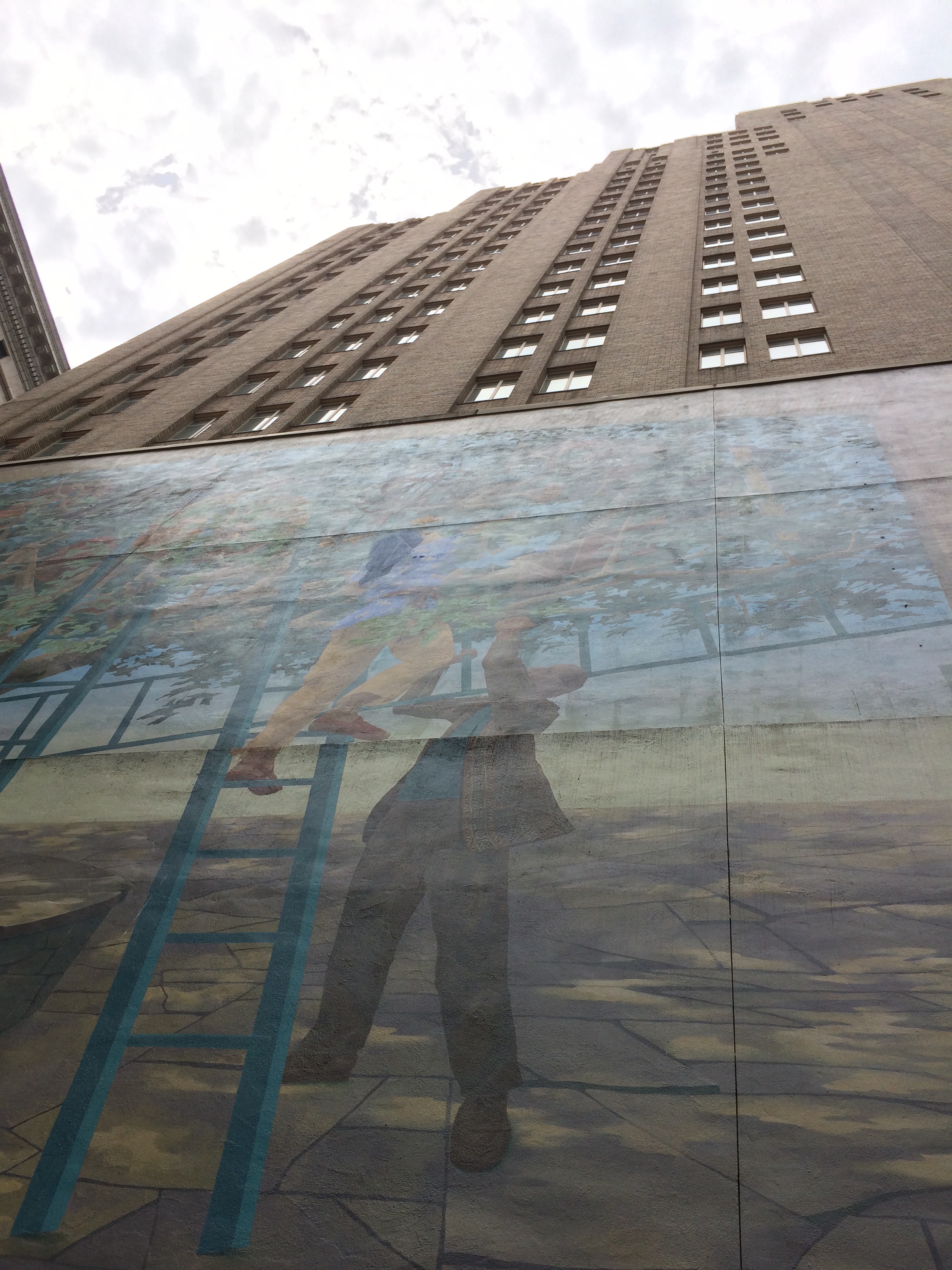
I was off to a good start. And one block later the good start continued when a sweet juxtaposition caught my eye. Philadelphia is famed for the several thousands of murals painted on the sides of buildings, and a great one adorns the lower reaches of a 16-or-so story office building near the corner of 13th and Market Streets. The mural is titled The Tree Of Knowledge. A ladder, a good item to have if you’re planning to pluck some information and wisdom from a tree, comprises a major part of the composition. I sidled up nice and close to the wall and looked up. The office building’s windows took on a new aspect, flowing gently in streams towards the heavens. And the ladder? It led the way to the levels above. I was tempted to climb it and see what happened.

Forty-five minutes later another mural, Reach High And You Will Go Far, crossed my path where 20th and Arch Streets meet. It too is a beauty, painted on the side of a three-story structure. Only a fool would argue with its message. I couldn’t get up close and personal to it though, as I had with The Tree Of Knowledge, because it is fenced-in. But I remembered to look up. And what I saw behind the mural, one block to its east,  was a giant tower, the under-construction Comcast Technology Center, that will top out at over 1,100 feet when completed next year. It is destined to become Philadelphia’s tallest building by about 150 feet. Reaching high, for sure.

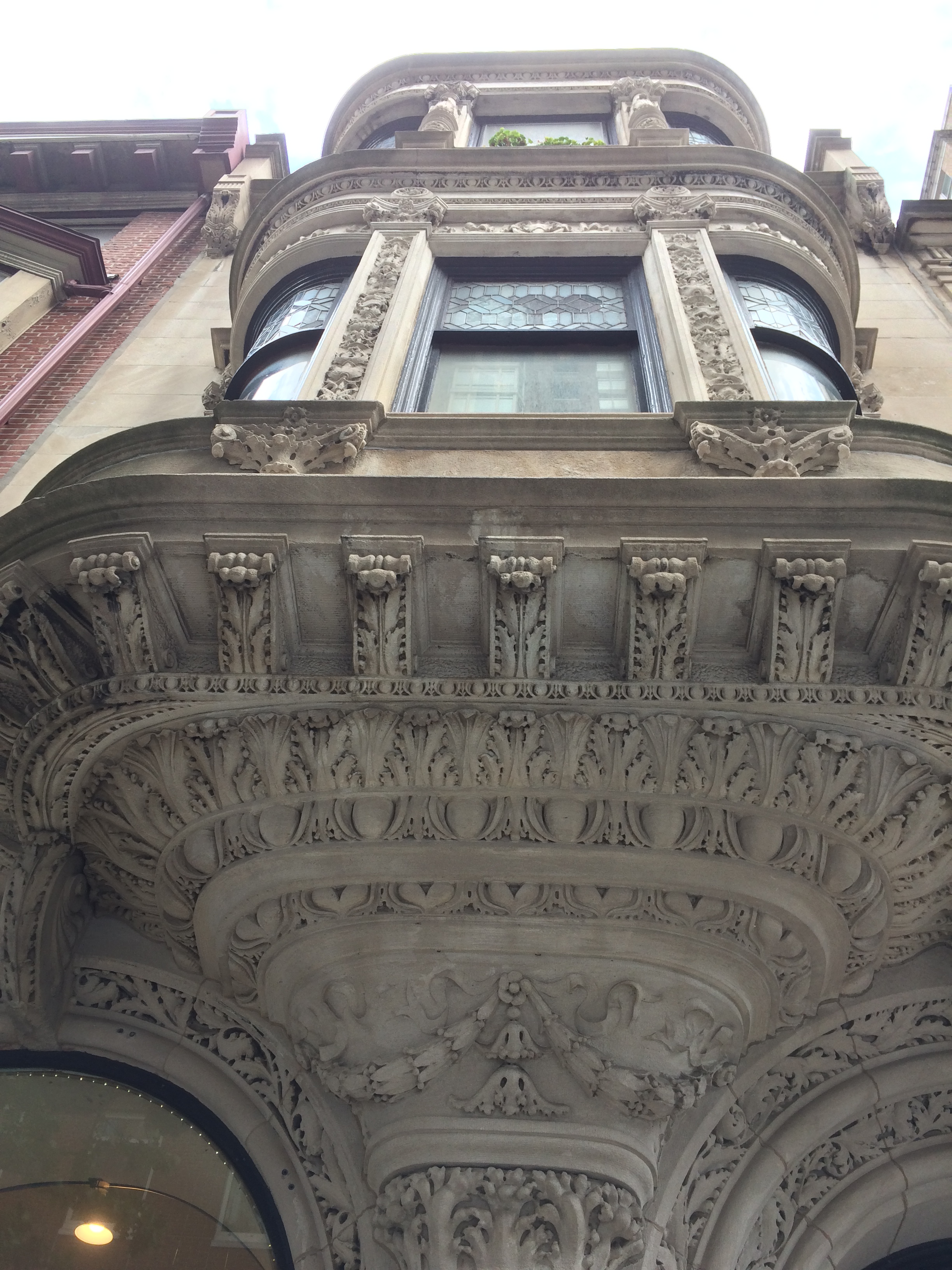
All told I spent two and a half hours roaming the streets, covering several miles-worth of territory. I spent much of the time in the areas where the city’s skyscrapers are most concentrated, and also walked along many blocks whose buildings are of normal size. My eyes darted here, there and everywhere, but I kept my mantra — look up! — firmly in the front of my mind. The patterns up above formed by contrasting buildings, the wonderful reflections of sky and surrounding edifices in way-up-there glass sheathings and windows, the loving details carved into stone not far above ground level in stately three-story homes . . . all of these made me smile.

I admired the words etched above the entranceway to The Alison Building, a calmly regal structure that faces one of the city’s finest parks, Rittenhouse Square. On an ordinary day, with my eyes looking straight ahead, I wouldn’t have noticed them. “He that soweth bountifully shall reap bountifully” they read. Hmmm, sounds like something that Benjamin Franklin might have said, I guessed. Incorrectly, of course. The phrase comes from the Christian Bible. Ben, though, probably knew and liked the statement, one you definitely can’t argue with.

My stroll ended alongside Philadelphia’s City Hall, an impossibly ornate hulk smack dab in the center of town. This monolith took around 30 years to build, finally opening for business in 1901. I’ve never been able to decide whether I like its exterior design or not. Some days I do, some days I don’t. It depends on how receptive to over-the-top decoration my mood is. As I approached City Hall from the south I naturally had to look at its highest point. Namely, the hat sitting atop the giant statue of William Penn, who more or less was Pennsylvania’s and Philadelphia’s founder in the late 1600s. That hat rests 548 feet above the ground, which made City Hall the tallest building in the city until 1987, when the first of Philadelphia’s now-numerous sleek, modern skyscrapers was erected.

Well, it almost was time to call it a day. I made my way to a subway station and rode a sub into South Philadelphia, an enormous area filled mostly with row houses. There I met two of my bestest pals, Mike and Jeff, for dinner at a pub. The hours of looking up had ended. Beers and some grub were the next things on the agenda.

(Don’t be shy about adding your comments or about sharing this story on social media)

(If you click on any photo, a larger image will open in a separate window)