Spring 2017 Revisited

What were the odds that I’d be writing about spring for the second time in three weeks? Well, if you had asked me that question even one week ago I’d have said “slim, very slim.” But it turns out the odds were 100%, because here I am penning another paean to the greenest of seasons.

To begin, there I was on the afternoon of April 24, denting, as usual, my favorite of the living room sofa’s three cushions. Such a comfortable spot it is. In fact, when I expire I’d like a memorial plaque to be placed on that cushion. It should read as follows: Neil Scheinin certainly made quite an impression. Here’s proof: He sat for so many hours on this sofa, the sensuous shape of his buttocks is forever recorded directly below. May Neil’s rear end, and his other parts, rest in peace.

Once in a while, however, I do rise from my throne to meet and greet the outside world. And once in a while said excursions involve taking a pretty good look at what passes for nature in my home territory. To wit, the wondrously paved-over, built-upon lands of suburban Philadelphia. My first investigation of Spring 2017’s unfolding, which took place on April 11 (click here to read it), was less than a smash. Few maples and oaks and their brethren had sprouted much, if any, new greenery. And blossoms on flowering trees and bushes were in short supply too. Two days later, though, driving around my region, I’d noticed that things were getting better, that spring was starting to look more like spring. It was a call to action.

But I’m not a man of action. I waited a week and a half, until April 24 rolled around, before once again making my way into the wilderness. As with my previous springtime stroll I would be a seeker of colors other than green. Hell, I’m cool with green, but there’s just so damn much of it out there. Enough’s enough, don’t you think? What’s more, variety’s the spice of life. And I’d throw in another cliché if I could think of one. No, it was pale whites and pinks and soothing shades of violet and rocking reds and yellows that I was charged up to smile at. Hey, by now those hues would be popping out riotously, wouldn’t they?

Hopping off the couch and into my car, I headed to a neighborhood I was slightly familiar with in a nearby township. I parked on a leafy street studded with good-looking houses and began my walk. It was 3:00 PM.

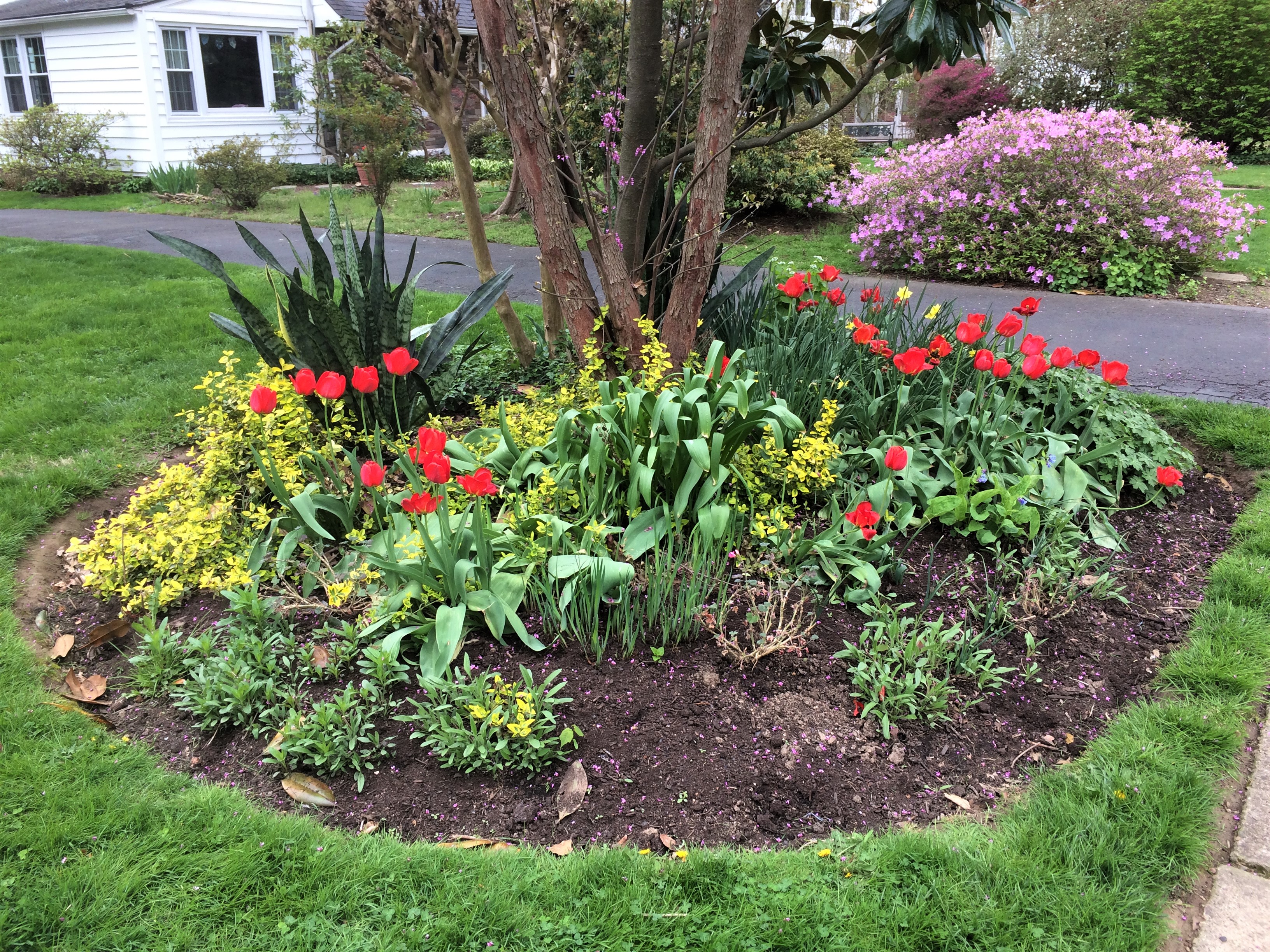
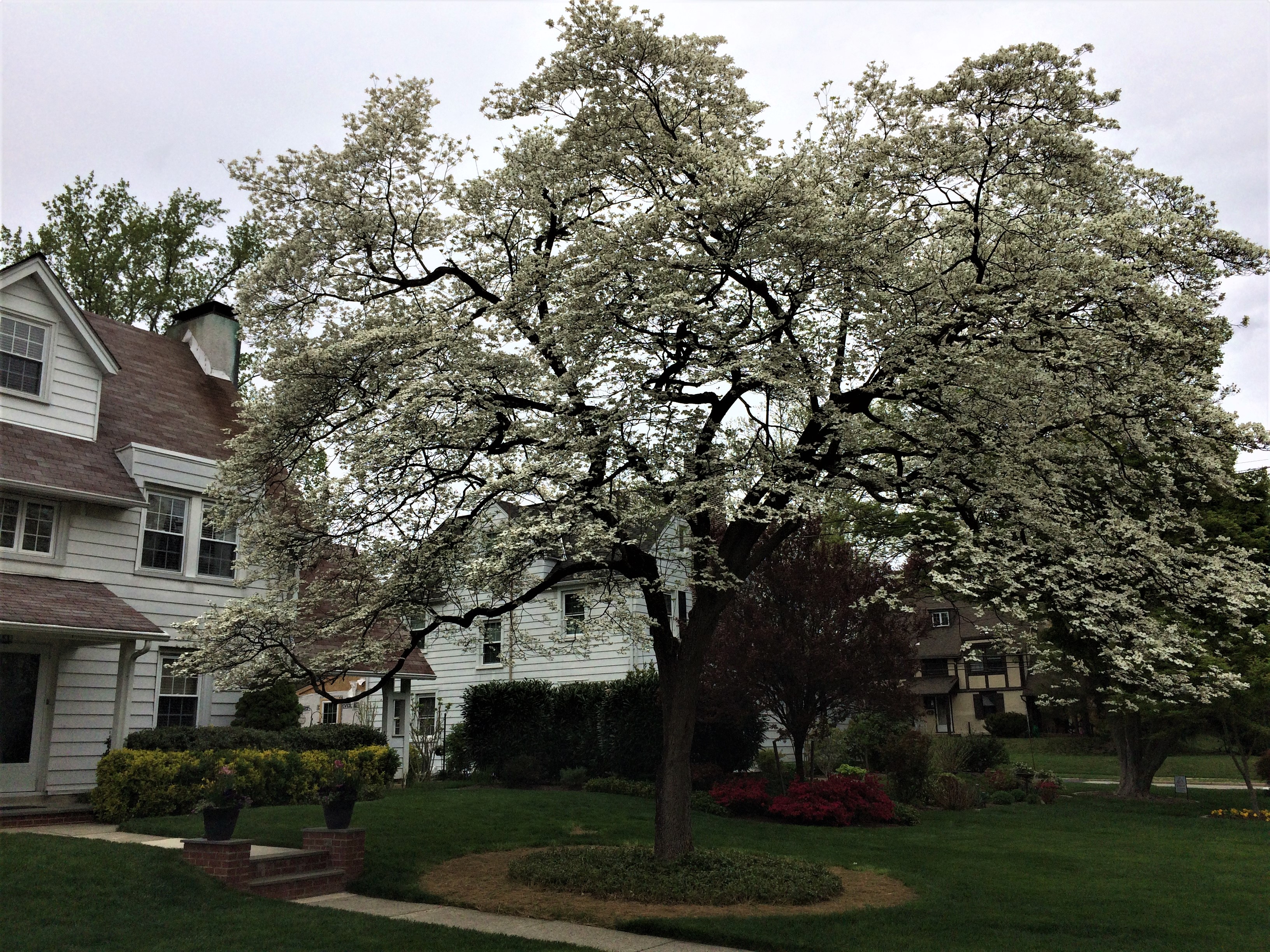
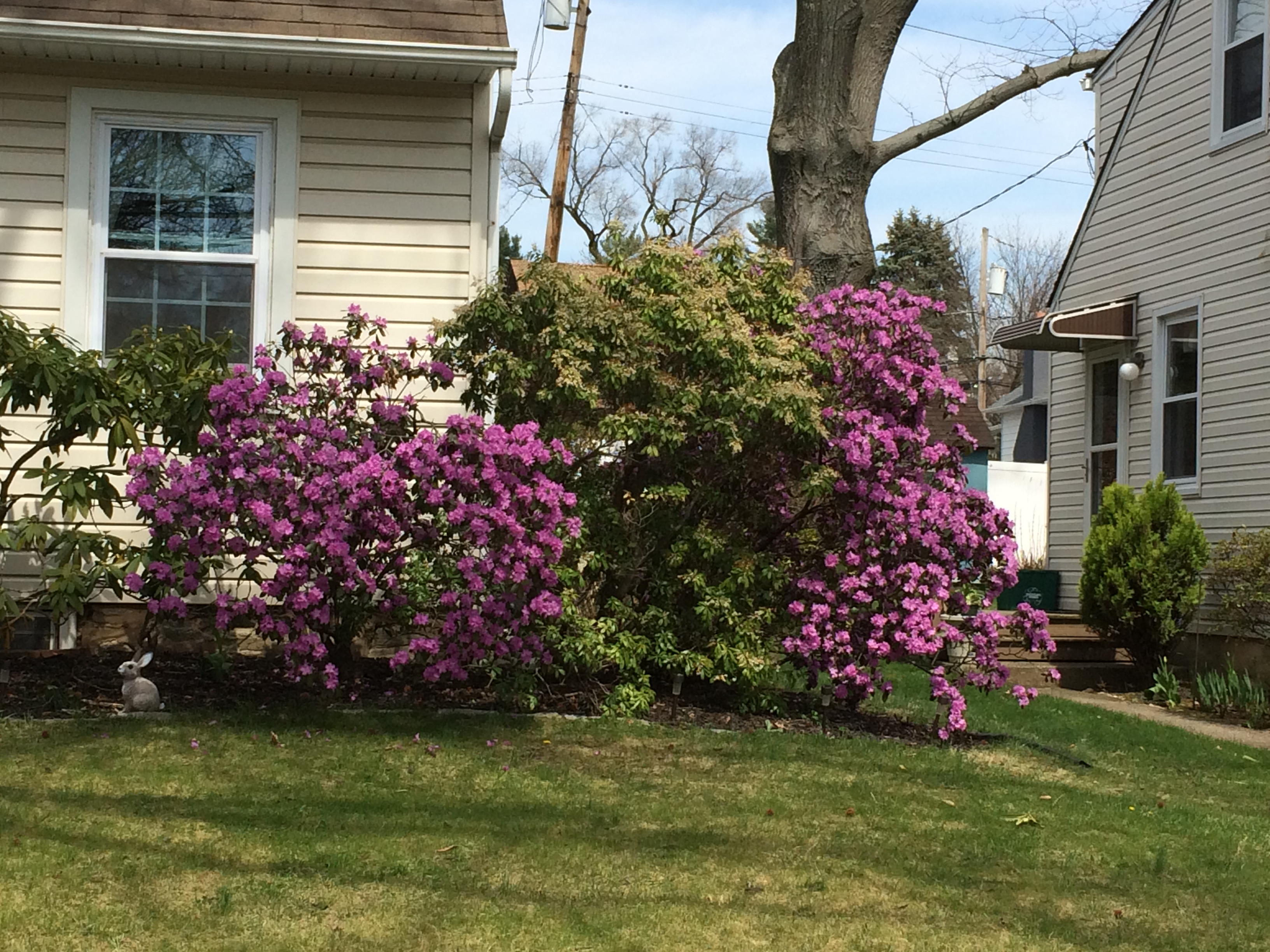
Eureka! I struck pay dirt! I strolled along many blocks admiring the views. Dogwood trees and azalea and lilac bushes, all aflower, glowed serenely on nearly every property. Beautiful flower beds — hey man, dig those snazzy, crazy tulips! — wowed like flashy jewels. I was in heaven. Or thereabouts.
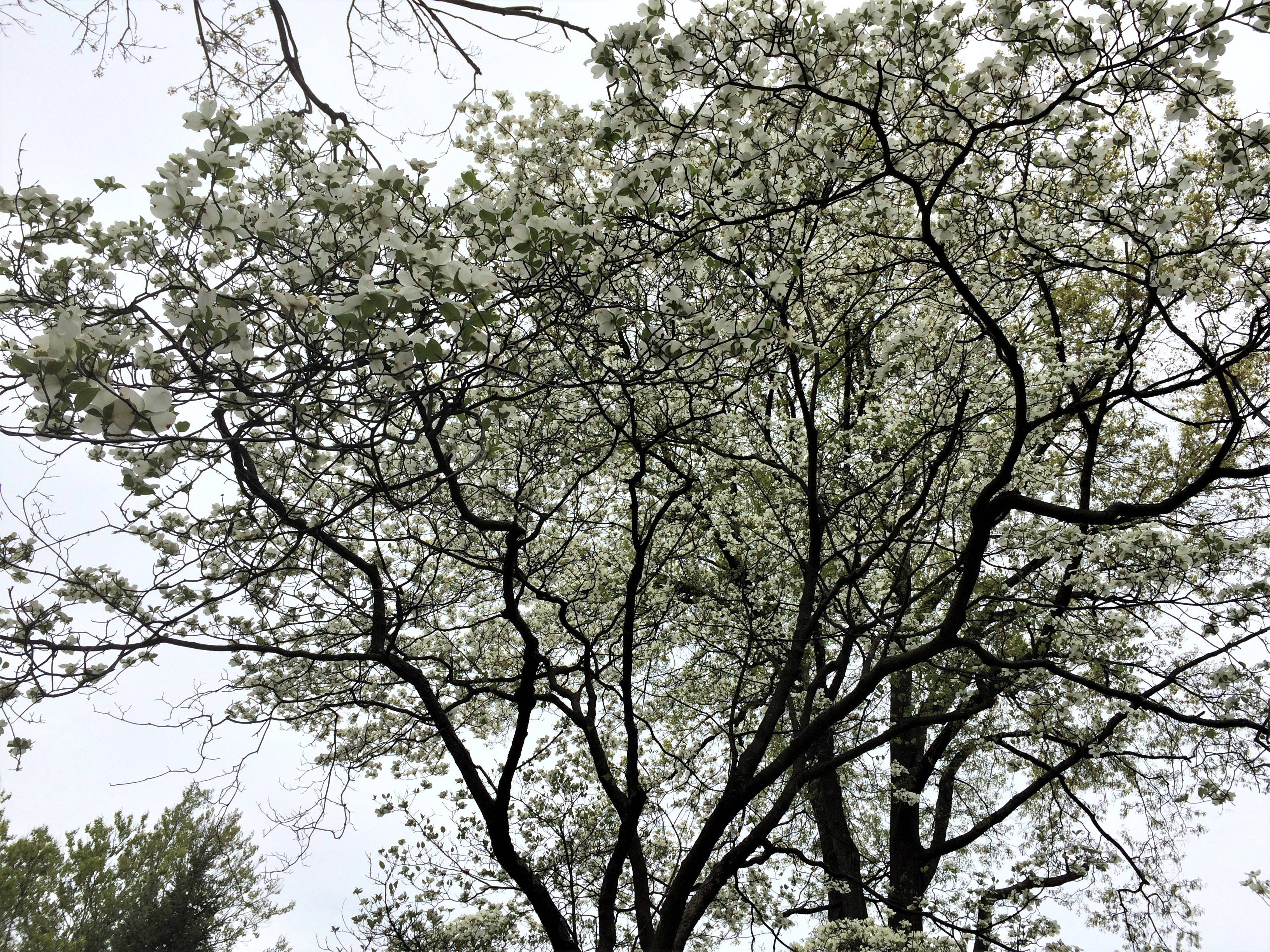
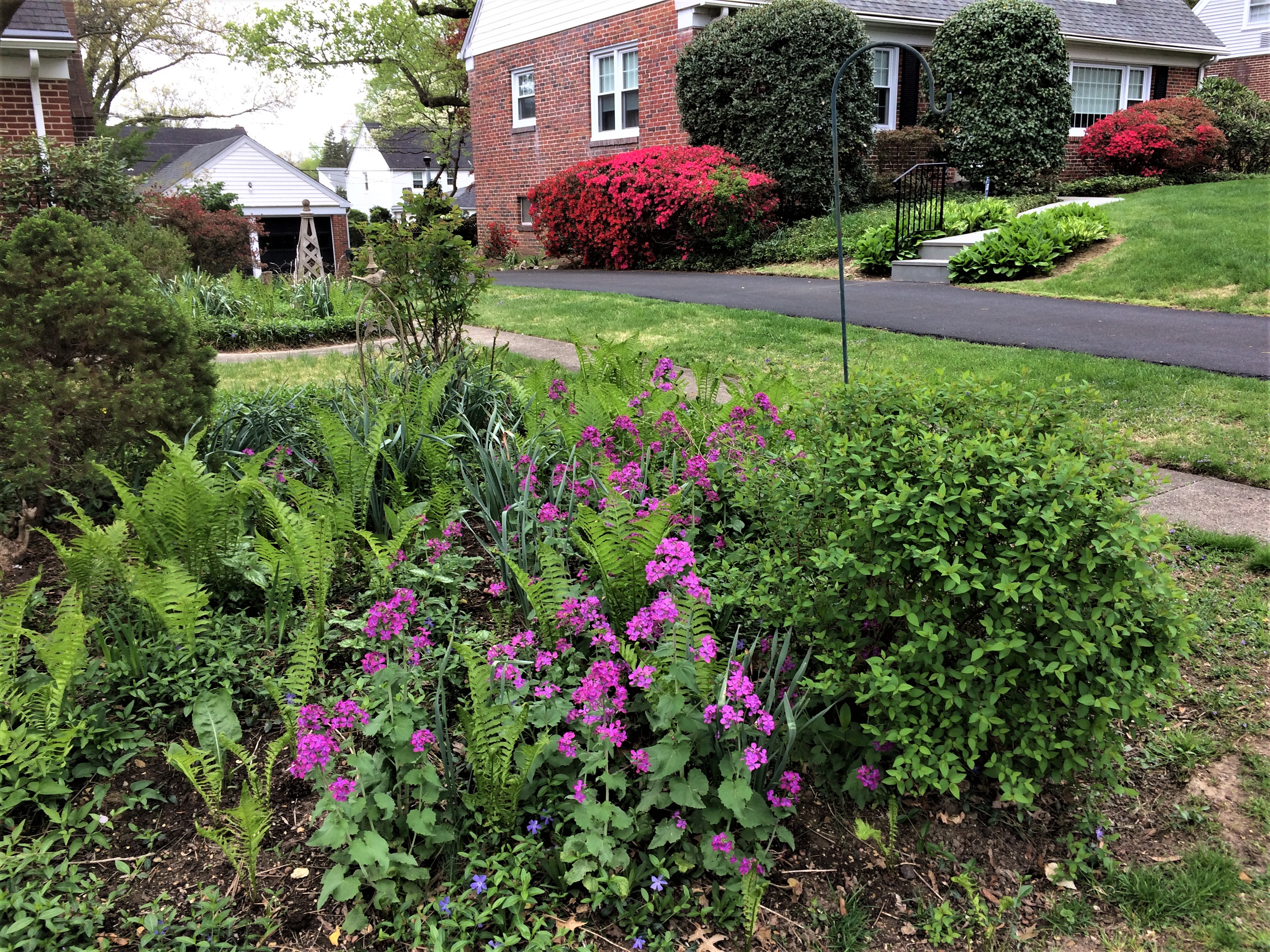
What’s more, the air was cool and comfortable, a light breeze tousling my Apollo-like tresses. And it was okay by me that the sky was overcast, as the clouds were not unhappy nor threatening. In other words I was amidst perfect walking conditions. No need to have slathered on sunscreen (I hadn’t). No chance I’d be shvitzing like a pig by the time my travels ended.
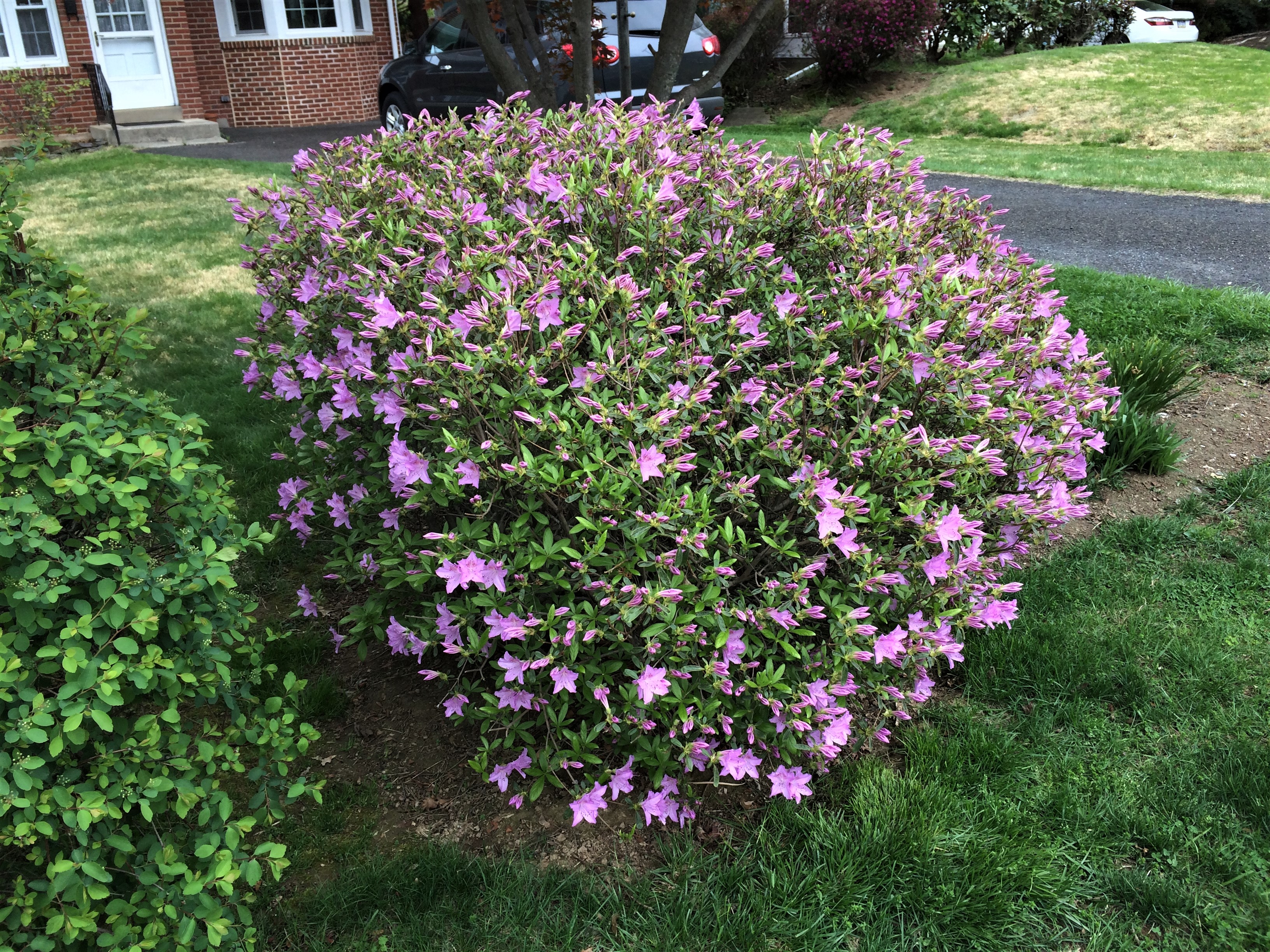
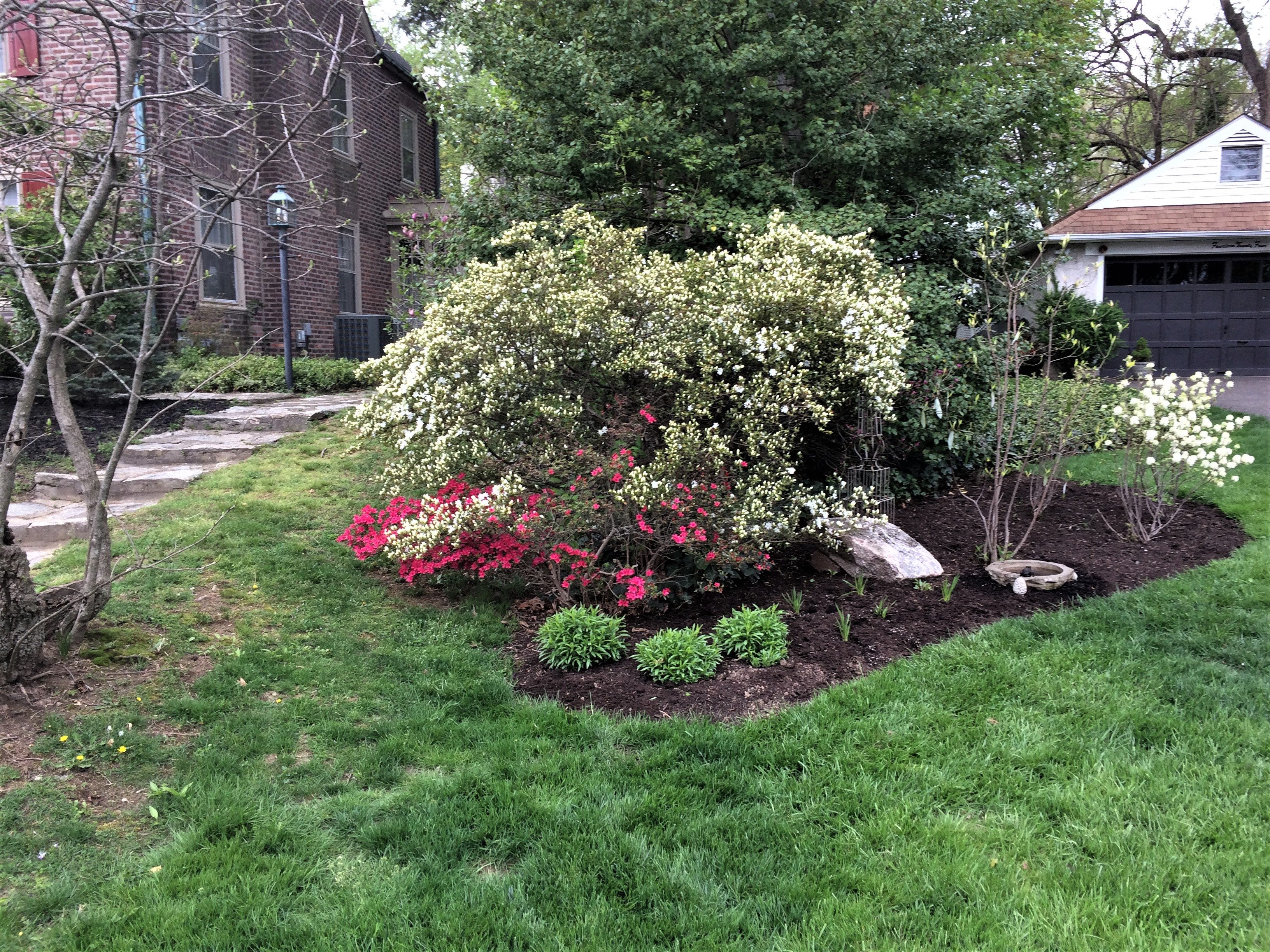
Clearly, I was in a very good mood. Things were going my way. Although I was a mere mile and a half from my home, the sights were far better than those in my own township. These homeowners not only were with it, they were into it, putting a whole lot of time, effort and bucks into creating fine outdoor canvases. Now I know where to head to decompress, other than the emergency room, when my blood pressure starts pushing 230/130.
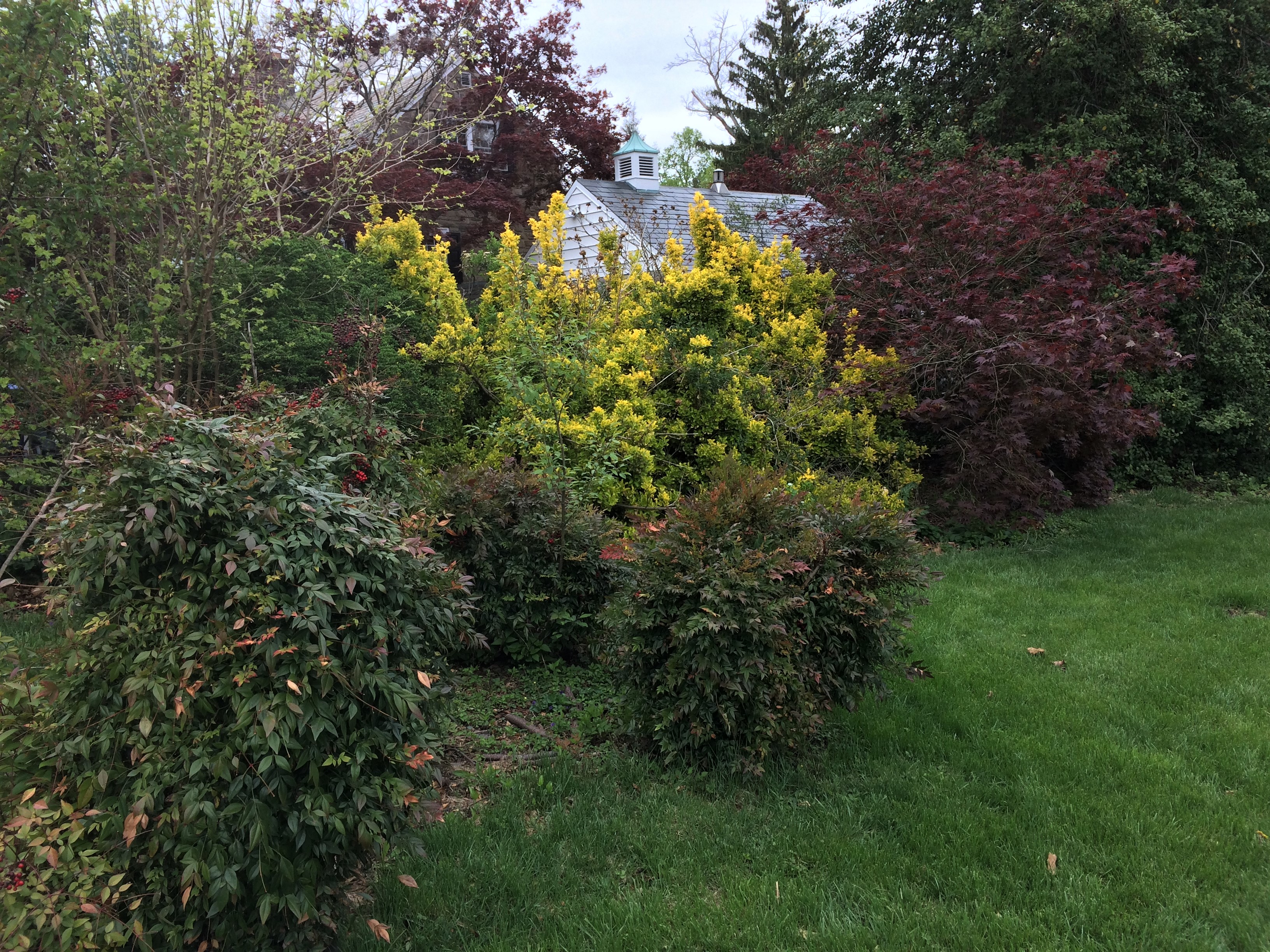
My journey was a quiet one, decibel-wise, except for the manic dog barking its head off in a yard. Of course, that’s one too many, especially if you’re an unfortunate soul living within 150 feet of that animal and its owner(s). Other than that, everything was peaceful. None of the cars passing by hit their horns. And the only other sounds of note that I met, besides the voices of the people walking on the streets, were those of something I hadn’t encountered in a pretty long time — the whirs of a bicycle bearing down on me from behind. Deftly I stepped off the sidewalk, moving onto a front lawn, and watched a nine-or-so-year-old whiz by on his two-wheeler. “Thank you!” he yelled to me. Holy crap, I really must have been in heaven, that place of the heart and mind where I’m certain it’s a prerequisite for children to have the finest of manners. “You’re welcome!” I shouted in return.
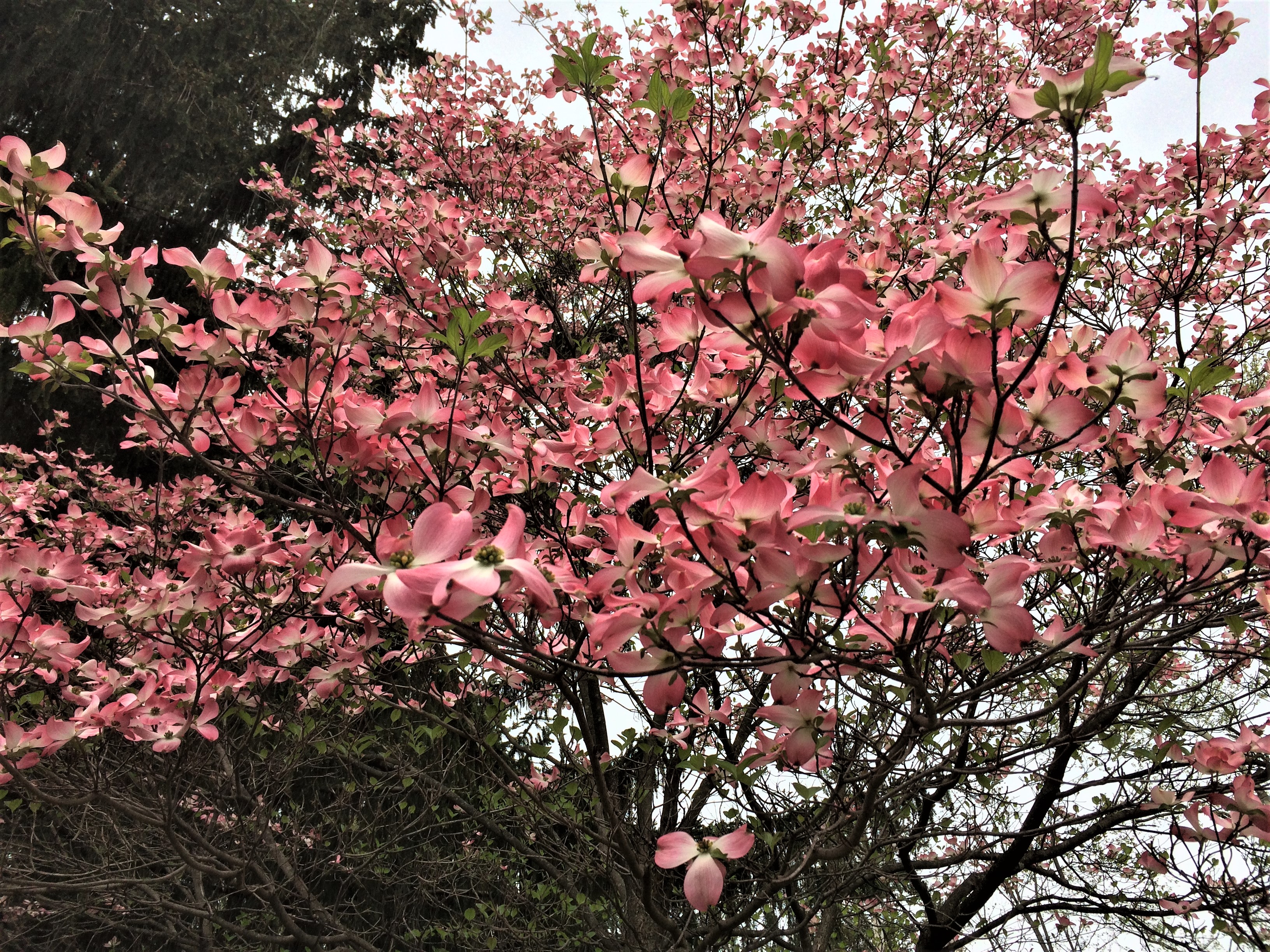
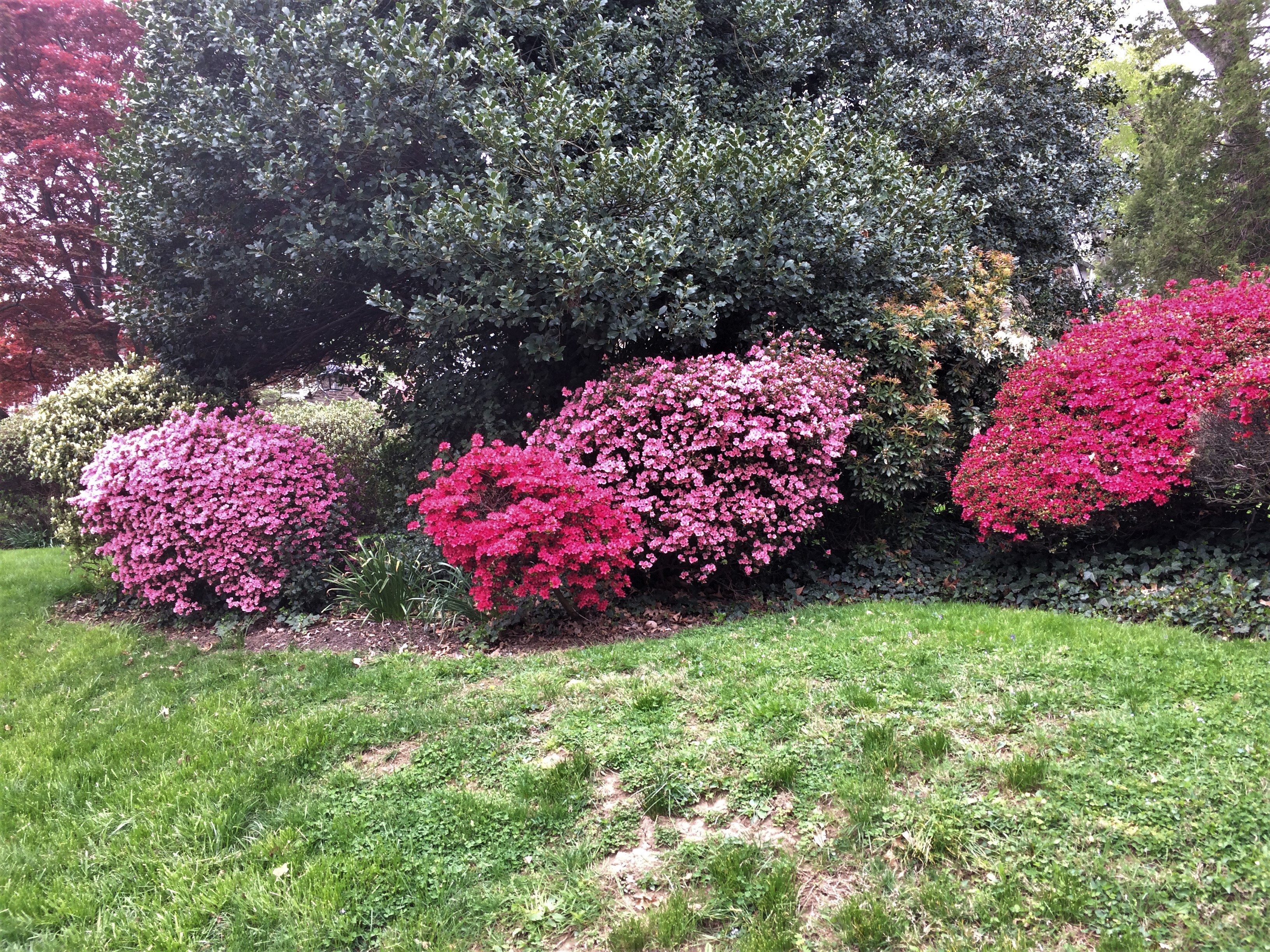
At 4:00 PM I returned to my car. I hadn’t felt so chipper in weeks. I’ve got to get out more in the suburban version of the great outdoors.


(Don’t be shy about adding your comments or about sharing this article)

(If you click on any photo, a larger image will open in a separate window)
Spring Is In The Air: A Search For Colors

For the last seven years I’ve had a Tuesday morning volunteer gig at a suburban Philadelphia hospital’s medical office building. There, I man the information desk from eight o’clock till noon, helping people locate their doctors’ offices, the cleverly hidden restrooms, and ATMs so that they can pay to get out of the cash-only parking garage behind the building. Incredible to me, it seems to be de rigueur for lots of folks these days to carry nary a dollar on their persons. Plastic rules, except at the parking garage. Wouldn’t you know it, though? . . . there isn’t an ATM in the garage or the medical building. So, off on a two-block trek to the closest ATM the short-on-cash folks depart.

I was at my post last Tuesday, the 11th of April. Looking through the lobby windows I could tell that the Sun was blazing away deliriously. My iPhone said that the high for the day would be 83°F. Yeah man, that sounded fine to me, a non-Sun-worshipping guy who normally isn’t thrilled when the thermometer climbs above 74 degrees. But after all the rains we’d had in recent weeks I was psyched for a bright, overly-warm spring day.

I wasn’t alone in that feeling. Inside the medical building two humans of the male variety were taking their cues from our winged friends that undoubtedly were chirping away merrily outside. I heard one of the patients singing freely and loudly as he entered the elevator, on his way to get checked out in an upper-level doctor’s office. And I heard another whistling a happy tune as he exited the building through the main door 20 feet from the information desk. His doctor must have given him a good report. Good golly, Miss Molly, there and then I decided to have a look that afternoon at how spring was shaping up in my neck of the woods. I would be in search of colors.

I was possibly, even probably, wrong, but for a couple of weeks I’d been thinking that spring was taking its good old time unfolding in the Philadelphia region. I could have sworn that in most years, for instance, masses of forsythia were showing off their yellows by early April and that flowering trees were ablaze aplenty. But I’d noticed not too much activity so far in 2017 during my drives through the burbs, though I hadn’t really been paying strict attention to the situation for the last four or five days. “Let’s see if things are starting to get more colorful out there,” I said to myself. “I’m ready to be impressed.”

And so I spent an hour and a half in early afternoon wandering, on foot, in three of my town’s neighborhoods, including my own. These are modest areas filled with no-nonsense homes from the last century’s early and middle sections. Things are neat and tidy here, but usually not exactly eye-grabbing. But when cherry and dogwood trees and azaleas and rhododendrons and all the rest open their floodgates, watch out! The streets then, for me anyway, rise above snooziness. Charm and loveliness take over.

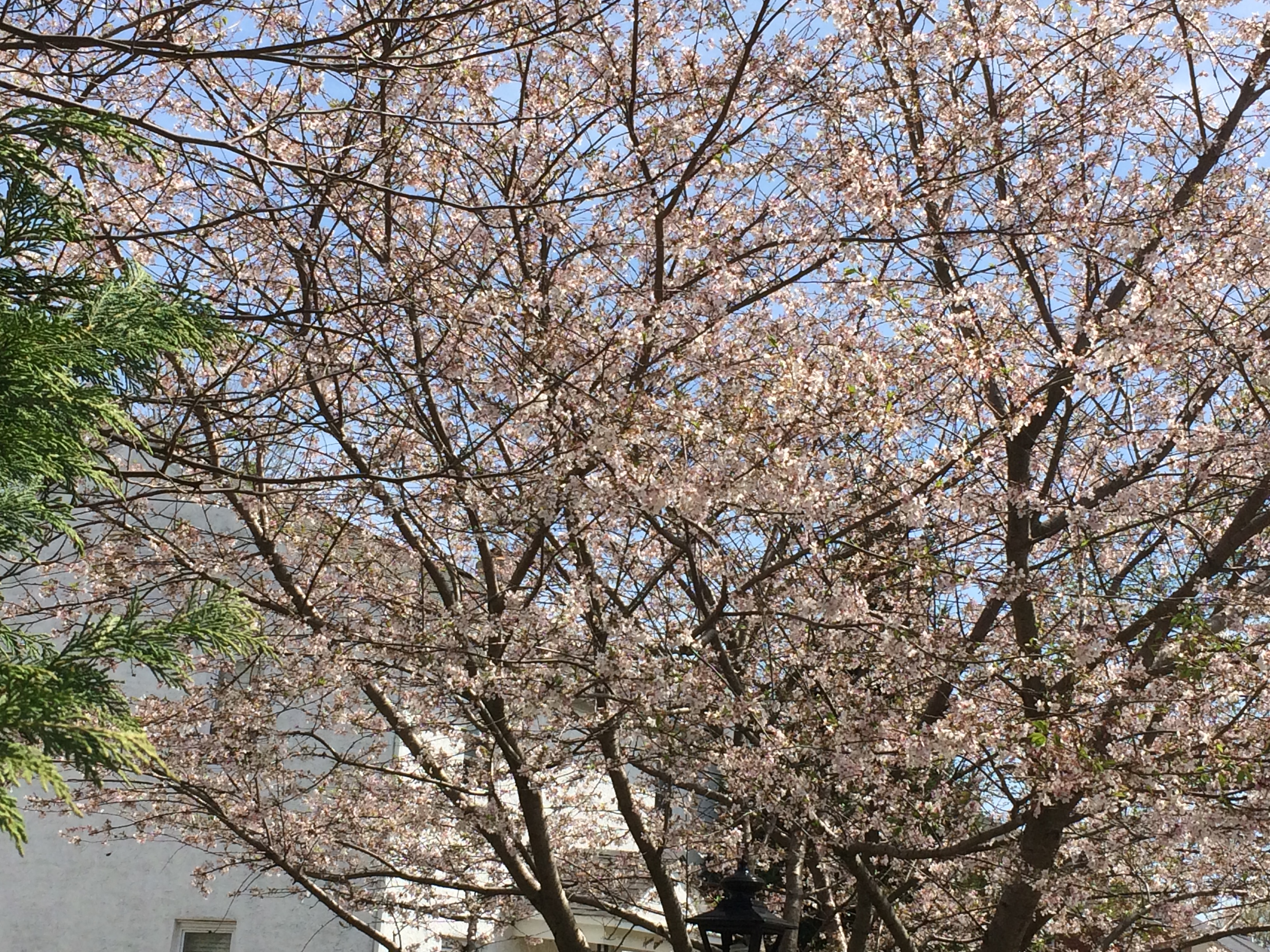
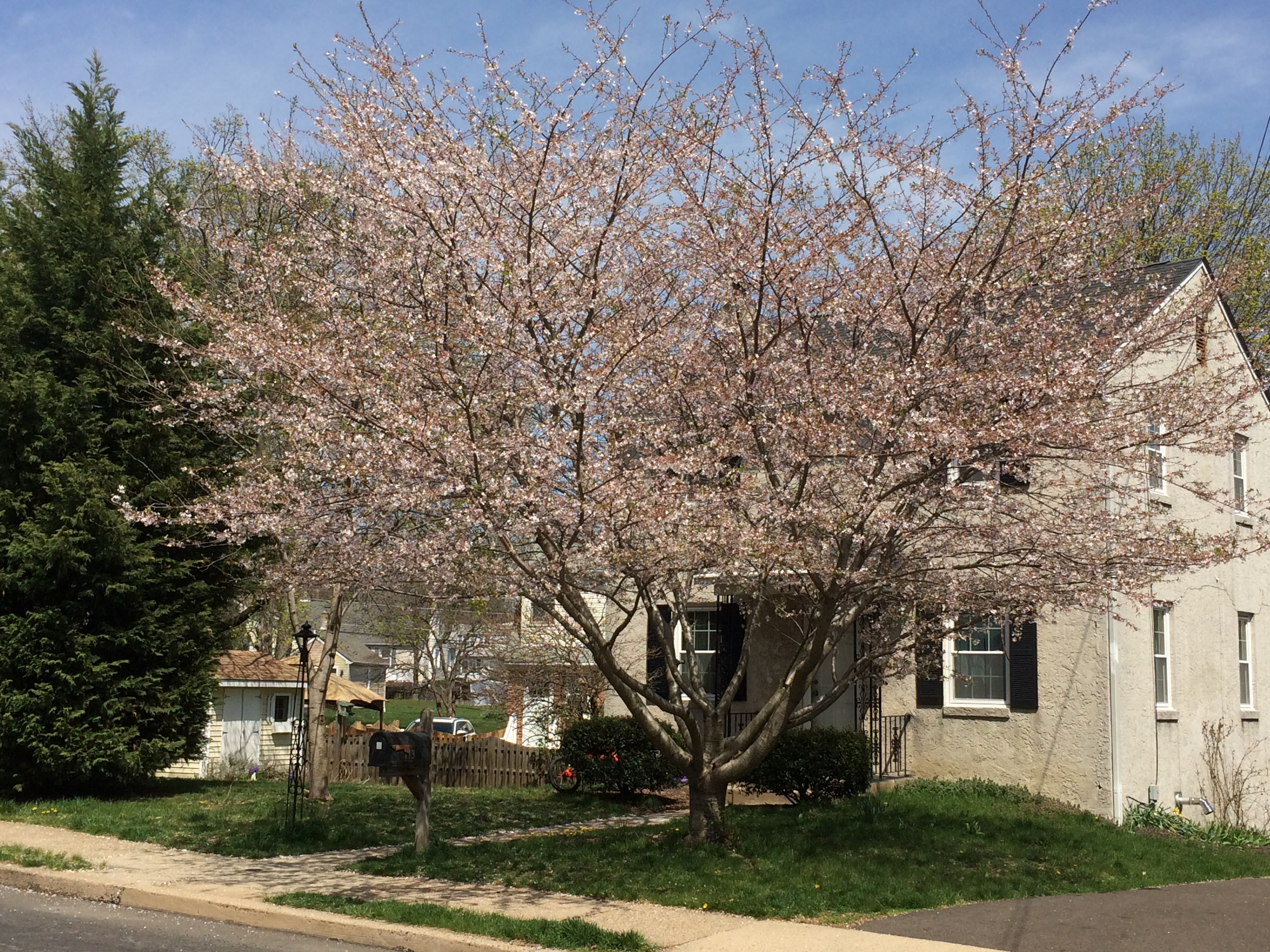
Alas, I’m here to report that not much out of the ordinary was happening color-wise on April 11. Bummer, indeed. In fact, many streets hadn’t escaped from their leafless winter doldrums, though here and there some trees were beginning to sprout delicate, new leafage. As expected, there were plenty of greens to be seen — lawn grasses and evergreen trees. And there was no shortage of browns, obviously, what with tree trunks all over the place. But soft colors that make you ooh and ah, and vivid colors that go pow? Well, some cherry trees were in bloom, and a smallish number of  azalea bushes were festooned with flowers tinted in strong lavender, and a far-less-than-I-expected quantity of forsythia were unfurling their yellows, and . . . that was about it. There even was a shortage of revved-up flower beds.

And yet I strolled in a contented mood. I don’t go out for walks anywhere near often enough, so the excursion put some purpose into my footsteps. I investigated block after block, taking pictures, neck craned and eyes darting everywhere in quest of color. I was surprised by how few people I passed, other than four dog walkers. Where was everybody? “Yo, genius,” a little voice inside my head muttered, “half the people are either at work or in school. And most of the others probably are at the mall, at Macy’s. Macy’s is having an incredible two-hour sale on underwear: Buy one and get six free. Genius, you’ve been wearing the same briefs for the last 15 years. Raggedy doesn’t begin to describe them. Do your balls a favor and head to Macy’s now.”

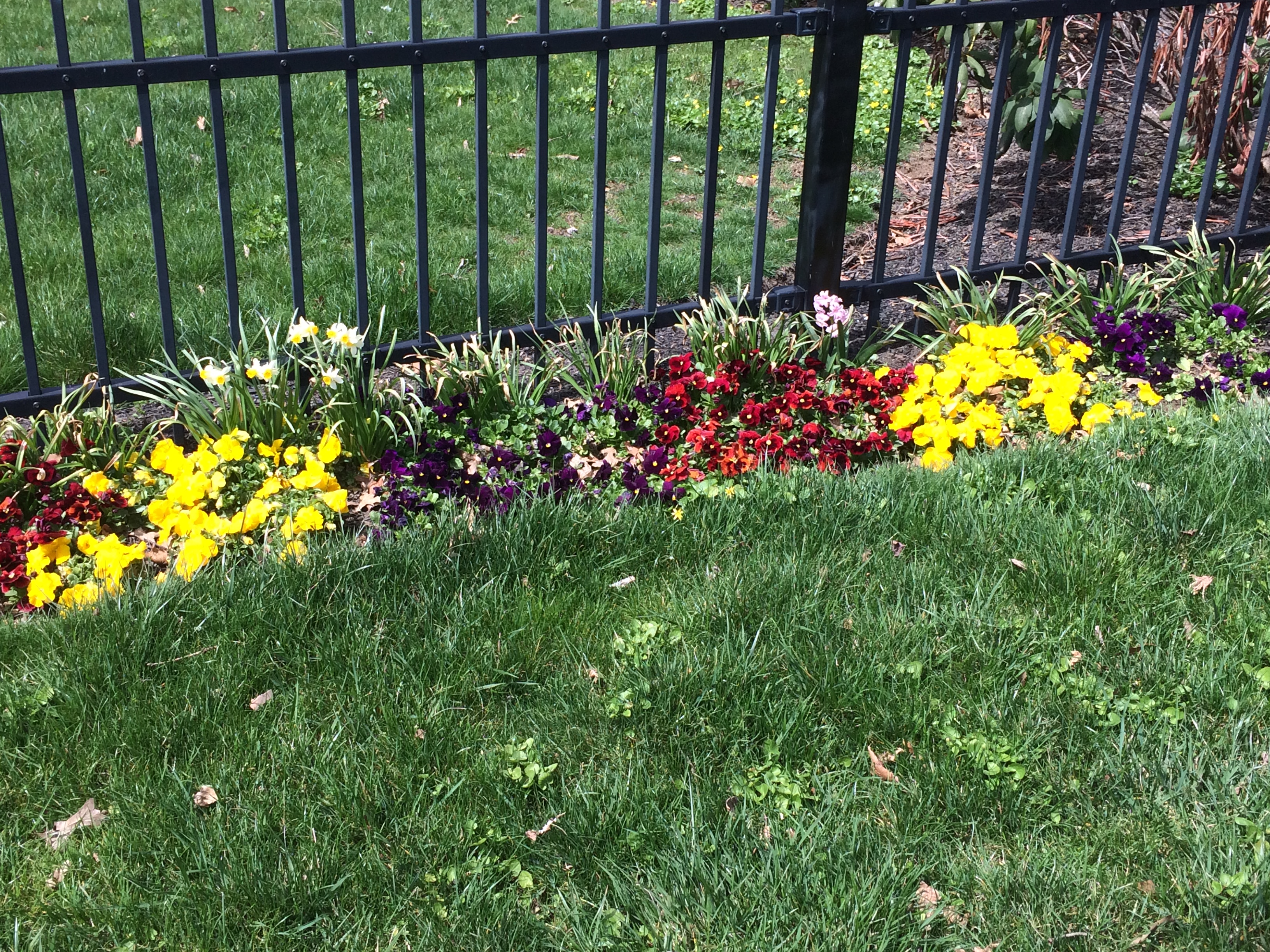
Thus, I hurried to my car, snapping the last of my photos. Macy’s, not Nature’s hues, called! Maybe in a future article I’ll report on the degree of shopping success I encountered at the mall. The world, I know, anxiously awaits that information. In any case, I’ll wind up these proceedings by saying that I hope you have enjoyed the photographs that I’ve placed on this page. Though my springtime adventure wasn’t a 10 (hell, it was more like a 4), I managed to document some decently lovely and colorful vegetative sights. Next year, perhaps, I’ll improve my timing and write a piece about spring in all its glory.


(Don’t be shy about adding your comments or about sharing this story)

(If you click on any photo, a larger image will open in a separate window)
Darkened Skies, Beautiful Philadelphia

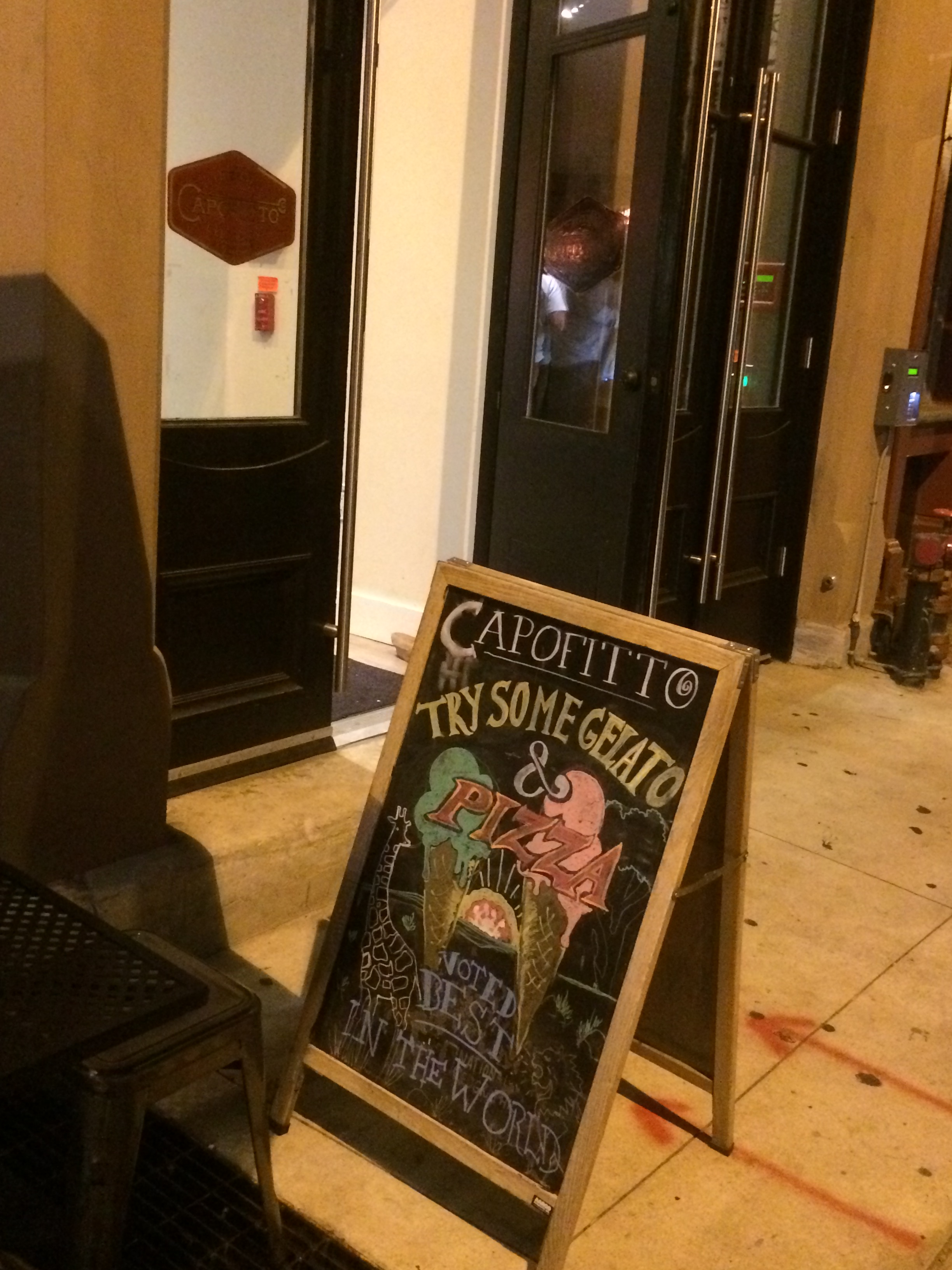
img_0891 At about 8:30 PM on the first Friday of the current month, my wife Sandy and I exited Capofitto, an Italian bistro cum gelato/sorbetto (ice cream/sorbet) store that we like. We’d downed a pizza-centric meal there, capped off with scoops of cappuccino gelato and peach sorbetto. Pretty damn good for sure. Capofitto is in the heart of Philadelphia’s Old City section, whose roots go back powerfully to Colonial days. No doubt the block on which Capifitto resides, a length of Chestnut Street, was trod upon countless times by any Founding Father you can name, not to mention his romantic partner(s), as was just about every Old City block. I find it très neat to think about that. Old City is a cool part of town.

“What next?” we asked ourselves. Should we go back to our home in the burbs? Nah, the night was young. And quite dark, as the Sun had set an hour earlier and neither moonlight nor starlight was apparent to me. Essentially, Old City was being illuminated by electric lights, and in a muted manner. Which I enjoyed. Everything seemed dreamy and atmospheric — the semi-ancient brick buildings, the stone-paved streets. I felt as though I was on a movie set. I asked Sandy if she’d like to go for a walk. She said yes, and off we went down Chestnut Street toward nearby Penn’s Landing, a large swath of Philadelphia’s Delaware River waterfront. The night not only was young, it also was calling. 

img_0894Like the Founding Fathers, Sandy and I have moseyed along Old City’s arteries many times. That’s an activity that doesn’t get old. We keep coming back for more. And this being a night whose effects I actually was paying attention to, which isn’t always the case, I felt myself getting into the scene more than usual. “Holy brotherly love,” I murmured to myself when, half a block from Capofitto, I turned around and saw the huge and perfectly-sculpted United States Custom House, which went up in the 1930s, glowing warmly in its white lights. “That’s gorgeous.” Indeed it was. I snapped its picture, the first of many that Sandy and I would snap as we investigated Philadelphia under darkened skies.

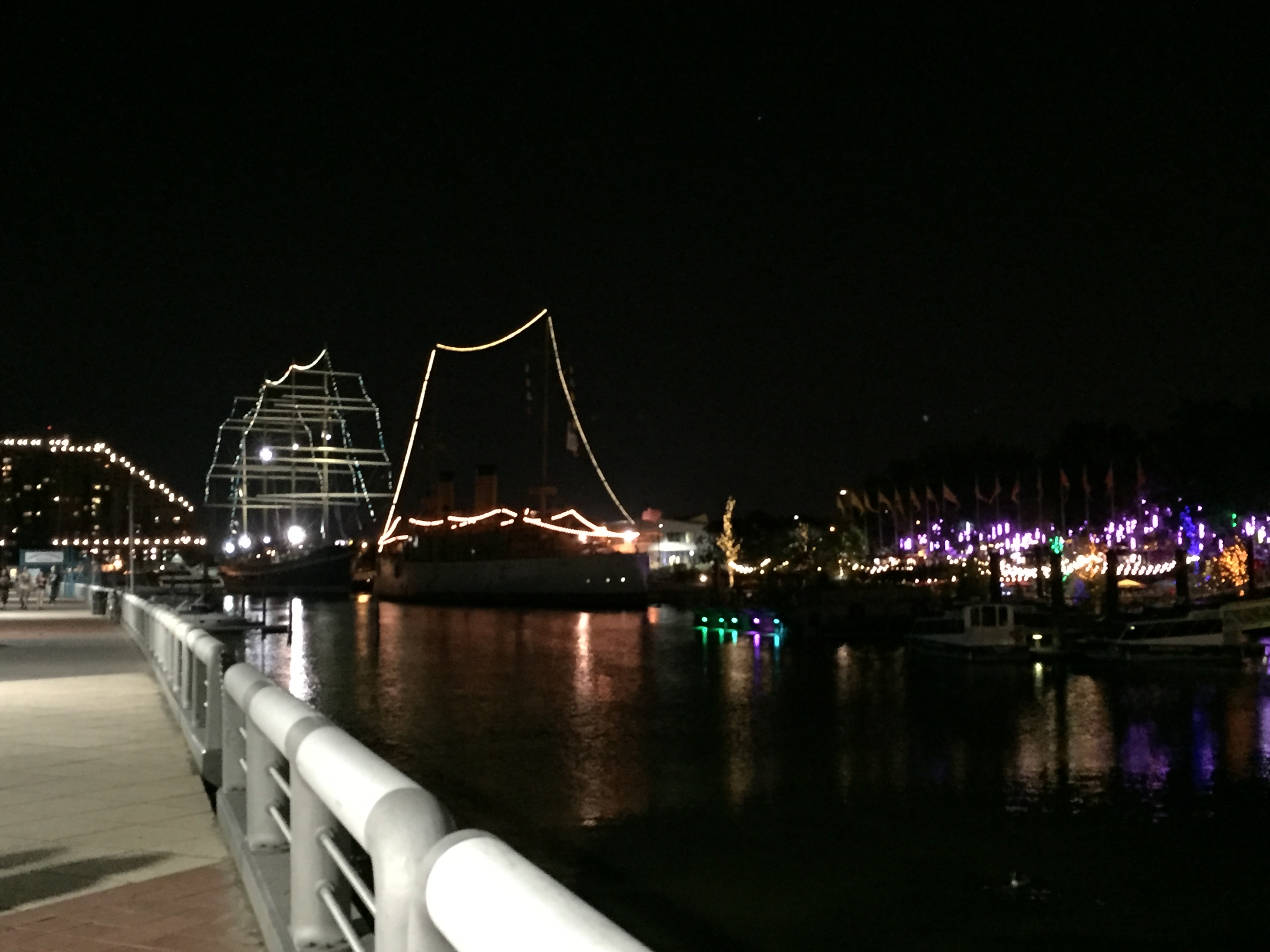
img_1546In a flash we were at Penn’s Landing, a once unassuming and still developing stretch of territory that city officials have been master-planning and trying to force into glorious bloom for over 50 years. To put it another way, the keys to unlocking Penn’s Landing’s full potential as a tourist and city resident draw have yet to be discovered. But it’s getting there, as we shall see. First thing you notice at night when you enter Penn’s Landing near its northern end, as Sandy and I did, is the Ben Franklin Bridge, which connects our nations’ first capitol with Camden, New Jersey. The bridge is massive and grand and, when skies are black, a visual wow. Why? Because years ago someone had the sterling idea to string colorful, Christmassy lights along it. Sandy and I looked at the bridge long and hard and, as on many nights before, we liked what we saw.

The park's LED lights (center right) seen from a distance.
The park’s LED lights (at right) seen from a distance.

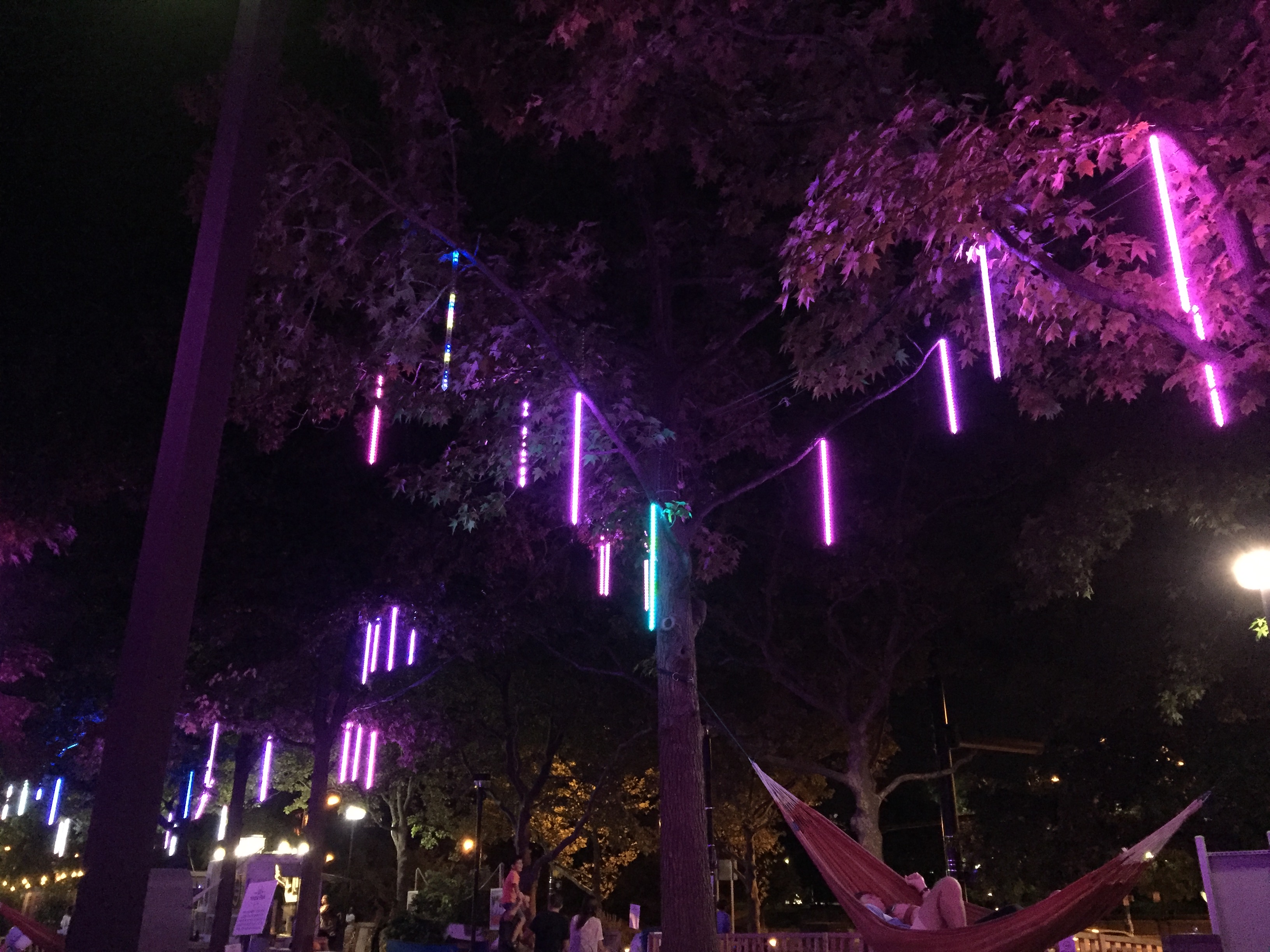
I must have realized this on past visits too, but that night I was taken by the low-wattage illumination in most parts of Penn’s Landing. Just like in Old City. Philadelphia — and I’m all for this — ain’t aiming for a Times Square type of lighting blitz. A feeling of intimacy, I think, is the result throughout most of the city. And that casual, relaxed spirit was true even in the section of Penn’s Landing that the masses have discovered and turned into a destination. I speak of Spruce Street Harbor Park, which drew closer as Sandy and I headed south along Penn’s Landing’s walkways. At night we couldn’t and wouldn’t have wanted to miss it, because the possibly thousands of color-shifting LED lights hanging from its trees were superb and put us under a spell. And we didn’t need to don shades . . . yes, the lights dazzled, but subtly.

img_1552Spruce Street Harbor Park, loaded with things to do, overlooks Penn’s Landing’s marina, which I never used to think much of because I’d rarely if ever notice anything interesting going on within it. And the grounds of what is now the park, which opened for business in 2014, once were as bland and barren as an unbuttered slice of white bread, except for a grove of trees and a monument to Christopher Columbus. That, at least, is the way I remember the area. But all that has changed. Lo and behold, SSHP has become, I’d guess, the most popular place to hang out in all of Philadelphia. The governmental folks who orchestrated the park’s development birthed a phenomenon, a winner that has far exceeded in popularity anyone’s expectations.

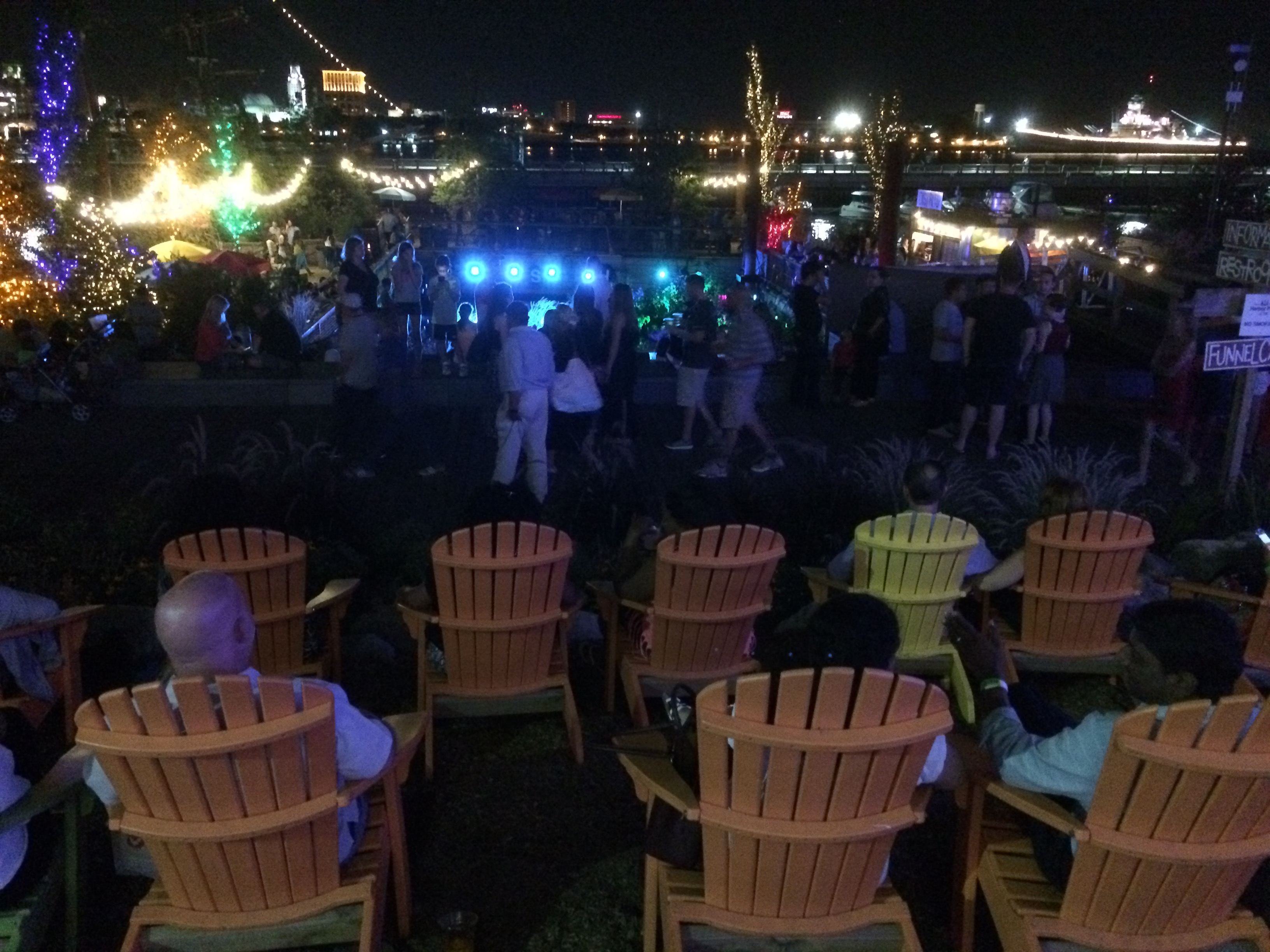
img_0926img_0911Designed to have a summery sort of ambience, the attractions at Spruce Street Harbor Park have a limited run each year, though I wouldn’t be surprised if the powers that be are brainstorming ideas that would keep the park open most or all months. Yeah, more is better, guys! This year, SSHP’s season began in early May and will end on September 25. At the very least, why not open the gates in mid-April and close them in mid-October? Sounds like a plan to me. Anyway, the place was mobbed the night Sandy and I visited. With good reason. It has a low-key, breezy combination of things going for it, besides the groovy LED shafts whose color blips rise and fall regimentally.


img_0920img_1557There are hammocks dangling between trees; tables and chairs of different sizes and shapes scattered all around; a boardwalk lined with food shacks; craft beer stands; an indoor arcade; restaurants floating in the marina; a bocce court . . .  you get the picture. Among other pursuits, folks lounged, strolled, stuffed their faces and watched others lounge, stroll and stuff. And played their parts peacefully and politely. The nitwit factor at Spruce Street Harbor Park and the rest of Penn’s Landing and, come to think of it, in Old City, was nil that night. Do hypnotic lights amid semi-darkness induce commendable behavior? I don’t really know, but there might be something to that.


Alas, all good things that first Friday evening, for Sandy and me anyway, came to an end. To a train station in central Philadelphia we eventually proceeded. And, not long after that, at our abode’s doorstep, a mere handful of miles from one of the city’s borders, we arrived.

(Don’t be shy about adding your thoughts, or about sharing this story with others)

(All photos, except that of the United States Custom House, by Sandra Cherrey Scheinin. If you click on any photo, a larger image will open)

Walking Through Philadelphia With Colors On My Mind

I woke up one weekday morning not long ago with visions of Philadelphia swirling in my mind and beckoning me. Amorphous visions, but colorful. I hadn’t done much city exploration in awhile. Hadn’t taken a long and leisurely stroll anywhere in awhile. What’s more, the weather prediction was highly favorable: warm, sunny and breezy. A walk was in order. And so, a few hours later in my suburban Philadelphia home, I closed my eyes, clicked my heels together three times and thought beautiful thoughts about the City Of Brotherly Love. Next thing I knew I was standing at the corner of 2nd and South Streets, part of a funky area not far from the Philadelphia waterfront and some of the city’s oldest residential blocks. Let the adventure begin.

The hike took nearly four hours. I trod, often guided by whimsy, on many blocks within the rectangle formed by 2nd, Bainbridge, Broad and Arch Streets. At the start I didn’t have much of an idea of what my route would be. But this much I knew: I wanted to stretch the ol’ legs, inhale Philadelphia’s quasi-clean air and feel the wind caressing my thinning hair. And this too I knew: I wasn’t in the mood to check out any historical or touristy sites, or anything with the connotation of trendy attached to it, all of which Philadelphia is loaded with. But it wasn’t to be an aimless ramble. No way. When I landed at 2nd and South Streets, I had in mind a theme for the day, inspired by the colorful visions from earlier in the morning. I was going to look for sharp and snazzy outdoor color displays produced by the hands of man, not by nature. It was a modest quest, probably kind of a dumb one. But hey, I’m that kind of guy.

fez IMG_0212mexican IMG_0215
Things got off to a slow start. I looked all around the 2nd and South Streets vicinity and the only colorful things I could find were Fez Restaurant’s facade and a happy, yellow ghoul, dressed in red, outside Las Bugambilias, a Mexican eatery. Still, I figured that the South Street corridor — not as happening a part of town as once it was, but hanging in there fairly well — offered a decent chance to come across more than that. And I was right.

mako's IMG_0220larry fine IMG_0222
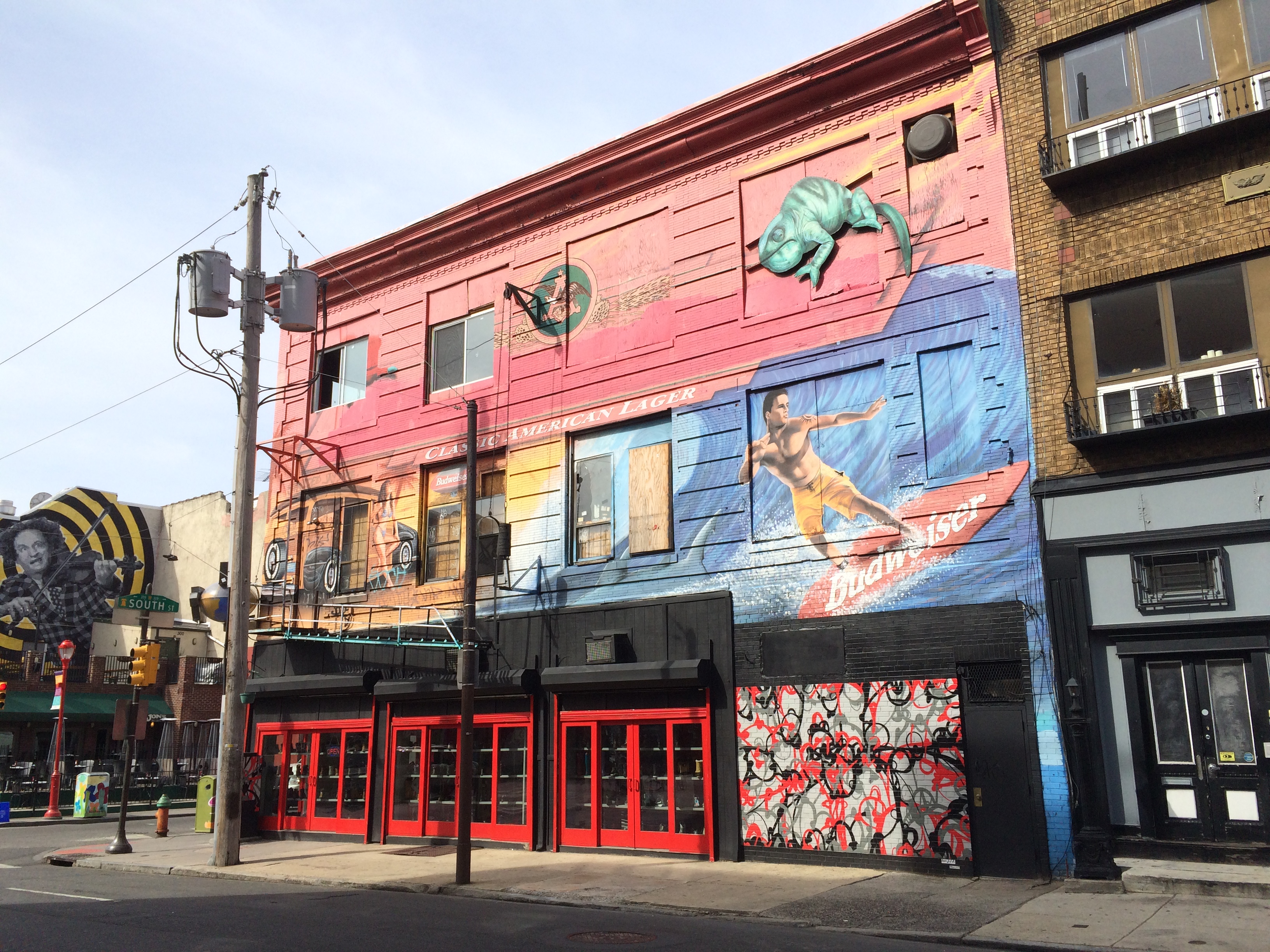
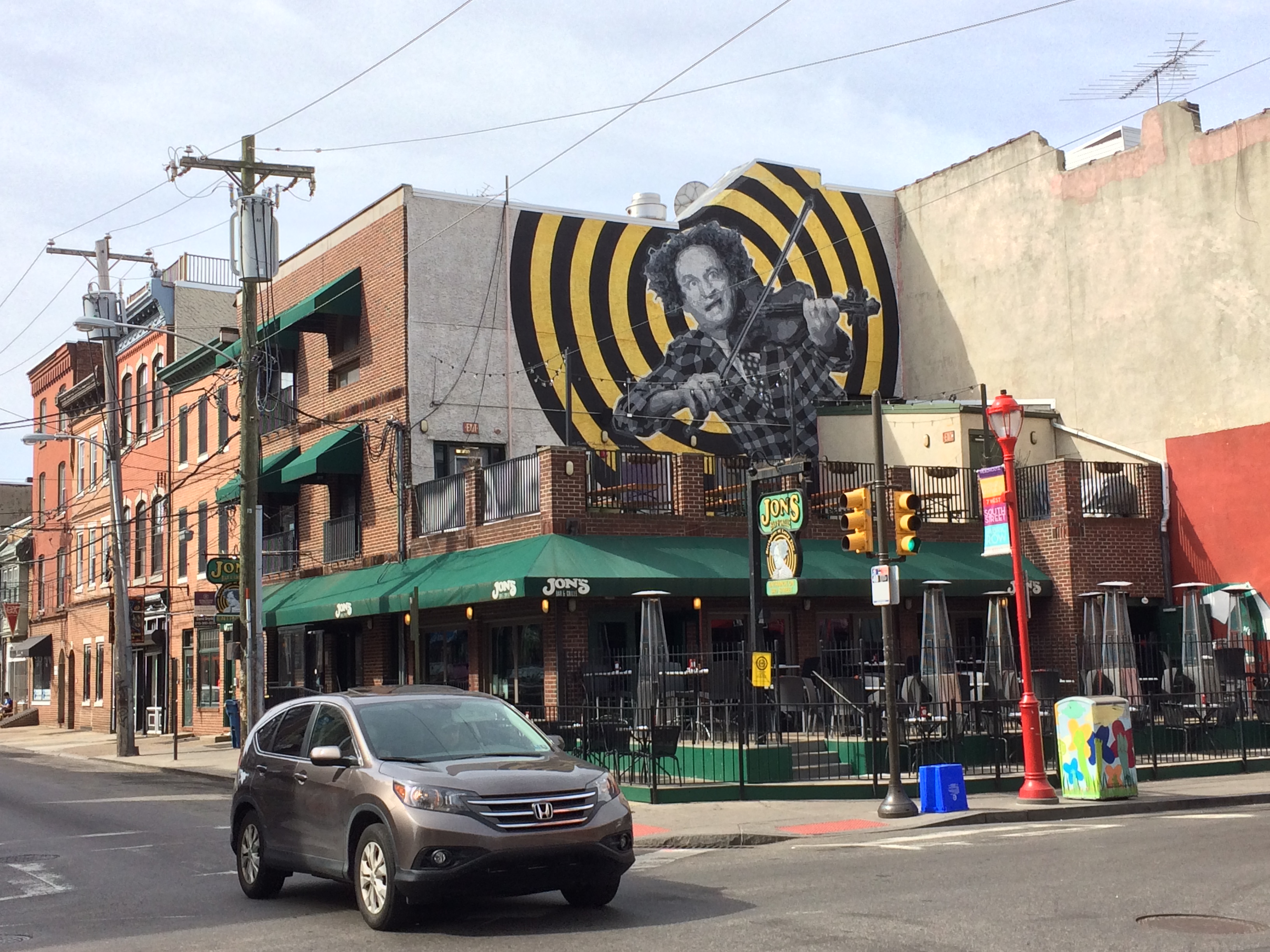
At 3rd and South I said to myself, “Wow, look at that mural.”  It was painted on the side of the out-of-business and mourned Mako’s Retired Surfers Bar And Grill. A guy on a surfboard, a girl leaning against a fat-tire car, all done in sweet pastel hues. Lovely. And didst my eyes deceive me? Directly across the street from the former Mako’s was another mural, this one depicting the torso of a fiddle-playing, electric-haired madman inside yellow and black concentric rings. None other than Philadelphia native Larry Fine, one of The Three Stooges. Yeah, man, now we were getting somewhere.

A little while ago I alluded to the fact that I’m no genius. Proof? I shouldn’t have been surprised to see the murals at 3rd and South, because I’d seen them before, though not in recent years. What’s more, I somehow also had forgotten that Philadelphia is the outdoor mural capitol of the world, thanks to Mural Arts Program, a public/private organization born in 1984. Incredibly, over 3,000 MAP- created works grace Philadelphia. No doubt, Mural Arts Program is one of the good guys. It aims to beautify all neighborhoods (from dilapidated to swank), to employ many folks in need of work and encouragement, and to inspire the general population. Big goals, all reached as far as I can tell.

DuBois IMG_0240
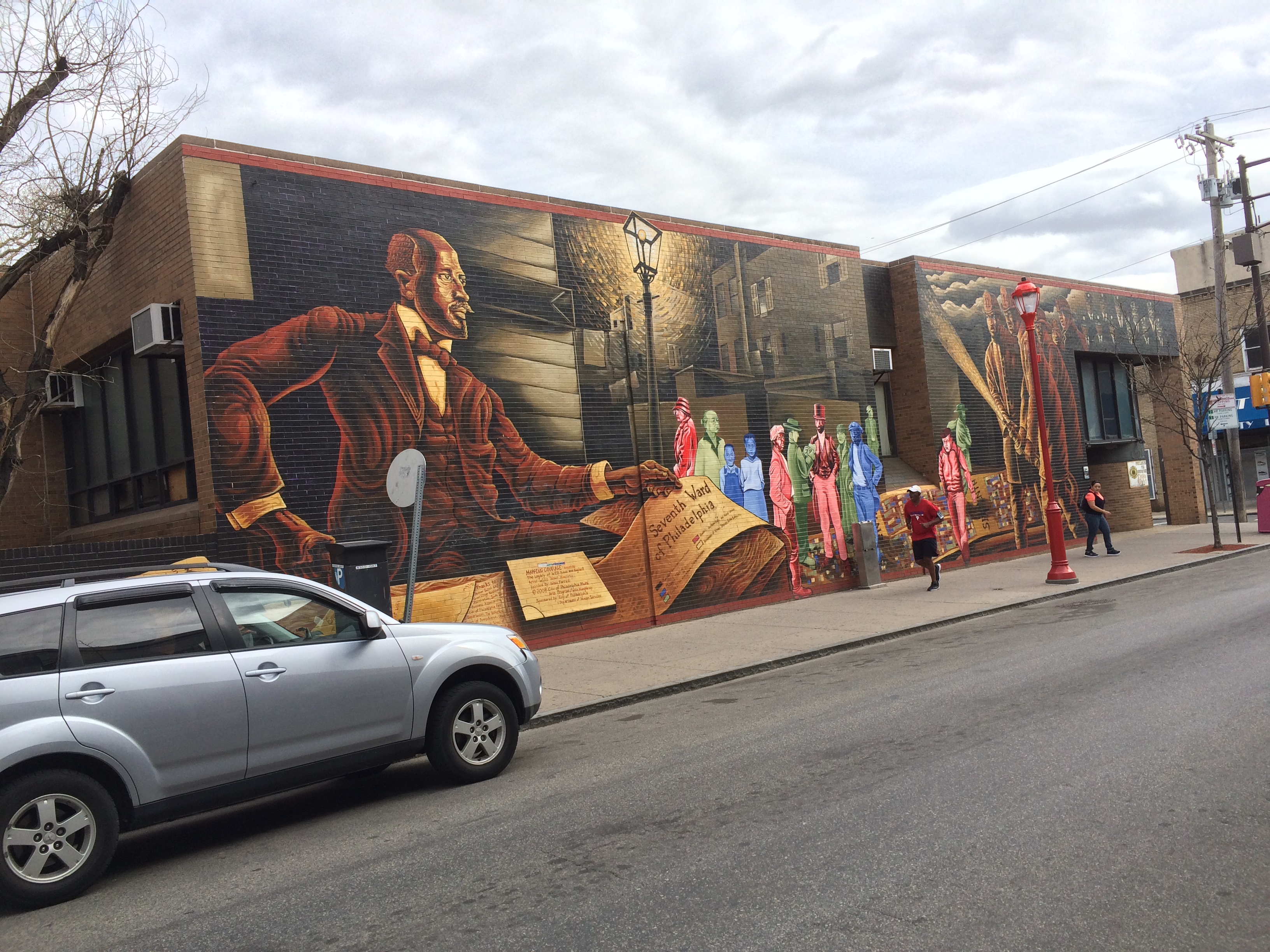
Well, I haven’t been able to determine if MAP was behind the painting on Mako’s side wall. But Larry Fine wouldn’t be overlooking South Street were it not for MAP, nor would two other murals that I later saw on my trek be in existence. Of those, the first I came to is attached to Engine Company 11, a firehouse at 6th and South Streets. It’s a magnificently imposing creation titled Mapping Courage. It honors W.E.B. Du Bois, the Black scholar and leader, and the firehouse itself, which for years was manned only by African Americans. The mural is beautifully designed, shining in browns and ambers that allow its few bright colors to pulsate.

Spring IMG_0260
An hour later, on Pine Street near 13th, I stumbled upon the mural known as Spring. Yowza, this one stunned me too. Look at those soft whites and butterscotch shades of the flowering foliage. How totally cool it was that real trees, in bloom, nearly were melting into the painted surface.

You know, somewhere in the middle of my expedition I realized something that never had dawned on me before. Namely, despite the murals that gas things up on certain blocks, most of Philadelphia’s residential streets, beautiful and architecturally rich as many are, sure appear tame when it comes to color. This ain’t exactly a news flash to the oceans of people more observant than I, but it’s true. And it’s largely because of bricks, bricks, bricks, the quintessential and earth-toned building blocks of Philadelphia. Bricks are sturdy, bricks are quaint, bricks have been with us humans for thousands of years. But man, I can understand how someone might decide that a brick-dominated landscape needs to be jazzed up. Someone named Isaiah Zagar, for example.

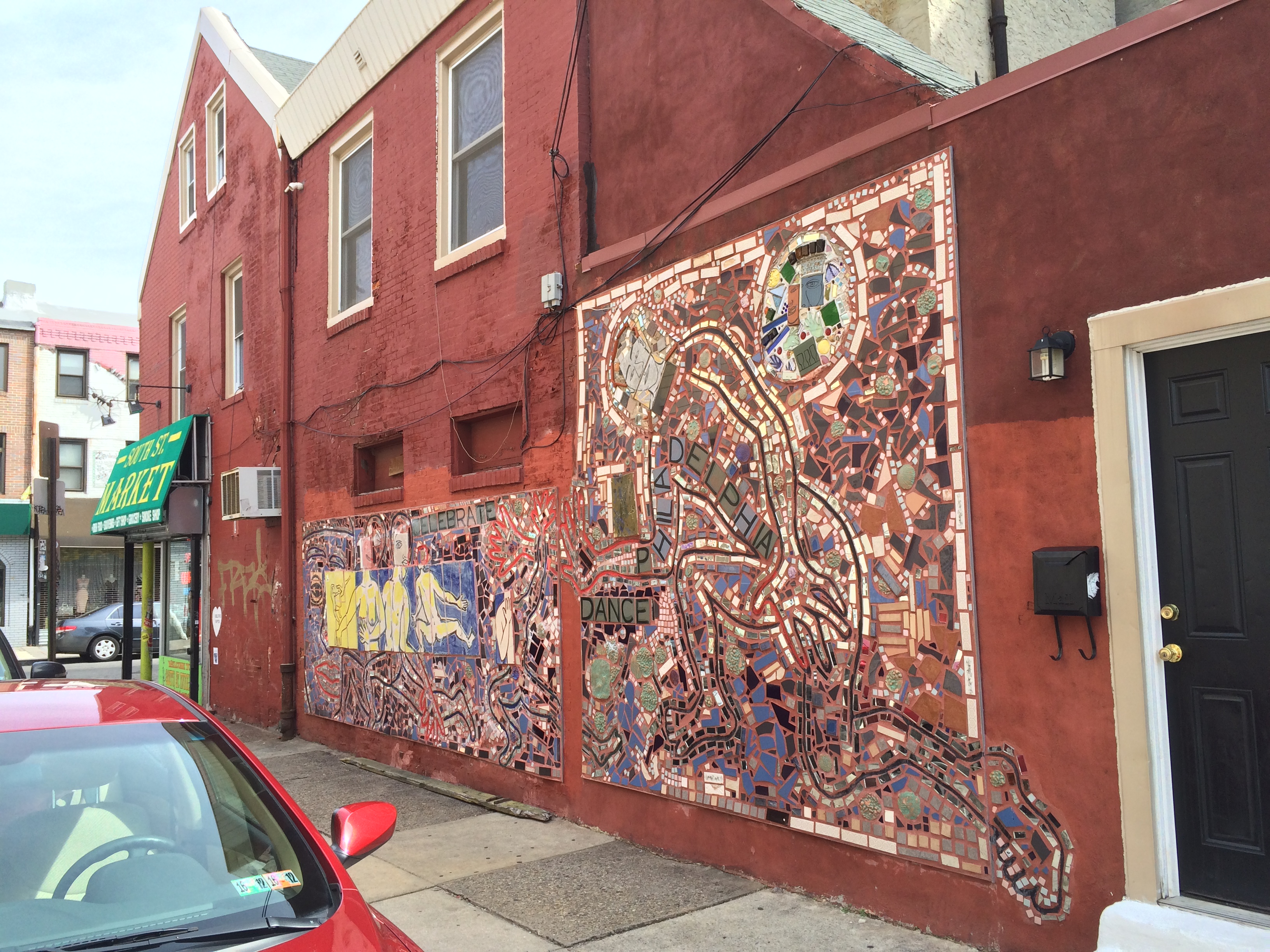
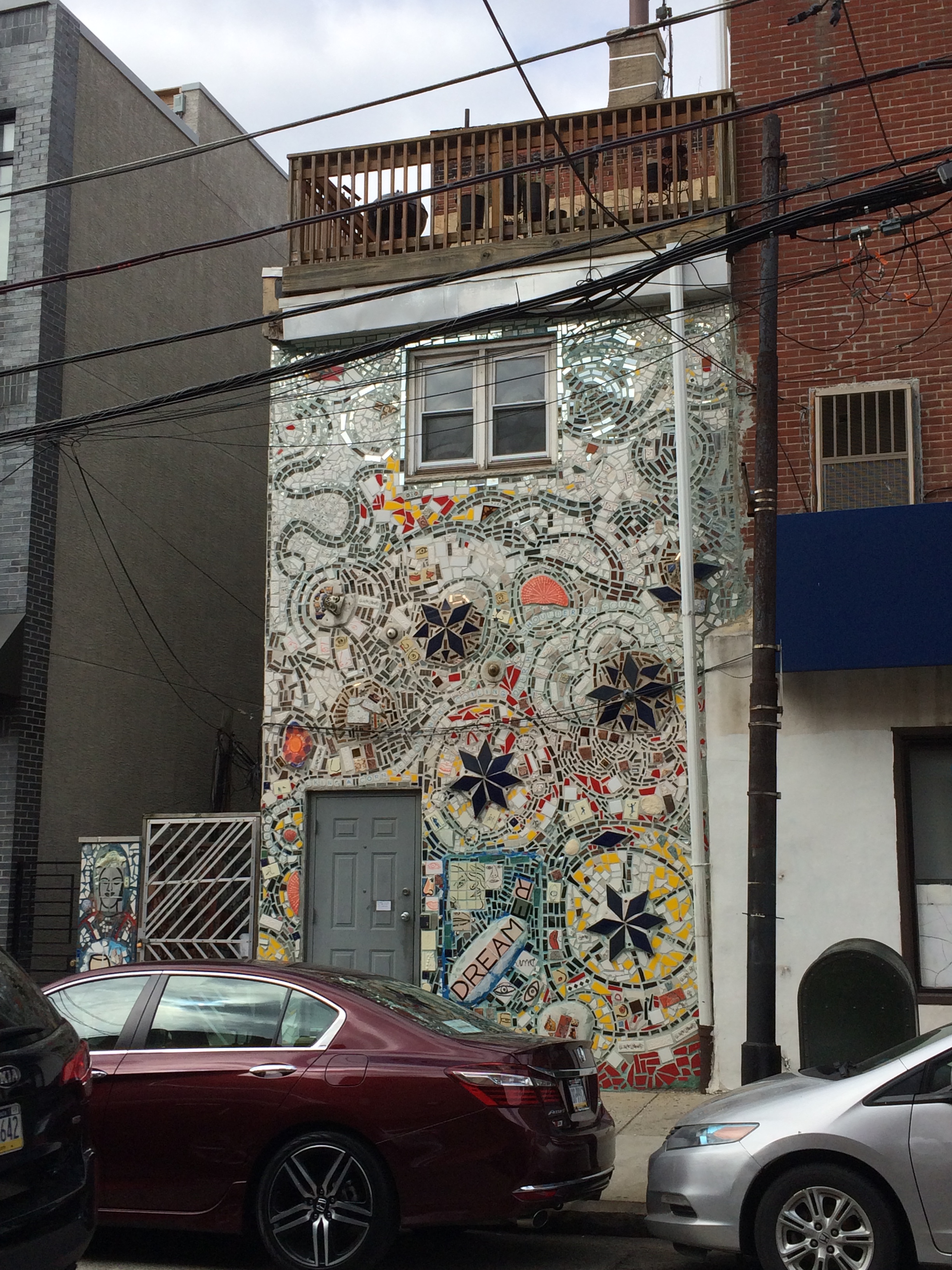
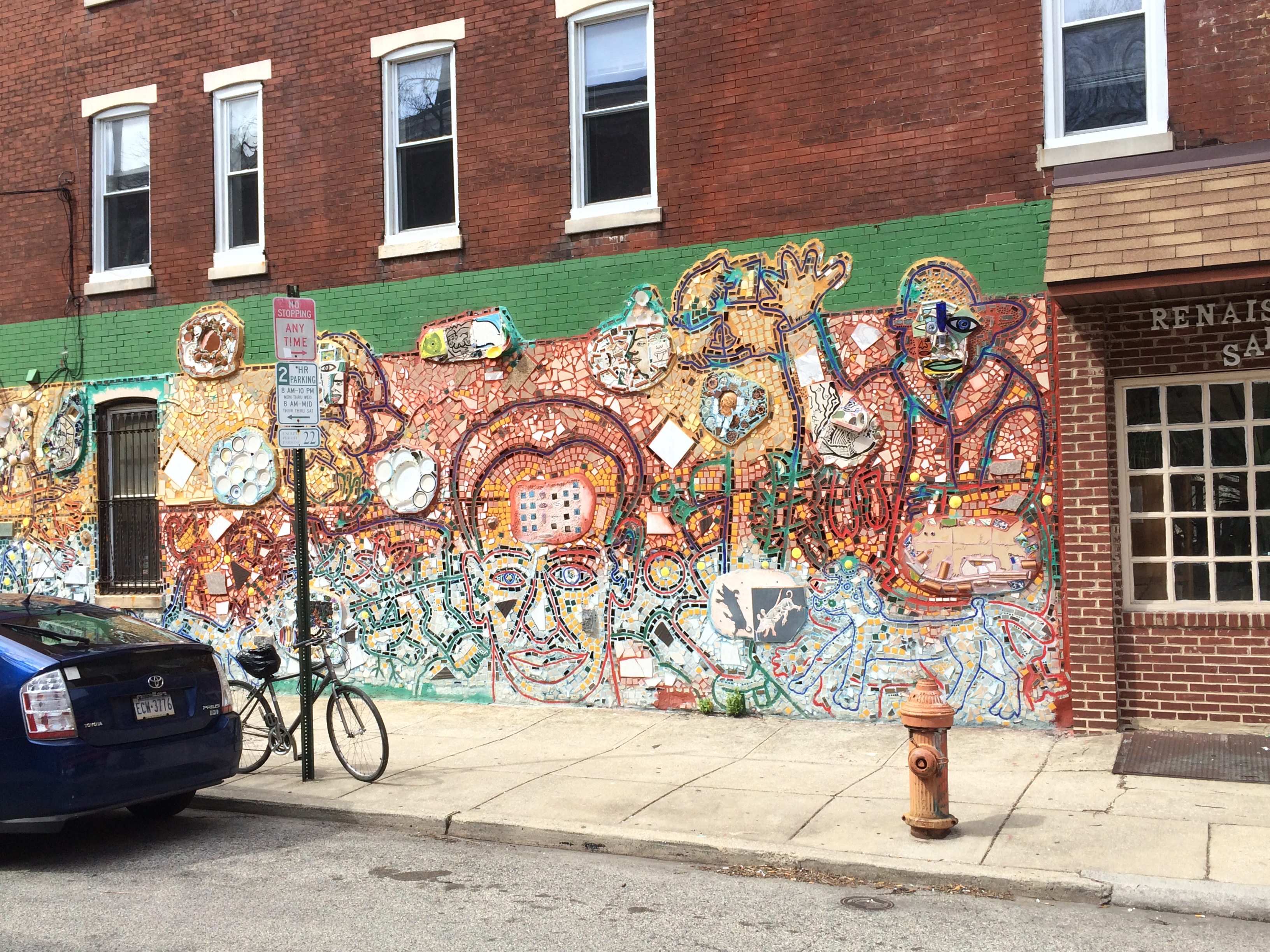
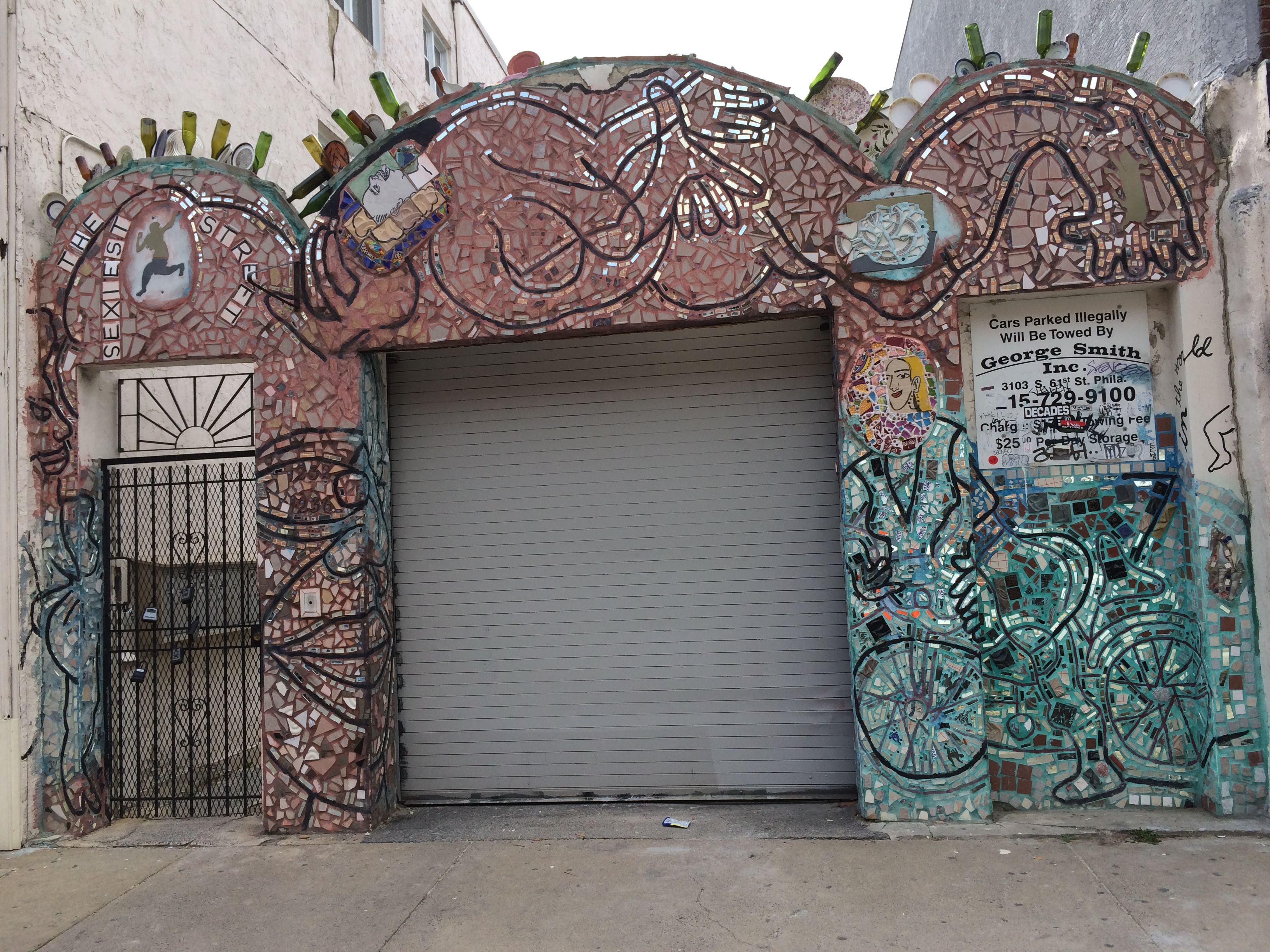
Soon after my walk began, a few minutes after I metaphorically tipped my hat to the Mako’s and Larry Fine murals, I started to come upon some unusually decorated homes, first on Leithgow Street, just off of South. And then on many other blocks near or on South. I had never seen these exterior wall decorations before, hadn’t known about them. They were something else, kaleidoscopic, multi-colored mosaics made from pieces of tile and glass. The design similarities got me wondering if one person had done all the work. I had a vague knowledge of mosaic artist Isaiah Zagar. I knew that he lived in the area and that he had established something called Philadelphia’s Magic Gardens. Were these freewheeling creations his? A bit later I learned that the answer was yes, and that he had begun adorning buildings quite a few years ago.

I suppose that Zagar obtained the permissions of homeowners before going wild on their domiciles. Or maybe he didn’t. Whatever. Unembellished bricks (and other stones), goodbye! Colors and designs up the wazoo, hello! Zagar’s mosaics put me in mind of native art from South America and Africa, of children’s art, of what cave paintings from 20,000 years ago might have resembled if their creators had been high on pot. Anthropomorphic faces and figures abound. Psychedelic cellular shapes look determined to escape their confines. Words like dance and celebrate and dream are embedded in the mosaics. Zagar is a positive thinker, a lover of life and, I assume, one hip cat.

Zagar’s greatest creation is Philadelphia’s Magic Gardens, a multi-level indoor and outdoor mosaic extravaganza, an arts center and a head trip that has become a go-to attraction for tourists and locals. He began work on it in 1994 in what then were abandoned lots, and endured some legal battles years later with the lots’ owners. In the end, creativity and social justice prevailed. PMG, an incorporated non-profit, opened to the public around 10 years ago. It’s at 1020 South Street. I caught a few peeks of PMG, grabbed a brochure from the admission desk and confirmed there that Zagar is the guilty party behind the glorification of the South Street corridor. But I didn’t want to interrupt my hike by entering the Magic Gardens. I’ll get back there some day and will drop my report within this blog. For now, this travelogue will end with photos of some of Zagar’s handiworks. If you click on any of them, or on any other photo in this article, a larger image will open.

IMG_0232IMG_0233IMG_0243

IMG_0246IMG_0250IMG_0251

IMG_0253IMG_0256IMG_0258

Out And About In Fishtown

On a recent Friday night my wife Sandy and I went to dinner with our great pals, Liz and Rich. We dined in Al Dar, an atmospheric Mediterranean-cuisine bistro in Philadelphia’s western suburbs. As the four of us wolfed down lots of good stuff, Liz asked Sandy and me what we had on the agenda for the following day. Because the Philadelphia area was in the middle of an amazing December warm weather streak, any upcoming rain-free day would be a great one for outdoor exploration. “Maybe we’ll go to Fishtown,” Sandy said. And that’s what we did.

Fishtown is a Philadelphia neighborhood fairly near the city’s downtown sections. It is a maze of narrow streets, with a few big avenues running through, and for most of its existence has held a blue-collar reputation. Until a handful of years ago, Fishtown wasn’t somewhere you’d have had any particular reason to go to, unless you lived there. But times change, and sometimes for the better. Fishtown’s rowhouses and small single homes have found favor with millenials, hipsters, musicians. And with those fine folk have come cool bars and eateries and music venues. Fishtown now is on the map, though its goodly number of empty storefronts and how-do-they-stay-in-business businesses show that there’s plenty of climbing yet to do.

The 1300 block of East Eyre Street.
The 500 block of East Thompson Street.

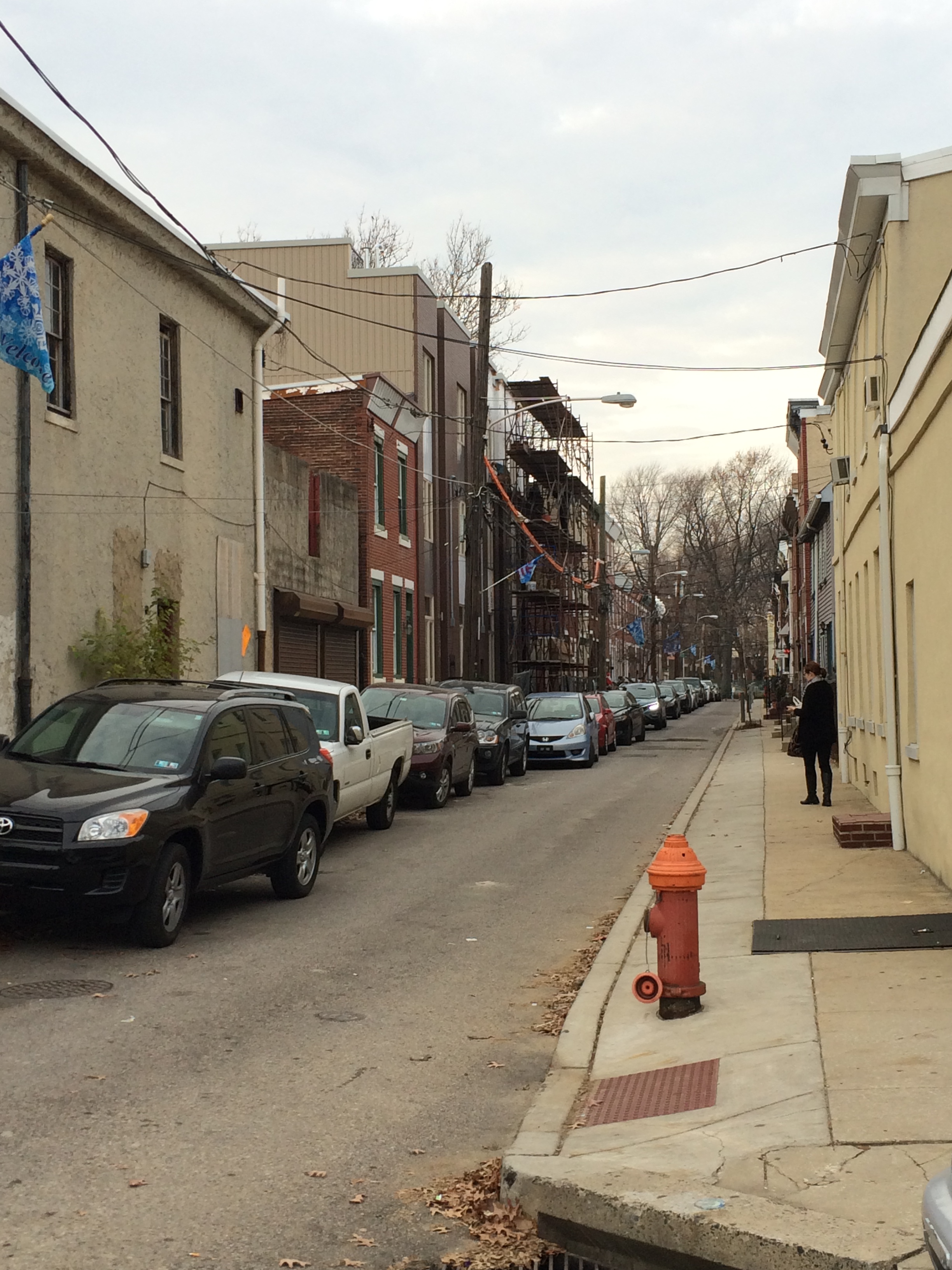
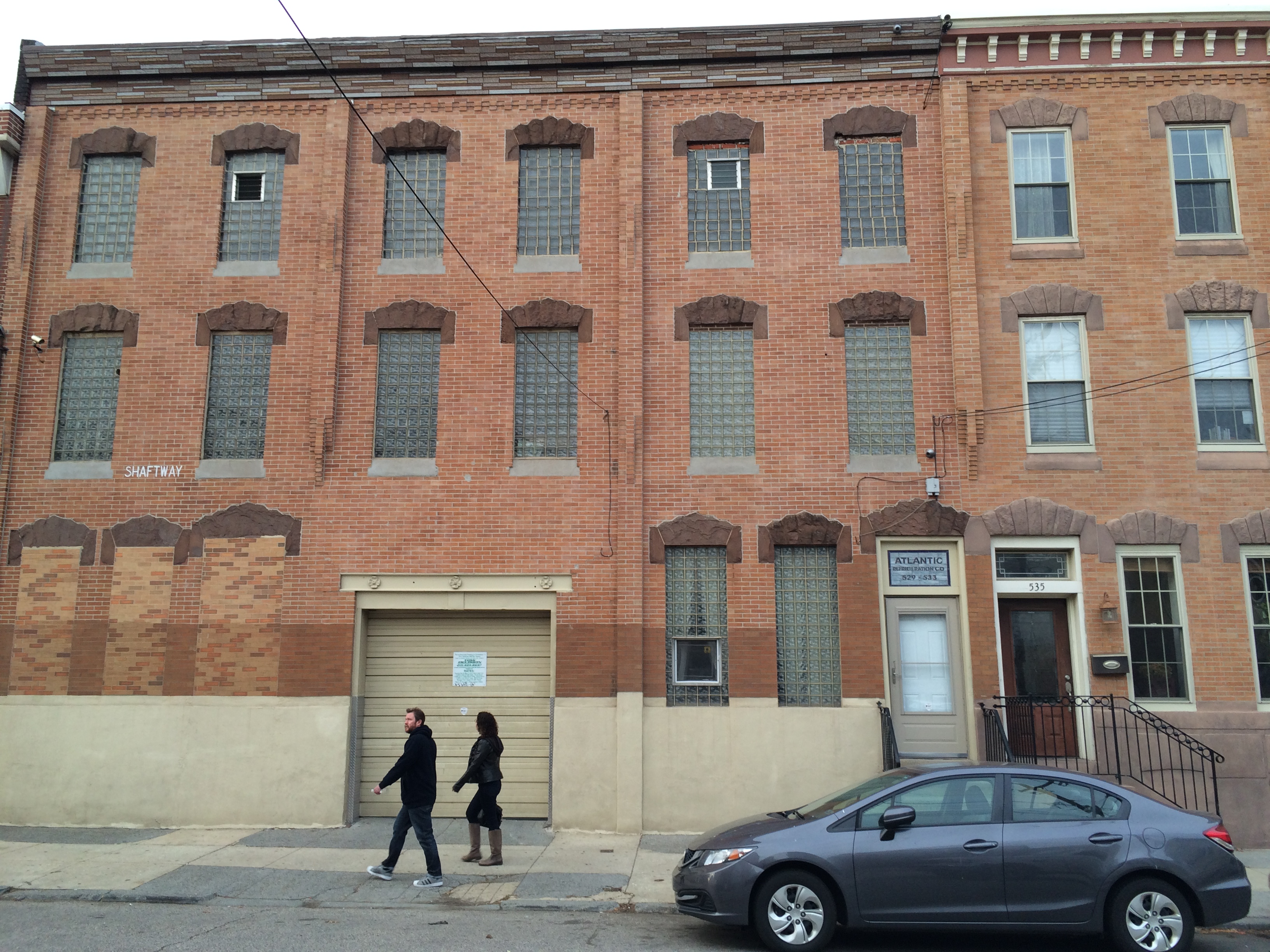
I like wandering on cute blocks, especially when they have nifty or unusual names. And Fishtown is full of those: Crease Street, Eyre Street, Shackamaxon Street. Yeah, Shackamaxon. I’d never heard of half the streets that Sandy and I stepped upon, which was just the way I like it. Gave me a sense of exploring the unknown. I saw that Fishtown’s byways are crammed with housing and commercial properties that, to my marginally-trained eye, looked to have been erected mostly between the mid 1800s and early 1900s. As with much of Philadelphia, the buildings usually rise no farther than three stories above ground level. And how about those bricks, a construction material that numbers in the gawd-knows-how-many trillions of units in Philadelphia. Fishtown’s share of that bounty must be at least twenty billion.

Fishtown's public library.
Fishtown’s public library.
Girard Avenue as seen from Eyre Street.

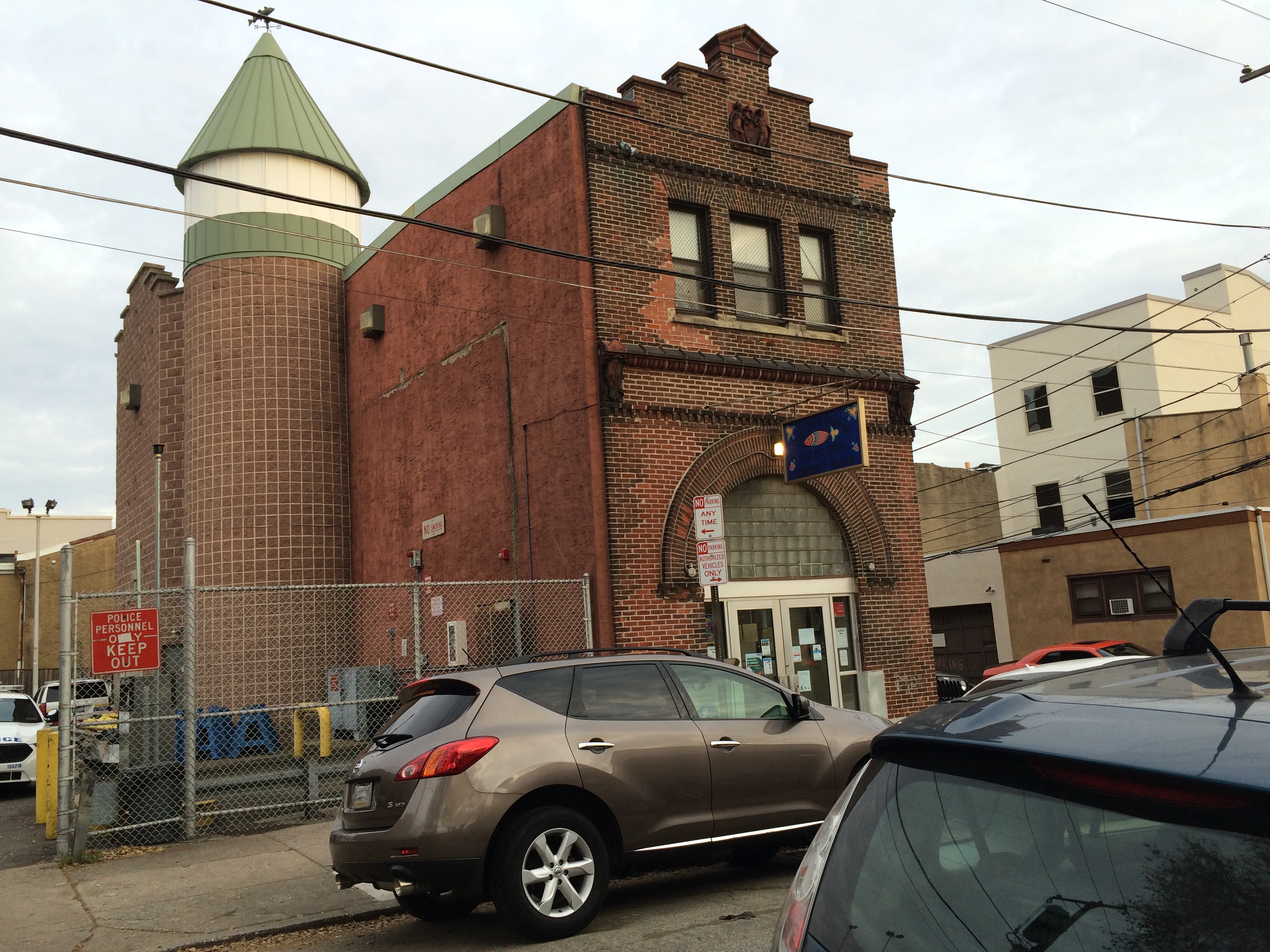
It would take hours to see all of Fishtown, hours that Sandy and I didn’t have at hand. But we strolled around and I think got a halfway decent sense of what the neighborhood is all about. I was glad to see that Fishtown is kind of a small town unto itself. That’s been the case for at least 150 years, from what I’ve subsequently read. Look! A library. A police station. A rec center with a hockey rink. A wonderfully-domed Presbyterian church that has been in place since 1859. A bunch of pocket parks. Sharp, indeed! But the small town feel disappears when you venture off the residential blocks. On Girard Avenue, a major artery that bisects the area, the almost endless lengths of overhead wires are a gritty spider’s web and a quaint-yet-quintessential urban sight. And the traffic on Girard Avenue and Frankford Avenue at times is relentless.

Let’s move on to food and drink. Fishtown has become a player in Philadelphia’s emergence as a destination for foodies and/or craft beer aficionados. Kraftwork, East Girard Gastropub, Frankford Hall, Fette Sau, Interstate Draft House, Pizzeria Beddia (a take-out-only joint with no phone and a policy of baking only 40 pies per day. It gained instant fame when bon appétit magazine, incredibly, crowned its offerings earlier this year as the best pizza in the USA). Hey, if filling the gut and loosening the inhibitions are on your agenda, Fishtown’s as good a choice as any to do that in.

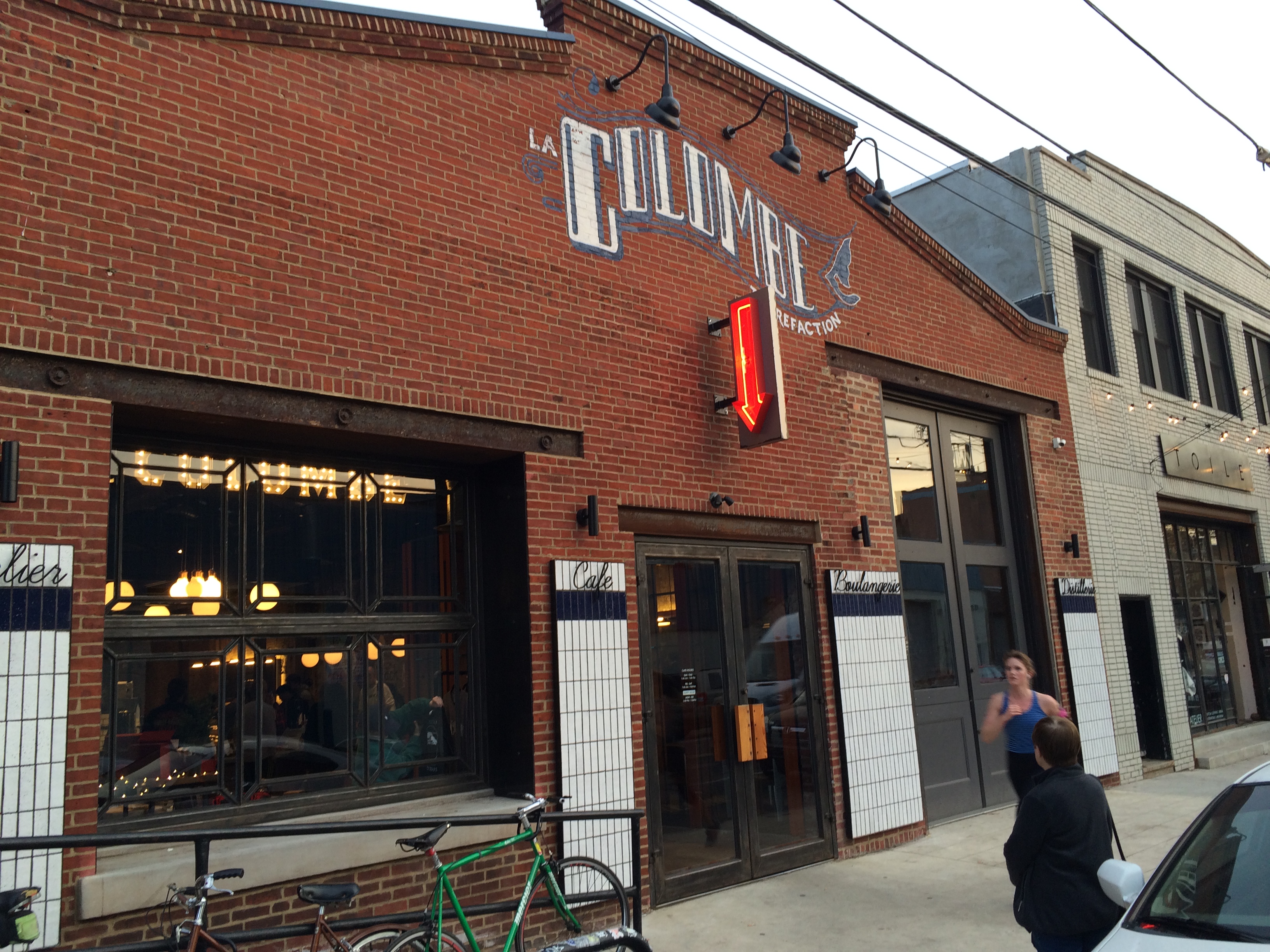
I peeked inside some of the above-named places, and others, on Girard Avenue. They looked great, but it wasn’t even 5:00 PM yet and I wasn’t ready for alcohol or food. Sandy and I earlier had decided that we needed to patronize, or at least ogle, what probably are Fishtown’s two most well-known spots, just to say that we’d been there. And thus we headed north on Frankford Avenue till we reached La Colombe Fishtown (1335 Frankford Avenue), the crown jewel of the La Colombe coffee empire.

Exterior of La Colombe Fishtown.
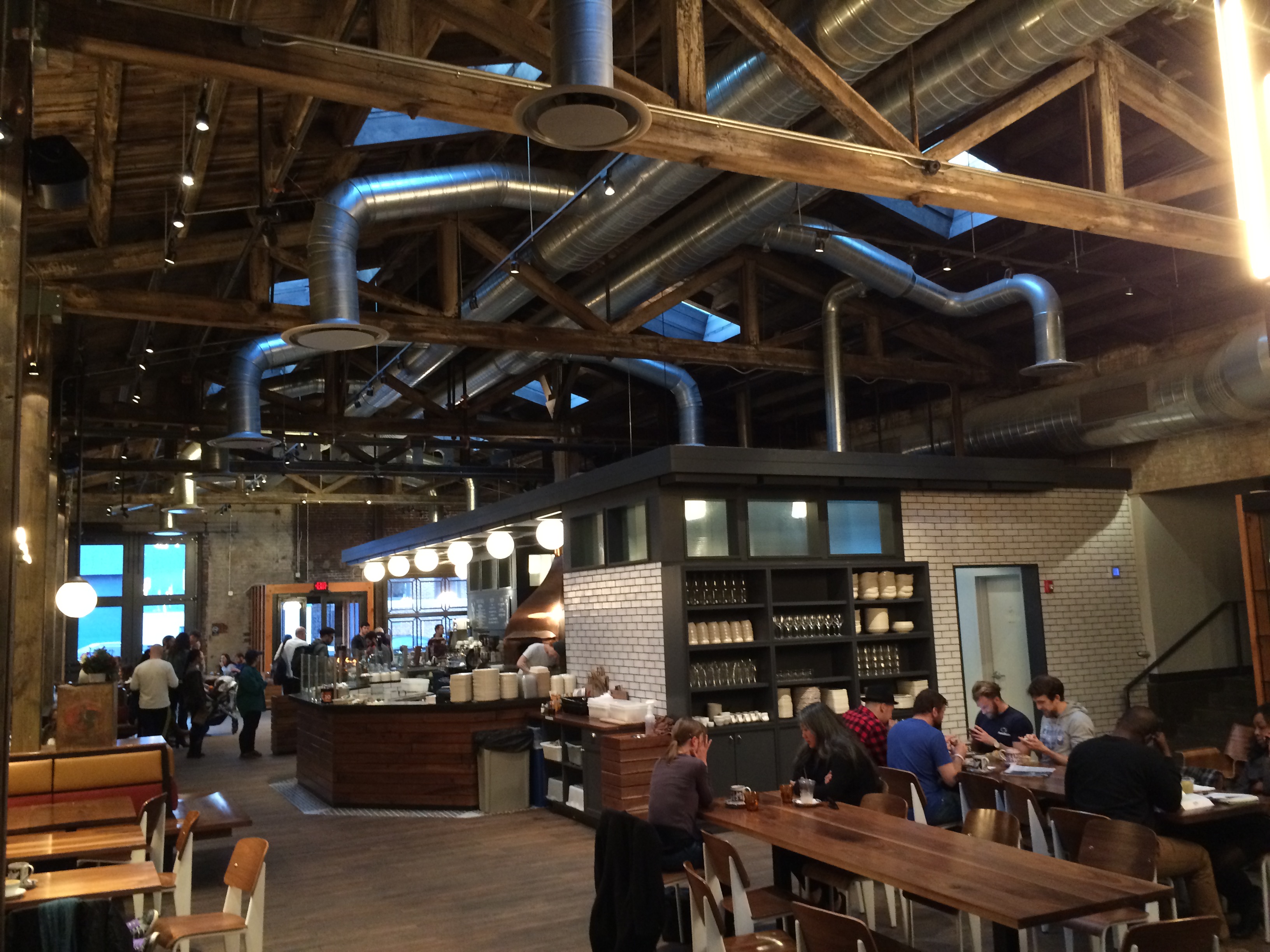
Interior of La Colombe Fishtown.

LCF opened last year and it’s a thing of beauty, a Starbucks-on-steroids enterprise that was created out of a former warehouse. It’s comfortable and fashioned in the rustic chic mode. Dark wood floors go on forever. Exposed air system ductwork looms overhead. At the tables, customers nurse coffees, wines, beers, pastries and sandwiches for a long long time as they stare into their electronic devices or into each others’ eyes. And in the rear of the cavernous space is something I’d have been unable to anticipate in a million years. A rum distillery. Don’t ask me why, but the brains behind La Colombe had a jones for rum that had to be satisfied. The rum is for sale.

Sandy and I, though, kept things simple. We ordered ice coffees. Yes, we’re big spenders. They were strong and delicious. We stared into our devices and into each others’ eyes for awhile, and then hit the streets once again. It now was time for food and alcohol. Next stop was Fishtown’s biggest claim to fame.

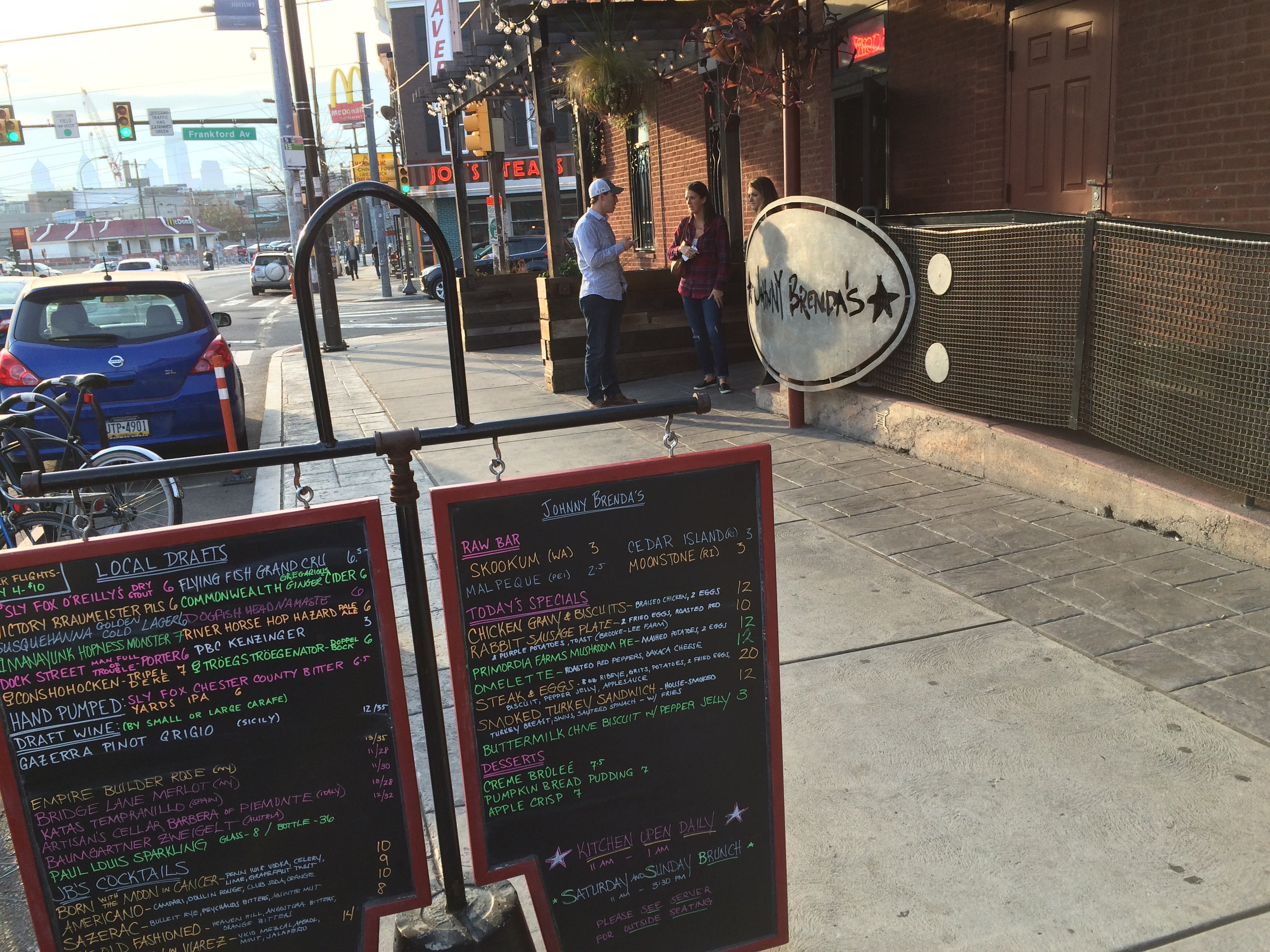
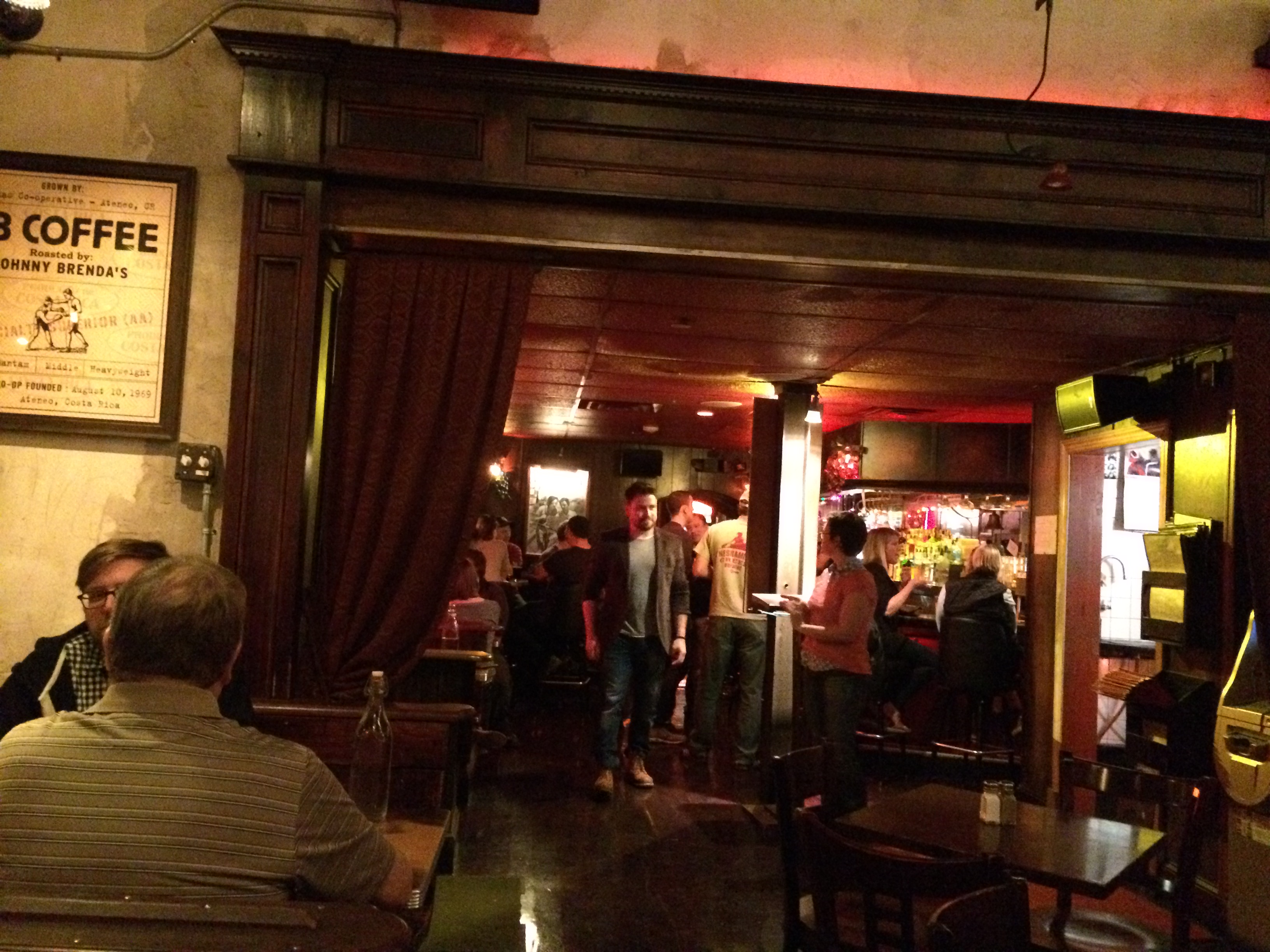
Johnny Brenda’s (1201 Frankford Avenue) used to be an insular neighborhood bar. New owners took over in 2003. They installed good beers and good food, made nice with their Fishtown neighbors, and set in motion their visions of expanding JB’s audience. Johnny Brenda’s is widely credited as the catalyst for Fishtown’s renaissance. Things really began cooking in 2006, the year that JB’s brought live rock and roll to its upstairs quarters. Brenda’s has become a favorite place for local and touring rock bands. Sandy and I have yet to catch music at JB’s, but we’ve frequently talked with friends about doing that. One day soon we will.

Exterior of Johnny Brenda's.
Exterior of Johnny Brenda’s.
Interior of Johnny Brenda's
Interior of Johnny Brenda’s

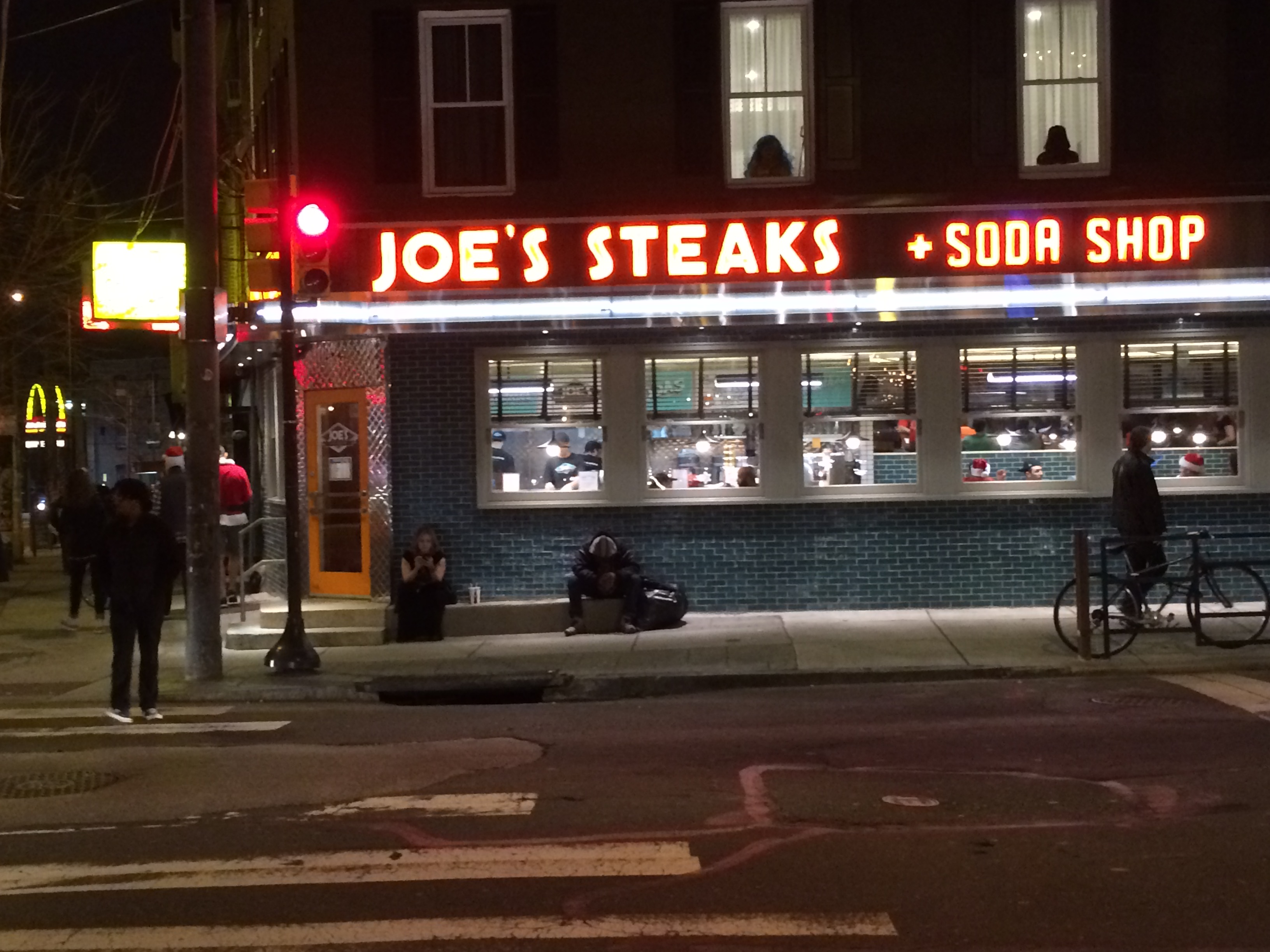
JB’s is a friendly place. It has a pool table, local beers on tap, a nice selection of pub grub. And plenty of customers. Sandy and I grabbed a booth in the dining room. We ordered. Sandy’s Italian white wine was delicious. So was my Sly Fox porter. So were our burgers, hers made from beef, mine from vegetables. But before too long it was time to leave, as a movie, in another Philadelphia neighborhood, was on our evening’s schedule. We settled up and stepped outside. Daylight had disappeared 90 minutes earlier.  The air was cooling down. Groups of 20-somethings and 30-somethings were everywhere. We crossed the street, heading westward on Girard Avenue. But Sandy then suggested that we walk back to where we had just been so that we could get another good look at a resplendent neon palace: Joe’s Steaks + Soda Shop. Sandy took its picture. And we left Fishtown on a high note.

JoesSteaks IMG_0076
(If you enjoyed this article, then don’t be shy about sharing it. Sharing buttons are below)
(Photos by Sandra Cherrey Scheinin. If you click on a photo, a larger image will open)

Outdoors At Last, At Morris Arboretum

Ocean, beach and sand cliffs on Cape Cod.

Cape Cod has become a favorite locale for me and my wife. It was love at first sight when we first ventured there for a vacation in 1998. We like pretty much everything about Cape Cod, but the one aspect above all others is its expansive areas of startling beauty. The Cape’s Atlantic Ocean beach, for one example, is breathtaking, about 30 miles of it uninterrupted and basically undeveloped. In the off-season you can walk there as far as you like, gazing at the waters and the tall sand cliffs backing the beach, and there’s a good chance you’ll cross paths with nary another human. Not many places where such a scenario can be duplicated. And at Cape Cod’s outer reaches is one of the more astonishing vistas I’ve ever seen, a five mile long lunar-like expanse of enormous sand dunes and valleys. Most unusual, most unexpected.

Cape Cod’s natural world draws me outdoors. When Capeside my wife and I spend hours in the fresh air daily. Home in the burbs, though, it’s another story. Here I’m out when mowing the lawn or shoveling snow or shooting hoops at my neighborhood playground. Other than that I’m indoors most of the time, and I think this is because there’s a dearth of beautiful suburban places to get lost in.

Luckily for me, Philadelphia is at hand. It’s an old city and a new one, with great architecture and sights. Walking its streets and parks is an outdoors activity that I do a fair amount of.  On Memorial Day weekend’s Sunday, my wife had an inspired Philadelphia idea. Let’s visit Morris Arboretum, she suggested. We hadn’t been there in years. This would be a fine chance to spend time in a lovely green spot not far from home. Okay, I said. We drove to Philadelphia’s Chestnut Hill section, where the Morris takes up a lot of space (167 acres). We spent three hours there. It was good to be outside for an extended period.

Morris Arboretum originally was an estate named Compton, home to siblings John Morris and Lydia Morris. They were wealthy, worldly and civic-minded folks. Their mansion is no longer with us, but Compton’s grounds and some secondary buildings remain. Established in 1887, Compton stayed in Morris hands till 1932, the year of Lydia’s passing (John had died in 1915). Lydia bequeathed Compton to the University of Pennsylvania as a botanical garden and research facility. The U of P has maintained and developed the property ever since.

Morris Arboretum has gotten a whole lot better since our previous visit. Back then a parent might have said to his or her five year old Amy or Andy, “Hey, look at that pine tree. Isn’t it beautiful?” and Amy or Andy would have responded “I’m bored, let’s go home.” The arboretum managers, obviously smart people, saw the need to build kid-magnet structures. Up went the Garden Railway in the late 1990s, and in 2009 Out On A Limb opened.

Morris Arboretum's Out On A Limb.
Morris Arboretum’s Out On A Limb.
Out On A Limb's play area.
Out On A Limb’s play area.

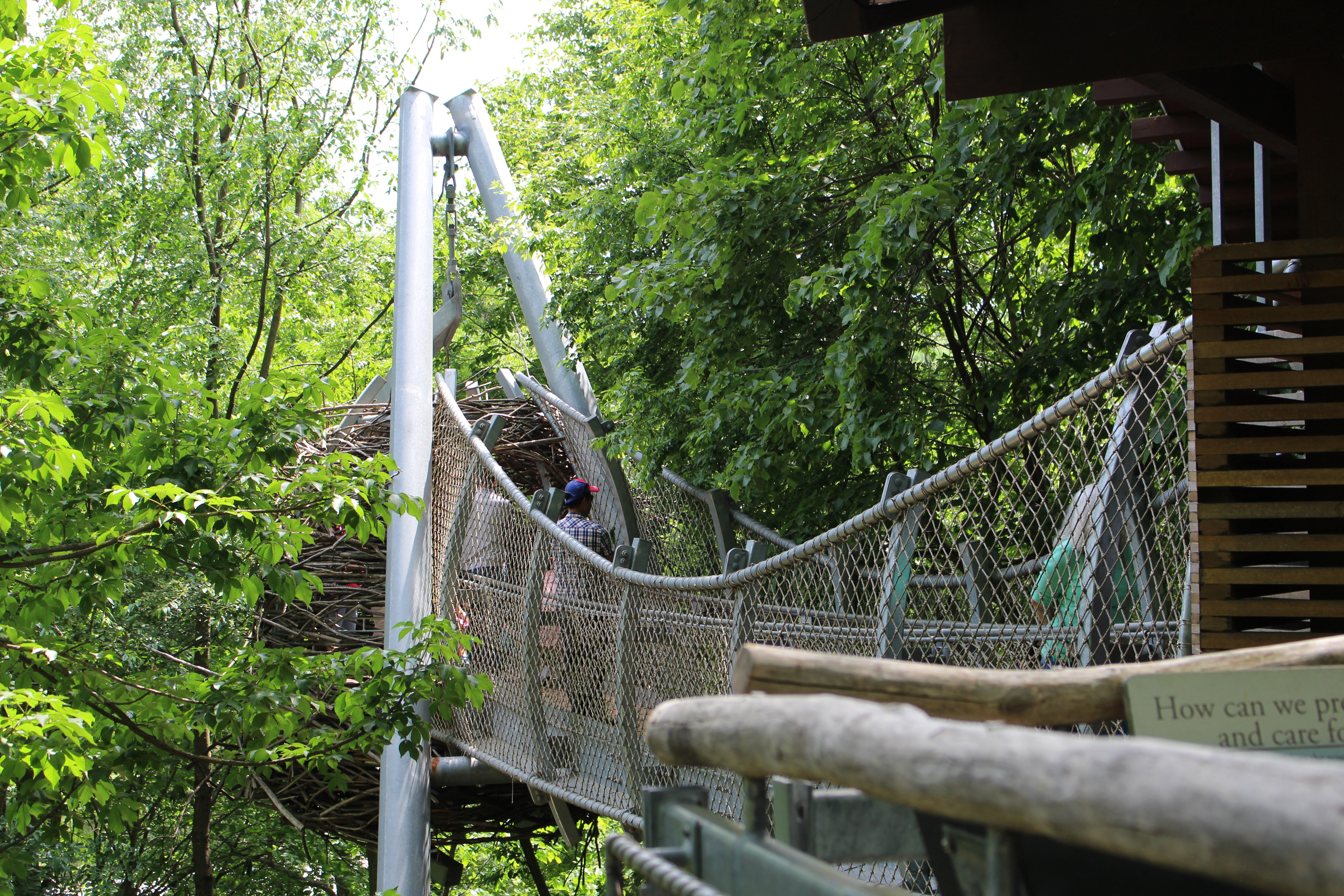
Out On A Limb is very cool. It’s an elevated twisting boardwalk, supported by steel columns and threaded between trees on a hilly part of the arboretum’s grounds. You enter at ground level and in a few seconds, because the earth slopes away quickly,  you’re looking down 40 or more feet at the forest floor. Walking alongside the mid and upper reaches of trees is a gas. Best yet is the play area at the walkway’s far end, where giant rope hammocks are suspended off to the side. Kids abound there. No wonder that attendance at Morris Arboretum has grown steadily since Out On A Limb came on the scene.

Morris Arboretum's Garden Railway.
Morris Arboretum’s Garden Railway.

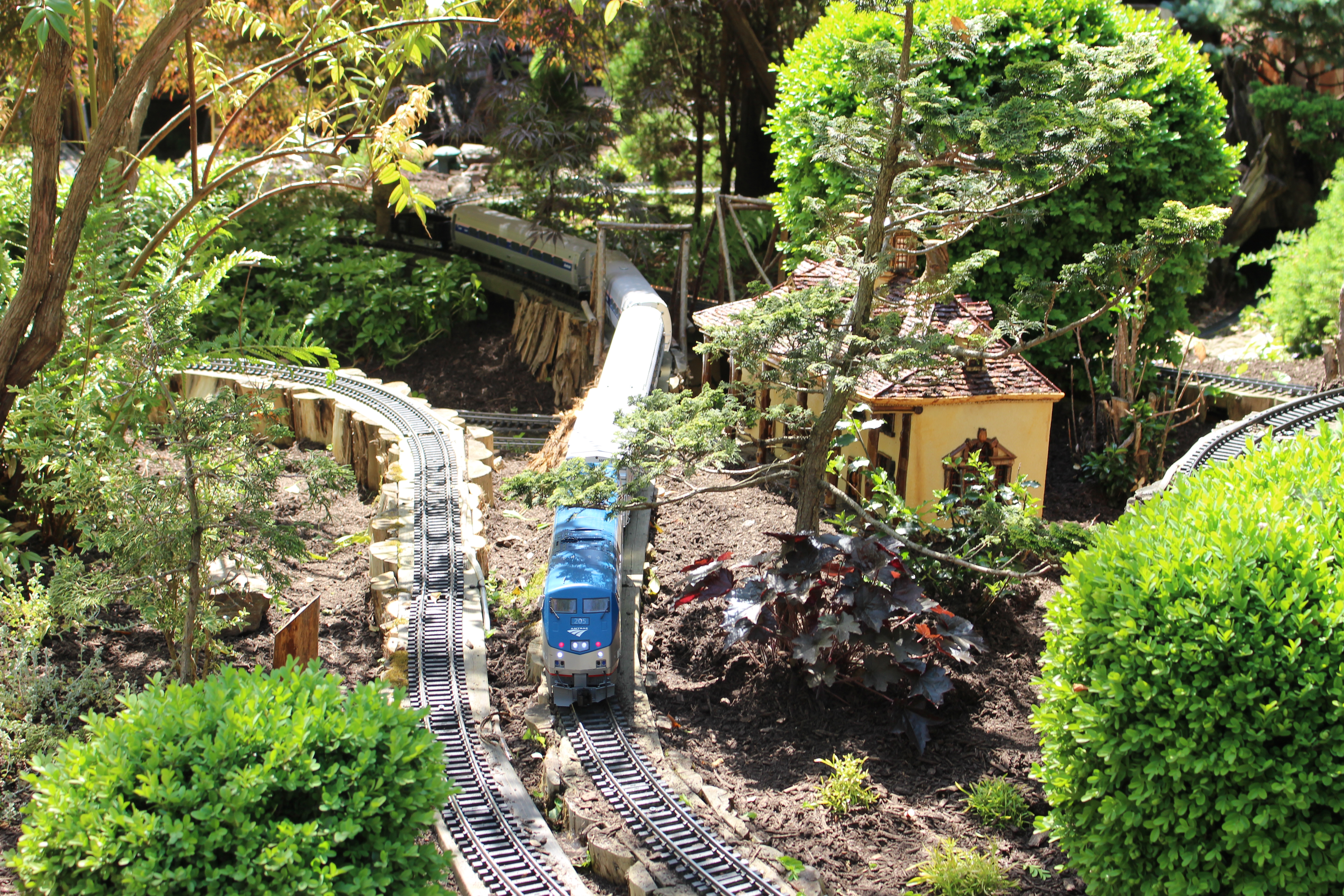
Almost as invigorating is the Garden Railway. Nestled among trees and shrubbery near the Morris’s Rose Garden, it is a cleverly designed toy train layout. Passenger trains, freight trains, cable cars, tunnels, bridges . . . all are there in three large separate areas. So are natural-material replicas of famous structures, such as the Eiffel Tower and Philadelphia’s City Hall. The trains wind their way over, around and through, disappearing from view, eventually reemerging. My wife and I were intrigued by the whole set-up. It’s something.

The amazing Blue Atlas Cedar at Morris Arboretum.

It’s not a bad idea to stroll the arboretum’s grounds with no particular plan. That is to say, you won’t go wrong by not referring too often to the map you’re given at the information center. Morris Arboretum is a work of art, sculpted to display its trees, flower gardens, fern groves, swan pond and shrubs. Poking around them randomly works. Plenty of things, often green ones, will catch your eye. One tree in particular caught mine, a Blue Atlas Cedar. One of this massive being’s long lower limbs shoots out perpendicularly to the trunk, resting on the earth. The limb I think grows that way naturally. It doesn’t appear to have been forced into its strange position by windstorms or magic.

Sculptures by George Sugarman.
African Queen, a stone sculpture at Morris Arboretum.

Manmade sculpture is another big part of the arboretum experience. Many such objects are placed on the grounds, continuing a tradition that John and Lydia began. The most colorful are the large playful and organically-shaped painted aluminum creations by the late George Sugarman. They’ve been on site since 1981. The most alluring sculpture to me is African Queen, a stone carving from Zimbabwe, artist unknown. How old is it? 50 years? 500 years? If the arboretum custodians have the answer, they’re not saying. Regardless, it’s a charmer. Pablo Picasso, who was greatly influenced by African art, would have loved it. The armless queen is asleep, her sweet face lost in dreams. The artist chose to depict her headdress as broad and undefined, focusing attention to the face below. A visit to Morris Arboretum, in my opinion, is incomplete without making time for this superb piece.